Religion
A Summary of Izutsu's 'Semantic Field' Theory for Determining the Meaning of Religious Vocabulary
To understand Izutsu's theory of the semantic field, three semantic approaches are examined: the essentialist, which views meaning as fixed; the contextual, which emphasizes the non-linguistic setting; and the functional, which sees meaning as dependent on a word's role within the linguistic context.

One of the well-known semantic theories is the theory of the semantic field. Contemporary linguistic discussions have developed enormously since the mid-nineteenth century, and especially in the twentieth century; to the extent that the scope and domain of this science are fundamentally incomparable to the past achievements in traditional literature and logic. Some thinkers divide the various fields of linguistics into seven or eight study groups. One of these branches is the field of semantics. A field whose focus is the relationship between word and meaning, and which seeks to understand how words relate to the category of meaning and how we can find our way to the meaning of words and language. Essentially, how is meaning produced in language, what is the process of the evolution of linguistic meaning, and so on. Of course, some semantic theories go beyond the domain of meaning and also deal with the domain of cognition, and sometimes discussions of the sociology of language or the anthropology of language are also brought up. In the domain of semantic discussions, there are various approaches, and there is no consensus on the classification of these approaches. From the perspective of semantics, three fundamental approaches can be distinguished in order to clarify the origin of the theory of semantic fields: the essentialist approach; the contextual approach, and the functional approach...
.
A Summary of Izutsu's 'Semantic Field' Theory for Determining the Meaning of Religious Vocabulary
Mohsen Zandi (Researcher in the Psychology of Religion)
One of the well-known semantic theories is the theory of the semantic field. [1] Contemporary linguistic discussions have developed enormously since the mid-nineteenth century, and especially in the twentieth century; to the extent that the scope and domain of this science are fundamentally incomparable to the past achievements in traditional literature and logic. Some thinkers divide the various fields of linguistics into seven or eight study groups.[2] One of these branches is the field of semantics. A field whose focus is the relationship between word and meaning, and which seeks to understand how words relate to the category of meaning and how we can find our way to the meaning of words and language. Essentially, how is meaning produced in language, what is the process of the evolution of linguistic meaning, and so on. Of course, some semantic theories go beyond the domain of meaning and also deal with the domain of cognition, and sometimes discussions of the sociology of language or the anthropology of language are also brought up.[3]In the domain of semantic discussions, there are various approaches, and there is no consensus on the classification of these approaches. From the perspective of semantics, three fundamental approaches can be distinguished in order to clarify the origin of the theory of semantic fields: the essentialist approach; the contextual approach, and the functional approach.
The essentialist approach includes a number of theories (including old and traditional views on meaning) that consider meaning to be a defined, closed category that is connected to the word and to reality. Every meaning in a word has a core or essence that is unchangeable. Meaning is that central core of a word's meaning which is preserved in different conditions, situations, and contexts (various accidents). Therefore, in this semantic view, whenever we want to understand the meaning of a sentence or phrase, it is sufficient to understand the essential meanings of a word, discern the relationship between them, and thereby grasp the meaning of a phrase.
The second approach, the contextual and interpretive approach, stands in direct opposition to the first and holds that there is fundamentally no fixed meaning. Meaning is always produced within a specific package and context, and to understand the meaning of a word, rather than focusing on the uses of a term and the fixed meanings typically found in dictionaries, one must examine the context and setting in which that term exists. By package, we mean non-linguistic packages or contexts. For example, the word "matter" or "substance" has one meaning in a chemistry department and another in philosophy and theology; it may even have two meanings within the same discipline at two different times. Many words carry cultural and social weight, and the meaning of a word changes from one socio-cultural context to another. There are multiple perspectives within this approach. The interpretive or hermeneutic perspective is one of them, and it itself contains several approaches: the speaker-centered approach (the identity, personality, culture, expertise, and any "context" within the speaker influences the formation of their mental meaning), and the reader- and interpreter-centered approach (the audience's context constructs meaning). Here, meaning is equated with understanding. Thus, the second approach relates meaning more to external and non-linguistic contexts than to the interior of language and linguistic texture and structure.
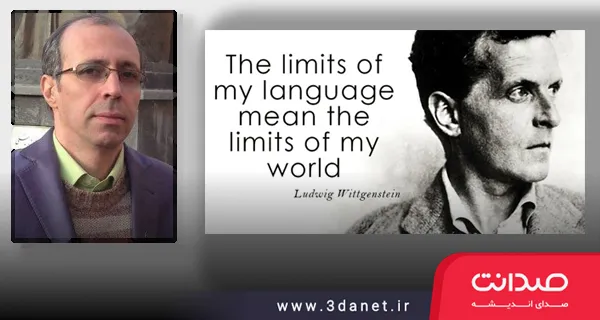
The third approach, or the functional approach to meaning, consists of theories that believe meaning does not exist as a fixed essence or core (rejecting the first approach), but meaning is also not something related to the realm outside language (rejecting the second approach); rather, meaning pertains to the linguistic realm, but to the specific functions of each word and phrase within the language itself. The difference between this approach and the first is that the first approach holds a static and absolute view of meaning, whereas the functionalist approach believes meaning is not fixed but fluid, and therefore may change from one linguistic context to another. In this respect, the third approach shares common ground with the second. That is, the main objection of both to the essentialist view of meaning is that it takes meaning to be an absolutely fixed matter, whereas the reality of language is not like that; a word has a history, geography, time, and place, and therefore meaning is a relative matter. On the other hand, however, it also opposes the contextual approach, believing that the contextual approach not only leads to absolute relativism in meaning but also disrupts linguistic criteria, structural rules, and the linguistic relations between humans, and seeks the meaning of language outside of language. The functionalist view attempts to return the reality of linguistic meaning to the interior of language itself, but not as an essentialist and static meaning, rather as a functional meaning. In this sense, the meaning of a word or phrase depends entirely on the type of role and function that word plays within its specific linguistic set and context. This approach also contains multiple approaches within it. The theory of the later Wittgenstein is one of the most famous of these approaches.[4] He believed that we do not have something called a semantic core and then demonstrated that in different phrases and uses, a word sometimes has such semantic diversity that finding even a single common component among them is difficult. The example he gave was the word "game." What is the semantic core that makes the countless types of games a "game"? Hence, he coined the term "family resemblance." He believed that the meaning of a word must be understood from its use in language. Until a word is used in a phrase and language, we cannot speak of its meaning. Therefore, dictionary and encyclopedic meaning, from the functionalists' perspective, is invalid or at least useless, and (in the extreme view) should not be made the basis of semantics. For example, to understand the Quran, one cannot look at Mufradat al-Raghib or al-Jawhari's al-Sihah to see what the meaning of this word is; this conception is an essentialist conception that posits a fixed semantic core for the word. But in the functionalist view, to understand the text, one must see the word's use in the linguistic context where it occurred and discover its meaning through establishing connections and the type of function.
The theory of semantic fields is one of the functionalist theories of meaning; that is, on the one hand, it does not accept the essentialist theory of meaning and does not believe that words possess a fixed meaning; and at the same time, it does not accept the semantic relativism of hermeneutic theories. Of course, it accepts relativity in meaning, but it considers relativity to be bound by functions within the text. In other words, meaning is relative, but this relativity is not dependent on external conditions; rather, it depends on the linguistic text, and if we want to extract that relative meaning from a word, we have no choice but to refer to the text and the uses of that word within the text. Therefore, the theory of semantic fields is a functional theory. The core argument of functional theory is that the meaning of a word or phrase, although relative, must be understood within the text, not outside it. All references to meaning must be to the functions of the word within a linguistic and semantic context (just as an anthropologist infers the meaning of a behavior within the context of that specific people).[5]
3.2.1. The Eight Principles of the Theory of Semantic Fields
The theory of semantic fields has eight fundamental principles:
First Principle: Meaning is the result of analyzing and classifying reality in the form of semantic bundles. This view holds that in the realm of meaning, until an individual classifies and analyzes reality (phenomena obtained from the real world), nothing called meaning emerges at all. The human mind participates in the production of meaning. Meaning is not something that exists in reality and falls directly into the mirror of the human mind (the essentialist view); rather, the human mind, in encountering the outside world, is initially chaotic and does not attain meaning until it categorizes, classifies, and analyzes reality. Izutsu gives the example of a weed. In the external world, there is no such thing as a weed. It is humans who, according to their own interests and expediencies, divide and categorize reality (one as a flower, another as a weed, and so on; or calling white gold 'white gold' in a language). Many words and meanings are subject to our perspective, and from the viewpoint of semantic fields, all existing meanings are, in a way, subject to the categorization and analysis that our mind performs on reality. The name of this process is categorization in language, and based on it, we first categorize reality in order to arrive at meaning. Meaning is the construct of an active encounter of our mind with external reality. Of course, as Izutsu himself says, this epistemological point concerns the relationship between language and cognition, not language and meaning.
Second Principle: The components, elements, and categories that our mind produces are not singular and separate matters from one another. When my mind begins to analyze and break down external reality, it does this work within a system (network/system) of analysis. When my mind classifies external reality, the resulting meanings are compatible with each other, and therefore, when it applies words to these meanings, it does not confuse them, and the position and relation of these meanings to one another is known. For example, when it says human, animal, plant, sky, mountain, all of these have their own place in this network. The mind's division regarding meaning is a system and apparatus; such that these meanings are also interconnected. Hence, in a sense, we are dealing with a network of meaning, and the product of our categorization is a semantic network, which Izutsu sometimes interprets as semantic patterns and sometimes as the structure of meaning. We are faced with a structure of meaning, the various bodies of which constitute that composition.
Third Principle: Every semantic system or network is itself composed of subsets. We are faced with a system of meanings that is itself composed of a group of meanings that are interconnected and interact with one another. This group of meanings, which is a subset of the overall system of meaning and language, is technically called a "semantic field." Therefore, if we accept that meaning is the product of an overall categorization and that groups of meanings (not individual words) have internal relationships with one another, the notion that each word has a meaning of its own is dispelled; rather, we must say what semantic group this word connects with in this linguistic text. Izutsu himself provides many examples in his books God and Man in the Qur'an and Ethico-Religious Concepts in the Qur'an. For instance, to define the word "ṣalāh," one should no longer say what the word ṣalāh means in isolation; instead, one must say what linguistic context and semantic structure ṣalāh has connected with in a given lexical context. For example, when we see in the Holy Qur'an that ṣalāh sits alongside zakāt and falls within the domain of acts of worship and religious legislation, it has one meaning, and when it is placed alongside other words, it takes on another meaning (in one place meaning sound, supplication, and in another place meaning a set of pillars). Or the word kufr, in one semantic relation and one semantic context, means covering, and in another place means ingratitude, and in one place stands in opposition to īmān (faith). In his works, he shows that this difference in meaning depends on the relation in which we interpret this word. The meaning of the word kufr changes in the different semantic relations in which it is placed. If an Arabic speaker uses kufr in a context where it is related to the issue of knowledge (that is, mentioning knowledge before it and then saying kufr), this kufr stands in opposition to īmān. But if this same kufr is used in a context discussing blessings, the relation of blessing to kufr means its meaning is no longer that of kufr in opposition to īmān.
Fourth Principle: The aforementioned semantic system, which is the semantic structure itself, differs from one culture to another, from one language to another, and even within a single language, from one dialect to another, or from one subculture to another (even with similar vocabulary). Research has shown that the semantic structure and context differ even within the Persian language itself. Izutsu's own works in Arabic also show that the semantic structure of the Qur'an's language differs from the semantic structure of the language of the Jāhiliyyah (pre-Islamic era); because the type of cultural view a people has of the surrounding world affects their categorization of the surrounding world, and this categorization is effective in their construction of meaning. He mentions a term called "semantic worldview" or "linguistic worldview"; meaning that a person's view and vision can be discerned through the meaning within the language. If someone refers to the language and poetry of the Jāhiliyyah and conducts semantics, and through establishing semantic connections grasps the meaning behind its vocabulary, they can discover the worldview of the Jāhiliyyah. Just as if someone analyzes the Qur'an semantically and understands the semantic structure of the Qur'an, they infer the worldview of the Qur'an from within this lexical system.
Fifth Principle: If we accept that meaning is not an isolated entity and is realized within a semantic system, we arrive at a new classification of word meaning: basic meaning and relational meaning. Every word in a language has a basic meaning and a relational meaning. The basic meaning of a word is the meaning that is, 'by hypothesis,' its fixed meaning, and the relational meaning is the meaning or meanings that this fixed meaning gradually acquires within the semantic and linguistic context. As became clear from the previous discussions, and as Izutsu himself explicitly states, when we speak of basic or fundamental meaning, we do not mean the core, essential meaning posited by the picture theory of language. What is meant by basic meaning is a methodological matter and a hypothetical one. In language, we have no choice but to methodologically assume a general, approximate meaning for words in order to begin understanding a text. But this does not mean that words possess this fixed meaning; rather, as we said, the meaning of every word changes depending on its function within the linguistic field, and that basic meaning also changes depending on where it is situated. Hence, he ultimately clarifies his challenging view that we do not have anything as a basic meaning. For basic meaning is merely a hypothetical meaning, intended to solve the problem of theories that, on the one hand, do not believe in an inherent meaning for the words of a language, and on the other hand, consider the meaning of words to be relational and context-dependent. By positing the basic meaning, he aims to resolve the problem of the lack of connection with the text in these hypotheses. Accordingly, whenever an individual begins to speak in a language, they possess a set of semantic presuppositions and conceptions for words inherited through the institution of family, education, and so on. But this does not mean that they, as a speaker of that language, use exactly the same meaning they learned; for example, my understanding of the meaning of the word 'water' is not the same as my parents' understanding, and I have either corrected or replaced that initial inherited understanding. This is the very relational meaning that, as we said, manifests itself in function and within the context of language. The basic meaning is a hypothetical meaning that the language user, when speaking, communicating, or understanding, considers only as a methodological postulate. Therefore, the basic meaning is not the inherent meaning of the word; hence, this semantic theory recommends that one must quickly move beyond the basic meaning, and lingering on the basic, lexical meaning results in error, deviation from the text's meaning, and the imposition of the meaning of one culture and mentality onto another text.
In summary, as language users, we always have a conception of a word's meaning, and this is a natural matter, for without it we could not enter the linguistic space at all. But this basic meaning is only the starting point of semantics, and the meaning of the text should not be understood based on it. Rather, it should only be kept as a postulate, and by moving along the path of the word's linguistic usages and the relation of the word's semantic fields to its usage, one must find a way to discover the text's meaning from within the text itself. For example, one must find the meaning of the vocabulary of pre-Islamic poetry through these means and use it as a basic meaning for understanding the vocabulary of the Quran in order to discover the intended meaning of the Quranic text. Thus, we postulate that basic meaning from outside a text (such as the Quranic text) and then enter the Quranic text to find the relational meaning. It is here that the authority of dictionaries that do not provide meaning through this method becomes questionable.
But how should the relational meaning be obtained? The answer leads to the sixth principle.
Sixth Principle: The semantic fields in any text consist of three types of words: focal words, key words, and subsidiary words. Of course, it should be noted that these characteristics in words differ from one text to another. From the perspective of this theory, a focal word is a word that, when we search within the text, we see is the axis for many other words, and other words constantly appear in relation to it. For example, Izutsu says that if one consults the text of the Quran, one sees that words like Allah and faith are focal. He also mentions a series of methods for discovering key words.
Keywords are words that occupy the second rank; that is, they have a high frequency and establish numerous linguistic connections with other words, but they lack the centrality of focal words. Some words are entirely peripheral, having a faint presence in terms of volume and being completely marginal in terms of quality, serving only to convey the meaning of other terms. After this classification, Izutsu states that every linguistic system possesses semantic fields within itself, and each semantic field revolves around a focal word. For instance, the semantic field of faith revolves around the concept of faith. Within the Quran, various semantic fields can be discovered in the domains of worldview, anthropology, ethics, or duties. But the key point is that these semantic fields are overlapping fields. Sometimes a word is a focal word in one domain, yet in another semantic field it is entirely a peripheral word, and this requires considerable reflection. By finding these words and establishing connections between them, we can discover the meaning of vocabulary. Therefore, if one asks about the meaning of faith, one should not consult a dictionary to see what faith means; rather, we must see in which semantic field faith is used in the Quran, in relation to which key and focal words it is placed, and what kind of relationship it establishes with them (the next principle).
Seventh Principle: Within semantic fields, various relationships exist. As we have said, language and meaning are not merely a collection of words; rather, words come with a set of relationships. The relationships established between words themselves carry semantic implications. For example, if the word knowledge or the word blessing appears alongside the word God; from the relationship between the word knowledge and God, we understand that God has an active relationship to knowledge or a passive one (the object of knowledge). Furthermore, in addition to relationships, we can also access meanings through substitutes and collocates. For instance, to understand the meaning of wisdom (ḥikma) in the Quran, contrary to the common practice of usually consulting dictionaries or defining the meaning of wisdom in the Quran through learned philosophical-theological-mystical teachings, from the perspective of semantic field theory, one must first see where wisdom is used, whether it is itself a focal word or not, what relationships exist around it, what the substitutes and collocates of wisdom are, what things are attributed to wisdom, and so on. If a practical fruit is attributed to wisdom, we understand that wisdom is not merely a category of theoretical knowledge. If an epistemological effect is attributed to wisdom, we understand that it also has an epistemological dimension. One must also pay attention to whether wisdom is attributed to God or not. Is it attributed to animals in addition to humans? What relationship does wisdom have with the human as a free agent? What is the relationship of wisdom with the world? Do we have words in the Quran that are exact substitutes for wisdom, so that through specific techniques we can grasp the meaning of wisdom through them? What are the substitutes and collocates of wisdom?
Eighth Principle. The final point Izutsu mentions is the discussion of diachronic and synchronic meaning. Up to this point, the assumption has been that meaning is a category occurring at a specific time. For example, "ṣalāh" initially meant supplication, and at a specific time and with a specific verse, the Quran assigned "ṣalāh" the meaning of a set of ritual pillars. However, this semantic theory holds that such an assumption is incorrect. Fundamentally, the change in the linguistic meaning of words in a text (at least in the foundational/important texts of a language) is a product of the passage of time.[6] The important words of a language are a product of the passage of time. It is not the case that the word taqwā suddenly changed from a pre-Islamic lexical meaning and was placed into an ethical meaning. On the other hand, the semantic context of this very taqwā itself constantly changes over time and across different verses. In the example above, it has come to be that now when we say ṣalāh, in this semantic context, the ritual pillars come to mind, and the original meaning has completely disappeared. The semantics of semantic fields holds that we can have two perspectives on the matter of discovering meaning. One is to take a language and slice it completely at a single point in time and examine it. For instance, we look at the Quran as a text that was seemingly revealed in a single moment. In this case, all the previous techniques can be applied here. But if we say the Quran was revealed over 23 years, and during these 23 years, the various relations of a word to other words are constantly changing, we must view the meaning of words differently. In this case, the Quran must be arranged in chronological order and according to the occasion of revelation. Here, the slice we make is no longer a synchronic cross-section; we must make a diachronic, longitudinal slice. We must see whether the semantic relations of a word are changing or not. This can be demonstrated for some words in the Quran. In the Holy Quran, we have semantic change and a change in the semantic context for certain words.
The theory of semantic fields has several important points for us: 1) That we should not view meaning as static; 2) Meaning is dependent on function and not on anything outside language. 3) Meaning can be discovered from within the context of the language, and discovering meaning within the context of language means discovering the text's author's view of the world around him. 4) The Quran has a lexical system that possesses a completely independent and stable meaning for itself; although within that meaning, which is stable in relation to the outside, changes do occur.
.
.
[1] Our discussion of this method consists of interpretations adopted from the following books and discussions:
The Semantic Structure of Ethical-Religious Concepts in the Quran, translated by Fereydoun Badreh'i, Tehran: Farzan: 1378.
God and Man in the Quran, translated by Ahmad Aram. Tehran: Sherkat-e Sahami-ye Enteshar, 1361.
The Concept of Belief in Islamic Theology. Translated by Zahra Poursina. Tehran: Soroush, 1380.
Sufism and Taoism, translated by Mohammad Javad Gohari. Tehran: Rowzaneh, 1379.
Discussion of Semantic Field Theory, Dr. Mohammad Taqi Sobhani, Islamic Theology Research Institute.
Numerous series of lectures by Professor Mostafa Malekian on theological topics.
The Quran and Izutsu, "A Lecture by Baha'oddin Khorramshahi on Izutsu's Quranic Views," Jam-e Jam, No. 473, Second Year, Thursday, 28 Azar 1380.
Scholarly critique by Dr. Hossein Masoumi Hamedani in Nashr-e Danesh, Second Year, No. 3, Farvardin and Ordibehesht 1361.
Semantics and Textual Understanding, Seyyed Heydar Alavinejad, Quranic Researches No. 27-28, Special Issue on Women in the Quran 2, Autumn and Winter 1380.
[2] See Vaezi, The Theory of Text Interpretation. Qom: Research Institute of Hawzah and University, 1390. Chapter One.
[3] One must not confuse the theory of meaning within a particular perspective with that perspective's theory of reality and cognition—a relatively recent tendency that discusses to what extent language represents reality and to what extent reality influences language. How effective are the mental constructs of an individual or a people in the realm of language, and to what extent does language affect our construct of reality? These are issues within the domains of language and cognition. A theorist may have spoken about meaning and, in the process, also addressed the issue of cognition and language; these are separable. For instance, in Izutsu's theory of semantic fields, he sometimes engages with other issues, including his own accepted views on cognition, which belong to another area of linguistics and can be distinguished from his theory of meaning. That is, one can reject his theory of cognition while accepting his discussion of meaning; the two are not necessarily interdependent.
[4] Of course, Wittgenstein had two theories in two historical periods. His first theory was a form of the picture theory of language, which is a thoroughly essentialist view of language (in the book Tractatus Logico-Philosophicus). However, in the second period of his philosophical life, he recanted his theory and adopted a functionalist theory (in the book Philosophical Investigations).
[5] As Izutsu himself says about the origin of his method, the development of cultural anthropology from the late nineteenth century, anthropologists' encounters with new, primitive, and untouched peoples and the various aspects of their lives (including language), and the necessity of inferring meaning from them, became the source of new linguistic theories. On the other hand, anthropological studies showed that existing linguistic theories were based solely on common and well-known languages.
[6] This discussion has a significant impact on the topics of wad' (coinage/designation) and similar issues in traditional usul al-fiqh (principles of Islamic jurisprudence).
.
.
A Summary of Izutsu's 'Semantic Field' Theory for Determining the Meaning of Religious Vocabulary
Author: Mohsen Zandi (Researcher in the Psychology of Religion)
.
.

Discussion2 comments
ممنون از آقای زندی روان، مسلط و رسا
سلام، می خواستم کانال یادداشت را که به مسائل زبان شناسی و مسائلنقد ادبی می وردازد. @j_yaddasht