Philosophy
“I’m Going to Sleep a Little”: An Iranian Account of the Japanese Philosopher Izutsu
The Japanese philosopher Izutsu is perhaps better known in Iran than in his homeland. The documentary 'The Eastern' offers a comprehensive portrait of him, filmed across twelve countries. On the anniversary of his death, this note presents an account of Izutsu's life through the lens of the documentary.
1. The “Forty-Piece” Documentary
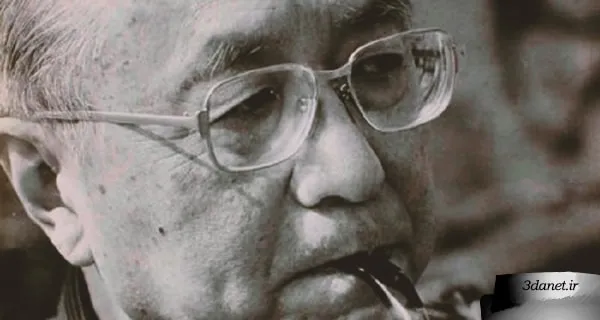
Toshihiko Izutsu (1914–1993), the renowned Japanese linguist, philosopher of language, one of the founders of a contemporary philosophy known as “Oriental Philosophy,” literary scholar, comparative religionist, Islamicist, and particularly a celebrated scholar of the Qur’an (born in Tokyo), is apparently better known in Iran than in his native Japan.
Izutsu passed away on January 7, 1993 (17 Dey 1371 in the Iranian calendar). He was a comprehensive and, to some extent, unknown figure in contemporary philosophy and religious studies. He had learned thirty-five languages, mastering at least seventeen of them, including Arabic, Hebrew, Persian, Sanskrit, Pali, Russian, Latin, Greek, and Chinese.
I mentioned a little earlier that Izutsu is apparently better known in Iran than in his native Japan. So as not to speak without evidence, just one illustration of Izutsu’s obscurity in Japan follows. A book on philosophical thought in contemporary Japan was originally written in Japanese. The publisher of the English translation describes it as a rare resource in the English language. This book is titled “A Survey of Recent Japanese Philosophical Thought from 1862 to 1996.” In this book of over three hundred pages, Izutsu is addressed in less than a single page (p. 278), and that too in the appendix at the end of the book.
In Iran, however, a unique documentary on the life, ideas, and legacy of Izutsu has recently been made and screened. This documentary, titled “Sharghi” (The Easterner), is the work of Iranian documentary filmmaker Masoud Taheri and a product of “Chehrdad Film.”
The documentary “Sharghi” was filmed in 12 countries around the world, including Iran, Japan, France, Switzerland, Italy, Turkey, Canada, the United States, Syria, Spain, and Russia. The interviewees in this documentary spoke a total of 11 languages. Approximately 120 people were interviewed for the making of this documentary, and after evaluation, ultimately more than 60 figures, including friends and students of Izutsu, as well as Izutsu scholars, experts, and political figures, speak about Izutsu’s life, works, ideas, and legacy.
In the documentary “Sharghi,” among others, the following individuals speak about Izutsu or issues related to him: Seyyed Hossein Nasr (Izutsu’s director at the Iranian Institute of Philosophy before the revolution), Mehdi Mohaghegh (friend and colleague of Izutsu), the late Dariush Shayegan (friend and colleague of Izutsu), Hermann Landolt (friend of Izutsu), Nader Ardalan (friend of Izutsu), Noushafarin Ansari (friend of Izutsu), Kōsei Morimoto (senior Buddhist monk of the “Tōdai-ji” temple in Nara, Japan, Japanese Islamicist, and friend of Izutsu), the late Toshio Kuroda (prominent student of Izutsu), Akiro Matsumoto (prominent student of Izutsu and the only Japanese student of the late Seyyed Jalal al-Din Ashtiani), Gholamreza Aavani (student of Izutsu), Nasrollah Pourjavady (student of Izutsu), James Morris (student of Izutsu), Pierre Lory (student of Izutsu), Yoshitsugu Sawai (student of Izutsu), Gholam-Ali Haddad-Adel (student of Izutsu), Walid Saleh (renowned Qur’anic scholar), Robert Wisnovsky (former director of the Institute of Islamic Studies at McGill University and researcher of Islamic philosophy), Pirouz Mojtahedzadeh, Karim Mojtahedi, Mostafa Malekian, Eisuke Wakamatsu (Japanese Izutsu scholar), Bahman Zakipour (Iranian Izutsu scholar), Shin Nomoto (professor and specialist in Ismaili philosophy at Keio University and one of Izutsu’s successors at that university), Seyyed Mostafa Mohaghegh Damad, Ahmad Pakatchi, Jean Connell Hoff (translator of Izutsu’s works), Mehrdad Abbasi, Seyyed Hadi Khamenei, Abdolrahim Gavahi (former Iranian ambassador to Japan), and Seyyed Abbas Araghchi (former Iranian ambassador to Japan).
The making of this documentary took four years (from 1393 to 1397 in the Iranian calendar). The documentary “Sharghi” has so far been screened in Iran and Japan, and, apparently, efforts to screen it in other countries (including soon in Canada) as well as in other cities in Iran are still ongoing.
This 130-minute documentary is divided into four main parts: the first part provides an account of Izutsu’s life in childhood, adolescence, and youth in Japan. The second part presents an account of Izutsu’s migration to the West, and the third part deals with Izutsu’s migration to Iran. In the second and third parts of his life, Izutsu gradually becomes an internationally renowned researcher and professor. The fourth part is devoted to Izutsu’s sudden departure from Iran as a result of the 1979 revolution and his return to Japan until his death in his birthplace.
Among the important topics addressed in various parts of this documentary, the following can be mentioned: 1. The influence of various individuals of different nationalities, especially Japanese, Tatar, Russian, Iranian, Canadian, Swiss, and French, in shaping Izutsu’s intellectual system; 2. The genealogy of Islamic studies in Japan and Izutsu’s role in shaping and directing it; 3. The political roots of Izutsu’s philosophical thought; 4. The influence that Izutsu’s thought and philosophy can have on today’s political actions; and 5. The possibility or impossibility of forming an Eastern and Asian union, like the European Union, based on Izutsu’s Eastern philosophy.
In this short essay, it is impossible to address all or even most of the aspects and topics of this documentary. Nevertheless, this note provides a fleeting account of Izutsu through the lens of the documentary’s inquisitive and globetrotting camera. This writing, however, goes beyond the documentary here and there and attempts, so to speak, to open a written window onto the visual window of this documentary.
The publication of the note you are about to read coincides with the twenty-sixth anniversary of Izutsu’s death.
2. Izutsu, Weary of the “Dry Asceticism” of Zen
Izutsu grew up in a more or less wealthy family. He had a merchant father who was strict and devoted to Zen Buddhism. His father’s religious strictness, which forced Izutsu from a young age to practice asceticism according to the Zen rite, led Izutsu, in order to escape his ancestral faith, first to delve into the labyrinthine world of ancient languages and then, through linguistics, to turn to the “pure wine” of philosophy and the study of other religions, and once again to return to understanding his ancestral tradition with a new vision.
According to Masataka Takeshita (Islamicist and specialist in Islamic philosophy) in this documentary, “Because he was forced to perform Zen ascetic practices from childhood, Izutsu really hated [the] Zen [rite].” Studying at a Christian middle school led him to become acquainted with the Judeo-Christian world for the first time, an acquaintance that later aided him in his Islamic studies.
Studying the Old and New Testaments made him aware of the importance of language in the world of religions. In his early twenties, Izutsu became interested in the Arabic language. He studied Arabic and traditional Islamic studies under a Tatar Muslim scholar named Abdurreshid Ibrahim. After two years, upon Abdurreshid’s introduction, Izutsu hastened to the presence of Musa Jarullah, a prominent Tatar Muslim scholar, to perfect his knowledge of Arabic. Jarullah was, among other things, proficient in Arabic, Persian, Russian, and Turkish.
The very young Izutsu’s discipleship under Abdurreshid and Jarullah, which was not limited to learning Arabic but, more importantly, was a lesson in traditional Islamic studies, is of particular importance. Jarullah was perhaps one of the most worldly and multilingual Sunni scholars of his time. Jarullah, who had also traveled to Iraq and Iran and there engaged in critical dialogue with Shiites as well as some Shiite mujtahids of the time, generally had a critical inclination towards Shiism and had written a famous book titled “al-Washi‘ah fi Naqd ‘Aqa’id al-Shi‘ah” criticizing Shiism.
However, although Izutsu in his memoirs recalls Jarullah with great fascination, it does not appear that Izutsu was influenced by Jarullah’s critical inclinations towards Shiism, for in his period of intellectual maturity, Izutsu devoted his research enthusiastically to Shiite philosophy and theoretical mysticism.
Izutsu, who had begun his university studies in economics, soon returned to his long-standing love of language and literature, and, as if in the spirit of “wash your pages if you are a fellow student of mine,” he threw his accounting books from a bridge into the river (the documentary shows an image of that bridge) and earned his doctorate in linguistics.
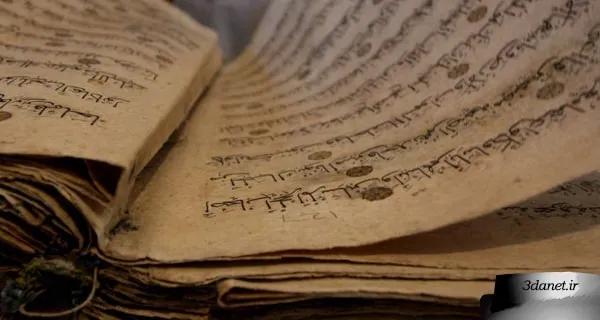
Izutsu, now a capable Arabist, translated the Quran into Japanese between 1957 and 1958, publishing it in three volumes—a magnificent and precise translation that remains a classic reference in Japanese Quranic studies. The Quran had, of course, been translated into Japanese before Izutsu, but those translations were done from European and Chinese languages, not the original Arabic. For the first time in the history of Japanese language and literature, Izutsu translated the Quran directly from the original Arabic into Japanese.
3. Reviving the “Spiritual Philosophy of the East”
In his intellectual journey, Izutsu aimed to demonstrate the “universality” of mystical thought to Easterners and the world at large. He sought to trace the various manifestations of the “Sacred” in different Eastern cultures. Izutsu was intent on reviving the “World of Imagination” or the “Spiritual Worlds.”
In this respect, his intellectual project aligns with that of Henry Corbin, the famous French philosopher, Iranologist, and scholar of Shiism, who was a friend of Izutsu. Indeed, Izutsu, like Corbin, believed that contemporary humanity had forgotten the “Spiritual Worlds” and the “World of Imagination” and had fallen into the “trap of nihilism.” Furthermore, Izutsu, as an Easterner, believed that for engaging with contemporary philosophy as well as Orientalism, the comparative study of Eastern philosophies could provide a philosophical response in the encounter with Western philosophy.
From Izutsu’s perspective, the connecting point of the various forms of “Eastern spiritual philosophies” was something that could be called the “metaphysics of nothingness.” From the viewpoint of this metaphysics, existence is not the most fundamental layer of reality; rather, existence is rooted in nothingness, existence is a manifestation of nothingness; primacy belongs to nothingness, not existence. This nothingness, however, does not mean void and emptiness; on the contrary, all forms of existence are rooted in nothingness, a generative nothingness that transcends being itself, a nothingness that is simultaneously more existent than existence and yet non-existent. In a word, Izutsu’s argument was that to escape “nihilism,” one must return to “nothing” (nothingness).
From the perspective of the “metaphysics of nothingness,” deep within the layers of human consciousness lies a kind of latent knowledge of nothingness, and the goal of the “Spiritual Philosophy of the East” is the recollection of nothingness, a nothingness that is everything, a nothingness that is and yet is not, and which connects the various “spiritual” cultures of the East.
In breathing new life into the “Spiritual Philosophy of the East,” Izutsu particularly undertook a comparison of Islam with Daoism (Taoism). In his path of comparing Islam and Daoism, he authored, among other works, the book “Sufism and Taoism.” This work has been translated into Persian in a not entirely polished rendition. In this work, he compares the mysticism of Ibn Arabi with ancient Chinese thought, as manifested in Daoism. Izutsu’s main work in the comparative study of Eastern philosophies or traditions, however, is manifested in the book “Consciousness and Essence” in Japanese, an important book that has not been translated into Persian or English. In this book, he undertakes a comparison of Islam, Buddhism, Hinduism, Taoism, Judaism, Christianity, and Greek Platonic thought.
Another comparative work by Izutsu that has been translated into Persian is “Creation, Existence and Time.” According to Bahman Zakipour, the Iranian Izutsu scholar who has a prominent presence in this documentary and was one of its main consultants, “The book ‘Creation, Existence and Time,’ which has not attracted much attention in Iran, is far more important than ‘Sufism and Taoism,’ because it was written a step beyond the perspective of ‘Sufism and Taoism’ and is closer to the mature stages of Izutsu’s thought.”
Among those who influenced Izutsu's thought on the path to reviving the "Spiritual Philosophy of the East," the most important is Henry Corbin. One can also name Haj Mulla Hadi Sabzavari, Jung, Jacques Derrida, Louis Massignon, Rudolf Otto, and Mircea Eliade. Izutsu associated with some of these thinkers in an intellectual circle called "Eranos," which met annually in Switzerland, although Izutsu was not formally a member of this circle. Izutsu became enamored with Iranian thought after hearing a couplet from Haj Mulla Hadi Sabzavari's *Manzumeh* in Mehdi Mohaghegh's class in Canada, and his first work related to the field of Iranian philosophy was the translation and commentary of the *Manzumeh* into English, together with Mehdi Mohaghegh.
It is worth noting that the "East" in the "Spiritual Philosophy of the East" and in Izutsu's intellectual system has two distinct meanings. The first meaning is the "metaphysical East," a non-terrestrial East mentioned in Suhrawardi's philosophy, which Izutsu sought to revive. The second meaning of "East" is its geographical, worldly sense, which from Izutsu's perspective covers a vast expanse. This expanse begins in Japan and moves westward, passing through India, China, and the Middle East, and also encompasses Greece. Therefore, contrary to the general opinion of the Japanese, who believed the East ended at the borders of India, from Izutsu's viewpoint, this boundary should be extended, due to a shared heritage, to Iran and then to the western borders of Greece.
Ancient Greece has always been considered the foundation of Western thought. Hence, including Ancient Greece within the "Spiritual Philosophy of the East" seems, if not problematic, at least ambiguous. Izutsu, however, believes that "if we go deep into Ancient Greek philosophy, and truly seek to explain it clearly, we find that elements of Eastern thought are abundant in it. This has nothing to do with having or not having historical influences; rather, the structure of Greek thought possesses a shared and necessary illuminative problem" ("Darkness and Light at the End of the Twentieth Century, a Conversation with Toshihiko Izutsu," translated from Japanese by Bahman Zakipour).
For an account of various aspects of Izutsu's philosophy, see the book by Eisuke Wakamatsu, a Japanese Izutsu scholar, an author who also has a prominent presence in the documentary "The Eastern." Wakamatsu's book is titled "Toshihiko Izutsu and the Philosophy of the Word: In Search of the Spiritual East" and has been translated from Japanese into English. This work is the only comprehensive book available in English on the various aspects of Izutsu's thought (and not just his Islamic studies). However, several other books about Izutsu are available in Japanese. In a month or two (specifically in February 2019), Bahman Zakipour, an Iranian Izutsu scholar, will publish a book in Japanese critiquing and examining Izutsu's philosophy, titled "The Comparative Philosophy of Toshihiko Izutsu: The Struggle Between the Divine and the Social."
4. Unveiling the Mysteries of the Quran
Izutsu, as a comparative philosopher and Islamicist, could not ignore the Quran on the path to reviving the "Spiritual Philosophy of the East." Although Izutsu's Quranic studies historically precede his later works on "Eastern philosophy," perhaps his Quranic research can also be considered part of his intellectual project to revive the "Spiritual Philosophy of the East."
He viewed the Quran as a coherent whole that, at the same time, does not easily reveal its coherence to the critical and searching reader. The Quran, as it were, is like a beloved who reveals herself and then withdraws. Discovering the multifaceted and layered relationship of Quranic concepts with the aid of modern linguistics is one of Izutsu's contributions or scholarly aids in modern Quranic studies.
From Izutsu's perspective, a Quranic concept finds its ultimate meaning based on its semantic relationship with the intertwined network of other Quranic concepts within the heart of this book itself, and not in a framework isolated from that semantic network, nor based on a worldview independent of the Quran, nor even based on the worldviews from which the Quran borrowed concepts. For example, according to Izutsu, the word "Allah" was used in pre-Prophetic Arabia, but in the semantic network of the pre-Prophetic Arab world, "Allah" sat alongside "aliha" (gods), was not in opposition to them, and was a god among gods, albeit more important than them.
In the Qur’anic language, however, although “Allāh” is borrowed from the pre-Prophetic Arab linguistic tradition, this Allāh is no longer that Allāh. Rather, within the semantic network of the Qur’an, Allāh assumes a central position; there is no longer any talk of goddesses, and indeed belief in goddesses is placed in opposition to belief in Allāh, and the origin, return, and constant governance of all things revert to Allāh, and to Him alone.
The monotheistic vision of the Qur’an also found expression in Islamic architecture within Islamic civilization. The architectural manifestation of Islamic monotheism in this film reveals itself through an emphasis on the dome of the Sheikh Lotfollah Mosque and the dome of the Shah Mosque, with their unique designs. The monotheistic vision of the Qur’an is also the inspiration and source for the thought of the “Unity of Being” in Sadrian philosophy, which fascinated both Izutsu and Henry Corbin.
5. A Critical Look at the Documentary
At the beginning of this article, I noted that this film is a unique documentary about Izutsu. In further explanation of this judgment, it can be said that this film is the only documentary ever made about Izutsu in any language. Apart from a Hard Talk television program in Turkey—which, moreover, was solely about Izutsu’s Islamic studies—no film has been made about Izutsu, neither in Japan nor anywhere else in the world, until now.
Nevertheless, here and there, points come to mind regarding this documentary whose observance could have enhanced its craftsmanship. The first point is that whenever a quotation from Izutsu appears, it would have been more appropriate to cite its source. This could have served as a good pretext for acquainting the viewer with Izutsu’s various works. But as it stands in the documentary, when a quotation from Izutsu is presented, there is no reference. Observing this point could have also added to the documentary’s precision and richness. Masoud Taheri, the director of this documentary, responds to this criticism by saying: “The references were included in the initial versions of the documentary, but many viewers repeatedly objected, asking us to remove the references because this is a film, not a book.” Nevertheless, according to the director himself, he is currently preparing a new edit of the documentary in which the references will be present.
The second point is that in the second half, the documentary contains short, silent moving images of Izutsu’s presence at the “Iranian Institute of Philosophy” in Tehran. In these images, which according to the documentary’s narration are being shown for the first time, Seyyed Hossein Nasr is giving a lecture, and Izutsu is seated among the attendees, listening. However, no audio and/or video of Izutsu’s own lectures is played in this documentary. Wherever a quotation from Izutsu appears, his voice and image have been reconstructed, and there is no trace of Izutsu’s original voice and image.
This matter might well lead the attentive viewer to ask: Was no audio or video of Izutsu delivering a lecture available to the documentary’s makers? Masoud Taheri, the director of this documentary, responds to this question by saying: “No film of Izutsu exists. Finding even these few moments of short film [in the Iranian archives] was something akin to a miracle. Japanese television networks refused any kind of cooperation on this matter. Apart from a few photographs and one audio recording, nothing else of Izutsu is available. In this respect, it must be said that although Izutsu passed away in 1993, it is as if he lived in 1920.”
6. “I’m Going to Sleep a Little”
At the end of the documentary, images of Izutsu’s personal room in his home are presented, along with an account of the day of his death. On a table in his home, a small plaque catches the eye on which the word “Nothing” (in Japanese: Mu) has been calligraphed by Izutsu himself in black ink on white paper. On January 7, 1993 (17 Dey 1371 in the Solar Hijri calendar), Izutsu fell to the ground in his home, but under the impression that it was nothing serious, he told his wife, “I’m going to sleep a little.” He suffered a cerebral hemorrhage and never awoke from sleep. In the words of Rumi, however, “He slept, but his fortune and felicity did not sleep” (Masnavi, Book Three).
Izutsu is perhaps far better known today than when he closed his eyes to the world. Nevertheless, he is a philosopher and scholar of religion who still remains to be discovered. According to Masoud Taheri, the director of this documentary, perhaps around ninety percent of Japanese people have not even heard Izutsu's name. One can hope that this obscure Japanese philosopher, who made Iran his second home in the atmosphere of reviving the "Spiritual Philosophy of the East," will in the future be introduced far more than today to Iranians, Japanese, and enthusiasts of philosophy and comparative religion throughout the world.
.
.
"I'm Going to Sleep a Little,"
An Iranian Account of the Japanese Philosopher Izutsu
Author: Yaser Mirdamadi
.
.

Discussion0 comments
No comments yet; let yours be the first voice.