اندیشهفلسفهخردگفتگوحکمتمعناپرسشفرهنگ
Political Science
Rationality Coming to Its Senses: A Narrative from In Praise of Reason
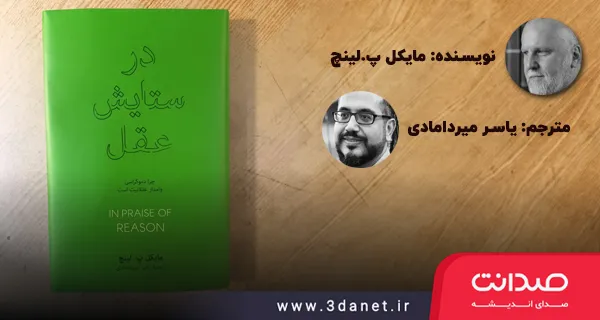
The book *In Praise of Reason* seeks to show that skepticism toward rationality is a political mistake, because democracy is indebted to rationality. In an account of this book, Yaser Mirdamadi examines a skeptical defense of scientific rationality and the responses to the skeptics' objections.
Rationality Coming to Its Senses
A Narrative from “In Praise of Reason”
Yaser Mirdamadi
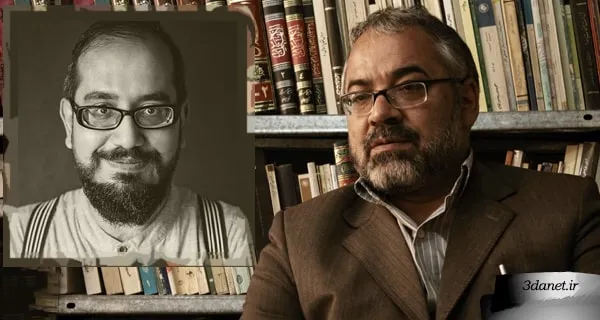
The following text is the transcript of a talk by Yaser Mirdamadi (translator of the book In Praise of Reason) at the session “Unveiling and Review of the Book In Praise of Reason,” organized by the “New Perspective Circle.”
Listen to the audio of this session here
.
.
1. Introduction
“In Praise of Reason,” subtitled “Why Democracy Depends on Rationality,” by Michael Patrick Lynch (born 1966), a professor of philosophy at the University of Connecticut in the United States, was published in 2012 by the MIT Press in the U.S., and its Persian translation by the author, Yaser Mirdamadi, was published in late 2023 / mid-1402 Solar Hijri by Nashr-e No in Tehran.
The main aim of the book is to critique skepticism, particularly skepticism toward rationality. It is no exaggeration to say that in philosophy, from ancient Greece to the present, skepticism has been the problem of problems. But what distinguishes this book is that it goes beyond the conventional examination of skepticism and shows that skepticism is not only a philosophical error but also a political one. Given the importance of this subject, allow me to offer three quotations: “The idea that everything is arbitrary undermines a fundamental principle of civil society; that principle is: we are obliged to explain our actions to our fellow citizens” (p. 3). Elsewhere he says, “When we speak of a democratic state, we partly mean that such a state is, at least in principle, governed by reason” (p. 53). And also:
“Democratic political engagement requires that we view our fellow citizens as rational, autonomous agents who, under the rule of law, deserve equal respect. [...] If I make a claim against you and you demand a reason from me, and I refuse to provide one, it is clear that I have not respected you as an equal judge. Likewise, if the government does not explain its use of political power, it has not respected you.” (p. 92).
2. Two Types of Skepticism
To understand the place and importance of the book’s discussion in critiquing skepticism, it is necessary to point out at the outset that Lynch makes a fateful distinction between two types of skepticism: 1. skepticism about knowledge, 2. skepticism about rationality. He argues convincingly that defending knowledge does not logically entail defending rationality. In the sense that we may know something (thus have knowledge) but be unable to justify it to others (thus lack rationality). So, knowing is one thing, and giving reasons is another. In other words, we may know something but be unable to convey our knowledge to others in a reasoned manner. Lynch focuses almost all his attention in the book on defending (the possibility and realization of) rationality, not on defending (the possibility and realization of) knowledge. As an aside, if you are interested in defending knowledge, I translated another book on this subject about ten years ago: “Fear of Knowledge: Against Relativism,” by Paul Boghossian, translated by Yaser Mirdamadi, Tehran: Kargadan, 1392.
Let me return to the main point. Lynch means two things by rationality: 1. The business of giving reasons—when I make a claim and another demands a reason from me, and I provide them with a reason, I have engaged in the business of giving reasons. Although this may seem very simple and even trivial at first glance, a mountain of philosophical and political arguments has been mounted against this very simple business of giving reasons. 2. Lynch's second meaning of rationality is certain epistemic principles, such as logic and observation, which are used in scientific reasoning. So, rationality refers to both the rational process and the rational outcome. Ultimately, this book is a philosophical defense of scientific rationality. This philosophical defense, however, is not merely epistemological; it also draws serious substance from political philosophy.
But defenses of rationality are not scarce in the treacherous marketplace of ideas. To be honest, rationality has its own eulogists. The eulogists of reason may not roam the Haft-e Tir Expressway, but throughout history, they have not hesitated to silence esoteric traditions in the name of "anti-superstition." What distinguishes Lynch's defense of rationality from orthodox defenses is that his defense is skeptical. In other words, he raises his hands in surrender to almost all skeptical arguments against rationality. Lynch's situation is like that of films where the story's hero is on the verge of execution, and just as the villain, with a triumphant smile and gleaming eyes, is about to pull the trigger, a hand emerges from the unseen and, at the last moment, turns the barrel of the pistol away from rationality's temple; the bullet of skepticism whistles past rationality's ear, grazing it and striking the stone.
In other words, Lynch defends rationality, but a rationality that has been thinned down by the relentless, pounding blows of skepticism and has carefully drawn in its limbs. In other words, to critique skepticism, he adopts the color of skepticism and, like a mole, infiltrates the ranks of the skeptics to learn their tricks and, at the critical moment, sets fire to the harvest of skepticism. Let me provide a key quote on this matter to show how critical and minimal his defense of rationality is: "There is no elixir of reason that will convince everyone, regardless of their values, commitments, or psychology, of what is right and reasonable." (p. 146).
3. Three Skeptical Objections to Reason
Specifically, Lynch addresses three skeptical objections to rationality:
1. That reason plays no role in our individual and collective decision-making; in technical terms, reason has no causal role in human psychology,
2. Even if, hypothetically, reason does play a role in our decision-making, reason itself cannot be rationally defended because reason is groundless,
3. Even if, hypothetically, reason does play a role in our decision-making and reason can be rationally defended, reason is incapable of representing objective truth.
In what follows, I will elaborate on all three skeptical arguments and briefly state Lynch's responses to them. However, I should caution that this narrative is not intended to replace reading the original book, but rather to provide only an overview of the book's themes to serve as a study guide.
3.1 Reason is Incapable
The first skeptical objection Lynch addresses is that, to use a jurisprudential expression, reason is impotent. That is, reason is powerless and plays no role in our decision-making. From the skeptical viewpoint, the decision-making role in human psychology is played not by reason but by intuition and emotion, and intuition and emotion have nothing to do with reason. The irony is that a growing body of research in neuroscience and cognitive science over recent decades has provided evidence in favor of reason's impotence. In a rare case that occurred in the second half of the nineteenth century, but for which new supporting evidence has recently been presented by cognitive scientists, an explosion drove a rod into the frontal lobe of a foreman named Phineas Gage—the part of the brain responsible for emotions and decision-making. Gage miraculously survived and quickly returned to normal life. But although his logical faculties and memory remained intact, he no longer had the power to make decisions. In Lynch's words, "without guiding emotions, nothing seemed more valuable to him than anything else" (p. 27). Examples of this kind, according to skeptics, showed that emotions and feelings are all-powerful, that they drive human beings forward, and that reason is ultimately the slave of the emotions.
Lynch does not deny the findings of cognitive science, but he takes issue with their interpretation. In response, Lynch critiques two common conceptions of reason in the Western intellectual tradition: 1. The Platonic-Stoic tradition of reason, in which reason rules over the person, and emotions and feelings are devoid of rationality and obey reason's commands. 2. The Humean tradition, according to which emotions and feelings are again devoid of rationality, but in this picture, emotion rules over the person and reason obeys the commands of the emotions. He critiques the common ground of both traditions: that reason is separate from emotions and intuition. He shows that many of our emotions are rational, and that our rationality works in cooperation with our emotions. For example, the anger we feel at the oppressor's injustice is of the emotional kind, but it is a rational emotion, such that if someone were indifferent to the oppressor's injustice, they would be deserving of blame. Emotions are a source of rationality. If we do not consider emotions as excluded from rationality, and see rationality as intertwined with emotions, then reason has a causal effect. Furthermore, Lynch provides historical evidence that reasoning has been effective in changing people's minds. An example is the change in the general American public's opinion toward people of color, which has undergone a significant positive change compared to 50 years ago. For Lynch, this is the effect of education, which is built upon rational persuasion.
3.2 Reason is Groundless
But the second objection was that even if, hypothetically, reason does play a role in our decision-making, reason itself cannot be rationally defended. Reason is groundless. Lynch devotes most of the book to laying out this objection and responding to it, and it is precisely at this point that the skeptic seems, until the very last minute, to be winning the game of skepticism. The skeptical objection is that one cannot defend reason's truth-conduciveness using reason itself, because this would be a form of circular reasoning. It is like a bank asking me for a guarantor to get a loan, and the guarantor I introduce to the bank is not approved by the bank, and to guarantee the guarantor, I myself guarantee the guarantor. Similarly, one cannot defend the reliability of sense perception (such as seeing, hearing, touching, etc.) by appealing to sense perception itself. This would be circular reasoning. One cannot defend the validity of induction by arguing that past inductions have worked out correctly so far, because this would be appealing to induction to justify induction. One cannot defend the validity of logic through logical argument, because this would be appealing to circular reasoning. Circular reasoning is reasoning that uses the very thing it seeks to justify. Circular reasoning is not valid. In fact, it is not reasoning at all; it is pseudo-reasoning, or in other words, a sham argument.
The skeptic says we have no valid argument in hand to defend reason, and even worse, we cannot have one. We possess only a handful of pseudo-arguments. The seemingly inevitable conclusion is that rationality itself is irrational. This is not only philosophically disheartening but also politically catastrophic. For skepticism undermines civil society and democratic principles, undermines a society that is supposed to be governed on the basis of collective reason and whose rulers are rationally accountable for their governance. If there is no reason, there will be no collective reason, and from that, neither democracy nor civil society will emerge. But as we shall see, Lynch artfully ends the game of skepticism at the eleventh hour with a single stroke in favor of rationality.
But before arriving at Lynch's positive solution, it is worth mentioning solutions that have been proposed in response to the challenge of rationality and which, in Lynch's view, are indefensible. One solution is that if reason cannot be defended and reason itself is irrational, we should replace reason with tradition. Lynch accepts that tradition is inescapable and that rationality, ultimately, is itself a kind of tradition. But we are faced with different, and indeed contradictory, traditions. Which tradition should we side with? If it is said that everyone should side with the tradition in which they were born and raised, this smacks of determinism. Traditions are not prisons, and they will be generative only if they do not become prisons (this last point, of course, is not in the book, but it can be added in critique of Lynch's view on opting for tradition over rationality). And if it is said that traditions are incommensurable, meaning each tradition can only be measured by the internal criteria of that tradition and not by external ones, then we face a dangerous situation: in such a state, undemocratic traditions cannot be criticized. So, while tradition is important, tradition is not a substitute for rationality.
But another solution is to say that rationality is natural and inescapable, and that anyone who questions rationality lacks common sense, and we have no further discussion with them. As the saying goes, "Silence is the best answer to fools." Lynch's response is that we are supposed to be accountable for our commitments in the public sphere, and what commitment is more fundamental than the commitment to reason? If we have no argument for our fundamental commitment to reason, and indeed call anyone who demands an argument a fool, we have behaved anti-rationally and anti-democratically, and one cannot defend rationality through hostility to rationality.
So if these dead ends cannot be taken, what is the way to defend rationality against the challenge of skepticism? The creative solution Lynch proposes involves a wholesale concession. He accepts that in the face of skeptical challenges, a theoretical defense of the truth-conduciveness of rationality is not possible. To theoretically defend the truth-conduciveness of rationality against skeptical challenges, we must appeal to reason, and this becomes a circular argument, and a circular argument is no argument. But the distinction Lynch drew between knowledge and rationality serves him here. The defender of rationality can still claim that scientific rationality yields knowledge, but she cannot mount a theoretical argument to convince the skeptic. Although this damages the theoretical rationality of rationality, it does not necessarily damage the presumed knowledge-yielding nature of rationality. To understand this difference, consider this example (the example is mine and not in the book): A person has a malevolent enemy, and this enemy, who is capable, persistent, and intelligent, masterfully designs a scene to make the person appear to be a murderer. His staging succeeds, all the evidence against the person seems convincing, the person's defenses in court are ineffective, and he is convicted in court. But at least the person himself knows that he is not a murderer, even if he has no evidence against the murder charge. In such a case, the person has knowledge but lacks rationality. The defender of scientific rationality may, like this person, possess knowledge, even if she cannot convince the skeptical governing body of the theoretical rationality of science.
اما اگر دفاع لینچ تنها همین مقدار باشد مشتپرکن نیست. این دفاع تنها میگوید امکان معرفت پیش روی مدافع عقلانیت علمی گشوده است حتی اگر نتواند از عقلانیت علمی دفاع نظری کند. لینچ در ادامه میگوید اگر امکان دفاع نظری از عقلانیت در مقابل چالش شکاکیت بسته باشد، امکان دفاع از موضع عقلانیت عملی کاملا گشوده است. پیش از طرح استدلال او بگذارید تمایز عقلانیت نظری و عملی را، که لینچ در کتاب توضیح نمیدهد، با هم مرور کنیم: در عقلانیت نظری از واقعنمایی و صادق بودن یا دستکم موجه بودن ایدهای دفاع میکنیم. مثلا دلایلی میآوریم که میگوید خدا وجود دارد یا به تعبیر دیگر باور به گزارهی «خدا وجود دارد» موجه است. در عقلانیت عملی اما از سودمندی (فردی یا جمعی) ایدهای دفاع میکنیم. مثلا استدلال میکنیم باور به خدا برای سلامت روان مفید است، صرف نظر از اینکه خدا وجود داشته باشد یا نه.
لینچ راه مشابهی برای دفاع از عقلانیت عملیِ رویّهی علمی در پیش میگیرد. ادعای او این است که هر جامعهی پیشرفته و عدالتطلبی برای عقلانیت علمی جایگاه ممتازی قائل میشود. مهم است توجه کنیم که برای دفاع از این ادعا او به دستاوردهای عقلانیت علمی اشاره نمیکند. زیرا متوجه است که اگر شکاک از ما مطالبهی دلیل در باب ریشهی عقلانیت علمی بکند، برشمردن میوههای عقلانیت علمی او را تحت تأثیر قرار نخواهد داد. برای فهم بهتر به این مثال من دقت کنید: پدر یا مادری را در نظر بگیرید که تفریح فرزندش را مصداق اتلاف وقت میداند. فرزند نمیتواند برای دفاع از خودش فهرستی از سالمترین و کمخرجترین تفریحهای خود ارائه کند. زیرا پدر یا مادر اصل تفریح را اتلاف وقت میدانند چه تفریح سالم و کمخرج، چه غیر آن. اکنون شکاک، اصل رویّهی عقلانیت علمی را به زیر پرسش کشیده و برشمردن دستاورهای خیرهکنندهی عقلانیت علمی او را تحت تأثیر قرار نخواهد داد.
به جای این راه، لینچ روشی عینی و بی طرف برای بررسی عقلانیت عملیِ رویّههای مختلف پیش مینهد و سپس نشان میدهد که در میان رویّههای مختلف آن رویّهای برنده است که بیش از همه به رویّهی علمی نزدیک است. تأکیداً میگویم که با این راه او از عقلانیت عملی (و نه عقلانیت نظریِ) علم دفاع میکند. او بدین سان نشان نمیدهد که عقلانیت علمی واقعنما است و بهترین گزارههای علمی ما صادق یا حتی موجه اند اما نشان میدهد که اتخاذ عقلانیت علمی به سود جامعهای پیشرفته و برابریطلب است. او این طریقه را «بازی روش» مینامد. برای فهم سادهی این روش این مثال را در نظر بگیرید. دیگربار مثال از من است و در کتاب نیست: فرض کنید که در مهمانی تولد، ۵ نفر حضور دارند و بریدن کیک تولد به شما سپرده شده است. تنها یک شرط وجود دارد و آن این که پس از تکه کردن کیک شما نخستین کسی نخواهید بود که تکه کیکتان را برمیدارید. در چنین حالتی عقلانیت عملی (یعنی بیشینه کردن منافع) اقتضا میکند که شما کیک را به شکل کاملا مساوی به ۵ قسمت تقسیم کنید. زیرا اگر آن را به چهار تکهی کوچکتر و یک تکهی بزرگتر تقسیم کنید، از آنجا که شما نخستین فردی نخواهید بود که تکه کیکاش را برمیدارد، شاید یکی از ۴ مهمان دیگر تکه کیک بزرگ را برداشت و سهم شما کوچکتر شد.
«بازی روش» وضعیت فرضی مشابهی را ترسیم میکند. در بازی روش فرض میشود که قرار است شما ساکن سیارهای شبیه زمین شوید و در آنجا اجتماعی شبیه اجتماع انسانی تشکیل دهید. وضعیت شما در آن سیارهی شبهزمین مشابه وضعیت شما در زمین خواهد بود، یعنی شما همچنان انسان خواهید بود با این تفاوت که طبقهی اجتماعی، رنگ، نژاد، جنسیت، گرایش جنسی، سیاسی، مذهبی، سطح تحصیلات، ملیت و سن خود را نمیدانید. شما ممکن است روی زمین مرد سفید میانسال ثروتمند دگرجنسگرای مسیحی باشید ولی در سیارهی شبهزمین زن سیاهپوست مسنّ همجنسگرای فارغدین طبقهی متوسط از کار در آیید. حال قرار است شما در بازی روش تعیین کنید که چه روشهایی برای سیاستگذاری بر روی سیارهی شبهزمین حاکم باشد. بهتر است رویّهای را انتخاب کنید که روی سیارهی شبهزمین از هر طبقهی اجتماعی، رنگ، نژاد، جنسیت، گرایش جنسی، سطح تحصیلات، ملیت و سنی که از کار درآمدید، آن رویّه به سود شما باشد. به تعبیر ساده بهتر است رویّهی شما برابریطلبانه و به سود همه باشد.
Which practice do you choose? Lynch argues that if you pursue your own interests and follow the logic of the game, you will prefer open practices to closed ones. That is, you will prefer transparent, intersubjective, repeatable, adaptable, and natural practices to opaque, subjective, unrepeatable, unadaptable, and unnatural ones. Transparent practices are accessible to everyone, intersubjective practices do not belong to a specific group or class, repeatable practices can be trusted more, adaptable practices can be implemented in any situation, and more people benefit from natural practices. Lynch argues that the scientific method possesses all the characteristics of an open practice. If we are to divide the cake of practices, it is better to choose the scientific practice because it is fairer and more conducive to progress. If the scientific practice is fairer and more conducive to progress in the hypothetical quasi-Earth situation, it will be the same on the real Earth. On this basis, scientific rationality possesses practical rationality. Simply put, science is to everyone's benefit.
3.3 Reason and Objective Truth
The third objection the skeptic raised was that even if it can be shown that reason influences our decisions and even if a firm basis for rationality can be found, reason remains incapable of demonstrating objective truth. The third objection is a kind of return to the objection concerning theoretical rationality. I must confess that Lynch's exposition in this section is the most condensed and complex of all. This may not be much of a flaw, because the issue is difficult, as Parvin E'tesami said:


Discussion0 comments
No comments yet; let yours be the first voice.