Philosophy
From Relativism and Hadith Studies to the Dispute over 'Islamic Medicine': An Essay by Yaser Mirdamadi
Relativism has endured despite extensive criticism throughout the history of philosophy and has left its mark on the Islamic tradition; from a review of the Routledge Handbook of the Philosophy of Relativism to the impact of sectarian conflicts on the relativization of religious truth, a report by Yaser Mirdamadi.
Adventures of Religion and Philosophy (2)
From Relativism and Hadith Studies to the Dispute over 'Islamic Medicine'
Yaser Mirdamadi
Alongside the hustle and bustle of daily life and far from the public eye, adventures unfold in the labyrinth of religion and philosophy in Iran and the world that may not have a direct or immediate effect on our lives. After all, we are not all scholars of religion and philosophy, and perhaps we do not even have a remote hand in these matters. But experience has shown that the seemingly quiet intellectual events around us can, in the medium or long term, leave a lasting impact on our collective life.
In "Adventures of Religion and Philosophy," we address events that, although currently unfolding in Iran or the world, their sound may be heard later. These events could be the publication of a book, article, or journal; they could be a lecture, debate, dialogue, or intellectual dispute; or the pursuit of a thinker, the tracking of a trend, or the narration of a virtual wave that has occurred around a topic in religion or philosophy.
1_ The Persistence of Absolute Relativism
You have surely heard judgments of this sort, or perhaps you yourself have participated in such judgments: "In your culture, this is savagery, but in our culture, it is honor," or more bluntly: "There is no absolute truth; rather, everyone has their own truth." Judgments of this kind have a more or less relativistic hue.
Relativism is a philosophical view that says different cultures, and even different individuals within a single culture, have profoundly different judgments, and there is no independent standard for adjudicating between these judgments; rather, all proposed standards of judgment are ultimately dependent on those very cultures and not independent of them. The relativist then concludes that each individual or culture has its own truth, and the profoundly different truths of different individuals or cultures have equal validity or are equally invalid, and it is not the case that one truth is more valid than others.
For example, "honor killing" in some cultures, past and present, was not only not considered "savagery" but was regarded as a sign of "honor," and the killer even acquired a "hero" status. However, in other cultures, this type of killing is considered "savagery," and the killer is called barbaric and heartless. Which side is right? "There is no absolute answer; tell me which culture you come from so I can tell you which side is right," this is the essence of the relativist's response.
The intellectual dispute between relativists and anti-relativists is one of the eternal disputes in the history of Western and Eastern philosophy. Socrates can be considered the first "martyr" of this dispute in the history of Western philosophy. On the one hand, Socrates clashed with the Sophists, who were professional relativists, and took them to task in his challenging dialogues, and on the other hand, he himself was condemned to drink the cup of hemlock on a similar charge.
Relativism, even in the Middle Ages, which was the era of the blazing flame of certainty and absolutism, did not completely disappear and continued its existence on the margins. In the modern era as well, when science and technology were seeking challengers, relativism still did not vanish; until we reach the second half of the twentieth century, when factors such as familiarity with different cultures, especially through migration, as well as world wars, environmental catastrophes, and the expansion of feminist and anti-colonial movements, provided the ground for the growth of relativistic ideas more than ever before.
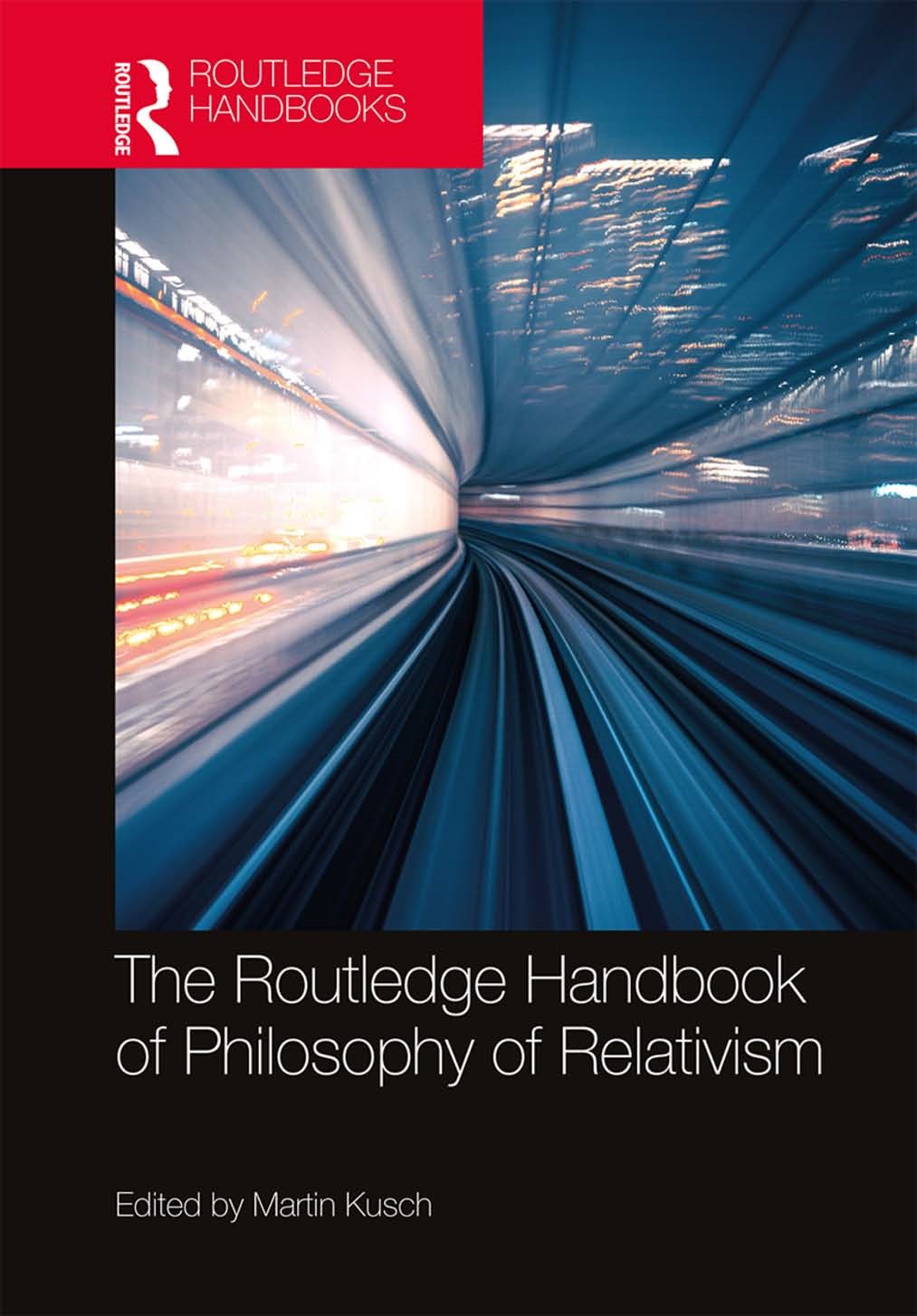
Although relativism has had serious and numerous critics in the history of both ancient and modern philosophy, it has shown such flexibility that it has endured throughout history despite the harshest critiques; and not only that, it has taken on new forms. Whenever one version of relativism has fallen out of favor, relativists, in light of anti-relativist critiques, have cultivated new versions and continue to do so. Even philosophers who have not accepted the charge of relativism or intended to defend it have developed ideas that, inadvertently, have contributed to the flourishing of relativism. Given that very few philosophers can be found who are willing to explicitly identify themselves as relativists, and given that among professional philosophers the charge of relativism is considered a kind of
The second part of The Routledge Handbook of Philosophy of Relativism, which contains eleven chapters, is devoted to the history of relativism in Western philosophy from ancient Greece to the contemporary era. The various chapters of parts three through nine of this work address relativism in different domains of philosophy: political philosophy, philosophy of law, moral philosophy, epistemology, metaphysics, philosophy of science, philosophy of language, philosophy of mind, philosophy of religion, and experimental philosophy. Although this book is, by its own account, the most comprehensive work on relativism, its historical section does not cover Chinese and Japanese philosophy. In the section on philosophical domains, there is also no discussion of relativism in the philosophy of history, hermeneutics, and the philosophy of art (aesthetics).
2. Hadith from One Who Speaks of Hadith and Understanding
"Hadith" in the Islamic tradition means a report containing a saying attributed to the Prophet and also, in the Shi'i tradition, in a broader sense, a report containing a saying attributed to the Shi'i Imams; furthermore, hadith is not merely a report of the sayings of the Prophet and Imams but also a report containing behaviors attributed to the Prophet and Imams or their reactions to events. The importance of hadith in Islamic traditions (both Shi'i and Sunni) is such that influential branches of the "Islamic sciences," such as jurisprudence and transmitted theology, have drawn more from hadith than from the Quran.
"'Ilm al-Hadith" (the science of hadith), that is, the branch of the "Islamic sciences" that examines the chain of transmission and the text of hadiths, is a long-standing branch of traditional Islamic studies. Hadith studies in Western Islamic studies, however, is a recent development and has a history of roughly one hundred years. Its pioneer is the Hungarian Islamicist Ignaz Goldziher (1850–1921). In his research, Goldziher cast doubt on the historical authenticity of prophetic hadiths. He generally considered them post-prophetic fabrications for the ideological legitimization of sectarian conflicts. After Goldziher, a number of Western Islamicists such as Joseph Schacht, John Wansbrough, and Patricia Crone pursued the skeptical hadith-studies tendency in their research. Nevertheless, among Western Islamicists, there have also been scholars, such as Montgomery Watt in the past and Harald Motzki and Andreas Görke in the present, who have held a less skeptical view of the historical authenticity of prophetic hadiths.
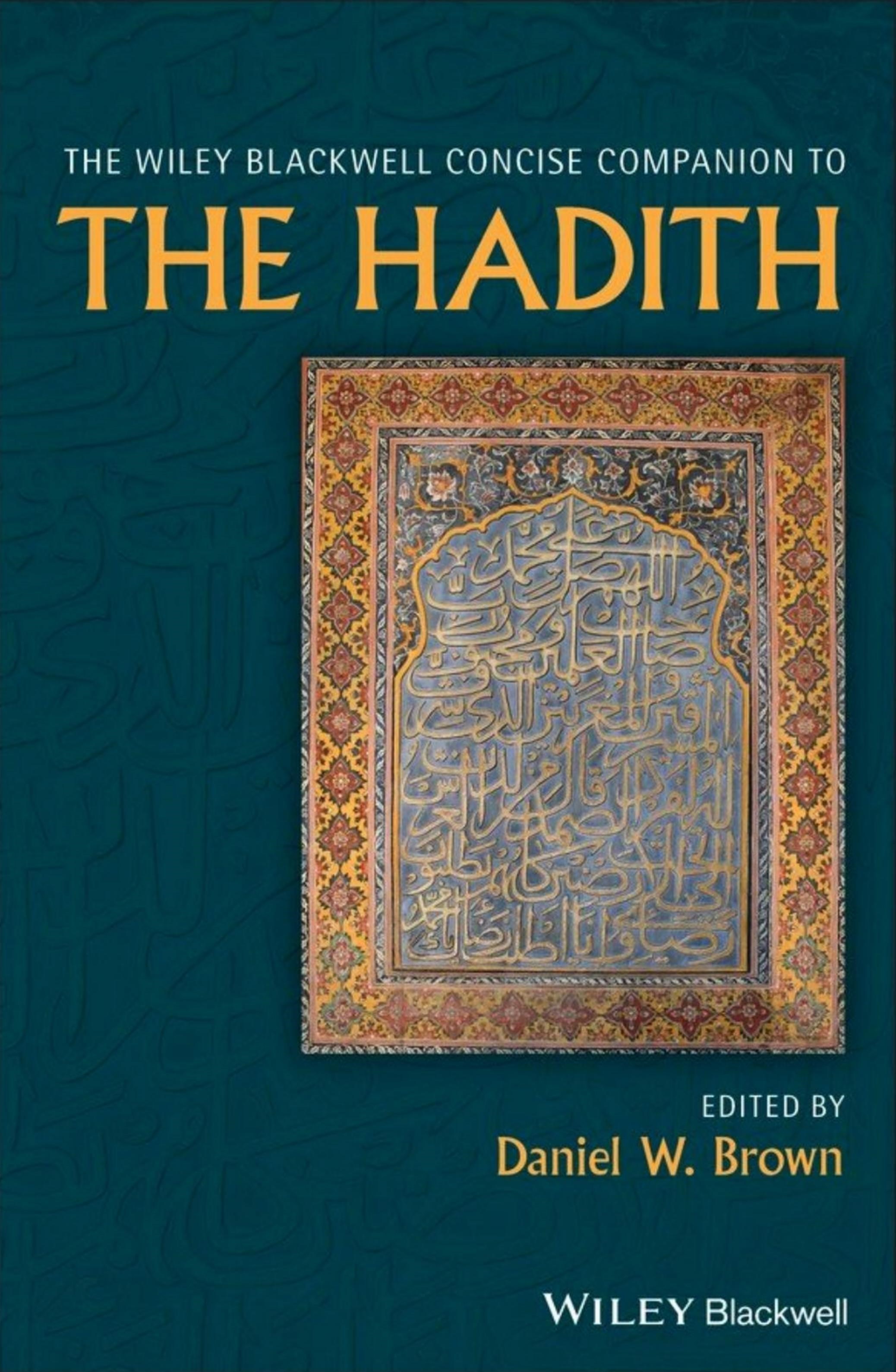
A recently published work maps out the roadmap of Muslim and Western hadith studies: "The Wiley Blackwell Concise Companion to the Hadith." As the title suggests, this book was published by Wiley-Blackwell on February 20, 2020, and was written by a group of Western and Muslim hadith scholars. Daniel Brown, the editor of this work, explains in the introduction that this book is not only an introduction to Western and Muslim hadith studies past and present, but because it contains numerous references to mainly Arabic hadith-scholarship works that have not yet been translated into English, it will also serve as a reference work (p. 10).
The chapter on Shi‘i hadith studies was written by Ahmad Pakatchi, a faculty member of the Department of Quran and Hadith Sciences at Imam Sadiq University in Tehran. In Chapter 19 of this work, titled “Re-evaluating Hadith,” Daniel Brown addresses the efforts of Muslim scholars who are hadith-averse and Quran-centric. He argues that from the late nineteenth century onward, Muslim scholars emerged who considered the prevalence of largely “fabricated and superstitious” hadiths to be one of the factors behind the backwardness of Muslims. They sought to propose a Quran-centered religiosity, free from hadith. One of the most successful theorists of this intellectual current was the Pakistani-American Islamic scholar Fazlur Rahman (1919–1988). However, Brown argues that the Quran-centric and hadith-averse current, despite its theoretical importance, has so far failed to achieve much success among Muslims and has remained a marginal movement.
3_ The Dispute over “Islamic Medicine”
The affair began when a cleric named Abbas Tabrizian (born 1964 in Najaf), a proponent of “Islamic medicine” and an opponent of professional medicine, announced in late January of this year that he intended to burn one of the famous textbooks in the field of medicine, titled “Harrison’s Principles of Internal Medicine,” in a ceremony. This book, whose twentieth edition was published in 2018, is named after the American physician Tinsley Harrison (1900–1978). Harrison was the editor of the first five editions of this work.
Efforts to promote traditional medicine and “Islamic medicine” and to oppose professional medicine have accelerated in Iran in recent years. In April 2014, Ayatollah Khamenei, the Leader of the Islamic Republic of Iran, communicated the general health policies. Although “Islamic medicine” was not explicitly mentioned in this directive, its twelfth clause speaks of “recognizing, explaining, promoting, developing, and institutionalizing Iranian traditional medicine.” Nearly four years prior, in 2010, Ayatollah Khamenei, in remarks to university professors published on his official website, said: “One of the friends mentioned that a faculty of traditional medicine has been established; this is good news for me.”
Furthermore, more explicit oral statements in defense of “Islamic medicine” are attributed to Ayatollah Khamenei; these remarks have been quoted by websites supporting “Islamic medicine” as well as by Fars News Agency, which is close to the Islamic Revolutionary Guard Corps: “My concern today is Islamic Iranian medicine. The Islamic society must be entirely Islamic; its economy, behavior, dress, and even its medicine must be Islamic.” However, these recent remarks are not found on Ayatollah Khamenei’s official website.
Evidence suggests that the discussion of traditional and “Islamic” medicine versus professional medicine has apparently been raised since the beginning of the 1979 revolution. This is while Ayatollah Khamenei, at least at one point early in the revolution, was an opponent of the discussion of “Islamic” and traditional medicine versus professional medicine. In July 1979, addressing a gathering of traditional medicine practitioners who had come to Qom from Shiraz, Ayatollah Khamenei said: “Today is not the day for you to expend all your energy on whether Islamic medicine, as you call it, or the traditional medicine of Avicenna and Razi should be practiced, or other medicines; this should not be raised now.”
Whatever the background to this dispute, Tabrizian fulfilled his book-burning pledge, and the video of the book-burning ceremony spread rapidly and widely in cyberspace. While lighting the original English edition of Harrison’s book on internal medicine with a lighter, Tabrizian explained that this book-burning was a symbolic ceremony marking the end of “chemical medicine in the entire world.”
The video of the book-burning provoked many reactions, especially on Persian-language social media inside and outside Iran. For example, Rasul Jafarian, a professor of history at the University of Tehran who is himself a cleric, called the act “ugly and shameful” and “ignorant and extremist” in a short, frank note, and, comparing it to the book-burning by Ahmad Kasravi, wrote that this is something “no lover of knowledge, at any level, would accept.” Distinguishing between traditional medicine and “religious medicine,” Jafarian considered the former acceptable in principle after credible medical validation, but described the “religious medicine” claimed by Tabrizian as the “fabrications” of an individual who, in terms of academic and seminary education, “is in no position to make such a claim.”
The reactions escalated to such an extent that the Management Center of Iran’s Seminaries, with the direct signature of Alireza Arafi, the center’s director who is also a member of the Guardian Council and Friday Prayer leader of Qom, issued a statement. Arafi called the recent book-burning a “disgraceful and ignorant act.” He stipulated that “such thoughts and actions have no place in the seminary and are not attributable to the seminary or the clergy.” Other official bodies, such as the Secretariat of the Public Culture Council affiliated with the Ministry of Culture and Islamic Guidance, as well as the head of the Medical Council of Iran, also condemned the book-burning in separate statements. In the Medical Council head’s statement, the burning of Harrison’s book was described as “concomitant with the notion of the sacred, home-wrecking ignorance of the Daeshis.”
Ali Akbar Sadeghi Rashad, a member of the Supreme Council of the Cultural Revolution and a cleric close to Ayatollah Khamenei, also, on the sidelines of his advanced jurisprudence class, referring to the recent book-burning and the problems with the chains of transmission and content of medical hadiths, said, “I do not know what calamity has befallen the clergy and the seminary that every moment a new bitter incident occurs due to ill-considered behavior contrary to the dignity [of the clergy] by individuals.” Seyyed Kamal Heydari, an innovative Iraqi jurist residing in Qom, also, on the sidelines of his advanced class, explicitly called “Islamic medicine” a “big lie” and said that ninety-five percent of medical hadiths are either weak or fabricated. Heydari also asked, if we burn the books of Westerners, can we then criticize the burning of the Quran by Westerners? Heydari argued that if the culture of book-burning takes hold, then whenever philosophers come to power they will burn the books of jurists, and whenever jurists come to power they will burn the books of philosophers.
In response to these reactions, Mehrab Sadeghnia, an assistant professor of Abrahamic religions at the University of Religions and Denominations in Qom who is himself a cleric, argued that the seminarians cannot portray Tabrizian as a mere exception and absolve themselves of his science-burning. Sadeghnia explained that Tabrizian is a well-known cleric who has been teaching advanced seminary courses for years, and his condemnation by seminarians, including by the director of Iran’s seminaries, does not turn Tabrizian into an exception: “Tabrizian is neither an exception nor has he come to this country from some demonic world like a nightmare; he and a number of others like him are the unrighteous fruit of procedures that for several decades, under titles such as the ‘Islamization’ or ‘indigenization’ of sciences, have been injecting social mistrust of modern human sciences among the people. The Tabrizians are the fruits of the tree of insulting the university. The result of the work of those who claim to have a heavenly mission to combat the empirical sciences.”
Nevertheless, some other seminarians, while condemning Tabrizian’s book-burning, also criticized the reactions to it. For example, Mehdi Nasiri, a seminary researcher and writer, argued in a note that although the root of the error of Tabrizian’s “Islamic medicine” current is an uncritical view of hadiths, this view has not only existed among the Akhbaris (the traditionist Shia group) but has also existed among Muslim mystics and philosophers.
Nasiri pointed out, by way of example, that the idea of considering the current leader of the Islamic Republic an “Insān-i Kāmil” (Perfect Human) was recently proposed not by hadith-oriented seminarians, who are critics of mysticism and philosophy, but by some seminarians who advocate mysticism and philosophy. Nasiri was referring to Abdolhossein Khosropanah, a seminary researcher sympathetic to mysticism and philosophy, who about two years ago, citing a quote from a “mystic” in Mashhad, called Ayatollah Khamenei the “Perfect Human.” At the time, in a critical note, Nasiri deemed the title “Perfect Human” exclusive to the Shiite Imams and described bestowing this title on a non-infallible person as one of the “fabrications of Greek mysticism.” In response to Nasiri at the time, Khosropanah insisted on attributing the title “Perfect Human” to Ayatollah Khamenei and called opponents of this act “malevolent” or “misguided.” Nasiri’s overall argument bears a formal resemblance (though not a substantive one) to Sadeghnia’s argument; both seek to show that Tabrizian’s book-burning is not merely an exception among seminarians but has enduring roots in the “distorted” religious understanding of a significant portion of them.
Among the various reactions to the recent book-burning, the response of Mohammad-Taqi Akbarnejad, a seminary researcher and instructor, is also noteworthy. In a note, without explicitly condemning the act of book-burning itself, he argued that burning a medical reference book is erroneous because it addresses the branches, not the roots. “A Western lifestyle severed from God” is the primary cause of emerging diseases in the modern world, and for the fundamental treatment of these diseases, instead of prescribing a few herbal medicines—which are themselves products of modernity—one must put an end to the “neglect of the essence of modernity.”
However, instead of recommending the “overthrow” of Western modernity, Akbarnejad stated that our era is an era of “taqiyya” (prudent dissimulation) from Western modernity, because “this era must run its course and there is no alternative.” He likely means that in this era, one must only preserve one’s faith rather than actively clashing with Western modernity, because this era will not end until the age of Western modernity sets. Criticizing those who “wrote more angrily than Harrison himself in defense of his book, shielded modern medicine with their chests, and sought to portray Islam as being in agreement with Western products,” he also asked them to look into the consequences of Western modernity and “not engage in self-harm out of fear of being accused of petrifaction, rigidity, and stagnation.”



Discussion0 comments
No comments yet; let yours be the first voice.