Religion
Shi‘i Jurisprudence in an Age of Democracy, Freedom, and Equality
Hassan Jamshidi, a seminary researcher, sees the continued life of Shi‘i jurisprudence in the age of democracy as fraught with challenges. By enumerating the traits of modern man—such as historical fluid reason and freedom—he assesses the relationship between the new world and jurisprudence and points to its modernization.
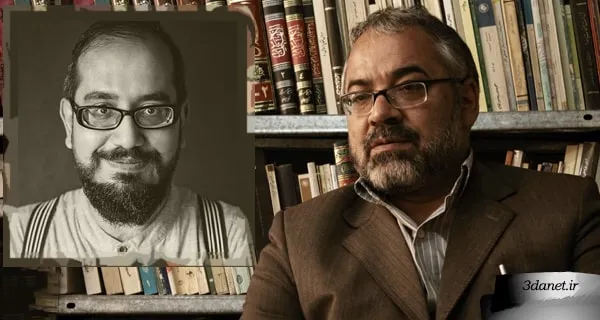
Note: Hassan Jamshidi, a Mashhad-based scholar of religion, believes the first characteristic of modern man is his regard for fluid historical reason. He considers contemporary man to be free, loving, and knowledgeable about his times, and sees our age as the age of human freedom—an age that has cast aside gender stereotypes and, knowing it has no access to the thing-in-itself, possesses a this-worldly mode of thought. Jamshidi sees the continued life of Shi‘i jurisprudence in such an era, where democracy is the dominant and great legacy of human experience, as fraught with manifold challenges. This researcher explicates the traits of modern man and society, speaks of the information society, the rejection of discrimination against women, pluralism, and democracy as the foundations of the new world, and assesses the relationship between the new world and Shi‘i jurisprudence. He finally touches upon the subject of the “contemporization” of Shi‘i jurisprudence.
It is worth noting that this interview was conducted in 2004 with this expert in the fields of jurisprudence and theology. Hassan Jamshidi is one of the active Mashhad-based researchers in the field of theology and philosophy. He also has a background in editing texts on Islamic philosophy and mysticism. In the years 2007 and 2008, his editions of two books, Abwāb al-Hudā and Miṣbāḥ al-Hudā by Mirza Mahdi Isfahani, were published by Bustan-e Ketab Publications in Qom. In jurisprudence and its principles, he was a student of the Grand Ayatollahs Zanjani and Mortazavi, and for several years he regularly attended the advanced jurisprudence classes (dars-e khārij) of Grand Ayatollah Ezz al-Din Zanjani. In Islamic philosophy and mysticism, Jamshidi was also a student of Seyyed Jalal al-Din Ashtiani and Ayatollah Seyyed Ezz al-Din Zanjani for several years.
This conversation was first published in the bi-weekly Aftab-e Sobh-e Neyshabur, Year 3, Issue 60, p. 3, dated March 9, 2019, and is being republished on “Sedanet”.
Let me pose this blunt question right at the outset, without preamble: What is wrong with living according to the worldview derived from the Quran and hadiths and abandoning the new lifeworld entirely?
The problem is that the Quranic verses, prophetic hadiths, and also the narrations transmitted from the Shi‘i Imams were fundamentally shaped with regard to the atmosphere of the human society of the time these verses and narrations were revealed. Our traditional anthropology was also formed on the basis of these same verses and narrations. We treat the philosophy of Aristotle and the generalities of Sa‘di in the same way, and by examining them we say that the people of Aristotle’s and Sa‘di’s times moved in such-and-such an atmosphere, but my thought is that modern man no longer moves in that atmosphere and those situations. In my view, our most important problem in jurisprudential circles is precisely this; we are the inheritors of a jurisprudence in which we deal with time-bound and place-bound human beings. Humans who, at that time, existed under the specific conditions of their own era, as opposed to humans who find themselves in a different situation today.
In your view, what characteristics does modern man have that distinguish him from ancient man? Do you believe a fundamental rupture has occurred between ancient and modern man?
Yes, in my view this rupture has been fundamental. Enumerating the characteristics of modern man will show us this fundamental rupture.
The first characteristic of modern man is his regard for “fluid historical reason.” If in the past the basis for defining reason was achieving the discernment of “good” and “bad,” today we cannot offer such a definition—meaning, whatever definition we give, another definition will be presented tomorrow, and the battle of definitions is endless. Definitions and concepts have, so to speak, a “gelatinous state.” Of course, I am speaking of the general spirit governing modern man, because there may be individuals who are not instances of this statement, but they are rare, and “the rare is as the nonexistent.”
The second characteristic of modern man is that he views the individual as a "lover" and "free." If we wish to be pathfinders for modern man, we must note that he is not a slave, and indeed slavery no longer has any meaning. My child is astonished that in the time of Imam Sadiq, there were male and female slaves. In my opinion, this one instance alone is sufficient for God to punish all those involved in the old systems for having submitted to the institution of slavery throughout history. This is the filthiest, ugliest, and most unjust act humanity has committed in history, and I believe there is no deed more despicable than slavery. Of course, its original formation has nothing to do with the realm of religions, yet that ugly behavior still exists, although in our time its form has changed and almost nothing remains of classical slavery.
The third characteristic of modern man is being "calm" and not "chaotic." Modern man is not violent and ruthless like people of the past. All this interest in the environment stems from this. Whereas in the past, an individual would take pleasure in the massacre of thousands, today Sohrab Sepehri and those like him would not be willing to kill even a fly.
The fourth characteristic is that modern man is, in a sense, a "guided" human being who has benefited from the presence of the prophets, the infallible Imams, and the jurists. At the dawn of Islam, there were families who were not believers and later embraced faith, but today individuals have been Muslims for generations. Even in recounting beliefs, we sometimes find ourselves at a loss as to what to tell someone whose entire lineage has been Muslim that they do not already know.
Fifth, in the modern world, we encounter a more knowledgeable human being. We face people who are exposed to a deluge of information every hour. News sources are now so numerous that we engage in selecting the news. If once news was carried by courier and camel, now, behind the internet, we must first delete a great deal of information and select a small portion. There was a time when Abu Bakr carried out the caliphate part-time, so simple and uncomplicated were affairs. Now, I do not imagine that presidents have more than three or four hours for rest.
The sixth characteristic is that today's societal atmosphere is "open," not "closed." You may close the society, but you cannot close minds, satellites, or the internet. We live in an open world. We live in the information age.
The seventh characteristic of modern man is that we are faced with a human being who is constantly changing and evolving in the fields of natural science. It is not the case that when Galileo claimed the Earth revolves around the Sun, it created no change even in ordinary people's lives. All scientific discoveries create a new atmosphere that emerges in accordance with new perspectives. Although some great figures in the seminaries have, in their own estimation, proven that believing in new or old science creates no change in Islamic life and rulings, I believe it is simplistic to think this way. That is to say, is traveling from Mashhad to Golmakan by horse no different from today's movement by car? Is our parking lot truly the same as the old stable, or is the gas station the same as the former chandler? Is this tire repair the same as the old horseshoeing? These transformations are fundamental, and new professions have been formed based on the division of labor in the modern age. Today, does anyone go hunting to make a living, or do they heat food with a microwave? Of course, the examples I gave were technological, but new technology is built upon new science. Therefore, one cannot claim that human needs and conditions are always constant.
Eighth, in today's world, "gender-centrism" has been set aside. Today, even in military and law enforcement forces, women are employed. The modern world claims equality of rights between men and women in work, profession, and the income derived from it. Now, in many areas, past discriminations have disappeared, and the concept of gender as a basis for discrimination no longer has meaning. Of course, the characteristic differences of individuals remain, but this has nothing to do with gender, and gender should not lead to discrimination. This is the demand of the new world.
Ninth, another difference between modern man and his predecessors is that modern man does not seek to know what God wants from him; rather, he wants to understand what his own desire from God is. I seek to understand which of my needs religion answers. For instance, Maslow presented a new classification of human needs. Truly, what does our jurisprudence intend to do with the literature of the demands of past humans and its difference from the needs of modern man?
Tenth, modern man not only has no regard for reality but is also certain that he has no access to reality. When he wants to reach “reality,” he must pass through dozens of factors, and even then, he has not attained absolute reality but has reached an interpretation of reality with his own self-devised and self-wrought standards, assuming it to be reality so that his problem is solved for the time being. He does not want or is unable to reach reality; rather, he wants to have an analysis of the different perspectives that have been proposed to see which is more helpful and which is not. We are always dealing with the minds of individuals, not the very essence of reality. Even if we stand at the threshold of individuals’ minds, it does not mean we stand at the threshold of the subjective reality of individuals, and we simply cannot perceive reality as it is. Of course, there are those who claim that reality, as it truly is, is discoverable, but these are not modern men; or a certain gentleman compels women to sit in the corner of the house and considers them “long-haired” creatures, but this gentleman, although close to our time, is far from our era.
Eleventh, another characteristic of modern man is being “critical” and desacralizing. Even Catholic Christians no longer consider the Pope as sacred as they did in the Middle Ages; at least, there are groups and thinkers within Catholicism who no longer think this way. Not just among Catholics, but the atmosphere of the majority of societies is like this. If a law were passed in parliament stating the Pope is sacred, they would criticize him, and this is a characteristic of modern man, and it is not even in his own hands. The times have changed. If you give him the opportunity, he will even criticize God. This critical and desacralizing conception, however, differs from the conception of the “infidels” of yesterday. We do not call them “infidels” but consider them “critics,” and their criticism has a fluid and flexible state.
Twelfth, modern man — even if he believes in the afterlife — does not look towards the otherworldly and eternal life and has a “this-worldly” way of thinking. Modern man, even if he believes in the afterlife, simultaneously believes that if you make my worldly life good, you will make my afterlife good; but if you lack the ability to manage just these 60-70 years of my worldly life, how can you claim to be able to cultivate my afterlife? Therefore, modern man looks at today’s life, and any religion, whether Buddhism, Christianity, or Hinduism, if it can fulfill this perspective, he will turn to it. If someone today proposes that our this-worldly life is unimportant, they may be a good ascetic, but they are alien to the spirit of the new world.
Thirteenth, in the life of modern man, urbanism is the principle, and life in spaces outside the city, like rural life, is diminishing. Urbanism also has its own specific requirements. In the past, one of the virtues of a certain sacred female figure of our faith was grinding flour, but today no one has time for such a task; they go to the corner store and buy ready-made flour, and they do not consider grinding flour a virtue, even if they find it nostalgic. In today’s apartments, “one’s home is one’s castle” has no meaning; if your voice is a little loud, they will bang on the wall with their fist. People who imagine they had a traditional life, when they turn to apartment living, completely feel that they have entered a new world.
Fourteenth, modern man needs “spirituality,” and there is no doubt about this. Past man looked towards religion, but modern man’s view is towards spirituality; whichever religion offers it, he inclines towards it, and if he does not find it in religion, he moves towards spirituality independent of religion. Modern man has reserved the right of choice for himself. Nothing can be imposed on him anymore. Modern man chooses the best according to his own discernment. Modern man is not a “devotee” but a “lover,” and he chooses spirituality lovingly, not devoutly, in whatever domain he pleases. That is, we are faced with a “choosing” human being. Transformation and change are also intrinsic to modern man, and stability is an exceptional state.
Fifteenth, modern man looks to “science” rather than to “certainty.” That is, we believe that “certainty” is impossible. What, after all, could you possibly attain certainty about? We seek a science whose method is clear. It reaches us either through “reasoning” or through “sense-perception,” and we do not attain certainty from the flight of a crow. Science, too, involves a coefficient of probability.
Sixteenth, modern man believes in “plurality.” He looks to different perspectives. We have accepted that a single perspective cannot be dominant and that different perspectives must be recognized. Here, the debate arises over absolute plurality or relative (non-absolute) plurality, not over the negation of plurality.
The seventeenth characteristic of modern man is that he looks to the “complex mind” and shuns clichéd, unexamined, and ready-made solutions.
You have enumerated the characteristics of modern man from your own viewpoint—characteristics such as rationality, science-centeredness, urbanism, free-thinking, and the avoidance of patriarchy. Given the outlook of the new man and its distinction (if not contradiction) from the traditional perspective of jurists, do you think it is possible to establish a contemporary jurisprudence? If a contemporary jurisprudence is possible, what characteristics would it have?
I believe that, willingly or unwillingly, these developments and influences have already occurred in our jurisprudence. For instance, in the past, a consensus of jurists was possible to some extent, but now Qom, Mashhad, Isfahan, Karbala, and Najaf each have their own seminary, let alone the dispersion of jurists in India, Afghanistan, and Lebanon; under these circumstances, how can a consensus be formed?
From a certain period onward, we see that the authoritativeness of consensus has practically collapsed, and just recently they were dismissing consensus in its two forms: transmitted and acquired. In this area, when we take an external look at the opinions of jurists, we see that they have fallen into contradictory views in some fields. In many cases, the jurist has not changed the basis of his fatwa, but when confronting people’s predicaments, his view and fatwa have undergone change. For example, in my opinion, Mr. Sane‘i’s fatwas suffer from problems in terms of jurisprudential explanation and reasoning, but he has correctly understood that continuing past fatwas is impossible under today’s conditions, and on the other hand, he has been confronted with the process of people’s concrete life problems. For instance, when he addresses the maturity of girls, he faces a jurisprudential problem. Or, for example, given the extensive transactions with other religions, I know of few jurists who consider adherents of other religions to possess “inherent impurity”; rather, if they still maintain impurity, they consider it “accidental.”
Nevertheless, although jurists have realized that a renewal has occurred in society, they have so far been unable to achieve a foundational adaptation to their time. A hundred years ago, they considered women’s “deficiency of intellect” a description taken from a sermon attributed to Imam Ali and regarded it as a source of pride for the male sex, but now even female seminary students (let alone others) critique this statement in Nahj al-Balagha. For example, Mr. Javadi Amoli, with great contrivance, has tried to justify this narration, explaining what is meant by “they are deficient in intellects,” and this means that even Mr. Javadi Amoli doubts the “deficiency” of women’s intellect. Javadi Amoli, who is the heir to Avicenna and Haj Mulla Hadi Sabzavari, differs greatly on this matter from Avicenna, who considered women “long-haired animals,” or Mulla Hadi Sabzavari, who held a similar view.
Beyond these, today we are confronted with the problem of reconciling “democracy” and “religion.” In any case, we must accept that if we set religion in opposition to democracy, we will not arrive at a better situation but will instead end up with a Hitlerian system. Nothing that stands against democracy will result in anything other than systems resembling those of Reza Khan and Mohammad Reza Shah. Your proposal must be better than democracy, not worse than it. That is, it must lack its flaws while possessing its merits (if such a thing is possible). Some imagine that as soon as we say “Islamic government,” this is the antithesis of democracy. The antithesis of democracy is despotism, and nothing else. There is no bright spot opposite democracy. Your Islamic government must have the advantages of democracy and be free from its shortcomings (if, of course, such a thing is even possible). Democracy means openness to criticism, respect for minority rights, the rule of the majority vote, and the possibility of transparent and non-violent removal of rulers. Democracy means we do not have lifelong rule. Some mistakenly link democracy to the French Revolution, whereas democracy is a collective human experience.
We do not consider monarchical systems, fascism, and Nazism to be authentic human experiences; we consider them transient, vile human systems. In the Hitlerian system, it was the will of a single autocrat that ultimately shaped everything. In despotism, one person rules and the rest are ruled. Democracy, however, is the long-standing experience of all humanity. So let us not say “Western democracy” but rather “human democracy.” As long as we say democracy is a Western experience, certain gentlemen will say, “Well, we are Easterners, so democracy has nothing to do with us.” This democracy has not been nourished solely by Western philosophy. That philosophy has also passed through Islamic societies. Historically, among Muslims, those who have spoken against democracy have been rejected. In our own Iran, the people did not accept the slogan “Islamic government” but instead cried out “Islamic Republic.” In this regard, Imam Khomeini pointed to the redundancy inherent in “democratic republic,” asking, do we even have a non-democratic republic? Some say democracy is useless because it allows people like Bush and Reagan to come to power, but these critics do not consider that Bush and Reagan came to power within the framework of democracy, and their rule was also temporary. Some critics also cite Hitler’s government as an example, which rose to power within the vessel of democracy. But Hitler was not open to criticism and did not tolerate opposition.
I believe that even if the Imam of the Age were to appear in the current climate, he would act “democratically,” unless he were to bring forth an idea that possesses the advantages of democracy and lacks its flaws, and that idea also gains universal acceptance.
.
.
Shi‘i Jurisprudence in an Age of Democracy, Freedom, and Equality
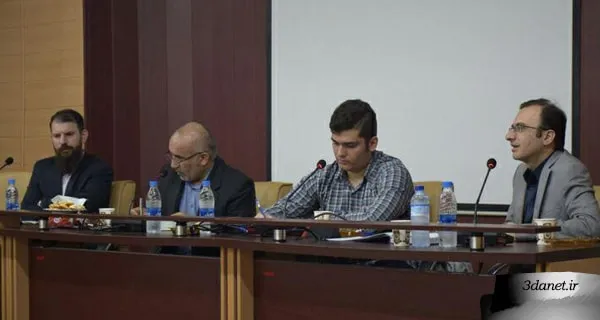
A Conversation between Yaser Mirdamadi and Hassan Jamshidi, facilitated by Hassan Khajouei
.
.


Discussion0 comments
No comments yet; let yours be the first voice.