Religion
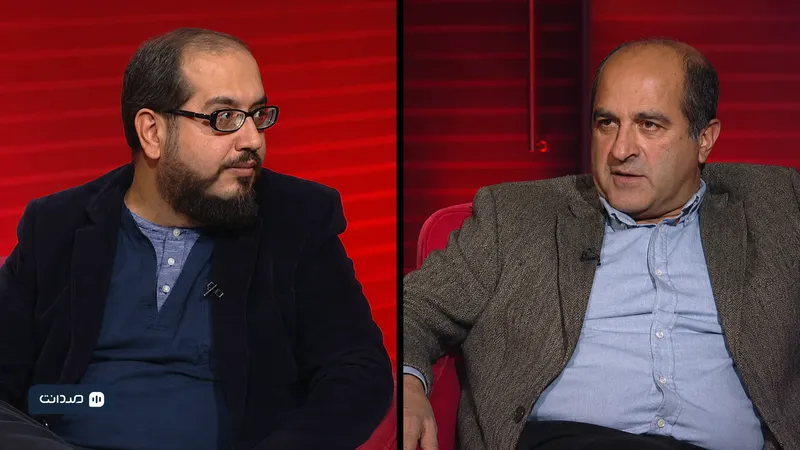
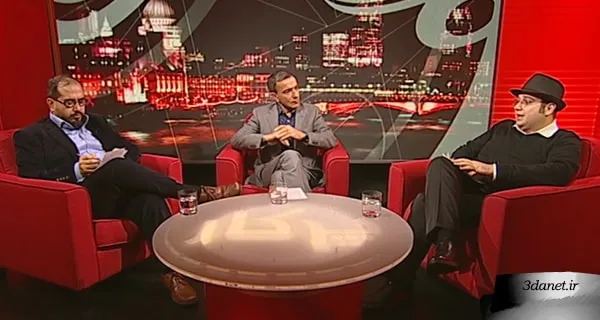
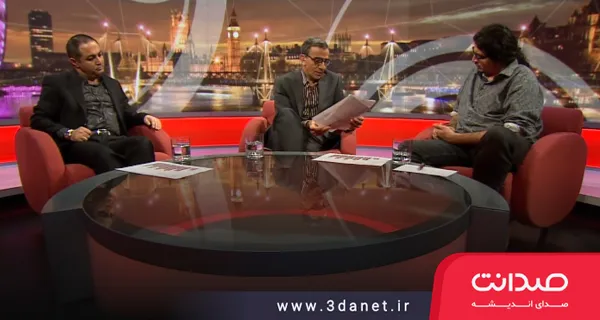
Pargar programme with Arash Naraghi and Yaser Mirdamadi: 'Religious Exclusivism and Pluralism'
Arash Naraghi considers justificatory exclusivism defensible as a theory of knowledge, provided it is paired with soteriological pluralism; Yaser Mirdamadi, however, advocates religious pluralism as a way out of conflict and a better means of doing justice to the divine.
Arash Naraghi
Debater
Yaser Mirdamadi
DebaterDariush Karimi: "Only my religion is true"—to what extent is this defensible? Does deeming other religions false not pave the way for accusing their followers of apostasy? Religious conflicts have appeared in different guises, but the followers of the religions involved have always taken part in them on the basis that they considered their own religion superior. The effort to find religious commonalities, as human history has shown, has been somewhat useful for increasing tolerance, but not for regarding the perspective offered by other religions as truthful. What theoretical or behavioral consequences does religious exclusivism—in the sense of considering one's own religion to be true—lead to among the faithful?
Can one consider one's own religion true and yet refrain from deeming others atheists or apostates? Can one consider belief in the true God to be one's exclusive preserve and still see the possibility of salvation as open to the followers of other religions and to other human beings? But does religious exclusivism necessarily lead to the consequences we see today in religious societies, or can one be exclusivist in belief without engaging in the persecution of others?
Arash Naraghi says that religious exclusivism, in the sense of considering only one's own religion true, is a defensible position but does not necessarily have the consequences common in Islamic societies. Yaser Mirdamadi believes in religious pluralism and says that only in this way can one escape the predicaments arising from religious conflicts.
Arash Naraghi: The religious exclusivism I accept has two parts. One is a kind of investigative exclusivism in the realm of knowledge, and a kind of pluralism in the realm of salvation. What I mean by investigative exclusivism in the realm of knowledge is that the individual believes that at least the propositions related to the pillars of their own religion are true, and consequently, all religions that entail the negation of those propositions are, at least to that extent, false, provided the individual is sufficiently informed about the content of the rival religion. The fourth point is that they acknowledge that in rival religious traditions, there are genuine examples of spiritual flourishing and moral integrity that are inspiring. The final condition is that the individual knows that the reasons they have for consolidating their own positions will not necessarily convince other people.
If an individual, based on justified reasons and experiences, believes that the core beliefs of their own religion are true and is sensitive in these positions to counterarguments and criticisms leveled against their religion, I call them an investigative exclusivist. This is the same investigative exclusivism in the realm of knowledge. But we can couple this with pluralism in the realm of salvation, meaning that sincerity in intellectual and spiritual conduct and ethical living is a sufficient condition for salvation, and also that they believe true religious beliefs are a necessary condition for the higher levels of salvation. That is, a person may not believe in my religious beliefs, but if in their personal life, in their intellectual and spiritual conduct, they are sincere and live ethically, this person is saved. That is, someone may be of my faith—that is, believe in the true religious beliefs—but if their life, in terms of spiritual and ethical conduct, is not, this person will be deprived of salvation. That is, someone who possesses both of these conditions together can hope to attain higher degrees of salvation and nearness to God.
Dariush Karimi: So you have different levels of salvation.
Arash Naraghi: Yes. There is a general level of salvation available to anyone who leads a spiritual and moral life, and there are higher levels available to those who believe in and are committed to true religious beliefs. Another point is that this type of investigative exclusivism is formed in contrast to imitative or dogmatic exclusivism. In dogmatic exclusivism, the individual not only builds their beliefs on imitative and non-investigative foundations, without relying on reasons and knowledge-producing experiences, but is also insensitive to counterexamples and criticisms directed at their beliefs from outside. Furthermore, investigative religious exclusivism recognizes the phenomenon of religious diversity and believes that religious diversity is a necessary condition for the realization of the condition of investigative exclusivism. When the exclusivist encounters different religions, they feel obliged to go back and re-examine their own beliefs, but due to personal attachments, we are more lenient in criticizing and re-examining our own beliefs. This is where we must create this space. Exclusivism in this sense recognizes the right to be wrong for its opponents. The right to be wrong means that if someone holds a true belief, it does not mean they have a special right in society, and you cannot deprive someone who holds an incorrect belief of their social, human, and civil rights.
Dariush Karimi: Does this degree of flexibility found in Mr. Naraghi's investigative exclusivism satisfy you?
Yaser Mirdamadi: Many of the objections that apply to common versions of religious exclusivism do not apply to Dr. Naraghi's version. Nevertheless, it still seems to me that the right of the divine matter is better fulfilled by the pluralist view. I will present two pluralist arguments that emphasize the right of the divine matter.
1_ Transcendence, or the argument from transcendence in favor of religious pluralism. God is transcendent, and His transcendence necessitates that He not be confined to a single religion or denomination. Imam Sadiq was asked whether "Allahu Akbar," which is the slogan of transcendence, means that God is greater than all things and everything. The Imam said no, He is even beyond what can be conceived. Therefore, the notion that one religion can possess truth in an exclusive manner is incompatible with God's transcendence. So, if God's manifestation is not in one religion but is multiple, this may well make pluralism defensible.
2_ The second argument: the argument from infinity. God is infinite, and we encounter God's manifestation everywhere, and the best explanation for the dispersion of divine manifestation is religious pluralism.
Dariush Karimi: The manifestation of the divine matter is one thing, and the truth of each of these religions in which the divine matter is manifested is another. Is there no difference?
Yaser Mirdamadi: There is a difference, but they are related at the same time. That is, if we can show that religions and denominations that have an ethical framework are all more or less true, in the sense that they are loci of the manifestation of the divine matter, then we arrive at religious pluralism. For example, Ibn Arabi is very fond of a hadith that says on the Day of Resurrection, God will not manifest to each people in the form in which He used to manifest to them. When the people see God, they will say, "This is not God." Then God will manifest to that same people in the form in which He always manifested, and that people will accept God. The implication Ibn Arabi draws is that if someone denies the multiple manifestations of the divine matter, they may well have failed to fulfill the right of the divine matter. In the Quran, regarding the dispute that existed between the Jews and Christians, where each says the other is false, the Quran says, "Come, let us put aside our differences. I will judge between them on the Day of Resurrection, and come, let us vie with one another in good deeds in this world." In my opinion, the pluralist view better fulfills the right of the truth of the divine matter, even compared to religious inclusivism. Dariush Karimi: What is inclusivism?
Yaser Mirdamadi: It is the middle view between exclusivism and pluralism, and it says that this religion possesses more truth, but other religions also enjoy lower degrees of truth.
Dariush Karimi: Mr. Mirdamadi, as a religious pluralist, where do you draw the line for the salvation of human beings? Or for the truth of an ideology? Yaser Mirdamadi: Regarding salvation, Dr. Naraghi and I agree. Mr. Naraghi does not believe in the pluralism of truth, and that is the main point of our disagreement. But the answer is that as long as someone is religious and has a moral framework, they possess rightfulness. However, if someone believes that this apparent world is all there is, all religions, even Buddhism, deny this; they say this world has a back, and if you want to see the truth of this world, you must turn it inside out. In my view, if someone denies religions altogether, they do not possess rightfulness. On this basis, my position is not relativistic. That is, I do not say that whatever anyone says is truth for them. This position does not consider someone who is, in the old parlance, a 'dahri' or, in today's terms, an atheist or secularist, to possess rightfulness. Dariush Karimi: Dr. Naraghi, what is your objection to this version of pluralism put forward by Mr. Mirdamadi?
Arash Naraghi: There are some religions that believe in an afterlife, but one that is impersonal. Others accept it in the form of reincarnation. All of these cannot be true simultaneously. And the problem of a single reality manifesting in different forms does not solve this historical problem: for instance, did Jesus raise the dead or not, or was he the son of God or not? So, when you consider a position to be true, by the dictates of logic, you must consider its contradictory position to be false.
Another point is that Dr. Mirdamadi, in his own pluralism, is also an exclusivist. That is, he, who considers pluralism to be true, must consider my exclusivist position to be false, and in this stance, he must be an exclusivist. When it comes to non-religious people, he also adopts an exclusivist position.
Dariush Karimi: In what sense?
That is, he says this position—that religion believes in a transcendental matter—is a true position, and those who deny it hold a false position, and the truth in this matter is with us. That is, he holds an exclusivist position both towards opponents of religion and towards the pluralist position. Dariush Karimi: What is Mr. Mirdamadi's response?
Yaser Mirdamadi: That is completely correct, but this could only be an objection to my view if I were to say that exclusivists' position is false simply because the exclusivist stance brings arrogance and so forth. This objection does not hold, because whatever position you take, you set aside a series of other positions.
Dariush Karimi: In fact, you do not object to exclusivism on the grounds that it is false.
Yaser Mirdamadi: No, I do not make the objection that because it is exclusivist, and every exclusivist position is false since it leads to arrogance and so on, therefore exclusivism is false. Because I know that whatever position you hold, you are also an exclusivist in some way, even the pluralist position that I have adopted. My objection is twofold: one is that it does not do justice to the Divine reality, and the other is that, compared to alternative views, it is more prone to violence, and this is a posteriori, not a priori—that is, it is empirical.
Dariush Karimi: According to Mr. Naraghi, religious exclusivism, no matter how much you soften it, has the potential to lead to placing some people outside this sphere, declaring them infidels, apostates, and heretics, and committing violence against them.
Arash Naraghi: The exclusivist position itself does not entail these consequences. What has historically led to these violences is the dogmatism that has accompanied exclusivism.
That is, instead of entering into dialogue with the other party, you try to subjugate them to your view through power.
Dariush Karimi: We are not talking about any specific individual, for example, you and Mr. Mirdamadi. When religious exclusivism is accompanied by a set of institutions and privileges, it causes violence to be perpetrated against the other.
Arash Naraghi: You are reasoning from correlation to causation, and I think this requires further premises. I accept that exclusivist positions have been accompanied by violence, but the cause was not exclusivism; the cause was dogmatism. That is, it is dogmatic exclusivism that tends toward violence. And dogmatic pluralism can also tend toward violence.
Of course, I also have a clarification regarding Mr. Mirdamadi's remarks. This position that there is a transcendent absolute reality and these various conceptions of God are a reflection of it can be interpreted in two ways, and I would like him to clarify which one he has in mind. One model is the model of the shape-shifting idol: the shape-shifting idol appears in a different form every moment. Consider a king who wants to be informed of his subjects' conditions; every day he wears a different disguise, and when the subjects see him in form A or B, it is one individual.
Another model is that a group of painters have come and want to paint a landscape. Each of them, according to their own style and the impression they have received from the landscape, creates a particular painting. These paintings are the products of these painters and are merely inspired by that landscape. Now my question is: which type is his pluralism?
Yaser Mirdamadi: That is a very important question. With the concept of manifestation, I will in fact anticipate this question. I think it is a combination of both. The model of pluralism that John Hick and those who followed him have, in my view, reduces all this plurality to the different conceptions of human beings, as if the divine reality is passive. This model of pluralism does not do justice to the traditions of religions and their relationship with the divine reality. But another model, which I have drawn inspiration from Ibn Arabi, is that in fact that (shape-shifting idol) or manifestation is a combination of our different understandings of the divine reality. But the divine reality also has different manifestations. For example, in Hinduism it has shown itself in the form of pantheism. In Buddhism, it has shown itself in such a way as if it is not personal. In the Abrahamic religions, it has shown itself as personal. These are all different manifestations of the divine reality, from each of which different interpretations have also been made.
Arash Naraghi: First of all, it seems to me that Hick himself, after the criticisms Quinn made of him, says my view is the first, not the second. But I am not concerned with this problem, which is the problem of the hermeneutics of the text. My view is that these two models are incompatible, meaning they cannot be combined. We can discuss it. But it seems to me that you are closer to the first model. Hick himself also says I prefer the shape-shifting idol model. Then a problem arises, which is that you must say that the entire theology of religions, in the part concerning the knowledge of God, their depiction of God has been false. That is, you must adopt an anti-realist position; therefore, the gods introduced in religions – personal and impersonal, etc. – must be interpreted anti-realistically. And to this you must add an entirely apophatic theology regarding this absolute reality that is the source of these manifestations. This theology does not entail pluralism; it is the negation of the theology of religions.
Yaser Mirdamadi: God has various manifestations, and our understanding of each of these manifestations can also differ. So the theology of religions does not become false. Because they are all manifestations of the divine reality, they have a relation to the divine reality. Kant says God is beyond categories, and of course these have no relation; they are cultural understandings. But in this model, these are manifestations of the divine reality, and therefore the theology of no religion is false, but exclusivism becomes false.
Dariush Karimi: Now that Kant has been mentioned, Mr. Naraghi, let us raise this important critique of religious exclusivism that has been put forward by some philosophers. They say this view is pre-Kantian, meaning it belongs to a time when it was imagined that we could access the essence of religious truths. Whereas Kant showed that your understanding of God and your religious understanding is situated and bound by the time, place, and culture in which you have grown up. If that is the case, then can religious exclusivism really be defensible? That is, within this framework in which you live and in this time, etc., you have arrived at this religious understanding, and if someone in another context has arrived at a different understanding, the notion that you could declare it false seems very difficult.
Arash Naraghi: This is one of the important beliefs that is leveled against religious exclusivism—that your beliefs stem from the religion you were born into and the era you were born in. This is true, but it is not sufficient reason to refute scholarly exclusivism. Why? Because even the reason we believe the sun is the center of the solar system and the earth revolves around it is that we were born in a period after Kepler and Copernicus, and not, say, in the time of Ptolemy.
Dariush Karimi: But are religious truths of the same kind as scientific truths? There is a difference.
Arash Naraghi: So you are adding a caveat.
Dariush Karimi: A caveat in the sense that scientific understanding is not bound by time and place.
Arash Naraghi: So your argument has changed. You say that because belief x is a product of our time and place, its truth can be doubted. I say this formulation is incorrect. Because we have beliefs that are bound to a specific time, yet their truth can still be defended. The second point is that it is not necessary to push Kant's position to the point of skepticism. As long as you believe we can reasonably and justifiably defend the truth of a belief, it means you can believe in the falsehood of the negation of that proposition. Dariush Karimi: Mr. Mirdamadi, does this satisfy you?
Yaser Mirdamadi: No. But before that, let me quickly point out that two objections are not valid against religious exclusivism: one is to say it is false simply because it is exclusivist. The second objection is that I was born into a Muslim family and became a Muslim, so these beliefs are diverse and... to which Dr. Naraghi gave a good response. I did not raise either of these two objections. Because these can also be said about ethics and lead to skepticism.
But let me get to your point. Look, it is not necessarily the case that if you believe a proposition, its negation is necessarily false. In the manifestation model, the belief in polytheism—this is false, but it is not the case that despite being false, its connection to the Divine is severed. And that we must necessarily adopt one and negate the other. Right?
Firstly, this defends the truth of the Divine reality better than rival models. Secondly, compared to rival versions, it is less prone to violence. For instance, when I look at the various versions of the Hindu tradition, I do not feel they are false.
Dariush Karimi: So you believe that for this reason you will be more open?
Yaser Mirdamadi: Yes.
Dariush Karimi: But there is a critique that can be leveled at both Mr. Naraghi's view and, to some extent, your view. And that is, when you place a group of people within a sphere of truth, to what extent is this compatible with divine justice? I mean, ultimately, you consider these different groups as different manifestations of the Divine. But someone born and raised outside this sphere, who has no access to these messages, why should they be deprived of truth?
Yaser Mirdamadi: One answer that Muslim and Christian theologians gave was that this is precisely why we need the Day of Resurrection or Judgment Day, so that those who were deprived of truth but were authentic human beings can, in that world, also attain the vision of the Divine Truth, and thus this is compensated for.
Arash Naraghi: My view is slightly different from Dr. Mirdamadi's. Look, the issue of God's justice is a serious matter, but my point is that this is not unique to this case. Because the principle of difference exists in this world. You might consider it unjust, that is another discussion. For example, people in the era of ancient Greece were deprived of many truths that are revealed to us today, and we are deprived of many truths that will be revealed even 100 years from now. Therefore, due to our boundedness to time and place, we always have access to some truths and are deprived of others. Hence, justice or injustice is not unique to religious exclusivism.
Now let us return to Dr Mirdamadi's remarks on pluralism. His assumption is that we have a single transcendent reality. Well, where does this assumption come from? Another point: in your version of pluralism, what becomes of Tibetan Buddhists? They do not believe in a transcendent reality at all. And they do not believe at all that there is a single reality with which everyone connects.
Dariush Karimi: Some critics charge pluralists with this, saying that this pluralism is another guise for exclusivism. That is, you say I am open and receptive to those who accept different manifestations of the transcendent. Well, outsiders are still left behind the door. For example, people with different, non-religious spiritualities.
Arash Naraghi: As it happens, the essence of Tibetan Buddhism does not lie in such a single, independent reality.
Dariush Karimi: If you will allow, let us leave the discussion of the transcendent for later. But references to the various branches of Buddhism and the various branches of Islam are important. That is, religious exclusivism can lead to the point where you consider even your co-religionists and fellow believers to be in error. Does this not add to the problems?
Arash Naraghi: If you have reasonably and justifiably concluded, outside or inside the religion, that proposition A is true, by the requirements of realism about truth you must say that you have rationally justified grounds for holding that its negation is false.
Yaser Mirdamadi: When we come to theology, despite the correctness of that rule, the matter becomes complicated because of the inherent ambiguity of the divine.
Dariush Karimi: In the sphere of religious intellectualism, there are those who, from your perspective, could become apostates, and because of your exclusivism and sincerity, you are compelled to state that you reject this interpretation and even consider your neighbor in the sphere of religious intellectualism to be outside the religion.
Arash Naraghi: The issue of apostasy is, as it happens, one of the signs of imitative and dogmatic exclusivism. In the sense that if you do not agree with my belief, you are deprived of your human, social, and civil rights—that is, you do not recognize the right of the opponent to be wrong. And this is precisely the point I disagree with. That is, you can consider your own belief true and the opponent's belief false, and at the same time recognize the opponent as a respected member for scholarly dialogue and also regard them as a respected member possessing rights in civil society.
Yaser Mirdamadi: Let me use an analogy. You say we make truth exclusive, but we grant the right to be wrong, and so the problem is solved. Regarding homosexuals, in medical and psychological texts they used to say it is an illness, and therefore they could not defend their rights. But when this was criticized, that was the beginning of their gaining rights. Truth and rights are not so unrelated to each other. Arash Naraghi: This defense you are making is, in my view, a dangerous one. You are saying that we can recognize social rights for individuals only if we consider those individuals to be right.
Yaser Mirdamadi: My reasoning is not merely pragmatic. If it were, your objection would be valid. Pluralism about truth better fulfills the divine reality. Moreover, in practice, it also fosters greater tolerance.
Arash Naraghi: The argument you made was this: as long as we considered, for example, homosexuality to be wrong, we also did not recognize their rights. So you are saying that we can recognize the rights of individuals only if we consider them to be right. I say no, there is no such necessity.
Yaser Mirdamadi: In any case, it is a historical example, you know.
Arash Naraghi: This is a dangerous logic.
Yaser Mirdamadi: If that were the only reason, yes.
Arash Naraghi: That is, the rights of individuals should not depend on the truth or falsity of their beliefs.
Yaser Mirdamadi: That is completely correct, but historically it can be shown that until their truth was demonstrated, they were not even granted their rights.
Arash Naraghi: Well, their presupposition was wrong; that is, the reason they reached that incorrect conclusion was that they established that incorrect relationship between true belief and social rights.
Dariush Karimi: Mr. Naraghi, have you ever thought to yourself, I am a religious exclusivist (and of course those who know you are aware that in many areas you are a religious liberal, meaning you show the utmost tolerance towards others), and on this basis I am an exclusivist because I hold the pillars and principles of my religious propositions to be true; does the fact that these propositions are not of the scientific type, meaning they might turn out to be false, not suffice to pull you out of the position of religious exclusivism? Arash Naraghi: No, any belief we hold to be true may one day turn out to be false. That is not a problem. This is why I submit that our duty is to accept a belief based on justified reasons. For example, I have certain sensory experiences here and certain beliefs, such as that I have not used a hallucinogenic drug that would cause me to hallucinate; the sum of these leads me to the belief that you are present here.
Dariush Karimi: Of course, if you ask Kant, he would say that many temporal and spatial conditions can act like a hallucinogenic drug. Arash Naraghi: Of course, I do not agree with this interpretation of Kant. But if you say this, it leads you to an epistemological skepticism that calls all beliefs into question.
Dariush Karimi: Mr. Mirdamadi, you have tried to articulate your distinction from relativists and skeptics, but does leaving the door open to different manifestations of the Transcendent not truly lead you to relativism?
Yaser Mirdamadi: Not necessarily. Relativism is an epistemological position, and what I said is in fact a theological position. Now, does this position explain all religions or not? In my view, it does; in Dr. Naraghi's view, it does not. This is a theological position, but epistemic relativism says whatever anyone believes is true for them. But relativism is indefensible.... Dariush Karimi: In this programme, we have avoided the discussion of salvation, both because it differs from the discussion of truth and because it requires its own time and independent discussion. But Mr. Mirdamadi, do you consider your position similar to Mr. Naraghi's regarding the possibility of salvation? Because Mr. Naraghi believes in degrees of salvation and says that those who possess the truth, are sincere in their spiritual conduct, and lead an ethical life attain the highest degrees of salvation. This is, of course, a kind of exclusivism at the highest levels of salvation. Is such a thing acceptable to you as well?
Yaser Mirdamadi: I still have doubts. That is, I feel it is a kind of reconstruction of exclusivism and its spillover onto the subject of salvation. And in my view, a more defensible model of salvation is to say that on the Day of Reckoning, everyone is, as it were, in the presence of the Divine, albeit through different manifestations. Whether in that world we see God in His essence without His manifestation is, of course, a separate discussion. And it may not even occur. But some mystics have said that even those who lack sincerity must attend remedial classes. Perhaps, with some delay, they too will be placed in the presence of Ridwan.
Dariush Karimi: Do you believe that human beings are saved, but not to different degrees?
Yaser Mirdamadi: Some sooner, some later. In the sense that, since from a religious perspective we have eternity ahead of us, the one who was in the truth in this world, for whatever reason, seemingly reaches the destination sooner.
Arash Naraghi: Let me say something about Dr. Mirdamadi's view. The main question is whether there is a relationship between truth and salvation or not. People like John Hick, in that 'idol of the changeling' model, in order to secure salvation for everyone, have eliminated the relationship between salvation and truth. They have said that what beliefs you hold has no bearing on the matter of salvation at all. I don't know whether Mr. Mirdamadi subscribes to this position of Hick's or not? But what I defended is that absolute exclusivists, in most cases, say that truth is a necessary and sufficient condition for salvation. The position I proposed was an intermediate one, meaning there is a connection between truth and salvation, but this connection pertains to the higher degrees of nearness. So the main question here is: do you see a connection between truth and salvation or not, and furthermore, if you do see a connection, how do you interpret this connection?
Yaser Mirdamadi: I see the connection only in terms of sooner or later attaining salvation. But rightness is not entirely separate from truth.
Dariush Karimi: Leaving aside the discussion of truths, do you grant the possibility of salvation for those who have no religious belief or belief in the transcendent?Yaser Mirdamadi: Yes, although from the viewpoint I defend, their perspective may not possess rightness, yet as long as they are sincere and open, even if they have not attained it, they possess rightness.
Dariush Karimi: And you, Mr. Naraghi?
Arash Naraghi: Sincerity in the station of spiritual wayfaring and ethical living is a sufficient condition for salvation, and truth is a necessary condition for the higher levels of salvation.Dariush Karimi: An atheist who is sincere in their belief and pursues a wayfaring based upon it, in your view, is salvation possible for them?
Arash Naraghi: Of course.
Yaser Mirdamadi: Certainly.
Arash Naraghi: The important thing is that this type of salvation is compatible with the epistemic exclusivism that I defended.
A Few Extra Minutes (in the podcast version):
Dariush Karimi: It's interesting, Mr. Naraghi, you are much more liberal than the religious new-thinkers in many areas, yet in this area you have placed yourself in the position of religious exclusivism. Doesn't this seem contradictory to you?
Arash Naraghi: No, my entire argument was that it does not.
Dariush Karimi: And you, Mr. Mirdamadi?
Yaser Mirdamadi: No, not in this realm, no.
Dariush Karimi: This is based on the idea that he says we must grant the rightness or wrongness of others? Correct?Yaser Mirdamadi: Both that, and also that he has re-read certain verses of the Quran, whether we agree with it or not. In traditional theology, we believe that all people are in the vicinity of God's good pleasure, as many mystics have said, and philosophers of religion show that even this is compatible with religious exclusivism. One says, 'My religion is truer,' but from my perspective, all of you are in the vicinity of divine good pleasure. My main objection was that religious exclusivism does not do justice to the reality of the divine matter.
Arash Naraghi: I disagree with this. Our mystics were not pluralists. The fact that some recognize diversity and respect others does not mean they subscribe to the theory of pluralism. This theory says that different approaches to religion are equally true. Our mystics did not hold this view.
Dariush Karimi: Mr. Mirdamadi, do you think this theoretical backing can support your theory, or are you in fact putting forward an interpretation of Sufi views that they themselves did not hold?
Yaser Mirdamadi: As Dr. Naraghi rightly said, religious pluralism is a new theory that emerged 40-50 years ago. But when we look back, among the mystics of various traditions we actually find elements that can be used to enrich the pluralist view of religion. Ibn Arabi himself, for example.
Dariush Karimi: Could the concept of manifestation (tajalli) serve as a good vehicle for this theory of yours?
Yaser Mirdamadi: For my view, yes. But that is different from saying that what I defend is, for example, exactly what Ibn Arabi says. Dariush Karimi: Mr. Naraghi, what is your opinion?
Arash Naraghi: The idea of manifestation, as interpreted by Mr. Mirdamadi and, according to my understanding, which is also Hick's interpretation, becomes a synthesis of two theologies: an anti-realist theology that holds that the images of God presented in religions are, in the strict sense, false. The other point is that this theology is entirely apophatic. That is, you cannot attribute any positive quality to Him.
Dariush Karimi: Because of the great diversity of these garments?
Arash Naraghi: Fundamentally because you have no access to Him except through your own experiences.
Yaser Mirdamadi: I tried to offer a model that preserves a minimal degree of realism.
Dariush Karimi: Among religious intellectuals, who else subscribes to this religious pluralism of yours? The model Soroush defends is close to Hick's model, but I haven't seen the idea of manifestation in Soroush.
Arash Naraghi: Let me also mention this point, which I find very interesting. It is a sign of evolution in our religious thought that our scholars and clerics (gesturing to Dr. Mirdamadi) have also become advocates of pluralism. This in itself is promising.
Dariush Karimi: Thank you very much.
.
Watch on YouTube
Download Audio File
.


Discussion7 comments
دخالت های قدری زیاد مجری محترم در برنامه به کنار، به نظرم جلسه جالبی بود. و به نظرم نراقی قوی تر از میردامادی ظاهر شد. ممنون برای لینک یوتیوب.
از امام محمد غزالي نقل شده است. که روزي بر منبر وعظ نشست و گفت : اي مردم عمري است که شما را موعظه مي کنم و اکنون مي بينم که همه موعظه هاي من در اين دو بيت از همشهري من فردوسي طوسي جمع آمده است و دو بيت زير را فروخواند : ز روز گـذر کـردن انـديشـه کـن پرستيدن دادگـر پيـشـه کـن بـه نيـکي گـراي و ميـازار کـس ره رستگاري همـين است و بـس
قرابت روشنفکری با انگلیس و با این مجری وابسته به انگلیس برای جامعه جهانی، برای اهل اندیشه کاملا شناخته شده است. فریب، گیج کردن مردم، و اقناع با ژست گرفتن و بکار بردن مامبو جامبو، confusing the addressee with science. جامعه جهانی دیگر با تکنیکهای گیج کردن ذهن با توضیح و ایجاد فضای روانی فریب نمی خورد.
آیا علم (ساینتیسم) دین من است تجربی است؟ آیا معقول است؟ آیا سازگار با دانش بشری است؟
تنها فلسفه راه اندیشه است به کجا می انجامد؟
سئوال از نویسنده: این که من فلسفه می دانم پس عقلانی فکر می کنم، پس دیگران برخطا هستند تا چه حد قابل پذیرش است؟
لطفا تمام مطالبتان را درباره یک مطلب (در آینده) در قالب یک کامنت بگذارید