Religion
The Essence of Religion and Pluralism: A Conversation with Mohammad Hosseini
Mohammad Hosseini sees reconciliation and peace as the soul of religion and considers the salvation of followers of other Abrahamic faiths possible. He argues it is essential to move from the jurisprudence of rulings to the philosophy of rulings—a religion that, by rejecting judgment and exclusivism, carries no message but hope and peace.
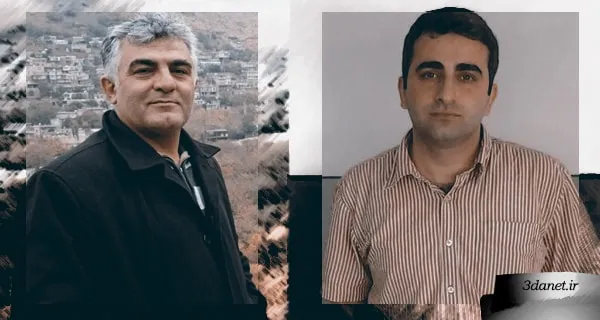
The essence of religion is reconciliation and peace
Seddiq Qotbi: Mohammad Hosseini is a graduate of both the seminary and the university. He earned his Master's degree in Quranic and Hadith Sciences with a thesis on "Freedom from the Perspective of the Quran and Sunnah." Years of practice and reflection on religious thought, combined with a certain intellectual audacity, self-reflection, and a lack of inhibition in expressing his findings and views, have made him a challenging and controversial figure. In this conversation, an effort has been made to delve into his mind and intellectual world and to introduce his religious thinking as much as possible and within the available space.
Citing verses from the Quran and evidence from the prophetic tradition and conduct, Mohammad Hosseini seeks to demonstrate that from the Quran's perspective, followers of other Abrahamic religions can also attain salvation even after the era of Muhammad's (PBUH) prophethood, so long as they affirm the truth of the Quran and the Muhammadan mission and strive faithfully in the path of goodness and righteous deeds. In his belief, the Prophet's (PBUH) call did not entail the negation and rejection of other religions, but rather the negation of exclusivism and religious totalitarianism, and an invitation to reconciliation and peace.
The following text is the result of a four-hour conversation conducted with Mr. Hosseini in Azar of 1393 (December 2014). My questions proceeded without any prior order, in an informal and heartfelt manner, and in the text presented here, I did not wish its impromptu character and disordered arrangement to undergo any contrived alteration. On the other hand, due to certain cautious considerations and expediencies (read: precautions), many passages from the conversation did not find their way into the present text. Nevertheless, the present text was approved and reviewed by Mr. Hosseini, and I believe that for those who understand allusions, the main lines of the interviewee's religious thinking and fundamental approaches are accessible.
==
+ Mr. Hosseini, some believe that your ideas have crossed the established boundaries of religiosity. Do you still define your intellectual framework within the realm of religion?
Hosseini:
In my own view, yes. Sohrab said: "One must wash one's eyes / See in a different way." I have freed myself from the matter of judgment and believe that judgments bear no good fruit. Hafez said:
May I speak one Sufi word, with your leave?
O light of the eye, peace is better than war and judgment
Where there is judgment, there is war, and where there is war, there is judgment. "Come, let us cast these judgments before the Judge." In my opinion, judgment is not befitting of a human being, unless a social necessity requires that an institution like the judiciary pass judgment to uphold rights.
I see the project of religion as being in line with the negation of judgment. I believe the essence of religion is that "What do you know of who is good and who is vile?" When there is no judgment, there will be no war or conflict, and we will move towards peace and reconciliation. As it is stated in the Quran: "And if they incline to peace, then incline to it..." (Al-Anfal: 61); and if they take the side of reconciliation, you too take that side.
Just as war is the twin and blood-kin of judgment, analysis is the twin of peace. In analysis, you are confronted with a phenomenon and no longer harbor love or hatred for a specific person. You see that if I were in that individual's situation, with that upbringing and psychological type, I would have become exactly what they have become.
+ What is your current understanding of a reasonable mode of religiosity?
Hosseini:
In my view, religiosity must be steered in another direction. In the age of the Prophet (PBUH), we were faced with the rule of prophethood; after the Prophet (PBUH), we had the rule of jurisprudence; and after the Renaissance, we have moved toward specializations. In specialized domains, we no longer have anything to do with the jurist. Today, if ISIS takes Yazidis captive, it can cite the same jurisprudential reasons found in books of jurisprudence: "نساءُ الكفار وصِبيانُهم اذا أَسَروا رقّوا" (Nihāyat al-Muḥtāj), meaning the women of the infidels and their children, when taken captive, become slaves. It is stated in jurisprudential books that the Imam of the Muslims is authorized to choose the more beneficial option from among four choices: execution (killing), mann (granting a favor and freeing), fidāʾ (release in exchange for ransom), and istirqāq (enslavement). These are our jurisprudential sources, which contain such forms of violence and have largely been shaped by political movements and currents throughout the periods of Islamic history.
In my view of religion, the era of the rule of prophethood and the rule of jurisprudence has come to an end, and we now need to transition to the rule of philosophy. Today, we are faced with a different world that has different exigencies. A poet has said: "We took the kernel from the Quran..."; today, we need to pay attention to the kernel of religiosity.
+ So far, you have mainly pointed to dimensions that you no longer consider religion, saying that specializations have emerged and taken over the function that jurisprudence once bore. In your opinion, what is the specific task of religion in our time? What can religion do that other institutions and specializations are incapable of doing?
Hosseini:
In my opinion, as long as these three questions remain, the mission of religion will remain: "Where did I come from? What was the purpose of my coming? Where am I going in the end?...". As some intellectuals have said, we must define an essence and an accident, a kernel and a shell, for religion. The soul of religion, in my view, is to tell us: "You exist and will never perish." Your existence, in the Abrahamic religions, is tied to a God who is personal and anthropomorphic, but in the view of mystics, becomes impersonal (in Rumi's words: We are free from all purity and impurity). A God who, in Rumi's words, is "whatever cannot come into thought, that is God." The foundation of religion directs us toward the idea that "you exist," there was never a day when you did not exist, and there will never be a day when you will not be. The human being's journey is from polytheism to monotheism, from monotheism to union, and from union to unity, and whoever reaches this station will be at peace with all of God's creation. This matter, just as it manifests in the intellectual and spiritual journey of the individual, also holds true in the collective journey of human societies, and is also seen in the trajectory of divine religions, especially the Abrahamic faiths.
The main message of religion is to never despair. "وَلَا تَيْأَسُوا مِن رَّوْحِ اللَّهِ إِنَّهُ لَا يَيْأَسُ مِن رَّوْحِ اللَّهِ إِلَّا الْقَوْمُ الْكَافِرُونَ" (Yusuf: 87), and do not despair of God's mercy, for no one despairs of God's mercy except the disbelieving people.
Therefore, in my view, one essential message of religion is for the human being to feel that they are with God and God is with them, and another is that the human being never perishes. These two fill the individual with hope. Hopelessness leads the human being into a dark realm of unkindness, cruelty, and rebellion against oneself and others, something in which the concept of "kufr" (disbelief) is, in a sense, embedded.
+ These two properties also exist in other heavenly religions; how can the necessity of adhering to the religion of Islam be derived from this?
Hosseini:
The Prophet (PBUH) came to create reconciliation between religions. He said: "...تَعَالَوْا إِلَى كَلِمَةٍ سَوَاءٍ بَيْنَنَا وَبَيْنَكُمْ أَلَّا نَعْبُدَ إِلَّا اللَّهَ وَلَا نُشْرِكَ بِهِ شَيْئًا وَلَا يَتَّخِذَ بَعْضُنَا بَعْضًا أَرْبَابًا مِّن دُونِ اللَّهِ..." (Āl ʿImrān: 64); Come to a common word between us and you, that we worship none but God and do not associate anything with Him, and that none of us takes others as lords besides God.
The Qur'an says about the followers of other heavenly religions: "And whatever good they do, they will never be denied its reward, and God is All-Knowing of the righteous" (Āl ʿImrān: 115); and whatever good deed they perform, they will never go unrewarded and unthanked, and God is aware of the pious. It also says: "And for each there is a direction toward which he turns, so vie with one another in good works..." (al-Baqarah: 148); and each has a direction [for the qibla] toward which God has turned them, so hasten to do good deeds.
It was for this reason that when ʿUmar al-Fārūq (may God be pleased with him) went to Jerusalem, he inspected the Church of the Holy Sepulchre. The Christians had turned the area between the Rock and the Mihrab of David, which was the qibla of the Jews, into a garbage dump. ʿUmar (may God be pleased with him), along with Shuraḥbīl, Abū ʿUbayda ibn al-Jarrāḥ, Yazīd ibn Abī Sufyān, and ʿAbd Allāh ibn ʿUmar, cleaned the entire area. In Ibn Khaldūn's history, it is mentioned that ʿUmar al-Fārūq (may God be pleased with him), in explaining why he did not pray inside the Church of the Holy Sepulchre, said: "If I pray inside the church, the Muslims after me will take it and say, 'Here ʿUmar prayed.'" This conduct reflects the foresight of ʿUmar ibn al-Khaṭṭāb (may God be pleased with him) aimed at upholding the right of worship for the followers of other religions.
+So you believe in the salvific nature of all religions?
Hosseini:
Yes, precisely. Briefly examine the life of the Negus. The Negus did not pray a single rakʿah like the Prophet (peace be upon him). The Prophet (peace be upon him) was in Mecca when the Negus embraced faith. In the ninth year of the Hijra, the Negus passed away, and the Prophet (peace be upon him) said, "A righteous brother from among your brothers has met God; pray for him." (In Ṣaḥīḥ al-Bukhārī it is stated: "Today a righteous man has died, so arise and pray over your brother."). In the circumstances of revelation, it is mentioned that when some objected to this action of the Prophet (peace be upon him), the verse was revealed: "They are not all alike; among the People of the Book is an upright community who recite God's verses in the watches of the night, while they prostrate. They believe in God and the Last Day, and enjoin what is right and forbid what is wrong, and hasten to good deeds; and those are among the righteous" (Āl ʿImrān: 113 and 114); they are not all alike and equal; among the People of the Book is a group of upright conduct who recite the divine verses (the verses of the Torah and the Gospel) in the depths of the night and bow their heads in prostration. They believe in God and the Last Day, enjoin good and forbid evil, and hasten to good works, and these are among the righteous.
Indeed, such a description of the good-thinking and good-doing among the People of the Book, using the term "community," as those who enjoin good and forbid evil and hasten in good works, is precisely the description of "You are the best community" mentioned in verse 109 of this same surah, and it places some of the People of the Book among the believers. Following this, it says not to view all the People of the Book with the same eye, for among them are righteous, believing men who hasten in good works, and these should be honored.
+ If this is the case, that the Prophet (peace be upon him) did not reject or deny the faith of the People of the Book, then why do we see so much anxiety and hostility from the People of the Book of that time?
Hosseini:
The Qur'an says: "So if they believe in the like of what you believe in, then they are guided; but if they turn away, then they are only in dissension" (al-Baqarah: 137); meaning: "So if they believe as you have believed, they are guided; and if they turn away, they are surely in schism." The kind of faith that God considers guidance is the same as mentioned in the verse preceding this one: "We believe in God and what has been sent down to us, and what was sent down to Abraham, Ishmael, Isaac, Jacob, and the Tribes, and what was given to Moses and Jesus, and what was given to the prophets from their Lord; we make no distinction between any of them..." (al-Baqarah: 136); we believe in God and what has been revealed to us, and what was revealed to Abraham, Ishmael, Isaac, Jacob, and the Tribes, and what was given to Moses and Jesus, and what was given to the prophets from their Lord; we make no distinction between any of them.
What provoked the hostile stance of many followers of other Abrahamic faiths during the Prophet’s (PBUH) era was the Qur’an’s extraordinary sensitivity to the issue of shirk (polytheism).
Lā ilāha illā Allāh (There is no god but God), fundamentally and centrally, negates power from the human realm. It says that power does not inherently belong to humans, nor should it be concentrated in a single person or group, and that God belongs equally to all human beings. What was difficult for the People of the Book to digest was accepting that another could also be on the path of salvation. Just as they were rebuked by the Qur’an: “The Jews say, ‘The Christians have nothing to stand on,’ and the Christians say, ‘The Jews have nothing to stand on,’ yet they both recite the Scripture. Those who do not know speak likewise. God will judge between them on the Day of Resurrection concerning that over which they used to differ” (Al-Baqarah: 113).
The Prophet (PBUH) came to negate religious and denominational totalitarianism, and this was not something that suited their desires.
+ You referred to the constant presence of God and the permanence and ever-being of the human being as the principal religious approaches that guarantee hope. What relation do religious rituals have with these perspectives?
Hosseini:
Look, rulings are accidental (ʿaraḍ). Accidental does not mean they should not exist. When we say a person is not their clothes, it means clothes are not the essence of the person, and this does not imply that clothes are useless. A person without clothes is exposed to harm. Rulings, or in other words the outer shell of religion, are of two kinds: they either arise from within the human being or from the external world. The kind that arises from within the human being are acts of worship (ʿibādāt). Contrary to the opinion of those who say independent reasoning (ijtihād) is not permissible in devotional rulings, I believe that the only area where ijtihād is still possible is the domain of worship. But regarding the necessity of worship in a faithful life, I must say by way of introduction that in life, the human being faces two great deserts and must strive to expand and green life, and through expansiveness, combat desertification. One is the desert of ignorance (jahl), and the other is the desert of heedlessness (ghafla). Against ignorance, we have knowledge (ʿilm). The opposite of ignorance is knowledge, and we cultivate the desert of ignorance with knowledge. But there is a very significant category that is in no way less than ignorance, and that is heedlessness. However, the opposite of heedlessness is not knowledge, but rather “remembrance” (dhikr). The achievement of thinkers and scientists is knowledge and awareness, but the achievement of the prophets (peace be upon them) was not knowledge. It was not physics or chemistry. Although in their era, when a stewardship-like system prevailed and the spheres of social life were not well differentiated, they were sometimes compelled to attend to other matters. But as explicitly stated in the Qur’an, the mission of the prophets is remembrance. A doctor who smokes is afflicted with heedlessness. He has knowledge but lacks remembrance. If he reviewed the harms of smoking and reminded himself, he would abstain from it. Heedlessness is not not-knowing; it is procrastination. As a result of heedlessness, truths become so distant from the human mind and creep into the recesses of forgetfulness that they gradually even lead to ignorance. The basis of unbelief (kufr) is heedlessness. The term forgetfulness (nisyān) also appears in the Qur’an, which afflicts the human being as an extension of heedlessness.
Therefore, the mission of the prophets is to remind. By what method? By connecting to God. Within the domain of these rulings fall praying, fasting, performing the Hajj, or specific places and times that remind the human being more of God. Acts of worship have been instituted to bring the human being out of heedlessness and to continually give hope to human beings.
It is related that the Kurdish Mawlawi, an hour before dawn, unexpectedly went to the lodge of one of the Sufi masters. In a corner, he heard the sound of weeping. Listening carefully, he saw that the Shaykh was engaged in intimate supplication. The Kurdish Mawlawi spontaneously recited a couplet whose meaning is this:
“It is night and a solitude in which there is none but God. The whole world is asleep and only the Beloved is awake.” The Shaykh, having thrown a goatskin over his head, immediately replies: “It is a spiritual state I sorely need. With this goatskin over my head, nightly lamentations with the Beloved are delightful.” In this pursuit of pleasure, tenderness of heart, kindness, and love flow forth, and the human being partakes of both the divine attribute of All-Mercifulness (Raḥmāniyya) and All-Compassionateness (Raḥīmiyya) (Raḥmāniyya is plenitude and fullness of mercy, and Raḥīmiyya is the flow and diffusion of mercy). The verses “Their skins and their hearts soften to the remembrance of God” (al-Zumar: 23) and “Those who believe and whose hearts find rest in the remembrance of God—verily, in the remembrance of God do hearts find rest” (al-Raʿd: 28), as well as “O you enwrapped one… Indeed, the rising by night is most intense in impression and most upright in speech” (al-Muzzammil: 1–6) and the verse “Has the time not yet come for those who believe that their hearts should humble themselves to the remembrance of God and to the truth that has come down?” (al-Ḥadīd: 16) all point to this same flourishing truth.
“Indeed, in that is a reminder for whoever has a heart or gives ear while he is a witness” (Qāf: 37); undoubtedly, in this is a reminder for one who possesses a heart or has a receptive ear and is a witness.
Yes, whoever loves God, fasting and secret communion with the Lord dispel heedlessness from his soul.
But the rulings arising from the external world are mutable and finite, and as Jesus Christ says: “Neither do men put new wine into old wineskins; else the skins burst, the wine runs out, and the skins are ruined. But they put new wine into new wineskins, and both are preserved” (Gospel of Matthew: 9:14–17). Indeed, rulings arising from the external world—namely, socio-political-economic rulings—are situated on a trajectory of change and finitude, and their philosophy is need within the heart of time, which customarily gives rise to new instruments and events; new instruments and events give rise to a new process; a new process gives rise to a stance toward that process; and the stance necessitates a ruling. Hence, this chain has always been and continues to be current and operative in human life, encompassing all socio-political-economic rulings. The philosophy of abrogation (naskh) in religions is precisely this and nothing more, and it does not encompass anything of the essence of religion. In other words, time is the abrogator of certain socio-political-economic rulings in religious texts, and the collective reason of society, based on the expertise of specialists in various fields and grounded in the scientific realities of the day and field research, presents updated rulings in the form of law to society through legislators. Thus, with the passing of the Holy Prophet (PBUH) and the declaration of the seal of prophethood and the end of the era of juristic deduction, the derivation of rulings is entrusted to specialists, and perhaps the concept of consultation (“their affair being counsel among them”) is precisely this. Indeed, the conflict between the followers of different religions often lies in their revealed rulings, with each claiming its own truth and the falsehood of the other from this perspective. If one pays a little attention to the philosophy of the ruling and heeds the religious texts in this regard, the accidentals of religion are transient, while its essentials remain, enduring and eternal; for the seal of prophethood drew a final line under these clamors and, until the Day of Resurrection, shortened humanity’s hand from the sky and returned it to its own lap—so that it might pull its own rug out of the water itself, not fix its gaze on the heavens, and through error and trial, move from one stage to another.
+ Let us return to our previous discussion. The prevailing belief is that after the mission of the Prophet of Islam (PBUH), no other creed is accepted by God, and all followers of other heavenly religions are obligated to believe in the new creed. This dominant and entrenched view presents relatively numerous proofs from the Qur’an:
“And whoever seeks a religion other than Islam, it will never be accepted from him, and he, in the Hereafter, will be among the losers” (Āl ʿImrān: 85); and whoever chooses a religion other than Islam, it shall never be accepted from him, and in the Hereafter he shall be among the losers.
“Indeed, the religion with God is Islam” (Āl ʿImrān: 19); the religion pleasing to God is indeed Islam.
«يَا أَيُّهَا الَّذِينَ أُوتُوا الْكِتَابَ آمِنُوا بِمَا نَزَّلْنَا مُصَدِّقًا لِّمَا مَعَكُم مِّن قَبْلِ أَن نَّطْمِسَ وُجُوهًا فَنَرُدَّهَا عَلَى أَدْبَارِهَا أَوْ نَلْعَنَهُمْ كَمَا لَعَنَّا أَصْحَابَ السَّبْتِ وَكَانَ أَمْرُ اللَّهِ مَفْعُولًا»(نساء:47)؛ O People of the Book, believe in what We have sent down, confirming what is with you, before We obliterate faces and turn them backward, or curse them as We cursed the Sabbath-breakers; and the command of God is ever executed.
In the above verse, followers of other religions are threatened that if they do not believe in the new faith, they will be afflicted with curse and regression. In Sahih al-Bukhari, it is narrated that a Jewish youth who served the Prophet (PBUH) was on his deathbed when the Messenger of God (PBUH) visited him and invited him to Islam and to utter the Shahada. After the Jewish youth complied and became a Muslim, the Prophet (PBUH) joyfully said: «الحمدُ لله الذي أنقذهُ من النار», Praise be to God who saved this youth from the Fire. It seems that the condition for salvation and a goodly end in the Hereafter was solely conversion to the new faith. There is a narration which, though not sound in its chain of transmission, is much relied upon by proponents of this view. According to it, when Umar ibn al-Khattab brought a writing from the People of the Book and began reading it to the Prophet (PBUH), he was met with the Prophet's (PBUH) rebuke: «أفي شکٍ أنت يا ابن الخطاب والذي نفسي بيده لقد جئتكم بها بيضاء نقية لا تسألوهم عن شيء فيخبروكم بحق فتكذبوا به أو بباطل فتصدقوا به والذي نفسي بيده لو أن موسى كان حيا ما وسعه إلا أن يتبعني», O Ibn al-Khattab, are you in doubt? By Him in whose hand is my soul, I have brought you a clear and pure faith. Do not ask the People of the Book about anything, for they might tell you a truth and you would deny it, or they might present a falsehood and you would believe it. By Him in whose hand is my soul, if Moses were alive today, he would have no choice but to follow me.
Hosseini:
The essence of religion is peace. The core of religion is being a doer of good (muhsin). Peace lies within ihsan (goodness). «بَلَى مَنْ أَسْلَمَ وَجْهَهُ لِلَّهِ وَهُوَ مُحْسِنٌ فَلَهُ أَجْرُهُ عِندَ رَبِّهِ وَلَا خَوْفٌ عَلَيْهِمْ وَلَا هُمْ يَحْزَنُونَ»(بقره:112)؛ Indeed, whoever submits his face to God while being a doer of good—his reward is with his Lord, and no fear shall be upon them, nor shall they grieve.
The word «مَن» (whoever) in the above verse indicates universality. In this verse, it is said that whoever places themselves within the circle of salm (peace) and reconciliation is a muhsin and is saved. There are two approaches and spirits: justice and ihsan. Justice is equating good with good and evil with evil; it is the requital of a crime with a penalty. Ihsan is responding to good with greater good, and to evil with, at minimum, silence and, at maximum, goodness. One who reaches this station is a muhsin. In my opinion, Nelson Mandela was a muhsin, and I performed the funeral prayer for him, calling the prayer over him the Prayer of Peace.
I believe that the Negus (Ashama ibn Abjar) did not pray or fast like Muhammad (PBUH), but because he affirmed the Prophet's (PBUH) mission and, after hearing the verses of the Quran from Ja'far ibn Abi Talib, confessed: «إن هذا الكلام ليخرجُ مِنَ المِشكاةِ التي جاء بها موسى», meaning, "This speech emerges from the same niche from which the message of Moses (AS) came," the Prophet (PBUH) performed the funeral prayer in absentia for him and called him a righteous brother.
The "Muslimness" and "Islam" used in the verses you cited have a broad scope. Abraham, Isaac, and Jacob were also Muslims. Islam is the acceptance of salm and reconciliation. This religious self-righteousness and exclusivism, where we consider only ourselves saved, is a form of shirk (polytheism). I draw your attention to these verses from Surah Ash-Shura:
He has ordained for you of religion what He enjoined upon Noah and that which We have revealed to you, [O Muhammad], and what We enjoined upon Abraham and Moses and Jesus – to establish the religion and not be divided therein. Difficult for those who associate others with Allah is that to which you invite them. Allah chooses for Himself whom He wills and guides to Himself whoever turns back [to Him]. (13) And they did not become divided until after knowledge had come to them – out of jealous animosity among themselves. And if not for a word that preceded from your Lord [postponing the penalty] until a specified time, it would have been concluded between them. And indeed, those who were granted inheritance of the Scripture after them are, concerning it, in disquieting doubt. (14) So to that [religion of Allah] invite, [O Muhammad], and remain on a right course as you are commanded and do not follow their inclinations but say, "I have believed in what Allah has revealed of the Book, and I have been commanded to do justice among you. Allah is our Lord and your Lord. For us are our deeds, and for you your deeds. There is no [need for] argument between us and you. Allah will bring us together, and to Him is the [final] destination." (15) And those who argue concerning Allah after He has been responded to – their argument is invalid with their Lord, and upon them is [His] wrath, and for them is a severe punishment. (16) It is Allah who has sent down the Book in truth and [also] the balance. And what will make you perceive? Perhaps the Hour is near. (17)
As we see in these verses from Surah Ash-Shura, the core of the religion's message was: "to establish the religion and not be divided therein." Uphold the religion and do not create division. When does division occur? When you say, "I am, and you should not be." This is why we read in the continuation of the verse: "Difficult for those who associate others with Allah is that to which you invite them." It is grievous for the polytheists, that to which you call them. Why? Because it requires relinquishing religious totalitarianism and self-righteousness. See what the belief and attitude of the People of the Book was at the time of the Prophet (PBUH): "The Jews say, 'The Christians have nothing [true] to stand on,' and the Christians say, 'The Jews have nothing [true] to stand on,' yet they [both] recite the Scripture..." (Al-Baqarah: 113); The Jews said the Christians are not upon the truth, and the Christians said the Jews are not upon the truth, even though they recite the Holy Book.
What the Quran disapproves of and rebukes in the People of the Book is the affirmation of oneself and the negation of the other. That they consider themselves exclusively right and negate and reject other divine faiths. The Quran affirms diversity and plurality and asks us, instead of trying to prove ourselves and negate others, to hasten toward good deeds:
"For each [religious community] is a direction toward which it turns. So race to [all that is] good..." (Al-Baqarah: 148); And everyone has a direction to which God has turned them, so hasten to do good deeds.
"So race to [all that is] good" means that the "direction" and "qibla" are not the foundation and basis of religion; rather, the foundation and basis of religion is hastening toward good deeds, and whoever hastens in this path and creates reconciliation and security is among the pious in the sight of God.
Let us return to the verses I recited from Surah Ash-Shura. The Quran says: "And they did not become divided until after knowledge had come to them – out of jealous animosity among themselves"; And they did not become divided until after knowledge [revelation] came to them, and that was out of envious and totalitarian rivalry that existed among them.
"Baghy" is totalitarianism and intolerance of the other. Therefore, it asks the Prophet (PBUH) to call for reconciliation between religions and to remain steadfast in this path: "So to that invite, [O Muhammad], and remain on a right course as you are commanded," and not to follow the selfish desires and exclusivism of others: "and do not follow their inclinations," and to acknowledge and confess to all the divine books: "but say, 'I have believed in what Allah has revealed of the Book.'" The word "Book" here is indefinite and signifies all the divine books whose followers claim divine origin. We are not tasked with denying it, because God has spoken to Muhammad (PBUH) about some prophets and has not mentioned others by name. In the continuation of the verses, we read that we should act and judge with a single scale and balance, without giving superiority to one prophet over another: "and I have been commanded to do justice among you."
The Prophet (PBUH) said: “Whoever says, ‘I am better than Jonah son of Matta,’ has lied.” In the Sahihayn, it is narrated from the Prophet (PBUH) that he said: “Do not make distinctions among the prophets,” or in another wording: “Do not consider some of God’s prophets superior to others,” meaning do not rank the prophets of God and do not deem one superior to another. It is narrated from the Prophet (PBUH) that: “God has enjoined upon me that you be humble, so that no one boasts over another and no one transgresses against another” (Sahih Muslim); meaning God has recommended me to practice humility to the extent that no one prides himself over anyone else, boasts, or sees himself as superior to him.
Let us return to the continuation of the verses of Surah Ash-Shura. It says, O Prophet, say: “Allah is our Lord and your Lord. For us are our deeds, and for you are your deeds. There is no argument between us and you. Allah will bring us together, and to Him is the final destination.”
Say that there is no need to prove the superiority of your own religion over another; we all have one God and to Him we shall ultimately return. Every person is held in pledge for their own deeds. Then it continues: “And those who argue concerning Allah after He has been responded to – their argument is invalid with their Lord,” meaning those who, out of a desire for exclusivity, consider God to belong only to themselves have flimsy and hollow arguments.
In contrast to monotheism, the Quran speaks of two categories. One is Taghut and the other is “Jibt”: “Have you not seen those who were given a portion of the Scripture, believing in Jibt and Taghut…” (An-Nisa: 51)
Taghut is worldly authoritarianism that manifests in the realms of governance, economics, and politics, and “Jibt” is religious self-righteousness or spiritual inflation. It is the same attitude that says: “The Christians have nothing to stand upon … the Jews have nothing to stand upon.”
In the continuation of the verses of Surah Ash-Shura, we read: “It is Allah who has sent down the Book in truth and the Balance. And what will make you perceive? Perhaps the Hour is near.” It says, why have you busied yourselves with drawing battle lines and asserting superiority over one another? Be mindful of the Resurrection; hasten to good deeds: “So race to all that is good.”
But regarding the anecdote you cited about the Prophet’s (PBUH) conduct with Umar ibn al-Khattab, it is necessary to first offer a preliminary remark. We must piece together the puzzle fragments of the hadith to arrive at a clear concept. Our religious texts have faced and continue to face three types of “strangeness” (gharaba). The first is strangeness in the chain of transmission (isnad). We call a chain strange when, in at least one of its tiers, there is only a single narrator. The second is strangeness in the text (matn), about which books such as “Al-Mufradat fi Gharib al-Quran” by Raghib al-Isfahani, “Al-Fa’iq fi Gharib al-Hadith” by Zamakhshari, and “Gharib al-Hadith” by Ibn Qutaybah have been written. The first concerns the strangeness of Quranic terms, and the latter two concern the strangeness of hadith terms.
From the seventh century AH onwards, we experienced a stagnation in the fields of principles of jurisprudence (usul al-fiqh), hadith methodology, and foundational theories, and we witnessed almost no serious or significant innovation. In my opinion, in the realm of religious understanding, we face a third type of “strangeness” that has not been pointed out in the past, and that is the strangeness of “concept.” The strangeness of concept occurs where the strangeness arises not from a term within the collection of words, but due to factors including the discursive context of the speech, the historical moment of the speech’s origin, and sometimes the semantic shift of words that carried a different meaning in the Prophetic era. The concept of the hadith is strange to us because we are unaware of the circumstances in which the hadith was originally uttered. When we place the numerous narrations related to a subject side by side, taking into account the historical origin of the hadith, the discursive context, etc., we see that a different concept emerges. Sometimes the Prophet (PBUH) said something in a sermon or speech, but we see this interwoven and interconnected speech in the Sunan collections in a fragmented and disjointed form, which causes us conceptual strangeness. Sometimes this conceptual strangeness is not the result of fragmentation (taqti‘), i.e., cutting the speech from its discursive context, but rather the product of aggregation (tajmi‘). In the sciences of hadith, fragmentation is mentioned, but there is no discussion of aggregation. What is meant by aggregation is that alongside one hadith, a collection of hadiths is placed, each of which is the product of a specific context and discursive space, and this juxtaposition causes strangeness.
The introduction grew a bit long; our intention was to recount the narrative concerning the Prophet’s (PBUH) reaction to the behavior of Umar ibn al-Khattab. In my view, regardless of the documentary dimensions of that narration, which is subject to much debate, it is necessary to pay attention to the circumstances that this Qur’anic verse delineates: “And a faction of the People of the Book said, ‘Believe in what has been revealed to the believers [Muslims] at the beginning of the day, and reject it at its end, that perhaps they may turn back [from their religion].’” (Āl ʿImrān: 72)
In circumstances where the People of the Book were striving with such stratagems to sow anxiety and doubt in the hearts of the Prophet’s (PBUH) followers, and were saying that the Prophet (PBUH) was unaware of the content and substance of the Torah and the Gospel, the Prophet (PBUH) shows such a reaction and says that he and Moses are on the same path, and that if Moses were present in this arena, he would confirm me. Regarding the other narration you cited, it must be said that the Prophet (PBUH) asked the young Jew to join the ranks of the peace-seekers and advocates of conciliation and peace; to abandon belief in his own exclusive rightness and also to accept and affirm the Prophet (PBUH). Not that he necessarily had to abandon his own faith—and in practice, this was indeed the case, and he did not abandon his faith.
It is explicitly stated in the Qur’an that every community has a path and a way, and fundamentally, God’s will has been attached to this very fact; however, what is desirable is hastening toward good and righteous deeds, and this itself indicates the diversity of cultures, dispositions, and methods of different societies. Every society has a method and a disposition for its religiosity, which ultimately must lead to reconciliation and hastening in good deeds:
“For each [community] among you We have appointed a law and a way. And had God willed, He would have made you a single community, but [He did so] to test you in what He has given you; so race to [all that is] good.” (al-Māʾidah: 48)
That is, every community possesses its own particular resources and talents suited to its own time, and must play a role in the evolutionary movement of humanity through trial and error.
+ Opponents of your view say that the Qur’an states there is only one path, the straight and salvific path, and we do not have multiple straight and salvific paths: “And [know] that this is My straight path, so follow it, and do not follow [other] ways, for they will separate you from His way.” (al-Anʿām: 153)
Hosseini:
A necessary point to recall regarding this verse is that the correct meaning of ṣirāṭ is a highway, not a path. A highway that contains lanes and lines within it, and whoever moves along any of these lanes and lines is situated on this highway, this ṣirāṭ. In Sūrat al-Fātiḥah, where ṣirāṭ is mentioned, the following verse explains which ṣirāṭ and highway is pleasing and desirable to God: “The path of those upon whom You have bestowed favor.” Favor (niʿmah) stands in contrast to wrath (niqmah). Wrath is the extinction of the divine light within the human being: “Deaf, dumb, and blind, so they will not return [to the right path].” (al-Baqarah: 18) Those who are subject to wrath are those afflicted with such a condition. They are not receptive to any form of reasoning, and it is for this reason that the Qur’an calls disbelief (kufr) death, but considers hypocrisy (nifāq) an illness or disease. Illness and disease are reversible and curable, but disbelief, in its Qur’anic sense, is not. Hypocrisy is the ground for disbelief and is not worse than disbelief, for disbelief is the extinguishing of the divine light within the human being. And again, for this reason, I believe that disbelief is an inner matter of which no one has knowledge except God, the All-Aware, the All-Knowing.
Disbelief is when the light of analysis and the light of human movement are extinguished. Jonah (peace be upon him) saw glimmers of disbelief among his people, fell into premature judgment, and was punished by God.
Disbelief has two prominent characteristics: one is being lost, and the other is being the object of hatred, which stems from human transgression and self-sufficiency.
«كَلَّا إِنَّ الْإِنسَانَ لَيَطْغَى * أَن رَّآهُ اسْتَغْنَى»(علق:6-7)؛ No indeed! Surely man waxes insolent, for he thinks himself self-sufficient.
When a person reaches self-righteousness or self-puritanism (jibt), two states arise within them. First, they descend a slippery slope of deviation to the point where they may no longer be redeemable (la yarji‘un), and second, they become detested by all. They are compatible neither with God, nor with the forces of good, nor with other human beings. They become accursed, and this is the meaning of "la‘n" (curse) mentioned in verse 161 of Al-Baqarah, which states: «إِنَّ الَّذِينَ كَفَرُوا وَمَاتُوا وَهُمْ كُفَّارٌ أُولَئِكَ عَلَيْهِمْ لَعْنَةُ اللَّهِ وَالْمَلَائِكَةِ وَالنَّاسِ أَجْمَعِينَ»; Those who disbelieve and die while they are disbelievers—upon them is the curse of God, the forces of good, and all humankind.
One who is detested by all humankind is accursed (mal‘un). That is, someone in whom no traces of goodness are seen; on the contrary, they are in conflict and war with all people, the divine forces of good, and all of God's creation. Given these explanations and descriptions of the concept of kufr in the Quran, how can Nelson Mandela be considered a kafir? A Nelson Mandela who was filled with affection and respect not only for Muhammad (PBUH) but for all the prophets. A kafir is one who, by extinguishing the divine light within themselves, is in enmity and strife with everyone, and none knows this except the All-Knowing, the All-Wise.
Only when we believe in the manner of the prophets (PBUH)—who did not seek to negate and deny one another—will we be at peace: «فَإِنْ آمَنُوا بِمِثْلِ مَا آمَنتُم بِهِ فَقَدِ اهْتَدَوا وَّإِن تَوَلَّوْا فَإِنَّمَا هُمْ فِي شِقَاقٍ...»(بقره:137)؛ meaning: So if they believe in the like of what you believe in, then they are guided; but if they turn away, then they are surely in schism.
Let us complete this discussion by reviewing a few more verses from the Quran. In Surah Al-e-Imran we read:
كُنتُمْ خَيْرَ أُمَّةٍ أُخْرِجَتْ لِلنَّاسِ تَأْمُرُونَ بِالْمَعْرُوفِ وَتَنْهَوْنَ عَنِ الْمُنكَرِ وَتُؤْمِنُونَ بِاللَّهِ وَلَوْ آمَنَ أَهْلُ الْكِتَابِ لَكَانَ خَيْرًا لَّهُم مِّنْهُمُ الْمُؤْمِنُونَ وَأَكْثَرُهُمُ الْفَاسِقُونَ ﴿١١٠﴾ لَن يَضُرُّوكُمْ إِلَّا أَذًى وَإِن يُقَاتِلُوكُمْ يُوَلُّوكُمُ الْأَدْبَارَ ثُمَّ لَا يُنصَرُونَ ﴿١١١﴾ ضُرِبَتْ عَلَيْهِمُ الذِّلَّةُ أَيْنَ مَا ثُقِفُوا إِلَّا بِحَبْلٍ مِّنَ اللَّهِ وَحَبْلٍ مِّنَ النَّاسِ وَبَاءُوا بِغَضَبٍ مِّنَ اللَّهِ وَضُرِبَتْ عَلَيْهِمُ الْمَسْكَنَةُ ذَلِكَ بِأَنَّهُمْ كَانُوا يَكْفُرُونَ بِآيَاتِ اللَّهِ وَيَقْتُلُونَ الْأَنبِيَاءَ بِغَيْرِ حَقٍّ ذَلِكَ بِمَا عَصَوا وَّكَانُوا يَعْتَدُونَ ﴿١١٢﴾ لَيْسُوا سَوَاءً مِّنْ أَهْلِ الْكِتَابِ أُمَّةٌ قَائِمَةٌ يَتْلُونَ آيَاتِ اللَّهِ آنَاءَ اللَّيْلِ وَهُمْ يَسْجُدُونَ ﴿١١٣﴾ يُؤْمِنُونَ بِاللَّهِ وَالْيَوْمِ الْآخِرِ وَيَأْمُرُونَ بِالْمَعْرُوفِ وَيَنْهَوْنَ عَنِ الْمُنكَرِ وَيُسَارِعُونَ فِي الْخَيْرَاتِ وَأُولَئِكَ مِنَ الصَّالِحِينَ ﴿١١٤﴾ وَمَا يَفْعَلُوا مِنْ خَيْرٍ فَلَن يُكْفَرُوهُ وَاللَّهُ عَلِيمٌ بِالْمُتَّقِينَ ﴿١١٥﴾
"Khayra Ummah" here does not mean the best community, but rather you are a good community. Your attributes are that you "enjoin what is right," "forbid what is wrong," and "believe in God." Then it continues: "وَلَوْ آمَنَ أَهْلُ الْكِتَابِ لَكَانَ خَيْرًا لَّهُم مِّنْهُمُ الْمُؤْمِنُونَ وَأَكْثَرُهُمُ الْفَاسِقُونَ", among these very People of the Book are those who are people of peace. They are people of faith. Faith means placing oneself within the circle of tranquility and recognizing others. The verse says a portion of these very People of the Book are believers, and many are transgressors (fasiqun). Fisq means exiting from reconciliation. Why does it consider the majority of them to be people of fisq and exiting from the circle of peace? Because, just like today among the followers of various religions, the majority see themselves as the people of salvation and deem others outside the circle of salvation, and this matter has caused self-righteousness, one-sidedness, and self-puritanism among the followers of different religions and sects, and consequently has led to judgment, war, strife, hatred, killing, and supremacist discrimination. The Holy Quran here expresses the reality of the community of the People of the Book of that era, where the overwhelming majority consisted of the self-righteous and the one-sided.
It continues: "ضُرِبَتْ عَلَيْهِمُ الذِّلَّةُ أَيْنَ مَا ثُقِفُوا إِلَّا بِحَبْلٍ مِّنَ اللَّهِ وَحَبْلٍ مِّنَ النَّاسِ"; wherever they are found, they are stricken with abasement, unless they take refuge in the security of God and the protection of the people.
That is, the further we distance ourselves from this perspective, the more we fall into division and abasement. The only way out and to liberation from abasement and division is to cling to the "حَبلُ مِن الله" (rope from God) and "حَبلُ مِن الناس" (rope from the people), meaning reconciliation with existence and reconciliation with all people.
The Quran then makes a clear reference and says regarding the People of the Book: "لَيْسُوا سَوَاءً مِّنْ أَهْلِ الْكِتَابِ أُمَّةٌ قَائِمَةٌ يَتْلُونَ آيَاتِ اللَّهِ آنَاءَ اللَّيْلِ وَهُمْ يَسْجُدُونَ * يُؤْمِنُونَ بِاللَّهِ وَالْيَوْمِ الْآخِرِ وَيَأْمُرُونَ بِالْمَعْرُوفِ وَيَنْهَوْنَ عَنِ الْمُنكَرِ وَيُسَارِعُونَ فِي الْخَيْرَاتِ وَأُولَئِكَ مِنَ الصَّالِحِينَ * وَمَا يَفْعَلُوا مِنْ خَيْرٍ فَلَن يُكْفَرُوهُ وَاللَّهُ عَلِيمٌ بِالْمُتَّقِين"
Do not consider all the People of the Book alike. Among them are believers who, in prostration, recite the verses of God (the verses of the Torah and the Gospel). They believe in God and the Last Day, and they are swift and diligent in good deeds. Not even the smallest of their good deeds will be overlooked.
+ In closing, I would like to ask for a concise summary of your view on the ideal mode of religiosity.
Hosseini:
My greatest emphasis is on the philosophy of religion and the philosophy of rulings. The Islamic world has, up to now, had three different approaches to the legacy of the Prophet (PBUH). The first approach is that of the textualists, those who do not step beyond the bounds of the texts. The second approach is that of the justificationists, who strive to reinterpret religious texts through extensive esoteric interpretation and justification. And finally, the third approach is the method of the philosophers. Philosophers like Iqbal and Fazlur Rahman are those who neither cling to the texts nor seek to reinterpret and justify them, but rather focus on the philosophy of religion and rulings. I believe that today, inspired by and following the model of the architect of the sanctuary (the Prophet of Islam), we must rise to repair the sanctuary and take a step in the light of the philosophy of religion and the philosophy of rulings, addressing the essence and soul of religion.
Discussion0 comments
No comments yet; let yours be the first voice.