Religion
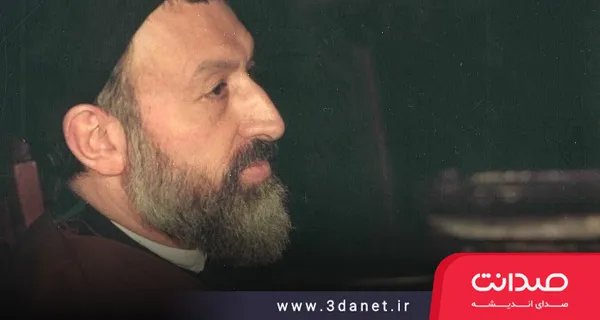
Seyyed Mohammad Hosseini Beheshti: In Islam there is no special status called clergy or exclusive guardians of the religion, such that we could create a class under this title with privileges and distinctions in dress, rank, and livelihood.
Seyyed Mohammad Hosseini Beheshti emphasizes that in Islam there is no class known as a clergy with special privileges and a mediating role between the people and religion. This structure is common in other faiths, but in Islam it is deemed invalid and condemned as the wrongful appropriation of people's property.
In the name of God, the Most Gracious, the Most Merciful
Praise be to God, Lord of the Worlds, and blessings and peace be upon all His prophets and messengers, and upon our master, the Seal of the Prophets, and upon the pure Imams from his household, and the chosen ones from his family and companions, and peace be upon us and upon the righteous servants of God.
“The Jews said, ‘Ezra is the son of God,’ and the Christians said, ‘The Messiah is the son of God.’ That is their statement from their mouths; they imitate the saying of those who disbelieved before. May God destroy them; how are they deluded? * They have taken their rabbis and their monks as lords besides God, and [also] the Messiah, the son of Mary. And they were not commanded except to worship one God; there is no deity except Him. Exalted is He above whatever they associate with Him. * They want to extinguish the light of God with their mouths, but God refuses except to perfect His light, even if the disbelievers dislike it. * It is He who sent His Messenger with guidance and the religion of truth to manifest it over all religion, even if the polytheists dislike it. * O you who have believed, indeed many of the rabbis and the monks devour the wealth of people unjustly and avert [them] from the way of God. And those who hoard gold and silver and do not spend it in the way of God – give them tidings of a painful punishment. * On the Day when it will be heated in the fire of Hell and their foreheads, their flanks, and their backs will be branded with it. [It will be said], ‘This is what you hoarded for yourselves, so taste what you used to hoard.’”[1]
“The Jews said, ‘Ezra is the son of God.’ The Christians said, ‘The Messiah is the son of God.’ This is a word that comes out of their mouths, exactly resembling the speech of those who went the way of disbelief before them.
May God destroy them. From where are such lies inspired to them? They treat their scholars and ascetics as God, and just as they treat the Messiah, son of Mary, as God, they worship them. They were not commanded except to worship the One God. There is no god but the One God. Exalted is He above the partners these people bring forth.
(The issue of monotheism in Islam is so vast and its scope of influence so great that if monotheism is set right, everything is set right.) They want to extinguish the light of God with their mouths, but God refuses except to perfect and complete His light, even if the disbelievers dislike it. It is He who sent His Prophet for guidance and direction and the religion of truth, to make it prevail over all religions, even if the polytheists dislike it and are averse to it. O Muslims! Many of the religious scholars and the learned of religion, and many of the ascetics, devour people’s wealth unjustly and without right. They turn people away from the path of God. Those who hoard gold and silver. They do not spend in the way of God. Give them tidings of God’s painful torment. On the Day when this gold and silver is heated in the fire of Hell until it becomes red-hot and it is branded, and they are branded with this very money on their foreheads, their sides, and their backs, and it is said, ‘This is the treasure you hoarded for your own end and outcome. Taste the treasure you had amassed for yourselves.’”
Tonight’s verses are almost unique in the Holy Quran concerning two matters. The important matter relates to religious scholars and pious people in society, and the relationships between the people, the religious scholars, and the so-called ascetics and the God-fearing in Islam.
Examining the Role of the Clergy in Islam and Other Religions
It is clearly understood from the totality of the verses and narrations that the clericalism customary among all religions does not exist in Islam. For clericalism in various religions consists of a group of people who possess religious knowledge and are closer to God than other people, who hold authority over the people's religion and hold authority over the people's worldly affairs in that which pertains to religion. The monies that must be spent in the way of religion must reach their hands and be spent, and if they do not reach their hands, it is of no benefit and is in vain. In short, they are the exclusive helpers of religion, in the sense that they are the exclusive authorities of religion and a kind of intermediary between the people and religion. This is the meaning of the clericalism that exists in all the world's religions that we know of, whether religions that have no divine root at all or those religions that do have a divine root.
Idol-worshippers also have guardians and custodians for their idol-temples. These custodians of the idol-temple are intermediaries between the people and the idols. When people want to come before the idols, they must obtain permission from these custodians, give them vows and offerings, pay money, and show them respects. If they wish to contact the idols directly, it is not possible. Without the mediation of these individuals, it is ineffectual.
In Buddhism and Brahmanism, which are among the well-known religions of the world, and also in the minor Indian, Chinese, Japanese, and African religions, in what the old science of religion and the modern science of religion—which has studied and transmitted much more extensively—have studied, and in what I have studied so far, in all existing religions in the world, from small to large and from well-known to obscure, there is a group of people who are the exclusive guardians of the religion, the custodians of the religion, and the intermediaries between the religion and the people, such that people can only access the religion and religious objectives through them. They can only recognize the lawful and unlawful through them, they can only understand truth and falsehood from their tongues, and they can only draw near to God through them, and they can only repent and purify their sins through them.
Willy-nilly, this position is accompanied by privileges for them; they have monies, they have respects and ranks. In particular, vows are brought to them. Ordinary people make vows to give something to the cleric so that God might resolve their difficulties.
Such clericalism does not exist in Islam and is forbidden and invalid. The aim of these verses is this, and they strike down this type of clericalism. In these verses, it says to the Muslims who initiated a new movement against the well-known religious establishment of Christianity and Judaism that many of these Jewish Ahbar (scholars) and many of these monks and ascetics, "la ya'kuluna amwala al-nasi bil-batil"; "They take the people's wealth and consume it in falsehood." They have no such right. "wa yasudduna 'an sabil Allah"; their entire method is one that distances people from the path of God. The monies that reach their hands and must be spent in the way of God, they do not spend in the way of God but hoard for themselves. They cannot spend it on themselves, because if they spend it on themselves and live very well, the people would raise an uproar. Therefore, they neither consume nor spend, but hoard! Those who hoard these monies and do not spend them in the way they must be spent, which is the way of God, should know that they will have a painful punishment, and on the Day of Resurrection, with these very hoarded monies, their foreheads, backs, and sides will be branded.
We cannot find verses more severe, sharper, more explicit, and clearer than these regarding the invalidity of this type of clerical establishment in Islam, and I know of none in the Quran. Therefore, this type of clergy does not exist in Islam at all. A clergy that has privileges under the very title of clergy—such a thing does not exist in Islam.
What exists in Islam is, firstly, that all people have direct access to God. No intermediary is needed to connect with God. Everyone can directly contact God and engage in intimate prayer with God.
Secondly, for becoming a good person and returning to God's path, the fundamental issue is that the person must return on their own. If they return on their own, they have everything, but if they do not return and someone else obtains things from God for them, such a thing does not exist in Islam, except for the prayer of any Muslim for another Muslim. Prayer is a different matter. If I myself am a good person, God gives me certain things. But the idea that since I am not willing to become a good person myself, I am lazy and do not want to turn away from my corruption, I come to a gentleman and say
The fact that people make vows and offerings to a religious scholar—this smacks of the former idolatry. These practices stem from pre-Islamic ideas that later infiltrated among Muslims. During the time of the Prophet of Islam, and likewise during the time of the Pure Imams, no special attire or special status was ever at issue. This attire belongs to later times and is particularly Iranian. These things originated from the Iranian system and spread to the Abbasid system. Even during the Umayyad period, despite many deviations, they were not like this, because their way of life was like that of the Arabs. But during the Abbasid period, when the reins of state affairs were increasingly in the hands of Iranians and those around them, and because Iranians had grown up with these very traditions, they wanted to create a similar apparatus to the Zoroastrian clergy for Islam as well. And it has advanced increasingly ever since.
In Islam, anyone can draw near to God without an intermediary, by bettering themselves. How can I become good? By fulfilling my religious duties. If I do not fulfill them, another person, even if they are a scholar or dressed in the garb of the learned, cannot bring me closer to God. When can I have my needs granted by God? When I have the worthiness for my supplication to be answered.
If a scholar prays for someone because of a vow, that scholar is distant from God. Now, if a learned and pious person prays for someone without any expectation, not even the expectation of a greeting, that prayer is much closer to being answered. But for praying to be a shop where they give me something and I pray, and then God answers my prayer—that is contrary to Islam. There is absolutely no such thing in Islam. It is anti-Islam, and how many of these things exist in our society, all of which are remnants of the era of idolatry and the era of deviation. In short, these things are anti-Islam.
From Islam's perspective, anyone can study and read to understand the Quran and Hadith and become a mullah; it makes no difference whether their clothing is a suit, white or black, or a robe, cloak, aba, and turban. Whoever studies and reads and is able to understand the Quran and Hadith well has the right to express an opinion about Islam. Expressing opinions on religious matters is not an exclusive monopoly or in the hands of specific individuals.
After the time of the Prophet, Umar goes up on the pulpit and says, 'I rule over you. Whenever you see me acting contrary to God and the Sunnah, you must turn me back from deviation,' and he asks, 'If I do not turn back from deviation, how will you turn me back from corruption?' An Arab man stands up and says, 'If you do not turn back, we will turn you back with this sword.' This is how the reckoning is in Islam.
May God have mercy on Ayatollah Naini. In a treatise, in the early days of the Constitutional Revolution, he wrote about governance in Islam. Although the book is very old and its Persian prose is not very fluent, it contains a very subtle expression. He states that in our era, both religious despotism and governmental despotism exist, and these two despotisms are the guardians of one another. The despotic scholar is the guardian of the despotic ruler, and the despotic ruler is the supporter of the despotic scholar. And indeed, that is how the matter stands. Whereas neither he has a monopoly, nor the other. None of it is exclusive.
Woe to the time when someone says something about religion contrary to the usual opinion. The cudgel of excommunication is raised against them. Of course, there is a time when someone has no study. These two matters should not be confused. There is a time when someone has read four books and learned four Arabic words, and immediately expresses an opinion about Islam, new opinions, becoming a modernist in religion. This too is a deviation. This must also be condemned. But there is a time when a learned person has studied, is seasoned, and is truly an authority on Islam, and offers a new opinion that is contrary to the leaders of religion. To strike them down with the cudgel of excommunication is contrary to Islam. It is precisely anti-Islam.
Of course, to prevent chaos from arising in people's thoughts, religious teachings must be divided into two parts:
One part concerns social regulations and laws, where if someone were to say, “I give my opinion and my opinion is authoritative, my opinion is decisive and must be the criterion for action,” chaos would ensue. For example, one person says collecting taxes is forbidden, another says collecting taxes is permissible, and a third says it is obligatory. If everyone acts according to their own opinion, and a number of people follow one of these views, social life itself becomes paralyzed. Regarding religious matters pertaining to social life, there must be an orderly system and responsible authorities who have the right to express an opinion, and these responsible authorities must work hand in hand with the government. Both the responsible religious authorities and the responsible scholarly authorities must be selected and appointed in a correct manner, and they and the government must work hand in hand. This applies to religious matters related to governance.
In religious matters that are not related to governance, freedom must be granted, and it should be said that if someone is themselves a person of considered opinion, they follow their own opinion; otherwise, they follow another person of considered opinion and act according to his view. For instance, regarding individual matters like prayer, matters related to purity and impurity, matters concerning the details of doctrinal issues, matters related to the history of Islam—whether practical or scholarly matters, it makes no difference. Those matters that lie outside the axis of social life and the arena of social life, those which the government is not tasked with enforcing, must be left free so that everyone follows their own opinion or the opinion of someone else. There is no monopoly or exclusivity whatsoever.
If the relationship between the people and the religious scholars is regulated on this basis, it is in accordance with Islam. The idea that piety and asceticism become a shopfront—there is absolutely no such thing in Islam. Asceticism is not a profession for a person! We must all be ascetics. Who is there in Islam who is not an ascetic? Everyone must be an ascetic. Each to their own share.
What is so-and-so’s occupation? One of those occupations befitting the clerical establishment. There is absolutely no such thing in Islam. In Islam, there is a set of missionary duties and a set of scholarly duties. The missionary duties, as far as possible, must also be carried out by all the people. We have virtually no exclusive missionaries. If, for the defense of Islam and for certain specific arenas, we need to train a type of specialized people, that too must be done through organizations, and their livelihood must be administered by those organizations; otherwise, as much as possible, everyone who has a profession should also be a missionary of the religion. A physician should also propagate the religion, a teacher should also propagate the religion, a judge should also propagate the religion, a merchant should also propagate the religion. Incidentally, the most valuable missionary work done in the Islamic world to date has been carried out by ordinary people. Yes, there are times when it is necessary to train a specialized missionary, a specialized orator, a specialized jurist—individuals who must devote all their strength, time, and talent to one of these general religious, missionary, and scholarly needs of the Islamic world. Wherever such a need arises, their livelihood must also be provided from the budget of the Islamic world. That is a different matter. And that too, on the condition that sufficient individuals are not found among those with independent professions. If they are found, then again there is no need for it. If truly outstanding and talented individuals are found who, while having a profession and securing their livelihood, also become jurists of considered opinion, also become valuable missionaries, also become valuable orators, then again there is no need.
In any case, in Islam there is no special status called clergy or exclusive guardians of the religion, such that we could create a class under this title with privileges and distinctions in dress, rank, and livelihood. These things do not exist in Islam.
In Islam, it is religion, the understanding of religion, and the propagation of religion that are the duties of all. It is asceticism, piety, and abstinence that, within the limits of one’s capacity and ability, are the duty of all. In Islam, it is meaningless to create a specialized class of ascetics and provide for their livelihood, because it is not among the necessities. If mentors, teachers, missionaries, orators, and jurists are necessary for the Islamic world—individuals who must devote their entire lives and time to a specific path and are no longer able to secure their own livelihood—if such a necessity arises, then within the limits of this necessity, their livelihood must be provided from the budget of the Islamic community. But then, making vows for them is meaningless. Their livelihood must be provided from the public treasury of the Muslims.
The public treasury must also be under the authority and supervision of a single apparatus and organization, not that I directly receive money and spend it, and this money I receive is mine and I spend it however I wish. I also hold it over people’s heads, saying that the khums or the Imam’s share you give is my personal entitlement, but I am doing you a favor and letting you spend a portion of it on yourselves. None of this exists in Islam. The meaning of khums, the Imam’s share, and zakat in Islam is that anyone whose financial means exceed their living expenses should allocate a certain percentage of their surplus income and net profit for the welfare of the Islamic community, and that too under the supervision of an apparatus and organization that can put it to better use. Even on the issue of the Imam’s share, scholars who are meticulous have a particular view.
In any case, the fundamental issue is that the Quran explicitly negates the idea that in Islam a specific group, with material and social privileges, should live as clergy and as exclusive men of religion, and it attacks them, turning them away from this path, and it also attacks the people.
It tells the people: if you make a vow for a religious scholar and think that this religious scholar can grant your wishes, this act is a form of shirk (associating partners with God). If you close your eyes and ears, knowing that this educated man in a hat is scientifically an outstanding person, but you look at the mouth of a turbaned man like me and reject his words without due consideration, Islam says this too carries the ruling of shirk.
In Tabarsi’s Majma‘ al-Bayan, under the verse “They have taken their rabbis and their monks as lords besides Allah,” there is a narration that says the Jews and Christians took their mullahs and ascetics as partners with God. The narration says, by God, they did not prostrate before their mullahs and ascetics. When the Quran says they took them as partners with God, it does not mean they prostrated to them. They never prostrated or fell to the ground before them. The meaning of the Quran saying they took their mullahs, ascetics, and world-renouncers as partners with God is not that they fell to the ground before them. Never! Rather, it means that whatever they said, they accepted without due consideration. Islam counts this as “They have taken their rabbis and their monks as lords besides Allah.” The meaning of due consideration is that if so-and-so is a prominent scholar and I know he is learned and righteous, and I also know this other person’s knowledge is less than his, then giving precedence to the latter’s opinion over the former’s is contrary to the logic of reason. The Quran constantly invites us to follow sound logic.
Not everyone can express an opinion about religion. Inevitably, some people become followers (muqallid) of others. But what is the criterion for emulation? Is it clothing? Never! The criterion for emulation is knowledge and righteousness. When you yourself know nothing about Islam, if you want to understand something about Islam, you must inevitably refer to an expert. By what criterion and standard do you choose this expert? The criterion is practice and piety.
Now, if there are five people, all possessing knowledge and piety, you see what these five or these hundred people say. If you see they all speak with one voice, that is very good. But if you see they have differences of opinion, the one whose knowledge, purity, and righteousness are greater is more trustworthy. These are all reasonable and logical criteria, which are the criteria for emulating the most learned (a‘lam) among us. But if today a most learned person is found who has neither a long beard nor a turban, but wears a suit and trousers, who will emulate him? So it becomes clear that we say “emulate the most learned,” but we do not act upon it. It is written in these very treatises on practical law, but we do not act upon it. We trample upon what is written in the treatise. This is a deviation, and whoever endorses this deviation, whether a scholar or a layperson, is also deviant. Because none of the scholars want to say anything beyond what they have written in their treatises.
Have you ever read in any practical treatise that the condition for a follower and a source of emulation is a cloak and a turban? In which treatise is such a thing? Have you ever seen such a thing in a treatise? We have no such treatise.
If such a deviation exists among the people, even if someone from among the learned practically and verbally endorses this deviation, it is void and contrary to Islam. This is something Islam does not want. Because if we act on the basis of these reasonable and logical criteria, we will always remain alive.
We always allow free, pure, and educated individuals to present the truths of Islam to the people without concealment, and since among these people there may be found those who are self-sufficient and do not make this work a means of livelihood, religious liberty in the face of religious despotism (as the late Naini put it) is always preserved.
If we act otherwise, if we only look into the mouth of someone who wears a special garment, that is when deviations arise. I do not think anyone from among the learned would be willing to endorse these deviations. If someone from among the learned endorses this deviation, he himself is also deviant, but I truly do not know of any. Because with whichever of today's sources of emulation we have spoken, saying, "Sir, we know someone more learned than you, and also more just than you; should we follow him or you?" he must say, "Follow him." But if he hesitates and there is guile in his work, at the very least his piety is weak.
I frankly state regarding myself that I claim no kind of superiority over any of God's creatures. Whenever a man has appeared in any corner of the world (and indeed has appeared) who is more learned, more understanding, and more pious than I, I myself have respected him and I myself have given him precedence, and I must do so. It is no favor; it is my duty.
Therefore, from the perspective of the Holy Quran, the relationship between the people and the religious scholars has a criterion different from the criterion customary in all the world's religions. I used to say this in Iran, and I say it here too. Friends often talk about how well-organized the church's institutions are. I say, God forbid that we should have institutions like the church, because our situation would become worse than it is today. Our appearance would be adorned, but we would be more hollow than we are now. The church does good activities, provides social services, and propagates through that path. All of this is very good, but I have never wanted us to have an apparatus similar to the papal apparatus in the Catholic Church. Far be it from us to wish for such a thing. It is impossible! I never wish for such a thing and I will always fight against it. Order and accounting in activities is very good, but this system is very bad, or the apparatus of the Evangelical Protestant church, which is somewhat simpler and newer, and in which its deviations are fewer.
You have heard that about fifty years have passed since the emergence of a new Christian sect that started in America. This movement has no clerical institution or church. Because they say that propagation and invitation is everyone's duty, and servitude to God can be performed everywhere, and we do not need intermediaries. In the early days when I had come, one or two of these missionaries came to our house. I asked them detailed questions about these matters. They had publications. They strive to make the text of the Bible available to everyone in various languages, as they put it, exactly the opposite of the Catholic Church, which I do not know if it is still willing for ordinary people to read translations of the Bible in various languages or not? You know that one of the most important points of contention between the Catholic Church and Voltaire was precisely this. Because the Catholic Church said we do not permit the translation of the Bible into any language. The first issue on which Voltaire rose up was that people must understand what the Bible says. Not understanding the Bible is meaningless. It must be translated into various languages, and one of the advantages of the Protestants and the Evangelical church over the Catholic Church is this. Now this group has gone a step further than this. Of course, I asked them whether there are specialized religious men among you or not? Again, it became clear that they also have them, because freeing oneself from this issue is difficult. It requires a great deal of resolve and clear-sightedness, a great deal of intellectual development. But the contamination of these is much less. In any case, from Islam's perspective, the matter of religious knowledge is encouraged for everyone.
Summary of Discussions Therefore, I will summarize my remarks:
1- All verses and narrations encourage Muslims to acquire as much knowledge about the religion as possible, and this is not exclusive to any particular group or class.
2- The issue of piety, purity, and servitude to God is a matter that concerns all human beings. All verses and narrations call all people to purity, piety, and virtue.
3- The criterion for nearness to God is greater piety, purity, and virtue, and rank and position are not the criteria for nearness to God.
4- In none of these matters does clothing play any role whatsoever.
5- In any case, the relationship between people whose Islamic knowledge is limited and those whose Islamic knowledge is greater does not exceed the relationship of a teacher and student, or the relationship between a specialist and an ordinary person. People's referral to a prominent religious scholar is either akin to a student's referral to a teacher or akin to an uninformed ordinary person's referral to a specialist; it falls into one of these two categories. This is the criterion, and there is no other criterion.
7- The value of pious and virtuous people is that they have an educational effect. That is, when a virtuous person sits and offers counsel and advice, because the words they speak arise from their heart, they also settle in the heart, and their role in society should be one of education. They should be an inspiration for purity, virtue, and piety in society. Beyond this, piety in Islam is not a matter of vows, offerings, and commerce, and we have no such thing at all.
7- In order for the matter of religious knowledge and the propagation of religion to be established on a sound basis in Islamic society, we may, at certain times, need to train religious specialists who are specialized in scholarly fields, in oratory and speech, in writing, and in propagation, so that these individuals can devote all their time to this work. In this case, this task is among the obligations of the Islamic Ummah, and such individuals must be trained, but its cost must be paid by the Islamic country and the Islamic Ummah from the public treasury, and that too with proper accounting, order, and organization.
Any kind of activity seen in the religious institutions of other peoples in the world that has the aspect of service to creation and the propagation of religion through service to creation, and drawing people's attention to spiritual matters through service, is commendable, but this is not among the exclusive duties of institutions; rather, it is among the duties of all. Since propagation in Islam is the duty of all, this work is also the duty of all. It must have its order, and it must have its activity.
This is a summary of the points we can state, from the perspective of Islam, regarding the issue related to what is called the clergy, and these remarkable verses come into the field with clarity on this matter.
I repeat once more: "And the Jews said: Ezra is the son of God"; "The Jews said that Ezra is the son of God." "And the Christians said: The Messiah is the son of God"; "The Christians said the Messiah is the son of God."
"That is their saying with their mouths"; "This is a word that comes out of their mouths." "They imitate the saying of those who disbelieved before"; "Resembling the word of the disbelieving people who came before them (who also attributed children and offspring to God, or said the angels are God's children)." "May God destroy them! How are they deluded?"; "May God destroy them! From where do they derive these great lies?"
By what path do these people go astray? They go astray by setting aside their reason and handing it over to their mullahs. Their relationship with the mullahs is not based on reason. A person must lose his reason to be able to believe in the Church. If he had reason, his reason would battle his faith. This is precisely what is now, especially, the refrain of the Church or anyone else. It makes no difference. From where are these lies told to them? "اتَّخَذُوا أَحْبارَهُمْ وَ رُهْبانَهُمْ أَرْباباً مِنْ دُونِ اللَّهِ"; "They have taken their scholars and mullahs and ascetics as lords besides God, like a minor deity, and also the Messiah, son of Mary"; while "ما أُمِرُوا إِلاَّ لِیعْبُدُوا إِلهاً واحِداً"; "They were commanded only to worship the One God." "لا إِلهَ إِلاَّ هُوَ"; "There is no god but He." "سُبْحانَهُ عَمَّا یشْرِكُونَ"; "Exalted is God above the partners they ascribe to Him."
The issue of monotheism in Islam is this vast and its scope of influence this extensive. It has so many branches and roots that if monotheism is truly established in the sense that Islam has stated, everything is set right.
"یریدُونَ أَنْ یطْفِؤُا نُورَ اللَّهِ"; "They wish to extinguish the light of God with their mouths. "وَ یأْبَى اللَّهُ إِلاَّ أَنْ یتِمَّ نُورَهُ"; "And God refuses except to perfect His light." "وَ لَوْ كَرِهَ الْكافِرُونَ".
"هُوَ الَّذی أَرْسَلَ رَسُولَهُ بِالْهُدى وَ دینِ الْحَقِّ"; "He it is who sent His Messenger with guidance and the religion of truth," "لِیظْهِرَهُ عَلَى الدِّینِ كُلِّهِ"; "to make it prevail over all religions," "وَ لَوْ كَرِهَ الْمُشْرِكُونَ"; "even though the polytheists dislike it."
And then this verse has come: "یا أَیهَا الَّذینَ آمَنُوا إِنَّ كَثیراً مِنَ الْأَحْبارِ وَ الرُّهْبانِ …". This expression "كَثیراً" (many) is so heartwarming that the Quran (of course, the Quran must be like this, and we Muslims who follow the Quran must be like this) states every matter with complete gravity: "یا أَیهَا الَّذینَ آمَنُوا إِنَّ كَثیراً مِنَ الْأَحْبارِ وَ الرُّهْبانِ"; "O Muslims! Many of the mullahs and many of these ascetics have turned mullah-ship and asceticism into a shop"; "لَیأْكُلُونَ أَمْوالَ النَّاسِ بِالْباطِلِ"; "They take people's wealth through this means and consume it unjustly." But "many" of them, not all of them! Among them, one can find a decent person, someone who seeks knowledge for knowledge's sake, piety for piety's sake, and people for guidance. Even within them, those who are like this are many.
"وَ یصُدُّونَ عَنْ سَبیلِ اللَّهِ"; "These are the ones who even turn people away from the path of God." Why? Because either people understand their trickery and become completely transformed, or people do not understand their trickery and, through them, walk the path of falsehood. It is not outside these two states. Either people understand their trickery and are led astray from this path, becoming pessimistic about all knowledge, religion, piety, and scholars, and saying, "Forget it, it's all a sham and a shop," or people do not understand their trickery and charlatanism and follow them to the end on the path of falsehood.
"وَ الَّذینَ یكْنِزُونَ الذَّهَبَ وَ الْفِضَّه"; this verse applies most of all to this very group of mullahs, because this group, as I said, and as one sees in many places, cannot even spend the money they take from the people themselves, since if they live too well, the people will turn away from them. For this reason, they do not spend the money. Nor do they spend it in the way of God, and since they are also lovers of money, like all lovers of money, they simply hoard it. Money they have taken from the people as being for the cause of God, to spend in God's way. "They hoard this money, this gold and silver," "وَ لا ینْفِقُونَها فی سَبیلِ اللَّهِ"; "and this money which ought to be spent in the way of God, they do not spend in the way of God." "فَبَشِّرْهُمْ بِعَذابٍ أَلیمٍ"; "So give them tidings of a painful punishment from God." "َیوْمَ یحْمى عَلَیها فی نارِ جَهَنَّمَ"; "On the Day when this money will be heated in the fire of Hell," "فَتُكْوى بِها جِباهُهُمْ"; first their foreheads will be branded with it so that they are well recognized, "وَ جُنُوبُهُمْ وَ ظُهُورُهُمْ"; "and their flanks and their backs," "هذا ما كَنَزْتُمْ لِأَنْفُسِكُمْ"; "This is the end and outcome of the monies you hoarded for yourselves or for your survivors," "فَذُوقُوا ما كُنْتُمْ تَكْنِزُون"; so taste that which you were hoarding.
صدق الله العلی العظیم. I hope that, first of all, we strive so that among Muslims, with this explicit teaching of the Quran, such a situation does not arise, or if such a situation exists, it does not continue, and that the relations between the religious scholar and the people, the relations between pure, pious people and ordinary people, always rest upon those logical and reasonable foundations of Islam. The ignorant learns from the scholar, the non-specialist consults the specialist; he is an authority, so one accepts his opinion. The virtuous, pure, and faithful person, with his inspiring teachings, with his actions, and with his counsel and advice, increases the light of faith in people's hearts and illuminates people's hearts. This, and only this, and nothing more. This is what I personally wish for myself and for everyone, from God.
.
.
[1]. Surah At-Tawbah, verses 30-35.
.
.
Video clip of a portion of this talk
.
.
Seyyed Mohammad Beheshti: In Islam there is no special status called clergy or exclusive guardians of the religion, such that we could create a class under this title with privileges and distinctions in dress, rank, and livelihood.
From the series of exegetical lectures "In the School of the Quran," forthcoming
Source: "The Foundation for the Publication of the Works and Thoughts of Martyr Ayatollah Dr. Beheshti" website
.
.

Discussion0 comments
No comments yet; let yours be the first voice.