Religion
Exploring the Limits and Boundaries of Other-Acceptance and Tolerance: A Conversation with Dr. Hassan Farshtian
Toleration means the conscious endurance of a differing belief, not the acceptance of its truth or indifference towards truth. Dr. Hassan Fershtian explains toleration and coexistence without epistemic pluralism, as well as the factors that produce antagonistic readings of religion.
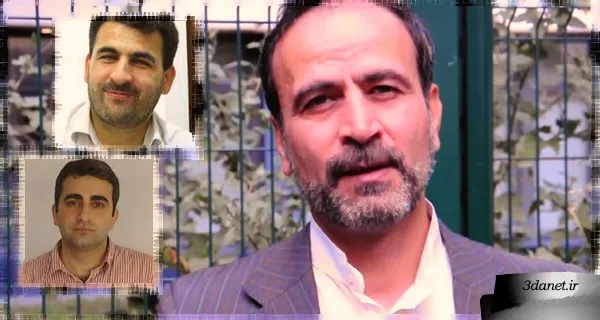
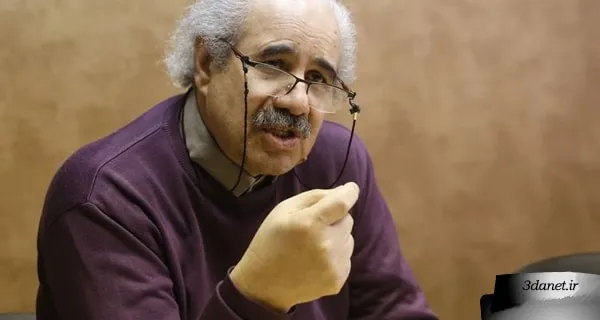
Note: Other-acceptance and tolerance are among the concepts that appear to be an unavoidable necessity in the contemporary world. In Islamic culture and civilization, peace, tolerance, and forbearance have held a special place. Peace and tolerance can also be examined in Persian literary texts. In the culture of the Iranian world, the masses of people have lived alongside one another with broad-mindedness and forbearance. Other-acceptance and tolerance constitute a culture that eschews violence and is against war; therefore, the Islamic world, which has turned into an insecure place with the spread of dogmatic readings of Islam and where peaceful coexistence in the Middle East has practically faced a serious danger, necessitates research explorations in this area of Islamic culture and civilization. To examine the limits and boundaries of other-acceptance and tolerance, we have posed questions to Dr. Hassan Farshtian (b. 1963), a cleric and religious researcher residing in Paris, the result of which written conversation follows. We hope it will be appreciated by esteemed readers.
- As a first question, what is your conception of the meaning and requisites of “tolerance” and “acceptance of the other”?
Tolerance, and its Latin equivalent “tolerance,” means enduring and accepting something with which we disagree. The word Tolerance comes from the Latin root Tolerare, meaning endurance and forbearance. Tolerance is always accompanied by an unpleasant background and premise. Historically, too, humans initially encounter an unpleasant phenomenon and rise to fight it, then the turn for tolerance arrives, and they endure it, exercising forbearance and tolerance.
From the perspective of ethicists, tolerance arises when we are faced with the duality of good and evil. Of course, evil here does not mean absolute evil, but rather the concept of relative evil, which also includes the “lesser good.” When we intend to fight evil and realize that this fight against evil leads to a worse evil, we turn to tolerance—provided, of course, that we have the will and ability to fight that evil but deliberately and consciously tolerate it.
In the seventeenth and eighteenth centuries, when the fire of religious wars had engulfed Europe, the philosophers of the Enlightenment saw the solution to ending those religious wars as establishing a ceasefire under the shadow of promoting a culture of tolerance.
John Locke, one of the prominent scholars of the Enlightenment, believed on the one hand that worldly judgment is incapable of proving the truth of one religion over others, and on the other hand, he held that compelling society toward religious uniformity would lead to irreparable violence and disorders. In his book titled “Letters Concerning Toleration”(1), he presents one of the first descriptive definitions of tolerance as follows: “The cessation of the fight against what we cannot change,” meaning we initially considered it undesirable and intended to change it, but because we cannot change it due to the corrupt consequence of fighting it, we do not fight it and endure it.
Although the concept of tolerance bears similarities to the concepts of indifference, submissiveness, and passivity, they are entirely different. In a state of “indifference,” the individual lacks motivation and feeling for action, whereas in tolerance, there is motivation—they dislike or like it but tolerate it for another reason. In a state of “submissiveness,” the individual yields to compulsions, but in tolerance, the individual has the capacity for resistance yet turns to acceptance of the other. In tolerance, the root of accepting the other, or respect for the other, stems either from “humanism” or from respect for a fundamental idea or thought, and consequently from “political liberalism.” Of course, since about the mid-twentieth century, tolerance has been used to mean an open spirit and acceptance of the other.
- Is epistemic pluralism a requisite for exercising tolerance?
For tolerance, we are not obliged to accept epistemological pluralism. There is no compulsion to regard the relationship of religions to truth as identical in order to arrive at tolerance. Adherents of religions have the right to consider their own religion closer to the truth compared to other religions; otherwise, preferring one religious belief over another would be meaningless. What brings us closer to tolerance is not the acceptance of the equal truthfulness of religions, but rather the acceptance of others' right to freely express their beliefs. In one respect, everyone must be able to speak their mind and put themselves forward, but this does not necessarily require the premise that all these words are true or that all these words partake equally of the truth.
If someone believed that all religions partake equally of the truth, the occasion for tolerance would never arise, meaning the need for tolerance would not emerge. As previously mentioned, tolerance arises where you do not accept that belief and, compared to your own belief which you consider good, you deem that other belief to be evil, or at least consider its share of the truth to be less than your own share of the truth; in this state, you will try to change that matter and even fight against it. This is where the occasion for tolerance arrives. That is, you cease the struggle and effort to destroy that other belief.
- What contexts and factors lead to the creation of antagonistic and intolerant readings of religion and creed?
First, one must see what the primary and fundamental function of religion and creed has been. Did religion come to gather a collection of "I"s together and create a "we"? Or, conversely, did it strive to create division among "us" and split us into sects?
The Arabic word "madhhab" (مذهب) means path. A creed was initially a path to lead the faithful to a place, which was undoubtedly the promised place of salvation and felicity, not conflict and misery. The problem began right here: what was a "path" was mistaken for the "goal," and since every wayfarer considered their own path superior and better and mistook it for the goal, they fell into conflict over the authenticity of their own path and the deviation of other ways.
The Latin word for religion, "Religio," comes from the Latin root "Religio- Relegere," which means "Relier," that is, to be tied together and become one. Although its terminological roots have long been a subject of discussion and debate—some held that religion is for the bond between humanity and God, while others considered religion the factor of connection among the faithful—the defining characteristic of religion has been its connecting factor. In the realm of practice and the objective world, religion takes on two functions: it has both "separated" and "connected." It has both "joined" and "divided." It has brought some individuals together and distinguished and separated others. It has "gathered" a group of individuals together and "separated" another group of individuals from one another. Now we must see which function of religion was its fundamental goal, and which function was an inevitable incident along the way?
In the view of theists, the story of humanity and religion begins with a "Super-I." That Super-I was like a hidden treasure that created humanity to be known; He Himself said: "I was a hidden treasure; I loved to be known, so I created creation so that they would know Me."(2)
When the "small I" of humanity descended, it became the vicegerent and representative of that "Great I" on earth. Then came the turn for the self-display of earthly "I"s. In this descent, in the process of give-and-take and interaction, its commonalities and differences with other "I"s became apparent. When the "I" in this process joined with like-minded and like-hearted "I"s, it transformed into a "we." "We" together become a shared collection and turn into a tribe and group with common cultural or doctrinal traits and shared traditions, a "Communauté."(3) In Islamic culture, on a macro level, the "we" becomes the "Ummah." In contrast to "us," "they" and "others" also find an objective and specific existence.(4)
When, in this journey of faith for believers, the “I”s become a “We,” the “We” must offer a definition of itself that gathers all the individuals of the “We” under one umbrella and, on the other hand, delineates and defines boundaries with others, because based on these definitions, others are “Them” and “Them” are not “Us.” After these demarcations, the manner of “Our” behavior toward “Them” is also determined.
When the “I” in this process becomes a “We,” the “We” takes the form of a “unit”(5) that explicates and defines its own identity(6), customs, and relations within itself. These customs and relations manifest in the collection of socio-political identities as “norm and anomaly,” and in the collection of cultural identities as “ethics and etiquette.”(7) In professional collectives, these customs are called bylaws or professional conduct,(8) and in the collection of religious identities, they are explicated in the form of “Sharia” or “Fiqh.” “Sharia” literally means a watering place or a path that leads a person to a place where they can access water without a rope and drink from it: “the watering place from which one draws water without a bucket.” “Madhhab” (religion/doctrine) also means a path and signifies the “way.”
These classifications initially began with doctrinal discussions, and theologians and the divines in the science of Kalam (theology) undertake the explication of these doctrinal boundaries. Then, it is the turn of the jurists and guardians of Sharia to explicate, based on the boundaries defined in Kalam, the customs and regulations, the jurisprudential musts and must-nots, and the religiously lawful and unlawful from the perspective of “Fiqh” for the masses of followers.
To highlight itself, the “We” engages in explicating its theological and jurisprudential boundaries. To explicate these boundaries, it defines new boundaries within the larger boundary. The “We” becomes smaller within itself, and a “micro-We” is formed. These “micro-We”s need to redefine themselves. In cultural identities, the “micro-We” becomes “micro-cultures,” whose definitions, the more precise, finer, more detailed, and more specific they become, the smaller their circle and ring become proportionally.
In the course of these doctrinal demarcations, much like the course of geographical demarcations, bloody conflicts and severe disputes have erupted. Catholics massacred Protestants, and Muslims declared each other apostates and excommunicated one another. At certain junctures, these frictions led to the permission to kill one another, and fatwas were issued, and heads were put to the gallows. It was not only Kalam and Fiqh that created these boundaries; “political currents” also played a significant role in these alignments. For example, from the very beginning of Islam, in the emergence of the Jabriyya and Mu’tazila movements, the footprint of political power was evident, from supporting and agreeing with one current to suppressing and opposing another.
- Which cultural situation and political conditions are effective in the spread of a culture of tolerance?
In the creation and expansion of a religiously tolerant spirit, and conversely, in the creation and expansion of a religiously antagonistic disposition, three phenomena can have a direct impact: “the sacred text,” “the interpretation of the sacred text,” and “the behavior of the believers in the sacred.” Although the first, i.e., the “text,” has its own life without our will, in its “interpretation and re-reading,” we are active agents, and “our behavior” stems from these very readings and re-readings of ours.
Culturally, revisiting the concepts mentioned in response to the previous question plays a significant role in expanding the culture of tolerance. In the previous response, the process and trajectory of these separations were noted; in this process, “we” sought to highlight our own characteristics in order to show our distinctions from “them.” Perhaps this was necessary at the outset for “us” to find an identity and gain an independent life, but halting at this stage and turning the “path” into the “goal” strengthened the culture of “distinction-seeking,” and its result was “fear of the other.” The behavior of “fear of the other” and consequently “hostility toward the other” was born of these very distinction-seeking tendencies. It seems the most important task to be undertaken is a re-reading of definitions. In this re-reading, the definitions of “us” and the definitions of “them” must be updated once again. When definitions change, “relationships” will also be re-read, and new positions will emerge based on the new definitions. In these positions, actions and reactions will also differ; “we” and “they” will not necessarily stand opposed to one another to engage in an endless battle. Each of us can define a new position for “self” and “other,” so that we may not only achieve mutual acceptance and coexistence but also walk together toward the destination.
In re-reading these definitions, we will observe that the paths to God and to the truth of the universe are numerous. It is not only “we” who bear absolute truth, nor is it certain that all “others” bear absolute error; the paths to salvation are also different. Perhaps every individual reaches God through their own particular way and path. “Al-ṭuruqu ilá Allāh bi-ʿadadi anfāsi al-khalāʾiq”—“The paths to God are as numerous as the breaths of creatures.”
Certain intra-religious perspectives, such as the mystical view of the universe, can lead us to a different understanding from the prevailing “hostility toward the other.” It seems these empathetic understandings may be closer to the original meaning of the message’s content.(9)
In the Masnavi, Rumi likens the truth of salvation to the light of the sun: if from within every house, every person looks at the sun, they will undoubtedly see the sun in a particular way and from their own point of view, and perhaps our definitions of the sun will differ according to the difference in our perspectives. Yet if one day the walls of these houses and these veils are removed, everyone will see that there is but one single sun. The sun is one, but each person’s point of view is different; in that state, everyone will encounter one sun:
Just as that one light of the sun in the sky
Is a hundred in relation to the courtyards of houses,
Yet all their lights are one,
When you remove the walls from between.
When the foundations of houses do not remain,
The faithful are like a single soul.
Hence all these conflicts among our companions;
No one heard of conflict among the prophets,
Because the light of the prophets was the sun,
The light of our senses is a lamp, a candle, and smoke.(10)
In the words of Hafez, everyone seeks the Beloved, and all places of worship are the house of love—what difference does it make whether those temples are a mosque, a church, or a synagogue.
Do not fault the rogues, O ascetic of pure nature,
For the sins of others will not be written against you.
Whether I am good or bad, go and mind yourself;
Everyone reaps, in the end, what they have sown.
Everyone seeks the Beloved, whether sober or drunk;
Everywhere is the house of love, whether mosque or synagogue.
With this perspective, our view of many of “them” will change. Many of “them,” although not of our creed, are nonetheless seeking, at the final destination, a truth that we too hope for.
Tracing the roots of these identity-formations plays a significant role in re-reading the definitions of “us” and “others,” and consequently in shaping new structures of relations. Borrowing from physical terms, the movement of “us” along its historical trajectory can be seen as a dual movement, which, to define its boundaries, has had and continues to have a centrifugal movement (Centrifg); but at the end of history, it will have a centripetal movement (Centripète).
The apocalyptic savior, the Zoroastrian “Saoshyant”(11), the Jewish “Messiah”(12), the Christian “Christ,” and the Shiite “Mahdi,” will come. The one God sent numerous and multiple prophets. In the process of descent, the multiplicity of messengers of the one God, and consequently the multiplicity of saviors, was an inevitable necessity and a requirement of the diverse climatic-cultural and historical conditions of humanity that had descended. But the multiple faiths, multiple messengers, multiple saviors, all had one God. In the process of ascent, the intellect of the perfect human will have a return to that oneness of “Tawhid.”
From a political perspective, the existence of freedom and democracy plays a significant role in expanding the culture of tolerance. In autocratic governments, whether secular and laic or religious, the culture of tolerance is consigned to oblivion. In secular dictatorial governments, due to the absence of fundamental political and cultural freedoms, the possibility of exchange and dialogue between religions and denominations vanishes, or in some cases, a reading that is less dangerous for the secular government is allowed to be presented, and other readings are stifled. In religious dictatorial governments, the same story occurs; the official reading becomes the ruling reading, and the possibility of conversation and dialogue is eliminated. But when democracy exists, the possibility of dialogue is created. These very dialogues cause the walls of distrust and “fear of the other” and “hostility toward the other” to collapse.
- What role do states play in weakening or strengthening the culture of tolerance and coexistence?
Ideological states, even if founded on a non-religious ideology, like the former Eastern Bloc, are often themselves an obstacle to the expansion of the culture of tolerance and coexistence. In Islamic lands in the nineteenth and twentieth centuries, this same obstacle was established by states. Concepts such as Caliphate and Ummah or Arabism, etc., were recognized as symbols of the solidarity of the Muslim community. Relying on the belief in the “supranationality of Islam,” the realm of the Islamic state did not limit itself to territorial and climatic boundaries. Religious leaders also presented themselves as supranational leaders. Despite the fact that the scope of sovereignty of each of these leaders and sultans was only the specific territories pertaining to them, their claim to leadership and authority expanded on a supranational scale, and each of them endeavored, through slogans, to conceive of their realms as extending beyond the territorial borders of their country.
With such an approach, it appeared very natural that the concept of citizenship would also be considered within the framework of membership in a specific belief group, such as the Arab nation or the Islamic Ummah. Although the requirements of international rules and territorial legal regulations made the implementation of these concepts problematic, and these societies were inevitably forced to observe territorial rules, no change occurred in the depths of their beliefs.
The thought and dream of reviving the Islamic Caliphate within a supranational framework is also among the ancient aspirations of Muslim societies, which come back to life whenever a suitable opportunity arises. A recent example of these tendencies manifested in the emergence of the ISIS network. Muslims with nationalities and passports from various countries, under the banner of ISIS, strive to revive the Islamic Caliphate once again. In this promised Islamic Caliphate, the territorial borders between Iraq and Syria and other regions are broken; ISIS networks in these Middle Eastern regions can even, in connection with movements like Boko Haram and Al-Shabaab on the African continent, contemplate the dream of a global Islamic Caliphate, beyond conventional territorial borders.
This theoretical basis causes the concepts of “citizenship” to be interpreted and explained in relation to membership in this very Ummah. Members of the Islamic Ummah are considered citizens of the global Islamic nation, and others are considered aliens, aliens in religion or in denomination.
Given the aforementioned intellectual foundations, it seems very natural that the same prevalent jurisprudential classifications would be invoked for categorizing citizens as well. In the well-known jurisprudential classifications, people were either Muslim or non-Muslim, and non-Muslims were either People of the Book or not. Muslims were considered members of the Islamic Ummah; but non-Muslims, as infidels, were categorized under other headings. Non-Muslims were called infidels and placed outside the Islamic Ummah. Christians, Jews, and Zoroastrians, however, were placed in an intermediate status as “People of the Book.” Infidels were divided into ḥarbī infidels and dhimmī infidels.
Such jurisprudential foundations and definitions, and such common jurisprudential and theological classifications, entered public law and constitutional law in this very form. The concept of citizenship was reduced to the concept of membership in the Islamic Ummah. Consequently, only members of the Islamic Ummah were considered the primary citizens of the Islamic society. Others (non-Muslims) were placed within the framework of other groups according to the other jurisprudential classifications. By assembling the above foundations, such states themselves create the conditions for intolerance.
To promote tolerance and coexistence, if states in Islamic lands adhere to the regulations of the “nation-state” and consider themselves servants of all citizens, they practically create the conditions for interfaith coexistence so that some do not consider themselves second- or third-class citizens. In this case, even from a jurisprudential perspective, one can broaden the horizon beyond “political jurisprudence” and contemplate “civil jurisprudence.” Civil jurisprudence brings the devout and believers of a land closer to the concept of citizenship, and accepting the foundations of citizenship paves the way more smoothly for coexistence.
- How can the institution of education be effective in establishing a culture of other-acceptance and tolerance?
Given that understanding a behavior or accepting it is impossible without knowing its roots and reasons, “education” undoubtedly plays a significant role in understanding the behavior of others or accepting it. As Helen Keller (1880-1968) said, the most important result of education is tolerance.
The United Nations designated the first decade of the 21st century as the “Decade of Non-Violence and Peace.” On this occasion in Paris, a group of Buddhists, Jews, Christians, and Muslims engaged in quadrilateral dialogues. I was also present in this group as an Islamic theologian. Each year, we would consider a topic in this regard, and after extensive discussions among ourselves, we would hold a public conference, the results of which would be published as a book. One of the issues we felt needed to be discussed was the matter of “education,” and especially “education for tolerance,” the result of which conference was later published as a book in French titled “Towards an Education for Peace”(13).(14) In this conference, relying on the importance of children’s education in Islam and the role of education in early childhood in shaping culture and customs, Islam’s attention to this matter was recounted; other religions had also extracted similar views from their own texts. The outcome of this conference was the importance of the role of education in spreading peace and tolerance among different religions and cultures.
- How can the institution of law and legislation aid tolerance and other-acceptance?
In terms of being “progressive” in relation to social developments or “following” these events, “law” and “legislation” are considered among the “subsequent sciences.” First, a historical development or event occurs, or a need for a phenomenon arises, and then the science of law enters and the law provides the ruling for that event and its solution. First, a thirst, need, and necessity must be felt in society for the law to enact regulations to meet that need. First, the invention and presence of the automobile on the streets happens, and then traffic laws are formulated to systematize driving. Before the intervention of the institution of law and legislation, its groundwork must be laid.
در کشورهای با حاکمیت دینی، این مسأله در مورد قوانین دینی نیز حاکم است. نهادهای سنتی، از نهادهای دینی گرفته تا نهادهای حقوقی، در ذات خویش، در برابر هر امر نو و جدیدی مقاومت میکنند. تفسیر رایج از دین، قانون موجود، اموری ریشهدار و جاافتاده تلقی میشوند، اینها هر چقدر ریشهدارتر باشند، تغییرات کُندتر خواهد بود. هم در علم حقوق و هم در برداشتها از دین، واقعیتهای موجود، عادتهای دینی، سنن پیشینیان و قوانین مصوبه، بسان حقیقتهای لایتغیر تلقی میشوند. همچنانکه، در تفاسیر سنتی و محافظه کارانه از دین، با تمسک به روایاتی از قبیل «كُلُّ مُحْدَثَةٍ بِدْعَةٌ»، «كُلُّ جَدیدٍ بِدْعَةٌ»(15) هر امر جدیدی بدعت، حرام و اسباب گمراهی شمرده میشوند و در برابر آن مقاومت میشود. در نزد برخی حقوقدانان کلاسیک نیز قوانین مصوبه و رویه قضایی موجود، چنین حکمی دارد.
اما حقوقدانان نوآور، در امر حقوقی، بسان نواندیشان و اصلاحطلبان دینی، در مقولههای امر دینی، میتوانند در مراحل گوناگونی، با این نوآوریها همراهی کنند. گام اول، طرح این نیاز و عطش است، نیاز ما به همزیستی، درک متقابل از یکدیگر و مدارا با همدیگر. گام دوم، به روز کردن خوانشهایی از قوانین عرفی یا شرعی است که با این نیازها همراه و همپا باشد. گام سوم، ایجاد تغییراتی در قوانین است که زمینههای عملی این همزیستی را فراهم کند. یعنی از یک سو شهروندان را از حقوق شهروندی یکسانی برخوردار سازد و از سوی دیگر، زمینههای همپذیری را از منظر حقوقی و قانونی فراهم سازد.
به عنوان نمونه، میتوان به نقش قانون و قانونگذاری در فرانسه توجه کرد. پس از نبردهای خونین با پروتستانها و دگراندیشان، سرانجام در فرمان ورسای سال 1787، که به امضای لویی شانزدهم رسید، اولین گامهای تلورانس قانونی در فرانسه برداشته شد و بر مبنای سند فوق، به غیر کاتولیکها نیز اجازه داده شد که برگه احوال شخصیه دریافت کنند بدون آن که مجبور به ایمان آوردن به آیین کاتولیک باشند. تا پیش از آن، فقط نام کاتولیکها در دفتر احوال شخصیه به ثبت رسانده میشد. در این فرمان به پروتستانها اجازه داده شد که عبادتگاههای خویش را بسازند مشروط بر این که برج ناقوس معبدشان، کوتاهتر از برج ناقوس کلیسای کاتولیک باشد. سپس همین مفاهیم در سند انقلاب فرانسه، یعنی در «اعلامیه حقوق بشر و شهروندی فرانسه 1789»(16) رسمیت بنیادین یافت و بعداً این سند به عنوان مقدمه قانون اساسی فرانسه، بخشی از حقوق اساسی و بنیادین این کشور شد. همین مفاهیم در اعلامیه جهانی حقوق بشر (1948)، در لوای مفاهیمی مثل حق آزادی عقیده، حق آزادی ابراز عقیده و به جا آوردن مناسک گنجانده شد. به مرور سایر مقررات و قوانین نیز از همین قوانین بنیادین پیروی کردند.
- بایستههای ارتباطی در درون خانواده که به نهادینهشدن خوی همپذیری و رواداری در فرزندان یاری میکند کدامند؟
در پاسخهای پیشین، به نقش آموزش و تعلیم و تربیت اشاره شد. بیتردید کانون خانواده، نخستین نهاد مربوطه میباشد که با الگوسازی عملی، والدین نقش الگوی رفتاری فرزندان میشوند. پذیرش تفاوتهای فرزندان و پذیرش نقطه نظرات مقابل آنان، از یک سو به آنان جرأت ابراز عقیده، توانایی ابراز مخالفت و اعتماد به خویش میدهد و از سویی دیگر، در پهنه عمل، رواداری به گونهای مصداقی و کاربردی به آنان میآموزد. نقش آموزشهای عملی در شکلدادن شخصیت کودکان به مراتب پُر رنگتر و تأثیرگذارتر از آموزشهای تئوری میباشد زیرا «دوصد گفته چون نیم کردار نیست.»
- نشانهها و مشخصههای رفتاری یک شهروند مداراگر و دگرپذیر از نگاه شما کدامند؟
برای بررسی درجه «دگرپذیری» بایستی دید که چرا آن «دیگری» را «من»، «دیگری» میدانم؟ از چه جهت او «دیگری» است؟ از جهت ایمان، مذهب، قومیت، زبان، علایق و...؟
به عنوان مثال، برای شناخت درجه مدارای یک شهروند باورمند مذهبی، بایستی نگرش وی به مذهبش را مورد توجه قرار داد. آیا مذهبش برای وی به مثابه یک «راه» برای رسیدن به رستگاری و سعادت است؟ یا نه، مذهبش خود یک «هدف» شده است؟ اگر پذیرفتیم که مذهب یک «راه» است، در این صورت، «هدف» نبایستی فدای «راه» شود. اگر هدف فدای راه شد، نوبت سلطه تعصبات مذهبی فرا میرسد و نشانههایش را به شکل تعصب مذهبی و در نهایت به شکل اصطکاکی، نمایش میدهد.(17)
- Which ethical rules necessitate or explain the limits of tolerance? What role does the Golden Rule play in this regard?
From different angles, different rules can be highlighted. The most famous is: Do not wish for others what you do not wish for yourself. If we become more detailed and precise, in my view, the foundation and basis of tolerance is formed by faith and belief in the "inherent dignity of the human being."
We know that human dignity is of two types: inherent dignity and acquired dignity. Inherent dignity is the dignity given to the human being at the time of their creation. This dignity is intrinsic and inherent to the human being, a part of their essence, and cannot be separated from them. All human beings have benefited and will benefit from this dignity; this dignity is the cause of human pride over other creatures because they possess comprehensiveness and perfections that other creatures do not. For this reason, God points to this human dignity, stating that other creatures and nature are placed at their service: "And We have certainly honored the children of Adam" (17:70).(18) However, this dignity does not cause one human being to boast over another, because all human beings, from the beginning of creation and by the mere fact of being created, have benefited and will benefit from this inherent dignity.(19)
Acquired human dignity is the dignity that a person attains through their own efforts. This dignity is a continuation of that initial inherent dignity. That primary dignity is the leaven and potential for this acquired dignity. That inherent dignity possesses within itself the latent potential for this acquired dignity. Through effort, a human being can attain this acquired dignity. Human beings who have striven to achieve that piety and self-refinement, and to the extent that they have reached the station of true humanity and acquired the necessary merit, are held in honor by the Creator of the universe. Thus, it is explicitly stated in the Quran that the most honorable and dignified among you in the sight of God is the most pious of you: "...Indeed, the most noble of you in the sight of Allah is the most righteous of you..." (Al-Hujurat: 13);(20)
In Islamic belief, the inherent dignity of the human being is not exclusive to specific individuals. Rather, all human beings, regardless of their race, faith, ideology, and beliefs, possess this inherent dignity, and others must respect the sanctity of this dignity and honor the bearer of this nobility. Ali ibn Abi Talib, in his covenant to his governor Malik al-Ashtar al-Nakha'i, when dispatching him to the governorship of Egypt, sets forth instructions for regulating the relations between the ruler and the subjects. It seems that Ali, knowing that Malik, due to his own religious faith and beliefs, would behave faithfully and fraternally with believers, is not concerned about Malik's conduct with believers, but rather worries about his conduct with non-believers. On this basis, he tries to organize these behaviors with a logical statement. Therefore, while advising Malik to treat citizens well, he explains to him: "Make kindness, love, and affection toward the subjects the motto of your heart. Do not be like a predatory beast toward the subjects, considering seizing and devouring them as spoils, for indeed the subjects are of two groups: either they are your brothers in religion or they are human beings like you."(21)
In this instruction, Ali explains to Malik that people are of two groups: either they are your brothers in religion or they are human beings like you. Regarding brothers in religion, religious teachings explain the faithful and fraternal conduct of the religious toward one another, and the religious, based on their religious belief, feel spiritual affections and doctrinal bonds among themselves. But regarding non-believers, the Imam tries to recall those aspects of the inherent dignity of the human being. Those aspects of inherent human dignity are themselves important affections and bonds, by recalling the characteristic of human dignity, a person bows in reverence before the sanctity of another and upholds the sanctity of the inherent dignity of human beings. Abu al-Hasan Kharaqani had written above the door of his lodge: "Whoever enters this house, give them bread and do not ask about their faith, for the one who is worthy of life at the court of God Almighty is certainly worthy of bread at the table of Bu al-Hasan."
- Is tolerance toward opponents of tolerance desirable and reasonable?
Tolerating the tolerant is easy and simple. The art of tolerance lies in tolerating the opponents of tolerance. This approach is also highlighted in the Quran. In the Quran, God commands His Prophet, in response to those who deny his mission, to speak of all-encompassing mercy: “So if they deny you, then say, ‘Your Lord is the possessor of all-encompassing mercy, but His punishment cannot be repelled from the guilty people.’”(22) The point cited in this verse is that it tells the Prophet to address the deniers by saying, “رَّبُّكُمْ ذُو رَحْمَةٍ وَاسِعَةٍ...” “Your Lord is the possessor of all-encompassing mercy.” That is, despite your denial, He remains your Lord. This very gentle word “Rabb” (Lord, Nurturer) demonstrates tolerance towards the “others” who were in conflict with God’s messenger and denied his mission, yet He still kindly and gently considers Himself their “Rabb.” God’s mercy is not only for believers in God; rather, His description as All-Merciful remains firm even in the face of antagonists. As Hafez says, “The comfort of both worlds is the interpretation of these two words:
With friends, magnanimity; with enemies, tolerance.”
- As a final question, how can one speak of tolerance and other-acceptance with those who oppose others? Which persuasive methods are effective?
The renowned American philosopher in political and moral philosophy, John Rawls (1921-2002), in his famous book “A Theory of Justice”(23), in response to the question of whether the intolerable must also be tolerated, answers yes, it must also be tolerated, because not tolerating it leads to oppression and injustice. He explains, of course, that a society has rights and duties regarding tolerance, but it does not have the right to tolerate that which causes its destruction and decline.
For the expansion of justice, there is no alternative but to tolerate dissenters and even those who oppose others. Of course, the chosen methods can vary depending on the case. But the goal of this discourse is not to suppress, humiliate, or belittle the other; rather, the goal is to persuade them and invite them to goodness and virtue.
In the Quranic discourse for inviting dissenters, three key recommendations are set forth as guidelines: logical and wise dialogue, “ادْعُ إِلَى سَبِيلِ رَبِّكَ بِالْحِكْمَةِ” (Invite to the way of your Lord with wisdom), goodly exhortation, “وَالْمَوْعِظَةِ الْحَسَنَةِ” (and good instruction), and disputing in the best manner, “وَجَادِلْهُمْ بِالَّتِي هِيَ أَحْسَنُ” (and argue with them in a way that is best).(24) These methods can serve as instructions for constructive and persuasive dialogues.
.
.
Footnotes
- Lettre sur la tolérance, 1689
- In a hadith, it is narrated that the Prophet David asked God: “O Lord, why did You create the creation? He said: I was a hidden treasure, and I loved to be known, so I created the creation so that I would be known.”
- Community
- Farshtian, Hassan, “We” and “Them”—A Perspective on the Ideological and Jurisprudential Process of the Emergence of “Us” and “Others”, Khormagas Philosophical-Social Journal, Fifth Issue, Azar 1394
- Entité/ Entity
- Identité/ Identity
- Mœurs
- Déontologie/ Deontology
- Ferechtian Hassan (co-auteur), Dialogues interreligieux pour le bien de notre humanité: L’autre, L’Harmattan, 255 pages, Paris, 2008
- Rumi, Masnavi, Book Four
- Zoroastrians await that savior, “Saoshyant” or “Sushyant,” who in Zoroastrianism or Mazdayasna is considered the final savior of the earth.
- According to Maimonides, belief in the return of the promised one, the “Mashiach,” is one of the thirteen principles of the Jewish faith. See. Daghigian, A Commentary on The Guide for the Perplexed, Vol. 1, p. 277
- Ferechtian Hassan (co-auteur), Vers une éducation à la paix, L’Harmattan, 87 pages, Paris, 2005.
- Some other published books resulting from the dialogues of the aforementioned group include:
Ferechtian Hassan (co-auteur), Dialogues interreligieux pours une éthique de l’environnement, L’Harmattan, 213 pages, Paris, 2006. Religion, paix, ET non–violence, L’Harmattan, 61 pages, Paris, 2004
- Numerous sayings of the Prophet have been narrated in condemnation of innovation (bid‘ah). One of the most famous citations, also found in Muslim and Abu Dawud, is the following hadith narrated by Jabir ibn Abdullah, who quotes the Prophet: “Whomever Allah guides, none can lead astray, and whomever He leads astray, none can guide. The truest speech is the Book of Allah, and the best guidance is the guidance of Muhammad. The worst of matters are their newly invented ones, and every newly invented matter is an innovation, and every innovation is misguidance, and every misguidance is in the Fire.”
- Déclaration des droits de l'Homme et du Citoyen
- Farshtian, Hassan, Religion as a “Path” not a “Goal” (A Look at Imam Musa Sadr’s Approach to the Rapprochement of Religions), published on 31 August 2015 on the Sadr Studies website, at the address:
http://www.mkamalian.com/?PId=129&MId=845#.VeSQIPntmko
- “We have honored the children of Adam and carried them on land and sea, and provided them with good things, and preferred them greatly over many of those We created” (Al-Isra, verse 70).
- In contrast to dignity (karamah) stands “insult” (ihanah), baseness, and abasement. This abasement is irrelevant to the inherent, ontological dignity of the human being, for from the moment the worthless drop of sperm becomes balanced, measured, and enters the orbit of humanity, becoming a human being—“From a drop of sperm He created him and proportioned him” (Abasa, verse 8)—from that moment it ceases to be described as “worthless” and, as a human being, is endowed with dignity and honored. Thus, all human offspring, by the mere fact of being created, enjoy this inherent, ontological dignity. In contrast to acquired human dignity stands the term “insult,” meaning that a human being, by his own will, steps toward baseness and humiliation, debases himself, and commits an insult against his own self. Hence, the Quran explicitly states that whomever God humiliates, none can honor: “And whomever Allah humiliates, for him there is no bestower of honor” (Al-Hajj, verse 18).
- Al-Hujurat, verse 13
- “And fill your heart with mercy for the subjects, and love for them, and kindness toward them. And be not like a predatory beast toward them, seizing the opportunity to devour them. For they are of two kinds: either a brother to you in religion, or a peer to you in creation.” Nahj al-Balagha, Letter 53, the letter to Malik al-Ashtar.
- “So if they deny you, [O Muhammad], say, ‘Your Lord is the possessor of vast mercy; but His punishment cannot be repelled from the people who are criminals’” (Al-An‘am, verse 147).
- A Theory of Justice, Harvard, HUP, 1971.
- “Invite to the way of your Lord with wisdom and good instruction, and argue with them in a way that is best. Indeed, your Lord is most knowing of who has strayed from His way, and He is most knowing of the [rightly] guided” (An-Nahl, verse 125).
.
.
Exploring the Limits and Boundaries of Other-Acceptance and Tolerance: A Conversation with Dr. Hassan Farshtian
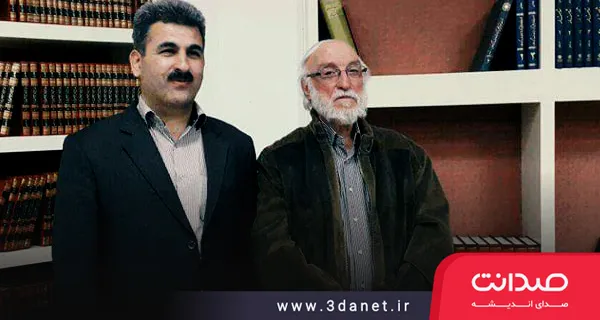
Interview by: Mouloud Bahramian - Sedigh Qotbi
.
.

Discussion0 comments
No comments yet; let yours be the first voice.