Religion
Weighing the Relationship Between Islam and Human Rights: A Conversation with Mohammad Mojtahed Shabestari
Mohammad Mojtahed Shabestari sees the relationship between Islam and human rights as a challenge between tradition and modernity. He understands 'right' not as a traditional moral right, but as a social norm for securing freedom and justice, one that arises from the realities of human historical life.
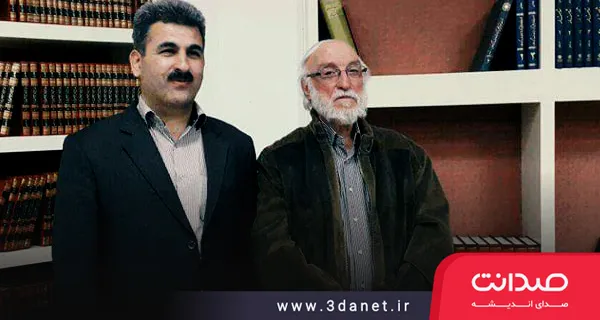
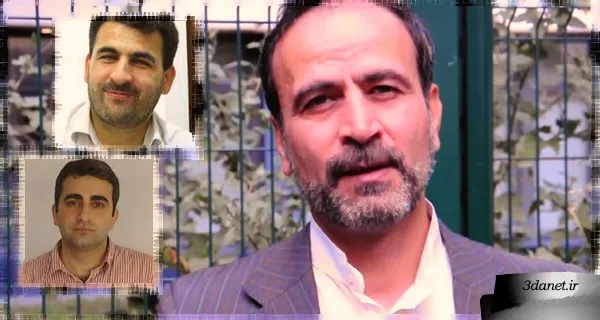
The relationship between human rights and Islam is one of the most significant instances of the challenge between tradition and modernity. What relation can religion, as one of the most prominent legacies of tradition, have with human rights, as one of the fruits of modernity? General and sometimes vague answers have been given to this question of the relationship between Islam and human rights, but none of these answers have specified all the points of conflict, nor have they presented a credible and robust theory in tracing the roots of these conflicts. When the answer fails at the stages of "description," "explanation," and "judgment," how can one expect it to offer an effective solution with sufficient theoretical support? The present interview has been conducted with the aim of providing a relatively extensive genealogy of the concept of human rights and scrutinizing the manner of engagement with it in the Islamic world, in conversation with Professor Dr. Mohammad Mojtahed Shabestari (b. 1936–), who is a well-known figure, both as a former professor of philosophy at the University of Tehran and as a mujtahid who studied Islamic sciences in the seminary, and as a prominent theologian and theorist, a considerable part of whose intellectual efforts have been in this very direction. While thanking him for his patience and cooperation, we draw your attention to the text of the conversation.
Weighing the Relationship Between Islam and Human Rights: A Conversation with Mohammad Mojtahed Shabestari
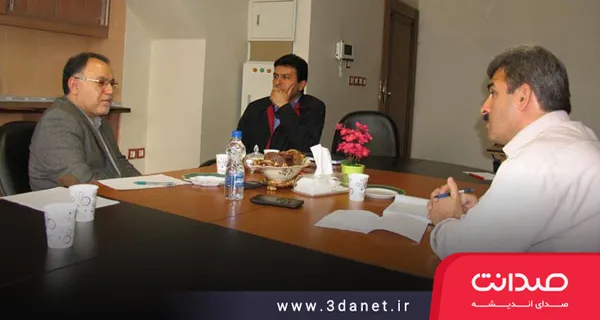
Interviewer: Moloud Bahramian
Note: The relationship between human rights and Islam is one of the most significant instances of the challenge between tradition and modernity. What relation can religion, as one of the most prominent legacies of tradition, have with human rights, as one of the fruits of modernity? General and sometimes vague answers have been given to this question of the relationship between Islam and human rights, but none of these answers have specified all the points of conflict, nor have they presented a credible and robust theory in tracing the roots of these conflicts. When the answer fails at the stages of "description," "explanation," and "judgment," how can one expect it to offer an effective solution with sufficient theoretical support? The present interview has been conducted with the aim of providing a relatively extensive genealogy of the concept of human rights and scrutinizing the manner of engagement with it in the Islamic world, in conversation with Professor Dr. Mohammad Mojtahed Shabestari (b. 1936–), who is a well-known figure, both as a former professor of philosophy at the University of Tehran and as a mujtahid who studied Islamic sciences in the seminary, and as a prominent theologian and theorist, a considerable part of whose intellectual efforts have been in this very direction. While thanking him for his patience and cooperation, we draw your attention to the text of the conversation.
- It seems that attention to the issue of human rights has been prominent in your works in recent years. Undoubtedly, human rights is one of the most important topics in the contemporary world, especially in Iran. In our Islamic society, it is also natural that the discussion of "the relationship between Islam and human rights" or "determining the status of human rights from the perspective of Islam" is a very necessary and at the same time challenging discussion. As the most important question in the discussion of human rights, I would like to ask: what is the meaning of the concept of "right" in human rights?
As far as I know, this right, in the moral sense in which it is raised in our religious tradition, is certainly not present. For instance, what right does a father have over his child, or, as our predecessors put it, what right does the subject have over the ruler? Or what right does the governed have over the governor? This right is not of that kind. Those are a type of moral rights and a series of moral recommendations about what a father should do for his child and vice versa. The right here, as far as can be inferred from the preamble of the thirty-article Universal Declaration of Human Rights, means a social norm or something that appears as a necessity of social life. In other words, right in the legal sense is the very concept that emerged with legal thought throughout the history of human life; that is, the necessity, rule, and obligation arising from the historical and social life of humanity in history, which shows that if this social life is to secure certain goals and the possibility of securing them is to be provided within it, it must submit to these obligations. I believe this is what emerges from the preamble of the Universal Declaration of Human Rights. The preamble of the Universal Declaration of Human Rights states: “Whereas recognition of the inherent dignity and of the equal and inalienable rights of all members of the human family is the foundation of freedom, justice and peace in the world; Whereas disregard and contempt for human rights have resulted in barbarous acts which have outraged the conscience of mankind, and the advent of a world in which human beings shall enjoy freedom of speech and belief and freedom from fear and want has been proclaimed as the highest aspiration of the common people;
Whereas it is essential, if man is not to be compelled to have recourse, as a last resort, to rebellion against tyranny and oppression, that human rights should be protected by the rule of law; Whereas it is essential to promote the development of friendly relations between nations;
Whereas the peoples of the United Nations have in the Charter reaffirmed their faith in fundamental human rights, in the dignity and worth of the human person and in the equal rights of men and women and have determined to promote social progress and better standards of life in larger freedom;
Whereas Member States have pledged themselves to achieve, in co-operation with the United Nations, the promotion of universal respect for and observance of human rights and fundamental freedoms;
Whereas a common understanding of these rights and freedoms is of the greatest importance for the full realization of this pledge; Now, Therefore, The General Assembly proclaims this Universal Declaration of Human Rights as a common standard of achievement for all peoples and all nations, to the end that every individual and every organ of society, keeping this Declaration constantly in mind, shall strive by teaching and education to promote respect for these rights and freedoms and by progressive measures, national and international, to secure their universal and effective recognition and observance, both among the peoples of Member States themselves and among the peoples of territories under their jurisdiction.”
Here, in fact, the philosophy and meaning of human rights is that if freedom is to exist for human beings, justice is to prevail, and peace is to reign in the world, then rights must be recognized for every individual human being. Right here means an obligation that makes others duty-bound to observe that obligation. And this obligation arises here because it seeks for freedom, justice, and peace to prevail in the world. Therefore, to some extent, it can be said that this obligation is an act and a moral philosophy that originates from and manifests itself through the realities of human historical life, not from metaphysical and philosophical discussions; in other words, it arises from the realities of the socio-historical life of humanity throughout history. And our historical experiences and the course of human life show that if freedom, justice, and peace are to be established among human beings, these rights and obligations must be recognized.
- Professor, with these descriptions you have given, what are human rights themselves and what do they say? In other words, what are the constituents and foundations of human rights?
When I speak of human rights, I mean the Universal Declaration of Human Rights, which has thirty articles. In this Declaration, what is fundamental and what is derivative, and what is intended, is already given—I am not conjuring up a picture of human rights so that one might then ask what its constitutive elements are. As constitutive elements, three categories of rights have been considered: one series of these rights concerns freedom of thought, conscience, and the expression of thought and conscience; another series concerns citizenship rights and the equality of human beings in rights, duties, and political participation; and another series concerns social rights, meaning the participation of all human beings in building social life and enjoying its benefits. The details of these three categories of rights (citizenship, social, and freedom) are set forth in these thirty articles, and provisions have been made to secure each of these three categories of rights.
- Is the nature of the content of human rights religious or non-religious? To what extent can one sympathize with suffixes such as Islamic human rights or women's human rights?
This question is a very important one, especially in the Islamic world. The nature of these human rights is non-religious, not anti-religious. When a statement, declaration, or proclamation is anti-religious, it means that it rejects a specific religion, all religions, or certain ideas. In that sense, the thirty-article Universal Declaration of Human Rights is by no means anti-religious. (I emphasize that all my remarks pertain to this very thirty-article Declaration.) However, human rights are non-religious. Non-religious in what sense? In the sense that when this Declaration was proposed and later adopted, its contents were not derived from religious texts, and in this sense, it is non-religious. It is assumed that what we mean by 'religious' in this conversation is that which is taken from religious texts, and 'non-religious' means that it is not derived from religious texts. So where was it derived from? As I mentioned in response to the previous question, it was derived from the realities of humanity's historical and social life. I explained a little about how it was derived from them. As human history unfolded, it was filled with wars waged in the name of religion and non-religion, and in the twentieth century, during the First and Second World Wars, millions of people were killed and wounded in those two wars under various pretexts and titles. Then, during the drafting of the Universal Declaration of Human Rights, the question arose for thinkers and the people of the world: on which ethical and human principle can we rely to create inviolable boundaries for all human beings on earth that would be accepted by everyone both 'in theory' and have the greatest chance of success 'in practice'? Everyone was searching for a practical ethical approach that, by relying on it and insisting on its realization, could create an obstacle to warmongering, bloodshed, and oppression. At that time, it was recognized that by learning lessons and drawing wisdom from past centuries of human history, the principle of the 'inherent dignity and sanctity of this very historical-social human being' must be revived and activated, and all efforts and measures must be employed to give that principle universal validity. The rights arising from that dignity had to be codified and made the criterion and standard for social, political, and international systems. Human beings, terrified and suffering from the two world wars of the twentieth century, had realized that until the inherent sanctity and dignity of every individual human being, solely by virtue of being human and without any distinction of belief, nationality, race, gender, or the like, is explicitly and decisively recognized, the pretexts for warmongering, bloodshed, oppression, dictatorship, and class exploitation—whether within any country or on the international stage—will not be taken away from the hands of oppressors, tyrants, and bloodthirsty individuals. They will always have pretexts, in the name of religion, nation, race, gender, economy, national interests, and the like, to attack the weak and consolidate the foundations of their oppression, and even write philosophies for their oppressions and exploitations, and if necessary, expend all the spiritual sanctities of human beings to consolidate their power. In fact, they had reached the conclusion that a theoretical antidote was needed that could stand against all pretexts, and this could be nothing other than positing the inherent sanctity and dignity of every individual human being solely by virtue of being human. With this description, this philosophy is not religious, because we do not have such a thing in religious texts. As soon as you want to derive an issue from religious texts, it would mean that God grants this right, God grants this dignity. But the Universal Declaration of Human Rights is founded on the basis that human beings, through the pains and sufferings they have endured, the wounds they have received, the wars they have witnessed, and so on, have reached the conclusion that to resolve these problems and change the existing situation, they must establish obligations for all human beings, propose them to everyone, and base this obligation on the dignity and honor of the human being, by virtue of being human, not by virtue of being a creature of God, nor by virtue of being Muslim, Christian, Jewish, Eastern, or Western. It is clear that this is a non-religious philosophy. Therefore, the identity of these human rights in this thirty-article Declaration is non-religious. In reality, human rights are a strategy and are not derived from religious texts.
- Can propositions be found in the religious texts of the Book and the Sunnah upon which human rights can be based and grounded? And what is the duty of us believing and practicing Muslims in relation to human rights, and how should we confront it as a historical and ethical necessity?
I believe that we Muslims must engage with the issue of human rights one hundred percent, in precisely the same sense as it appears in the Universal Declaration of Human Rights. Because we Muslims are now part of the global community. We cannot separate ourselves. We are definitely part of that global community that one day recognized these imperatives as necessary for itself. That is, the three issues of “freedom,” “justice,” and “world peace” are also very important issues for us Muslims. In other words, observing the rights of freedom, citizenship rights, and social rights as imperatives is a vital necessity for us Muslims wherever we live. And we must inevitably have a response to them. The historical experience of the past fifty years in most Islamic countries clearly shows that there are serious demands regarding the rights of freedom, citizenship, and social rights. These demands exist in the real world, not that someone is proposing them. When these demands exist, they must be addressed and a response must be found for them. In the position of wanting to answer them, two kinds of discussion about human rights may arise: some may say that we will discuss within the framework of inference from the Qur’an and Sunnah. (I emphasize that our discussion is about the rights mentioned in the thirty-article Declaration.) We must see what exactly those who say this are saying. Is their claim that the content and substance of these thirty articles, that is, the three categories of freedom rights, citizenship rights, and social rights, exist in the Book and Sunnah in exactly this sense and with this same content as in these three branches? Or is their claim that a part of these exists in the Book and Sunnah? Suppose someone says that the principle and foundation of these three categories of rights exist in the Book and Sunnah. We ask him: why do you refer to the Book and Sunnah to obtain these rights; what do you mean by this? Do you want to know whether God permits it or not? Whether God has granted these rights or not? If that is the intention, the moment you consider whether God has granted these rights or not, you have stripped these rights of their original identity and nature. As I said earlier, these rights were not raised in this way at all; these are the rights of human beings qua human beings, which human beings themselves, at a specific juncture in their social-historical life, declared their commitment to as a strategy for securing freedom and justice. Regarding such rights, one cannot ask whether they exist in the Book and Sunnah or not, let alone engage in reasoning on this matter. The moment you refer to the Book and Sunnah to see whether God grants these rights or not, you “distort” their content.
If some people do these things, they should not say that the rights contained in the Universal Declaration of Human Rights also exist in the Book and the Sunnah; rather, they should say we have nothing to do with that, because those are the rights of man qua man, non-religious and secular human rights. Instead, we go to the Book and the Sunnah to see what those two tell us. The Book and the Sunnah determine our duty, and we have nothing to do with human rights that are secular and supra-religious in nature. If this is the case—that they say we are concerned with the Book and the Sunnah and we go to the Book and the Sunnah to determine rights—one must see how much of these rights they derive from the Book and the Sunnah. And in what sense do they derive rights? What is beyond doubt is that whatever amount of these rights they derive from the Book and the Sunnah, it is in the sense that God has granted this right, and they should not call it the rights of man qua man. If this is so, when we look at their deductions, which they have made from this side and that, everyone has offered an opinion: some have specified four rights, some have specified five rights, and some have specified more than five. A number of them, by imitating human rights, have wanted to raise the number even beyond twenty. In any case, the important point is that these will no longer be human rights qua human, but rather rights that God grants. If Muslims deduce in this way that these are rights God grants, they must be aware of the limits of their work, meaning they can no longer prescribe for the world. They cannot say these are rights that prevent wars. They cannot say these are rights for everyone. These are rights valid for believers in God / believers in the Qur'an / believers in the Sunnah. If this is so, this becomes an internal issue of the Islamic world or an internal issue of this or that Islamic country. Because you cannot say to others, 'O people! We believe in God, and our God has given you these rights, so come and observe these rights to prevent war.' They will say: 'We cannot receive our rights from your God at all.' That is, the way the issue is framed then becomes such that we become isolated within our own Islamic countries. We cannot speak of fundamental human rights in this sense. As I said, this is an important point, and in my opinion, the most significant problem lies right here.
Following this problem, those who advocate deriving rights from the Book and the Sunnah must specify what their methods of deduction are, and one must see to what extent these can be considered valid and methodical. My point here is that they can never extract human rights, in the sense I mentioned, from the Book and the Sunnah.
- The main argument of Mahmoud Mohammed Taha (1909–1985) and his student Abdullahi Ahmed An-Na'im (1946–) in favor of the compatibility of Islam with human rights is that: the Meccan message of the Qur'an, which is essentially spiritual and embodies justice, freedom, and equality, should replace the Medinan message of the Qur'an, which emphasizes law, order, and obedience. By applying the concept of abrogation (naskh) to the Medinan message, the Meccan message becomes active and powerful once again. (= the theory of reverse abrogation) To what extent do you agree with this theory?
In response to your question, I have several questions here. Now, let us suppose we have done this. Then we were also able to resort to the Meccan texts and, through those texts, obtain a set of rights. Apparently, Mahmoud Mohammed Taha and his student Abdullahi Ahmed An-Na'im cannot deny the fact that their product is for regulating public law within Islamic countries, and they themselves acknowledge this. It is not that we present these to the world and say this is universal human rights. In addition to this, as soon as you say that God grants these, another interpreter says: 'No, God does not grant these; you said ten, God grants no more than five.' Another interpreter emerges and says: 'No, God grants no more than two rights.' Yet another interpreter says: 'If God grants these rights, and we attribute these rights to God, God must appoint a supervisor to see whether you are utilizing them correctly or not.' It is here that the path is opened wide for the governance of religious custodians.
It is not clear to me whether these gentlemen have thought about the fact that if rights come from God, given that the interpretation of religious texts is also a very complex matter and all sorts of opinions may arise in this regard, could the rights to freedoms, social rights, and citizenship rights they have in mind ever be violated by anyone—even within an Islamic country? Does this approach yield results? What is its practical consequence?
- It seems to me that the discussion of hermeneutics also arises here in the various forms of inferring and extracting rights. Why, until 1948, were the scholars, exegetes, and commentators of the Quran unable to offer such an interpretation of the Book and the Tradition?
This is the matter I wish to address. Therefore, it is not clear what the late Taha and his student aim to achieve by proposing such a subject and what they want to realize. Rights granted by God? This is something for which every religion has custodians, and the interpretation of religious texts is in their hands. This is why, during the time of Jaafar Nimeiri (1930–2009), at their instigation, the late Taha was executed. Because they were stronger than him and said it is God's will that we execute you. They want to solve a problem, but this idea, in practice, solves nothing. The second discussion is: to what extent do these texts actually have the capacity? Can the rights to freedoms, citizenship rights, and social rights contained in these thirty articles really be inferred—to this breadth—from the Meccan Quran? In my opinion, no. The reason is that the very texts these gentlemen cite, which were revealed in Mecca, were uttered in an environment where these concepts, as we understand freedom, justice, and world peace today, simply did not exist, let alone that these expressions could refer to them. The human individual, in this sense, did not exist for it to be referenced. The state in its modern sense did not exist for it to be referenced. These rights are the rights of the human individual against the state and society. That is, the state or society should not violate these rights. At the time of revelation, there was no notion of the State or Society.
- It seems that at the time of revelation, the individual was also part of the tribe, and individuality in the modern sense—where the unit entitled to rights is the individual, not society, and rights belong primarily and essentially to individuals—did not exist.
Yes, exactly. Therefore, if you want to interpret a text, there must be the possibility that the text refers to the breadth of concepts to which you wish to extend it, whereas this possibility does not exist. If this is done, the interpretation will not be an acceptable one. And ultimately, we will see that the major problem, which I cannot get out of my mind, is that these rights you have attributed to God cannot possibly refer to those that exist in the Universal Declaration of Human Rights today. The result of the work becomes a series of moral concepts appropriate to that time, period, and the circumstances of the Prophet's era in the Hijaz. I do not consider the theory of Mr. Naim and Taha to be in any way acceptable according to the methodical standards of text interpretation.
- The Syrian Quran scholar, Muhammad Shahrur (1938–), also places more emphasis on the Meccan Quran and, in order to create harmony between the Quran and human rights, while considering certain fixed characteristics for Islam, regards some of the rulings in Quranic surahs such as Surah At-Tawbah and Al-Anfal as part of the Muhammadan narratives whose time for application and citation has expired.
Shahrur's statement is different from Naim's and is correct in a sense. The work of Mr. Naim and Taha, insofar as it says these are period-specific and temporary, is correct. The point that can be criticized is that he wants to interpret the texts of the Meccan Quran in a way that refers to human rights. Otherwise, with the part where he says what was done in Medina was done temporarily in a dialectic with the reality of Medina, I am in complete agreement.
Considering hermeneutical standards, you cannot take a new situation, new concepts that have no precedent, interpret a text in such a way, and claim that it also encompasses these.
- Can the efforts of people like Mr. Naim and others be considered, in Islamic societies that are in a sense unopened and cannot accept anything other than the Book and the Sunnah, an action aimed at institutionalizing the discourse of human rights in those societies?
No. In my opinion, it cannot, because that major problem still applies, and if you believe in God's permission, you cannot institutionalize human rights. Divine address is an annex of obligation. Human rights can be institutionalized when the human being, as a claimant and protester, speaks and asserts these rights for themselves. That is human rights.
- When we reach that desirable, non-existent state where social justice prevails, human beings have citizenship rights, and there is no violence or violation of fundamental human rights, what difference does it make whether these rights have a divine origin or were arrived at by human beings themselves?
The difference is that when you attribute something to God and deduce it from verses that are open to various interpretations, it will always be something shaky. Whoever has more religious power, their interpretation will win. When I wrote in some of my writings that human rights are the only antidote against ISIS and the like, this is precisely the issue. You propose something in the name of God, and someone else proposes something else in the name of God. But when you propose it in the name of humanity, saying, "Sir, this is the claim of humanity," the other person must also be able to say that humanity's claim is something else. As soon as this is said, that this is humanity's claim, we say, "Gather human beings and let's see what their claim is." This is something you can reach a conclusion about scientifically. But when you cite a source that no one has access to, everyone will have their own interpretation. Then you have to examine the validity of these interpretations. It is simply not practical to eradicate an interpretation that has been given in this form for 1,400 years. In the experience of the Islamic Revolution itself, it was similarly imagined that Islamic teachings were such and such, that God willed it so, and that society would become a rose garden; gradually, problems emerged, and the matter was not so simple. Any religious interpreter with more political power will have their interpretation prevail. In a way, Foucault's (1926–1984) discussion on the relationship between knowledge and power comes into play. Human beings must solve the problem through their own mutual understanding. Otherwise, it is a dream and fantasy that we can simply talk and problems will be solved, and rights to freedom, citizenship, and social rights will come into being. Such a thing is only achieved through the consensus or majority of human beings themselves, that we want these things. God has His place, and we worship Him, but we, as human beings, want these things. Let us define these together and let us reach an agreement on them together. This is the only way.
When I was writing some of the articles on human rights published in the book A Critique of the Official Reading of Religion, a gentleman wrote, "What does it matter to us that many wars have happened in the world, and then they concluded that there must be human rights and that we must secure the rights to freedom and so on? Our situation is not like that of the Westerners. We do not need human rights. We can solve the issue with these same Islamic concepts, so what business do we have with human rights?" I remember when Muammar Gaddafi (1942–2011) was killing Muslims in Libya, I wrote an article titled "Today, Even God Wants Human Rights." If you don't believe it, see how one Muslim is slaughtering other Muslims! If you want to stand against Gaddafi, you cannot say, "God does not want you to kill people to maintain your own dominance." He can say, "No, God wants exactly what I say." We, as human beings, must raise the banner of human rights and say that what you are doing is against humanity, and have other human beings confirm it. Only then is the proof complete.
Why have our jurists been disarmed in the face of ISIS? They have merely sat back and seized upon the takfiri aspect of ISIS, saying that ISIS declares others to be apostates. The problem of ISIS is not only that they declare others apostates; the problem of ISIS is that it promotes violence in the name of religion. Now, suppose ISIS did not kill Shias and set aside the excommunication of Shias; would the issue of ISIS be resolved? ISIS possesses the very same foundations as you, is acting upon them, and speaks your language. So the problem lies elsewhere. The problem is that you say God says this, ISIS says God says something else, and the divergence in understandings and interpretations of religious texts results in what we see now, and this leads nowhere.
But if you arrive at the issue that we humans on earth historically face problems, what mutual obligations must we recognize for one another so that freedom, peace, and justice are realized? Let us put these up for discussion. Let us agree upon this and adhere to certain principles. You are able to discuss whether this is correct or not, whether we should do this or that, and ultimately what we should do to reach a conclusion. These are issues that can be discussed, reasoned about, and a consensus or final agreement can be reached.
- Dr. Arash Naraghi, an Iranian religious intellectual, believes that human rights are, first and foremost, of the nature of moral rights. If this claim is affirmed, would the discussion of the "relationship between religion and human rights" not be reducible to the relationship between "religion and morality"?
I have not read his article on this subject, but I too understand that a kind of moral philosophy has been developed for human rights. However, I believe that this moral philosophy has arisen from the necessities of life. That is, it is not merely abstract ethics.
- Meaning that human rights do not need morality?
The origin of human rights is not discursive ethics. Human rights have a moral hue, but their origin lies in the necessities that have emerged in human social and political life. Human rights are like other rights, arising from the realities and necessities of social life, which were later formulated and categorized. The story of human rights is something of this sort, with moral content. In the present age, speaking of human rights and insisting on their implementation is a strategy for securing freedom and justice.
- Does the assertion that religious rulings are issued by the All-Wise and Omniscient God, along with the claim that these rulings may sometimes or entirely contain hidden benefits that are difficult, or perhaps never fully, susceptible to the revelations of humanity's meager knowledge, not fuel the question of whether such a conception paves the way for extending the devotional model of ritual rulings to the domain of rulings concerning transactions?
I have answered this question in an essay titled “Why Has the Era of the Science of Legal Theory (Uṣūl) and Jurisprudential Ijtihād Come to an End?” I have reached the conclusion that the era of the science of legal theory and jurisprudential ijtihād is over and has come to an end. This assumption or theory that all the actions of human beings possess real benefits and harms, and that God, being aware of those real benefits and harms, and being absolutely omniscient, absolutely wise, and absolutely omnipotent—His wisdom, knowledge, and absolute power necessitate that a ruling be established by God for every action. These are the philosophical and theological foundations used in the science of legal theory (uṣūl al-fiqh). In the individual and social life of the world, by the requirement of His wisdom and power, He has ordained a real ruling for each of the actions of human beings that issue from them in all ages and all places, so that God’s servants, according to those rulings, perform the actions that have real benefit and abandon those that have real harm, in order that both their worldly benefit is secured and they attain felicity in the Hereafter (what was later called the felicity of this world and the Hereafter). It is obligatory upon every duty-bound individual, before any undertaking, to engage in the investigation of the ruling (searching for the divine ruling). They then added that the way to become aware of God’s real rulings is to refer to the Book (the Qur’an) and the Prophetic Sunnah, and that these rulings must be derived from these two sources, which are God’s proof to humankind. The third issue is that we are obligated to refer to the Book and the Sunnah to obtain the real ruling for actions. In that article, I demonstrated the invalidation of this theory. Meaning that before the modern era, they could determine the duty of human beings by referring to the Book and the Sunnah and deriving rulings from them, just as al-Ghazālī al-Ṭūsī (450 AH – 505 AH) said in his book “Iḥyāʾ ʿUlūm al-Dīn” that the jurist makes law for the ruler, and on this basis, he considered jurisprudence a worldly science. Al-Ghazālī’s point is precisely that the ruler desires governance and social problems must be solved; the jurist, through derivation, makes law for him. As long as this procedure prevailed, based on it, any issue that arose in devotional rulings, transactions, and policies, they would bring a jurist who would extract the ruling through derivation, and in fact, he would determine the ruling for the actions of human beings by referring to and deriving from the Book and the Sunnah. This process continued in the same way until jurisprudence came into being. The various chapters of jurisprudence were created on this very basis.
The four Imams of Sunni jurisprudence and the Shiʿi Imams also followed this same theory, which was a requirement of their living in that era. Centuries passed in this manner until the encounter of Muslims with the new European civilization began. In this encounter, a number of new legal and juridical issues and subjects emerged in the lives of Muslims, which were called “newly arisen issues” (masāʾil mustaḥdatha), such as insurance, artificial insemination, state ownership, and in recent decades, the obligation to fight against tyranny (ṭāghūt) and the obligation to establish a religious government, etc., about which jurists also engaged in derivations and, in their own opinion, once again confirmed the validity of their theological-philosophical theory. During the Constitutional Movement, too, a number of new jurisprudential derivations were made.
I have written there that, however, with the emergence of the Islamic Republic of Iran system in the year 1357 (1979) in our country, a completely unique and unprecedented historical situation has arisen that has clearly invalidated that theological-philosophical theory of the jurists and scholars of legal theory.
This invalidation lies in the fact that in this country, which has a religious government, we establish and determine law and directives for governance in the parliament, we establish hundreds of institutions, and through this legislation and the establishment of new institutions and governance that we have, human beings—whether the rulers or the people of the nation—perform thousands of actions, the duty for none of which can be derived from the Book and the Sunnah. If this is the case, then where did God’s wisdom and knowledge go? Today, Muslims, like everywhere else in the world, are left to their own devices to determine the duty for thousands of their actions that are effective in our worldly and otherworldly felicity, and in these cases, the Book and the Sunnah cannot help us at all.
- It seems that, in practice, the Guardian Council of the Constitution determines the incompatibility of the actions of human beings, both rulers and subjects, with Islamic law and prevents the approval and implementation of such a law.
If we were to draft a twenty-year plan, wholly based on the utilization of human experiences, and then hand it over to the Guardian Council for patching and mending, would this process strip the plan of its philosophical, scientific, and experiential identity, making its output something derived from the Book and the Sunnah? After its review by the Guardian Council and the confirmation that it does not contradict the Sharia, can this product be called a divine decree? At present, apart from the rulings on acts of worship, in all other matters we are conducting our livelihood and determining the duty of our actions through human reason and experience. However, someone might say that these are permissible matters (mubāḥāt), that you are performing actions within the realm of the permissible where God did not need to specify a ruling. The objection I have raised to this claim is: are not the actions we perform using human reason and experience hundreds of times more important than those actions and rulings found in the treatises of practical laws (Tawḍīḥ al-Masāʾil)? According to that theory, how can one claim that God, for instance, placed 80 percent of the servants' actions within the permissible category and did not specify a ruling for them there, yet specified a ruling for what constitutes ritual purity and impurity?
- Apparently, the jurists and legal theorists have considered the issue of permissible matters as the discretionary zone of the law (minṭaqat al-farāgh), and that according to the jurisprudential principle of 'the presumption of permissibility' (al-aṣl fī al-ashyāʾ al-ibāḥa), the default state of things is permissibility unless the contrary is proven. Moreover, proponents of this theory see it as a sign of the breadth and scope of variables compared to constants in the Sharia and jurisprudence, allowing those universal, transtemporal, and transpatial principles to be applicable in every time and place.
Yes, I am aware. If you label the use of human science and experience in life's affairs as the discretionary zone of the law, it does not solve the problem. The discretionary zone has now become our entire life. Until two hundred years ago, the discretionary zone encompassed only the exceptions. Only in the domain of personal life were certain issues termed the discretionary zone. The discretionary zone meant that the main issues were determined, but there were exceptions in some places. Now, however, the discretionary zone has become the rule, and we are living by it, that is, by human experiences. The discretionary zone has now become the majority; can it, according to that classical definition, encompass the entirety of human life?! Therefore, I have concluded that the era of jurisprudential ijtihad (in the sense that real rulings have been determined by God, and then jurisprudential rulings have been announced through the Book and the Sunnah, and our duty is to see what the obligation is whenever we encounter an action of the servants) has passed. Because the realities of our lives as Muslims in the present age invalidate that theory.
- In your view, what is the way out of this problem, and what is your alternative solution to jurisprudential ijtihad?
In my writings, I have separated acts of worship. Acts of worship are techniques for spiritual elevation; we are unable to change them and do not seek to tamper with them. However, in transactions and politics, jurisprudential ijtihad has completely lost its meaning. The problem for Muslims in the socio-political system, transactions, and politics is not that God has stated the real rulings and we must deduce their decree from the Book and the Sunnah. Rather, the main issue is that we believe in God, we also believe in the Prophet's mission, and we perform acts of worship according to our beliefs; but in socio-political life, we are in a situation where, under these conditions, we must derive everything using human intellects, sciences, and experiences. Now that this is the case, we look at our religious tradition; in our religious tradition, there are guidances in line with the use of these very sciences, intellects, and human experiences. Similarly, there are also minimal guidances in the field of political, economic, and social issues to which we should adhere, but not that we should search for real rulings, which is something else entirely.
- So, is tradition also a part of the historical process of humanity?
Yes, in the sense that human beings must draw upon their own tradition, we look upon the realm of transactions and politics through the lens of tradition. This is precisely what the hermeneutical discussion entails. It is on this basis that I say our approach to the Book and the Tradition in the present age must be a hermeneutical approach, not one of jurisprudential ijtihad. Until now, some individuals have imagined that the hermeneutical approach is something akin to jurisprudential ijtihad. I have clarified in my writings that jurisprudential ijtihad differs from the hermeneutical approach. Now, you might come and render it as a historical-ethical interpretation. For instance, that the process of the formation of social rulings and transactions was such-and-such, and a certain ethical objective was being served, and what can we learn from it today? And so on and so forth. If, with this historical perspective, you are able to derive values for preserving identity, it is acceptable.
- Given that among jurisprudential rulings, it is mostly the rulings concerning transactions that are susceptible to conflict with human rights, it appears that in the article “Moving Beyond Religious Formalism,” you have deemed the rulings on acts of worship to be just as susceptible to a critical situation as the rulings on transactions. However, in actuality, you only reported the realization of a crisis in political jurisprudence within the domain of transactional jurisprudence, and therefore, in order to overcome this crisis, you recommended moving beyond the formalism of this part of jurisprudence. In your view, what are, or could be, the signs and symptoms that might indicate a crisis in the jurisprudence of worship?
I believe that revisions must also be made in acts of worship, though there is no time for elaboration; I will only offer this point. In my opinion, the concept of “obligation” (wujub) in worship must be set aside, and in its place, the concept of “recommendation” should be put. The concept of obligation—that it is obligatory to pray at noon in such a way, and obligatory to fast—this concept, I believe, has lost its validity. Acts of worship, as a series of physical-psychospiritual practices that are beneficial for spiritual elevation, can be “recommended.” These acts of worship, when accompanied by the observance of ethical principles and ethical living, bring about mental health for many people and elevate them. I submit that what is the principle and foundation of a human being’s nearness to God is ethical virtues and the actions corresponding to them—noble “character” (khuluq), not standing up straight. One must recommend that character be changed and the structure of virtue be transformed. If that structure of virtue does not change, even if a person worships a thousand times, they will get nowhere. That is, precisely the opposite of what is prevalent now, where primacy is given to acts of worship. I am completely opposed to this practice. The recommendation should be for acquiring ethical virtues and adorning oneself with humane character traits. The recommendation for acts of worship should be secondary and without the label of obligation and duty.
- So, in your view, acts of worship are necessary as psychospiritual techniques, but they are not obligatory?
I avoid expressions from which a sense of duty in the realm of worship arises. Let me clarify this with an example. When a child is a picky eater and does not eat, their parents say: “My child, if you do not eat such-and-such food, when you grow up, you will get osteoporosis.” This same meaning can be applied to recommending acts of worship for attaining psychospiritual balance and elevation, not the meaning inherent in obligation, which contains a kind of formality and hardship. The most important transformation that must take place in this domain is precisely this removal of the label of obligation.
The audience should be told: if you can perform these acts as they are in the nature of devotional acts—that is, with the requisite beliefs and concomitants, the necessary humility and reverence, and a sound moral life—and you can prepare yourselves and live in this way, we recommend that you do these things; but if for any reason you cannot do so, perform these acts to the extent possible. There are many individuals in our society who, for whatever reason, cannot create those necessary conditions; they should be told: to the extent you can, do not sever your connection with God and do some things in this regard. In my view, a command from above does not change this situation. They should be told: if you cannot, for example, perform the daily prayers or the thirty-day fast of Ramadan with those necessary spiritual and moral conditions and preparations, perform lighter acts as a substitute, rather than being told that if you do not say the prayers and observe the fasts, it is a sin and you will be punished!
Another point is that I see the prevalent mode of inviting people to formal worship, with its obligatory label and address, as being in complete crisis. There are many individuals who are caught in a predicament of social embarrassment and perform these acts, yet do not perform them in private, and this situation has led to the spread of hypocrisy and dissimulation. As I said, if worship took on an advisory aspect, there would be no discord in families, and the individual differences and psychological types of their members, which differ from one another, would be taken into account. No one would then pray out of hypocrisy and dissimulation, and acts of worship would be performed according to people's capacities and readiness.
- My inference from your words is that you have altogether moved beyond the paradigm of duty-oriented thinking and prescriptive rulings, even in the realm of worship.
Yes, that is how I think about duty. In my view, the verses in the Quran that use the root word for 'duty' (taklīf) in no way signify the theological and jurisprudential meaning of obligation. The term taklīf, in its theological and jurisprudential sense, has a history of emergence. I currently have a book in mind, the doctoral dissertation of a foreign scholar, which examines how the word taklīf, in its current common meaning, emerged among Muslims. This book particularly analyzes the political and social factors in its emergence and also investigates how the notion that God must specify a set of eternal rulings for human beings came about. Of course, I do not deny that someone might experience duty for themselves during a spiritual connection with God in the stages of their own psychological ascent. This is different from that duty which is present in our common religious discourse and address, and which must be set aside.
I recommend that those interested in this discussion read an article I recently published online titled "How the Era of the Science of Legal Theory and Jurisprudential Ijtihad Has Passed."
- Perhaps the discussion of "the relationship between religion and human rights" can be placed under the topic of "reason and revelation," or more precisely, "reason and transmitted tradition." The late Ahmad Qabel, a bold thinker and jurist who was responsible for expanding and realizing the project of "Rational Sharia," believed regarding the relationship and status of these two categories that God Almighty and the Prophet (PBUH) have explicitly acknowledged that reason is an independent inner proof that God has established for humanity, and that the external proof (the prophets) and their divine laws only have the right to express an independent opinion in the realm where reason is silent; in all other cases, they are obliged to confirm and emphasize the judgment of reason. Therefore, reason is the primary and principal proof, and religious law is the secondary proof. What is your analysis in this regard?
It seems to me that this statement is based on the issue of 'proof' (ḥujjat) and proceeds from the concept of what constitutes a proof. Is reason a proof, or is religious law? Which is the primary proof? The concept of proof is based on the concept of duty. Someone who considers themselves duty-bound before God then asks themselves: if God questions me about something and holds me accountable, what can I say in response? This person seeks a proof. In the science of legal theory (uṣūl al-fiqh), proof is constructed in this way: with what evidence does God argue against His servants, and with what evidence can the servants argue before God? The story of proof in legal theory is this.
These statements are based on a certain belief about God, namely that God engages in disputation and imposes obligation. If someone has not structured their relationship with God on this basis, the concept of disputation is meaningless to them. Since the concept of obligation is meaningless, here we must once again touch upon the story of real ordinances, all of which form an interconnected set. Therefore, since I personally do not proceed from the concept of obligation in my theology, and my God is not a “God who imposes obligations,” consequently, He is not a God who engages in disputation, saying, “O servant, why did you do this and not do that?” Nor do I engage in any disputation before God, saying, “O God, I acted this way because I had an excuse.” Because I do not think this way in my theology, I have no sympathy whatsoever with Mr. Qabel’s statements regarding the determination of the primary and secondary proof. However, if someone were to think within the framework of obligation and proof, that is another matter. But there is a point there, which is: what is meant by reason, and what is its meaning? There are various types and kinds of rationalities and reasoning. Which reason is the primary proof? If what is meant by it are the independent rational judgments discussed in theology and the principles of jurisprudence, the truth is that these are incomplete, unrefined discussions. In the sense that the meaning of independent rational judgments, or the rational goodness and badness claimed by the Mu’tazila, is not only unclear but is entirely open to criticism, refutation, and questioning. In my view, the authoritativeness of reason is an ambiguous matter.
- Does reason, or independent rational judgments, discover universals or particulars?
Yes, these exist—the discovery of universals or particulars. How does this discovery take place? What happens if someone else discovers and interprets things differently? If this theory is to be used to answer such questions, for instance, to determine the obligations of public life affairs, the political system, public law, and criminal punishment, these obligations cannot be clarified by this ambiguous meaning of reason, because everyone speaks of a different kind of reason. And if, in the end, a general consensus is reached on a specific view, then the authoritativeness will belong to that consensus, not to the discovery of reason.
- What role can human rights play in creating understanding, eliminating discrimination, and ensuring equality among followers of the main Islamic denominations, Shia and Sunni? Does adherence to human rights have the capacity to eliminate religious, gender, ethnic, and sectarian discrimination in our country? In other words, what relationship can exist between adherence to the implementation of human rights and the observance of the fundamental rights of ethnic, gender, religious, and sectarian minorities?
It is one hundred percent effective. In the book A Critique of the Official Reading of Religion, there is an article titled “Human Rights and Interfaith Understanding.” In that article, I have explained that understanding among religions and denominations is possible only on the basis of human rights, and nothing else. Islamic denominations and religious, ethnic, and sectarian minorities are also part of religions, and it makes no difference. If understanding is to come about, it rests solely on this foundation. Why? If I approach a dialogue with you from the position that I am a Shi‘a and you are a Sunni, or a Zaydi, or Ahl-e Haqq, a Shafi‘i or a Hanafi, or from the position that I am a Muslim and the other is a Christian or a Jew, or that I am Persian and the other is a Kurd or a Turk and the like, it is impossible for me to reach an understanding with the other. The meaning of understanding is that we have a mutual comprehension of one another. For instance, that I, a Muslim, comprehend a Christian human being insofar as he is a human being. This understanding is possible when I share a common ground with him, and that common ground is humanity. At the first step, there is nothing else. That is, if you and I wish to speak with one another, I as a human being and you as a human being, you should have a human comprehension of me, and I likewise—not a comprehension of a Sunni or a Shi‘a. If this comprehension in terms of humanity exists, then the turn comes for you, the human being, to explain what your beliefs are, and for me, the human being, to explain what my beliefs are; and then we explain to one another. So we must first have a shared comprehension of each other’s being human. A shared comprehension of each other’s being human is not possible without a shared comprehension of each other’s human rights. Consider this on the scale of the social life of a country, and then on the scale of the social life of the world, where all kinds of denominations, sects, religions, ethnicities, nations, cultures, and so on exist: understanding and peaceful coexistence among the people of a country, or among the people of the world, is possible only if, in the first place, they have an understanding of one another as human beings.
These understandings must be founded on a set of norms and rights, and those norms and rights are precisely the requirements and human rights. If I conceive it in this way, my main issue is that I live with other human beings, and human beings live with me. In the first place, we must regard our problems with one another and our lack of mutual understanding as related to whether, insofar as we are human, we comprehend one another or not, whether we understand one another or not. In other words, when I sit with a Christian, the primary meaning of this sitting is that two human beings have sat together and are speaking with one another and wish to understand each other’s words—not that a Muslim has sat with a Christian. The point is that when the question arises as to what role human rights play in this dialogue and sitting, if mere being human is at issue, it means that the two parties have recognized each other as human beings and neither has come to dominate the other. From this basis, the rights of minorities and the rights of ethnic groups, the rights of children, the rights of women, and so on become open to discussion and dialogue. Therefore, human rights are the only path to understanding, not merely something that has an influence, and this idea must be promoted for the sake of accepting the other and peaceful coexistence.
- As a final question, one of the most important misunderstandings or misreadings in the realm of human rights concerns the rights of ethnic groups such as Kurds, Turks, and others, and religious minorities such as Sunnis. The dominant intellectual current in Iran narrates human rights in a way that serves the interests of the ruling majority group. The important point here is that they use the word “expediency” instead of the word “right.” As a religious new thinker who has called human rights a historical necessity, how do you see the relationship between right and expediency? Does expediency take priority over right, or, under any circumstances, do human rights have precedence and priority over any kind of expediency?
In my view, those who think this way are not intellectuals but rather “fundamentalists.” I believe human rights must be fully utilized in favor of minority rights. Human rights, by virtue of one’s humanity, are never negated by expediency. How a religious minority and majority resolve their differences when disputes arise is one issue, and what the rights of the minority are is another. Their human rights stand on their own ground and are not superseded by expediency; however, in resolving their political disputes and the distribution of power and wealth, and so on, these must be settled rationally. But human rights must never, under any circumstances, be sacrificed for expediency.

Discussion0 comments
No comments yet; let yours be the first voice.