Religion
Lecture by Dr. Abolghasem Fanaei: Methods for Resolving the Tension Between Islamic Jurisprudence and Human Rights
Dr. Fanaei argued that the conflict between Islamic jurisprudence and human rights stems from human understanding, not the essence of the Sharia; he proposed the 'rational reconstruction' of religious knowledge and ijtihad in the principles of jurisprudence as a way out of the incompatibility, and analyzed existing approaches.
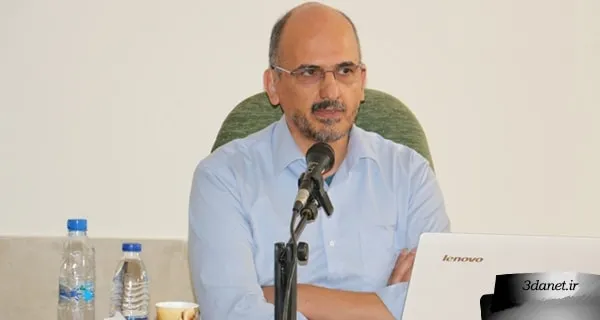
In the second part of the workshop “Approximating Imami Jurisprudence and the International Human Rights System: Possibility or Impossibility?”, Dr. Abolghasem Fanaei, professor of philosophy and faculty member at Mofid University, delivered a lecture on “Methods for Resolving the Tension Between Islamic Jurisprudence and Human Rights”.
At the beginning of his lecture, he stated that his studies, reflections, and research on human rights have mainly been conducted under the rubric of research on the relationship between religion and ethics. He then elaborated on the following preliminary points:
1) The question of “the relation between jurisprudence and human rights” is different from the question of “the relation between Sharia and human rights.”
2) The question of Sharia’s stance on a specific right is a jurisprudential question, but other questions that can be raised regarding the relation of Sharia or jurisprudence to human rights in general are not jurisprudential; rather, they are philosophical or theological.
3) No jurist, insofar as they are a jurist, has the right to alter the Sharia.
4) Sharia may be fixed or variable, but its fixity and change are in the hands of God, not in the hands of human beings.
5) Human rights have both a moral aspect and a legal aspect, and ignoring one of these aspects will lead to misunderstanding of the other.
6) The moral considerations formulated in the form of human rights pertain to “social ethics” and concern the regulation of social relations; these considerations have nothing to do with “individual ethics.”
7) From a legal perspective, human rights are prior to legal systems, because ethics is prior to law.
8) “Human rights” is different from the “Universal Declaration of Human Rights”; the Universal Declaration of Human Rights is a group of human beings’ understanding of human rights.
9) Human rights are “natural” rights, not “legislated” or “conventional” rights.
After explaining the above preliminary points, Dr. Fanaei added: The key question we are dealing with in this discussion is “Does Islam recognize human rights or not?” This recognition has two meanings: one “minimal” and the other “maximal.” The former means that the Islamic Lawgiver accepts human rights as the “framework of His Sharia” and says: My rulings do not “violate” human rights. But the latter means that the Islamic Lawgiver accepts human rights as one of the “sources of His Sharia” and says: I issue rulings based on human rights. The question of whether “human rights are the framework of Sharia or its source” is a philosophical question, not a jurisprudential one.
He then distinguished the following three different approaches to human rights from one another:
1) The first approach takes the validity of the “traditional understanding” of Sharia for granted and, based on that, judges the compatibility or incompatibility of Islam with human rights.
2) The second approach takes the validity of the “Universal Declaration of Human Rights” for granted and, based on that, judges the compatibility or incompatibility of Islam with human rights.
3) The third approach, which is a critical approach, does not take the validity of either of these for granted; rather, it seeks, through a critical engagement with the traditional understanding of Sharia on the one hand and the understanding of human rights crystallized in the Universal Declaration of Human Rights on the other, both to answer the question of the compatibility or incompatibility of the two and to find a reasonable way to resolve this incompatibility.
He continued: Given the theological presuppositions accepted by Shia theologians regarding intrinsic and rational good and evil, the moral nature of God, and divine justice, the incompatibility of Sharia itself with human rights itself is impossible, although incompatibility between our understanding of human rights and our understanding of Sharia is both possible and, in practice, some have arrived at such an understanding. But this incompatibility is between our understanding of these two categories, not between the two categories themselves. Therefore, if we accept that (1) God is a moral being, and (2) God’s being moral means that God does not violate moral norms, neither in creation nor in legislation, and (3) human rights are, in fact, moral considerations formulated in the form of the concept of rights, then logically we must accept that (4) God the Lawgiver, in the position of legislating Sharia rulings, will not violate human rights, nor will He grant anyone the right to violate these rights.
Therefore, when we speak of the relationship between human rights themselves and the Sharia itself, conflict and incompatibility are negated by the absence of the subject. That is, such a conflict cannot possibly be realized. If a conflict appears here, it originates either from an incorrect understanding of the Sharia or from an incorrect understanding of human rights. The very existence of this incompatibility indicates that one of these two understandings is erroneous, meaning it does not correspond to reality. On the other hand, neither of these two understandings is sacred, in the sense that it is beyond criticism; rather, both are equally subject to rational critique, evaluation, revision, and reconstruction. Resolving the incompatibility between human beings' understanding of the two aforementioned categories has its own specific method and mechanism. What we must do is to
If one can demonstrate that human rights are a dictate of reason or a dictate of the rational, then by appending human rights to the principle of correlation, one can prove that the God of Islam has recognized human rights in a maximalist manner, that is, as a source of religious rulings. In this way, jurisprudence becomes compatible with human rights, without this compatibility requiring independent reasoning in the principles of jurisprudence. This is because one of the sources recognized in traditional jurisprudence as a source for juristic derivation is the dictate of reason or the dictate of the rational.
However, this approach also faces many problems. Firstly, there is no consensus among the rational people of the world regarding the existence of human rights and the validity of the provisions of the Universal Declaration of Human Rights, and no one has claimed a consensus on this matter. If among the rational people of the world there is someone who does not accept human rights, the practice of the rational collapses, and the consensus of the rational is negated. Furthermore, within the framework of the traditional method of derivation, the practice of the rational is not valid in itself unless the Lawgiver's non-prohibition (rejection) is appended to it. But to show that the Lawgiver agrees with this practice and has not denied it, one must be able to demonstrate that this practice persisted up to the time of the Infallible's presence among the people. Opponents of this approach can claim that not only is this practice much later than the time of the Infallible's presence and does not extend back to that time, but also that textual evidence from the Quran and the Sunnah indicates that the Islamic Lawgiver is opposed to at least some of the articles of the Universal Declaration of Human Rights.
Even the staunchest defenders of human rights have not claimed certainty and conviction on this matter, and the reality is that claiming certainty and conviction here is an exaggeration and rationally indefensible. Meanwhile, the validity of the dictate of reason in traditional jurisprudence is conditional upon certainty and conviction. The strongest reasons that exist in favor of human rights are speculative reasons. These considerations lead us to the conclusion that demonstrating the compatibility of Islam and human rights through independent reasoning in derivative rulings is not possible.
Continuing his discussion, Dr. Fanaei pointed to three different approaches that attempt to demonstrate the compatibility of Islam and human rights through independent reasoning in the principles of jurisprudence. These three approaches are, respectively: "reverse abrogation"; "cultural translation of religious texts"; and "critique of juristic rationality." He then proceeded to explain each of these three approaches and their historical background. Reverse abrogation means the abrogation of the Medinan verses of the Quran, which appear incompatible with human rights, by the Meccan verses of the Quran, which appear compatible with human rights. The cultural translation of religious texts means being able to show that rulings seemingly incompatible with human rights are among the "accidentals" of Islamic Sharia, not its "essentials." The critique of juristic rationality also means demonstrating the incorrectness of the epistemological foundations of traditional jurisprudence.
After a brief examination of these three approaches, Dr. Fanaei said: In my opinion, apart from the third approach, any other approach presented to resolve this challenge and similar challenges faces two fundamental problems: first, it is incomplete in itself, and second, with no argument can you convince traditional jurists to accept that approach. That is, we have a missing link here, and that missing link is the "critique of juristic rationality." Until the existing juristic rationality is critiqued and its incorrectness is demonstrated, no approach will achieve the desired result, and this is what I have tried to raise and develop in my own works. What is meant by the critique of juristic rationality is the critique of the epistemological foundations of jurisprudence.
Traditional jurisprudence has borrowed many presuppositions from outside religion. Some of these methodological presuppositions are of an epistemological nature. Examining these presuppositions is also the concern of the “philosophy of jurisprudence,” not the concern of “jurisprudence itself.” It is entirely meaningless for someone to say: the principle is the prohibition of acting upon conjecture, unless the contrary is proven. Speaking of religious prohibition and permission here constitutes a category mistake in identifying the nature and locus of the issue under discussion. The question of the authoritativeness of conjectures is an epistemological and meta-jurisprudential question, not a religious or jurisprudential one, and the answer a person gives to this question expresses their epistemological stance, not the stance of the Lawgiver or the stance of Islam. The verses and narrations that in some way address this question must be interpreted as guiding one toward the judgment of reason or rational people, not as expressing the ruling of the Lawgiver. If philosophical evidence or philosophical analyses in epistemology tell us that conjectural proofs are absolutely valid and that being rational or transmitted cannot affect the epistemological validity of conjectural proofs, one cannot, citing verses and narrations, claim that the Sacred Lawgiver has not accepted the authoritativeness of rational and empirical conjectural proofs. Epistemological discrimination between rational and empirical conjectures on the one hand and transmitted conjectures on the other is philosophically indefensible. At the end, questions were raised by the audience, and Dr. Fanaei responded to these questions.
.
.
PDF file of the text of this lecture
.
.
The educational workshop “Approximating Imami Jurisprudence and the International Human Rights System: Possibility or Refusal?” was held on Monday, Esfand 21, 1396, by the Human Rights Studies Center of Mofid University in the university’s Dialogue Hall.
Source: Mofid University website
.
.


Discussion7 comments
استاد شما زیاد به خودت زحمت نده. راه حل ایجاد یک نظام سکولار دموکرات است که موارد زیر از اصول اساسی آن است 1- تمامی شهروندان در برابر قانون یکسانند و جهان بینیهای های تمامیتخواه رقیب مثل ولایت فقیه و استالینیسم یا فاشیسم هیچ اثری در قوانین نداشته باشند. قوانین تنها برپایه پذیرش حق طبیعی حیات همه انسانها و دانش بشری نوشته میشود. 2- هر کسی هر عقیده ای که دوست داشت در محدوده شخصی میتواند داشته باشد: شیعه، سنی، بهایی صوفی، لامذهب، زد دین، مسیحی، یهودی، زرتشتی، معنویت گرای جدید و کمونیست، فاشیست، استالینیسم، صهیونیسم و ... البته هر کسی میتواند هزار بار عقیده قبلی خود را عوض کند. همه هم میتوانند در محدوده فرهنگی نظرات هم را به شدت نقد کنند. 3- عقیده فردی این افراد هیچ اثری در قوانین نداشته باشد. بنابریان اگر کسی خواست کس دیگر را به جرم ارتداد مجازات کند، هم عامل جنایت و هم صادر کننده فتوا در دادگاه زد تروریستی به شدت مجازات شوند. هیچ کس نمیتواند برپایه این یا آن متن قرون وسطایی ( قرآن یا تورات) و این یا آن متن جدید (نبرد من هیتلر) از دیگران جزیه (جریمه) بگیرد و یا آنها را از زندگی، کار و تحصیل محروم کند. 4- تمامی بنیادهای مذهبی باید منابع مالی خود را به اداره مالیات معرفی و اگر سود داشته باشند مالیات به دولت سکولار بدهند. 5- تمامی موقوفات مذهبی در زیر کنترل دولت سکولار قرار میگیرد و درآمدهای آنها پشتوانه صندوق بازنشستگی و تامین اجتماعی میشود. در سایه یک چنین قوانینی معتقدین به آیه 29 سوره توبه یا خودشان را آداپته میکنند یا میروند جایی که داعش آن را اداره میکند زندگی میکنند. (شامل حال فاشیستها و استالینیستها هم میشود)
آیا چنین ادعاهایی در امکانا ت موجود کامنت ها مجال پاسخ به مخاطبین میدهد؟
اگر قواعد حقوقی وقضایی اسلام تغییر کند واین احکام متناسب با حقوق بشر طرح شود که البته فقط توسط فقیهان ومراجع قابلیت اجرایی پیدا خواهد کرد انگاه مطمئنا دین اسلام دین عطوفت ومهربانی ورحمت شناخته خواهد شد متاسفانه با اینکه متن قران بشدت درگیر زمان ومکان است مسلمانان ودر راس انها فقیهان میپندارند که در پشت هرایه تاریخی پیامی فراتاریخی نهفته است که برای همه اعصار است وقابلیت اجرایی برای تمام دورانها را دارد مطهری هرگز ایات برده داری را نقد نکرد مطهری ان قسمت را که مربوط به ازادی رقبه بود پررنگ نشان میداد اسلام هرگز برده داری را نهی نکرده است بلکه انرا تایید هم میکند ولی مدارای نسبت به بردگان را توصیه میکند مطهری هرگز ارتداد را رد نکرد هرگز جهاد ابتدایی را رد نکرد اگر فقهاو مراجع قدمی در ارتباط با این تغییر کلی وزیر بنایی بردارند مطمئنا خواهند توانست دوباره اسلام را احیا نمایند لازم به ذکر است که کوروش که قریب 1300 سال قبل از اسلام میزیسته به سپاهیان خود توصیه میکرده است که وقتیکه سرزمینی را فتح میکنند انرا غارت نکنند به زن وفرزندان انها تعرض نکنند دین انها مربوط به خودشان است انهارا مجبور به برگشتن از دین خودوپذیرش دین جدید نکنند
بنظرم تنها راه توجه بیشتر به تاثیر عمیق شرایط زمان و مکان در نزول احکام در صدر اسلام است. اساسا هیچ قانون و حکم حقوقی نمیتواند بدون در نظر گرفتن شرایط زمانه و ظرفیت مخاطبین آن وضع شود . در خود متون دینی شواهد فراوان برای این مدعا وجود دارد. حدیث مشهوری از پیامبر (ص) نقل شده که فرمودند ما گروه پیامبران مامور شده ایم که به اندازه عقل مردم با آنان سخن بگوییم. در حدیث مشهور و زیبایی از امام صادق در وصف قرآن آمده است العبارات للعوام والاشارات للخواص والطائف الاولیا و الحقایق للانبیا . به صراحت امام صادق میگوید کلمات و صورت عبارات قرآن برای عوام آن هم عوام 1400 سال پیش صحرای عربستان و متناسب با فهم آنها نازل شده است. نگاهی به آیات قرآن هم این مدعا را تایید میکند . فی المثل قرآن میگوید آیا به شتر نمینگرند که چگونه خلق شده . در وصف آیات الهی شتر را مثال میزند فرضا کهکشان را مثال نمیزند . به این علت ساده که اعراب جاهلی فهمی از کهکشان نداشتند اما شتر را خیلی خوب میشناختند. مرحوم مطهری با همین متدلوژی (مقتضیات زمان ) برده داری را رد میکند بدون وارد آمدن نقدی بر اسلام . همینجا لازم به ذکر است که احکام فقه اسلامی حتی در مورد مثلا برده داری نسبت به زمان خود و حتی قرنها بعد بسیار مترقی بوده است . همین متدلوژی را میتوان فرضا به حقوق زنان حقوق اقلیتهای دینی و جهاد ابتدایی هم تعمیم داد . گوهر همه ادیان معنویت است نه قواعد حقوقی و قضایی.
اقا مرتضی عزیز عقل مستقل از گرایشها عقل بدیهی میزان سازگاری وناسازگاری است با مثالی برایتان مسئله را روشن میکنم دروغگویی بد است با کدام عقل بد است ؟ شریعت هم با ان عقل ناسازگاری دارد دزدی بد است با کدام عقل بد است ؟ شریعت هم با ان عقل ناسازگاری دارد شریعت متاسفانه همه انسانها رادر خدمت خود میخواهد قتل بد است ولی اگر درراه دین باشد پاداش چنین وچنان دارد !!!!تهمت بد است ولی اگر درراه خدا به دشمنان خدا تهمت بزنید پاداش چنین وچنان دارد !!!!!نارو زدن وفریب دادن بداست ولی درراه خدا پاداش دارد و..... همان عقلی که به شما میگوید دزدی بداست همان عقل میگوید کسی را نمیتوان بدلیل بیان اعتقاداتش حکم مرگ برایش صادر کرد ولی شریعت میگوید میشود پاداش اخروی هم دارد !!!!
سلام سوال من اين است كه آيا أساسا خود شريعت قابل فهم است؟ايا ميتوان فهمي از شريعت را در نظر گرفت كه انطباق تام با خود شريعت داشته باشد؟منظورم اين است كه سازگاري يا ناسازگاري را من از كجا مي فهمم تا به دنبال حل ناسازگاري باشم؟چه فهمي و چه كسي ميزان اين سازگاري و ناسازگاري است؟كدام عقل و عقل چه كسي؟
سخنرانی بسیار خوبی بود تلاش دکتر فنایی برای اشتی دین ودموکراسی ویا فقه با حقوق بشر قابل تقدیر است امیدوارم که ایشان دراین راه به سر منزل مقصود برسند هرچند راهی پرفراز ونشیب وصعب العبور است وشاید هم بتوان گفت نشدنیست مگر انکه فقها هم تلاشی در این زمینه صورت دهند و طرحی نودراندازند