Political Science
Hossein Hooshmand's Lecture: 'Human Rights as Political Legitimacy'
After the Second World War, human rights became the benchmark of state legitimacy, yet their concrete applications remain contested. Drawing on the thought of John Rawls, a middle reading of human rights is articulated—one that goes beyond physical security but stops short of liberal-democratic rights.
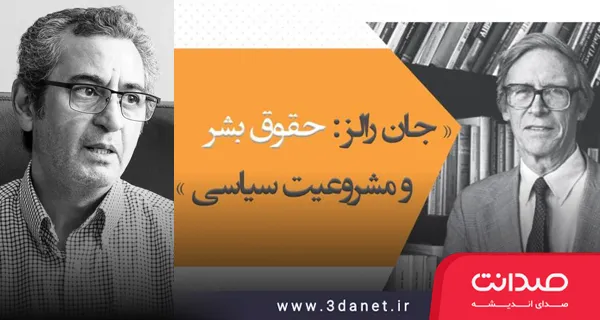
Hossein Hooshmand
Human Rights as Political Legitimacy*
Click here to receive the audio of this lecture
The serious and wide-ranging discussions and debates that led to the drafting of the 1948 Universal Declaration of Human Rights show that the primary aim of this declaration—which was ultimately agreed upon by all members—was to propose and provide measures to prevent the recurrence of the genocide and massacres that occurred during the Second World War ۱. As Jacques Maritain writes in an introduction to the "Universal Declaration of Human Rights": "(The essential point considered by the members involved in drafting the 1948 Universal Declaration of Human Rights) was not the founding [of human rights] on shared theoretical ideas; rather, their goal was to reach common ground for practical action (to prevent genocide/systematic violation of human rights). The members were not seeking to achieve a single understanding of the truth of the world, humanity, and knowledge; rather, they sought agreement on a set of criteria and standards as guidelines for action."
Before the adoption of the Universal Declaration of Human Rights in 1948, governments treated their citizens with sheer coercive force; but after the adoption of the said declaration, securing the fundamental rights of citizens came to be considered one of the essential foundations for the legitimacy of political systems. Now, every political system is obligated to secure the fundamental rights of all its citizens—regardless of their social, racial, ethnic, and religious status. This moral and political legitimacy of the state will only be stripped away through the systematic violation of human rights. Within the framework of standards governing international relations, when a political regime loses its legitimacy, it will also lose its immunity. Therefore, states possessing political legitimacy will, at the discretion of the United Nations, have the possibility to conditionally and limitedly intervene (diplomatic and economic sanctions or military intervention) in the internal affairs of that regime in order to restore the lost rights (the highly contentious issue of humanitarian interventions, which is an independent subject and requires another occasion for examination) ۲.
Thus, after the end of the Second World War, human rights have become the most fundamental principles in international ethics and relations. Some experts have called this transformation the "human rights revolution." The human rights revolution, despite its increasing and undeniable impact on the modern world, has not been immune to misunderstandings and unjust interpretations. The notion that every human individual possesses a set of fundamental rights is now globally agreed upon; however, there are extensive and irresolvable disputes regarding what these rights are, what their nature is, and upon which theoretical and epistemological foundations they are justifiable.
1- Two Common Approaches to Human Rights: Maximalist and Minimalist
To explain these disputes and ambiguities in understanding the content and foundations of human rights, let us look at two distinct and common approaches in contemporary political philosophy on this subject:
1- The cosmopolitan egalitarianism approach; 2- The humanitarianism approach.
The cosmopolitan egalitarianism approach believes that human rights correspond to all the rights that the concept of justice (in its liberal sense) entails. According to this view—as a monistic ethical theory—an identical set of norms based on justice are applicable to all human beings in any circumstances and at any time and place. This requires that egalitarian principles be applied uniformly throughout the world. Individuals belonging to any society—regardless of their historical and social conditions and context—must possess the same rights that citizens in liberal-democratic societies enjoy. Hence, it is thought that guaranteeing and securing human rights necessitates a liberal-democratic system. This approach—which is also a prevalent theory in our intellectual sphere—can be called a maximalist interpretation of human rights.
The second approach—that is, the humanitarian or speciesist creed—considers human rights to be limited to those rights that are pre-institutional; that is, rights that human beings possess even in a world without social and political institutions. According to this view, those rights that presuppose specific institutions, namely civil, political, and economic rights such as the right to political participation, the right to education, and public health, are in fact expressions of individuals' interests rather than their natural rights. From this standpoint, human rights are limited to negative rights. Accordingly, speciesist theorists restrict human rights to the right to security of life. In contrast to the previous approach, this latter theory can be called the minimalist approach. The problem with this reading of human rights is that if we accept it, we must then regard a great many of the global dialogues and declarations that have taken place since the 1948 Universal Declaration concerning the nature and content of human rights as misleading and futile. For these declarations generally contain a considerable measure of rights (such as the right to political participation, the right to education, and public health) that are institution-based.
With this brief reference to two prevalent theories of human rights, in the continuation of this writing, a plausible alternative reading and approach will be examined, according to which the scope of human rights is narrower than the rights claimed by the maximalist reading and broader than the rights accepted by the minimalist approach. This different interpretation is drawn from the book The Law of Peoples by John Rawls. ۳ In this article, we will examine Rawls's idea of human rights as well as the grounds for its justification.
In The Law of Peoples—which is part of his theory of political liberalism—Rawls extends his reflections on justice to a global horizon composed of peoples who have distinct traditions, values, and conceptions of justice. For reasons that will be examined, he presupposes a narrower content for justice on the global horizon (justice among peoples). He calls this limited conception of justice, which includes peremptory, necessary, fundamental, and universal rights, a "proper subset of human rights." From this viewpoint, the universality of human rights is not justified by relying on the reason that every individual, by virtue of their humanity, possesses a set of rights, but rather is based on the assumption that every reasonable secular or religious moral system is compatible with and supportive of those rights.
Pure human rights comprise a set of rights that include:
The right to life (including the means of subsistence and security); the right to liberty (including freedom from slavery and from any regime based on a system of serfdom, immunity from forced occupation, and the right to enjoy freedom of conscience to the extent that it entails freedom of thought and religion); the right to private property and the right to enjoy formal equality, as expressed in the rules of natural justice (issuing identical rulings in similar cases). (The Law of Peoples, p. 66)
The aforementioned rights play two vital roles in ethics and international relations: 1. These rights determine the principles and rules governing wars (entering into war is morally permissible solely for self-defense or to prevent the systematic violation of human rights—such as genocide); 2. The internal autonomy of political regimes is limited and conditioned upon the observance of human rights. In other words, the provisions of human rights are the measure and criterion of the legitimacy of political systems; this category of rights sets the minimum necessary (and not sufficient) standards for the justifiability or decency of judicial and political systems. Rawls does not consider these rights as comprehensive human rights, but rather as a proper subset of the rights inherent in justice (in its liberal sense). In other words, human rights are distinct from the rights that a liberal-democratic state guarantees and secures.
Accordingly, Rawls believes that of the 30 articles of the Universal Declaration of Human Rights (1948), Articles 3 through 18 fall within the definition of human rights in its narrower sense. He considers some of the rights proposed in this declaration to be incompatible with its claim to universality. For example, Article 1 of human rights, which expresses the equality of all human beings, reflects the ideal and aspiration of liberalism (and thus, in societies based on Confucianism or Hinduism, which possess a hierarchical social structure, this article may not be acceptable). Or Article 24 of human rights, which states that workers must be paid on holidays, or Articles 26 and 27, which emphasize the right to a full education for the complete development of the human personality, including scientific and artistic education, require specific social and economic institutions that have probably not been formed in many non-democratic societies. Rawls also considers Article 19, which expresses the right to freedom of expression in its liberal sense (meaning liberty of conscience, which requires the separation of religion and state), and Article 21, which speaks of political participation based on democracy, to be beyond the scope of human rights. Rawls does not consider the aforementioned rights to be among human rights proper; because he views human rights as part of the broad requirements and exigencies of justice that can, in principle, be secured by a multitude of political systems and not only by liberal capitalist states.
From Rawls's perspective, "human rights proper" are an indispensable requisite of any conception of justice that is based on the common good. Hence, human rights are not confined to liberalism or specific to the culture and intellectual tradition of the West. According to Rawls's theory, the concept of justice is broader than the concept of human rights. The realization of justice – in its liberal sense – depends on a democratic system; but securing human rights is not specific to liberal democracy; rather, any legitimate and justified political system must guarantee and incorporate them. In other words, democracy is not an instance of human rights. This is a key distinction that is often overlooked in prevailing and dominant theories of human rights.
2. The Foundations of Interpreting and Justifying Human Rights from Rawls's Viewpoint
But where do these rights originate, or in other words, what are the foundations of their justification? In the theory of justice as fairness, Rawls derives the content of justice from the concept of the democratic citizen (as free and equal persons), but here, he derives human rights from the concept of membership in an organized political society. In such a society, regardless of whether it is democratic or non-democratic, its members will possess fundamental human rights solely by virtue of their membership in that society. Membership in an organized political society requires that its institutions secure and guarantee the fundamental interests of its members; social membership necessitates that a person's interests be taken into account in the process as well as in the content of the programs and decisions of the society's leaders and agents, and this requires that political leaders be accountable to the members of society. Rawls says that human rights are the minimal but necessary preconditions for social interaction based on mutual respect among the members of a society. Denying these rights is tantamount to endorsing a society based on force and slavery; that is, a society in which coercion, despotism, and sheer power rule instead of social cooperation and collaboration.
From Rawls's perspective, securing human rights is a necessary – but not sufficient – criterion for the well-orderedness of a socio-political system. This point means that at least two other conditions are required for a system to be called well-ordered. These conditions are that, first, the relationship between the government and the people, and the political interaction of the people with one another, must be based on moral principles – that is, the mutual duties that justice based on the common good requires – and second, all members of society must have a meaningful role in political decision-making.
Rawls’s interpretation of human rights is based on the criterion of decency and an inquiry into the foundations of a decent hierarchical consultation regime. In his view, the criteria of decency for a society’s political and judicial system are among the necessary conditions for the realization of social justice; therefore, any society— liberal or non-liberal —that is organized in accordance with justice based on the common good will guarantee and secure human rights.
Two general and fundamental criteria for the decency/acceptability of a political system are: refraining from military aggression against other countries and guaranteeing the human rights of all members of society. Rawls elaborates on these two stipulations as follows:
1- A decent/acceptable regime or society does not pursue aggressive, nationalistic, or ideological aims, and seeks to obtain its legitimate demands through diplomacy, commerce, and other peaceful means. Such a society recognizes the political and social systems of other societies.
2- The second stipulation has three components: a) The first component is that the legal system of a decent/acceptable hierarchical society must secure what are called human rights—according to Rawls’s reading (i.e., in accordance with the theory of justice based on the common good).
b) The judicial system of a decent/acceptable society must impose valid duties and responsibilities (in addition to human rights) as binding upon all persons within a nation.
c) That judges and other officials and agents of the judicial system must sincerely and in good faith (bona fide) believe that the society’s legal system ought to be regulated based on the theory of justice grounded in the common good (The Law of Peoples, pp. 64-67).
A Model of a Decent Hierarchical Consultation Regime
By devising a hypothetical model of a decent/acceptable hierarchical consultation society called Kazanistan, Rawls further elucidates the criterion of decency (The Law of Peoples, p. 65). Kazanistan is a Muslim society and there is no separation between religion and state (though a decent society need not necessarily be religious). In Kazanistan, the highest political and judicial positions are reserved only for Muslims. This society has a state religion that controls domestic policy; therefore, adherents of the dominant religion may enjoy privileges from which others are excluded, although followers of no religion are persecuted. Other religions are not only tolerated, but their followers’ right to live a flourishing life according to their faith and rites is supported, and their participation in the civil culture of society is encouraged.
Thus, this model of a decent Islamic society adopts an enlightened and understanding approach in its encounter with other religions: in the political culture of this society, it is believed that differences between religions are by divine will and decree, and that the punishment for false and erroneous belief rests solely with Him. Such beliefs provide the basis for a theory of religious toleration and explain how different religious societies can adopt an approach based on mutual respect (the acceptable record of religious toleration in Andalusia and the period of Islamic Spain, a segment of the Ottoman Caliphate, as well as the fatwas of certain contemporary jurists concerning religious freedom, especially Ayatollah Montazeri’s fatwa recognizing the right of Baháʼís to citizenship, corroborate this). Moreover, because the rulers of Kazanistan hold a moral interpretation of the concept of jihad and only engage in war in defense of their nation, they refrain from hegemonic aims toward neighboring territories. Governance in Kazanistan is based on a “decent consultation hierarchy” structure: “The basic structure of this society must include a family of representative bodies whose role in the hierarchical system is to participate in a consultative process and to look after what are considered, in the idea of justice as the common good, the fundamental interests of all members of society.”
The mechanism of a consultative or deliberative structure provides the opportunity and possibility for hearing different voices, especially dissenting voices. Although this may differ from the mechanism found in democracies (such as equal opportunities to participate in elections), this mechanism allows the people to express their views. Cozanestan is a society committed to the mutual exchange of opinions (between the rulers and the representatives of the people). An authoritarian society is not like this; in such societies, where there is no dialogue and exchange of reciprocal reasons, laws are merely commands imposed by force.
Thus, in a legitimate hierarchical consultative governance, the sovereignty is accountable to its citizens. The people's representatives are consulted in the administration of society's affairs. They freely express opposition or raise criticisms regarding the government's plans, goals, and methods, and they expect and receive reasonable and reasoned responses from the government. The governing body and judges sincerely believe in the fundamental human rights of the members of society and rule accordingly. Members of society enjoy the right to peaceful dissent and protest against unjust laws; for example, if existing laws ignore the fundamental rights of women, they must have the right to protest. The expression of protests and dissent can lead to the gradual correction and improvement of errors and injustices, and ultimately to the expansion and deepening of human rights.
The criterion of legitimacy is narrower than the criterion of justice
Let us examine Rawls's argument for justifying and defending
Soper writes: "Legal systems are essentially characterized by the belief in value—that is, by the bona fide claim of those who govern that they are acting in the interests of all members of the community. It is this claim or demand of justice that is conceptually linked with the idea of law; thus, the differences between law, morality, and coercion can be shown in terms of the variables of force and belief in value. Law consists of organized sanctions accompanied by the sincere claim of justice by those who impose these sanctions. Morality makes the same claim but lacks sanctions. Coercive systems based on force rely solely on sanctions, without any concern for justice" (TL, 55). Thus, Soper argues that it is the official claim of justice, in the relations between rulers and the people, that creates the necessary condition for political obligation, namely: "the good faith effort of those in charge to govern in the interests of the entire community, including the dissenting individual." This condition is one of two conditions that create political obligation. The second condition stipulates that "the legal system as a whole—even though it may be defective—is better than no law at all" (TL, 80).
Regarding the latter condition, Soper argues that if the anarchists were correct and all legal systems were undesirable or immoral, there would be no need for political obligation. But the anarchists are mistaken, because legal systems provide security and stability. Despite this, if a legal system has degenerated to the point that it does not even make possible the minimum security for public works (public welfare), there will be no obligation to obey (TL, 83). Hence, Soper's theory of political obligation is based on the incorrectness of anarchism: whether an individual is in principle obligated to obey the law does not depend on the answer to the question of which type of legal system is best, but rather on the question of whether any legal system is defensible at all.
We noted that the first condition of political obligation—whether an individual initially has an obligation to obey the law—arises from a sincere belief in justice, meaning political obligation arises from whether those in power, in good faith, strive to govern in the best interests of all members of the community. But what are these interests, and how can one know that rulers sincerely believe in them?
Soper derives a small number of "natural" rights from the two aforementioned conditions, which he considers necessary and sufficient to create the initial obligation to obey the laws of a legal-political system. These are: the rights to security, formal equality (judicial justice), and freedom of expression. He claims that these are the only rights that, from the perspective of legal theory, qualify to be called "natural" (TL, 133). Soper emphasizes that legal systems must guarantee at least the minimum protection necessary for the life, liberty, and property of individuals. He adds that "without such protection, no system can impose an obligation" (TL, 130).
But how do we know that rulers have a sincere belief in these rights? Since government officials in autocratic regimes often make insincere claims about justice as a means of social control, Soper argues that good faith statements about justice are of fundamental importance. For, as Kant says: "A good will deserves moral respect." Hence, the sincere pursuit of justice or the common good must be the primary motive for the actions of government officials. If they instead pursue personal interests or the interests of specific groups, the excluded groups and individuals have no political obligation to obey the law, and if the claim of justice is a deliberate lie, it also creates no obligation.
Soper says that determining cases where the claim of justice is so insincere that it undermines the basis of political obligation will not be difficult in practice; he writes:
Where there is conventional doubt, some uncertainty about the immorality of certain acts—such as torture, slavery, or the major deprivation of human rights of selected groups—in such cases, one cannot conclude that regimes in which such acts occur are victims of self-deception. Or when the deception is simple (as when political prisoners are tortured, but officials knowingly deny this fact). But cases that are morally more complex than imagined (as when apartheid is consciously thought to be justified), these are instances of moral blindness, not self-deception. However, the difficulty of detecting degrees of deception and distinguishing self-deception from mere moral blindness creates a necessity to infer at least one important substantive right from the concept of law” (TL 125).
That “right” is the right of discourse. This right originates from the desire to know whether state officials sincerely believe in the justice of the legal system and their actions. Soper argues that if they hold this sincere belief, they will be prepared to respond to the normative challenge of the community or provide a normative justification for their coercive commands. To preserve the principle of mutual respect (between ruler and people) that underlies law and political obligation, individuals must have the right to test the sincerity of official justifications through speech (speech is the test of the rulers' sincerity). Members of society must “have the right to insist on evidence by which sincerity can be tested, such as: communication, exchange of views, and discussion and dialogue” (TL 134); thus, the right of discourse is a key right; the value of the right of discourse is the justification of the basic political structure: it is the basis for assessing “the validity of the official position that shows society has been opened to challenges—against accepted views—and new values.”
Thus, from Soper's perspective, the rights of security, formal/judicial equality, and discourse are natural rights. In the sense that they are rights against the state, and if the state fails to secure them, it is stripped of the title of legality and legitimacy, and struggle and resistance against it become defensible (TL, p. 132).
Now let us return to Rawls's idea: the necessary condition that Rawls considers the basis for justifying the legitimacy (or moral standing) of a political and legal system is the idea of justice based on the common good, which requires securing the fundamental interests of all members of society. When this condition is interpreted in light of Philip Soper's arguments, it leads to the conclusion that the idea of justice based on the common good/interests of all members of society recognizes them as possessing certain fundamental rights, which Rawls calls human rights. But as I hope my analysis of Rawls's idea has shown, despite the significant similarities between Soper's theory of natural rights and Rawls's conception of human rights, the following fundamental differences exist between them:
First, Rawls adds an international dimension to Soper's concept of natural rights, which he calls the “political conception of human rights”; second, Rawls believes that the conception of justice in a legitimate political society must include, in addition to the rights Soper considers natural rights, the rights of political participation; third, Rawls seeks to offer a political or freestanding conception of human rights that is compatible with the various and reasonable arguments for affirming fundamental human rights advanced by many comprehensive doctrines, religious or secular (overlapping consensus); finally, while Soper deals with the definition of law, Rawls is concerned with the necessary conditions for a defensible moral system of political and social cooperation.
Final Word
In The Law of Peoples, Rawls provides the moral justifications for two fundamental historical changes concerning the absolute power or total authority of governments after the Second World War: first, that “war is no longer an acceptable instrument of government policy and is justifiable only for self-defense, or in serious cases, intervention to protect human rights”; second, that “the internal autonomy of governments is now limited” (by human rights) (The Law of Peoples, p. 50). Rawls’s primary aim is to articulate principles for minimizing war among nations and securing the basic human rights of individuals through the expansion and defense of elective and law-governed government. From this perspective, world peace can be justly maintained, provided that a political conception of human rights (a conception independent of religious and secular doctrines of human rights) to be applied to the global order is endorsed by all societies that meet the minimum criteria of decency. Given the diversity and plurality of reasonable religious and moral traditions, the only way to achieve universal agreement on human rights is to present a freestanding conception of human rights. Different and reasonable moral and religious traditions—each possessing distinct sacred texts and an internal plurality of perspectives and methods of reasoning—can offer shared moral grounds for affirming a freestanding conception of human rights in their own terms and idioms. Hence, Rawls’s reading of human rights seeks to avoid creating unnecessary obstacles to its affirmation by refusing to limit its justification to a particular moral or philosophical tradition.
We said that the content of human rights provides the criteria for the legitimacy (moral standing) of a political system; but from Rawls’s perspective, the criterion of legitimacy is more limited and thinner than the criterion of democratic justice. According to the conception of legitimacy Rawls presents in The Law of Peoples, a state’s political legitimacy depends on its demonstrating that it fairly and reasonably has the right to impose political decisions on its citizens, and then to expect them to be committed to their civic duties, namely obedience to these policies. This is a more limited and thinner conception than what Rawls calls the liberal principle of legitimacy: the “liberal principle of legitimacy” states that the exercise of political power over citizens—as free and equal persons—is justifiable when it is in accordance with a constitution (written or unwritten) and can be endorsed by all reasonable and rational citizens.
At any rate, Rawls’s theory of the global normative order (in The Law of Peoples) presents a set of principles of justice and human rights applicable in international law, which, if followed, could lead to the creation of a just, peaceful, and stable world. Such a global order is a realistic utopia. Such a world could be more just and peaceful than the present world. Rawls says that the realization of such a global order is possible given human nature and the world’s cultural plurality: “I believe this scenario is real; it can and might exist. It is also idealistic and highly desirable, because it combines reasonableness with justice and enables peoples to realize their fundamental interests” (The Law of Peoples, p. 7).
*This article is the edited text of an online lecture at the Faculty of Law of Shahid Beheshti University. The author thanks Mr. Emad Khademi for his efforts in the formal editing of this article.
1- For information on these conversations and the controversies that took place during the drafting of the Universal Declaration of Human Rights, see: Mary Ann Glendon, A World Made New: Eleanor Roosevelt and the Universal Declaration of Human Rights (New York: Random House, 2002).
۲- For an examination of the arguments for war against regimes that engage in systematic human rights violations, see: Michael Walzer, Just and Unjust Wars: A Moral Arguments with Historical Illustrations (New York: Basic Books, 1977); Charles Beitz, Political Theory and International Relations (Princeton University Press, 1999).
3- John Rawls, The Law of Peoples (Harvard University Press, 1999).
4. Philip Soper, A Theory of Law (Cambridge, MA: Harvard University Press, 1984)
This book is cited in the article text with the abbreviation TL.


Discussion1 comments
پرسش: آیا آن چه United Nation's Human Rights' Charter خوانده میشود با رعایت حقوق مردم جهان نگاشته شدو یا نه این گونه نبود و ُThe Conditions of Inscription و Legitimization حاکم بر شرایط تصمیمگیری، نگارش و Enaction قانون سازی در شرایط حاکمیت نژادی و فکری که برتری نظامی و مالی داشت صورت گرفت؟ آیا سازمان ملل فقط در برابر خواست مردمان ضعیف میایستد و یا نه The Establishment جمع قدرتمند کنترل کننده روابط بین الملل و حقوق بین الملل را نظارت و مهار میکند؟ Sanctification of Human Rights و سخن گویی مسئولین فرانسوی، بیریتانیایی و آمریکایی حاکم بر مرگ و زندگی ملل از رنجهای انسانیت امروز است. جائی که بزرگترین مسئولین نسل کشی قدیم و حال حاضر تاریخ در موضع سخنگویی از حقوق قرار دارند و هیچکس امکان اثر گذاری بر این وضع را به خاطر فریبی به نام آزادی و سازمان ملل نمییابد. هنگامی که گرگ خود مسئول محافظت از جان دیگران باشد!