Philosophy
Lecture by Hossein Houshmand: “What They Call Justice”
In explicating the concept of justice in the thought of John Rawls, Dr. Hossein Hooshmand elaborated on principles such as basic liberties and equal opportunity, seeking to show how a just political system can be achieved in the face of reasonable pluralism—a theory that may prove illuminating.
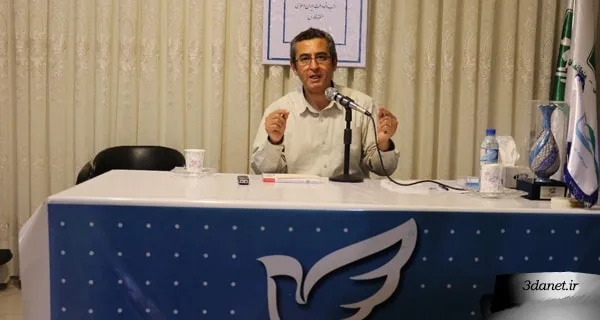
What They Call Justice
A session on the elucidation of the concept of justice according to Rawls
The meeting "What They Call Justice; Elucidating the Concept of Justice in the Thought of John Rawls" was held on 17 August 2018 by the Islamic Iran Union Party (Fars Region). This series of meetings is held under the name of Discourse and Thought sessions.
In this session, Dr. Hossein Houshmand, professor of comparative ethics at Concordia University in Canada, elucidated the thought of John Rawls and especially the concept of justice in his thought.
At the outset, pointing to the difference between political systems in the past and present, he explained: In old systems, the concept of the elite was very important, but in the present time, given the growing importance of the public sphere in society and the emphasis on the significance of the concept of the people, the public matter has replaced elite-centrism, and for this reason, the concept of justice has also become closely intertwined with the concept of the public sphere.
He then examined 5 main questions about modern political systems, the answering of which is possible through the concept of justice:
The first question concerns the function of governments and the limits and boundaries of their authority. In fact, it must be determined to what extent governments are permitted to intervene in the private sphere? In answer to this question, it must be said that governments solely have the function of securing and guaranteeing the basic rights and freedoms of the people. This means that social justice and distributive justice must be carried out through institutions, because a moral society will only be realized when justice is realized in society.
This is the most fundamental question, and subsequently, we must also think about questions concerning the domain of governments' capabilities, the responsibility of citizens towards the government, the rights of minorities, and social inequalities.
It is worth mentioning that, especially in the discussion surrounding inequalities such as gender inequalities, we can only reach a conclusion through the articulation of the concept of justice, because only in a just society will everyone have the ability to pursue their life goals. To secure this justice, the government must provide equal services to all individuals regardless of gender, ethnicity, religion, race, etc., in the two areas of health and education, and secure the minimums in these two areas for individuals who need more help.
Rawls believed that although engaging in charitable affairs to meet these basic needs is a commendable act, charities are case-specific and short-term work, and to solve these problems, we must move towards reflecting on how to create a system based on the concept of justice.
Continuing his speech, Dr. Houshmand elaborated on Rawls's theory regarding the concept of justice and acknowledged: Considering the aforementioned questions and points, Rawls formulated his theory in 1971. Although in modern thought and sciences built upon positivism, ethics is a matter of no importance or, at best, a second-class science, Rawls transformed ethics into a first-class science. Of course, unlike Kant, who expounded on ethics in the individual domain, Rawls focused on social ethics and tried to show that a moral society is a society based on the concept of justice.
Rawls proposed three fundamental principles:
1_ The principle of basic liberties: He believed that basic liberties must be secured for all individuals regardless of differences, so that the possibility of achieving goals exists for individuals, and this possibility is precisely what is a manifestation of justice. These liberties include freedom of conscience (religiosity or irreligiosity), freedom of thought and art, freedom in science and philosophy, freedom of political participation, and private property. Of course, when speaking of private property, Rawls introduced a caveat and believed that this property is free only to the extent that the difference between the wealthy class and the non-wealthy class is not great, and the poor must certainly enjoy the minimum educational and health facilities. Also, the government must strive to work towards the betterment of the condition of the poor.
2_ All individuals in society must benefit from fair and equal opportunities, such as the right to employment, etc.
All economic and social classes must have the right to pursue their own ideals and goals, and the political system must distribute this right equitably among all.
The political system must attend to this matter not only in constitutional law (as liberals do) but also in practice.
3_ Acceptance of Differences: Although we must seek to minimize the class gap, justice also dictates that, for example, a worker and a doctor should have different salaries, but the point here is that this difference must be controlled. In fact, while income disparity is accepted, this difference should not be to the extent that one lives in absolute poverty and the other in absolute wealth.
Dr. Houshmand further noted in his discussion that Rawls's question will in fact be the most fundamental philosophical question of the 21st century, and this question is as follows:
How, given reasonable pluralism, can we reach an agreement on a just political system?
Of course, it is worth mentioning that the use of the qualifier "reasonable" is because one can only engage in discussion and exchange of ideas with traditions that have attained a degree of rationality.
In fact, there are two types of liberalism: comprehensive or total liberalism, and political liberalism, which is what Rawls has in mind.
In political liberalism, diverse citizens were kept content with a secular democratic system, but this itself is a symbol of political tyranny and the suppression of pluralism, because a single system is proposed for everyone.
In the second type of liberalism, which is called political liberalism, an effort is made not to justify the value of justice based on any specific intellectual tradition; rather, one must try to provide a political conception of justice, not an ideological one.
The value of justice must be justified based on fundamental intuitions that are established and common in public belief and public culture.
On this basis, Rawls also critiques liberal human rights. He believes this view has not respected cultural pluralism.
Rawls believes that one cannot consider a specific view desirable for all environments, and systems must be determined for countries based on their level of development, which, of course, must enjoy a minimum of justice and freedom.
Dr. Houshmand further emphasized that Rawls's theory is a theory for transitioning from a dictatorial situation to a just situation. And in a just situation, the state has two essential characteristics: first, creating freedom and justice internally, and second, interacting with the outside world through diplomatic channels.
The speaker of the program finally emphasized that, in his opinion, Rawls's theory of justice is a moderate theory that tries to expand the value of justice by first critiquing the existing situation and then theorizing a way out of this situation. Dr. Houshmand also pointed out that Rawls's theory, given its positive features, could be used as a pioneering theory in the policies of Iran as well.
At the end of the session, Dr. Houshmand answered questions from the audience.
.
.
Audio of Hossein Houshmand's lecture titled "What They Call Justice"
Audio of Q&A with Hossein Houshmand
.
.
From the series of Goftar va Andisheh Sessions | Session 27 | August 2018
Speaker: Dr. Hossein Houshmand
Reporter and Transcriber: Maryam Boneh’i
Shiraz – Qasrodasht Street, Alley 39, No. 50, Office of the Ettehad-e Mellat Party, Fars Region
.
.


Discussion0 comments
No comments yet; let yours be the first voice.