Philosophy
Hossein Hooshmand's article “Religion and Public Reason”
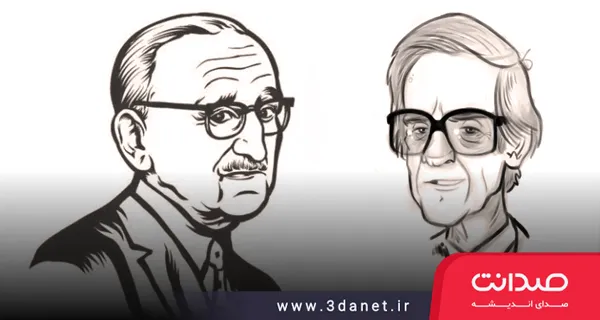
The tension between religion and the duties of citizenship shapes modern democracy. By proposing 'public reason' in Political Liberalism, John Rawls—unlike comprehensive liberalism, which relegates religion to the private sphere—creates a broader arena for the participation of religious citizens.

Religion and Public Reason
Hossein Hooshmand
The tension between religious commitment and the duties of citizenship has shaped the nature and course of modern democracy. Modern democracies are characterized by a plurality of comprehensive philosophical, moral, and religious doctrines. This fact raises an important question: “How is it possible for there to exist over time a just and stable society of free and equal citizens, who remain profoundly divided by reasonable religious, philosophical, and moral doctrines?”
In Political Liberalism, John Rawls introduces the “idea of public reason,” according to which citizens should present their fundamental political discussions within the framework of a political conception of justice based on values that others can reasonably accept. This idea means that citizens must be ready and able to show that their political views can be supported by “public reason,” that is, by shared and common reasons; for it is in this way that citizens demonstrate their cooperation and their intention not to compel others to accept reasons they cannot reasonably endorse.
This requires that, in the political domain for shared civic purposes, they refrain from introducing their deep and irresolvable metaphysical, epistemological, moral, and religious disagreements about the truth of the world, rationality, God, and human nature. They must endeavor to acknowledge the most important political and civic virtues, such as toleration and social cooperation based on mutual respect, in light of their own moral-religious system or as a component of it.
Rawls says that political philosophy must seek common grounds accessible to the public of citizens. Since, in pluralistic societies, all citizens cannot reasonably share a single comprehensive doctrine, Rawls’s idea of public reason creates a moral duty within whose boundaries and limits citizens must live. This article aims to explicate Rawls’s theory regarding the fundamental claims of political liberalism, especially the idea of public reason and its relation to reciprocity, which is considered the foundation of a democratic society.
Enlightenment Liberalism One of the most important criticisms leveled against liberalism is its attempt to eliminate, or at least privatize, religion. Enlightenment-era liberalism begins with the critique of religion and considers the critique of other matters, such as politics, ethics, and culture, to be contingent upon the critique of religion. Generally, Enlightenment liberalism decrees the absolute prohibition of religious doctrines in the public sphere. This conception of liberalism does not consider religious truths to be part of public truths and denies that religion is among the epistemic resources that can be utilized in political discourse.
The aforementioned conception of liberalism, known as comprehensive liberalism, is regarded as a philosophy of life that possesses metaphysical, epistemological, and moral doctrines and, in competition with religion, claims to have a reasonable answer for the general moral, spiritual, social, and political problems of human beings.
The dominant view in the tradition of comprehensive liberalism holds that religion is an irrational phenomenon, and in the modern age, which is an era of rationality, scientific worldview, and demythologization, religion must be relegated to the private realm; for the socio-political presence of religion, as a phenomenon belonging to pre-modern eras or, at best, a phenomenon confined to the psychological sphere of human beings, provokes the flames of religious strife and civil wars.
Defenders of comprehensive liberalism consider the bloody religious conflicts and strife of the 16th and 17th centuries in Europe, which resulted from the powerful and full-fledged presence of religion in society and politics, as evidence for their claim. They believe that to avoid the dangers and harms of religion, it is better to prevent its presence in politics. In their view, the public sphere must always remain secular, and any attempt to desecularize this sphere will lead to religious violence.
Within the context of comprehensive liberalism, a militant form of secularism has emerged and gradually come to dominate the cultural, political, and social life of modern humanity. One of the historical causes for the emergence and dominance of this conception of secularism must be sought in previous centuries, namely the era of the unchallenged rule of the Catholic Church over all dimensions and aspects of people's lives. In those historical periods, the Church was considered the sole authoritative source for interpreting religious texts, as well as the basis of political legitimacy and the criterion for the validity of philosophical and scientific theories. In other words, the absolute power of the Church cast a shadow over religion, education and culture, politics, and economics.
In opposition to this totalitarianism, comprehensive liberalism, while deeming religion irrational, strives to contain it and seeks its elimination or confinement to the private sphere. In the contemporary academic and intellectual climate in the West, the dominant belief is that religion, in any form, is a poison for democracy and must be expelled from the public sphere; some philosophers, such as Richard Rorty, even claim that atheists are better citizens for a democratic society. This approach to religion, as a liberal approach, has often been criticized by religious people. In a popular book published against liberalism, titled The Culture of Disbelief, it is stated: «Contemporary political philosophers fundamentally view public discourse as secular and limited to the requirements of reason and rationality, and it is difficult to find a place for religion in that world; for this reason, some religious individuals harbor hostility toward the dominant trends in contemporary philosophy.»
This claim may hold true for comprehensive liberalism or Enlightenment liberalism; but for reasons that will be mentioned, applying it to a different reading of liberalism, namely "political liberalism," is unjustified. Although political liberalism has crystallized in the works and views of renowned philosophers such as Charles Larmore, T. M. Scanlon, Thomas Nagel, and Robert Audi, the prominent figure of political liberalism is John Rawls.
In the continuation of this writing, while pointing to the main axes of Rawls's political liberalism, especially the idea of public reason, we will show that—contrary to what is claimed—political liberalism provides a very broad arena for religion and religious citizens in political discourse. Compared to other liberal theorists, Rawls's view of religion is highly sympathetic.
Political Liberalism Rawls's aim in writing Political Liberalism (1993) is an attempt to stabilize the democratic system in the current pluralistic society. From Rawls's perspective, the most important feature of the modern world is the plurality of reasonable philosophical, moral, and religious doctrines, or the "fact of reasonable pluralism." This fact is a description of the condition of modern social life, in which even rational and sound-minded individuals have serious disagreements with one another about the most fundamental issues of life.
Rawls says that the plurality of reasonable comprehensive doctrines is a natural result of freedom of thought under liberal democratic regimes. In the new world, disagreement among citizens regarding moral-religious beliefs and values is an inevitable matter; the notion that, in modern societies, the general populace could reach a consensus on a single moral and doctrinal system seems impossible. Although we often consider our own philosophical, moral, and religious beliefs to be true and the viewpoints of others to be false, this does not require us to deem others unreasonable for believing in them. To understand this point, it suffices to pay attention to the logical distinction between the two concepts of truth and reasonableness; two incompatible views cannot both be true at the same time, but they can both be reasonable.
Rawls says the problem of modern political philosophy is this: in today’s pluralistic world, what conception of justice can be offered that would be agreed upon by all reasonable citizens? Rawls’s political liberalism does not seek to devise a comprehensive philosophy for all the affairs and dimensions of human life; rather, it is limited and confined to the philosophy of politics. The subject of comprehensive liberalism is the human being as such, whereas the subject of political liberalism is the citizen (free and equal). Political liberalism says nothing, whether affirmative or negative, about concepts such as the purpose and meaning of life, truth, or the nature of the human being. Unlike comprehensive liberalism, which has placed the critique of religion at the center of its attention, in political liberalism the discussion of religion or secularism is not central; its principal concern is the legitimacy and stability of a just democratic order in a pluralistic society. That is, it examines the question of how, given the fact of reasonable pluralism, we can consolidate and stabilize a just political system based on social cooperation and respect for equal rights and liberties.
Political liberalism combines the major components of classical liberalism—namely basic liberties (including religious liberty, freedom of thought and expression) and political equality (which entails the right to vote and political participation)—with the issue that the legitimacy of political power depends on the public recognition and endorsement of citizens. Given our understanding of political power as the power of free and equal citizens, and taking into account the fact of reasonable pluralism, we must inevitably accept that fundamental discussions about the constitution and the general principles of justice should be conducted on the basis of grounds and reasons that are acceptable to the general public, and not confined to a single secular or religious moral tradition.
Political liberalism, although it imposes certain constraints on religious citizens, also encompasses secular citizens within those constraints. Rawls says the fundamental problem of political liberalism is examining the possibility and manner of compatibility between comprehensive secular or religious doctrines and democracy:
“Throughout this time, one painful problem in the contemporary world has preoccupied my mind, namely: Can democracy and comprehensive religious or secular doctrines be compatible? And if so, how?” In Political Liberalism, Rawls says that in A Theory of Justice (1971), the fact of reasonable pluralism was not given sufficient attention. A Theory of Justice was based on a particular liberal view of the philosophy of life, largely influenced by Kant’s moral philosophy; that is, a view that regards the human being as an independent, autonomous, and self-sufficient entity and seeks to realize a socio-political system that educates the general members of society in accordance with this very philosophy. But in Political Liberalism, Rawls asks whether it is possible for “justice as fairness” to be presented independently of such a philosophy.
In A Theory of Justice, which is the best instance of comprehensive liberalism, Rawls had attempted to formulate the moral foundations of “justice as fairness” in accordance with the principle of autonomy and centered on Kant’s autonomous individual. However, in Political Liberalism, Rawls distinguishes Kant’s theory of the person from its metaphysical conception and applies the principle of autonomy to the citizen who is committed to different moral-religious frameworks.
In this way, by substituting the citizen for the individual, political liberalism distances itself from comprehensive liberalism, which is based on the moral autonomy of the individual. In political liberalism, the principle of moral autonomy is not defended; rather, the virtue of social cooperation based on the observance of mutual rights is emphasized. Every well-ordered society must possess a system of social interaction and cooperation based on fairness. This requires that citizens, as free and equal persons, regulate their political conduct in accordance with the requirements of citizenship.
Therefore, the problem of political liberalism is this: how can citizens who are committed to different philosophical, moral, and religious systems (some of whom may even reject the liberal view of humanity, society, and the world) reach an agreement on a political conception of justice—that is, a theory of justice based on virtues such as fairness, human dignity, equal political rights, civil liberties, fair equality of opportunity, and mutual economic advantage? To answer this question, Rawls puts forward three fundamental ideas: the political conception of justice, the idea of overlapping consensus, and the idea of public reason, which will be outlined below.
a) The Political Conception of Justice Given the plurality of philosophical-moral and religious traditions in democratic societies, a formulation of the theory of justice must necessarily be presented in such a way that it can secure general agreement among citizens committed to different intellectual traditions and ways of life. This suitable formulation, which Rawls calls the political conception of justice, comprises three aspects: First, this conception of justice applies solely to the basic structure of society. Unlike metaphysical and moral theories of justice, which are extended to the category of divine justice or individual conduct and character, the scope of the political conception of justice is limited to the basic institutions of society (political, judicial, and economic institutions). It is therefore not so broad as to encompass norms governing individual behavior or ideals of life. From this point of view, justice is a practical and social task rather than a metaphysical or epistemological problem.
The second point is that such a conception of justice is drawn from the political culture of a democratic society whose citizens are familiar with its ideas, and the third is that, given the two preceding aspects, this conception of justice is a freestanding conception; that is, it is independent of any comprehensive moral, secular, or religious system. In other words, the political conception of justice is independent of philosophical and moral systems, both in terms of its content and substance and in terms of its justification.
b) The Idea of Overlapping Consensus The theory of "justice as fairness" is based on the political virtue of social cooperation grounded in mutual respect. Commitment to the principles of justice and the effort to realize them requires the collaborative efforts of citizens. Rawls calls this the virtue of civility or the virtue of a good citizen. The most important component of stabilizing a just system in political liberalism is that the defense of the principles of justice and the virtue of social cooperation based on fairness—as the fundamental principle in the theory of justice—is not confined to a specific epistemic apparatus; rather, adherents of different moral and religious systems, by reflecting on their own comprehensive doctrines, can, for various reasons, endorse and affirm the principles of justice and the political virtue of social cooperation. For example, some explain these principles based on secular concepts such as the autonomous human being or an end in itself, individualism, or human happiness, while others interpret them based on the religious doctrine that God created human beings free and equal. In this way, a kind of overlapping consensus on the principles of justice, which is a requisite for stabilizing a democratic system, becomes possible. The function of the idea of overlapping consensus for the political justification of a freestanding conception of justice is worth considering from two aspects:
First, reasonable citizens accept, in principle, that fundamental political concepts should be presented within the framework of public reason; reasons that are manifestly available in a democratic political culture. In other words, citizens, in their political conduct and speech, utilize ideas that their shared political culture has provided.
Second, political liberalism assumes that reasonable citizens can derive reasons for endorsing the political conception of justice from non-political concepts, namely their comprehensive doctrines. A historical instance Rawls had in mind for overlapping consensus was the agreement between Catholics and Protestants on religious toleration in the seventeenth century. Each of these sects endeavored to offer different moral reasons to defend the principles of toleration. Rawls believes that an overlapping consensus on justice can also become possible in this way.
ج) ایده عقل عمومی مطابق با ایده عقل عمومی، توجیه سیاسی مبتنی و معطوف به حقیقت نیست؛ بلکه ضمن قبول اختلاف نظرهایی که در باره حقیقت وجود دارد، طرح این ایده کوششی برای توجیه قدرت سیاسی مطابق با عقلانیت عمومی است. ایده عقل عمومی، وامدار سنت قرارداد اجتماعی است و ناظر بر توجیه قدرت سیاسی بدون اتکاء به آموزههای دینی است که نزد هابز، لاک، روسو و کانت مقبولیت داشت. لیبرالیسم سیاسی رالز این ایده را بسط میدهد و توجیه سیاسی قدرت را از دستگاههای جامع اعتقادی و اخلاقی (خواه دینی یا سکولار) که معطوف به حقیقت باشد، استقلال میبخشد.
لیبرالها عموماً بر این باورند که توجیه قدرت سیاسی در گرو جدی گرفتن معیارهای قضاوت عمومی است. به بیان دیگر، مستلزم آن است که باورها و ارزشهای عموم افراد جامعه را به حساب بیاوریم. ما در زندگی شخصی و در زندگی سیاسی خود صرفاً بر طبق دلایل مورد قبول خود عمل میکنیم؛ اما ایده عقل عمومی اخلاقاً ما را ملزم میسازد تا وقتی گام در حوزه عمومی میگذاریم دلایل و دیدگاههای بنیادی سیاسی ما برای دیگران هم معقول باشد. نظریه عقل عمومی میگوید توجیه قدرت سیاسی، مستلزم جدی گرفتن دلایل دیگران یا نگاه کردن از منظر دیگری است. اصل نگریستن از منظر دیگری یا جستجوی دلایل و باورهای دیگران، نقشی اساسی در اندیشه سیاسی لیبرالیسم در دوران معاصر ایفا میکند. این امر موجب شده است تا توجیه سیاسی قدرت از منظر حقیقت به توجیه آن مبتنی بر عقل عمومی تغییر و تحول یابد.
در دوران معاصر، شاید بهترین مصداق آنچه کانت «کاربرد عمومی عقل» میخواند، ایده عقل عمومی رالز باشد. بهرغم این که این ایده با آنچه که کانت از کاربرد عمومی عقل مد نظر داشت، تفاوت مهمی دارد (که در زیر اشاره خواهد شد)، اما رالز همانند کانت، بر این باور است که حوزه سیاسی، متشکل از افراد آزاد و برابر است و باید یکدیگر را این گونه ببینند و این که اگر همه شهروندان موافق باشند، این حوزه میتواند به طور مشروع، قوه قهریه خویش را بکار ببرد. اگر چه رالز از این جهت از کانت فراتر میرود.
رالز، عقل عمومی را به منزله نوعی تعقلورزیِ درخور و متناسب با شهروند آزاد و برابر میداند. او میگوید «عقل عمومی مشخصه یک جامعه دموکراتیک است؛ عقل شهروندان است که از منزلت برابر شهروندی برخوردارند.» این عقلانیت یا تعقل ورزی به معانی متفاوتی عمومی است: اولاً، عقل همگانی، عقلی است که عموم مردم برپایه آن تصمیم میگیرند. ثانیاً، مفاد و محتوی آن عمومی است: «برآمده از ایده آلها و اصولی است که برداشت سیاسی (عمومی) از عدالت را در بردارد.» ثالثاً، عقلی است که دغدغه عمومی دارد: «موضوع آن منافع عمومی و مسایل عدالت بنیادی است.» رابعاً، به عموم ختم میشود؛ یعنی برای نظر دادن همه مردم گشوده است: «قابل قبول برای همه شهروندان عاقل و معقول است.»
با این توصیف از عقل عمومی، بخصوص نکته اخیر، رالز بر محدودیتهای عقل یا دلایلی که برای توجیه تصمیمات سیاسی به کار میرود تأکید میورزد. عقل عمومی با عقل یا دلایل غیرعمومی که اعضاء جماعتها و گروههای داوطلبانه متفاوت مانند کلیساها، دانشگاهها، جوامع علمی و تحصیل کرده ...، کلوبها و تیمها برای یکدیگر ارائه مینمایند متمایز است.
رالز میگوید هر دلیلی میان خود افراد یا فیمابینی است؛ اما نوع دلایلی که در موقعیتهای فیمابینیِ متفاوت ارائه میکنیم، با توجه به معیارها و روشهای متفاوتی که گروههای متفاوت استفاده میکنند، تفاوت میکند. ویژگی متمایز عقل عمومی این است که بر اعمال و اقدامات جامعه که اغلب انسانها به طور معمول تمام عمر خود را در آن سپری می کنند و به آسانی نمیتوانند ترک گویند، حاکم است؛ اقداماتی که با قهوه قهریه همراه است. اگر اقدام عمومی بر پایه دلایل مشترکی که همه میپذیرند صورت نگیرد، کسانی که آزادی آنها با این اقدام، محدود شده است این حق را دارند که آن را کاربرد نامعقول قدرت تلقی کنند.
Hence, this requires that when we speak about issues concerning the basic structure of our society, we must set aside comprehensive secular or religious doctrines about how to live. We have fundamental disagreements about such doctrines, and there is no reason to suppose that these disagreements will one day be resolved; Rawls believes that reason inevitably leads to different religious and philosophical doctrines. Therefore, the aforementioned doctrines cannot be a source of reasons upon which we all agree. Hence, we should not base our coercion of fellow citizens on reasons about which others do not agree with us. This renders illegitimate the use of religious doctrines, as well as secular doctrines such as Marxism or utilitarianism, as a basis for political decisions (concerning the constitution and the general principles of justice that guide our political decisions).
Rawls says that when we decide on the fundamental political questions of society, we must restrict ourselves to reasons that are independent of comprehensive philosophical, moral, and religious doctrines and rely solely on the ideas and concepts that shape the political domain. In his view, public reason flows entirely within the political conception of justice, and thus people who believe in different comprehensive doctrines can live together respectfully and peacefully. Many of these people may not be committed to comprehensive liberalism—they might consider things other than freedom and equality as the highest human values.
Let us explore Rawls's meaning of public reason a little further. In one sense, by public reason he means reasons derived from the idea that people should be regarded as free and equal persons. Some principles and rules of this idea better manifest treating others as free and equal persons, and some institutions are necessary to preserve this freedom and equality; but this meaning of public reason alone is a very slender basis for political decisions. The concepts of free and equal are such vague and contested concepts that, based on them, reaching a consensus on the institutions we seek may not be possible; however, Rawls says that democratic societies are based on a "public political culture" in which the concepts of citizens being free and equal have been explicated and analyzed in numerous documents; documents that give meaning to democratic society, such as the Constitution and the Declaration of Independence of the United States; also documents used in schools, universities, speeches, and legal opinions that interpret and construe the political values of society, such as Abraham Lincoln's Inaugural Address and Gettysburg Address, or John Locke's Second Treatise of Government, or John Stuart Mill's On Liberty. These documents provide a rich interpretation of the meaning of being free and equal. Similar interpretations exist in other democratic societies.
Furthermore, political argument or public reason can draw upon the common methods of reaching moral and factual conclusions, namely "generally accepted beliefs and forms of reasoning in common sense and the methods and conclusions of science, when these are not controversial." Also, the great facts about history or human nature that have widespread acceptance can be operative in public reason; but controversial claims, such as economic theories of general equilibrium, cannot.
Therefore, according to Rawls's view, although we are not permitted to cite a theory of truth, human nature, or the good life for political justification in a democratic society, there are rich and abundant sources of reasons from which public reason can draw. On the other hand, Rawls says that in a stable democratic society, adherents of comprehensive moral and religious doctrines tend to conform to the demands of public reason. By employing resources from within their own intellectual tradition to present their political claims, they can often find ways to support the basic structure of society and its requirements. If this happens, the adherents of those doctrines achieve an
One cannot more clearly reject the claims of comprehensive liberalism or Enlightenment liberalism, which awaits the day when everyone becomes an idealist or materialist, a Hegelian monist or an atheist, a communist or a radical individualist. In fact, Rawls sets aside his early effort in A Theory of Justice to justify justice according to the foundations of comprehensive liberalism, and states that any reasonable conception of modern political society cannot ignore the “fact of reasonable pluralism.” He adds that he now seeks to apply the principles of eighteenth-century toleration to philosophy itself: calling upon philosophers—political philosophers at least—to set aside the claims of philosophy about how to live and instead to engage in defending and developing the institutional structures that make social cooperation possible among the followers of different comprehensive doctrines. Hence, political liberalism should be considered the equivalent of minimal enlightenment.
From Rawls’s perspective, reason itself demands that we understand how reason can justify and consolidate different metaphysical, epistemological, and moral views. The reasonableness of individuals entails a commitment to minimal conditions regarding how to believe in and adhere to multiple comprehensive views: a set of conditions concerning the role of the public, that is, what we share with others, requires that our reasonableness depends on cooperating with one another as free and equal persons and respecting the rights of our fellow citizens who think differently from us in other matters. Those who refuse this cooperation and whose sole endeavor is to conquer the world for the whole truth are not reasonable persons, and political liberalism has nothing to do with them. Thus, many of the points Rawls raises in Political Liberalism align with a minimal reading of Kant’s enlightenment: first, the account Rawls provides of how reasoning, according to the purpose pursued in each text or context, can justifiably vary from one context to another, furnishes a rich epistemic basis for a pluralist minimal enlightenment. Political liberalism contains deep and interesting discussions about why, in different contexts, we have different conceptions of the person, consider different facts as relevant or irrelevant, and even accept different concepts of valid or reasonable judgments. These discussions explain how we can confidently consider aspects of our moral or religious doctrines reasonable from one perspective, while, for instance, being uncertain whether our religious experiences are reasonable from other perspectives. Acknowledging this point shows why it is important for every individual to think independently, and how a society in which every individual thinks independently is likely a society where individuals believe in different comprehensive doctrines. Rawls’s explanation of the fact of reasonable pluralism prevents the conclusion that every reasonable person must think as we do.
Second, the idea that we must commit to a set of minimal principles or conditions for advancing our political claims and respect those who hold different views—so long as they also submit to these minimal constraints (or principles)—as free and equal citizens, provides an unparalleled model of the political conditions needed to advance minimal enlightenment. We need such a political space to preserve the intellectual health of society, religious and political pluralism, and the realization of a well-ordered democratic society. Otherwise, the freedom to express and develop our own comprehensive doctrines has no guarantee, and we cannot have a sphere of intellectual discussion to converse about the differences between our views and to test our political beliefs against the public use of reason.
Concluding Remarks New democracies face not only a plurality of religious and moral systems, but are also immersed in an incommensurable yet reasonable pluralism. Such a condition, which is specific to democratic societies, provides numerous advantages and possibilities for the growth of values and virtues. Among these possibilities, one can point to the existence of multiple sources for reflecting on human spirituality and a social atmosphere suitable for criticizing and reforming religious beliefs. There is no doubt that something spiritually or culturally significant may be absent in such a society; but as Rawls says, there is no society in which something of value is not absent; in fact, a pluralistic society that grows under democratic constitutional regimes fundamentally provides a more favorable environment for religion than a monolithic religious society.
The model of political liberalism that Rawls presents is a valuable effort to minimize the costs imposed on religious citizens in a liberal democratic society. The heart of Rawls's political liberalism is the idea of public reason. Public reason is a moral ideal for democratic citizenship and concerns the kinds of reasons [citizens] may reasonably offer one another when fundamental issues are under discussion. Public reason is realized when citizens commit to reciprocity: they must view one another as free and equal citizens and be prepared to offer terms of social cooperation that everyone has good reasons to endorse. This criterion aligns with what Rawls means by fairness and mutual respect. From Rawls's perspective, a just society primarily means "mutual recognition." The idea of public reason is the procedure through which citizens actualize this view.
.
.
Source: Institute for Contemporary Thought
Dr. Hossein Hooshmand initially presented this article at a session at the Research Institute for Contemporary Religious Thought, and its written text was published in the second volume of New Religious Thinking.
.
.





Discussion0 comments
No comments yet; let yours be the first voice.