Religion
Hossein Hooshmand's article “Towards Minimalist Enlightenment: A Proposal for Reconsidering Religious Intellectualism”
Hossein Hooshmand distinguishes between maximalist and minimalist enlightenment, defending the latter as a proposal for rethinking religious intellectualism—an approach grounded in independent thought and critical public dialogue in the service of pluralism.

Towards Minimalist Enlightenment:
A Proposal for Reconsidering Religious Intellectualism
Hossein Hooshmand
While distinguishing between two conceptions of enlightenment, known as radical or maximalist enlightenment and flexible or minimalist enlightenment, this article explicates and defends minimalist and pluralist enlightenment, presenting it as a proposal for reconsidering and reconstructing religious intellectualism—which has now gravitated towards maximalist enlightenment.
The Age of Enlightenment—which began in the seventeenth century—is among the most significant periods in the history of human thought. The issues and consequences of this era, such as the expansion of the realm of individual freedoms and the challenging of tradition, continue to resonate in the contemporary world. Among the philosophers of this age, Immanuel Kant reflected more seriously on these issues and examined them in his famous essay “An Answer to the Question: What is Enlightenment?” as well as in some of his other works.
The nature of “enlightenment” has been the subject of serious disputes among historians of modern thought: on the one hand, many of them emphasize that enlightenment was the beginning of an anti-religious era aimed at eliminating religion from the public sphere, led to the emergence of liberal democracy which gave rise to movements defending the rights of women and dissidents, and was also an age that heralded scientific and technological revolutions. On the other hand, “enlightenment” has been disparaged or outright condemned and denied by two opposing spectrums: traditionalists and progressives. Many traditional religious people consider enlightenment and its legacy a serious threat to their beliefs and values, and some view it as the embodiment of the devil, the decline of the sacred, and the decay of truth. Likewise, many secular intellectuals (predominantly leftists) equate enlightenment with racism, sexism, imperialism, and many of the injustices attributed to the modern world. They claim that the liberal politics which is a product of enlightenment is entirely individualistic, that modern science has led to the domination of quantity or the disenchantment of the world, and that the new autonomous morality which has replaced traditional religions is superficial and soulless.
However, as will be noted, “enlightenment” is a far more complex and diverse phenomenon than what its opponents and critics describe. Enlightenment was a combination of enthusiasts of sentiment and advocates of reason, champions of communitarianism and passionate defenders of individualism, critics and defenders of imperialism, and a multitude of other viewpoints and tendencies. Kant, while being a prominent spokesman for rationalism and individualism, has a complex intellectual personality and by no means denies the importance of community, emotions, and sentiments. Kant’s philosophy of enlightenment is multifaceted and has numerous dimensions. He bequeathed two conceptions of enlightenment to his successors: on the one hand, a maximalist conception of enlightenment is evident in Kant’s works, according to which an enlightened individual cannot believe in traditional/historical religions. On the other hand, Kant endeavored to present a minimalist conception of enlightenment, according to which enlightenment consists of having independent thought and engaging in free and critical dialogues in the public sphere, which enables the emergence and growth of pluralistic viewpoints.۱ The two aforementioned readings or conceptions have been developed in different directions by proponents and critics of Kant’s philosophy of enlightenment. The first conception has been severely criticized for its arrogance and self-righteousness, and for substituting liberal individualism for traditional ways of life, while the second conception—which is open and flexible—has risen up against the arrogant claims of the former approach.
These two conceptions or readings of enlightenment have been described, respectively, as the maximalist reading and the minimalist reading, or in other words, enlightenment as a period and enlightenment as a process. It seems that Kant’s primary concern was enlightenment as a process, but what is often understood by “enlightenment” is as a period. Let us take a look at the aforementioned readings.
۱ “Enlightenment” as an Age or a Maximalist Reading
Answering the question of what “Enlightenment” precisely is proves very difficult. Historians disagree with one another on almost every point concerning what has been called the distinct historical age (i.e., the Age of Enlightenment). Yet this much is clear and agreed upon: from the mid-seventeenth century, three currents or tendencies emerged in the substrata of European society that caused a static, hierarchical religious society, possessing strong social cohesion and enclosed within a system of absolute monarchy, to transform into a profoundly individualistic, dynamic, open, and egalitarian society that believes in liberal democracy and, relying on secular science, seeks mastery over nature. The aforementioned currents are:
First, the cooling of the fires of the Hundred Years’ religious wars between Protestants and Catholics, which was accompanied by the acknowledgment of the principles of religious tolerance by both groups and ultimately paved the way for the claims of theorists such as Thomas Hobbes and John Locke, to the effect that the primary and principal duty of the state is to guarantee and secure the rights and interests of the members of society, not the pursuit and realization of religious demands.
Second, the emergence of the new science, with its emphasis that knowledge is based on empirical observations and mathematical proofs, not on obedience and submission to authority (religious or political). The countless results of the new empirical knowledge soon became apparent: the immense technological achievements or the Industrial Revolution. Francis Bacon and René Descartes provided the intellectual foundations for this great transformation, and Galileo and Newton are among the heroes and most prominent representatives of this current. One of the characteristics of the new science is that scientific research is based on capabilities that all humans share. This point led to a theory to the effect that we are all fundamentally equal in intellectual capabilities and, therefore, must take responsibility for our beliefs rather than blindly trusting the words of those who claim to have achieved unity with God or the spirit of existence.
Third, radical Protestant religious movements such as the Puritans attached great importance to the minor values in everyday life—which had previously been neglected. The Puritan preacher William Perkins said that in God’s sight, there is no difference between washing dishes, polishing shoes (if accompanied by good intention), and religious preaching. God blesses all of them. This theory (alongside the second current) put the final seal on the prevailing hierarchical system and promoted a powerful egalitarian ethic. It also entailed a new view of the world, suggesting that each of us can seek what is valuable to us, instead of relying on the teachings of the sages of the community—especially religious or social authorities.
The aforementioned currents led to the emergence of a world in which traditional authority and the importance of its teachings were lost, and secular science replaced them. Individuals felt they could criticize or deny social traditions—which possess dogmatism or an imposing power structure. Hence, political power (the state), which was elected by the people, was asked to expand the scope of individual freedoms.
Although these currents had begun in the seventeenth century, they bore fruit in the eighteenth century, and this century has been described as an age that led Europe from the “darkness” of religious dogmatism, social inequality, an absolutist political system, and a neutral understanding of nature toward the “light” of free thought, egalitarianism, liberalism, and the astonishing achievements of the new empirical sciences.
The description of the “Age of Enlightenment” provided thus far is agreed upon by historians of modern thought, but the issue that distinguishes their perspectives is which aspect of this great transformation is of greater importance. Some historians regard “Enlightenment” as something fundamentally anti-religious, all efforts of which were directed at eliminating the power of the church.۱
Others see the chief contribution of “enlightenment” in the moral and political beliefs that made liberal democracy possible and gave rise to movements defending the rights of women, religious and ethnic minorities, and the poor.۲ Yet another group of historians regard it as an era built primarily on scientific and technological growth; the development of science and the production of agricultural and industrial goods over two centuries led to the accumulation of wealth in European countries.
In pre-modern traditions, enlightenment has been described as emerging from the darkness of ignorance or absolute heedlessness—in which human beings were thought to be trapped. It was believed that an individual attains enlightenment when they draw aside the veil (maya), whereupon they realize that multiplicity is illusory and only the cosmic spirit or individuality is real. Or it was thought that a person who grasps the esoteric meanings of sacred texts has reached enlightenment (or illumination). In “darkness” we are unable to correct our errors; all our strivings in search of moral and spiritual truths are mired in misguidance, and we cannot even know whether we are traveling on the right path or the wrong one. Rarely might someone attain a truth, but we generally do not know how to find the truth and avoid error. Hence, attaining enlightenment or “illumination” (enlightenment) requires a kind of fundamental change in beliefs. Enlightenment or illumination does not depend merely on correcting a few specific errors but on a change in the whole of one’s thinking and thoughts. Plato’s famous allegory of the cave describes well this process of liberation from the darkness of misguidance and intellectual confusion toward the sun of knowledge. Parallel allegories can be observed in other historical traditions: the Psalms of the Torah often speak of light as the truth of divine teachings; throughout the Upanishads, the metaphor of the sun and light is used to refer to knowledge of our true self (or our inner truth); in the first discourse attributed to the Buddha, enlightenment means turning away from the darkness of self-occupation, which causes human beings to become aware of the truth of selflessness; in the Quran, faith in God is interpreted as coming out of darknesses into light. In all the aforementioned cases, attaining truth is accompanied by adopting a better way of life: through spiritual wayfaring and gaining insight, the human being reaches salvation and liberation from suffering or evil. In the ancient world, enlightenment is a kind of wisdom, with all the moral and spiritual connotations that are intertwined with this word, and attaining it depends on devotion and obedience to the guidance of religious authorities.
The modern usage of the word enlightenment differs fundamentally from enlightenment in the aforementioned traditional sense and essentially emerged in opposition to it. Historians say that in the eighteenth century, “enlightenment” referred to a state in which faith in the new science—founded by Bacon, Descartes, and Galileo—replaced trust and devotion to religious authorities. In this period, it was believed that the thought system of the ancients not only had specific errors—here and there—but that they suffered from systematic mis-thinking, such that they did not know how to correct their errors. In the Age of Enlightenment, a new form of thinking was promised that would rationally distinguish between truth and falsehood. The key point in the new thinking is that (unlike ancient enlightenment) it was not specific to or confined within a particular metaphysical belief about God or human nature, but was considered a knowledge attainable with the aid of the rational and emotional capacities of all human beings. In other words, the new thinking is not based on the esoteric meanings of a metaphysical system, nor does it require devotion to religious authorities and guides.
Thus, it is said that the “enlightened” of the eighteenth century regarded liberation from darkness or the attainment of enlightenment as a will to question, revise, or reject some or all of the traditional religious teachings—with which they had been raised—and they asked others to act as they did. In other words, enlightenment in the eighteenth century was a critique of the conception of enlightenment in earlier traditions; in particular, a robust individualism—both epistemically and morally—replaced obedience to traditional authority. In this period, emerging from darkness meant abandoning religious tradition and its authorities.
2 Enlightenment as a Process or a Minimalist Reading
Kant’s definition of enlightenment in his short essay “What is Enlightenment?” is not based on any of the three aforementioned currents. From his perspective, neither modern science, nor detachment from religion, nor liberal democracy constitutes the foundation of enlightenment; rather, enlightenment consists of the striving and effort of individuals to think for themselves.
Kant equates enlightenment with the open and flexible process of reasoning, which rests on two general principles: first, thinking for oneself and seeking universally inclusive grounds for our thoughts; and second, being consistent with more plural and broader perspectives. Some commentators say that these principles explain Kant’s conception of reasoning. In the Critique of Pure Reason, Kant writes that “reason has no dictatorial authority” and that its authority derives from the agreement of free citizens, each of whom must be able to express their preferences. Kant adds that it is entirely nonsensical to expect enlightenment from reason while at the same time prescribing in advance which direction it should take.۳
Here, it is evident that enlightenment is the endless pursuit of knowledge, and therefore it neither prescribes nor justifies any particular philosophical or religious viewpoint. However, Kant’s contemporaries had a different understanding of enlightenment: they thought enlightenment meant accumulating theoretical and empirical knowledge and applying it to solve the acute problems of human society, or to put an end to the oppressive rule of priests who had subjugated the common people with superstitious and illusory beliefs.۴ Kant’s definition of enlightenment as thinking for oneself is not in harmony with the common understanding of the Enlightenment era.
At the beginning of the essay “What is Enlightenment?” Kant says that “enlightenment is man’s emergence from his self-incurred immaturity.” He adds that “the courage to know” or “the courage to use your own understanding” is the motto of enlightenment. In the same place, two main themes and ideas are raised: first, what is opposed to enlightenment is not ignorance or a lack of knowledge, but intellectual immaturity resulting from a weakness in feeling and will. The solution to this immaturity is taking responsibility for our beliefs, not acquiring information or accumulating data. The second idea is that immaturity is a self-inflicted fault, and the way out of it depends on something we must do ourselves: others cannot bring us to enlightenment; we must reach enlightenment by using our own understanding.
Does Kant mean by thinking for oneself that we must understand everything entirely on our own? As some commentators have shown, Kant considers testimony, independent of intuition and rational argument, as one of the sources of knowledge. From our name and place of birth to the vast majority of other opinions and our scientific beliefs are based on the testimony of others. Testimony is an independent source of knowledge, without which much of our knowledge would be unattainable.۵ Despite the importance of testimony in Kant’s epistemology, it must be added that, in his view, we always need the criteria of reason to distinguish reliable from unreliable authority.
Thus, Kant interprets thinking for oneself as the search for universal reasons for our beliefs. This means we must carefully consider whether, in light of universal reasons, we should rely on perception or testimony, or set both aside in favor of a priori judgments. On the other hand, it is necessary to establish criteria that indicate some sources of testimony have more credibility than others. In general, as long as we critically evaluate the reliability of our intellectual authorities and choose among them, we are engaged in independent thinking. This manner of trusting authorities does not stem from fear or their social dominance, but is trust in an enlightened manner.
Kant says that our failure to think for ourselves lies in the fact that, through irresponsibility and indolence, we let others taste the sweet flavor of power by our own hands, and thereby give them the possibility to shape our beliefs. Therefore, the primary source of authority is ourselves, which others then use against us. If we question the authority of others, we will see that there is no magical power in scientific and religious specialists and experts; we must consciously rely on their authority (i.e., their knowledge and experience) as long as there are acceptable reasons for doing so. We also find that we must accept the authority and expertise of those to whom we have freely (i.e., consciously and responsibly) granted it. Kant's most important concern in the essay “What is Enlightenment?” is to pose this ethical-religious question: How should one live? Before stating anything else, Kant emphasizes that we must learn to think independently. Kant's fundamental critique is of blind imitation or unquestioning trust in experts or religious authorities, not of enlightened trust in the knowledge of specialists. Therefore, from Kant's perspective, independent thinking is not incompatible with taking seriously, respecting, and conditionally trusting the opinions and thoughts of others.
In his essay “What is Orientation in Thinking?” (1786), Kant presents the principle of independent thinking alongside two other principles: “Think in the position of another” and “Think in accordance with yourself” or “Do not contradict yourself.” He calls this set of three rules “universal human rules.” Kant designates each with specific titles: he calls independent thinking the “principle of enlightenment,” the rule of “reason that is never passive,” the “rule of thinking without prejudice,” a rule that stands against “heteronomy,” and a principle that liberates us from “superstition.” Thus, Kant equates enlightenment with active thinking or rational autonomy and employs it against prejudice and superstition. But he calls the other two rules, respectively, the rule of thinking with a “broad-minded” and tolerant mind, and the rule of “consistency.” Kant says that thinking with a broad mind requires that we “see our beliefs from the perspective of others or subject them to the judgment of others.”
The latter rule concerns the importance of the public sphere. By the public sphere, Kant does not mean the political sphere but encompasses a realm in which all our particular historical identities, including our religious and political identity, are suspended so that we can subject them to reflection and critical assessment. Kant emphasizes that this point is vitally important for preserving our individual identities: it is necessary for us, in the public sphere, to suspend our individual identities as an Iranian, a university professor, a Muslim, etc., so that we are able to reflect upon and scrutinize them carefully. That is, we must be able to assess the beliefs we hold in the private sphere and the judgments we issue based on them. Kant says that in the public sphere, we speak and write for the “society of world citizens”: for all of humanity, not a particular community. He says that any text presented as a work of knowledge must submit to the judgment of all humanity, even if it was written for a specific audience.
In other words, if our life is based on “a way of life,” it is essential that we look at it from an external and alien perspective and ask ourselves why we consider this particular way of life valuable or by what moral criteria we justify it. For example, it would be beneficial for our religious culture if we looked at it from the outside and from the perspective of another. Such an approach goes beyond the private sphere and belongs to the public realm. In general, from Kant's viewpoint, the public perspective must be regarded as a standard and a test for correcting our beliefs—even our ordinary beliefs.
And finally, the third rule—do not contradict yourself—which is among the most self-evident of rules, and Kant says it is of course also the most difficult of them, and only through long-term practice in applying the first two rules does it develop in a person as a habit (or become second nature to them). Dogmatic beliefs we have inherited from others and accepted without inquiry and reflection, as well as personal beliefs confined to our individual experiences, may, at different times and in different circumstances, lead to multiple, incompatible meanings. Kant says that only through a mental activity that balances individual experiences with the perspectives of others (i.e., common belief) and vice versa can we avoid inconsistency in our beliefs.
We now better understand what Kant means by the necessity of harmonizing "private" and "public" thought. That I must think for myself means that I must never allow my mind to become passive; instead, I must strive, with an active mind and with reasonable grounds, to evaluate the claims of others that are presented to us. But at the same time, I must align this way of thinking with the standards and criteria that are common among human beings—that is, universal and common human criteria, not racial, national, religious, or professional standards—so that this practice gradually becomes the touchstone for our beliefs. This two-way instruction for thinking steers us in a direction where we uphold the universal principles of thinking and reasoning—that is, what we have in common with others—without necessarily submitting to any particular beliefs. In other words, what Kant means by thinking for oneself is a commitment to the methods of validating beliefs, not the affirmation of a set of specific beliefs.
Thus, enlightenment emphasizes the how of our knowledge rather than its what. In other words, enlightenment is a commitment to the ethics of belief. The threefold rule above points to Kant's famous moral principle, the categorical imperative: accept only those claims that are universalizable (as the foundation of belief). Kant says that this prescriptive command and this necessary principle must be applied to knowledge based on religious experience or sacred text.
Does Kant mean that by carrying out the test of universalizability, we should abandon the religious doctrines we believe in with such fervent devotion? Considering what has been said, it seems that Kant does not intend the test of universalizability as a tool for denying traditional religious faith; rather, what Kant has in mind is setting aside certain methods of confirming and preserving religious beliefs. From Kant's perspective, if we do not base our religious beliefs on passionate and fanciful emotions, we can justifiably retain them and even attain enlightenment. We may have reasonable grounds—that is, grounds capable of universalizability—for consolidating our beliefs. We may believe that certain individual experiences play a justified and valid role in religious life, provided that the reasons we have for beliefs based on personal experiences are in harmony with public reasons. This consonance is essential for correcting delusional and false beliefs.
In connection with the public sphere, Kant also spoke briefly about the changeability of ecclesiastical (religious) beliefs in the essays “What is Enlightenment?” and “What Does it Mean to Orient Oneself in Thinking?”, but he provided a detailed account in the book Religion within the Bounds of Bare Reason.۷ Kant says that every kind of historical faith (faith based on historical events), or doctrines and texts that emerged in a particular period, must be subjected to more up-to-date and precise interpretation or rethinking by those who have been inspired by them and strive to disseminate them. Kant writes: “Every effort to understand the meaning of sacred texts in conformity with the sacred principles of reason is not only necessary but must be regarded as a duty” (ibid., 6: 110-114). In other words, Kant considers it essential that definitive religious beliefs and doctrines be reformed in light of more precise and moral understandings. He adds: “Every kind of historical faith is ultimately nothing but faith in religious scholars and their findings. This should not be considered trivial and insignificant, but can be useful if it passes safely through the current of free public thought and reason” (ibid.). Elsewhere he says: “Historical faith, as a means of religious faith, is changeable and must always be subject to gradual purification until it accords and conforms with religious faith” (ibid., 7:42).
The aforementioned points elucidate the central axes of the idea of “independent thinking” in Kant: independent thinking does not require the adoption or appropriation of any particular philosophical system, including Kant’s own critical philosophy. Hence, the mentioned essays present a minimalist reading of enlightenment. The most important components of minimalist enlightenment can be briefly enumerated as follows:
First, every human being has the moral duty to think independently and not to accept their values and beliefs solely on the basis of the authority of others. Second, this individual moral duty is intertwined with a social network, namely dialogue and exchange of views in the public sphere. Third, religious beliefs and doctrines are changeable.
However, unlike the essays “What is Enlightenment?” and “What Does it Mean to Orient Oneself in Thinking?”, in the book Religion within the Bounds of Bare Reason, Kant shows a tendency toward radical/maximalist enlightenment. Kant writes that true enlightenment consists in distinguishing between morality and religious rites and giving priority to the former over the latter (6:179). Also, in the treatise The Conflict of the Faculties, he writes that “Protestant, Catholic, and Jewish enlighteners look forward to the day when their religious principles, as far as possible, become a means for expressing universal moral religion.” Kant adds that if Jews were to convert to pure moral religion and “cast off their ancient sectarian rites,” this could lead to the euthanasia of the Jewish religion. In the latter two treatises, Kant believes that enlightenment necessarily leads to a specific set of beliefs.
Thus, Kant’s works encompass two conceptions of enlightenment, a thin one and a thick one: the thin conception is an approach to knowledge that any reasonable individual can affirm, in contrast to the thick conception, which consists in affirming a comprehensive philosophical system, that is, a method sufficiently thick and possessing a multitude of specific beliefs. The thin conception requires that we constantly measure our personal thoughts against common public standards, but it does not require that we necessarily affirm a particular set of thoughts and beliefs or submit to specific values and beliefs.
Final Word
A certain ambiguity and complexity is evident in Kant’s philosophy of enlightenment: on the one hand, it provides some minimal conditions for enlightenment and the enlightened person—which signify independent thinking—and on the other hand, it entails the maximal condition of affirming Kant’s critical philosophy (or a specific epistemic system) as enlightenment. In other words, two interpretations, “minimalist” and “maximalist,” regarding enlightenment can be observed in Kant’s works, which do not sit entirely comfortably alongside one another. These two interpretations have been the source of conflicting intellectual legacies for thinkers who have drawn inspiration from Kant over the past two centuries.
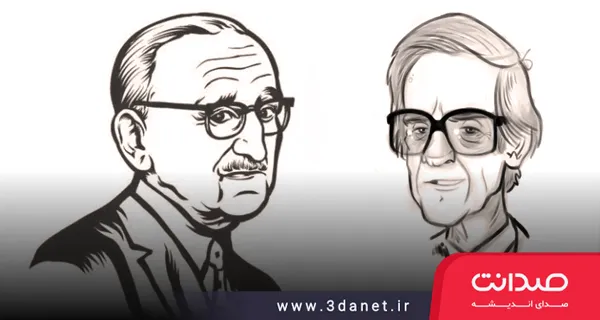
In the past thirty years we have witnessed a revival of interest in Kant’s works on enlightenment. Leading thinkers such as John Rawls and Jürgen Habermas regard Kant’s philosophy of enlightenment as an open and unfinished project that must now be reconsidered in light of the conditions and realities of the contemporary world.۸ One might say that the revival of Kantian enlightenment is a response to the arrogance and hubris of Western man. Many contemporary critics of the Enlightenment argue that modern Western thought has used the legacy of the Enlightenment as a pretext for transgressing against peoples and individuals different from the white, Western race. Rawls and Habermas believe that Kant provides the necessary resources for developing a minimalist conception of rational discourse so that human differences can be recognized (i.e., reasonable pluralism), while at the same time offering common ground for reforming political, social, and cultural procedures and institutions. Kant’s minimalist enlightenment is regarded as a vast resource at the philosophical core of the West for the post-metaphysical, post-ideological, and post-secular age, one that makes possible plural epistemic systems. This depends on the denial of the maximalist enlightenment that was the ideal of nineteenth-century philosophers. Philosophers of the late twentieth and early twenty-first centuries revived the minimalist elements in Kant’s works on enlightenment—elements that had been ignored or derided by Kant’s early successors.
In the works of Habermas and Rawls, different models or paradigms of minimalist enlightenment are presented. Today, Kantian political philosophers think within the framework of these paradigms. Rawls says that philosophers such as Charles Larmore, Bruce Ackerman, and Robert Audi are developing projects similar to his political liberalism; some of Rawls’s students, such as Onora O’Neill and Anthony Laden, have developed his project. Habermas acknowledges that the works of Hans-Otto Apel, Albrecht Wellmer, and Axel Honneth are similar to his own intellectual project.
In the modern history of Iran, the majority of intellectuals from the dawn of the Constitutional Revolution to the present have either been ardent advocates of a maximalist/radical reading of the Enlightenment or belong to the ranks of its critics—postmodernists and communitarians can be counted among the latter. A minimalist reading of the Enlightenment has found little opportunity to be put forward and contemplated in our academic and intellectual (religious and secular) milieu. The aim of this essay is to explicate the minimalist reading of the Enlightenment in order to reconstruct the project of religious intellectualism (as well as secular intellectualism). In its recent phase, religious intellectualism has taken steps toward maximalist enlightenment and has therefore led to a paradox (the explanation of which will come in the second part of this note). Minimalist enlightenment, however, provides the necessary foundations for reconsidering and reconstructing the project of religious intellectualism. The important point is that some of the main elements of this reconsideration already exist in a portion of the literature of religious intellectualism, especially in the book “The Theory of the Contraction and Expansion of Religious Law” by Dr. Abdolkarim Soroush (ideas such as the distinction between the revealed text of religion and its human interpretation, the historical and collective nature of religious knowledge, the plurality of religious beliefs, their changeability (their expansion), and their epochal character). This book is a work in religious epistemology, and its major claims have now gained general acceptance. However, this work also contains important implications and consequences for minimalist enlightenment and political philosophy that its esteemed author and his students have not examined from this perspective. The fundamental claims of this theory necessitate the existence of a public sphere or the public use of reason (as Kant puts it) and necessitate taking seriously John Stuart Mill’s theory of liberty, in the absence of which the system of censorship slaughters truth, living truths turn into dead dogmas, the truth or falsity of our beliefs is not tested, and reasonable beliefs in differing perspectives (i.e., reasonable pluralism) are not revealed. The existence of a free public sphere is one of the essential preconditions of the claims of the theory of the contraction and expansion of religious law; furthermore, this theory requires a kind of educational system (in the religious and public spheres) that leads to intellectual independence alongside an ethics of belief (i.e., the moral responsibility of accepting beliefs and their rational and empirical assessment). The aforementioned matters are among the essential elements of the minimalist reading of the Enlightenment. With some modifications and additions, the aforementioned theory can be called the most important work of minimalist enlightenment in our society.
A minimalist reading of enlightenment, as one of the most important preconditions for rationality and intellectual health, is constitutive of religious and political pluralism and serves as the foundation of a well-ordered, democratic society. By drawing on such a reading, it becomes possible to arrive at reasonable answers to many of the challenges between tradition and modernity (especially the challenge of religion, democracy, and human rights). Freedom of thought, the rejection of blind obedience, accepting responsibility for our beliefs, and critical dialogue in the public sphere—which are fundamental components of minimalist enlightenment—are in principle not in conflict with the rational religious tradition, but are rather necessities for the reform and dynamism of the religious tradition. Maximalist religious intellectualism seeks to make religion minimal, but minimalist religious intellectualism wants enlightenment itself to be minimal, flexible, and pluralistic so as to make room for revealed (historical) religion.
.
.
۱ In explaining and elaborating on the two maximalist and minimalist readings of enlightenment in Kant's works, I have drawn upon the following books:
Fleischacker, Samuel. What is enlightenment?. Routledge, 2013.
Deligiorgi, Katerina. Kant and the Culture of Enlightenment. SUNY Press, 2005.
On this subject, see: Israel, Jonathan. A revolution of the mind: Radical enlightenment and the intellectual origins of modern democracy. Princeton University Press, 2009..
۲ See: Muthu, Sankar. Enlightenment against empire. Princeton University Press, 2009.
۳ Kant, Immanuel. "of Pure Reason." Trans. and eds. Paul Guyer and Allen Wood. Cambridge: Cambridge University Press (1998), A738-747.
۴ See the numerous articles in this book: Schmidt, James, ed. What is Enlightenment? eighteenth-century answers and twentieth-century questions. University of California Press, 2019.
۵ See: Gelfert, Axel. "Kant on testimony." British Journal for the History of Philosophy 14, no. 4 (2006): 627-652.
۷ Kant, Immanuel, et al. Religion within the boundaries of mere reason and other writings. Cambridge Univ. Press, 1998.
۸ In the book Political Liberalism by John Rawls (Rawls, John. Political liberalism. Columbia University Press,1993)
and in numerous works by Habermas, including in Habermas, Jürgen. "The Philosophical Discourse of Modernity, trans. F. Lawrence." Cambridge, MA: Massachusetts Institute of (1987). we see two different interpretations of Kant's minimalist enlightenment.
.
.





Discussion0 comments
No comments yet; let yours be the first voice.