Lecture
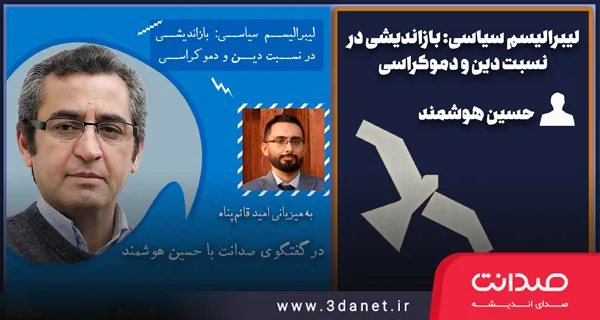
Liberalism and the Possibility of Peaceful Coexistence
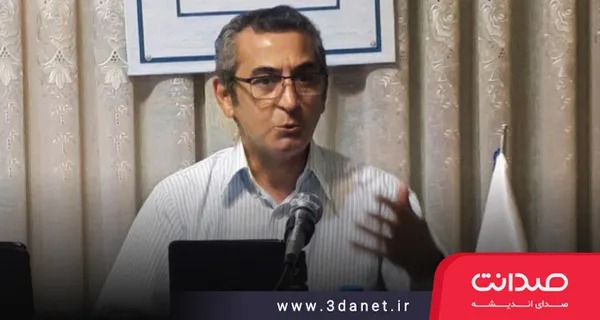
This lecture addresses the relationship between liberalism, religious and moral pluralism, and the possibility of peaceful coexistence in modern societies. Distinguishing between comprehensive liberalism and political liberalism, Hossein Houshmand speaks of the possibility of political agreement between secular and religious citizens.
About this video
In this video, Hossein Houshmand examines the problem of peaceful coexistence in a pluralistic society from the perspective of political philosophy. The starting point of the discussion is that modern societies are faced with diverse philosophical, moral, and religious traditions; traditions that are sometimes reasonable, yet harbor deep incompatibilities with one another.
The central focus of the lecture is the distinction between two conceptions of liberalism: comprehensive liberalism, or the Enlightenment as a philosophy for life, and political liberalism as a philosophy for the political order of society. Houshmand explains that political liberalism, unlike comprehensive liberalism, does not seek to commit all citizens to a particular conception of the good life, but rather seeks to provide a fair framework for rights, freedoms, and political cooperation.
Within this framework, religious and secular citizens can, for different reasons but in the form of an overlapping consensus, support shared principles of justice and democracy. The importance of this discussion lies in showing that coexistence in a pluralistic society does not necessarily require the elimination of deep disagreements, but can be formed on the basis of tolerance, mutual respect, and public reason.