Philosophy
Arash Naraghi's article 'Human Rights and the Problem of Cultural Relativism'
Critics of human rights invoke cultural relativism to deny their universality. But does cultural diversity prove the absence of shared moral values? An examination of relativist arguments and a critique of the foundations of human rights opponents.
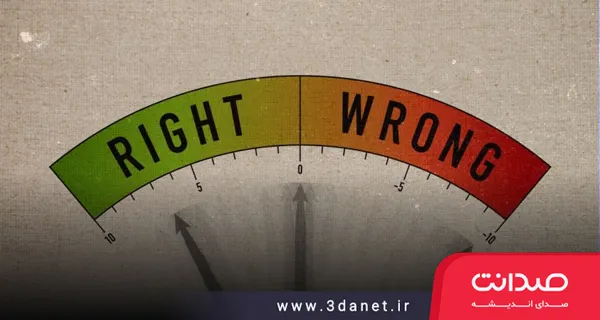
Human Rights and the Problem of Cultural Relativism
Arash Naraghi
Advocates of human rights attribute at least three important characteristics to these rights: First, these rights are universal, meaning that all human beings, by virtue of being human, regardless of race, religion, nationality, social class, gender, ethnicity, and so on, possess these rights; second, these rights have fundamental priority, meaning they demand the essential minimums for enjoying a dignified and humane life, and in most cases, when there is a conflict between them and other rights or considerations, it is these rights that take precedence; and third, their affirmation entails obligation, meaning that as soon as they are affirmed, a certain authority or authorities are morally (and in most cases, legally) obliged to secure and guarantee those rights.
On the other hand, critics of human rights have often subjected those rights to significant criticisms from at least two aspects. We can divide these criticisms into two groups: (a) conceptual criticisms, and (b) instance-based criticisms.
From a conceptual standpoint, most critics of human rights find the claim of the "universality" of the instances of human rights to be problematic and indefensible, both in theory and in practice. According to these critics, advocates of "universal human rights" overlook the remarkable diversity of cultures, religions, and national traditions in the world. Different cultures and societies follow different norms and values, and there is no objective criterion for privileging the values of one particular culture over others. Therefore, no culture has the right to assume its accepted values are universal and to try to impose them on other cultures that follow different values. For example, what is considered "good" and "proper" in Western culture is not necessarily "good" and "proper" in the context of Islamic culture. Advocates of "universal human rights" are, in fact, trying to impose the liberal values of Western culture on other cultures. Thus, advocates of "universal human rights" are inconsiderate, self-centered, and domineering individuals. They are "inconsiderate" because they do not see, or do not recognize, the differences that exist among various cultures and value systems. They are "self-centered" because they consider the values of their own culture superior to other cultures. And they are "domineering" because they try to forcibly impose the values and norms of their own culture on other cultures. In other words, advocates of human rights are oblivious to the relativity of moral values and norms, and consequently, they do not tolerate foreign cultures, and ultimately, under the guise of defending human rights, they defend a kind of embellished cultural imperialism.
In fact, most critics of human rights try to create breathing room for their own accepted value systems based on a kind of "cultural relativism." In other words, critics of human rights ultimately cannot tolerate some of the instances of human rights as they appear in the text of the Universal Declaration of Human Rights, and they often try, by resorting to the doctrine of "cultural relativism," to defend their own accepted instances against the content of the Universal Declaration. Depending on the culture to which they belong, individuals find different instances of human rights worthy of critique. For example, Muslim critics, based on a particular understanding they have of Islamic texts and sources, find the following items in the list of human rights especially contentious and worthy of criticism: (1) The right to freedom, especially freedom of religion, freedom of expression, and freedom of assembly; (2) The right to political participation and the guarantee of periodic elections; and (3) Rights pertaining to women and children.
In most debates that take place in the conceptual and instance-based critique of human rights, the doctrine of "cultural relativism" is present, either overtly or covertly, and critics try to justify their position on that basis.
But why should the doctrine of "cultural relativism" be accepted? As we have seen, the most important basis for the doctrine of cultural relativism is the "principle of diversity." The argument of cultural relativists can be summarized in the following simplified form:
(1) Different cultures have different conceptions of good and bad. It is a fact that in most cases, what is considered (for example) “good” in one particular culture is regarded as “bad” in another. Different cultures follow very different value systems. (The Principle of Diversity) Therefore, (2) “Good” and “bad” or moral values change from one culture to another. In other words, there is no objective, cross-cultural moral truth. (The Doctrine of Cultural Relativism) And of course, critics of human rights, based on proposition (2) (i.e., the doctrine of cultural relativism), can easily conclude: (3) “Universal human rights,” as a set of cross-cultural rights or values that encompass all human beings equally, do not exist.
Proponents of the doctrine of “cultural relativism” believe that affirming this doctrine creates a suitable ground for tolerance and mutual respect among the world’s different cultures, and negates cultural domination or imperialism.
But what can be said about this argument?
First, in the above argument, relativists try to prove a reality that (assuming it exists) is independent of people’s opinions and beliefs, based on those very opinions and beliefs. But this move is not logically possible. Suppose that objective, cross-cultural values truly exist. If such values truly exist, can our opinions and beliefs change that reality? It is highly unlikely.
Let me give an example to clarify this point: It is a fact that different cultures have had different conceptions about the shape of the Earth and its position in the solar system: some cultures considered the Earth to be flat and the center of the solar system, and some cultures considered the Earth to be spherical and the Sun to be the center of the solar system. Based on this fact about people’s opinions and beliefs in various cultures, can we conclude that, therefore, the shape of the Earth and its position in the solar system changes from one culture to another? It is clear that this false conclusion does not follow from that true premise.
Second, it seems that cultural relativists exaggerate the diversity and difference of values in different cultures. The “Principle of Diversity” can be accepted without denying the existence of certain shared fundamental values in the living cultures of the world. Within the vast diversity that exists in the values and norms of people in various cultures, certain fundamental and shared principles can also be observed. In many cases, people’s customs and traditions change from one culture to another, but the principles underlying those customs and traditions are shared. For example, followers of Hinduism cremate their dead, and Native Americans used to eat the flesh of their deceased fathers. But despite this apparent difference, the motivation for those rituals was shared: both groups sought, in two different ways, to pay respect to their dead. Perhaps the best way to understand to what extent the people of the world agree on the instances of human rights is to organize empirical research on this matter. As it happens, such research has begun on a global scale. For example, in 2002, in a survey conducted in eight Arab countries, respondents were asked to list ten political issues in order of importance to them. In all eight countries, the observance of “individual and civil rights” topped the list, ranking above the issue of healthcare services and the issue of Palestine.[1] Therefore, in discussions concerning human rights, it should be noted that governments and state-affiliated media in countries that violate human rights are not necessarily the best representatives of public opinion in those countries.
Of course, the empirical research conducted in this area so far is very nascent, and it does not show that the people of those countries necessarily believe in human rights, or that there is a universal consensus on this matter. However, consensus on human rights is a growing phenomenon on a global scale. As different cultures of the world become more familiar with these rights, they view them more favorably. The rationality underlying these rights is understandable to almost all human beings. The fundamental idea of human rights is that people possess inalienable rights in at least four domains: the right to life, the right to live according to one's own discretion, the right to freedom from cruel and degrading treatment, and the right to freedom from unfair and unjust treatment. These abstract rights form the justificatory basis for the instances of human rights in the Universal Declaration, and acknowledging them does not seem overly difficult.
On the other hand, many instances of human rights are among those that have gained relevance and importance due to the birth of the modern state. The modern state can easily threaten the independence and the individual and collective rights of citizens. Therefore, a solution must be devised to prevent the dangers arising from the powerful institution of the modern state and to protect citizens against it. Many instances of human rights, such as the right to a fair trial or the right to freedom from arbitrary detention, are for curbing the concentrated and potentially unbridled power of the modern state. Thus, wherever the modern state takes shape, commitment to human rights also becomes necessary due to its inevitable dangers. This situation is like, for example, a new electric saw being introduced to the market in country A. The people of that country learn through experience that working with that electric saw, alongside all its advantages, often causes, say, wood chips to fly into the users' eyes and damage their eyesight. Therefore, based on their experiences, the people of that country compile a safety manual and make it available to all users of that electric saw worldwide. It is true that the safety manual was first prepared and compiled in country A, but its recommendations are not relevant or exclusive to the people of that country. All those who use that electric saw need that manual. The people of the West have utilized the enormous machine of the modern state before other peoples of the world, and the Universal Declaration of Human Rights (at least insofar as it relates to the rights of the nation against the state) is a safety manual they have prepared based on their experiences with the dangers of this machine. Therefore, any culture that employs the enormous machine of the modern state needs this manual both to become aware of the dangers of that machine and to devise solutions for those dangers.
Third, let us suppose we accept that different cultures hold serious disagreements regarding fundamental human values and needs. But does this mean that we have no common rational basis for resolving our disputes over moral, political, and legal issues at the intercultural level, or that we cannot approach such a basis in the future? For many centuries, humanity has had serious and profound disagreements on many scientific matters. Yet, gradually, it has refined its methods of scientific inquiry to the point of providing at least a reasonable basis for constructive global dialogue on scientific issues. Keeping the door open for dialogue on human rights and critical discussion of its merits and shortcomings can also, over time, increasingly pave the way for global understanding and empathy regarding pressing human issues in the global community. Today, we witness many transnational norms and institutions, despite their short lifespans, playing successful roles in the international arena. The world's nations rapidly influence one another's intellectual and social movements and draw inspiration from each other's political, legal, and economic institutions. This global convergence can be observed to a large extent in the field of human rights as well. By 2006, out of 200 countries worldwide, 155 had formally accepted the “International Covenant on Civil and Political Rights”[2] and 152 had accepted the “International Covenant on Social Rights”[3]. Among them, 180 countries had signed the “Convention on the Elimination of All Forms of Discrimination against Women”[4], and 192 countries had signed the “Convention on the Rights of the Child”[5]. Of course, it is true that many countries around the world joined the signatories of these covenants to save face in the international arena, to embellish their appearance, and perhaps to reduce pressure from the United Nations upon themselves. But signing these covenants at least demonstrates that their content was not too far-fetched or unacceptable from the perspective of the signatory countries.
Fourth, recognizing “universal human rights” is entirely compatible with respect for the vast cultural and political diversity in the global community. Human rights are minimal rights in a few limited domains; that is, they suffice to articulate the necessary conditions for a minimally dignified and humane life, and leave decisions about the state of human life beyond that minimal level to the discretion of national governments. The language used to formulate human rights is also largely abstract and flexible, allowing the institutions tasked with realizing and protecting these rights to be sensitive to indigenous cultural differences and specific regional conditions when interpreting and implementing them. On the other hand, almost all credible human rights sources explicitly permit the temporary suspension of certain instances of human rights in extremely critical and acute situations, such as a state of war or conditions where the very existence of a nation is endangered. More importantly, all credible declarations concerning human rights recognize the right to national sovereignty and self-determination, as well as the prohibition of foreign intervention in a country's internal affairs. This leaves ample room for the expression of values specific to each culture. Of course, these rights are bound by certain important constraints; for example, the legal-judicial system of a society cannot exempt that society from its international obligations.
Fifth, it should not be forgotten that cultures are not homogeneous, monolithic sets. For example, Islamic culture cannot be considered a single whole whose members hold identical views on all matters. Within every culture, there are thousands of subcultures with a variety of beliefs and values. When relativists attribute a particular value to an entire specific culture, they often ignore the diversity within that culture and ascribe the values of one particular group to the whole of that culture. For instance, within Islamic culture, many Muslims believe that women do not enjoy equal rights with men, or that freedom of religion and expression should not be permitted. But on the other hand, many Muslims also defend women's equal rights, as well as the right to freedom of conscience and expression. Now, from the perspective of cultural relativists, which of these two groups should be considered the reference for defining “good” and “bad” within Islamic culture? The reality is that, from the perspective of cultural relativists, there is no clear and defensible criterion for preferring the viewpoint of one group over another within a single culture.
On the other hand, many of the human values respected in the text of the Universal Declaration of Human Rights have precedents in many non-Western cultures. And at the very least, there have been tendencies within those traditions and cultures that have long upheld many of those values. Therefore, it is difficult to consider the instances of human rights as entirely alien to the values of non-Western cultures.
Furthermore, commitment to human rights does not mean that we force the individuals of a particular culture to abandon their traditional beliefs, or not to organize their lives according to the beliefs of their tradition and culture. Respect for and commitment to human rights means that the freedom and dignity of those who live within that culture but hold different beliefs, or wish to organize their lives in a different way, remain respected and protected. Society must guarantee the possibility for everyone to organize their lives at their own discretion and according to the values they favor. In this context, of course, if some wish to organize their lives according to the traditional patterns of their culture, they will still enjoy this right. But this opportunity and possibility must be equally available to all members of society.
Sixth, cultural relativism does not necessarily lead to tolerance and mutual respect among cultures. Of course, those who subscribe to cultural relativism may, compared to those who believe in absolute universal values, be psychologically more open and receptive to other cultures. But cultural relativism logically provides no basis for a tolerant encounter between cultures. For example, suppose that in culture (A), tolerance towards opposing beliefs is not a respected and accepted value, and within its framework, citizens are permitted to commit violence against those who do not believe in their fundamental tenets. As it happens, people raised in culture (B) do not believe in the fundamental tenets accepted by culture (A). Therefore, the members of culture (A) act according to their culture's values and commit violence against the members of culture (B). On the other hand, the members of culture (B) are tolerant and subscribe to cultural relativism. Can the members of culture (B) criticize the aggressive and violent behavior of the members of culture (A)? The answer seems to be negative. According to the doctrine of relativism, the behavior of the members of culture (A) must be understood and evaluated within the framework of their culture. If that behavior is deemed acceptable within the framework of that culture, then that behavior must be considered acceptable. There is no independent, cross-cultural basis for judging the “good” or “bad” of that behavior. Therefore, from the perspective of the doctrine of cultural relativism, the members of culture (B) cannot consider the aggressive and violent behavior of the members of culture (A) as morally subject to criticism and condemnation, and must inevitably regard it with respect. Cultural relativism can easily issue a license for violence and intolerance. The members of culture (B) can only criticize the behavior of the members of culture (A) if they consider at least the principle of tolerance to be cross-cultural.
Interestingly, many governments that violate human rights often defend their objectionable conduct in international arenas from a relativistic position, invoking the “special values of their own culture,” yet the same governments regard their own value system as absolute and universal in the domestic sphere. That is, they are relativists in the international arena but absolutists domestically.
Seventh, cultural relativists assume that affirming “universal human rights” means issuing a license for the use of force and imposition in the realm of international relations. It seems that the existing realities of international relations also fuel this perception. In many cases, powerful countries violate the national sovereignty of other countries under the pretext of defending human rights but motivated by their own political or economic interests. What can be said about this criticism?
First, a distinction must be drawn between establishing a right and the possibility of abusing that right. It is true that in some instances, certain rights are abused and become a pretext for violating other rights. But is the abuse of a right a justified reason for suspending or denying that right? For example, many people abuse the right to property. Theft is fundamentally possible only if the right to property exists. But can one conclude from the fact that establishing the right to property creates the possibility of theft that the right to property therefore does not exist, or that affirming such a right is unjustified? Clearly, the answer is no. Establishing human rights, of course, justifies the right to humanitarian intervention (even in the form of military intervention) under certain conditions, and establishing the right to humanitarian intervention, in turn, provides the possibility for its abuse by powerful countries. But the mere fact that some countries abuse human rights or the right to humanitarian intervention is not a justified reason for suspending or denying those rights.
Second, in discussions concerning human rights, a distinction must be made between two stages: the stage of justifying human rights, and the stage of implementing those rights. Someone might prove with strong reasoning that certain rights are instances of human rights (the stage of justification). But proving this does not, in itself, show what the best method for realizing and implementing those rights in the international arena is. As I mentioned earlier, the widespread and systematic violation of fundamental human rights under specific conditions justifies the right to humanitarian intervention and the use of force against the state or authority violating human rights. However, the use of force is not, in most cases, the most effective method for establishing human rights. The use of force (especially the use of military force) is, in most cases, costly and yields little result.
Human rights activists, as a first step, strive to raise the level of public awareness about human rights, particularly among political and social elites as well as government agents, through education, and encourage governments to join international human rights treaties and periodically report on their progress in establishing human rights to international bodies.
But if a government does not adhere to its international human rights obligations, the international community can, as a second step, use a policy of “encouragement and pressure.” Non-governmental organizations, responsible members of the international community, and international bodies such as the UN Human Rights Council can continuously censure the offending and rights-violating country, causing it shame in the international community. And in the event of progress in the field of human rights, they can grant that government certain economic or political encouragements and privileges.
As a third step, the international community can resort to the use of force. However, the use of force, depending on the extent of human rights violations, the severity of the victims' situation, and the degree of possibility for civil resistance by the people against those rights violations, can be implemented in three stages: in the first stage, the use of force is of the nature of political and diplomatic pressure. In the second stage, if these pressures prove ineffective, economic sanctions are prescribed depending on the severity and extent of the human rights violations. And finally, in the last stage, if human rights violations are very widespread and the lives of a large number of innocent people are in serious danger, military intervention can be placed on the agenda.
Therefore, the primary policy of the international human rights movement in establishing human rights is, first and foremost, "persuasion" and not "coercion."
The result is that if we consider the arguments of this writing to be valid, then we must accept that cultural relativism is philosophically indefensible, and also that the validity of "universal human rights" cannot be called into question on its basis.
Arash Naraghi
California – Santa Barbara March 3, 2007
.
.
[1] What Arabs Think: Values, Beliefs, and Concerns, Utica, NY; Zogby International, 2002. And also, “Pew Global Attitudes Project: View of a Changing World”, Pew Research Center, 2003.
You can find the above research on this site.
[2] The Civil and Political Covenant
[3] The Social Covenant
[4] The Covenant on the Elimination of All Forms of Discrimination against Women
[5] The Covenant on the Rights of the Child
.
.




Discussion0 comments
No comments yet; let yours be the first voice.