Philosophy
Arash Naraghi's article 'The Moral Status of Violence in a Peaceful Civil Movement'
Are victims of repression in civil movements permitted to use violence in return? After examining the reasons for condemning violence, Arash Naraghi argues that while violence is never morally 'good', under certain conditions it can be considered a morally 'right' act.
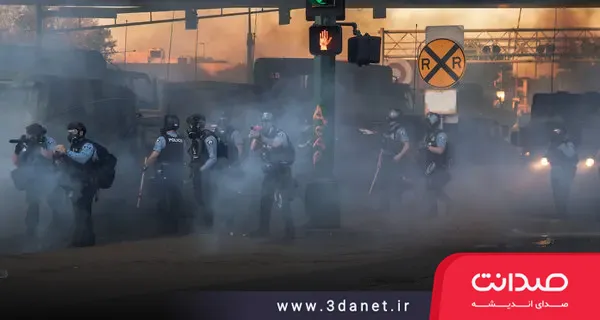
The Moral Status of Violence in a Peaceful Civil Movement
Arash Naraghi
1- The central question of this essay is: In a peaceful civil movement, are the people who are victims of violence and repression morally permitted to reciprocally use violence as a method to achieve the goals of their movement?
Here, by "violence" I mean the set of behaviors that humans carry out to harm other humans. These harms are often of a physical nature. Violent behaviors often lead to the infliction of physical pain and injury, and even the death of the other party, and sometimes result in the destruction of objects and beings that are important and valuable to the other party. In some cases, of course, violence can also manifest in the form of psychological harm.
2- In most cases, it is assumed that violence is inherently wrong from a moral perspective, meaning that resorting to it is always and under all circumstances morally incorrect. Proponents of this view usually offer several important reasons for their claim:
The first reason is that violence always leads to some kind of physical harm, or at least is applied with the intent of such harm. And harming others and causing pain and injury is, by the rule of morality, a wrongful act.
The second reason is that exercising violence negates the victim's dignity. One who resorts to violence ignores the reason and autonomy of the victim, meaning that instead of motivating them to change their behavior through rational persuasion, they compel them by force and against their will and rational judgment to serve their own purposes. In other words, the violent person turns their victim into a mere tool for securing their own ends, and thereby degrades that person to the level of an object. This process of alienation negates the human dignity of the victim, and on this basis, violence can be considered a morally reprehensible act.
The third reason is that violence leads to more violence. Violence provokes feelings of hatred and vengeance in the victim, and always keeps them watchful to inflict reciprocal harm on the opponent at a suitable opportunity, and this retaliatory attack in turn fuels the fire of further hatred and vengeance, and the continuation of these behaviors can turn into a conflagration that ultimately destroys the foundation of social solidarity.
The fourth reason is that exercising violence gradually hardens the heart of the agent of violence and empties them of noble human virtues. A human who continuously and recklessly exercises violence gradually acquires a violent and inhuman disposition and character. A psyche that recklessly and eagerly exercises violence is either sick or wicked.
The fifth reason is that violence is a destructive act, and fundamentally, if it is not destructive, it is not considered violence. But with destruction, one cannot achieve constructive and lasting human and social accomplishments. The most important destructive consequence of violence within the context of a civil movement is that it blocks the space for dialogue in the public sphere, and the blockage of dialogue in the public sphere in fact signifies the end of politics and the destruction of the power base of civil society. Civil society consists of citizens who strive through cooperation with one another to realize common goals in their collective life. But mutual cooperation depends on the mutual understanding of citizens of one another. The power of civil society does not stem from force; it stems from the capacity for dialogue. But violence is the endpoint of dialogue, and therefore, the widespread and continuous exercise of violence directly destroys the power base of civil society. Hence, employing violence to achieve civil goals seems from the very beginning to be a futile and ineffective measure.
3- But based on these reasons, should we conclude that violence is always and under all circumstances morally wrong?
The above reasons are, on the whole, reasonable and acceptable, but it does not seem that one can conclude from them that violence is always and under all circumstances morally impermissible. For example, when a criminal group takes innocent people hostage, and police forces resort to violence to save the hostages' lives, the hostage-takers are, of course, physically harmed. But this violence and the resulting harm cannot be considered morally impermissible. Even in these circumstances, the use of violence cannot be regarded as negating the human dignity of the hostage-takers. The hostage-takers, by their action, have completely disregarded the human dignity of their hostages, and have thereby deprived themselves of the right to immunity from violence. Here, it is the hostage-takers who have trampled upon their own human dignity through their action, not the police forces who have necessarily resorted to violence to save the hostages' lives. On the other hand, the claim that violence always leads to more violence is not necessarily and always true. For example, the violence exercised in the American Civil War to abolish slavery in the southern states not only did not lead to more violence but also prevented the occurrence of more severe violence in that country's future. It seems that in some circumstances, exercising violence is the only way to curb further violence. Also, although blind violence, especially when exercised continuously and indiscriminately, can strip the agent's soul of noble human qualities, in some cases where violence is the only way to prevent greater violence and larger catastrophes, passive observation can also, in a different way, stain the character of indifferent witnesses with moral vices. Finally, it is true that violence signifies the end of dialogue, and the widespread and continuous use of violence threatens the foundations of civil society and hinders the realization of civic ideals, but in some cases, for instance, when the core foundations and values of civil society are seriously threatened, the use of violence is sometimes the only remaining way to defend those foundations and values.
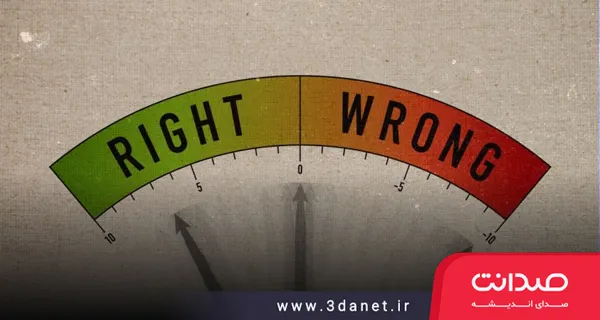
In my opinion, based on the reasons given for condemning violence, one can claim with sufficient confidence that violence is never morally “good,” but under certain conditions, it can be considered a morally “right” action. This claim rests on the belief that every morally right action is not necessarily morally good. It is good to give an example to clarify the distinction between a “morally good” act and a “morally right” act: Suppose Ms. Shirin Ebadi travels to the mountainous regions of northern Afghanistan for some humanitarian activities (for example, supporting children's vaccination). But she suddenly finds herself surrounded by Taliban forces. They arrest her and take her to a remote village. When Ms. Ebadi enters the village, she sees twenty villagers lined up against a wall, terrified and weeping. Suppose she somehow learns that these villagers are innocent people chosen completely at random from the population, and they are to be shot before the eyes of others to make an example of them and intimidate the people of the region. The leader of that military group, upon seeing Ms. Ebadi, recognizes her and, out of respect for her humanitarian activities, offers her a proposal: if she kills one of those innocent people with her own hands, he will release the remaining nineteen, but if she refuses, he will kill all twenty. Suppose that in this situation, there is no other way to save those innocent people, and at the same time, Ms. Ebadi, for some reasons, is completely certain that the man will do what he says. In the view of many people, in this situation, all things considered, Ms. Ebadi should, despite her inner desire, kill one of those innocent people to save the lives of the other nineteen. Those who hold such a belief are, in fact, claiming that in that situation, killing one innocent person is the morally “right” thing to do, meaning it is the decision that, all things considered, ought to be acted upon. But it is unlikely that any of those individuals would believe that the murder of an innocent human being is a morally “good” event. In some circumstances, a person is compelled to choose the lesser of two evils. In this situation, committing that evil, all things considered, is a morally right decision, but this does not necessarily transform the badness of that act into goodness.
On this basis, my proposal is that violence is always and under all circumstances a morally undesirable or bad event, but under certain conditions, resorting to it may be the morally right thing to do. This claim has three important implications:
First, in practice, the guiding moral rule is this: resorting to violence is wrong unless proven otherwise. In other words, as a general rule, avoiding violence requires no justification, but resorting to violence requires justification.
Second, based on the above moral rule, violence must be divided into two types: morally justified violence and morally unjustified violence. Violence must always be presumed morally unjustified unless morally convincing reasons are provided to permit it in a specific and particular case. If, in a particular case, a morally convincing reason for exercising violence can be provided, then resorting to violence in that particular case will be an instance of "justified violence."
Third, based on the above distinction, it can be claimed that violence is only permissible in specific and particular cases, provided there is a morally valid justification for it. Determining whether violence is justified or unjustified is entirely contingent upon the specific circumstances in which social actors find themselves, and with a change in those circumstances, the permission to exercise violence becomes void, unless the new circumstances, in turn, convincingly justify the necessity of using violence.
It seems the most important reason by virtue of which the use of violence can be considered permissible in a specific and particular case is a kind of utilitarian reason: if it becomes clear that in certain specific circumstances, resorting to violence can prevent the occurrence of greater and more severe violence—provided the risk of future violence is sufficiently close, real, and severe—then it can be claimed that a moral foundation for resorting to violence in that specific and particular case has been established, and the use of violence in that specific and particular case is morally permissible (and not necessarily obligatory).
On this basis, a peaceful civil movement should be considered a movement that refrains from employing "morally unjustified violence." More precisely, a peaceful civil movement is a movement that always considers violence morally "bad," and to realize its goals and ideals, it primarily and above all utilizes non-violent methods. However, in circumstances where non-violent methods lose their effectiveness, and the only way to prevent greater and more severe violence is to resort to a degree of morally justified violence, then resorting to morally justified violence will not be incompatible with the peaceful character of that movement.
Therefore, a civil movement can be considered "peaceful" if, to realize its goals and ideals, it utilizes the following methods in order:
In the first step, employ "non-violent persuasive" methods. Here, civil actors try, through speech—that is, reasoning and dialogue—to empathetically show their opponent that their actions are unjust, and in this way, deter them from committing malicious acts.
If the first method proves fruitless, in the second step, civil actors must utilize "non-violent coercive" methods. Here, to advance the movement's goals, actors place their opponent under a kind of non-violent pressure. For example, they organize actions such as peaceful marches, general strikes, or other civil protest actions. Civil disobedience is a clear example of using non-violent coercive methods.
But if the second method also reaches a dead end, then in the third step, resorting to "morally permissible violence" can be placed on the agenda under specific and particular conditions.
4- However, the concept of "morally permissible violence" requires further explanation. Under what conditions does the use of violence constitute an instance of morally permissible violence?
As far as I understand, violence is morally permissible if it meets at least the following three conditions:
The first condition is that civil activists must have previously, seriously and sincerely, tested non-violent methods of persuasion and coercion, but all those efforts have remained entirely fruitless.
The second condition is that the goal of employing violence must be just and morally defensible. One of the most important consequences of this condition is that violence is a last resort for fatal wounds, and cannot be used as a salve to remedy ordinary abnormalities. In other words, even if we assume that non-violent methods of persuasion and coercion have yielded no results, the use of violence can only be permissible for goals that are sufficiently important and fundamental to citizens.
The third condition is that the manner of employing violence must also be just and morally defensible. In other words, civil activists, even if they are striving for just and highly important goals, do not have the right to resort to any kind of violence to achieve those goals. Morally permissible violence must be bound by constraints.
But here, two important questions arise:
The first question pertains to the second condition: Which goals, in the absence of any effective non-violent method, can justify the use of violence?
The second question pertains to the third condition: By what constraints must morally permissible violence be bound?
In answer to the first question, it seems the most important goal that can morally justify the use of violence in the absence of any effective non-violent method is self-defense: if person A attacks innocent person B to subject them to serious violence, and B has no way to repel that danger except by resorting to reciprocal violence against A, then B is morally permitted to resort to reciprocal violence against A. Of course, under these conditions, the victim can forgo the right of self-defense, but if they exercise that right, they have done nothing morally wrong. However, here the principle of self-defense can be understood in two different but related ways:
The first interpretation can be considered a narrow interpretation of the principle of self-defense. According to this interpretation, violence is primarily direct and naked, and the victim is in fact compelled to resort to reciprocal violence to defend their physical integrity. Here, the meaning of "self" is mostly the individual's physical sphere. The basis for justifying the use of violence here is this: a person who resorts to unjustified and brutal violence forfeits the "right to immunity from violence," and therefore reciprocal aggression against them will be morally permissible. For example, when individuals brutally attack a peaceful march of civil activists, and the activists have no way to defend their lives except by resorting to reciprocal violence and, for instance, disarming those repressive individuals, then their action will be an instance of self-defense according to the narrow interpretation. Under these conditions, the repressive individuals have already forfeited the right to immunity from violence.
The second interpretation can be considered a broad interpretation of the principle of self-defense. Here, the meaning of "self" is not merely the individual's physical sphere, but also encompasses the set of fundamental rights that guarantee their human dignity. Here, violence means the widespread and systematic violation of citizens' fundamental rights. The broad interpretation mainly applies in cases where the state or forces under its protection violate citizens' fundamental rights in a widespread and systematic manner, do not adhere to the logic of dialogue in the public sphere, and citizens find no way to be heard and defend their fundamental rights except by resorting to reciprocal violence. The basis for justifying the use of violence here can be formulated in the following argument:
(1) A legitimate state is one that upholds the fundamental rights of its citizens and adheres to the logic of dialogue in the public sphere. Therefore, a state that systematically and widely violates the fundamental rights of its citizens and does not adhere to the logic of dialogue in the public sphere forfeits its legitimacy.
(2) The exclusive right to exercise violence belongs solely to the legitimate state. The legitimate state is the only authority that has the right to employ violent methods, if necessary, to preserve the foundations and frameworks of mutual cooperation within civil society, including the fundamental rights of citizens and the logic of dialogue in the public sphere.
Therefore,
(3) An illegitimate state, that is, a state that extensively and systematically violates the fundamental rights of its citizens and does not adhere to the logic of dialogue in the public sphere, forfeits its exclusive right to use violence.
Therefore, citizens and civil activists are morally permitted to resort to reciprocal violence, if necessary, against an illegitimate state that engages in violence, because the illegitimate state has already forfeited its right to immunity from violence and its exclusive right to use violence.
But what constraints must morally justified violence be bound by? Civil activists must always remember that, from a moral perspective, their just goals do not permit them to resort to any violent means against repressive forces. Violence, even in the pursuit of noble goals, is a morally "bad" method, and its use is only morally right if it is bound by at least three important principles:
The first principle can be called the "Principle of Effect." According to this principle, the use of violence is, in most cases, only permissible if one can have reasonable, relative confidence in its effectiveness. Morally justified violence is calculated, conscious, and responsible violence, and therefore, its civil application requires that activists reasonably believe that by resorting to it, they can bring the opposing party back to the negotiating table and compel them to adhere to the logic of dialogue, or deter them from more severe and further violent actions. It is difficult to consider violence exercised merely out of desperation, to vent anger, or to express hatred as a morally permissible act.
The second principle can be called the "Principle of Distinction." According to this principle, civil violence is never blind. That is, when employing morally justified violence, civil activists must use methods that, as much as possible, do not harm innocent people or national assets. When employing morally justified violence, civil activists must especially be able to distinguish, as far as possible, between repressive forces and neutral observers, and also between repressive forces that actively and brutally suppress citizens and official forces that, to the best of their ability, try to avoid brutal violence against citizens.
The third principle can be called the "Principle of Proportionality." The level of civil violence must be proportionate to the severity and importance of the threat facing civil activists. Civil violence must never exceed the minimum necessary to advance civil goals. For example, if a soldier firing upon people can be disarmed and neutralized without the slightest physical harm, that soldier's life must never be put at risk.
۵- Of course, employing violence within the context of a peaceful civil movement is a grave and perilous undertaking. Violence, even when morally justified, is a flame kindled in the midst of a forest, and if not applied with sufficient care and scrupulousness, it can prove far more destructive. It is for this very reason that the leaders of peaceful civil movements must actively and realistically manage the manner in which violence is employed within the movement's context. These leaders must not ignore the possibility of using justified violence as one of the morally permissible tools within a peaceful movement. Ignoring this possibility does not eliminate the occurrence of violence; it merely renders its occurrence blind and unbridled. Therefore, those who emphasize the peaceful character of a civil movement should not speak from a position of absolute negation of violence. The absolute negation of violence sometimes paves the way for the emergence of more heinous forms of violence. Civil leaders and activists must firmly condemn the use of morally unjustified violence and emphasize the primacy of non-violent methods, but they must also realistically recognize the possibility of morally justified violence, and instead of negating it, strive to manage it.



Discussion3 comments
بسیار روشنکننده و راهبردی بود
گاندی رهبر جنبش مدنی ضداستعماری هند که نماد پرهیز ا خشونت در قرن اخیر است. ولی همین گاندی معتقد است که اگر قرار باشد اجباراً بین" خشونت" و "ترس" یکی را انتخاب بکنم، من" خشونت " را انتخاب خواهم کرد، زیرا به نظر من بهتر است هندوستان جهت دفاع از شرافتِ خود به اسلحه دست ببرد تا اینکه مانند پرستوها ، تماشاچی باقی مانده و به ننگِ تماشاچی بودن تن در دهد..
جامعه متوهم شیفته و دیوانه فیلم های هالیوود که توهم تطابق واقعیت آمریکا با entertainment دنیای make believe را دارد و اساتید دانشگاه و دوست و رفیقز و فامیل با ژست های غلو آمیز رسانه ذهن او برای شناختن کشورهای دیگر است هم وقتی سخن از پیشرفت و آزادی و دوکراسی می کند اشک از چشمانت جاری می کند اما وقتی کوچکترین مشکلی در آپارتمان و یا در خیابان پیدا شود با موجودی خودخواه خطرناک و بی وجدان که خصیصه جامعه مدرنیته است مواجه می شوی. روحت شاد دکتر شریعتی و خاطره aphorism های عمیق ات: جامعه متمدن و فرد حیوان وحشی! پارادوکس دانشگاهی و واقعیت موجود در پس قمپزهای مدرن