Political Science
Creating Utopia Is a Human Right (Part Two)
The end of utopia transformed political language, replacing concepts like justice with bureaucracy. Believers in this end, drawing on Popper's 'piecemeal engineering,' think only of reducing pain—a minimalist approach that has drawn criticism.
The Impact of the End of Utopia on Language and Literature
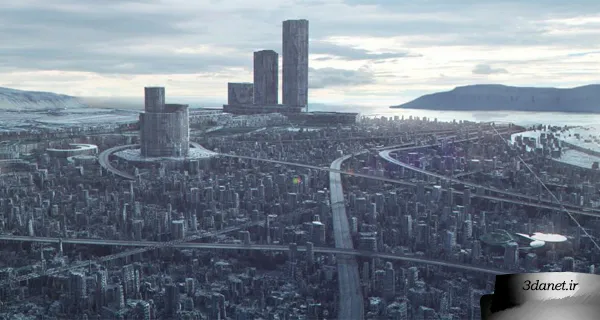
The end of utopia has brought about very significant consequences. The most important consequence of the end of utopia is a fundamental transformation in language and literature. Concepts such as "economic justice," "equality," "resistance," "struggle," "sacrifice and forbearance," "qualitativism," "radicalism," "humanity," "humankind," "truth," "national rights," "public conscience," "collective endeavor," "confrontation between right and wrong," "transcendent morality," "the transcendent," "the political," "authenticity," "adherence to principles," "puritanism," "accountability," "alienation," "refusal of power," "non-hegemony," "philanthropy," "radicalism," and "referendum" are departing from the domain of political language and literature, and even from the domain of the social sciences.
Any use of these concepts is interpreted as "revolutionary romanticism" or an "unattainable fantasy." This change from the domain of language and literature spreads to the levels of analysis and theorizing in political science and the social sciences. The system of bureaucracy and applied sciences gain importance, and this field of changes casts a heavy shadow over the social order. Ostensibly, an effort is made to "demystify" words and concepts, but in the light of the demystification of words, the sanctity of words that are the product of human freedom and transcendence is lost, and in presenting dualisms and binarisms, they become complementary to totalitarian behaviors and thoughts.
We know well that one of the characteristics of totalitarian movements is the creation of dualisms and the absolutization of binaries and dualities in society: insider and outsider, truth and falsehood, friend and enemy, good and evil—these are a series of totalitarian dualisms. Believers in the end of utopia also utilize this same totalitarian characteristic. The use of dualisms such as: "ethics of consequences" versus "ethics of duty," expediency versus truth, reality versus ideal, reform versus revolution, surrender versus resistance, relative versus absolute, "minimalism" versus "maximalism," legalism versus deconstruction, security versus freedom, independence versus freedom, and economic development versus political development are a set of dualisms that believers in the end of utopia employ. The use of concepts that I previously mentioned in the lexicon of "utopianism" is an unforgivable taboo that condemns the user to "revolutionary romanticism" and being out of touch with reality.
Thus, concepts such as "bureaucracy," "technocracy," "the application of sciences," "empiricism," "behavioralism," "utilitarianism," "calculation," "cost-benefit analysis of choices," "mathematization of the social sciences," "quantitativism," "extremism," "minimalism," "self-interest," "national interests," "public opinion," "opinion polling," "relativism," "legalism," "national security," "choosing between bad and worse," "flexibility," "compromise," "expediency," "pragmatism," "consequentialism," "elitism," "knowledge management," "hegemonic state," "political authority," "state hegemony," "legitimate force," "legitimate power," "legitimate authority," "legitimate violence," and dozens of other words and concepts of this kind, infiltrate the language and literature of believers in the end of utopia.
When believers in the end of utopia are confronted with issues such as crisis, violence, addiction, murder and suicide, child labor, unemployment, poverty, and the misery that grips a part of society, as well as dozens of other social, economic, and cultural problems, they respond using words and concepts framed within that same language and literature of realism. The use of concepts and words such as: "reduction of pain and suffering," "elimination of discrimination," "political justice," "reforms," "step-by-step and gradual changes," "the ballot box," and "elections" are part of the solutions that believers in the end of utopia offer. They strive to reform affairs with a realistic and minimalist view. And they criticize that eliminating pain and suffering is a utopian and unattainable state; humanity is incapable of achieving this state. From the realist perspective, one should only think about reducing pain, not eliminating it. The very thing Karl Popper referred to in his book as "piecemeal engineering."
Piecemeal engineering is another term that Karl Popper coins in opposition to the term “utopian engineering.” A social and political piecemeal engineer, with a detailed and empirical understanding of events and anomalies, and with an understanding of the issues and problems that exist in certain political and economic spheres, sets about creating ideas tailored to actually existing problems. Perhaps the work of piecemeal engineering is important in this respect: the extent to which ideas and theories aimed at solving certain social problems and issues appear in proportion to the problem itself. The scale, size, and scope of any piecemeal theory must match the reality that exists in the context. If the theories and ideas of piecemeal engineering are larger or smaller, their effectiveness and feasibility are reduced or eliminated. According to Popper:
“The piecemeal engineer does not seek to understand what the ultimate happiness of society consists of and then struggle to attain that end, but rather simply adopts a method to help discover the greatest and most urgent evils of society and strives to eliminate them. The difference between these two conceptions is not merely verbal, but is in fact a very important one: it is the difference between a reasonable method for improving the lot of mankind on the one hand, and, on the other, a method which, if really applied, would very easily lead to grave human suffering[1].”
In this passage, Popper commits two important errors:
First, he elevates the task of piecemeal engineering to the point of eliminating the greatest evils of society. This task is a maximalist one for piecemeal engineering and brings it close to utopian engineering. For the proponents of utopian engineering (as he calls them), or utopian intellectuals, claim nothing beyond this very task for themselves. And the question is always present in the language of intellectuals: What is the most urgent pain or the most urgent problem of a society? And where should one begin? Popper’s second error is where he makes the implementation of the utopian engineering role contingent upon the formation of an “ideal government.” I will return to this criticism later.
Following the criticisms of utopianism and under the influence of what I earlier referred to as the “globalization of realism,” the tendency of intellectuals toward the piecemeal engineering approach has increased. These intellectuals’ inclination to present minimalist plans and ideas, and their staunch positions against maximalist ideas, has been undertaken with the aim of playing the role of piecemeal engineering. Karl Popper says: “Those who have tried to turn the earth into heaven have created nothing more than a hell.” For this reason, piecemeal engineering, instead of the concept and word justice, which carries a utopian and idealistic semantic load, speaks of the concept and word “political justice.” The term political justice is used by Rawls, and he employs this term in opposition to the term “economic justice.” Economic justice is a concept used in utopia, but the demand for political justice is closer to reality. Although Rawls envisions political justice for a democratic society, and by democratic society he means “a fair system of social cooperation among free and equal citizens[2].” Nevertheless, Rawls’s view among liberals approaches a kind of left-leaning perspective. As Rawls himself also explicitly endorses only political liberalism and refuses to endorse economic liberalism.[3] Rawls’s views cannot be interpreted as a critique of “realism”; Rawls even bases his own scheme of political justice on a kind of utopia. A kind of utopia that goes hand in hand with realism. In Rawls’s view: “Justice as fairness is realistically utopian; justice as fairness probes the limits of practical possibility, that is, to what extent democratic regimes in our world (given laws and tendencies) can fully realize their desired political values – in other words, democratic perfection[4].”
Critique of the Critique
But in response to the realists’ criticisms of the utopians, I draw the readers’ attention to three points:
First, if utopia or the ideal city is to be implemented by the state or institutions of power, and governments are to be in charge of implementing and operationalizing utopia, it is clear that utopia is the shortest path to hell. As Karl Popper writes: "If we wish to apply these principles [of creating a utopian society] in the sphere of political activity, before proceeding to action, we must determine our ultimate goal, which is the ideal state[5]".
Consequently, the formation of an ideal state is a necessary condition for creating an ideal society. The formation of an ideal state is the "will to power." The nature of the state as an "organization of power" contradicts the nature of the ideal as freedom.
Here, it is necessary to also use the concept of ideology. Without wishing to defend or reject this concept, I believe that the two concepts of "ideology" and "utopia" are not, in and of themselves, defective concepts. These concepts become defective and take on a defective function when the state, as a political and economic institution, seeks to be in charge of implementing an ideology or an ideal city. The state and political institutions have no duty other than the security of society and other limited duties determined by law. When the state, as an organization of power, becomes the defender of an ideology, it becomes the defender of the ideology of power. The history of totalitarian states begins from this very point. Ideology and utopia are two tools for defending totalitarian states. Both ideology and utopia are incompatible with existing reality. When the task of implementing these two falls upon the state as the "most organized form of power," ideology and utopia gradually and progressively lose their content. No state becomes totalitarian all at once. Ideology and utopia are initially considered as the goal, and power organizations as the means to realize these goals. But because power is not, and cannot be, subject to any goal other than the one it determines for itself, it is not long before the means and the goal swap places.
The existence of reality does not contradict the ideal city or utopia. Utopias can be designed based on the space of possibilities within reality. The contradiction and incompatibility of reality with utopia occurs when centers of power play a role as intermediary links between "reality and utopia."
Second, some theories about utopia, including the views expressed in this writing, do not intend, or are not of the thought, to build an ideal city on earth free from pain, free from suffering, free from poverty, and free from war and conflict. Although an earth free from pain and suffering is the ideal of utopianism.
The third point is that all those who arrive at the end of utopia or defend realism, just as I discussed in this very argument about the impact of the end of utopia on language and literature, in all their discussions and analyses, consciously and unconsciously try never to utter words such as "right" and "truth." The entire verbal and literary structure of the theories of the end of utopia lacks these concepts, and the persistent use of words related to "rights." Let us now pass over secular intellectuals and political activists or those without religious belief, but the important point is that the language and literature of many intellectuals who call themselves religious, and even religious intellectual or religious enlightened, are influenced by a realism devoid of words and concepts such as "right," "truth," and "rights."
If we comment within the context of politics, perhaps no serious criticism can be leveled at this language and literature. Because the nature of a politician's function lies in the "expression of power," devoid of any right or truth. Truth for a politician is nothing but the maximization of benefit. Outside of interests and outside of expediency, no kind of truth can be proposed for a politician. But the situation of a religious person, especially in the capacity of an intellectual, is completely different. According to religious responsibility, even if the whole world and a society do not speak the truth, an intellectual and a religious person is not deprived of the "responsibility to express the truth" and cannot refrain from employing right, rights, and truth. Now, if religious intellectuals or reformists, instead of refraining, seriously employed these terms in their language and literature, and freed themselves a little from politics in the sense of "power," their entire interpretive and prescriptive structure would be transformed.
The reality is that not only are idealism and utopianism not subjective matters, but utopia can be spoken of as a right among human rights. In this sense, if we look closely at human rights, is the effort of human rights activists not to universalize the idea of human rights? If someone endeavored and strives to desire peace for the world, is their effort considered subjective and far from reality? If so, the very foundation of legal institutions and the foundation of institutions that strive for peace and environmental protection will appear subjective, futile, and far from reality. Even if practically none of the provisions of human rights can be fully and completely implemented anywhere in the world, no jurist rules for their annulment. Similarly, if an effort is made for society to become full of rights, even if societies are empty of rights, no jurist can rule for the annulment of these efforts. Therefore, not only is the expectation of the implementation of right a right itself, but the expectation of a society full of rights is also an indisputable, inalienable right. The implementation of this right, or at least the effort to realize this right, is nothing but the ideal city or human utopia. An ideal city that provides an image of a society full of right and rights.
The Role and Function of the Ideal City
This discussion still retains its force: upon which situational assessment and which empirical study is the claim of the end of utopia and the end of ideals in society based? And again, from another angle, this discussion still retains its force: if something comes to an end in a period of social life, this neither means it is invalid nor that society does not need it. On the contrary, one of the perennial concerns and commitments of intellectualism has always been that when society reaches a point of excess or deficiency regarding a specific issue or through losing a specific issue, it is precisely at that juncture that it needs and becomes ready for a "mental housecleaning" [Descartes' phrase and term]. The role of intellectuals is to create this mental housecleaning. The role of the politician is the "guardianship and safekeeping" of society. The role of political activists is the "intermediary or the mediating link between intellectualism and politics." Given that in a politicized society, political activists have more contact with society, they must acquire the necessary awareness of the role and function of utopia.
a) Creating Possibilities
From this perspective, political activists create new and fresh possibilities so that society becomes ever more acquainted with its freedoms and rights. The role of referring to utopia and ideals is to create this space of possibility. As Paul Ricoeur considers the role and function of utopia to be the "creation of new possibilities."[6]
Politicians think about the possibilities available in society. The politician’s sphere of action and thought is the sphere of “possibilities.” Realism summons society to this very sphere of possibilities. From the perspective of realism, acting or thinking outside of possibilities is “subjectivism” (idealism). Perhaps this is why Paul Ricœur introduces utopia as “the refuge of society.” For if we were to surrender to realism, in an economy where we face the scarcity of materials, in politics the scarcity of power, and in society the scarcity of status, in this world of scarcities, no refuge would remain for the majority. It is in this way that utopia, by creating possibilities, becomes the refuge of society. This does not mean that utopia entertains society with the illusion of impossible possibilities and plays the role of an opiate. Creating possibilities is not the illusion of impossible possibilities. Creating possibilities is the liberation of driving forces that are hidden both from the eyes of power and from the mind and consciousness of a society that is captive and ensnared in the clamor of public excitements and propaganda. Now our intellectuals have also reached the same point where, like politicians, they do not step beyond realities and possibilities. This point is not a blessed one; it is both a blight on intellectualism and a blight on social change and transformation. It is the reduction and degradation of intellectualism from the role of model, exemplar, and avant-garde (pioneer) to the role of guarding and patrolling.
Nevertheless, contrary to what is claimed, the role of utopianism is not “subjectivism.” Subjective ideals and subjective utopianism are characteristics of “fundamentalism” and “totalitarian regimes.” For example, if you wish to invite the people on the island of nudists to the customs of chastity, unless you intend to deceive, you have fallen captive to your own hollow and ill-considered subjectivity. Such an invitation is alien to reality. Utopianism may be incompatible with reality, but it is not alien to reality. An ideal can be derived from reality, but surrendering to reality is not the work of utopianism. Realism summons us to surrender to reality, but a utopian, if they do not wish to tread the path of fundamentalism, must be realistic. It needs no explanation that “realism” and “being realistic” are two different and separate matters.
b) The Transcending Role of Utopia
In his book Ideology and Utopia[7], Karl Mannheim considers ideology and utopia to be special mental states of the individual and society that are “incongruent with reality.” The difference being that the effort of ideology is the “concealment of reality,” whereas the effort of utopia is “transcending reality.” In his book, Mannheim opposes ideology and introduces it as false notions that are unrealizable. Because ideology is based on false notions, it is unrealizable in society, but utopias are realizable because they are formed based on the “experience” and “foundations of the historical life” of societies. According to Mannheim:
“If we look to the past, it seems possible to find a perfectly suitable criterion for utopian thought and ideological thought. This criterion is indeed their realization. Ideas that later turned out to be nothing but distorted representations of a potential or past social order were considered ideological, whereas ideas that were fittingly realized in the future social order were considered relative utopias[8].” All the arts, cultures, and philosophies that exist in society today were once human utopias. Today’s freedoms and pluralism were once considered human utopias[9]. The abolition of slavery, in times when the majority of society was captive and subjugated by a minority of masters, was a utopia for humanity. The relation of domination has not yet disappeared but has been reproduced in more complex and organized forms. The disappearance of this relation and the emergence of a free relation between human and human can be a utopia for humanity. Realism calls liberation from this relation unrealistic. If we call Thucydides the founder of realism, he too, in his own time, called the liberation of humans from the relation of slavery unrealistic and consequently decreed the enslavement of peoples whom he deemed subject to the relation of strong and weak.
Nevertheless, the main and important issue of utopianism is not whether the complete elimination of relations of domination is practical or not. Rather, the issue is that any kind of relation of domination violates the free and equal relationship of human with human, and the important matter, as stated earlier, is to posit utopia as an index for measuring the degree of freedom and unfreedom of relations in society. Mannheim adds that “when utopia disappears from a society, it signifies the decline of the human will. The disappearance of utopia means that the human will is reduced to the level of objects and everydayness.” Karl Mannheim wrote his book between 1929 and 1931. In those days, the idea of liberalist idealism was in decline, and realism was planting its lineage in the soil of the global community’s despair and hopelessness. It was in these same days that Mannheim presented an image of the end of idealism, which is the image of our present world:
“It is possible that in the future, in a world where nothing is new, where everything is finished and is merely a repetition of the past, a situation could arise in which the past is completely devoid of any ideological and utopian elements. But the complete elimination of the above elements from our world will lead us to a preoccupation with trivial matters, which ultimately means the decline of the human will. The most fundamental difference between these two types of ‘transcendence of reality’ lies here: while the decline of ideology represents a crisis only for certain strata, the reality of life resulting from the unmasking of ideologies always serves as an enlightenment for society as a whole. The complete destruction of the utopian element from human thought and action means that human nature and human development will take on a completely new quality. The destruction of utopia leads to the creation of a static situation in which man himself is degraded to the level of a mere object. We will then be faced with a conceivable paradox, namely the paradox that man has achieved the highest degree of rational mastery over existence, without any ideal remaining, which has turned him into a creature of momentary impulses and drives[10]”.
c) Utopia as an Index
Utopianism, more than being a universal plan, is an “index.” An index for measurement; without a criterion for measuring things, decision-making becomes impossible even in the possible world. Even realist governments, all parties, associations, and even a family, have their own utopia, even if we consider their utopias to be relative utopias. A simple economic and political plan is designed based on a micro-utopia that has been previously defined in the program. Realism is not yet aware that many of the concepts it cannot refrain from using are products of utopianism. Concepts such as “freedom,” “human rights,” and “fundamental rights” are all derived from their hypothetical utopia. Much of what humanity lives with today and has become a requisite of the new world was once considered humanity’s utopia. This very issue of “economic freedom” and the liberation of man from master-servant relations was once considered the utopia of a large part of human society.
The belief in equality, the realization of an equal society, and the attainment of economic justice is not solely about the possibility of achieving or not achieving it. Equality is an index. Even today, development theories are not far from this index. The “Gini” index, which measures the degree of equality and inequality in a society, is one of the indices of development. Measurement tools are among the possibilities for critique in society. Utopia, as a measurement index, becomes a tool for the critique of society. Without utopia, we cannot have a critical approach to the social order. Realism summons us to the existing order, and by instilling positivist thought, reduces society to the level of a statistical heap that is countable and measurable. Utopia, by providing a tool for critique, breathes a critical spirit into the half-dead body of society; as Sartre says: “If the idea of equality is not fully realizable and is an idealistic utopia, it is nonetheless a basis and an index for measuring our present situation and our planning, meaning in which direction we are moving.”
.
.
List of Sources:
[1] - The Open Society and Its Enemies, by Karl Popper, translated by Ali Asghar Mohajer, Sherkat Sahami Enteshar Publications, pp. 178 and 179
[2] - Justice as Fairness, by John Rawls, translated by Erfan Sabeti, Qoqnoos Publications, p. 79
[3] - Ibid., p. 256
[4] - Ibid., p. 39
[5] - The Open Society and Its Enemies, p. 178
[6] - Lacan and the Political, by Yannis Stavrakakis, translated by Mohammad Ali Jafari, Qoqnoos Publications, p. 208
[7] - The word utopia is written in English as "utopia" in some texts and "eutopia" in others, but it is most often written as "utopia," and the author has used it accordingly in his text. However, Karl Mannheim's book specifically uses the spelling "utopia" both in the book's title and in the text.
[8] - Ideology and Utopia, by Karl Mannheim, translated by Fariborz Majidi, University of Tehran Press, p. 210
[9] - Ibid., p. 228
[10] - Ibid., p. 269
.
.
Creating Utopia Is a Human Right (Part Two)
Author: Ahmad Faal
.
.
Creating Utopia Is a Human Right (Part One)
.
.

Discussion1 comments
بحث اتوپیا یکی از جنجالیترین بحثها در تاریخ اندیشۀ اروپاست که پرداختن به آن لازمهاش آشنایی با دیسیپلینهای مختلفی اعم از ادبیات، اقتصاد، جامعهشناسی، تاریخ و ... است. نویسنده جامعیت لازم را در بیان مسئله اتوپیا ندارد. نشانهاش منابع اتدک و پراکنده آن است گرچه مسئلهای که مطرح میکند مسئلهای جدی و قابل تامل است. اما سوالی که برای من در مواجهه با تفکرات چپ از جمله در این مقاله مطرح می شود این است: «چرا برای چپها سیاسنمدار خوب سیاستمدار مرده است؟» از متن مقاله:«... چون ماهیت کارکرد سیاستمداران در «بیان قدرت»، تهی از هرگونه حق و حقیقت است. حقیقت برای یک سیاستمدار چیزی جز حداکثر کردن منفعت نیست. بیرون از منافع و بیرون از مصلحت، هیچ نوع حقیقتی برای یک سیاستمدار قابل طرح نیست. ...»