Political Science
Creating Utopia Is a Human Right (Part One)
Is the end of idealism a scientific paradigm or a social fad? Tracing the trajectory of international relations theories from Wilsonian optimism to power-based realism reveals the dominance of hegemony and war over idealism and world peace.
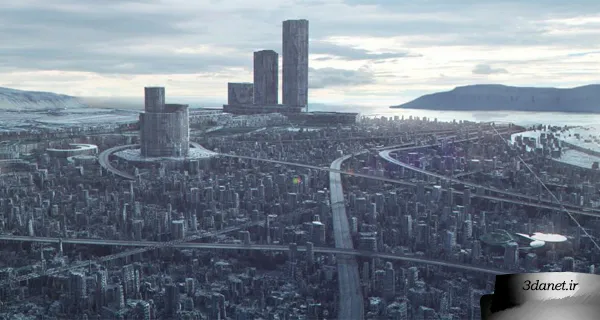
Ideas, like social commodities, are subject to fashion. Thomas Kuhn does not use the word “fashion,” but his interpretation of the concept of “paradigm” seems to evoke the very meaning of “social fashion.” According to Kuhn, a theory, or a model, example, or pattern of thought, undergoes rises and falls under the influence of its own era. A paradigm is a theory or an example, but not all theories and examples are paradigms. A theory becomes a paradigm when it assumes a pervasive role in society, gains general acceptance, and, in the language of power, achieves a hegemonic (dominant) role. At the beginning of his interpretation of paradigm, Kuhn speaks of “normal science.” In Kuhn’s view, normal science “means research firmly based upon one or more past scientific achievements, achievements that some particular scientific community acknowledges for a time as supplying the foundation for its further practice[1].”
Kuhn notes two characteristics of normal science. First, that a lasting group of adherents supports this science; second, that paradigms possess the ability to solve problems. A theory or an example becomes normal science or a paradigm when it is capable of solving the problems of its time. Social fashions have roughly the same characteristics. That is, on the one hand, they are supported by a large group, and on the other, from the perspective of their adherents, they solve their problems. A third characteristic that Kuhn points to in later sections of his book is the ability to respond to rival critiques. A theory becomes a paradigm and normal science when it can survive the criticisms of its detractors. But there is a fundamental difference between theory as “social fashion” and theory as “paradigm,” namely that social fashions, like social commodities, are usually neither durable nor do they inspire lasting motives for their defense.
With this interpretation, the reader of the text before them will discover whether the idea of the “end of utopianism,” as Thomas Kuhn describes in his valuable book, is a paradigm and normal science, or, as the author of these lines believes, the idea of the end of utopianism is merely put forward as a “social fashion” that, under the influence of events and with the subsiding of certain other fashions such as “reformism” and “expediency” and so on, will sooner or later lose its credibility.
The Beginning and End of Utopianism
The critique of utopianism calls us to “realism.” If it were known that realism in international relations theories is the primary source of violence in the contemporary world, critics of utopianism would at least not call us to realism. In 1919, in the early years just after the end of World War I, the first chair in the field of international relations was established in Britain. In those days, with the publication of the declaration by U.S. President Wilson, great optimism about peace in international relations emerged. Wilson stated in that declaration: “We are participants, whether we would or not, in the life of the world. The interests of all nations are our own also. We are partners with the rest. What affects mankind is inevitably our affair as well[2].”
This declaration was the primary source of the idealist liberal theories of the 1920s, which were taught in university international relations departments. The idea of liberal idealism and optimism about world peace did not last more than a decade. For the economic crisis of 1929 on the one hand, and the rise of the Nazis in the early 1930s on the other, provoked severe criticism of idealist liberal theory. From that time on, the reins of theory in international relations fell into the hands of the realists. If the idealist liberals subscribed to the optimistic theories of John Locke and, following him, offered a peaceful interpretation of human nature, the realists, in their pessimistic interpretation of international relations and human nature, turned to the theories of Machiavelli and Thomas Hobbes. Based on Hobbes's theories, the realists described the world as "anarchic." Meaning that there is no international institution, nor can there be one, that can play a peacemaking role in the world above states. War in the world is the result of the anarchic nature and disorder of international relations. War is the result of inequality among powers. Nevertheless, the realists were fiercely opposed to the distribution of capabilities in the world. In their view, states possessing superior hegemony must prevent the distribution of power among smaller states. Preserving the status quo, with the supremacy of global and regional hegemons, is the most important guarantor of international peace. No factor other than preserving hegemonies can prevent the outbreak of war. Distrust of international organizations and efforts to weaken these organizations were among the realists' recommendations. In the realists' view, states are the main actors in international relations. From this point onward, concepts such as "national interests," "the hegemonic role of states," "the inevitability of war and hostility," and "the anarchic and disorderly nature of the world" found their way into international relations theories. Power became the core of political theories, and consequently, "power politics" was placed on the agenda of realist theorists. Kelly-Kate S. Pease, author of the book International Organizations, explicitly writes: "Realism is based on the concept of war. Fundamentally, realism is power politics[3]."
These authors quote one of the teachings of realism as being: "The strong and powerful do what they have the power to do, and the weak accept what they must accept. This statement is obvious, but it has consequences and implications. Good does not always triumph over evil, so the only way to escape the fate of the weak is to join and attach oneself to the ranks of the strong. Unfortunately, the path to the ranks of the strong is accompanied by murder, theft, and deceit[4]."
Although Kelly-Kate and S. Pease were quoting these words from Thucydides, who belonged to the 5th century BC, they recognize the philosophical tradition of Thucydides as the source of realism. If you trace the views and theories of realism in international relations theories, they have stated nothing beyond the theories of Thucydides. For example, there is no need to go far afield and draw upon the theories of realists like Waltz or Morgenthau; in Iran, we encounter realists who outdo all the realists in the world. Consider these phrases: "That brutality and aggressive instinct we attribute to powers is latent in the nature of all countries. In this arena, whatever anyone has not done, they have been unable to do. Every person and every country thinks of profiting from another. This in itself is neither a problem nor fundamentally remediable[5]."
The 1980s witnessed a major transformation in international theories. The two realist and liberalist ideas converged. Neoliberals abandoned idealism and moved closer to realism. Apart from the political and economic factors that emerged in the realm of politics and the market, in terms of theorizing, Robert Keohane, the leader of the Harvard school, was the main driver of this convergence. Keohane was considered the most important teacher of the "neoliberal institutionalism" school. Neoliberal institutionalism is an amalgam of the idea of "realist hegemonism" and the idea of "liberalist institutionalism." His book titled "After Hegemony" is precisely an account of this combination. This means that Keohane, like realists, emphasized the role of state hegemony in creating international order, but like liberals, by introducing the role of international institutions, he thought about the period after hegemony. Thus, the school of neoliberal institutionalism was one of the important factors that eliminated the idea of idealism, at least in international relations theories.
But that was not the whole story; the important issue is the disappearance of the idea of idealism in human societies. The responsibility for eliminating idealism at the level of societies and even among intellectuals lay with political and economic neoliberalism. Now, this does not mean that this was done with a pre-designed plan and conspiracy. Although one cannot ignore the strategic plans of realist leaders and theorists, and the strategic plans of military and economic strategists, all of whom are nurtured by the school of realism. But more than that, one must pay attention to the structural role of the course of developments in the world from the late 70s and early 90s. Part of these developments relates to the failure of welfare states in America and Europe, and another part goes back to the project of Perestroika (economic reforms) and Glasnost (political reforms) in the former Soviet Union, which was led by Gorbachev. In any case, a series of structural changes emerged at the level of international relations, the result of which was the emergence of the phenomenon of neoliberalism.
I mentioned this introduction because perhaps many proponents of realism or realpolitik are not aware of the fact that what is happening in the world today, apart from what relates to the structural situation of global developments, stems from a way of thinking behind which are military and political strategists, all or most of whom are graduates of the school of realism. I have even said somewhere, half-jokingly and ironically, that if the world wants to see peace, one of the ways is to shut down international relations faculties. Because these faculties, with their realist teachings, are one of the most dangerous centers for nurturing and training war strategists. Nevertheless, the main issue is not the end of education, but the end of the guiding thought that has addicted the world, as well as political science faculties, to "power politics."
As far as international relations theories are concerned, realists defend an anarchic world, a world where war and violence are inevitable. In this world, only the hegemony of states and their dominant role in international relations can, to some extent, deter war. Opposing this mindset were the idealist liberals who both defended a peaceful world and, relying on the role of international organizations, worked to strengthen international organizations and their institutions. The important point here is that realists, over the half-century of their existence, could not inflict serious damage on the idea of idealism; the threat to the idea of idealism was carried out by the liberals themselves. Liberals who, in the chaotic market of competition, tailored a new robe and cloak for themselves. They freed the hands of corporations to achieve the deification of the market.
Note that theories of international relations were neither in the public sphere, nor in the intellectual sphere, nor in the domain of journals that played with public opinion. But the market is the public sphere. It is the sphere of people's everyday lives. Each of us visits the market daily and deals with market transactions. We meet our needs, willingly or reluctantly, through the market. “The market decides”—this is all that neoliberalism placed on its agenda. For neoliberals, everything is tradable and has a specific price determined by the market. The market's supply and demand was not only the site of exchange and determination for material goods; labor, science, culture, thought, and even love and affection are all determined in the market. The market's role went beyond this.
From the 1980s onward, liberals became entirely realist and surrendered everything to the reality of the market. One of the achievements of the neoliberals' realism was that it gradually made politics and intellectuals surrender to the market as well. The market not only turned into the temples of gods, but like all other temples, it became an independent, self-subsisting god. It was in this way that idealism departed from the thought of intellectuals. To justify the trap they had fallen into, they pretended that society had been emptied of ideals. But neither intellectuals nor political activists realized that society's being emptied of ideals was not solely the result of the market. Although the market, by universalizing the rule of “surrender,” played an important role in diminishing and neutralizing idealism, this role did not become society's inevitable fate without the inculcation of thought by political activists, the role of the media and journalists, and finally, without the inculcation of the guiding thought of realism by intellectuals. Intellectuals did not merely turn to interpreting reality; they imposed their own intellectual and mental drives, influenced by the exigencies of the market, upon society.
Two Curtains of One Reality
Curtain One: Public Opinion
In fact, my claim is this: contrary to the assertion that intellectuals and political activists recognize society as empty of ideals and then, with a realist critique, summon us to the end of ideals, it is these intellectuals and political activists who attribute their own exhaustion and emptiness, their own intellectual and mental incapacity and futility, to society.
There is no doubt that society, under the influence of a series of political, economic, and cultural factors, suffers from lethargy, incapacity, and exhaustion. Society, and especially the younger generation, is empty of ideals and transcendent goals. In the totality of what pertains to the entertainments and intellectual preoccupations of the youth, there is no longer anything worth sacrificing for. Everything is in a state of suspension. That is to say, things either are or are not. The being and non-being of everything depends on the degree of utility it brings to individuals. Moral decay has become widespread. All factors are at work to de-spiritualize society. Apart from what relates to the devaluation of the postmodern world, even the teachings of jurisprudential Islam are considered an important and effective factor in emptying society of ideals. For jurisprudential Islam is a worldly and superficial Islam that projects society from the depths of its own existence onto superficial and worldly matters. Our society has learned the calculating gaze and the cost-benefit analysis of affairs from jurisprudential teachings. It is according to these same teachings that the government's efforts at spiritualization have produced inverse results. These efforts have neither content, nor appeal, nor are they compatible with the general inclination of society. The more the propaganda apparatuses tune up their instrument of spirituality, the more materiality spreads through the spirit and thoughts of society.
What has been said in describing society and the condition of the youth is a description of one curtain of reality. Realist intellectuals and activists lean on this curtain of reality. But reality has a second curtain as well.
Curtain Two: Public Conscience
Before describing this curtain of reality, it is necessary to provide an explanation of what, from the perspective of this writing, constitutes the difference between “public opinion” and “public conscience.” I have pointed to this difference and their definitions elsewhere. These definitions are not borrowed from anywhere and are the result of the author's own understanding of these concepts.
Public opinion is the most superficial layer of social consciousness. Public opinion is influenced by propaganda and the excitements of everyday life. The volume of propaganda has a direct effect on individual and social excitements. Contradictions, conflicts, inequalities, violence and anger, competition and keeping up with the Joneses, the inclination toward luxury—all originate in public opinion. Public opinion is the meeting point and battleground of individual, group, and social interests. Politicians, demagogues, and propaganda apparatuses and networks (in the worlds of art, sport, politics, and even in the realm of religious rituals) deal with the element of society's public opinion.
A point that often leads analysts and intellectuals astray is the type of fluctuations that exist in public opinion. They recognize changes in public opinion as a sign of the "unpredictability of society" and sometimes as a sign of society's fickleness. But these analyses are incapable of understanding two points:
First, that we are facing a society that lacks a clear horizon before it. Such a society, under the influence of propaganda, changes its opinion very quickly. Second, they neglect the role and analysis of the "public conscience."
Public conscience is the deepest layer of social consciousness. The public conscience is the energetic and historical reservoir of a society. The public conscience is influenced by hopes and disappointments in society. Social movements, fundamental changes in society, unification and concern for forgiveness, sacrifice, equality, adherence to morality, the desire for collective justice and integrity—all originate in the public conscience or collective conscience. The collective conscience is the meeting point of and concern for individual and collective rights. As soon as society, through a social movement or through an opening onto a clear horizon, develops an inclination toward an individual, an ideal, or an idea, the public conscience of society finds its way out from the buried and dark layers of social consciousness and becomes active on the surface of social consciousness. A sense of danger also sometimes causes the stimulation and emergence of the public conscience. Iranian society is one of the exceptional societies that, at various historical junctures, has witnessed the emergence and decline of the collective conscience. From the era of the Constitutional Revolution until now, one can trace the footprints of the decline and emergence of the public conscience in the course of social developments. In the last four decades, from the beginning of the revolution of 22 Bahman 1357 until now, we have repeatedly witnessed the decline and emergence of the social conscience. The revolution of 22 Bahman 1357, the incident of 2 Khordad 1376, the people's movement in 1388, and one can even point to the football match on 8 Azar 1376 and the public presence of people in the streets, which were all, in a way, carried out under the influence of the public conscience.
A fundamental and important difference between public opinion and public conscience lies in the type of awareness each possesses. Awareness in public opinion is very superficial and takes place under the influence of propaganda, but the type of awareness in the public conscience is formed by a series of invisible threads. There is a kind of Adam Smithian invisible hand that transmits awareness to the public conscience. In the public conscience, the behavior of society is similar without individuals being aware of one another.
The public conscience is the second curtain of the reality of Iranian society. Intellectuals and political activists who speak of the end of ideals ignore this curtain of reality. Thus, they inevitably do not want to, or cannot, speak with the language of the public conscience. Their audience is public opinion. For this reason, they speak of a very despairing state of society. And even beyond that, they strive to reread their own wearisome mental and spiritual state onto the face of society. The intellectual and spiritual state of society is wearisome. The youth speak of morality in a wearisome way. But a significant part of the weariness of society and the young generation stems from the injustices, the betrayal of hopes, the lies, and the hollow, subjective promises and ideals that society and the youth have been experiencing for years. Another significant part, according to the claim of this text, stems from the inculcation of an anti-idealistic and anti-moral guiding thought that is constantly expressed by intellectuals and political activists. Defining politics without morality and limiting morality to "consequentialism" has long been a doctrine of political and theoretical analyses. Apart from what relates to the market and media technologies, who theorized realist and neoliberal doctrines for society? Concepts such as:
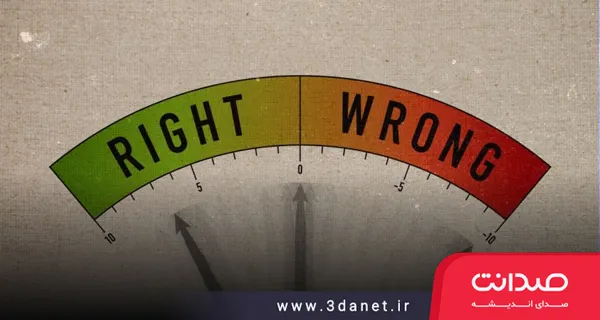
- “In politics, we have no fixed friends or enemies,” and with this phrase, all boundaries of right and wrong, correct and incorrect are transgressed and ignored,
- “In politics, puritanism is meaningless,” and with this phrase, the path is opened for transgressing and ignoring ethics,
- “In politics, preserving interests takes precedence over any choice,” and with this option, the path is transgressed for self-interest, - “In politics, expediency is beyond and superior to truth,” and with this phrase, everything I say about society’s malaise is completed all at once,
- “Human beings, in whatever mold they are cast, quite naturally seek to acquire more power, wealth, and prestige for themselves, even if this comes at the expense of a rival’s loss.”
By whom are these phrases transmitted to the guiding thought of society, apart from political activists and certain realist intellectuals?
.
.
List of Sources:
[1] - The Structure of Scientific Revolutions, by Thomas Kuhn, translated by Ahmad Aram, Soroush Publications, page 25
[2] - Evolution in Theories of International Relations, by Dr. Homeira Moshirzadeh, The Organization for Researching and Composing University Textbooks in the Humanities, page 25
[3] - International Organizations, by Kelly-Kate S. Pease, translated by Dr. Hossein Sharifi Tarazkouhi, Mizan Publishing, page 112
[4] - Ibid, page 90
[5] - For further reading, refer to the article “Why Independence Contradicts Political Realism,” by Dr. Morteza Mardiha.
.
.
Creating Utopia Is a Human Right (Part One)
Author: Ahmad Faal
.
.

Discussion4 comments
برای فهمیدن دیدگاه های نویسنده سری هم به این پست وبلاگش بزنید. قضاوت با خودتان. http://www.ahmadfaal.com/viewpost.aspx?id=172
بهتر بود به این نکته هم اشاره می کردید که دلیل سرخوردگی از آرمان ها همان آرمانگرایان انقلابی هستند که فکر می کردند می توانند آرمانشهر بسازند ولی ویرانشهر ساختند. شرایطی بحرانی که در آن هستیم حاصل همین آرمانشهرگرایی و اتوپیا اندیشی است. این روشنفکران لیبرال که ازشان نام می برید و کاسه و کوزه را سرشان می شکنید کی صدایشان در غوغای روشنفکران چپ اصلا شنیده شده. ثانیا بروید ببینید که نتیجه تفکر همین اصطلاحا نولیبرال ها چیست و نتیجه تفکر انقلابیون در کوبا، ونزوئلا و ایران ... آنجا بهشت نیست ولی اینجا قطعا جهنم است!
درود بر شما ایجاد آرمانشهر بدون شناخت قوانین حاکم بر جهان و حرکت بر طبق آنها، نتیجه ای جز ویرانشهر نخواهد داشت. اصولا انقلاب کار تندروهاست و تندروها با اعتدال میانه ای ندارند، به همین دلیل پس از انقلاب هم تندروی را ادامه میدهند و دستاوردهای انفلاب را هم بر باد می دهند و اینگونه آرمانشهر به ویرانشهر بدل می شود.
دوستان عزیز آقا محمد و آقا اصغر از توجه شما سپاس گزار هستم. وقتی فضای امکانی تحقق آرمانشهر را دولت و یا هر فضایی که فضای عمل و امکان قدرت و نهادهای قدرت است می بینید، پرواضح است که جز ساختن ویرانشهر کاری از پیش نخواهند برد. دولت و نهادهای قدرت آرمانشهر را ابزار توجیه ویرانشهری می سازند، که حاصل ناتوانی های آنهاست.در قسمت دوم دوستان ملاحظه خواهند کرد که فضای امکانی طرح ایده آرمانشهر نه دولت و یا حکومت، بلکه جامعه است، به عنوان ابزار نقد، و به عنوان فرارفتن از وضع موجود و به عنوان خلق امکانات از راه آزاد شدن نیروی محرکه اجتماعی. شاد باشید احمد فعال