Religion
Audio Lecture by Mojtahed Shabestari: “Human Dignity and Human Rights”
Mujtahid Shabestari described the political culture of Islam as “in need of profound reform,” traced the roots of ISIS to “the ruled’s obedience to the ruler,” and called for “the substitution of human dignity and human rights” as the solution, declaring its emphasis “a moral and political duty of Muslims.”
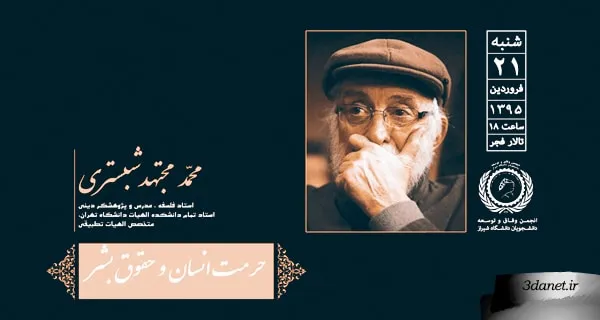
On the evening of Saturday, April 9, 2016, the “Consensus and Development” Association of Shiraz University hosted Mohammad Mojtahed Shabestari so that this religious scholar could speak about “human dignity” and “human rights.” In the Fajr Hall of Shiraz University, Professor Shabestari spoke of the “costs of speaking about human dignity,” deemed ISIS to possess a “theologically and jurisprudentially justifiable theory,” described the “political culture and ethics of Islam” as “in need of profound reform,” declared the “only solution” for the Islamic world to resolve this problem to be “reforming cultural memory” and “replacing the subject’s obedience to the ruler with human dignity and human rights,” and called the emphasis on human rights “the moral and political duty of every Muslim.”
.
*Speaking of “human dignity” is a neglected and costly subject
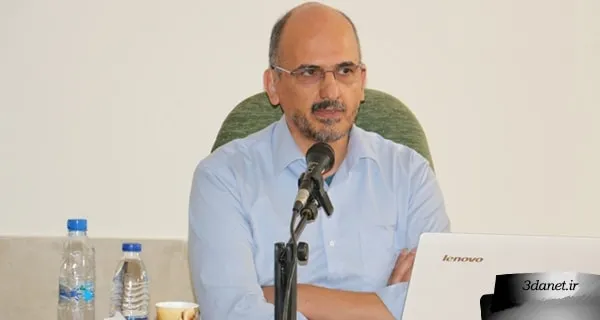
Professor Mohammad Mojtahed Shabestari, with a chocolate-colored cane and a long coat, walks onto the stage, leans his cane against the table, hangs his coat from the chair, and begins his speech with the same calmness that is ever-present in his words. The retired professor of the Faculty of Theology at the University of Tehran opens his remarks with the subject of the session (human dignity and human rights): “This discussion is a neglected, abandoned subject, driven from the scene of lively debates,” “it has no room for discussion,” and “addressing it comes at a cost.” Perhaps this is why Mojtahed Shabestari asks the students to think more about such subjects and pursue them in detail.
Mohammad Shabestari then begins the subject of the discussion from the “very unfortunate, bitter, regretful, and despairing conditions” of the Islamic world these days: “The killings and violence of ISIS, and before them al-Qaeda and others, are destructive of humanity and civilization and are carried out in the name of the Muslim community.” Shabestari describes the “anti-humanity” actions and “destruction of human rights” by these groups as “contrary to human rights” and raises a question that exists everywhere in the world today regarding these groups: “Why has this thinking emerged from among Muslims?” The author of the book “Faith and Freedom” then critiques the analysis that holds that “ISIS members are a product of Western modernity and have environmental causes”: “Suppose this is the case and these bloodlettings have environmental causes, then why do they have a theological and jurisprudential theory, and why do they derive that theory from the political culture of Islam?”
*The necessity of replacing obedience to the ruler with human rights
Mohammad Mojtahed Shabestari goes on to address the jurists, saying: the jurisprudential theory must be taken away from groups like ISIS, and this task “requires profound reforms in the political culture and ethics of Islam.” He then returns to the initial question: “What elements exist in the political culture and ethics of Islam that allow ISIS to find its theory from Islam?” According to the author of “Hermeneutics, the Book, and Tradition,” there is an element in the political culture and ethics of Islam which, as long as it exists, makes the actions of ISIS jurisprudentially justifiable, and that is: “the subject’s obedience to the ruler.” In Mojtahed Shabestari’s belief, the “only solution” for the Islamic world to resolve this problem is “replacing the subject’s obedience to the ruler with human dignity and human rights.” A matter which, in Mojtahed’s view, is “not incompatible” with being a Muslim.
*The necessity of reforming cultural memory
Professor Mohammad Mojtahed Shabestari goes on to describe text-centered religions such as Judaism, Christianity, and Islam as having a common characteristic: 1—These religions are all text-centered; 2—These texts have been transformed into a cultural memory. Professor Shabestari’s solution, however, is “reforming cultural memory”; including “purging the memory of certain harmful elements” and “adding human dignity and human rights” to it. In the belief of this religious scholar, Ayatollah Modarres’s statement regarding the identity of politics and religion was not correct; because “after the enactment of the constitution and the definition of the nation-state, freedom, the equality of human beings, and social justice have been articulated,” and it no longer has a logical basis.
The author of the book “Reflections on a Humanistic Reading of Religion” then speaks of the historical background of “human dignity in religions” and states that the consensus on declaring the Universal Declaration of Human Rights was due to the necessity of “relying on a common concept in defining the meaning of human dignity.” Professor Shabestari describes the “equality of human beings” as considering “every human being as an individual who is a locus for the flourishing of human qualities” and describes “recognizing human rights” as “recognizing a political method for preventing oppression in its various meanings.”
*Emphasizing human rights is a moral and political duty
At the end of his speech, Mohammad Mojtahed Shabestari considers the role of the divine prophets to be "perfecting morality" and describes "the guidance of the prophets" alongside "human reason and human experience" as "the two wings of the transcendence of human morality." On this basis, Shabestari calls "emphasizing human rights" a "duty," "a duty that is moral and political," and one that falls under the "moral duties of Muslims." It is 8:15 PM when Mohammad Mojtahed Shabestari's speech concludes amid the applause of students and attendees in the university's Fajr Hall, and now what is perhaps most imprinted on the minds of those present is the pursuit of the professor's request: "thinking about theoretical subjects."

Discussion1 comments
بسم الله بااحترام خاص براین عزبز مگر در کلام الله جز حرمت انسان واحتزام به حقوق او وحتی دیگر موجودات طرح شده است مگر اسلام مجپز کشتار صادر نموده است ،همه می دانند که اعمال گروه هتی افراطی ربطی به اسلام ندارد اگرچه فقعای متحجر قد چشم انداز فکریشان گاها همراهی با افکار این گروه ها دارد اما همه اینها بغض شخصی وعکس العمل تحقیر های جهان قدرتمند با مسلمانان می باشد که بطور طبیعی توسط این نوع انسان ها عکس العمل نشان داده می شود درکلام الله ظلم وشرک بزرگترین عمل خلاف رضای خداوند است وآیا معنای ظلم غیر از تضییع حق است ،البته اگر بعنوان تاکتیک زمانی بخواهیم دهان فقیهان دگم اندیش را ببندیم قابل قبول می باشد اما نه به اینکه معارف اسلامی مفصر در این معرکه می باشد