Philosophy
Science and Ethics: A Conversation with Dr. Mousa Akrami
Ethics in science and academia has deep roots, from the Islamic tradition and Western philosophy to today's professional charters. This conversation with Musa Akrami reviews the place of ethics in research and the necessity for researchers to adhere to ethical principles and impartiality.
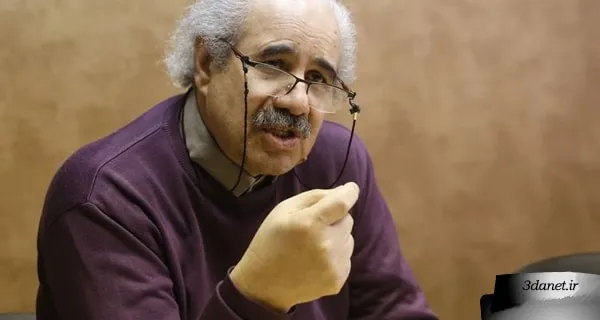
Mohsen Azmoudeh: Dr. Akrami, thank you for the time you have devoted to this discussion. Alongside your engagement with diverse topics in philosophy, political thought, literature, and so on, which you have addressed, one of your areas of interest is the university. Our main topic is the issue of ethics in the university in particular and the higher education system in general. Let us first address the theoretical background of the discussion. What has been the place of ethics in the thought of philosophers and in scientific activity from ancient times to the present?
The discussion of ethics in science and research is long-standing and ancient. Regardless of religious injunctions, in our tradition of theoretical and practical philosophy, attention has always been paid to ethics. One can generalize and say that ethical discussions have always been of concern to human beings and thinkers in all societies throughout human history. Apart from the place of ethics among the great philosophers, especially in the Western tradition, from Aristotle to Kant and after Kant, in the twentieth century, theoretical discussions of ethics crystallized in an academic form in one of the annexed or particular philosophies called the philosophy of ethics, and today the philosophy of ethics is one of the important branches of philosophy. The philosophy of ethics itself is divided into sub-branches, such as meta-ethics, normative ethics, and practical or applied ethics. In descriptive ethics, the do's and don'ts in various societies are also addressed. Some of these do's and don'ts have long been rooted in the requirements of optimal collective life for human beings. However, philosophers have discussed the justification or explanation of these do's and don'ts from various perspectives or based on various foundations, of which three perspectives or foundations are usually of particular importance: virtue ethics, deontology, and utilitarianism. For example, Aristotle, in his philosophy of ethics, defends a virtue-ethical approach and says that the moral agent must be virtuous. He bases virtue on his own specific foundations and, for instance, mentions wisdom, courage, and temperance as the virtues of the three faculties of reason, anger, and appetite, and then justice as the harmony among these three virtues. In the modern era, within the framework of philosophy, attention to ethics expanded, and after the Aristotelian-Platonic virtue ethics, about twenty-one to twenty-two centuries after Aristotle, on the one hand, Kantian deontological ethics was proposed, and on the other hand, the utilitarian ethics of Jeremy Bentham and John Stuart Mill. Unfortunately, in the tradition of Islamic philosophy, less attention has been paid to theoretical ethical discussions. For example, a book like Akhlaq-e Naseri by Khajeh Nasir al-Din Tusi is a work containing recommendations and admonitions and does not engage with the philosophical issues of ethics. Perhaps one of the reasons was the perception that sacred texts take the place of theoretical ethical discussions. But in general, it can be said that the ethical discussions raised in our tradition are categorized under virtue ethics. Some of our religious thinkers, such as Mulla Ahmad Naraqi and others, have also written ethical books within the framework of religious works. But behind these works, too, a kind of virtue ethics is evident.
With these preliminaries, it can be said that a scientist and academic, and even before that a human being and citizen, belongs to an environment and, consequently, is expected to adhere to ethical principles as a human being and citizen. The great thinkers of the world, from East to West, and specifically in philosophy, have introduced the ethical life as the most important way of life for human beings, such that ethical behaviors and virtues are the most important components shaping the character of an active individual in society. If we set aside the religious texts in our own ethical tradition in Iran, as I mentioned, in the philosophical view, for example, one of the most important thinkers who addressed this subject is Aristotle, who created works such as Nicomachean Ethics and Politics and, in particular, established a precise, two-way relationship between the two domains of ethics and politics. In a more precise view, for Aristotle, these two are necessary and inseparable from one another; that is, politics for him means social ethics, and ethics means individual politics. In this respect, thinkers have considered the ethical life and ethical virtues to be the most important components in individual behavior and social activity, and have emphasized that if every individual, as a naturally civic being who lives in a group or society, pursues these virtues and avoids vices, they will attain happiness—happiness considered both in an individual and a social sense, and from another perspective, both in a this-worldly and an other-worldly sense. Therefore, in the first place, a human being, as a naturally social (in Aristotle's terms) or civic (in Farabi's terms) being, is expected to behave ethically. But when we come to professions and guilds, especially professions that are both scientific and deal with an ever-greater number of people, we see a greater emphasis on ethics; for example, in the field of medicine, we have long held the Hippocratic Oath as a credible and important document that shows a group of people who believe in a specific profession must, beyond collective laws and regulations, also personally observe certain dignities. This has also influenced our culture; for instance, Zakariya Razi is a skilled physician and sage who has very valuable discussions in the field of medical ethics. Ibn Sina is the same, and in the Canon, he specifically refers to the ethical characteristics of a physician. Or the futuwwat-namas (chivalry manuals) in our society are clear examples of works that address the professional ethics of various guilds, from the baker to the builder. So, after this attention to professional ethics, specific manifestations of which can be seen more or less in various societies, today professional ethics within the framework of moral philosophy has become an attractive discipline that has gained particular importance, especially in sensitive occupations. Perhaps it can be said that the main movement began in the field of medicine and biological research, especially in genetics, and spread to other scientific and research fields. Now, there is scarcely an important profession in advanced societies that does not have some kind of charter, regulation, or ethical codes. In our country, too, many efforts have been seen within the framework of professional ethics.
You mentioned the theoretical background of the ethics debate among thinkers and in our own tradition. If you agree, let's turn to the issue of the university and ethics. We have had universities for nearly a hundred years, and our higher education system is expanding day by day. Has ethics also entered our research work or not?Yes. In the realm of academic work, from before the revolution until today, we have, in any case, observed a set of principles, written or unwritten, in the field of professional scientific ethics. For example, one of the principles in scientific research is the observance of objectivity and impartiality. This also has deep roots in our tradition. For instance, we see that Abu Rayhan Biruni, in his book Kitab fi Tahqiq ma li'l-Hind, fully observed impartiality and research ethics, adopting a truth-seeking perspective without any particular bias. These works have more or less served as models for us. Especially in the golden age of research and science in the Islamic world, which I believe continued in rivulets until the early 9th century AH, we witness this presence of ethics in scientific research. Of course, exceptional cases may also be seen; for example, Khwaja Nasir al-Din Tusi, in his great project of the Maragheh observatory, when authoring or compiling the Zij-i Ilkhani, consciously or unconsciously engaged in a kind of plagiarism and use of predecessors' achievements, even inaccurate ones, without citing sources, in order to cobble the project together as quickly as possible, although figures like Qutb al-Din Shirazi and Shams Maghrebi were aware of this. In appointing a successor for the directorship of the Maragheh observatory, too, there was unethical and impolitic behavior, and one of the causes or reasons for the observatory's collapse was Khwaja's unethical conduct, whether it was due to exigencies or Khwaja's own personal considerations.
- Why would a figure like Khwaja Nasir al-Din Tusi, with such scholarly standing and great character, and as someone who wrote the book Akhlaq-i Nasiri, commit such an unethical act?
Probably, if Khwaja himself were asked, he would refer to politics, the exigencies of the day's circumstances, and expediency, such as Hulagu Khan's insistence on presenting the observatory's results as quickly as possible, and so on. Or his judgment that his son was more devoted than anyone else to managing the observatory and preserving Khwaja's legacy. Incidentally, for some time now, a text attributed to someone named Sheikh Abul-Hasan Kaslani has been circulating in the media, said to be one of Khwaja's students and the author of a satirical work called "Asrar al-Latifa wa al-Kasila". In that text, one day in Baghdad, Khwaja tells him the secret of Muslims' immorality in committing theft, lying, and so on. I do not know whether a person by this name was actually Khwaja's student and wrote such a book or not. But whether this event and the expression of these matters are true or not, the spirit governing this text corresponds to the psychology of many people, and with all the devotion I have for Khwaja, I fear—touch wood—that Khwaja may sometimes have slipped in the way this text condemns. In this text, it is attributed to Khwaja that the reason for Muslims' violation of ethical rulings is, unfortunately, the existence of many 'buts' and 'ifs' as exceptions to the universality or generality of the rulings, which violate the rulings by way of exception, and gradually the violation of rulings itself becomes the rule. In any case, in ethical conduct, justifications based on circumstances and exigencies, and clinging to conditions to evade the rule, are unacceptable. Many people in different eras have been, and are, compelled to lie, cheat, fabricate matters, and steal the work of others. These conditions of compulsion cannot serve as a license for committing an unethical act.
Let’s return to the discussion of ethics in the university; what is the situation like today?Today we are faced with a large number of universities and students in Iran, which is unprecedented in the country’s history and rare on a global scale. Over the past 30–40 years, we have raised the number of enrolled students to over 4 million. Of course, the increase in university graduates has been essential for the country. But alongside quantity, to what extent has quality been valued? This reign of quantity, to use René Guénon’s phrase, certainly has its own harms and blights, which have manifested in various kinds of unethical behavior. Therefore, today more than ever, we are grappling with the issue of ethics in science and research. The unfortunate events that have occurred in recent years in this area have created the necessity of addressing the discussion of ethics in universities. That is, we must analyze ethical behavior and demonstrate, on the one hand, why it is desirable from a logical and rational standpoint, and on the other, how its realization is possible.
You pointed to the necessity of rethinking the foundations of ethics for the implementation of ethical norms in universities. It seems that in the new era, two important ruptures have occurred in our scientific community: first, a rupture from the classical educational system, including Plato, Aristotle, and Khajeh Nasir, on the one hand, and second, a rupture between East and West. That is, first, the distinction between the paradigm governing ancient ethics, which was based on virtue ethics, and the paradigm governing modern ethics, which mainly emphasizes consequentialism and deontology; and second, the distinction between our culture and thought and Western culture and thought. That is, Western thinkers tried to offer a worldly and secular explanation of ethics in relation to politics and everyday life, whereas our thinkers offered a religious and divine explanation of ethics. You mentioned that in the new era, with the expansion of our universities, the necessity of discussing ethics has increased. Where does this necessity stem from? Is it related to these ruptures you mentioned?In a sense, this necessity can be seen as arising from these very ruptures, which make a revision of ethics in general, and professional ethics in particular, essential. In fact, the traditional view of ethics was excessively individualistic, focusing on the individual per se, and for this reason, it emphasizes virtue ethics. That is, it does not pay attention to the role of ethics in social relations. This is why, especially in our tradition, ethical discussion unfortunately veered toward admonition and advice, without paying attention to the theoretical foundations of ethics and addressing: 1) What exactly is ethics? 2) What is the origin of ethics and where does it arise from? 3) What is ethics for and what use is it? 4) Can ethical behavior be expected from every individual? 5) What conditions are necessary for the realization of ethical behavior?
Of course, in my opinion, through precise discussion it can be shown that this capacity exists in the discussions raised by thinkers such as Aristotle to answer these questions. But this did not happen in our tradition. That is why Aristotelian ethics is not taken seriously in our tradition and its connection with politics remains neglected. We do not see discussions of theoretical ethics in Avicenna and Suhrawardi. If we overlook the writings of Miskawayh and Khwaja, we have no philosopher who has seriously addressed this part of practical wisdom. What we see in Avicenna is scattered and fragmentary. Virtue ethics, whenever it disregards politics and the social position of individuals, will be individualistic. But it is evident that the human being is a social creature. This manifests itself more in complex societies. That is why deontological and consequentialist tendencies in ethics emerged. Of course, virtue ethics, alongside deontological ethics, became confined and limited to certain elites and intellectuals. Extensive discussions took place among Western thinkers about the place of each of these major ethical schools, but unfortunately we paid less attention to these discussions and did not address what the conditions for moral action are. Our society, in any case, gradually moved towards modernity and the creation of modern institutions from the middle of the Qajar period, and social divisions gained greater breadth, depth, and complexity. As a result of these developments, it became clear to our thinkers that more attention must be paid to ethics. But in practice this did not happen, and unfortunately it remains more or less the same to this day, although on the one hand, due to the revolution and the type of government, the promotion of ethics is widespread in the country, and on the other hand, significant works in the philosophy of ethics have been translated and even authored. The main cause of our ethical problems is that we have not seriously reflected on, firstly, what we expect from the human being, and secondly, under what conditions those expectations are fulfilled? A human being does not grow in a vacuum and is nurtured in a specific social context. We have created conditions for citizens where, if they do not behave unethically, their affairs do not progress. Consequently, to promote ethics and encourage individuals towards ethical behavior, social and political conditions must be improved, so that ethical action and behavior do not incur a cost for individuals and even assist them. Therefore, ethics, while being an individual matter, is a social phenomenon. We have not been able to explain the dialectical relationship between the individual and society, or between the agent and the structure; we have always paid attention either solely to the agent or to the structure. One cannot expect ordinary people to behave like the elites. We cannot advise people day and night in the mass media, while in practice creating conditions where individuals are forced to resort to unethical behavior to make a living. In the West, this relationship between the individual and the collective was largely explained. Western thinkers looked more carefully at the intellectual foundations of ethics and, with a realist and empiricist approach, explained the place of ethics in collective life. That is why they moved towards consequentialist approaches in ethics. We did not become acquainted with the rational foundations of various ethical schools, whether virtue-oriented, consequentialist, or deontological. As a result, today we witness misconduct in various areas of society, including in scientific and research affairs.
In your own view, which of the tendencies in moral philosophy is defensible?I myself try to create a synthesis among these three general tendencies. In my belief, whenever the conditions for the realization of ethical behavior are met, the three approaches in ethics converge toward one another and find firm bonds. The elites of society must pay attention to all three approaches in moral philosophy. These three are one in the final stage. Ethical behavior within the framework of virtue ethics in fact also has positive consequences and is also considered the individual's duty. Especially since what Kant proposes as the golden rule of ethics and theorizes, namely the principle that “Act only according to that maxim whereby you can at the same time will that it should become a universal law,” is not a new thing, and we see similar versions of this saying among thinkers like Confucius or in the religious recommendations of our own society. In other words, the golden rule of ethics has a history as old as human social life and says that to discern the moral act, I must put myself in the place of others. Therefore, in my opinion, all three ethical schools must join together. This occurs when the relationship between the collective and the individual is explained. If Aristotle said that politics is social ethics and ethics is individual politics, it was because he paid attention to this relationship. But in our tradition, this important matter was not attended to. For this reason, unfortunately, in our society, neither political philosophy nor moral philosophy developed. After Farabi and Miskawayh, no significant event occurred in these two domains. It was in this vacuum that many turned to linking ethics to religion. Whereas commitment to ethics is not solely dependent on the institution of religion and religious sources. We see in various societies with different traditions and religions that ethical behavior and standards are observed, without this necessarily being related to religiosity. Therefore, linking ethical norms to an extra-human foundation has created a problem for us. Of course, if extra-human and religious sources recommend ethical behaviors, we must pay attention. But we must also pay serious attention to the independent foundations of ethics. Society cannot be guided toward ethics with mere recommendations and books of advice. Especially since, unfortunately, we have created conditions in which individuals can reach high positions through immorality and misconduct. We also have these cases in the university. In addition to the spread of immorality in the behavior of academics, we have individuals who are in high positions and come to the university and want to obtain academic degrees or positions through lies, deceit, and fraud.
From your words, one can conclude that despite having universities, our higher education system has been formed in the absence of an explanation of fundamental ethical issues and their connection and relationship with society. What is the consequence of this?Of course, when the higher education system was formed in Iran, we neither had such a need for those explanations to this extent, nor was the ground so prepared for unethical behavior. The need for these explanations is very urgent in this day and age because both society has become larger and more complex, and higher education has expanded greatly. The consequences of the absence of such explanations are very dangerous. Despite having had great quantitative growth in various fields, we have lacked proportional qualitative growth. Except for some specific fields like medicine or chemistry or a few other disciplines, we have not had good qualitative growth. The growth in these specific cases also had particular reasons and causes. In the majority of basic sciences and humanities, despite the huge number of graduates, we have a negligible share in the production of science in the international arena. We might say that the number of our articles has increased. This in itself might be considered good. But one must see what the quality of those articles is like or who the authors are. This is in addition to the presentation of false statistics in this field. For example, when one of the ministers wanted to get a vote of confidence from the parliament, he claimed to have 66 ISI articles, and someone in his defense claimed he had 86 articles. Upon immediate investigation, it became clear that on his site, only 3 articles were written under his name, and of these 3 claimed articles, there was no trace of two articles on the internet. Then the journal Nature announced that the third article, meaning the only article by this person, was fraudulent and copied from a Chinese article. Fortunately, with the digitization of searches, many of these claims can be verified. In any case, we are afflicted by the dominance and reign of quantity, and this has caused damage to our quality. Examples of our scientific plagiarisms that foreign publications like Nature published caused the reputation of our higher education, in which honorable professors and students are also present, to be toyed with. In addition to that, we are witnessing that this scientific immorality has both spread in an ugly way and found new and diverse dimensions. For example, we see a professor taking on 5-6 theses and dissertations in one year, while not dedicating time to reading them and guiding the students. This matter is seen both in the Islamic Azad University and in public universities. In many cases, with regret and frayed nerves, I have witnessed that supervising and advising professors do not read the thesis or dissertation and also expect the examining professor to give it a grade, while the thesis or dissertation has many problems or is full of plagiarism or perhaps others have written it for the student. If one day an investigation and inquiry into dissertations, in various fields, gets underway, it will become clear what a catastrophe has occurred. Many individuals, without having a role in writing the thesis, buy the thesis by paying money, defend it, and get a degree. It is shameful that on the walls of the University of Tehran or our university, which usually has the highest number of theses and articles per year after the University of Tehran, we openly see advertisements for selling theses and ISI articles, and there is no authority to stop them, while this is a clear crime. Of course, approvals were made in the parliament. But unfortunately, institutions like the judiciary do not take action, and some members of parliament are themselves fraudsters or break the law in various ways. One of the reasons is that, unfortunately, a part of the statesmen are themselves beneficiaries in some way, or they themselves have obtained degrees through this method, or they allow their students to obtain degrees in this same way, or they turn a blind eye to centers that commit crimes in this field. The increase in the age of education and allowing individuals who have jobs to pursue education has fueled degree-orientation. I am sorry to say that a number of those whose education costs are paid not by themselves but by various centers and foundations, meaning essentially from the nation's pocket, as well as a number of employed individuals who sometimes hold high positions in the governmental apparatus, do not have a desirable situation in education and inflict serious damage on higher education. This statement of mine does not detract anything from my praise for those who have served and serve the country in various positions. But I think it is necessary for officials, with the necessary compassion for the country, to address the pathology of these cases.
شمار زیادی از دانشجویان در مجلههای شبهعلمی با پرداخت پول مقالاتی پر از غلط منتشر میکنند. حتی گاهی با این مقالات جایزه هم میگیرند. جالب است که برخی برای این اقدامات کلاه شرعی هم میدوزند! اینجاست که ضرورت توجه به اخلاق و شرایط امکان رفتار اخلاقی به میان میآید. به نظر بنده استاد نباید اجازه بدهد اسمش ابتدای مقالهای که ارزش علمی ندارد، یا خودش نقشی در نوشتن آن ندارد چاپ شود و حتی نباید اجازه بدهد آن دانشجو با چنان مقالهای فارغ التحصیل دانشجو شود. به نظر من 1) نوشتن مقالۀ معتبر برای دانشآموختگی دانشجو ضروری است؛ 2)ذکر نام استاد همراه با نام دانشجو ضروری است؛ 3) لازم است که استاد در نگارش چنین مقالهای نقش داشته باشد؛ 4) نباید استاد بابت مقالهای که با دانشجو نوشته برای ترفیع و ارتقاء امتیازی بگیرد. اینک در شرایط از همگسیختگی اخلاق شاهدیم که الف) شماری از دانشجویان خودشان مقاله نمینویسند (همچنان که شاید پایاننامه یا رساله را خودشان ننوشته باشند)؛ ب) استاد بی آن که مقاله (و پایاننامه/رساله) را خوانده باشد، آن را تأیید میکند و نام خود را در زیر آن قرار میدهد (وبعضاً دانشجو را وامیدارد که تعداد مقاله با نام استاد را بیشتر کند)؛ پ) بابت چنین مقالهای هم پاداش مالی دریافت میکند هم امتیاز؛ و ت) برای دستیابی به شمار بیشتری از رساله/پایاننامه و برخورداری از مزایای مالی و دیگر امتیازها سرودست میشکند. What is the consequence of the prevalence of these pseudo-scientific and unethical behaviors in the university for society?The result is that the university does not fulfill its primary function, and science in the true sense is not produced. When an article is written with fabricated data, its content is taken from elsewhere, parts of it are forgeries, its descriptions are false, and its analyses are inaccurate, then science is not produced. What is produced is fabrication or the repetition of others' words, and in general, anti-science and contrary to the truth. Of course, I must emphasize that in various universities, there are also honorable individuals who try to observe the ethical norms of research. But unfortunately, a large portion of students and professors have become involved in these unethical behaviors. Sometimes a well-known person has even published someone else's article under their own name! Or another person submits an article full of plagiarism to a reputable journal with any justification. Even reputable journals sometimes make errors in peer review. Today, sometimes a professor or an employee becomes an intermediary for the acceptance and publication of an article. Today, talk of taking bribes or intermediary fees for publishing articles is growing louder. Wherever privilege and money are involved, corruption finds its way and keeps ethics at the level of a slogan. Mentioning the types and examples of corruption in education and research could become a lengthy tome.
You said the consequence of these unethical acts is that the production of science does not take place. Well, what is the problem with that?Then what have we established the university for? The university institution is supposed to be the arm of society, firstly in the production of science and secondly in applying science to solve problems. One part of science is theoretical and fundamental discussions, and another part is applied and practical discussions. We do not have a serious role in the fundamental areas of science in the world. We do not have a significant role in the production of true knowledge. We are about one percent of the world's population. Statistics say that the articles we produce are more than one percent of articles at the global level. The reason is also that we have many graduate students. This is in terms of quantity. But when we pay attention to the quality and number of articles published in reputable journals, we see that we do not have serious achievements in the fundamental discussions of science. If you see any production among Iranians, it is the result of the activity of Iranians abroad, or a small number of domestic researchers connected with foreign researchers. In the applied field, too, the vast majority of articles and theses are useless, take up space, and should be thrown in the trash. So, the university as an institution for the production of science in Iran has not been able, relative to its size, to fulfill its main duties, firstly in the fundamental part of science and secondly in its applied part. So, frankly, in our country, the production of science in the true sense of the word has not taken place relative to the number of professors, students, and researchers, and we are mainly consumers. Let alone that apparently in some exceptional fields like chemistry, nano, or stem cells, we have done some work. I hope it is true. I am not qualified to comment in this field. But I hope that relative to the investment made in these fields, the result is also useful. Based on a cost-benefit calculation, in many areas we have not had serious production and achievement. It is a reality that the level of education and research in Iran has declined catastrophically, from elementary and secondary school to university. Now, an average PhD graduate from our universities is less literate than an average bachelor's graduate of the 1980s! Our educational system is designed in such a way that such individuals graduate en masse. The ground was prepared for people, knowingly or unknowingly, to seek degrees and their buying and selling, and in the field of higher education, individuals are pushed or drift towards a situation where this domain falls under the domination of quantity.
In our universities, taking a course in Islamic ethics is mandatory. On the other hand, in our universities, billboards displaying codes of ethics are not few. But from the totality of your remarks and our own observations, it seems these measures have not been able to make our educational system ethical. In other words, ethics education in our universities has been reduced to the level of advisory pamphlets and has failed to provide a precise explanation of the function of ethics in scientific work and society, nor has it institutionalized it among academics. In your opinion, what should be done to remedy this problem?Here we enter into a macro-level discussion. One could write a book titled Academic Professional Ethics and require everyone to take it as a university course. But in the absence of macro-level infrastructures, it will become the very cliché you mentioned. Of course, courses in professional ethics, the ethics of science, and research ethics must exist in our universities, and we must offer the necessary theoretical justifications and explanations to the academic community, but a single course or a few courses are by no means sufficient. As long as the structure of our higher education is like this, these solutions will not work. The macro-level management of society must become democratic and meritocratic in the true sense of the word in all areas. It should be self-evident that in democratization and meritocracy, one must view the entirety of society as a system or an apparatus, where all its parts are interconnected, and one cannot expect reforms to take place in one sector and for those reforms to remain sustainable without undertaking reforms in other sectors. Just as corruption also spreads from one sector to other sectors. In this connection, democracy and meritocracy must also be institutionalized in our universities. At the very least, this expectation must be raised that the university should be as independent as possible from politics and ideology. Of course, I do not wish to reduce all problems to these two. But when the entire governance is formed in such a way that it extends these two into all institutions, including the higher education system, the result is that individuals try to make the best possible use of these conditions, even if their behavior is opportunistic. This is immorality or unethical conduct. A defective and corruption-breeding structure allows those to rise whose selection criteria are not precise scientific and ethical criteria. The notion that expertise and commitment are necessary together is an important point. But unfortunately, commitment gradually replaced expertise, and commitment itself turned into a superficial matter, and opportunistic individuals occupied important positions and posts in our society. In the previous regime, despite all the criticisms that are rightly and correctly leveled against it, individuals became faculty members largely based on scientific and professional qualifications. Even in non-academic fields, if commitment to the government was demanded of individuals, expertise was also a condition. Of course, in its final years, especially from the time the Rastakhiz Party became dominant, the Shah's regime distanced itself from meritocracy. Now, unfortunately, this is not the case, and with the selections that are made, capable individuals, unfortunately, do not reach the positions for which they have scientific and ethical merit. In public universities, the selection criteria have been so strictly political and ideological that many qualified individuals could not be recruited, and their entry into the university was easier. The main source of this problem is that a formal, partisan, and ideological definition of commitment has been presented, and it has not been defined in the true sense of the word and within the framework of scientific ethics. In ideological systems, the possibility of advancement is provided for opportunistic individuals, and they present themselves as something they are not, and those who do the selecting also prefer these hypocritical individuals. The result is this cancerous tumor of corruption, which has also found its way into higher education. Until ten years ago, it was hard for us to accept that corruption would also become prevalent in higher education. But unfortunately, it did. Its signs were more or less reported from the early years of the 1370s [1990s] in bribe-taking, selling exam questions, forging degrees, and selling grades. Today, this has expanded astonishingly. When, instead of meritocracy and true commitment to national interests and ethical principles and even religious beliefs, personal gain-seeking, power-seeking, and love of wealth become prevalent through feigning commitment and opportunism, the ethics of science also falls into decline.
You are a professor of philosophy. From a philosophical perspective, what solution do you think can be found to overcome this situation? Can philosophy offer a solution at all?It certainly can. This is, in fact, one of the tasks of philosophy. Of course, the issue is to some extent a theoretical-practical, interdisciplinary or multidisciplinary problem, and sociologists, psychologists, and political scientists must also pay attention to it. But philosophers address this subject at a broader level. I fundamentally believe that philosophers have the task of both interpreting the world and changing it. I have explained this point in the book Philosophy: From Interpreting the World to Changing the World. From this perspective, the problem of the university in Iran is, in the strict sense of the word, a philosophical problem or an interdisciplinary problem with an important role for philosophy. This philosophy is both a theoretical philosophy in designing and explaining the nature, characteristics, and goals of the university, and a critical philosophy that has a critical and analytical approach. At such a level, of course, the philosopher can, firstly, use the achievements of sociologists, psychologists, economists, etc., and secondly, must engage in dialogue and exchange of ideas with them to understand, analyze, explain, and critique the university. But if I want to address the problem of the university and its immorality from this perspective, I am compelled to look at the issue at a macro level. In any case, a major political-social-cultural change called the Revolution has taken place in our country, which was, in a sense, necessary under the conditions of political rigidity or blockage one or two years before the Revolution. There were also specific ideals for the better functioning of the university at both quantitative and qualitative levels. Certainly, this revolution has also had achievements over the past forty years that must be appreciated. In the field of higher education, quantitative growth was, after all, necessary. But we expected this quantitative growth to be accompanied by qualitative growth. Yet we see that, despite all the good intentions of the elders, corruption from outside the university has spread into the university, and we have reached a critical situation. That is, what happens in higher education is not a separate entity from the totality of the system. Of course, the emergence and manifestation of this crisis in higher education has occurred with a delay. But in any case, we are facing critical conditions at the national level and in various aspects, which have also spread to higher education. To find the root of this crisis, one must have a macro view, while I emphasize that everyone in every position must observe their professional ethics and responsibility to the greatest extent possible. But the problem will not be solved with this approach. The structure is sick, and its ailments must be diagnosed and treated. We must all ask the officials and those who run the country at the macro level to accept that the country is in crisis, and to overcome this crisis, solutions must be offered with serious determination. We need a macro-level revision in the administration of the country in general and in the institution of higher education in particular. At the general level, perhaps the simplest and easiest step is to move towards strengthening democratic institutions. We must realize freedom, as one of the main slogans of the revolution, in the true sense of the word. Unfortunately, in our society today, appointed institutions have overshadowed elected institutions and dominate them to such an extent that they are not truly elected institutions. The three branches of government must become truly democratic and meritocratic. At the level of higher education, we must also recognize the independence of educational and research institutions and their democratic management. Today, the presidency of a university is determined by appointment from above, and academics have no role in determining it. There was a time when Dr. Ali Akbar Siasi, as the president of the University of Tehran as the mother university, insisted on the principle of university independence. After the coup of 28 Mordad, in a note of the budget bill, probably of the year 1334, the parliament included the point that the president of the University of Tehran would be chosen by the Shah from among three people introduced by the Minister of Culture. After that, the university president was appointed by the Shah. But at lower levels, we still witnessed that faculty members were allowed to make decisions in some cases. Of course, from 1354 onwards, with the spread, however caricatured, of the Rastakhiz Party and the greater dominance of SAVAK, politics and ideology gained more dominance. After the revolution, the situation became such that we have reached this point.
When academics cannot decide for the university themselves, and at the same time have no role in matters pertaining to the university, the university suffers fundamental problems in its democratic dimension and in terms of freedom and the role of academics in determining its destiny. We are a country with an ancient civilization and culture, and we have had rare, brilliant scientific and cultural periods. Today, to elevate the university's standing in knowledge production to a level commensurate with its quantitative scale, we need a precise pathology at both the national and university levels. It is only by creating suitable conditions and necessary guarantees that ethical conduct can be expected from the university body and the majority of professors and staff. Thus, the structure of society and governance in general, and the structure of the university in particular, become important in how they function. The university, too, consists of individuals plus an organization. Individuals in their personal conduct must strive to observe ethical proprieties, but the organization must also behave ethically. The ethical conduct of the organization is reflected in the proper behavior of the organization, which itself manifests in democratic and meritocratic structures and relations. What I have presented was a macro-level discussion on the country's administrative structure. In connection with the necessity of revising the country's administration, I must also add that the purification and restructuring of higher education is also essential. Credentialism and neglect of meritocracy have led to the creation of many higher education centers relative to demand, which in turn, by supplying a commodity, have fueled demand. In such a society, the tendency to establish higher education centers has increased, manifested in the creation of various public and private
.
.
From the Necessity of Professional Ethics to the Conditions for Realizing Ethical Behavior in Scientific Activity: The Dominance of Quantity and the Decline of Quality
Science and Ethics: A Conversation with Dr. Mousa Akrami, Professor of Philosophy at the Science and Research Branch of Islamic Azad University
University Today Magazine, a biannual scientific-specialized journal of the Office of Cultural Policy and Planning, Ministry of Science, Research and Technology
Volume 2, Number 3, Fall and Winter 2018, Special Issue on "Ethics of Science in Higher Education", pp. 90-101
.
.
Discussion2 comments
اگر انتحال را از فلسفه غير اروپايي غير آمريكايي حذف كنند هيچ برجاي نمي ملاند. فرموديد كه دانشگاه ما اخلاقي نشده آيا جاي ديگري سراغ داريد كه اخلاقي شده باشد؟
چه سمی برای اخلاق یک جامعه مهلک تر است از بی اخلاقی معلم اخلاق! با این احتساب علت ارادت استاد اکرمی به حواجه نصیر توسی که رفتارهای خلاف اخلاق بزرگ دیگری هم دارد چیست؟ چرا این قدر ملاحظه کاری؟