Philosophy
Qalamyaran Monthly in Conversation with Mousa Akrami on Seyyed Ahmad Fardid
Mousa Akrami considers Ahmad Fardid's attempt at an archaeology of Western concepts to be devoid of academic methodology. In his view, Fardid tried to narrate the history of thought using self-coined, obscure terminology, which yielded nothing but destruction.
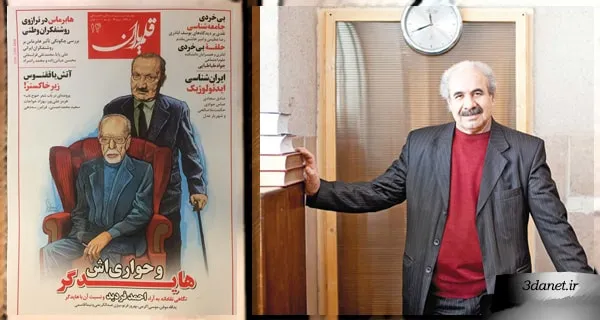
Cariphilosophicator[1]: The Tragicomedy of PhilosophyUnread Philosophy-Hater Who Attained a Professorship in Philosophy
A Conversation with Professor Dr. Mousa Akrami
Qalamyaran Monthly, Issue 14, Azar 1397, pp. 50-61
Mousa Akrami is a full professor, author, translator, and editor in the Department of Philosophy of Science at the Science and Research Branch of Islamic Azad University. In addition to his expertise in physics and philosophy and his authorship and translation of works in the philosophy of science and political philosophy, this university professor has also conducted serious studies in various ways on the different intellectual currents that emerged before the revolution. The necessity of discussing Ahmad Fardid prompted us to sit down for a conversation with this university professor once again.
First Question: Esteemed professor, as a first question, if the hypothesis is correct that understanding Western thought requires serious attention to the evolution of concepts, or in other words, undertaking an archaeology of concepts, to what extent, in your opinion, was the late Fardid aware of this history of the evolution of concepts and their explication?
* Akrami. The answer to this question is both easy and difficult. On the one hand, it is easy because one can simply say that Fardid was perhaps never able to engage with such discussions in the strict sense of the word. This means that, in the way we need to engage in the archaeology or genealogy of words within the framework of academic discussions—to see how these words emerged and what evolutionary course they underwent in the source language and other languages—we do not see such a thing in what has come down to us from Fardid, except in a sporadic and caricatured manner. Regarding what you have in mind, namely the words and concepts related to Western thought, we have not witnessed any serious reception or presentation from Fardid. Of course, some of his close associates and students have said that he was in the process of writing a grand etymological dictionary of words or terms. Until we see such a work under his name, I personally cannot say that he undertook serious research and writing in this field. Hence, it can be said that from an academic perspective, Fardid was not able, or did not manage, to produce a worthy work in accordance with the precise methodology and standards of research in the humanities, even in the discussion of etymology, archaeology, and the genealogy of words and concepts. On the other hand, answering your question is difficult because Fardid, both before and after the revolution, used a set of terms that were to some extent unique to him, and with this set of terms he tried to describe, analyze, and explain the entirety of Western civilization, at least from Plato onwards. In this context, he was also interested in the evolution of concepts, but since interest alone is not enough, he was in no way able to provide a satisfactory explanation for these concepts. Every now and then, which seems more like a diversionary pastime than a serious and sustained effort leading to the creation of a comprehensive and lasting work, he made statements about philosophy in the West using those very terms of his, which hold no particular academic value. His work more closely resembled the use of a refrain. We are, in any case, faced with a collection of philosophical terms containing philosophical ideas, in various fields from metaphysics to political thought and ethics, some of which have been disseminated by our own philosophers like Farabi and Avicenna, and some we have taken from Western philosophers, which of course share commonalities in certain areas. We utilize all of these in their proper place. We can, and should, of course pay attention to the origin of these terms, their etymology, and the evolutionary course of their pronunciation, writing, and meaning. I do not find this precise academic task in Fardid's work. Now, if I am to answer you more precisely, I must say that Fardid adopted certain specific terms from a few limited sources and created a not very precise or acceptable connection between them, assembled a collection of terms, sometimes loaded them with arbitrary meanings, and constructed a few formulas or capsule propositions to describe, analyze, and explain all the intellectual developments of East and West with all of them. In addition to terms borrowed from the Aristotelian tradition—regardless of whether they were taken from Aristotle's original works or from his translators, commentators, and followers in the Islamic tradition—he also adopted terms from Ibn Arabi, from Indian schools, from Hegel's philosophy of history, and finally from Heidegger, and sometimes, with self-invented meanings or his own special interpretation of them, he fabricated and concocted an "amalgam" and a collection of vocabulary for himself, which in a sense might be said to be unique to him. In this direction and with these specific lexical and terminological tools, he tried to view and report on the history of the West—and it is perhaps better to say the history of thought in the West, especially Western philosophical thought and even philosophical thought in the Islamic world—in such a way that, in connection with it, he could make judgments about the history of our country, especially from the Constitutional Revolution onwards, which, firstly, is never successful in presenting a precise and comprehensive view, and secondly, with the criteria he chose from his own particular perspective, has yielded nothing but the destruction of everything that has been the result of human intellectual endeavor in the West or in Iran. Therefore, at least from the formal academic perspective and with the methodology that exists in any case, it can be said that he was never successful in presenting a precise, interconnected set of terms, definitions, analyses, and explanations; rather, he used a series of vague, ambiguous, imprecise, and perhaps anachronistic and misplaced terms and tried, by lumping the history of thought and culture together in the narrow, misshapen mold of his own terms, firstly, the history of philosop
ای بس کژدیسه که چندان ربطی به واقعیت ندارد روایت کند ثانیاً فلسفۀ تاریخ ویژهای را عرضه کند که به هیچ وجه این فلسفۀ تاریخ قادر نیست تبیین دقیق و روشن و راستینی از سیر تحول اندیشه و فرهنگ و تمدن در غرب و در ایران به دست دهد.
Second question: Given our previous question, one of the foundations for understanding modernity—not critiquing it, which is beyond our capacity for now—is identifying the traditional foundations of modernity in Christian theology based on an examination of the works of theological philosophers from the earliest centuries of the Christian era up to the fifteenth century. Naturally, Fardid could not examine modernity with his particular viewpoint and within the hodgepodge referred to in the previous question. Considering that every thinker must reveal himself in his work, in which part of his intellectual system was Fardid able to attend to these foundations?
* Akrami. At the outset of my answer, I must reiterate that in the realm of academic research and teaching, one can in no way speak of the existence of an intellectual system in Fardid's work. Without intending any insult, I must say that based on criteria such as precision, clarity, explanatory power, and connection to the lexical context accepted among philosophers, he has a few terms and a few formulas that are more akin to the incantations of fortune-tellers and exorcists than to philosophical thought and exposition—unless, someday, philosophy acquires a new meaning or branch such that these terms with their particular semantic load can also be called philosophy. In any case, perhaps with indulgence and with apologies to the court of philosophy, this collection of anti-philosophical and anti-thought terms and expressions can be called a system. At any rate, whenever we consider Western civilization to be based on political philosophy or reflected in political philosophy, we must pay attention to two main intellectual currents, which of course have a specific dialectical relationship with each other. Those two currents are: 1) philosophical thought, which was mainly formed in ancient Greece and encompasses everything from metaphysics to political philosophy and ethics in interconnection; and 2) Christian-era thought, which, in addition to being influenced by Christian theology, is influenced by both Plato and Aristotle, and ultimately what emerged as Christian philosophy is a combination or, in some cases, an amalgam of Christian theology and Platonic and Aristotelian philosophies, in a hodgepodge of interpretations and commentaries that has sometimes taken on particular variegations. This philosophy has various facets or manifestations or branches in so-called theoretical philosophy and practical philosophy, which have undergone important developments, maturations, and achievements throughout the history of thought, in metaphysics, epistemology, philosophy of language, political philosophy, ethics, philosophy of history, to philosophy of science and philosophy of art and philosophy of religion and philosophy of technology and many other specific philosophies that deal in a specialized way with a particular subject or a particular body of knowledge.
Fardid, with that view borrowed from Heidegger and Ibn Arabi, seeks to describe and explain the entire history of humanity, including the history of thought, from East to West, with a single compressed formula. Without needing to discuss here the nature and extent of Fardid's familiarity with Ibn Arabi and Heidegger or the chronology of his acquaintance with these two, I will say that Ibn Arabi bases the course of spiritual history on his particular interpretation of the science of divine names. From his perspective, each period of human history is a manifestation of one of God's names, and this name, in fact, has a manifestation in each period of spiritual history. In his particular reading of history, he sees it as religious and mystical, and considers each prophet to be the representative of one of the ages. Now Fardid, with the special interpretation he has of this science-of-names-based history of Ibn Arabi and which he sometimes casts in, say, Heideggerian terms, seeks to pass judgment on the whole of history, from an unknown beginning to an unknown end—though for Fardid, of course, this beginning and end are also known based on Ibn Arabi's perspective and reference to religious sources.
Heidegger believes that “Being” or “existence” or “existence qua existence” has been consigned to oblivion by metaphysics, meaning that the metaphysics that has held sway for 2,500 years has brought about the twilight, or veiling, or hiddenness of “Being,” and Being is no longer seen. This hiddenness of Being and hiddenness of truth, and humanity’s estrangement from Being and truth, has had its own devastating consequences, which have found their greatest manifestation in modern reason and modernity. By intermingling the views of Ibn Arabi and Heidegger with obscure and sometimes irrelevant elements from other domains of thought, Fardid coins a term that is perhaps his most important one, namely “Westoxication” (gharbzadegi), which can also be understood, in a more precise philosophical sense, as being stricken by metaphysics, by philosophy in the sense of being stricken by metaphysics, by reason, and subsequently by science and technology. He thinks that with metaphysics, which began with Plato—and one could even say with Socrates—the whole of human thought has gone astray and fallen away from the truth of Being. Through the lens of Ibn Arabi, this deviation and estrangement also take on a religious and mystical hue, which, with Fardid’s peculiar caricature-like interpretation or hermeneutics, has had strange manifestations of varying intensity. Thus, in Fardid’s view, with metaphysics—that is, in effect, with philosophy in the usual sense of the word—an era began that is a satanic era, an era of heresy, and an era of the dominance of all that is evil. He says we are living in this era. With his strange periodization of historical epochs, he calls the first period “the day before yesterday” (pariruz). In this day before yesterday, there was apparently a single community (ummat-e vāhedeh). He hints that humans were not yet defined through classes. This day before yesterday, however, leads to “yesterday” (diruz), which mainly begins with Plato and continues until we become entangled in “today” (emruz), which began with Descartes. In Fardid’s view, with the Cartesian cogito, subjectivity, I-ness, we-ness, egoism and collectivism, and the “commanding self” (nafs-e ammāreh) came to dominate, and humanity fell away from the Truth, truth, and God. This is Westoxication. It is clear, of course, that this “West” is not meant in a geographical sense, although its origin is, after all, the geographical West from the perspective of us Easterners. Apparently, from Descartes to Hegel, a “redoubled Westoxication” occurs. Of course, in his view, this Westoxication has two types: positive and negative. One who is Westoxicated and does not accept it is a negative Westoxicated person, like Al-e Ahmad in Fardid’s view, although Fardid considers Al-e Ahmad’s understanding of Westoxication to be limited and superficial. With this view of history, it is evident that Fardid disregards all of humanity’s theoretical and practical achievements. Religion is, of course, exempt, for the reason that religion lacks a human origin. Let us add that this point applies more to the religion of Islam and the Shia denomination, especially in the post-revolutionary period when Fardid’s opportunism reaches its peak. In any case, Fardid primarily fails to see the vast portion of human history that lies outside the Western world. Whereas one might ask: what was the world like before ancient Greece? What was the world like in non-Western countries such as China and India? Does he consider the Islamic period of Iranian history to be entirely under the sway of a Dajjālesque entity called reason and Westoxication? Even in the modern era, he sees all matters, through the formula he has constructed for himself, within the sphere of Westoxication. The entire world is encompassed by this era of estrangement from the Truth and truth, and the emergence of I-ness and the satanic commanding self. It is clear that this perspective holds no positive view of the historical past, except for that “day before yesterday” of which he provides no clear, precise, or discussable understanding. Where in history, truly, was that day before yesterday? Should it be equated with the presence of Adam and Eve in the Garden of Eden, from which they were expelled for committing the sin of eating the forbidden fruit of knowledge? Does it correspond to the era of humanity’s herd-like existence in the pre-productive, simple food-gathering historical stage? Fardid also offers no clear horizon of the “day after tomorrow” (pas-fardā). Of course, whenever circumstances require, he equates it with the advent of the Imam of the Age. Here he departs from Heidegger, though his view of the day before yesterday is not particularly Heideggerian either. He has neither a clear and favorable image of the past, nor a precise description and analysis of the present, nor a clear horizon of the future. He only tells us that we are distant from something, which is, for example, God, or the word of Truth, or the manifestation of Rahmaniyyat; but from a Heideggerian perspective, it is as if “Being” itself, which from a Hegelian viewpoint, in its own course, has hidden itself behind the veil of metaphysics, and one can hope for nothing but Being itself to reveal itself to us at some unknown time in the future. From a religious perspective, and especially from a Shia viewpoint, which became prominent after the revolution,
کرده بود، ظهور یا بیرون شدن حق یا وجود یا خدا از حجاب اختفاء را به ظهور امام زمان پیوند میدهد، چنان که با ظهور او، انسان از شرّ دجال خاص و این دجالهای عامی که در فیلسوفان غرب تجلی پیدا کردهاند رها میشود.
From Socrates to Sartre, Fardid sees the presence of the Antichrist. Of course, there was a time when he held Sartre in great esteem, but especially after the revolution, he refers to him as the Antichrist, and with a derision that should be far from the station of a so-called thinker, he considers Sartre, who lacked one eye, to be that very Antichrist who, in religious narrations, is missing one eye. It is not inappropriate, with apologies to the readers, to quote one of his statements about Sartre and, of course, philosophers. In one of his post-revolution sessions, he says: "One of the filthiest supporters of imperialism, the bourgeoisie, and every Western thought is Jean-Paul Sartre, because his premises are such that everything is valid only by the validation of man. ... Jean-Paul Sartre lacked one eye; the Antichrist is also one-eyed. In our time, Antichrists like these Sartres are many. These are the defenders of the Antichrist. I once said this Antichrist is an old hag who has a donkey; certain characteristics have been described for this donkey. This donkey drops dung, and others pick up this dung and consume it. Now, these Jean-Paul Sartres and these philosophers are the donkeys that the Antichrist rides." One could speak at length about these interpretations and expressions. I will not dwell on it. I only emphasize that Fardid, with these terms and this view, wants to explain history. This is in no way effective. This is a destructive view of history and a deeply despairing approach to human endeavor, which causes us very fundamental problems. Fardid consigns us to a historical dispensation in which the utmost that can and must be done is to be prepared. That is, one must wait and do nothing, and perhaps, in a sense, it is even necessary for man—Fardidian man, that is—to strive for the situation to worsen. He borrows this both from a kind of reactionary apocalyptic view and from the Heideggerian view. Thus, we see that Fardid, in this respect, has left the domain of philosophy (in which, of course, he never was) and enters the religious domain, telling us to sit on our hands, to have a preparatory mode of thinking, and not to undertake anything ourselves. With this view, he negates any collective or individual intervention in building society, planning for the future, and striving to improve future conditions. In this respect, his attitude is completely sterile, indeed reactionary and destructive.
With the anti-philosophical and anti-rational conception he has of the West, Fardid has presented it as the manifestation of Satan and the manifestation of all that is evil. He saw human life, which is, after all, a manifestation of the self-willed unfolding of Being in its Heideggerian sense, or a part of the manifestation of the Divine Names in their specific course in the sense of Ibn Arabi, as subject to various polarities and evaluated and judged everything based on these polarities. With this view, all matters are either good or evil, divine or satanic. Therefore, in the view Fardid cast upon the West, he found nothing positive in it. He never paid attention to Western art, the achievements of Western philosophers, scientists, and technologists; human rights were, for him, the result of nothing but the commanding self. Thus, the face he portrayed of the West as the manifestation of the satanic era of the sovereignty of reason and humanism was a deeply detested face.
What kind of thinker is one who considers Socrates to be a false prophet and regards Plato as being on the level of the scribe of a false prophet? What intellectual system does someone have who, even in our own tradition, considers figures like Avicenna and Farabi to be heretics because of their attention to the Western and Greek tradition? What valuable achievement for humanity does someone have who considers even Suhrawardi and Hallaj to have deserved death on the grounds that they were captives of Westoxification? Anyone who looks at history through Fardid's glasses will know the West to be the manifestation of that very Antichrist and all that is evil. This view of Fardid's had a very negative impact on his followers. Of course, in our country, it was not the case that this view of Fardid's was very common among thinkers, but nonetheless, a part of the so-called "intellectuals" before the revolution were under his influence. Here, the word intellectual must be used with caution, because these individuals were essentially obscurantists, or anti-intellectuals, or enemies of enlightenment, both in the arena of supposedly philosophical thought and in the arena of politics.
Third question. It is here that one can ask about Fardid's position in the university system and his view of the existing political power. In your opinion, can Fardid's personality, position, and views have a meaningful connection to power in the country?
* Akrami. Before the revolution, the existing monarchical regime, at least for a period, imagined that it could create or promote an alternative or alternatives to the national forces, the communists, and the traditional religious groups that might move toward revolution. The regime was content to support, to some extent, the so-called intellectuals who were singing a different tune. A group of these contrarian players had coalesced around a kind of discourse that criticized the West and the East (that is, the capitalist First World and the socialist Second World camp) and emphasized indigenous and native elements. Incidentally, part of this nativism was influenced by intellectuals in the West who had gathered around figures like Sartre, such as Aimé Césaire and Frantz Fanon. Sartre, the leftist intellectual, had readers in Iran. He had also influenced religious intellectuals, for example, Ali Shariati. Fardid, specifically, thought that the Rastakhiz Party was the political and cultural manifestation of nativist spirituality and a ground that could help him raise his own concerns regarding Iranian-Islamic spirituality, with elements of a general Eastern spirituality in his own particular sense. Perhaps he also had an eye on the project of Suhrawardi, the Sheikh of Illumination, regarding, for instance, the eternal leaven of thought, which was, of course, more mystical or pseudo-mystical than philosophical.
Fardid was never dissatisfied with the political situation before the revolution. It seems that in the atmosphere of the Rastakhiz Party, he and his supporters thought that he could found a philosophy based on, for example, the ideal of Suhrawardi, whose central element might be the Shah. It is clear that Fardid could not come to terms with a "republic." Republic was the manifestation of democracy, or in his own words, the rule of the rabble. It was a sign of egoism, we-ism, and reason captive in the clutches of the commanding self.
Thus, overall, a current took shape in that atmosphere which, while having certain relations with the liberal and Western right-wing current, brought forth elements of potential native resources, both in the Iranian civilizational and cultural domain and in the Islamic tradition, and gradually stirred hopes in opposition to the capitalist and liberal West on one side and the socialist East on the other. This current, in its composition, brought together conservative political elements and non-political elements. Ehsan Naraghi, Hossein Nasr, and Daryush Shayegan were the most important figures of this current, who, despite having specific differences with one another, also shared commonalities in their approach and intellectual elements. There is no time for me to go into details. After Al-e Ahmad, with his superficial understanding of Westoxification, gave this name to an important book and gained fame, Fardid gained importance as the originator of this term. Having studied preliminary seminary courses and holding a bachelor's degree in literature, he had gone to France to study philosophy. He returned to Iran from around 1946 onwards without a degree and without any writings or translations, obtained a teaching job at the Daneshsara-ye Aali, and with his extravagant claims was able to influence people like Al-e Ahmad and gradually find his way into anti-Eastern and anti-Western circles and gain a reputation.
Improper actions were taken by Ehsan Naraghi, drawing the attention of people like Yahya Mahdavi and with the support of people like Hossein Nasr, to transfer him to the Philosophy Department of the University of Tehran and entrust him with teaching existentialist philosophies. In the first step, by accepting his incomplete academic record as equivalent to a doctorate, he entered the Philosophy Department as a teacher and embarked on an astonishing anti-philosophy campaign. History has never known such a person, who has neither a minimal academic education in philosophy, nor has authored or translated any worthy work in philosophy, nor values philosophy even a grain, to go to the classes of various levels of philosophy in the most important philosophy department of a major university (in this case, the mother university of the country) and curse philosophy and philosophers. The gentlemen who, for whatever reason, considered his credentials equivalent to a doctorate and deemed him a teacher (the contemporary equivalent of "instructor"), in another leap, promoted him to the rank of full professor in the Western Philosophy Department, without him having published any writing since that same 1946. In this way, they unjustly recognized him as a doctor and unjustly gave him the rank of full professor at the University of Tehran. Someone who had never studied philosophy in a systematic, proper, and academic manner, and in this same University of Tehran had been granted a doctorate equivalent based on non-academic criteria, suddenly acquired the title of doctor and the position of professor as well.
What can one really say? Who is accountable for such injustices done to the university, higher education, philosophy, and university professorship? Someone without a proper education and literacy in philosophy, and who is anti-philosophy, becomes a full professor of Western philosophy in the country's most important philosophy department. We should truly rend our garments. As Mansour Ouji said,
In the history of philosophy, theology, and mysticism, there have in any case been no shortage of anti-philosophy and anti-Socrates figures. Like some of our own theologians, mystics, or jurists. But they spoke within their own intellectual domain in ways that one can sympathize with, whether by the standards of reason and logic or by specific extra-rational and extra-logical standards, or at least connect with them, whereas in history one cannot find any anti-philosophy and anti-Socrates figure who has heaped such abuse on philosophy and Socrates in the form of meaningless and sometimes extravagant, boastful, and absurd utterances. It is deeply regrettable that the University of Tehran granted such a person the rank of professor. This is truly a tragicomedy or comitragedy in a wonderland of impossibilities, enchantments, and fables, that a philosophy-illiterate, anti-philosophy reviler of all human intellectual achievements should attain a doctorate in philosophy and the rank of “professor of philosophy.” If he had at least some writings and translations, one could accept that the university made such an assessment of him. It was quite clear that Fardid lacked the ability to write anything. Most of his followers also did not produce a readable work, except for Abbas Ma’aref, who, by authoring the book “A Second Look at the Principles of Human Wisdom,” can be credited with a great debt to the Fardidians, although some of Fardid’s claims do not fit even within the framework of this book. There is no room here to discuss this book. In any case, one of the so-called intellectuals influenced by Fardid was Al-e Ahmad, though Fardid, of course, did not accept his conception of Westoxification—and I, incidentally, agree with him on this matter. Apart from such individuals who had a two-way exchange with Fardid, many leftist and liberal intellectuals, whether in various circles or in the public sphere, attached no importance to Fardid.
Fourth question. But at the juncture of the revolution, it seems that Fardid’s ideas were influential, and this influence was utilized in the post-revolutionary period in interpreting the history of thought and drawing lines of distinction between the revolution in the surrounding world, both East and West.
* Akrami. In the years before the revolution, among the most well-known figures who were known to be close to Fardid, one can name Dariush Ashouri and Reza Davari, although ultimately his closeness to Dariush Shayegan and Nasr and the emphasis on mystical elements and elements in, for example, Eastern wisdom and Islamic wisdom could have had some influence in devout political groups. I do not recall any particular work by Dariush Ashouri in the pre-revolutionary era that directly shows Fardid’s influence, although in his critique of Al-e Ahmad’s Westoxification he had shown that his horizon of vision was far broader than Al-e Ahmad’s and presumably had affinities with Fardid’s understanding. Of course, Ashouri’s thought in that critique was coherent and bore no resemblance to Fardid’s fragmented and disjointed perspective and expression.
Regarding Reza Davari, I must also say that despite his reputation for closeness to Fardid, in a critique that Mohammad Reza Jowzi wrote of his small book, he expelled him from Fardid's circle, while it was evident that this expulsion was at the command or by the verdict of Fardid himself. The title of Dr. Davari's book was “The Status of Philosophy in the History of Islamic Iran.” Jowzi's harsh critique of Davari is very strange. This itself testifies to Fardid's supervision of this critique, that he could not tolerate Davari's viewpoint. I will read some sentences from this so-called critique so that you can see what violent or violence-inciting views Fardid and the Fardidians, with those same excesses and extravagances and rightist leftist-seeming or conservative revolution-seeming tendencies, were disseminating. Simply because Dr. Davari paid attention to philosophy and accorded it value in the Islamic period, Jowzi writes[2]: “It is not strange to this servant that a writer devoid of the two attributes of thought and faith, which are the adornment and ornament of the people of truth, should judge the past of the Islamic Ummah in this way, for, as Nietzsche says, our time is the time of the swelling and desiccation of the desert of thoughtlessness. [...] Apparently, the 143 pages of the book's leaves indicate that the esteemed author has inquired about the nature of Islamic civilization with a philosophical disposition. [...] With the familiarity this servant has with the background of the contents contained in the book, I believe that the esteemed author is not himself a person of remembrance and thought, and has never striven in either of the two paths of thinking, and what is in this book is not the result of his own initiative, mind, and thought, but the result of imitation of those with opinion and insight. However, the point is that the mirror of the author's mind, in reflecting the meanings he has adopted, has not been free of distortion, and as attested by the saying: Our Masnavi, like the guiding Quran, guides some and misleads some [...] the conclusion he has reached after the disharmonious synthesis and disproportionate combination of adopted meanings has culminated in the nihilistic negation of the truth and spirituality of the religion of Islam. [...] As Ali ibn Abi Talib has said, a time will come when Islam will be worn like a fur coat turned inside out. Such a situation signifies the inversion of the relation between truth and falsehood, and right and wrong. Before this, the elders of the religion strove to cleanse the skirt of Islam from philosophy for the sake of enjoining the prohibition of wrong; but today, the effort of some is to stain Islam and being a Muslim ever more with philosophy for the sake of enjoining the wrong. Until yesterday, there was the freedom to say ‘no’ to the heresy of the philosophers, but today, the spirit of the age and the hand of Destiny require that, for cultural posturing, we sink Islam ever deeper into the cesspool of philosophy. [...] Ultimately, the book ‘The Status of Philosophy in the History of Islamic Iran’ is an effort to cover the spirituality and grandeur of Islamic history with the form of the heresy of Western metaphysics.”
The quotation became lengthy. I apologize. But I thought it was necessary to reread a sample of this harsh language and outlook from before the revolution, directed at someone who was considered one of the closest people to Fardid. In any case, Fardid's circle and the Fardidians before the revolution were narrow and narrow-minded. They did not publish many works. But those same oral statements within the circle of close associates had some effects. In intellectual production, they were weaker than many other circles. They themselves, for example, did not translate anything from Heidegger before the revolution. Of course, others had not translated anything either. Mostly, Fardid himself presented a fragmented narrative in class and in gatherings of followers from second- and third-hand works, or at most from the works of Corbin.
This could not have had much influence before the revolution. But with the conditions that emerged at the time of the revolution, Fardid was able to quickly attach himself to the revolutionary current and give his interpretations an increasingly religious, Shiite, and apocalyptic flavor. Of course, this capacity existed in his thought, as is evident in Jowzi's view. But in any case, it was during and after the revolution that Fardid found supporters who could take a stand against communism and liberalism, attract followers, and, of course, make more noise relative to their abilities. Naturally, the dominant Islamic current among the masses was the traditional thought arising from the seminary and manifested in representatives such as the clergy. Despite gaining limited influence among a number of radical religious revolutionaries, the Fardidians could not take root in the country; for instance, despite the fact that they obtained certain political positions and were able to infiltrate centers ranging from the national broadcasting service to some high government posts, I remember perfectly well that Fardid, as their representative and leader, could not attract public attention. For example, when he ran as a candidate for the Assembly of Experts, he received only about 200 votes. Or when he ran for the Islamic Consultative Assembly, he received a small number of votes, even though the Fada'iyan-e Islam group supported him and even included his name on its list of candidates. This showed that Fardid and the Fardidians had no base among the masses or even the educated revolutionary class. However, due to the particular concentration of power in the country, a number of his supporters attained positions and posts within the ruling establishment and tried to maintain their influence.
But when the situation calmed down, the dust settled, and Fardid showed his face more, it became clear that his ideas lacked a clear, precise, and solid foundation and suffered from internal inconsistencies. A few of his television speeches, with his peculiar accent, unveiled his truer face. Some of the discussions raised in some of his classes leaked out, the very ones that were eventually published by Mohammad Madadpour in the book "Didār-e Farrehi va Fotuhāt-e Akhar al-Zamān" (The Vision of Divine Glory and the Conquests of the End Times). But this book was truly a great defeat for Fardid and the Fardidians and showed that this man was a confused and obscurantist individual, who not only had no clear thought but, one could say, had little coherent thought at all, and merely babbled materials he had collected over about fifty years from sometimes unreliable or reliable sources as a pastime, and, seasoned with profanity, scattered nothing but filth, blood, and stench upon anyone with a more or less important and accepted place in the history of thought. He cursed all of history and every Muslim and non-Muslim intellectual. He went so far in this profanity that not only does someone like me believe his equal has never been seen, but even those around him, in the words of Nasrollah Pourjavady, said that no one disgraced the revolution as much as Fardid did. Fardid had no academic qualifications whatsoever to occupy a university position, yet he had the ability to spread violence against everyone and everything, against all kinds of thought and the history of civilization, culture, and human endeavor, from the past to the present.
Fardid did not even spare his own intellectual sources. Perhaps Heidegger is the sole and only exception. He discovered that Ibn Arabi blinded one eye of Sufism and left the other eye for Mulla Sadra to blind later! With utter ingratitude, he declared Corbin a spy and a member of six Masonic lodges. This is how it came to seem that those among the wise who looked more carefully at Fardid's thoughts and behavior realized that he was not a very serious person. Thus it was that even those who once accepted Fardid used the terms charlatan and charlatanism about him. In any case, I now think he has no power or influence, although his ideas still remain with some, and there is a fear that at a particular critical juncture, they might once again show their face with great violence.
Fifth question. It seems Fardid quoted Heidegger somewhere as saying that only the One God will deliver us from this time of distress. What relevance could these sentences and this quotation have had for us? Fardid speaks in a way as if we too have undergone the experience of modernity and then suffered from nihilism, the darkness of the end times, subjectivity, and sensual objectivity, and now it is the manifestation of the singular divine truth that will save us.
* Akrami. You refer to Heidegger’s famous remark in his 1966 interview with Der Spiegel, which he had stipulated be published after his death and which appeared in 1976. There Heidegger said, “Only a god can save us.” This statement has been interpreted in various ways. In recounting it, Fardid does not use the phrase “Only a god”; instead, he removes the indefinite article and renders it as “Only God,” which for Fardid is “Allah”—that is, God in the specific sense presented in Islam, with the particular attributes reflected especially in the Qur’an. It seems that after Nietzsche’s proclamation in Thus Spoke Zarathustra that “God is dead,” Heidegger is now contemplating a solution and says this. The death of God is an event that occurred in the modern era, one that Nietzsche himself does not accept, blaming the Church and Christians for the dying or killing of God. From a Heideggerian perspective, the metaphysics that was supposed to address “Being”—and Being, in a sense, is God—has altered its task and turned its attention to “beings.” Thus thought has gone astray, and “Being” has become hidden and remains concealed. Here I should point out that Heidegger apparently does not believe in God in a religious sense, meaning he does not believe in the God of religions, although some Heidegger scholars offer a Christian reading of his Being and Time. As a philosopher, he looks upon “Being” in such a way that at least those who believe in God say that the Being of which Heidegger speaks is God himself. With this view, one can ask what meaning Heidegger intends when he says, “Only a god can save us.” Some are of the opinion that this has a religious meaning. If so, then it seems Heidegger has returned to theology and is indirectly saying that everything he has said so far has been idle talk and that philosophy must now be abandoned. But others look at this matter more deeply and say the issue is not the declaration of a theological attitude; rather, if Heidegger said, “Only a god can save us,” he meant that god which is coextensive with Being. In fact, Heidegger is expressing his expectation that the era of Being’s concealment will come to an end, that Being will once again reveal itself, emerge from behind the veil, and that by attending to it we will return to what we were before the beginning of metaphysics and attain a direct connection with Being. It is at that time that we will exit our obsession with beings and establish a bond with Being itself. When this happens, we will be humans who emerge from self-alienation and become at one with ourselves. Therefore, some hold an existentialist interpretation of this matter and suppose that Heidegger’s meaning is simply to wait. Of course, this waiting is futile, for Heidegger himself said we must wait and see whether Being will, in its course, show itself to us or will remain veiled under the continuing dominance of metaphysical thinking. Emerging from the veil is the work of Being itself. Until that time, we must break away from this metaphysics, a break that for him is a path to liberation, and in this break we must turn to poetry; poetry that, like that of Hölderlin or Rilke, connects us with Being. Of course, here one can ask Heidegger what our distance from Being, or the absence and concealment of Being, means. Or how do poets have a connection with Being that Heidegger recommends to us? In what contexts and to what extent is the poetic gaze advisable? But our subject here is not Heidegger’s philosophy.
In any case, Fardid transforms this “divinity” into “Allah,” that is, the God of Islam. He uses this expression to show that the present era is a satanic era of Westoxication and metaphysics-intoxication, and that we must return to our spiritual and religious texts, which after the Revolution becomes the Quran. He says that in this era we must take refuge in it through preparedness, so that after this era the Imam of the Age may appear and we may return to God. This return is a return to before metaphysics and an exit from taghut-ness and Westoxication, the very return to pure spirituality that has manifested itself in the best possible way in religious texts and the Quran. This matter is raised within the framework of Ibn Arabi’s philosophical mysticism or mystical reasoning; but because Ibn Arabi tried to make mystical discussions argumentative, in any case, from Fardid’s point of view, he is metaphysics-intoxicated. Therefore, it seems that what Fardid ultimately has in mind from this talk of Heidegger is that we return to the sacred text and the Quran. Fardid thinks that after the Revolution, through the Islamic Revolution, such a covenant and such a God is accessible. That is, in Fardid’s belief, with the Islamic Revolution, the era of taghut, which is the era of the dominion of reason and philosophy (of course, he means, for instance, self-founded reason, instrumental reason, and metaphysics) and the era of the Dajjal and evil, has been eliminated, and the era of Allah and the advent arrives, and humanity moves toward tomorrow and the day after tomorrow.
Sixth question: Considering Fardid’s reading of history, or Fardid’s philosophy of history, it must be said that he viewed historical periods as egoistic (nafsani). He said that egoism has never been as relevant as it is in the modern age. In your opinion, how can one judge the words of someone who takes a position in power relations in this way?
* Akrami. As I said, Fardid uses his own specific terminology in explaining the whole of history. He considers every historical period to be the manifestation of one of the Divine Names, but he does not specify for us what these Names are, to the point that he merely contents himself with a series of general statements. If we want to approach history with an Ibn Arabi reading, Ibn Arabi’s method and outlook are completely clear: he starts from Adam and the course of history continues until the period of the Seal. If we look at this issue from a Heideggerian perspective, Heidegger specifically says that pre-metaphysical humanity was connected and concerned with Being itself. For this reason, we must wait for this period of metaphysics, unawareness of Being, and preoccupation with “beings” to come to an end so that we can reconnect with Being. But Fardid does not tell us this. He passes over the day-before-yesterday, which is presumably the time of the unified community, the original classless society, and the direct witnessing of Being, and sees history under the dominion of taghut and Westoxication. With Plato, humanity became afflicted with metaphysics-intoxication. One can raise issues such as the period of the Egyptian Pharaohs and its place in the pre-Platonic era, for which Fardid undoubtedly has no correct and non-contradictory answer.
In any case, he, just like Heidegger, has no correct understanding of history, of the reality of history, of the real course of historical developments, and wants to force the whole of history into the narrow mold of his formula. In connection with the future as well, without any precise historical analysis and explanation grounded in the science of history and a sound philosophy of history, he thinks that humanity is moving toward a tomorrow and a day after tomorrow in which egoity and egoism will disappear. Therefore, if we look at this issue from a mystical, philosophical, and historical perspective, his words do not seem precise. Only when, after the Revolution, he links his futurism with the ideological Shiite perspective of the revolutionaries do we understand to some extent what he is talking about. But he does not clarify the path to reach it. On the one hand, he says one must be prepared, that is, one must have a preparatory view and outlook; on the other hand, he does not say what this preparedness is. Does this mean that one should not undertake any action and must only be prepared so that when, for example, news of the advent of the Imam of the Age arrives, one can line up behind him? Should one do anything or not until the advent of the Imam of the Age? During this time, how can one be sure that one is not Westoxicated and taghuti in thought and behavior? His view is a complete manifestation of confused thinking and the lack of a kind of logic for creating internal harmony among the fragments of thought.
What we observe in Ibn Arabi possesses an inner coherence. For example, if we consider this very discussion of the science of divine names and remain faithful to Ibn Arabi himself, one can, to a large extent, sympathize with him or understand his words and not observe much contradiction in him. His thought is clear, and with effort, as you say, one can understand his intellectual system. This is more or less observable in Heidegger as well; the same can be said of Twelver Imami theology or Ismaili kalam. But in Fardid we see a hodgepodge, or a patchwork, or a bizarre collage of, for instance, various thoughts from various sources, which are sometimes in contradiction with one another, both in their foundations and in their conclusions. He is sometimes unable to follow the consequences of an idea to the end. One cannot, by referring to his intellectual framework, read, understand, explain, and make comprehensible the history of the West, the history of Iran, or the history of any other country.
For this very reason, Fardid, with this intellectual confusion, was in no way capable of explaining the spatial and temporal coordinates of the Iran of his time. He had a sort of idealistic view that humanity should live in spirituality, which is not problematic in itself. The problem is that he cannot show what the existing situation is, why it has become so, what the desirable situation is, and how one can move from the existing critical situation to the desirable one. With his strange model-making, merely by employing a few philosophical, mystical, and religious terms, he created dichotomies that not only are useless for examining history and culture, but their use makes one's view highly unrealistic; in the best case, whoever puts on these glasses becomes a Don Quixote who sees things and goes to fight things that have no real existence. Now, if the person who puts on these glasses lacks the honesty and nobility of Don Quixote, woe to those who find themselves in the path of his sword and lance—something that unfortunately happened in Fardid's own case.
Abundant evidence attests to his egoism, self-centeredness, and his captivity—and that of some of his followers—in the grip of the commanding self. The very fact that he accepted, without any scholarly qualification or proper regulatory justification, to become a faculty member of the philosophy department, bearing the title of doctor and the academic rank of professor, and to enjoy its salary and benefits, is a clear manifestation of the commanding self. His opportunism before and after the revolution is remarkable. Before the revolution, according to Ehsan Naraqi, he considered Mohammad Reza Shah Pahlavi a symbol of divine effulgence and possessed of a charismatic personality, and he collaborated in formulating the ideology of his Rastakhiz Party. After the revolution, this same person possessed of divine effulgence became "Mohammad Reza Palani, son of Reza Palani." Fardid, who, according to Nasrollah Pourjavady[3], "in the early days of the revolution, mocked the clerics and said: 'The clergy cannot run the country,'" became, after the revolution, what we know. He, again according to Pourjavady, "after the revolution, openly cursed some Muslim revolutionaries [such as Bazargan and Shariati] and described them as captives of their egoistic desires, while he himself was drowning in egoism and his commanding self was stronger than anyone's." I cannot resist reading a few more sentences from Nasrollah Pourjavady, who both sat in Fardid's classes and received grades from him, and once upon a time had some sympathies with him: "Whoever he wanted to destroy, he would call a Jew, a Zionist, and a Freemason. He did not criticize anyone's thought. If he disliked someone, he would call them base-minded. At a time when he ought not to have spoken ill of humanism, he said the ugliest things about humanism in the name of God and the Prophet. Behind this vilification of humanism lay not ignorance and stupidity, but malice of nature and wickedness. For some, he spoke of revolutionary purification. If power had fallen into his hands, he would not have lagged behind Pol Pot in Cambodia, no, but he would not have lagged behind Mussolini. The junk-dealing old man had left no honor for the people of philosophy in the country. After the revolution, due to his political stances, he was subjected to merciless and insulting criticism, and these criticisms were mostly directed at his personality. And he deserved it! I myself, had I found the opportunity, would have leveled this kind of criticism at him. His repulsive political games after the revolution had carried away the last remnants of the honor he had as a professor of philosophy at the University of Tehran. With these vulgar and deceitful antics, he had caused no one to take seriously even the few sensible words he had. Sensible words? Fardid and sensible words? If there were those who agreed with some of his statements in certain respects, they dared not express it for fear of the dishonor and ignominy his personality had created. I, naturally, did not wish to side with Fardid, his revolutionary antics, and his words, and whenever the opportunity arose, I would dissociate myself from him."
In connection with Pourjavady's remarks, one must also point to Dariush Ashouri's statement that a number of those who, with their catastrophic violence, imposed a heavy cost on the nation and the country used to visit Fardid[4], that is, they visited someone who before the revolution had no belief in revolution whatsoever, and indeed had no principled commitment to religious beliefs either.
I myself have heard from others, and also read, that before the revolution, despite the respect Fardid held for religion and religious sanctities, he himself believed in nothing and lacked the necessary principled commitment and the ethical conduct befitting adherence to specific beliefs and the maintenance of doctrinal obligation and commitment.
Despite my personal aversion to exposing anyone, for the sake of the historical record and to draw the attention of all honest, concerned, and responsible individuals before history, I am compelled to mention another example of the dominance of the commanding self, this time in one of Fardid's followers (who, in the entire history of thought, accepted no one but Heidegger, and of course Fardid, and himself), and this within the very Islamic Republic that these individuals claimed to be devoted supporters of. The person I have in mind committed this illegal and unethical act: he tampered with his master's degree in library science, turning it into a doctorate in philosophy, so that he bore the title of doctor, was hired with it at a university, attained the rank of associate professor, considered its salary and benefits as lawful as mother's milk, and he and his family enjoyed them. I am ashamed to have stated such a thing. But I have ethically convinced myself that recounting this matter serves the cause of truth, integrity, and the health of philosophical education, research, and thought.
Seventh question: Esteemed professor, given that some people, by denying constitutionalism, try to regress to the very place championed by Qajar absolutism, they cannot grasp that “constitutionalism is an essential part of Iran’s history” and will never be erased from it. Constitutionalism is the crystallization of the multifaceted activities and achievements of all constitutionalists against their various opponents, and it cannot be reduced to a single aspect or interpreted according to one’s own wishes. With the Constitutional Revolution, the representative of the Iranian person sat in the National Consultative Assembly and enacted laws for themselves. In your view, what interpretation did this have in Fardid’s perspective?
* Akrami. Unfortunately, within the framework of his opposition to humanism, modernity, and human reason, and his belief in the domination of Taghut and Westoxification, Fardid targeted precisely this understanding of constitutionalism that you hold. Of course, before the revolution, he lacked sufficient courage to overcome his opportunism on this matter and speak openly in condemnation of constitutionalism and its constitution, unless he concealed his words in his usual confused literature or attacked constitutionalism from a position that would please the admirers of Sardar Sepah. Al-e Ahmad was the only one who, in any case, belonged to Fardid’s camp and, more than anyone, beat his chest in criticizing constitutionalism, praising Sheikh Fazlollah and the proponents of Mashru’eh, and mourning the victory of constitutionalism. It was with the victory of the revolution that Fardid found the opportunity to express his beliefs about the Constitutional Revolution and its constitution. In early 1362 [1983], Fardid sent his scattered thoughts in the form of a piece titled “Constitutionalism in its Relation to Repelling the Corrupt with the More Corrupt”[5] to Kayhan newspaper for publication. Apparently, the piece was printed on 13 Amordad 1362 [4 August 1983], but some people prevented its distribution, a story that has its own tale. The text is now available. The article begins with the same three famous couplets by Jami that were always Fardid’s constant refrain[6]. He then proceeds to raise not very coherent discussions to, for instance, explain his intellectual foundations and philosophy of history and to specify the place of the Constitutional Revolution within the geography of this philosophy of history. He addresses the roots of constitutionalism and the Enlightenment and intellectual movements, and says of intellectualism: “In our country, intellectualism has been and is nothing but a hodgepodge of Enlightenment thought and especially intellectualism, which has been interpreted as thoughtfulness, particularly with the propaganda of the tyrannical monarchy era, whose advocacy was inwardly nothing but Jewish, Masonic, and Zionist Enlightenment thought.”
Let me say here that Fardid considered the essential role in humanism, the Renaissance, modernity, and rationalism to belong to the Jews and Freemasons, and he negated any intellectual, modern, and humanist thought with the label “Jewish, Masonic, and Zionist.” I am compelled to quote from this so-called article so that my words are more documented. If one reads this text carefully, they will find dozens of writing errors and semantic inaccuracies in it. In any case, after the above sentence, he says: “The truth is that in the Qajar period, Islam was passing through its era of corruption and deformation. What existed was oppression, injustice, and despotism. The people generally sought revolution, in the sense of moving beyond this oppression and injustice, but the course of history, historical dispensation, and propaganda were such that what came to dominate constitutionalism was the very same Westoxification, nihilism, compounded Taghut-worship, the compounded cunning of night-and-day-worship and heaven-worship, and Enlightenment thought with all its requisites, and above all, the Jewish qibla.”
The very title of this piece reveals his conception of the Constitutional Revolution. He is taking a stand against Allameh Naini, who had described constitutionalism as “warding off the more corrupt with the corrupt,” and, based on the retrogressive outlook derived from his philosophy of history, considers the Constitutional Revolution to be “warding off the corrupt with the more corrupt.” In his view, if the Qajar autocratic system was corrupt, the Constitutional Revolution, in its struggle against this “corrupt” system, was itself “more corrupt.” He goes so far in negating the Constitutional Revolution that he even denounces those who defended it from a position of adherence to Islam in this manner: “In the modern period, the Book and the Sunna do not exist, and what gains authenticity is the same ontological nasut (nature). The human’s duty is to study the nasuti book and to derive declarative and prescriptive rulings from this very book, and not from the codified Book. It is this sort of talk and slogans that, with the Constitutional Revolution, takes over our press, and many issues that have no connection to Islam are propagated. Among them is the assertion that whatever the modern West possesses, from its Renaissance and religious reformation to the Declaration of Human Rights, is derived from Islam and from Islamic reason. And thus, the sacred religion of Islam and Islamic faith are defended as the religion of the primacy of opinion and reason (rationalism), and in this way, knowingly or unknowingly, Islamic religious reason is lumped together with the modern nihilistic self-founded reason, and that too with the corrupt and corrupting Masonic-Jewish reason.”
Someone who was a professor in the philosophy department and presumably wrote this piece with complete fastidiousness has such prose. Alas! I will read another supposedly complete sentence further on: “With the Constitutional Revolution, the guardianship of the constitutionalists over one another and over the god of these constitutionalists is transformed into satanic guardianship, and this itself, with the defense of the movement for freedom and liberty-seeking and fraternity and fraternity-seeking and equality and equality-seeking.” (The sentence remains incomplete like this.) I should also add that although the expression “warding off the corrupt with the more corrupt” appears in the title of the piece, in the text itself the only explanation he provides regarding warding off the corrupt with the more corrupt is this: “Today’s human is on the verge of death from historicism (the doctrine of the primacy of the historical whole) and the warding off of its corrupt [form] with the more corrupt [form of] historism (the doctrine of the primacy of the science of history, in the terminology of the Masonic-Zionist Karl Popper) — both — and passing beyond this historical dead-end of corrupt historicism and more corrupt historism and their dire consequences, this is the path of salvation and the way of human deliverance.” Alas for this sentence, which has presumably been revised with care several times!
Although Fardid’s view on the Constitutional Revolution can be understood from my preceding remarks, I will offer a few more points in explanation. With that same strange reading of human history, Fardid cannot accept that human beings, instead of God or instead of God’s representative, in his view, should sit in a parliament and legislate. With that same deviant view of history, he sees the constitutionalist movement as part of Western humanist history. Of course, we accept that in many of the achievements related to political thought, law, and the philosophy of law, we have been influenced by the West. But this is not a problem if we accept that the achievements of the West are part of the achievements of humanity, and that those human beings, the Western political philosophers (who put forward such political ideas in connection with freedom, democracy, parliament, constitutional law, etc., as well as the optimal conditions for social life within the framework of, for example, the social contract), are thinkers who, in a corner of the world, according to the exigencies of circumstances, were able to have such achievements. These are not small and insignificant achievements. But Fardid is entirely pessimistic about this history and judges any utilization of them with a negative gaze.
Before the revolution, with the establishment of the “Imperial Government,” Fardid apparently said some things in the form of his incomprehensible talk in a 1975 television conversation with Alireza Meybodi. I myself remember the broadcast of this conversation, which was a supreme example of muddled thinking. In any case, he had no serious critique of the Constitutional Revolution. With utmost astonishment, in his speech on July 28, 1980, he presented himself as a hero of opposition to two revolutions: the Constitutional Revolution and the Revolution of the Shah and the People. Fardid knew that the constitutionalists defended rights and freedoms. He did not approve of these. Especially after the revolution, an opportunity arose for him to declare his rancor against the Constitutional Revolution with harsh words, in the form of hatred for Judaism, Zionism, and Masonry. He believed that any movement by modern philosophers within the framework of political thought was in line with the desires of “Jews” or “Freemasons.”
Of course, the Freemasons, for a period, championed the slogan of “liberty, equality, fraternity” in the French Revolution. At that time, they were in any case representatives of a segment of the “progressive bourgeoisie” whose slogans were manifested in liberty, fraternity, and equality. Even if we accept that they were in secret organizations and societies, we cannot, in any event, ignore the progressive role of a part of them and tar them all with the same brush. Many of them were sincere in their own discourse, and for this reason believed that they could better advance their ideas in this way. But later, Freemasonry in countries like ours came to stand in opposition to national interests, and various lodges emerged which, even if they attracted sincere individuals, on the whole served the interests of foreigners. Fardid attributed everything that fell within the framework of libertarian and justice-seeking slogans to Westoxification and Jewish, Zionist, and Masonic idolatry. With this view, he approached the Constitutional Revolution and considered the constitutional movement to be in the service of realizing Zionist and Masonic slogans.
After the revolution, Fardid became more radical in his negative view of constitutionalism, and in that famous article, deemed the Constitution to be “repelling a corrupt thing with a more corrupt one,” as if sneering at Mirza Naini and his followers. What sound mind would accept such a thing? An interpretation like Fardid’s stems from a distorted view, from sick thought, and from an incorrect understanding of history. How can one ignore the sacrifices of a number of people who, in the course of positive, justice-seeking and libertarian developments, sincerely dedicated themselves to a better life for their compatriots and the progress and prosperity of the country? They strove in thought and deed for the elevation of the country and the realization of the people’s rights, and the result of their efforts was the “National Assembly” and the “Constitution” as a national covenant. With the victory of the revolution or constitutional movement, a great many people from all over the country found their way to parliamentary representation. The transcripts of parliamentary proceedings, especially in the early terms, demonstrate the representatives’ lofty understanding of the people’s rights and national interests. Their decision-making is incomparable to a time when, for instance, “Naser al-Din Shah” or any other king, as the absolute power, could do whatever he wished with the lives, property, and honor of the nation.
What sound mind prefers Qajar rule to constitutionalism? Fardid, unfortunately, fell into this error. I think, and I “judge” him, that after the revolution, when he found the opportunity, with his deep-rooted opportunism he made a return to advocating Sharia-based rule and negating constitutionalism, in which respect he far outran most of the clergy holding office in the revolution. The achievements of the Constitution can never be negated. A number of followers of Fardid and Jalal Al-e Ahmad, who was himself influenced by Fardid, promoted an attitude toward the Renaissance, humanism, Western modernity, and the Constitution that played a negative role in the country’s political climate and was in no way good for the country. Fardid and the Fardidians not only ignored the efforts and achievements of the constitutionalists, but more or less paid attention to them only to trample them with full force. It is clear that I do not mean the Constitution was without flaws or defects. Undoubtedly, there were also flaws and shortcomings that must be examined with a pathological view, as many concerned and knowledgeable researchers have already done. One can accept that excesses occurred and that, for example, Sheikh Fazlollah Nouri should not have been executed. But one cannot deem the Constitution as repelling a corrupt thing with a more corrupt one and consider it worse than Qajar rule.
Eighth question: In closing, if there is any other point or critique that you think we have not mentioned, would you please state it?
* Akrami. I have mentioned the important points within the scope of this conversation. But allow me to add that when we look at the rise of a person like Fardid and his “emergence” and “fall,” we must learn lessons and, through learning, carefully watch to see whether we have truly moved past such a phenomenon or not. If I use the word fall, I do not intend to insult the person of Fardid or his supporters of yesterday and today. I have critiqued thought and the misuse of thought, and I have addressed the person and personality only to the extent that I consider beneficial to philosophy, to the country, and to the university. There are probably still those who believe in Fardid, and I hope they are not offended by these interpretations of mine. In any case, Fardid was a phenomenon that perhaps, if the revolution had not taken such a form or if Fardid had died before the revolution, he would not have become as prominent as he did after the revolution, nor would he have found powerful supporters who were able to play roles in various spheres of political power.
No matter how much I think, I say to myself, I wish the Fardid phenomenon had not occurred in our country. I respect the concerns of these individuals, and even the concerns of Fardid himself, which could have stemmed from honesty and compassion for humanity, the Iranian person, and Muslims, but these concerns, as they were displayed in Fardid, took on a malformed, even ugly, venomous, and destructive shape. After he came from Yazd to Tehran, went to high school, had some studies in the seminary, and went to the Higher Teachers' College to study for a bachelor's degree in literature, he developed an interest in philosophy. It is clear that such a person was not at peace; he had concerns, he thought about good and beneficial ideas. Even more than many others who were merely pursuing a degree, he was in pursuit of study and learning. His first article, from 1937, about Bergson, shows his concern. He wanted to be something more than a simple teacher. He wanted, despite his bachelor's degree being in Persian literature, to also engage with philosophy. Of course, the articles he wrote from 1937 to 1946 are not powerful articles, and they even seem not to be original and have the appearance of translation. I do not know their number, but it is unlikely that they averaged more than one article per year. So these articles were not very important, neither in terms of quality nor quantity. We must not forget that Fardid was writing these articles at a time when masterful volumes like Mohammad Ali Foroughi's book “The Course of Wisdom in Europe” had either been published (1931) or were being published (1939 and 1941). In fairness, where is Foroughi's knowledge and prose, and where is Fardid's knowledge and prose? Where is Foroughi's astonishing intellectual order and rationalism, and where is Fardid's chaotic thinking and anti-rationalism?
Fardid was initially influenced by Bergson, but later rejected him too with the label of Judaism. Fardid went to France after 1946. How he was able to enter a doctoral program with a bachelor's degree in literature is not clear to me. Of course, let us not forget that the French third-cycle doctorate was given, even with a gift on the level of a small rug, to uneducated individuals in the so-called Third World, including a relatively large number of Iranians. In any case, I have heard the account that he progressed to the dissertation-writing stage and then abandoned his studies in France and made his way to Heidelberg. He could presumably have gone into Heidegger's presence and sat in his classes. But he did not settle in one place and ultimately returned to Iran without any degree, and with his background as a teacher, those few articles from before going to France, and the backing of a relative familiarity with French, German, and Arabic in the conditions of that time, he was able to obtain a job as a teacher or instructor at the Higher Teachers' College.
It seems he first became acquainted with the ideas of Corbin, and then through Corbin with the ideas of Heidegger. Even if he knew Heidegger before meeting Corbin, in any case, the main source of his acquaintance with Heidegger was Corbin. He initially had great affection for Corbin. Corbin possessed Fardid's possible concerns in a deeper and more coherent way. He knew Heidegger and Shiite philosophy more deeply and better than Fardid. After the revolution, Fardid repaid his debt to Corbin according to his usual method and called him a spy and a Freemason! In any event, such a person, with the things he had said and the fame he had gained from Al-e Ahmad's mention of him at the beginning of the book Gharbzadegi [Westoxification], became what he became at the university based on extra-legal intervention.
Another of Fardid’s erroneous, bombastic affectations was his attention to a number of key words in his so‑called intellectual system and his attempts at etymologizing them, stringing together far‑fetched and bizarre connections between words from different cultures and contexts, most of which lacked any scientific basis. He even claimed to be writing a vast philosophical dictionary in which he would, for instance, show how all Persian words are connected to one another and to words from other languages. His grandiloquence, under the conditions of that time, was among the factors behind his fame and the intimidation others felt before him. All of this, set against his attention to tradition and religion—in his own version, of course, which did not conflict with the outlook of the monarchical regime—led, as I have said, to his being patronized by figures such as “Ehsan Naraghi” and “Seyyed Hossein Nasr,” and, most regrettably, someone who held only a bachelor’s degree in Persian literature entered the philosophy department of the University of Tehran. First he became a teacher, and then, while being the most anti‑philosophy person possible in a philosophy department, he became a professor of philosophy. He turned into “Dr. Seyyed Ahmad Fardid,” and acquired for himself a pomp and splendor that was almost unparalleled.
I must say that in terms of anti‑philosophy, we have, for instance, al‑Ghazali as well. But, firstly, al‑Ghazali wrote, for example, “Maqāṣid al‑Falāsifa,” which demonstrates his deep understanding of Aristotelian‑Avicennan philosophy. He had an affinity with logic and understood it. His perspective was precise and, within its own semantic context, possessed coherence and internal consistency. Also, when we read the book “Tahāfut al‑Falāsifa,” the presence of careful scrutiny and reasoning is entirely evident. This means that al‑Ghazali holds an anti‑philosophy position based on serious logical foundations and specific theoretical principles; secondly, al‑Ghazali has weighty works in other fields, and all of Fardid’s works combined are not worth a single page of one of those in terms of precision, soundness, and relevance. Thirdly, the Niẓāmiyya of Baghdad, for instance, did not grant al‑Ghazali a professorship in philosophy! Yet in twentieth‑century Iran, someone who called “Socrates a false prophet,” branded all the philosophers of the Islamic world, especially Avicenna, as heretics, and said that Ibn ʿArabī and Mullā Ṣadrā, by employing philosophical or rational argumentation, had in turn blinded both eyes of Sufism, unjustly became, first, a doctor, second, a doctor of philosophy, and third, a full professor of philosophy in the philosophy department of the country’s most important university. “To what part of this dark night shall I hang my tattered cloak?”
In further explanation, I dare say that Fardid was unable to maintain intellectual focus even on a single specific subject, to speak for, say, two minutes, or to write even ten lines. He constantly jumped from one topic to another, and his words were incomprehensible to anyone. What now remains in the so‑called book, or rather the hodgepodge of a sick mind’s fabrications, titled “Didār‑i Farrahī va Futūḥāt‑i Ākhir al‑Zamān”[7], is in no way worthy of an average, normal mind. Of course, we must be grateful to Mr. Madadpour for publishing Fardid’s words without alteration or interference. That being the case, what Mr. Dibaj has published apparently comes with his own interference and alteration, or, as he puts it, his own redaction[8]. Abbas Maʿaref, however, has undertaken authorship within the framework of Fardid’s outlook and has produced a work possessing structure and internal harmony. One might say that if what Fardid had in his mind, and fragments of which he occasionally expressed in disorder, disjointedness, and confusion, has found clear and precise expression in the hands of someone like Abbas Maʿaref[9].
In that case, Fardid was very inarticulate, or perhaps he had a mute dream, offering a report in thousands of pieces of what he had seen in his sleep. One might even say, considering Maʿaref’s writing, that Fardid was not merely inarticulate but had either seen a troubled dream or had forgotten his dream. In the face of Maʿaref’s text, one can, while maintaining an opposing stance, stand in respect. His text is, to a large extent, based on specific foundations and possesses internal coherence. One could say to Fardid that, as Aristotle puts it, “in opposing metaphysics or philosophy, you must yourself be a metaphysician or a philosopher.” If we judge based on Yahya Mahdavi’s account of Fardid’s rewriting of the forty‑page introduction to “General Metaphysics or Metaphysica,” his work cannot be called first‑rate. This is the only valuable text by Fardid from 1325 until his death, that is, over a period of forty‑eight years. Was this sufficient for a professorship in philosophy?
Therefore, when I look back at the past, just as I sometimes look at our own times, I am deeply saddened—for the university, for the country, for philosophy, for ourselves. Fardid and his ilk were not intellectuals, that they were not. Nor were they philosophers. They were anti-intellectuals or counter-intellectuals and anti-philosophers or counter-philosophers who, in a distorted narrative of the history of human theoretical and practical activity, disseminated nothing but hatred for this history, and bewilderment in the face of the present and the future. In this regard, despite the weakening of the Fardidian current, the efforts of your magazine, Qalamyaran, are commendable for revisiting these currents from time to time, so that in re-reading them, we can tell ourselves and your audience what currents, with what origins, brought what calamities upon genuine thought in this country, and which real and legal persons supported them, and what benefits they derived or sought to derive from them. We must repeat this re-reading over and over so that we do not fall into historical amnesia, so that we may properly move beyond them and prevent them from reappearing in the same form or with a different face in the cultural, political, and intellectual arena of the country.
[1]. Shamloo had coined the term 'caricaturature' for the works of Parviz Shapour. Previously, influenced by Shamloo, I coined and used the term 'carimusicarture' to describe the work of some in music. Now, in describing the work of someone like Seyyed Ahmad Fardid in philosophy, I employ the term 'cariphilosophicature,' with all its strangeness in pronunciation, written form, and semantic load. This term, with its grotesque and caricature-like form, also seems fitting for referring to that kind of 'anti-philosophical philosophizing.'
[2]. Josie's article can be found at the following internet address:
http://fardidnameh.blogfa.com/post/119
[3]. Pourjavady's writing has been published on several internet sites; for instance, refer to the following address:
https://www.cgie.org.ir/fa/news/4566
[4] . To obtain Dariush Ashouri's excellent article, titled "The Myth of Philosophy Among Us," use this address.
[5]. For this writing, you can refer to this address:
http://tarikhirani.ir/Modules/News/Phtml/News.PrintVersion.Html.php?Lang=fa&TypeId=4&NewsId=1114
[6]. In this turn-house of form-worship, each one's life, in turn, beats the drum of existence
Truth has a manifestation in every cycle; from a Name, a light has fallen upon the world
If the world remained in one state, many lights would have remained concealed
[7]. Fardid, Seyyed Ahmad, Didar-e Farrahi va Futohat-e Akhar al-Zaman (The Vision of Divine Glory and the Revelations of the End Times), edited by Mohammad Madadpour, Tehran: Nazar Cultural-Research Institute of Printing and Publishing, 1381 [2002]
[8] . Fardid, Seyyed Ahmad, Ara' va Aqa'ed-e Seyyed Ahmad Fardid (The Opinions and Beliefs of Seyyed Ahmad Fardid), edited by Mousa Dibaj, Tehran: Elm Publishing, 1386 [2007]
[9] . Ma'aref, Abbas, Negahi Dobareh be Hekmat-e Onsi (A Second Look at Unitive Wisdom), Tehran, Rayzan Publishing, 1380 [2001]

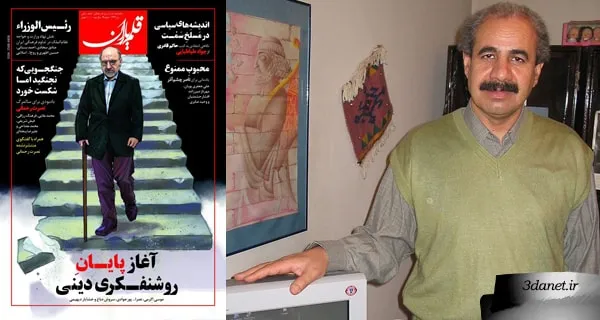

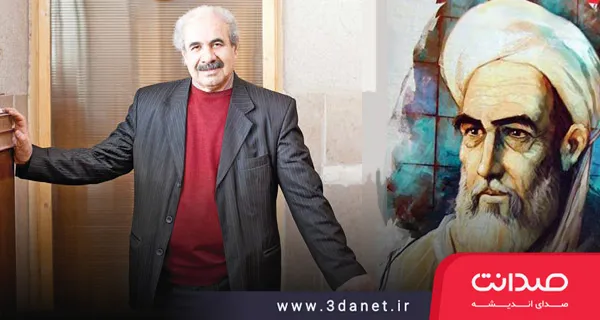
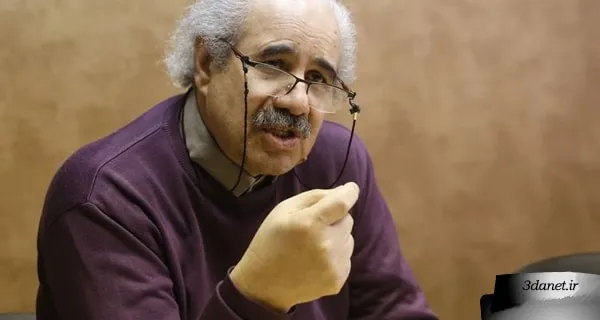
Discussion1 comments
احتمالاً فرديد مطلب حقي گفته كه مانند ديگر برملاكنندگان واقعيت مكتوم مورد حمله دست جمعي بوده و مي باشد. علاقمند شدم ببينم اين واقعيتي كه در آثار او برملا مي شود چيست. وقتي كه حمله به شخصيت يك نفر راه آسان جلب توجه است رعايت اخلاق كم ياب مي شود و هر كسي به جان آبروي او مي افتد تا از تخريب وي اعتبار كسب كند. اين يكي از واقعيات تلخ جامعه بشري است كه جمع ها از بيرون طور ديگري به نظر مي رسند. مردمي كه ناآشنا با فلسفه هستند تحت تاثير واژگان پر طمطراق، حقه هاي منطقي و وربياژ فلاسفه قرار مي گيرند اما نمي دانند كه اگر تظاهر افاده و گيج كردن مخاطبين و كلاژ حرف هاي اين و آن را از آن حذف كني هيچ بر جا نمي ماند.