Philosophy
In Conversation with Mousa Akrami: The Philosophical Legacy of Mulla Sadra
By synthesizing philosophy, mysticism, theology, and Quranic teachings, Mulla Sadra founded the Transcendent Theosophy—a legacy with the capacity to confront new questions. An examination of this achievement and the critiques of its methodology, in conversation with Musa Akrami.

The Philosophical Legacy of Mulla Sadra: Known and Unknown Critiques and Capacities
In Conversation with Mousa Akrami (Edited Text)
In drawing upon the philosophical and theological opinions, mystical teachings, and Quranic and Hadith-based knowledge of past thinkers, and in reflecting upon them with the aim of creating a link between them within the unified framework he called "Transcendent Theosophy" (al-Hikmat al-Muta‘āliyah), Mulla Sadra left behind such an intellectual legacy that, from a broad perspective, we can—despite all the criticisms leveled at his methodology and epistemology—remember him as the founder and originator of a new philosophical or theosophical current in the Islamic world, possessing great capacities for resolving certain ontological and epistemological problems, a legacy that even has the potential to confront some new issues and engage with certain Western philosophical currents.
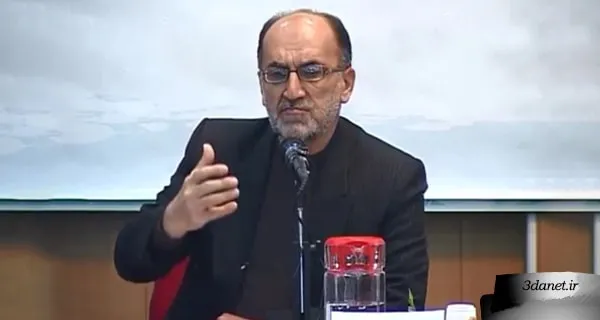
ILNA. With the arrival of the first of Khordad, the commemoration day of "Mohammad ibn Ebrahim Qawami Shirazi," known as "Sadr al-Muta'allihin" or "Mulla Sadra," he and his activities and innovations in the field of theosophy and philosophy have once again become a subject of discussion and debate among experts and researchers in the field of Islamic philosophy and theosophy. Undoubtedly, with years of scholarly activity in the fields of Islamic philosophy and mysticism, the founding of the school of "Transcendent Theosophy," benefiting from the tutelage of masters such as Sheikh Baha'i, Mir Fendereski, and Mir Damad, and presenting remarkable and noteworthy ideas such as the principality of existence, gradation of existence, and substantial motion, Mulla Sadra holds a significant position in the field of Islamic philosophy and theosophy, and this very issue provides ample grounds for the critique and analysis of his thoughts and ideas. In this regard, ILNA, in a conversation with "Mousa Akrami," a university professor, has addressed some of the most important issues raised concerning Mulla Sadra and his philosophy. Read the detailed conversation with Mousa Akrami below.
Question. Given that it has been said that Mulla Sadra used various sources for his Transcendent Theosophy, if you would like, please refer to those sources at the beginning of the conversation.
Answer. Yes. Certainly. Without needing to refer to the quantity and quality of Mulla Sadra's education and teachers, I can say that, like many curious and meticulous students and researchers of philosophy who have had the concern of attaining truths from a philosophical perspective, he studied professionally and with specialization within the existing philosophical tradition of his society, and also paid the utmost attention to other fields such as mystical currents and religious teachings, carefully studying the most important works written in these areas.
It is completely evident from his works that
1) In the field of philosophy, he had mastery over the most important works of the pre-Socratics, Plato, Aristotle, and the Neoplatonists in the Arabic language, as well as the sources and teachings of what is known from pre-Islamic Iran as "Khosrowani Theosophy" (Hikmat Khosravani), and the works of the Brethren of Purity (Ikhwan al-Safa), Avicenna (Ibn Sina), Suhrawardi, and their most important commentators, as well as the works of his master Mir Damad, drawing upon them with or without citing the source;
2) In mysticism, especially theoretical mysticism, philosophical mysticism, and mystical experiences and intuitions, he utilized the works of Ibn Arabi, particularly the Fusus al-Hikam and al-Futuhat al-Makkiyya, as well as the works of other followers of Ibn Arabi such as Sadr al-Din al-Qunawi, Dawud al-Qaysari, Hamza al-Fanari, and also the works of Ayn al-Qudat Hamadani; it is quite apparent that he also had mastery over the works of Rumi (Mawlana);
3) In theology (Kalam), in addition to the works of Ghazali, especially the Ihya' 'Ulum al-Din, he benefited from the Manazil al-Sa'irin of Khwaja Abdullah Ansari, the 'Awarif al-Ma'arif of Suhrawardi the Shafi'i theologian, the Qut al-Qulub of Abu Talib al-Makki, as well as the works of theologians such as Abu Ali al-Jubba'i, al-Jahiz, al-Nazzam, Imam Fakhr al-Din al-Razi, Sa'd al-Din al-Taftazani, and Qadi Adud al-Din al-Iji. Thus, he paid attention to the two powerful Ash'ari and Mu'tazili traditions in theology;
4) In interpreting the Quran, he primarily looked to Imam Fakhr al-Din al-Razi's Great Commentary, Jarallah al-Zamakhshari's al-Kashshaf, and al-Tabarsi's Majma' al-Bayan, drawing many theological, mystical, and literary discussions from them, and even taking some narrations from them. However, his intimacy with the Quran and Hadith, and his reflection within the atmosphere of spiritual unveiling and witnessing and various kinds of mystical experiences, led him to take his own understandings of the verses far beyond their outward meanings, leaving them as a legacy in works such as Mafatih al-Ghayb and his commentary on Usul al-Kafi, which are captivating in themselves and, together with other theological points in his other works, show that after Khwaja Nasir al-Din al-Tusi, he is also the most important Shiite theologian.
Thus, Mulla Sadra, who, through extensive reading, tireless day-and-night effort, and astonishing perseverance in understanding philosophy and other branches of knowledge, had resolved to become a professional philosopher with deep concerns for transcending what had reached him, found himself the heir to the philosophy before him, which consisted of two strong and prominent traditions, the Peripatetic and the Illuminationist, which had engaged in more or less exchange with each other and with theology and mysticism. In formulating his own system of thought, he borrowed from this weighty heritage of pre-Islamic Iranian, Greek, and Alexandrian philosophies and teachings, as well as from mystical, Quranic, and Hadith-based knowledge. Of course, the question of how earlier philosophers read Greek philosophy and Iranian teachings is also important here. For instance, al-Farabi considered the book "Theology of Aristotle"—which in the Neoplatonic tradition is a free adaptation of Plotinus's Enneads—to be by Aristotle and, based on it, tried to show that there is not much difference between the thoughts of Plato and Aristotle. Despite later doubts by Ibn Sina and Suhrawardi regarding the attribution of the Theology to Aristotle, this Neoplatonic work was, in any case, the basis for reconciling the thoughts of Plato and Aristotle in the Islamic world, a feature prominently seen in Mulla Sadra as well. Drawing upon this book, the ideas of the Brethren of Purity, and any current inclined toward reconciliation between Platonic and Aristotelian currents in general, and Avicennan Peripatetic and Illuminationist perspectives in particular, held an attraction for Mulla Sadra. In a step forward to formulate his own specific philosophy, which was later called "Transcendent Wisdom"—although Ibn Sina and Khwaja Nasir al-Din al-Tusi had used this term before him—he sought not only to reconcile Plato and Aristotle, or the Peripatetic philosophy of Ibn Sina and the Illuminationist Wisdom of Suhrawardi, but also saw it better to draw upon important mystical teachings such as those of Ibn Arabi—which up to that time represented the pinnacle of intellectual or philosophical mysticism—as well as Quranic knowledge and Hadith within the Shiite perspective, with the presupposition of harmony among them and rational demonstration, so that the grand and substantial philosophical system he was creating would be comprehensive of all knowledge existing up to that day.
Question. Considering what you have said, some researchers and experts in the field of philosophy believe that the Transcendent Wisdom presented by Mulla Sadra was a synthesis of principles and issues that Mulla Sadra acquired from those very same sages and philosophers before him whom you mentioned, and even from figures like Davani, Dashtaki, and others. Do you consider this interpretation valid?
Answer. Of course, at a first superficial glance at the totality of Mulla Sadra's works, such a thing as you mentioned comes to mind. It is generally natural that he was influenced by the most important teachings he had read, heard, and learned in those fields that interested him.
To build the very large philosophical system he had in mind, Mulla Sadra had accepted three presuppositions:
1) The unity of knowledge concerning God, the world, and the human being,
2) The harmony and complementarity of the three claimed sources of cognition, namely reason, intuition, and revelation, or Peripatetic philosophy, Illuminationist philosophy, mysticism, and the Quran and Hadith, and
3) The consonance and complementarity of the methods and teachings derived from those same three philosophical, mystical, and religious sources.
With an extraordinary mastery of his sources in these fields—the most important sources available in his time—he drew upon each one, so that both by citing material from them and by reflecting upon their content, he raised the edifice of his philosophical or theosophical structure, brick by brick, in his astonishing design, especially for the great book Al-Hikma al-Muta‘aliya fi al-Asfar al-‘Aqliyya al-Arba‘a. At first glance, this great book, and indeed all that is called Mulla Sadra’s philosophy or Transcendent Theosophy, may appear eclectic or the product of a mingling of material from Peripatetic and Illuminationist philosophies, mysticism, the Quran, and hadith.
I should say that sometimes the lengthy quotation of material from certain sources, and the conscious or unconscious refusal to mention the source and reference, provide a pretext for this perception and even an accusation of a kind of plagiarism by Mulla Sadra’s unfair critics and opponents. However, if we overlook the failure to cite sources—which was to some extent customary in certain periods and among certain authors—and examine an important work like the Asfar carefully, sympathetically, and within the framework of a robust intellectual system based on the holistic vision of a Muslim philosopher-theologian-mystic or sage under sometimes unfavorable social and political conditions, we will see that Mulla Sadra’s use of his sources is not in a compilatory manner, that is, like patching together scraps of thought-fabric to make a patchwork quilt, but rather as a more or less systematic intermingling of components in the service of a relatively coherent, specific epistemic system that has come to be called Transcendent Theosophy.
So the major objections to Mulla Sadra’s borrowings are, first, the use of others’ sources without citation, and second, the mixing of two types of philosophy with Islamic mysticism and theology based on the Quran and hadith with a particular interpretation. Each of these two objections has its own importance; it would be desirable if they did not exist, or if they were someday resolved by Sadra scholars and enthusiasts of Sadrian theosophy.
Question: So, according to your statements, we are faced with a body of work that is a mixture or adaptation of various teachings from different sources. If someday the first objection, namely the adaptation of others’ works without citation, were resolved, for example by Mulla Sadra’s proponents providing references to the original sources, how significant would the second objection be?
Answer: Before answering, or in order to answer, allow me to mention, briefly and somewhat parenthetically, that I believe in the existence of five systems of belief that claim knowledge—namely science, philosophy, religion, mysticism, and myth—each of which, firstly, has its own eight headings; secondly, two or more of them may overlap with one another in one of the headings, for example, subject matter; thirdly, despite all their possible overlaps, they are in principle not intermingleable because, for instance, in methodology or the source of knowledge and many other dimensions, the aspects that overlap are different.
Now I submit that perhaps someone like Mulla Sadra wished, with the foundations I enumerated, to construct something called Transcendent Theosophy that is beyond philosophy, theology, and mysticism, but it can no longer be called philosophy, just as it is not mysticism or theology either. This is a kind of intermingling that is not permissible from a purely philosophical standpoint, and I, despite my great respect for Mulla Sadra and my utilization of some parts of his thought, cannot agree with his method from a purely philosophical standpoint, nor can I consider his philosophy to be pure. In explanation, I must say:
1) Transgressing boundaries and moving from within one specific cognitive context into another cognitive context is not permissible,
2) The belief in creating a cognitive super-context composed of parts from different systems of belief that claim knowledge, which is superior to or beyond those systems, is a tremendous and grand claim whose proof and acceptance is not easy.
3) As long as we have diverse contexts of belief or systems of belief claiming knowledge, even if their subject matter is shared (for example, the existence or oneness of God, or the world after death), we cannot—that is, we are not justified—to use propositions or beliefs from one system of belief claiming knowledge within another system of belief claiming knowledge.
Therefore, Mulla Sadra or anyone else can only utilize propositions intrinsically belonging to one belief system claiming knowledge within a more comprehensive belief system claiming knowledge on the condition that he introduces a meta-context or meta-system claiming knowledge called Transcendent Philosophy, in which he can demonstrate that his beliefs are true, justified, and coherent with one another. If that meta-system is such that within it, the independent philosophical propositions or beliefs of the Peripatetic and Illuminationist philosophies, as well as mystical, Quranic, and hadith-based beliefs, are merely mixed together without connection, then we are dealing with an eclectic hodgepodge. If the thinker has been able to create a meta-system composed of these systems, he has created something that is no longer philosophy, nor religion, nor mysticism.
This is precisely what, for example, Mulla Sadra utilized from the terms in the title of his greatest and most important book: namely, Transcendent Philosophy, a specific wisdom that claims four journeys, which are, in any case, important or can be important:
1) The journey from creation to the Truth,
2) The journey in the Truth with the Truth,
3) The journey from the Truth to creation with the Truth, and
4) The journey in creation with the Truth.
This is now something more than philosophy. If we move beyond eclecticism in the sense of borrowing from various philosophical, mystical, and religious sources by simply placing diverse texts side by side, and arrive at and accept the intermingling of philosophical, theological, and mystical horizons, then it must be shown that this meta-system or Transcendent Philosophy, in terms of presenting its foundations, methodology, and epistemology, is not a haphazard mixture but a justified synthesis. This is, of course, something Mulla Sadra himself sought to do to some extent, but bringing this justification to a sufficient level is the task of his followers, a task no one has yet been able to accomplish exhaustively. It can be accepted that belief systems claiming knowledge, such as Peripatetic philosophy, Illuminationist philosophy, theology, and mysticism, inspire one another so that each addresses a subject with its own specific methodology and epistemology; however, neither their conflation can be accepted, nor their synthesis in a form that, for instance, still bears the name of philosophy and possesses methodological, epistemological, and semantic justifications at the level of recognized methodologies, epistemologies, and semantics. In this sense, the greater part of what is called Islamic, Christian, Jewish, or Buddhist philosophy, due to the entry of purely non-philosophical elements—that is, elements not based on reasoning and argumentation unconstrained by any rational limitation—is not philosophy, or is considered eclectic philosophy. In this regard, one might perhaps speak of an interdisciplinary belief system claiming knowledge, the result of combining several disciplines. This is for examining boundary issues. However, the nature of its methodology and semantics must be clarified.
In summary, it must be said
1) Sometimes Mulla Sadra's citations to sources are lengthy and without mentioning the source, a matter his proponents may perhaps rectify one day,
2) Considering Mulla Sadra's goal of presenting a Transcendent Philosophy that draws upon various forms of knowledge, drawing upon diverse epistemic sources is unavoidable and perhaps even unproblematic, provided that he was able to create Transcendent Philosophy at a level beyond Peripatetic and Illuminationist philosophies, Islamic mysticism, and Shiite theology based on specific interpretations of verses and narrations, and that he himself or his followers demonstrate the superiority of this level in the fields of logic, methodology, epistemology, and semantics to the audience of Mulla Sadra's legacy,
3) If we employ Bacon's analogy, this drawing upon diverse sources and achieving a level beyond belief systems claiming knowledge such as Peripatetic and Illuminationist philosophies, Islamic mysticism, and Shiite theology must be like the honeybee's utilization of the pollen of various flowers, with the intellectual power or faculty of intermingling or synthesizing them through its own intellectual ability to present an organic, uniform, and unprecedented product.
In summary, it can be said that in some instances we seem to be faced with a new epistemic nectar, and in others this is clearly not the case. The Transcendent Philosophy constructed from those sources and Mulla Sadra's personal reflection and contemplation possesses characteristics that, even if we find traces of them in the past, we cannot observe in the interconnected form found especially in Mulla Sadra's book "Al-Asfar," such that the novelty of the composition is evident; yet this final result does not possess the uniformity of a nectar like natural honey from towering mountains protected from artificial elements. Nevertheless, Mulla Sadra has managed to link the borrowings in such a way that from an overall perspective we can consider him the founder and originator of a new philosophical current in the Islamic world or the tradition of Islamic philosophizing, even though serious criticisms are leveled against him, mostly regarding those very epistemic syncretisms.
Question: Many believe that Mulla Sadra's main innovation was analyzing religion from the perspective of wisdom. In fact, he considered religion to be based on knowledge and learning, not mere faith. It has even been said that the methodology of Transcendent Philosophy is based on a rationality that substantiates religious teachings. In your view, has Mulla Sadra been able to present and elaborate this innovation and his idea well and in a coherent framework?
Answer: It is very difficult for me to say precisely whether such a thing has occurred or not. What is clear is that Mulla Sadra was, in his life, both very devout, with a concern for understanding and believing in religious teachings, and, in connection with rational thought and inquiry into the most important issues related to God, existence, the world, and humanity, engaged in reading, researching, and doing philosophy. With great interest in both domains, he strove to create reconciliation between the two. The discussion of compatibility between religion and philosophy, or revelation and reason, has been one of the important debates of rationalist currents in the Islamic tradition. Based on certain reflections and Shiite theological interpretations of the Quran and hadiths, and the trust he placed in human reason, Mulla Sadra had concluded that religion is fundamentally rational and all its teachings are comprehensible and acceptable by human reason.
In the course of his studies and within the atmosphere surrounding him, Mulla Sadra, in addition to the Peripatetic demonstrative method in philosophy, had also accepted the Illuminationist method as well as argumentative mysticism. It is natural that such a person would try to reconcile religion—which he considered inherently a matter of revelation but for humanity—with philosophy—which he considered inherently a rational or intuitive matter, that is, based on human cognitive faculties (both reason and intuition)—and would even want to proceed towards religion through the path of philosophy (in its two aspects, rational and intuitive) and from this perspective to know and make known religion. He pursued this very program.
Therefore, in answer to your question, I must say he had this intention, and as a devout philosophizer or a philosophizing devout person, he pursued this goal throughout his life. Your question concerns his success in realizing this program. So, his entire program, regardless of discussions in more specific instances, can be seen as presenting philosophies that are both compatible with religion and draw upon religion in the most important grand topics of religion and philosophy—such as the existence of God and His oneness, the creation of creatures, His relationship with humanity, and the ultimate end of humanity. However, the issue, or perhaps the problem, lies in the fact that in many instances, to lay the philosophical foundations or erect the pillars of his philosophy, Mulla Sadra resorted to those very religious teachings with an origin considered revelatory and therefore certain and definitive. It is these instances that are controversial from the perspective of philosophical methodology, philosophical epistemology, and philosophical semantics. As I said before, he harbors no philosophical doubt about any religious teaching taken from the Quran or any hadith he considers authentic. Of course, he may sometimes interpret or esoterically interpret a verse or hadith in a way that is compatible with his own presuppositions or even his doctrinal goals. These instances provoke many disputes, both from philosophers committed to free reason and from devout believers who hold different meanings and implications for some verses and hadiths. Engaging in listing examples requires another opportunity.
Therefore, in this context of presenting a rational or Peripatetic and/or Illuminationist philosophical reading of religion, this has occurred in some instances, and we can observe a relatively harmonious connection between a philosopher’s various interpretations of religion and religious teachings—someone who regards philosophy solely as a kind of cognition grounded in reason. Although we cannot consider him entirely successful in this regard, which goes back to various forms of circular reasoning and begging the question in his approach, because while he seeks to establish the truth of religious teachings on the basis of reason, he has already presupposed those teachings as true. Moreover, in areas where, as a philosopher, he relies not on reason—that is, arguments whose forms are logical and whose premises correspond to cognitions acceptable to reason—but on intuition or illumination, epistemological doubts arise. It is very difficult for the community of philosophers to agree on knowledge whose origin is considered to be intuition or illumination, yet Mulla Sadra in some cases readily resorts to this kind of cognition, whether from an Illuminationist philosophical position or a mystical one.
Thus, in such cases, Mulla Sadra may face logical, methodological, epistemological, and even semantic and interpretive problems (that is, the manner of interpreting a verse or hadith). It is quite clear that Mulla Sadra sometimes believes he must interpret a specific verse or hadith in such a way as to fill the missing links or empty spaces he feels exist in his philosophy, and these very things have practically become his Achilles' heel or the vulnerable point of his philosophy, and by those who wish to exercise scrutiny, whether with philosophical zeal or religious zeal (even Twelver Shi‘i zeal), they may well be regarded as weaknesses of his philosophy.
Question: Mulla Sadra’s Transcendent Theosophy is a philosophical system that has not developed much after him. In this regard, many have criticized Sadrian philosophy, but no new philosophical school has emerged from these critiques. What do you see as the main reason for this issue?
Answer: Several reasons and/or causes can be enumerated for this matter:
1) If we look at the subject at the level of the entire Islamic world, that is, beyond Iran, firstly, non-Iranian and non-Shi‘i centers and circles considered philosophy to have ended with Ibn Rushd; hence, even Suhrawardi, Khwaja Nasir al-Din Tusi, and Qutb al-Din Shirazi received no attention;
2) The separation of Iran from the rest of the Islamic world, which occurred with the killing of the Caliph and the dismantling of the Caliphate system at the hands of Hulagu Khan the Mongol, led to a greater conscious or unconscious disregard in the non-Iranian region for the philosophical-intellectual events within the Iranian realm;
3) With the rise of Shah Ismail, the declaration of Shi‘i rule, the formalization of Shi‘ism, and the growth of enmity between Iran and the Ottoman government and other Sunni-populated areas, the disregard and even hostility towards Iranian-Shi‘i intellectual creations was such that, consciously or unconsciously, eyes were closed to the possible intellectual achievements among Iranian Shi‘is; therefore, in this atmosphere, it was impossible for someone like Mulla Sadra, who in his philosophizing drew upon Shi‘i hadiths with great enthusiasm and emphasis, to be welcomed by the Sunni world;
4) The resentment, or at least the criticism and opposition, from centers and circles of philosophy, religious law, Sufism, and theology (that is, theological speculation) towards Mulla Sadra, which had arisen during the lifetime of Shah Abbas I and Mulla Sadra’s own life, continued—part of which was the result of conscious opposition—from a position of fondness for Avicennan philosophy or from a position of anti-philosophy in general—to Mulla Sadra’s innovations and position, and part of which was the result of an incorrect understanding of his works. Avicenna’s philosophy still dominated the minds of philosophy enthusiasts, and official philosophical centers paid more attention to this philosophy because, firstly, with its inclusion of sections such as logic, mathematics, and physics, this philosophy possessed a far greater comprehensiveness as a universal philosophical system; secondly, the philosophical methodological, epistemological, and semantic purity of this philosophical system possessed more principled rigor and appeal;
5) There was no philosophical opponent of Mulla Sadra's own stature to elevate both philosophy and Mulla Sadra himself through a critique of his achievements. After the passing of Mir Damad, we no longer see a first-rate, prominent figure in philosophy to stand against Mulla Sadra. The greatest opponents of Mulla Sadra were Mulla Rajab-Ali Tabrizi, Abd al-Razzaq Lahiji (Mulla Sadra's son-in-law), Mohammad-Baqer Khansari, and Aqa Hossein Khansari, who lacked the capacity for a principled critique of Mulla Sadra. Later, figures such as Mirza Abol-Hassan Jelveh mostly insisted on eclecticism in Mulla Sadra's works and even accused him of plagiarism. The proponents, from Mulla Mohsen Fayz Kashani (another son-in-law of Mulla Sadra) to Mirza Mohammad Almasi, despite their great affection for Mulla Sadra and his achievements, were not of such stature as to properly disseminate and elevate Mulla Sadra's philosophy and secure its acceptance in scholarly centers and among the learned.
6) These scholarly centers I speak of did not possess much power to establish a strong philosophical current in Iran or the Islamic world. If we look at Europe at that time, we perceive the difference. In Europe, there were various universities and diverse scholarly centers, and even courts interested in philosophy, where figures like Descartes, and later Spinoza and Leibniz, in opposition to, alliance with, or critique of the Scholastic philosophical tradition, and through confrontation with various opponents, attained greater intellectual growth.
7) It is many years later, nearly two hundred years later, that a philosopher of the stature of Hajj Mulla Hadi Sabzevari emerges, who both himself recognizes the value of Mulla Sadra's works and strives to acquaint others with them. However, in those not-so-prominent philosophical circles, centers, and gatherings (as opposed to jurisprudence and exegesis in a more or less traditional method), the study and dissemination of Avicennan philosophy had more adherents, an adherence that has the aforementioned reasons and is closer to caution. The shadow of Ibn Sina has weighed heavily upon philosophy, and his methodology, the topics he raised, and even the arrangement of subjects in important books such as the Shifa and the Najat were more favored by those interested in philosophical thought and reasoning, and by critics of the intermingling of philosophy with mysticism, religious teachings, the text of the Quran, and hadiths.
8) Apart from Hajj Mulla Hadi Sabzevari, other individuals such as Aqa Mohammad Bidabadi, Mulla Ali Nuri, Aqa Ali Modarres, and possibly many others were interested in Mulla Sadra's philosophy and kept the flame of his Transcendent Wisdom more or less alive. However, despite the efforts they made, they were not first-rate, influential figures in philosophy capable of offering an appealing presentation of Mulla Sadra's philosophy. Therefore, in the Shiite world too, the philosophical tradition and the emergence of someone like Mulla Sadra were dealt with in such a way that one can say ignorance, inattention, prejudice, and the lack of a powerful philosophical mind were among the reasons why, on the one hand, no serious critique of Mulla Sadra was undertaken, and on the other hand, the promotion and advancement of his thought did not occur.
9) If we disregard Dar al-Fonun (where, of course, philosophy was not taught) and also the scattered religious sciences centers in cities like Tehran, Mashhad, Isfahan, and Arak, and focus our attention on the establishment of the great Iranian Shiite seminary and the university in Iran, we must consider the founding or revival of the Qom Seminary in 1301 (1922 CE) and the founding of the University of Tehran in 1313 (1934 CE). Despite the presence of professors or students interested in Sadrian wisdom in the Qom Seminary or other smaller seminaries, and the warmth of the teaching circles and gatherings of figures like Mirza Mahdi Ashtiani and Allameh Abol-Hassan Sha'rani, or the presence of individuals like Mohammad-Kazem Assar at the University of Tehran, not much attention was paid to Mulla Sadra. This was because if so-called Islamic philosophy was to be taught in the seminary or university, caution still dictated that Ibn Sina be taught. Mulla Sadra's philosophy was assessed as detrimental to philosophy on the one hand, and detrimental to religion on the other. Someone like Mohammad-Kazem Assar, having studied under a father who had written a commentary on Hajj Mulla Hadi's Manzumeh, and also having studied in the seminaries of Tehran and Isfahan, had learned Illuminationist wisdom, Sadrian wisdom, and the mysticism of Ibn Arabi well, and it was expected that he would show great academic attention to Mulla Sadra and promote his ideas. Nevertheless, from the founding or revival of the Qom Seminary and the founding of the University of Tehran until the late 1330s (late 1950s), not much attention was paid to Mulla Sadra. Both the philosophizers and the religiously orthodox preferred that the official philosophy remain Avicennan Peripatetic philosophy.
10) Gradually, some came to accept that one could draw upon religious teachings, mystical doctrines, and intuitive and Illuminationist wisdom, incorporating them into philosophy and philosophizing, thereby elevating philosophy, and specifically Shi‘i Islamic philosophy. They gravitated toward Shaykh al-Ishrāq and especially toward Mullā Ṣadrā, and in the late 1950s and early 1960s, with figures like ‘Allāmah Muḥammad Ḥusayn Ṭabāṭabā’ī at the center, the almost private gatherings for teaching Ṣadrian philosophy turned into formal classes. With the arrival of individuals such as Henry Corbin and new graduates like Daryush Shayegan and Seyyed Hossein Nasr—against the backdrop of the formation of the “return to self” movement and attention to “what one possessed of one’s own”—attention to Suhrawardī and Mullā Ṣadrā increased, particularly to show Westerners and Western-oriented liberals and Marxists that the tradition of Islamic philosophizing, beyond Ibn Sīnā, had other powerful currents that could be presented as alternatives to Western philosophies. There is no opportunity here to examine this subject.
11) After the Revolution, attention to Mullā Ṣadrā grew, especially since the leader of the Revolution had previously shown an interest in Mullā Ṣadrā and the tradition of philosophical mysticism of the school of Ibn ‘Arabī, and by uttering “mā adrāka mā Ibn ‘Arabī” and paying attention to Mullā Ṣadrā, he had pointed to his preferred option both against the philosophy-averse religious literalists or those taking refuge under the umbrella of Ibn Sīnā, and against the liberal, empiricist, or Marxist Western world. In any case, after the Revolution we have witnessed an enormous amount of attention to Mullā Ṣadrā in the seminary, the university, and the public sphere, and dozens of books, hundreds of theses and dissertations, and thousands of articles at various promotional and scholarly-research levels have been published about Mullā Ṣadrā, and this very day on which you are speaking with me has been named in his commemoration, although, of course, political power has played its role in this.
Given what I have said, in summary I can add that, in my opinion, the appropriate time has not yet arrived for us to judge whether Ṣadrian philosophy and outlook can become a current that can both justify itself and convince critics that it was legitimate to blend the rational method with the Illuminationist method and to turn toward mysticism, the Qur’an, and ḥadīth, and whether, in a cost-benefit analysis, it has been able to bring greater benefit to philosophy or not? Has it truly been able to adopt concepts, methods, and doctrines from non-rational and non-philosophical domains of knowledge, find the missing links in philosophy, and present them in a better and more coherent manner than the Peripatetic tradition, with a greater capacity to answer certain questions raised in the field of philosophy?
Unfortunately, in universities, Mullā Ṣadrā—and even Ibn Sīnā, Suhrawardī, and others considered founding philosophers or sages—are not read in depth. I do not wish to refer to the Islamic seminaries in this regard because I have less information about their inner workings. However, in the public sphere, it is expected that we would witness a deeper engagement with the topics of so-called Islamic philosophy, and especially the topics of Ṣadrian wisdom, in confrontation and interaction with the dynamic current of Western philosophy in its various manifestations. Despite seeing such a quantity of theses, dissertations, books, and articles, most of them lack value and have been written merely to fulfill a requirement and obtain an academic degree, or for the academic promotion and advancement of faculty members. For several years now, critique forums and theory-building chairs have been established in universities, which have mostly been pro forma and, to some extent, formed under compulsion for achieving promotion and advancement, and have essentially been caricatures of critique or theory-building, to which serious researchers have paid no attention.
For various reasons and causes, the market for serious philosophical critique in our country, if not closed or shut down, is very sluggish. A prerequisite for seriously reading the works of someone like Mullā Ṣadrā is the existence of a good critical edition, the existence of good commentaries and interpretations, knowledge of the Arabic language, or the existence of good Persian translations. Most students who engage with Mullā Ṣadrā’s works are unable to derive the necessary and sufficient benefit from them. It can be said that in the field of philosophical education, the situation in the seminary may be better in terms of reading texts. The situation in the university, as far as I am aware, is truly catastrophic. One can easily see that there is a superficial reading of philosophy and philosophers, and the goal is merely to complete a course of study and obtain a degree, or to write an article for some journal with not very rigorous scientific standards.
Given this situation, one naturally cannot expect the emergence of new critical currents that, from a critical or developmental standpoint, could properly draw upon the Sadrian tradition, thoroughly recognize Mulla Sadra's achievements in terms of their strengths and weaknesses, and, in critiquing or expanding upon them, reach new horizons.
Question. One of the marginal issues raised about Mulla Sadra is that Freemasonry and Wahhabism emerged from the heart of his philosophical system. What is your view on this?
Answer. I do not know where you have read or heard such things. Without wishing to delve into the quality of Mulla Sadra's opponents' proper understanding of his works, I must say that in his own time and after his death, he was the target of various attacks and denunciations from several quarters:
1) From the canonists and jurists who were fundamentally opposed to philosophy in general;
2) From the theologians who considered the role of philosophy in Mulla Sadra's intellectual apparatus to be too prominent;
3) From the rationalists who opposed the use of transmitted sources;
4) From the philosophers who favored Avicenna and did not approve of his intellectual amalgam with Illuminationist, mystical, and theological elements;
5) From the scripturalists who opposed his interpretation, and especially his esoteric interpretation, of the Quran and hadiths, contrary to what the apparent meaning of the verses and hadiths indicated;
6) From those who considered Mulla Sadra a proponent of mysticism and deemed his views and thoughts harmful to religion;
7) From the Sufis, who not only opposed the presence of rational and transmitted elements in Mulla Sadra's works but also disliked his criticism of their non-compliance with the Sharia.
Now, in connection with your question, I will offer a few points.
1) Regarding the relationship between Mulla Sadra's thought and Freemasonry, I must say I see no connection whatsoever. Freemasonry is originally a European, mainly English and French, movement that has, of course, also entered other countries. Both its rise to power in Europe and its entry into Iran occurred after Mulla Sadra's death. If we consider its entry into Iran to be with Mirza Malkam Khan Nazem al-Dowleh and the establishment of the Faramushkhaneh in 1275 or 1276 AH, this is about 230 years after Mulla Sadra's death. It is unlikely that anyone would claim Mulla Sadra, during his lifetime, for instance in Isfahan, or in Kahak, or in Shiraz, or on his seven journeys to Mecca, had any secret dealings with foreigners or was connected with fraternal societies in Iran and Mecca that were members of associations from which later Masonic lodges are known to have emerged. Someone might say that a certain individual among the admirers of Mulla Sadra and his ideas was a member of a particular Masonic lodge. If such a claim is made, and even if it is true, it has nothing to do with Mulla Sadra.
2) Regarding the relationship between Mulla Sadra's thought and Wahhabism, I must also deny any connection between them. Of course, Wahhabism emerged in the mid-eighteenth century CE, about a hundred years after Mulla Sadra's death, and was embraced by the House of Saud. We know that Wahhabism was founded by Muhammad ibn Abd al-Wahhab based on the ideas of Ibn Taymiyyah, who lived about 300 years before Mulla Sadra and was a Hanbali theologian, exegete, traditionist, jurist, and mufti known as Shaykh al-Islam. If one can find a common thread between Ibn Taymiyyah and Mulla Sadra, it is religious zeal and a great deal of attention to the Quran and Hadith. However, Ibn Taymiyyah was, firstly, fiercely anti-Shia, anti-Iranian, and anti-Persian, considering Shiism to be disbelief and Shias to be internal enemies, even worse than the Crusaders and the Mongols. He regarded any interpretation contrary to the apparent meaning of verses and hadiths as esoteric interpretation (ta'wil) and deemed it rejected. Therefore, the content of religious zeal and attention to the Quran and Hadith is completely different between him and Mulla Sadra. Ibn Taymiyyah's religious fervor, simple life, asceticism, disregard for worldly positions, constant engagement in worship, his uprising, and his fatwa against the Mongol Ghazan Khan have been praised by many, such as Ibn Hajar al-Asqalani and al-Suyuti. He was strongly opposed to Shia beliefs regarding their Imams and matters such as visiting their graves. Shia scholars, in turn, considered him deviant and severely rebuked him.
In general, neither was Mulla Sadra influenced by Ibn Taymiyyah, nor was Muhammad ibn Abd al-Wahhab influenced by Mulla Sadra. It is plausible that later, some opponents of Mulla Sadra's ideas, without any sense of responsibility, negated Mulla Sadra with the cudgel of Wahhabism, without having any reasoned or rational basis for doing so, just as in the contemporary era we have witnessed opponents within the faith accusing certain struggling Muslims of Wahhabism, and even of Babism, Baha'ism, Bolshevism, and so on.
3) If I take your question to be about the relationship of Mulla Sadra's philosophy not with Wahhabism but with Babism or Baha'ism, in this case too I must say that, as far as I understand, there is no connection between them. The intellectual narrative of some individuals who have said or heard such things is probably influenced by the intellectual connection of the Bab and Baha' with the Shaykhi school through Sayyid Kazim Rashti, and the intellectual connection of Shaykh Ahmad al-Ahsa'i with Mulla Sadra. If this is the meaning, it must be said, firstly, that the Shaykhi school is Twelver Shia; secondly, the mere fact that person A is influenced by person E, for example through a chain of A, B, C, D ... and E, is not sufficient to consider E dependent on A. One must pay attention to the quantity and quality of the influence. Mulla Sadra's influence on Shaykh Ahmad, in quantity and quality, was far less than his influence on figures such as Hajj Mulla Hadi Sabzavari, Mulla Ali Nuri, and Aqa Ali Mudarris. Even the influence of Shaykh Ahmad's ideas on the Bab and Baha' is not very great.
In any case, the accusation of Mulla Sadra's ideas influencing Wahhabism, Babism, or Baha'ism is a completely baseless and false accusation, made by ignorant and/or biased individuals for the purpose of discrediting and driving Mulla Sadra's followers out of the arena, for whatever cause or reason, a further examination of whose causes and reasons is beyond the scope of this conversation. In connection with Mulla Sadra and any other thinker, it must be said that with the introduction of new ideas in a society, various perceptions arise among proponents and opponents, proportionate to the quantity and quality of the novelty, which are largely due to the new capabilities and the emergence of non-traditional, macro-level interpretations of those innovations. Mulla Sadra's ideas were introduced in a specific intellectual-political context where long-standing jurisprudential, theological, and political disputes and conflicts existed, both between Sunnis and Shias in general, and among various currents within Shiism in particular, the most important of which perhaps revolved around the two main axes of Imamate and Justice, generating significant broad and detailed discussions about the successor, the Imamate, the characteristics of the Imam, and topics related to the Imam of the Age, which have always had an eye on political power and spiritual leadership.
These discussions could have come into conflict with traditional institutions that had developed and formalized specific teachings over hundreds of years. Within this framework or upon this context, it is possible that some might put forward the notion that one can have interpretations of Mulla Sadra's discussions that practically open up a space for the introduction of other discussions and currents. This itself has both attraction and repulsion, leading to agreements and disagreements with various possible harms on both fronts, the exhaustive examination of which must be left for another possible occasion.
Question. In closing, what do you consider to be Mulla Sadra's most important achievements in the field of philosophy and wisdom?
Answer. First of all, I must say that Mulla Sadra's sheer audacity in striving to transcend the existing traditions within systems of belief claiming cognitive authority, such as philosophy, theology, and mysticism, is in itself admirable, the requisite of which was intellectual confrontation with the dominant currents in society and paying various related costs at different levels of individual, social, psychological, and spiritual life.
Setting aside this audacity for knowing and moving against the common current, his intellectual achievements are, in any case, important and even, in some instances, very important. Of course, as I said, he did not engage with logic, mathematics, or the natural sciences, and had no achievements in these fields, and this, of course, is a defect for him as a system-building philosopher, which we will not address here. If the discussion of philosophy is raised in the sense of posing and solving problems based on reason and rational argumentation, free from any extra-rational source of knowledge, as I said, it might be better to use the very title of wisdom for it, although he also has many purely philosophical discussions.
His reliance, as a metaphysician, is on being or existence, which has led to the discovery or invention of the principality of existence, the unity of existence, and the gradation of existence. This threefold doctrine occupies the center, apex, or axis of his system of wisdom or even his philosophy. Considering the most important traditional definition of metaphysics as "the science of being qua being," topics such as the principality of existence, the unity of existence, and the gradation of existence can be considered metaphysical, that is, philosophical. The problem lies in Mulla Sadra's utilization of religious methodology and epistemology in this field. Setting aside the non-philosophical elements from this utilization, this important topic of the principality, unity, and gradation of existence in Sadrian ontology possesses many capabilities in the discussion of the modes of existence, the coextensiveness of existence with knowledge, power, and life, time, space, motion, substance, causality, necessity and possibility, quiddity and the origin of the soul, mental existence, cognition (or knowledge in the general sense), and the existence of the human being in the span from origin to return. It is such a comprehensive ontology that encompasses God, the human soul, and the motions of matter, within which rules such as "the simple in reality is all things" and "the soul, in its unity, is all the faculties," and theories such as "corporeal in origination, spiritual in subsistence" and "substantial motion" have been proposed, which even if we do not accept them, we cannot ignore their ingeniousness and astonishing capacity in the face of many rivals and alternatives.
Many of the ontological concepts or doctrines, as well as the connection or identity between substance, motion, and time as seen in this metaphysics, are highly inspiring for the metaphysics corresponding to the most important discussions of modern physical cosmology in connection with the origin, emergence, or temporal beginning of the material world. In connection with that same ontology, Mulla Sadra was able to achieve an epistemology from which mental existence and the union of the intellect, the intelligent, and the intelligible, or the union of knowledge, the knower, and the known, result.
All of these, in conjunction with one another, have emerged as a powerful, interconnected philosophical system, bestowing a highly significant comprehensiveness, perfection, and unity upon Mulla Sadra's philosophical or doctrinal system. With the relevant concepts and teachings of this system, we can have analyses, explanations, interpretations, and even solutions to problems that we cannot address with a quiddity-primacy perspective or even the entirety of prior metaphysics. Therefore, Mulla Sadra is truly a great founder within the framework of what has been called Islamic philosophy, or philosophy in the Islamic world tinged with Islamic religious knowledge and teachings, and many diverse parts of his ontology are of great importance. Of course, his philosophical works, in their various dynamic aspects, must be carefully read, critiqued, and evaluated, and their capacities in confronting certain metaphysical problems must be discovered and utilized.
It is evident that due to the intermingling of non-rational methodologies and purely non-philosophical epistemologies with theological-religious and mystical methodologies and epistemologies, there are obstacles on the path to approaching his wisdom and critiquing and evaluating it. On the one hand, this critique and evaluation has its own difficulties, subtleties, and error-prone meticulousness, and on the other hand, the presence of theological-religious and mystical elements in this wisdom has imparted a state of sanctity or dogmatism to it, such that some imagine that if this wisdom is criticized, its critique might lead to the critique of religion and mysticism. In any case, in a calm atmosphere, free from prejudice, we must allow eager and searching souls, with the lamp of a critical and evaluative perspective, to read this philosophy in its entirety and its parts and to discern its strengths and weaknesses.
One of the ways to understand the weaknesses and strengths of this wisdom or philosophy is to engage it with the problems raised in other philosophies in the West and East, North and South—that is, in other philosophical cultures—on the one hand, and to confront it with the major philosophical currents of the world (for example, with the philosophies of Spinoza and Leibniz) in such a way that their ability to solve various relevant problems is examined comparatively, the possibility of their interaction is investigated, and if such a possibility exists, it is utilized in relevant philosophical research programs. Unfortunately, what is called
Therefore, in a final summation, I must say that Mulla Sadra, in drawing upon the philosophical and theological opinions, mystical teachings, and Quranic and Hadith-based knowledge of past thinkers, and in reflecting upon them with the aim of creating a bond among them within the unified framework he called "Transcendent Wisdom," left behind such an intellectual legacy that from a broad perspective, despite all the criticisms leveled against his methodology and epistemology, we can remember him as the founder and originator of a new philosophical or wisdom-based current in the Islamic world, possessing great capabilities for resolving certain ontological and epistemological problems, a legacy that even has the capacity to confront some new issues and engage with certain Western philosophical currents.





Discussion0 comments
No comments yet; let yours be the first voice.