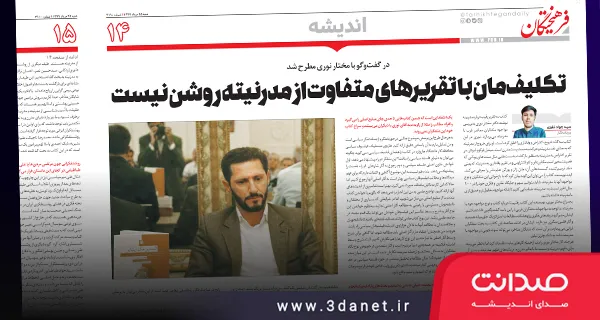
The book Three Rival Accounts of Modernity by Dr. Mokhtar Nouri examines the encounter of contemporary Western thinkers with modernity. In this book, Nouri has created a triad of Exit, Protest, and Loyalty. For the exit from modernity, which means a critique of modernity and a move toward the postmodern, he introduces Michel Foucault and Lyotard; in the account of protest against modernity for the purpose of returning to traditions such as the Greek traditions that are virtue-centered, he presents MacIntyre and Leo Strauss; and in the account of loyalty to modernity, which means a “reparative critique of its ruptures,” he introduces John Rawls and Jürgen Habermas. The author’s idea can be expressed as follows: by rereading these thinkers and their mode of encountering modernity, we might be able to identify our own theoretical and intellectual share and position in relation to “modernity” over the past 100 years, so that we may have a more reasonable and deeper encounter with modernity.
We went to Mokhtar Nouri, the author of this book, to have a conversation about the book and his own encounter with modernity, in light of the encounters of Western thinkers on this subject. He is the director of the Intellectual Trends Group at the Middle East Strategic Studies Research Institute and has other written works as well. Continuing the discussions of this book, he addresses Iranian thinkers and maintains that the later Shayegan can serve as a good example in encountering modernity, much like Charles Taylor.
Although Mokhtar Nouri's work must be counted among the positive efforts, it seems that a deeper perspective is needed for "understanding modernity and our relationship with the modern world," "the roots of the emergence of modernity," "its course in the West," and "the course of modernization across the globe."
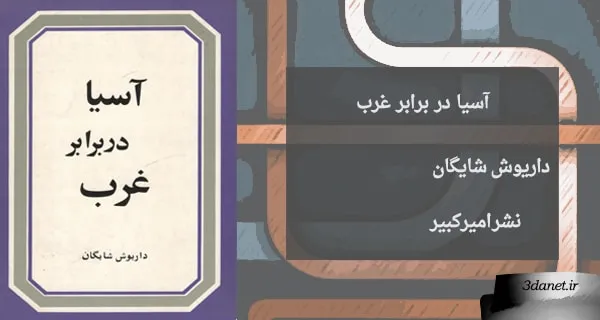
After the revolution and the publication of "What is a Religious Revolution?" in France, Dariush Shayegan concluded that our path lies only through modernity, and if any light is to emerge from the darkness of modernity, it will presumably be after we have become modern. In this vein, although Shayegan assumed modernity to be darkness, he deemed us compelled to enter it. We know that the genesis of the modern in modern countries was not forced or merely through "planning," but was also accompanied by a kind of self-consciousness. Modern self-consciousness at that time was almost unrivaled and powerful, and with this description, modernity was realized when, firstly, its undesirable effects and consequences were not yet apparent, and modernity was a utopia and a desire for the masses, and secondly, it was coupled with a kind of self-consciousness. Now that the masses are more or less familiar with the "promised earthly paradise of modernity" and know that there is no longer a polis without poverty and disease, gathering all perfections, and also in this era when modern self-consciousness is no longer defensible and is not considered unrivaled, is becoming modern in the former manner possible? Considering postmodern critiques and even the acceptance of fundamental criticisms by proponents of modernity, can "modernity" still be prescribed as before, and if prescribed, can it be realized? Is modernity—like during its genesis—anyone's desire? Shayegan offers no answers in these cases. He merely says that Kant and some philosophers of the genesis period of modernity are "hygienic" and should be translated and even promoted, while critics of modernity like Heidegger are unhygienic. This encounter is a kind of withdrawal from thought and turning a blind eye. In any case, Shayegan introduced submitting to formulaic modernity and what remains of modernity as the solution, and naturally, this submission, since it is recommended in an era of weakness and frailty of the foundations of modern thought, must presumably be blind and indifferent, closing its eyes to the inadequacies, problems, and crises of modernity and not considering them, or it must be out of compulsion and with reluctance, solely in the realm of "common usage" and the "universal stage of science and industry," in which case, without self-consciousness (a self-consciousness that can no longer be modern), it will lead nowhere but to compounded confusion.
Dr. Nouri, referring to Taylor, speaks of an interaction between tradition and modernity, but does this interaction not need to take place under a self-consciousness (whether philosophical, metaphysical, or otherwise)? Is this interaction a transaction without need for thought? Perhaps his interpretation of a "toolbox of theories" also indicates that thought is unnecessary and theories suffice, merely as tools. This is no longer an interaction with modernity; it is closing one's eyes to the problems and intellectual crises of the modern and a kind of myopia. A myopia that can intensify and compound modern crises, even if it temporarily solves some short-term problems. Of course, he complains about instrumentalizing modernity, but the entirety of his discussions shows no way towards liberation from instrumentalization, and it seems he ultimately remains trapped in the very snare he sought to escape. The text of this interview is before you for judgment.
Let us begin with the reason for writing the book "Three Rival Accounts of Modernity: Exit, Protest, and Loyalty." What drew you in this direction?
Every work produced corresponds to a need, and this book is no exception to this rule. In addition to personal interests, the most important need I perceived, which led me to enter this field, is the importance of theoretical and practical discussions surrounding modernity. The importance of the modern world, especially the role of modernity in the development process in the West and in countries that have adopted modern development as their model, is evident to everyone. These issues prompted me to gravitate towards such topics.
Therefore, firstly the importance of theoretical discussions, secondly the understanding of modernity as a model for development and progress, and thirdly the significance of theoretical and practical debates about the modern world for contemporary Iranian society, which has been grappling with such an order for the past two centuries, have led me to examine modernity and critical thought regarding it.
Your efforts make it possible for issues that student friends or those with theoretical interests do not have the time or opportunity to study, to be studied through this book and the good categorization you have provided. In the introduction, you also mentioned that in writing this book you were influenced by the model of Albert Hirschman and his famous book
Exit, Voice, and Loyalty. But one criticism is that such books to some extent take the place of primary sources, and individuals see the material, for example, from Mr. Nouri's or others' perspectives and do not go to the books of these thinkers themselves.
In any case, raising this question is an interesting topic in the field of thought, including political thought, and I wish to provide a precise answer to it. Harvey Mansfield, the conservative political philosopher at Harvard University, in his book
A Student's Guide to Political Philosophy, asks how one can enter the world of political philosophy. This thinker suggests two ways: first, reading the primary texts of political philosophy, and second, referring to the works of commentators. He recommends the first path. I, too, am aware of and attentive to the fact that to understand the views and material of political philosophers, it is better to refer to their original works. But now that this is not done for various reasons, it is better to provide interpretations of their thoughts. Scientific humility does not permit me to say that by reading my book, we become needless of primary sources, but in a situation where many researchers and students do not have access to or desire to study original works, I think reading these types of works and the exposition and elaboration of the interpretations of these philosophers can itself be a positive step in the scientific community. These types of books can serve as a map so that students and enthusiasts, by studying them, can find their way into the labyrinthine corridors of political philosophers' thought. Although I still believe that original works must be studied, sometimes for the exposition and elaboration of original works, we need to write these types of works as well. Of course, the exposition and elaboration of philosophers' thought is customary all over the world, and numerous works have been written regarding thinkers' perspectives on various issues, including modernity. In this context, after about 15 years of continuous study and research in the field of political philosophy, to the extent of my scientific means and understanding of the topics, I have presented my own particular interpretation and narrative of the subjects in this field, which I hope will be useful.
I must acknowledge that you had a very engaging introduction, and you had conducted paradigmatic discussions and then turned to political philosophy, because after all, it is a field that can influence epistemology, ontology, and anthropology. But why political philosophy and not political thought or ideology? Why should we enter into the understanding of modern worlds and modernity through political philosophy?
In that very introduction to the book, I have precisely pointed out these differences. First, I must say that in understanding Western political thought in its historical course, different methods are usually used, one of which is the paradigmatic method of the philosopher of science Thomas Kuhn. Of course, this topic itself is debatable whether the paradigmatic method can be applied and used in the field of humanities or not?! Because the discussion of paradigm has been raised in the field of "philosophy of science and scientific discussions." With these descriptions, we have used this method with tolerance and, according to the common categorization, have divided the history of Western philosophy into three paradigms. First, the paradigm of the classical period, which encompasses Greece and the Middle Ages; second, the modern paradigm; and third, the contemporary paradigm. In this paradigmatic division, in each paradigm, a "core" governs each period. For example, virtue and ethics are the central core of the classical period paradigm; utility, profit, and rationality are the central core of the modern paradigm; and critique and language form the central core of the contemporary paradigm. Therefore, based on such an approach that I have adopted to advance the discussions, I deliberately utilized political philosophy. Of course, in the text of the book, it is explained what the differences are between political thought, political philosophy, political ideology, political theory, and political theology. As a researcher in the field of political thought, I have relative awareness of these differences and know what differences each of these titles and subjects have with one another. With awareness of such discussions, I have deliberately employed political philosophy.
I should point out that my approach to politics is normative and critical, so I could not use “political theory” with its scientific characteristics and features. In defining political philosophy, Leo Strauss considers political philosophy to be “the attempt to replace opinion about the nature of political things by knowledge of them.” Therefore, I believe that political philosophy has a normative implication and seeks to replace and substitute a desirable state of affairs for the current disorderly one. In fact, the goal of political philosophy is to attain an ideal political society, whereas political theory, for example, has a positivistic character and seeks explanation and causal relationships between issues.
You yourself have said that the modern era has capitalism, a state, industry, and militarism. We know that in state-building, this political philosophy is very important, and essentially, this ideal society can be controlled from here. Today, in our country, is there attention to political philosophy in the matter of state-building? Or, in your view, are we taking the path of political ideology, political school, or political jurisprudence, etc.?
Despite all the negative and limited views that exist regarding the institution of the state, I believe that without a doubt, in all political societies, the state is an important institution. The importance of the state institution has been proven both theoretically and practically, and in the process of political governance. If we take the modern era as a basis, the most important institution of the modern world is the state. When thinkers like Anthony Giddens examined the institutional dimensions of modernity, they came to believe that modernity has four institutional dimensions, one of which is the state. Giddens considers the institutional dimensions of modernity to be the state, industrialization, capitalism, and militarism, although, in his view, these institutional dimensions of modernity have acquired a global and universal character through the processes of globalization and have spread to other parts of the world, including our country. Therefore, the institution of the state has always been an important and noteworthy issue for us Iranians in the contemporary era. What the role, position, and specific function of the state is has been among the notable issues. Many political theorists, including theorists of development and modernization, have addressed these issues. In the contemporary era in our country, these discussions have always been raised as to whether the state is the custodian of development or not. Therefore, the role of the state institution can always be very prominent in a country's political discourse. Of course, from this perspective, I agree with you that over the past few decades, we have paid less attention to the function of the state and its duties from the perspective of political philosophy, and we have paid more attention to the state and its activities from the perspective of political theology and ideology. Our political structure's view of the state has not been from the perspective of political philosophy and its specialized and common functions, but from an ideological perspective. It should be noted that when we look at the category of the state from the perspective of political philosophy, the issue becomes entirely technical. In this sense, for example, modern political philosophy seeks to reduce the power of the state and increase individual freedoms. This is the basis of modern political philosophy, and philosophers such as Hobbes, Locke, Rousseau, and Montesquieu and the like all sought to achieve this goal. Their efforts were aimed at how the power of the state could be restrained and placed at the service of citizens and securing their interests. The duties of the state in modern political philosophy are completely clear. Security, freedom, protection of property and ownership, and protection of civil rights are among the most important duties of the state, which modern philosophers have theorized well. But in our society, less attention has been paid to specialized discussions about the role and duties of the state. Part of these shortcomings is due to the dominance of ideological discussions, and part is due to the existing parallel activities surrounding the institution of the state. Although our academic centers have also paid less attention to this issue, to the extent that in our universities, we see fewer researchers who work on the state and are, so to speak, state-studies scholars. Recently, at Allameh Tabataba'i University, a journal titled “State Studies” has begun scientific activity, which is a positive step taken in recent years by colleagues and friends at that university, as the custodian of the humanities in the country. All these discussions and weaknesses are noteworthy while our destiny is intertwined with the state, and this institution plays an important role in the daily life of the Iranian individual; therefore, state studies requires more attention.
We live in an ecosystem, we have a tradition, there is a religion in between, and there are also customs and rituals. From the perspective of state-building, as you have also said, various schools of thought can be considered. The question is whether a metaphysics for the state can be constructed from political philosophy?
یا نه، عصر فلسفه سیاسی متافیزیکی بهسر آمده و ساخت چنین فلسفه سیاسی در شرایط فعلی برای اداره دولت غیرممکن است و شدنی نیست؟
البته باید خدمت شما عرض کنم که کار من در این کتاب اصلا درباره دولت و خصوصیات و کارکردهای آن نیست!
این مسالهای بود که شما به آن اشاره کرده و گفتهاید که فلسفه سیاسی متافیزیکی را عصر جدید کنار گذاشت و غیرمتافیزیکی شد و خواست مسائل را ازطریق قراردادهای اجتماعی و قوانین طبیعی حل کند. از این بابت سوال کردم.
این پرسش را من به این شکل میتوانم پاسخ بدهم که نوع نگاه به سیاست در دوران مدرن با پدیده مدرنیته و عقلانیت نهفته در آن دچار دگردیسی شد. در دنیای مدرن به تعبیر ماکس وبر «افسونزدایی» صورت گرفت و نگاههای متافیزیکی به سیاست کنار گذاشته شد و ما وارد عصر قرارداد، منافع و حسابوکتاب نسبتبه مسائل مختلف شدیم. درنتیجه در دوران معاصر بهدلیل نقدهای برخی از متفکران انتقادی نسبتبه سیاست مدرن تاحدی زمینه احیای دیدگاههای اخلاقی اعصار کلاسیک برای بحرانزدایی از مدرنیته فراهم شده است. مثلا در این زمینه میتوان به اشتراوس و اشتراوسیها در دانشگاه شیکاگو اشاره کرد، یا به اندیشههای اجتماعگرایانی مانند مکاینتایر، تیلور و دیگران. برخی از نظریهپردازان معاصر هستند که چنین دیدگاههایی را مطرح ساختهاند و از ضرورت بازگشت به افلاطون و ارسطو صحبت میکنند. آنها معتقدند ما معاصران میتوانیم از نگاههای اخلاقی و متافیزیکی عصر قدیم درخصوص سیاست، برای بحرانزدایی از مدرنیته استفاده کنیم. لذا این بحرانزدایی از مدرنیته میتواند سیاست و دولت مدرن را که خصلتی کاملا سکولار دارند، شامل شود. به هرحال این موضوع یک جدال فکری پردامنه و رایج در مباحث فکری و فلسفی معاصر غرب است. از این منظر میتوان به پرسش شما پاسخ مثبتی داد.
سراغ مساله اصلی کتاب شما یعنی مواجهه ما با مدرنیته برویم. شما درصدد نشان دادن 3 خوانش از مدرنیته به ما هستید -یک عده میخواهند آن را نقد و تصحیح کنند و برخی دیگر میخواهند به سنت یونانی برگردند و یک عده نیز میخواهند به شکل پستمدرن از آن خارج شوند. کدامیک از نگاههای امروز در کشور ما وجود دارد؟ چنین رویکردهایی را میتوان در کشور ما به مدرنیته دید یا وضعیت ما نسبت به مدرنیته ربطی به این دیدگاهها ندارد؟
در پاسخ باید عرض کنم بحثهای مطرحشده در کتاب «سه تقریر رقیب درباره مدرنیته» بیشتر راجعبه مدرنیته و خوانشهای انتقادی نسبت به نظم سیاسی مدرن است. این مساله در قالب سرفصلی با عنوان «نظریههای جدید در علم سیاست» در دانشگاههای مختلف جهان و ازجمله ایران نیز تدریس میشود. از این منظر هدف من بررسی دیدگاهها و خوانشهای انتقادی نسبت به مدرنیته بوده است، اگر چه این هدف اصلی در کتاب آشکار است، اما هدف دیگر که در موخره کتاب به آن مختصرا اشاره شده، نوع مواجهه ما ایرانیان با مدرنیته است. با صراحت عرض میکنم من به هیچوجه نه عاشق فوکو، نه مکاینتایر، نه لیوتار و هیچ متفکری نیستم و تا این حد میفهمم که این بحثهای فلسفی، فقط انتزاعیات هستند و ما باید ارتباط این مباحث را در پیوند با عمل اجتماعی و سیاسی مورد سنجش قرار دهیم. لذا در نتیجه مواجهه دو قرن اخیر ما با غرب و مدرنیته من نیز به این نتیجه رسیدم که به بررسی نسبت این نوع مباحث فکری با جامعه سیاسی خودمان بپردازم و قرائت خودم را بیان کنم. دیدگاههای نظری مطرح شده در مواجهه با مدرنیته نشان میدهند که ما با یک مدرنیته مواجه نیستیم. مثلا با مدرنیتهای مواجهیم که فوکو میگوید سراسر ضرر و زیان است و منجر به اسارت انسان و گرفتاری او در ساختارهای دنیای مدرن شده است. یک مدرنیتهای داریم که لیوتار آن را در قالب فراروایتهای سیاسی و عقلانی ارزیابی میکند که آزادیعمل انسان را محدود کردهاند. یک مدرنیته هم داریم که امثال مکاینتایر و اشتراوس آن را ترسیم کردهاند. این طیف از نظریهپردازان که من آنها را معترضان به مدرنیته نامیدهام به دنبال بازگشت از مدرنیته و احیای اخلاق و سنت کلاسیک در سیاست مدرن هستند. البته طیفی از متفکران دیگر مانند هابرماس و راولز نیز وجود دارند که میگویند بهرغم همه نابسامانیهایی که مدرنیته داشته ما میتوانیم با آسیبشناسی آن به وضعیت بهتری در دنیای مدرن دست پیدا کنیم. بهزعم این طیف از متفکران، با احیای عقل ارتباطی و عقلانیت معطوف به عدالت همچنان میتوانیم دنیای مدرن را حفظ کنیم و در چارچوب همین نظام زندگی کنیم. بنابراین من این خوانشها را بررسی کردهام تا به مخاطب ایرانی بگویم که این تصاویر و روایتها از مدرنیته وجود دارد و بیاید تکلیف خودمان را با آنها روشن کنیم. The aim is to provide the Iranian audience with a clue as to what we should do in the face of modernity. To examine such a subject, I turned to Iranian intellectuals, because Iranian intellectuals are the most important group among our social forces that have reacted to these issues. In other words, no other group has addressed these issues as much as intellectuals, who perform intellectual work. Therefore, when I turned to contemporary intellectuals, I saw that, parallel to Western thinkers, one can also speak of rival accounts of Iranian modernity within Iranian intellectual discourse. Of course, instead of engaging in historical discussions in the field of intellectualism, I examined this discussion from the decades leading up to the revolution and from the 1960s onward. The conducted examination shows that, in the manner of Western thinkers, Iranian intellectuals in their encounter with modernity can be categorized into three areas: exit, protest, and loyalty. We have presented intellectuals such as Babak Ahmadi, Mohammad Reza Tajik, and Morad Farhadpour as intellectuals who, in the manner of postmodernists and inspired by Nietzschean and Foucauldian theories, believe in an exit from modernity. We have discussed another spectrum of intellectuals, such as Seyyed Ahmad Fardid, Reza Davari Ardakani, Seyyed Hossein Nasr, Ehsan Naraghi, and the like, within the framework of protest against modernity. This spectrum of intellectuals has considered the crises of modernity as a sign for returning to native traditions and ethical principles, and in a sense, they have promoted a kind of nativism. Finally, there is a spectrum of intellectuals such as the later Dariush Shayegan, Abdolkarim Soroush, Ramin Jahanbegloo, Farhang Rajaee, Seyyed Alireza Hosseini Beheshti, and the like, who, despite their differences, in fact, through a pathology of modernity and Iranian modernity, want these harms to be resolved and for us to enter the modern world and, in a sense, engage in dialogue with it. It should also be noted that this is the first time a work has examined the thoughts of some Iranian intellectuals. In other words, examining the views of intellectuals such as Mohammad Reza Tajik, Alireza Beheshti, Farhang Rajaee, Hossein Bashiriyeh, Babak Ahmadi, and the like on a specific issue is among the new topics discussed in this book.
Where do intellectuals like Morteza Mardiha or Ali Mirsepassi, or people like Javad Tabatabai, fit into this story?
People like Ali Mirsepassi are also included in this framework. In fact, during the decades following the victory of the Islamic Revolution, a spectrum of intellectuals, distancing themselves from ideological issues and resorting to philosophical and sociological theories, were able to propose new discussions to resolve the issue of Iranian modernity. Several schools of thought in Iran's intellectual sphere in recent decades, especially after the imposed war, have been discussed. The first school is the remnants of the non-religious left, who, abroad, gradually shifted direction from Stalinism and Leninism towards a kind of social democracy. The second school is religious intellectualism, which moved towards the theoretical contraction and expansion of Sharia and hermeneutic approaches to the Book and Tradition, among whom Abdolkarim Soroush and Mujtahid Shabestari can be mentioned. Another group of religious intellectuals, such as Reza Alijani, Taghi Rahmani, and Hassan Yousefi Eshkevari, by defending Shariati's thoughts and re-reading his ideas in accordance with the times, have put forward a kind of spiritual social democracy. In this period, secular intellectuals are also divided into two groups: a group like Seyyed Javad Tabatabai, who has a philosophical approach to modernity and considers the main factor of decline in Iran to be the factor of thought, and another group like Ali Mirsepassi and Kazem Alamdari, who pay attention to the institutional and structural aspects of modernity. This group, while criticizing the philosophical approach to modernity, believes that Iran will tread the path of modern development when it engages in democratic institution-building. Mirsepassi looks at modernity with a sociological approach. He believes that one can enter the modern world through social and political institution-building. Unlike Seyyed Javad Tabatabai, who has a philosophical approach to modernity, he has advocated for a sociological and objective approach in encountering modernity.
In this categorization, you have not examined individuals such as Karl Löwith, Voegelin, or Alan Gillespie. Why are these individuals, who work on the theological roots of modernity, not seen in this categorization? Or if they were to be in this categorization, in which of these accounts would they be placed? Another point is that the book also lacks a solution for exiting these conditions and reaching a conclusion among these accounts.
لااقل من که کتاب را خواندم در آن راهحلی ندیدم بلکه حالت دایرهالمعارفی دارد.
متفکرانی چون فوگلین، گیلسپی، ماریتن و امثالهم متفکرانی هستند که بحثهای الهیاتی درخصوص مدرنیته را مطرح کردهاند. از نظر آنها برخلاف دیدگاههای رایج که مدرنیته را امری سکولار میدانند، این پدیده دارای ریشههای الهیاتی است. بهنظر این طیف فکری، مدرنیته، مدرنیته سیاسی و نهادهای سیاسی مدرن از درون الهیات و مسائل سنتی پدیدار شدهاند. تا حدودی در اثر حاضر به این بحثها اشاراتی داشتهام و اگر بخواهیم این متفکران را در این دستهبندیها قرار دهیم، قطعا آنها در روایت و تقریر اعتراض به مدرنیته گنجانده میشوند. شما وقتی مکاینتایر را مورد بررسی قرار میدهید کاملا با یک متفکر نوارسطویی و آکویناسی مواجه میشوید که دارای ریشههای الهیاتی است. بههرشکل، تعداد بیشماری از متفکران هستند که میتوانستم به اندیشه آنها بپردازم، اما ناچار بودم برای جلوگیری از اطاله کلام بحث را محدود کنم. من اهداف مشخصی داشتم و زیاد در پی این نبودم که حتما همه متفکران انتقادی معاصر را در این اثر جا بدهم. بنابراین از نظر خودم با همین 6 متفکر توانستهام تا حد زیادی بحثهای اصلی و اهدافی را که مدنظر داشتهام تئوریزه کنم.
میدانم که در مباحث نظری خیلی سخت است که بگوییم کسی بیاید و راهکار بدهد. منظورم از راهکار شاید یک جهت یا کورسوی امیدی باشد که بتوانیم برای خروج به آن سوق پیدا کنیم.
منظور شما خروج از چالشهاست؟
بله خروج از این دعوای همیشگی با مدرنیته، تعیینتکلیف برابر مدرنیته. به هر حال ما باید چه کنیم؟ فرضا ما این دستهبندی و 3 تقریری که شما گفتید را قبول کردیم؛ باید چه کار کنیم؟ یک عده در داخل کشور میگویند باید غرب را ابژه کنیم، یک عده دیگر میگویند ما تا 100 سال دیگر خودمان ابژه غرب هستیم. یک عده دیگر مثل دکتر ابراهیم توفیق میگوید که این درگیریها هیچ دردی را از ما دوا نمیکند و وارد بحث از «تعلیق» میشوند. عدهای دیگر وارد مباحث فلسفه میانفرهنگی شدهاند مثل دکتر یوسفی یا دکتر مصلح. آشفتگی خیلی عجیبی بهوجود آمده است که کتاب شما نیز میتواند به ما کمک کند این موضوع را درک کنیم. بالاخره بهعنوان یک پژوهشگر و کسی که دغدغه این موضوع را داشتهاید، میگویید چه باید بکنیم؟
این پرسش و مسالهای که شما مطرح کردید بسیار جدی است. من بسیار از طرح چنین مسالهای خوشحال هستم، چراکه معتقدم نگاه ما به این موضوعات باید کاملا آسیبشناسانه، انتقادی و خروجیمحور باشد. هدف ما از طرح این همه بحث نظری این است تا به خروجی و نتیجه روشنی دست پیدا کنیم. به نظر من، اگر آسیبشناسانه بررسی کنیم، در حوزه مباحث نظری و سپس تاسیس راهی برای مواجهه با مدرنیته، توجه به دو موضوع ضروری است: اولین موضوع این است که وظیفه دانشگاهی، ایجاد جامعه سیاسی مطلوب نیست. این وظیفه سیاستگذار و سیاستمدار است که جامعه سیاسی مطلوب را شکل دهد. انسان دانشگاهی باید راه را نشان دهد، مسیری را باز کند، معرفتی را تولید کند و در خدمت سیاستگذار و سیاستمدار قرار دهد. حال ممکن است این پرسش ایجاد شود چرا این رابطه میان اهالی سیاست و اهالی معرفت شکل نمیگیرد، این خودش معضل و موضوع دوم است. بهنظر من بهجهت تاریخی و بنا به دلایل مختلف، درهم تنیدگی و ارتباطی بین نظام سیاسی و نظام دانشگاهی ما برقرار نشده و این امر باعث شده ما نتوانیم از این نوع مباحث به خروجی مشخصی دست پیدا کنیم. یکی از مهمترین معضلات ما این است که نمیتوانیم از یافتههای نظری استفاده کنیم. درحالی که ما وقتی نظریات غربی را بررسی میکنیم میبینیم که مثلا نظریه عدالتِ جان راولز معطوف به حلوفصل بحرانهای حاکم بر نظام سرمایهداری است. جامعه سرمایهداری در نتیجه جنگ ویتنام، جنبشهای دانشجویی در دهه 1960 و سایر بحرانها با نابسامانیها و بحرانهایی مواجه بود. راولز بدون اشاره مستقیم همه هدفش را برای حلوفصل بحرانهای جامعه آمریکا و نظام سرمایهداری گذاشته بود. راولز میخواست به نظام سیاسی موجود بگوید که شما برای جبران بحرانها باید به سمت عدالت توزیعی و عدالت انصافی بروید. بهخاطر همین ارتباط میان نظام فکری و نظام سیاسی است که در سال 2002 در ایالات متحده، جان راولز «جایزه ملی علوم انسانی» را از رئیسجمهور وقت، بیل کلینتون، دریافت میکند. با ذکر این مثال، میخواهم بگویم که چنین ضعفهایی در جامعه ما وجود دارد و رابطه معقولی میان دانشگاهیان با مسائل سیاسی و حوزه حکمرانی وجود ندارد. درنهایت بهنظرم باید از این مسائل فکری راه خروجی پیدا کرد و هدف بنده نیز بررسی راهحلی برای خروج از بنبست مواجهه با غرب و دنیای مدرن بوده است.
You have drawn comparisons and correspondences between certain Western accounts of the problem and domestic accounts. When a student enters our knowledge system, it is as if they enter one ideology among other Western ideologies, regard one piece of the puzzle of Western thought as the best, choose it, and adopt it as a presupposition and ideology. Even many of the projects carried out in the country today, and the people who translate the works of Spinoza, Hegel, Žižek, or Deleuze, seek to assert that this project is, with certainty, the best. Perhaps the politician truly does not know, or does not want to know, what these thinkers have said. As the saying goes, perhaps they are not even in the ballpark or pay no attention to the humanities. What should we do here? Translator friends spend years of their time on a thinker, not to introduce them, but to present them as a salvific ideology or the only solution. How do we get out of this situation?
Part of the predicament goes back to the fact that our position in intellectual circles is not very clear. We must clarify whether we want to engage with intellectual and scholarly discussions in a trend-driven way, or whether we want to be problem-oriented. My belief and practice in recent years has always been that we should not look at intellectual discussions in a trend-driven manner, saying that because Spinoza is fashionable now, we should turn to Spinoza and translate him, and claim that anyone who does not understand Spinoza is ignorant, or turn to Foucault and say that our problems will be solved with Foucault. Whereas, in my opinion, this is not the case, and we must deal with issues in a problem-based way. In order to be problem-oriented and problem-solving, and to rid ourselves of trendiness, we must be able to arrive at a clear mentality. I think we need to arrive at an intellectual triangle to escape these debates and ambiguities. That triangle, for me, is such that at one vertex of this triangle we have theory, which creates knowledge and cognition for us, produces insight and illumination; at another side of this triangle, we have modernity and modern society, which, despite criticisms and negative attitudes toward the West, has brought about the highest rates of development, growth, progress, etc., in the life of Western people and other societies that have entered this domain. Without a doubt, the other side of this triangle must be Iran, and we must see it as a country that has fundamental challenges at the levels of its domestic and foreign policy. So, based on such a triangle and by drawing on Western theories and the successful model of modern society, we should look at the problems of our own society. This is the missing link that many of our researcher, author, and translator friends have overlooked. We must pay special attention to the wisdom of affinity and fitting intellectual issues together with our own society. We must pay attention to the extent to which theoretical discussions have a connection and relationship with the situation of our society and what affinity they have with the problems of the country of Iran.
You mentioned in the introduction that we have a modernity, a modernism, and a modernization. Has our country encountered modernity, or are we still in modernization and merely practicing with a formal aspect of the modern state? Have we truly encountered modernity?
The answer to this question depends on our definition of modernity and modernization. I agree with you that we have not been able to achieve that full-fledged modernity and the principles and foundations of modernity. In my opinion, what has taken shape in our contemporary history and been implemented in different historical periods by certain regimes and governments has mostly been modernization projects and a superficial view of modernity. For this reason, we have not been able to access authentic modernity and still face problems in these areas. It should be noted that modernization is the superstructure of modernity, meaning that until we can implement those epistemological, ontological, methodological, and philosophical and political foundations of modernity, no useful result will be achieved. For example, what happened during the Pahlavi era was not modernity, but modernization, which failed due to weakness in its intellectual underpinnings. In the era after the Islamic Revolution, although we have had a strong critical and protest-oriented tendency toward modernity, in my opinion, modernization has still been intensely active in our society. In other words, despite the fact that we have intellectual problems with modernity, we have adopted an instrumental attitude toward modernization and the achievements of the modern era.
After re-reading thinkers and intellectuals in Iran, to what extent have we been able to traverse the path of understanding modernity, and what should we do to increase the speed and depth of this path? Have you found an individual among these intellectuals who could be of greater help?
Yes, the afterword of the present book is being published as an independent volume titled
Competing Accounts of Iranian Modernity: The Narrative of Protest and Loyalty. In this book, which will soon be published by Qasideh-Sara Publications, I have deliberately set aside the narrative of exiting modernity and put forward the argument that despite the appeal and novelty of postmodern discussions, these debates are in fact issues of the post-industrial system and late Western capitalism that do not cure our ailments. We cannot move toward the postmodern era without entering modernity, because we will face an enormous chasm. Postmodernism in Iran today is a kind of “cognitive delusion” and then a tool for criticizing modernity in Iran by certain specific intellectual and political currents. Hence, in my new work, I have deliberately set aside the discussions of exiting modernity and centered the debate on those two narratives of protest and loyalty. My argument is that our contemporary society, from the Constitutional era to the present day, has been afflicted by conflict and strife between these two narratives. One narrative seeks the modernization of society, and another narrative has adopted a protesting stance toward the modernization of society. This struggle has also been guided and championed by specific social forces. Based on such narratives, I have categorized intellectuals and specifically examined six of them. In the narrative of protest, I have examined Fardid, Nasr, and Davari Ardakani, introducing them as representatives of the protest against modernity. In the narrative of loyalty to modernity, Soroush, the later Shayegan, and Farhang Rajaee have been included as intellectuals who have raised important discussions in recent years and decades. It is worth noting that in the realm of intellectualism, we have been caught in the duality of tradition and modernity, and our theoretical foundation has been such that we must either be Popperian or think in a Heideggerian manner. Therefore, another innovation of that work is that, in order to free ourselves from this dichotomy in epistemological and theoretical terms, I have turned to the contemporary communitarian philosopher Charles Taylor. The discussions raised regarding Taylor are taking place for the first time in the sphere of Iranian intellectualism. By drawing on Taylor and his thoughts, the aim has been to move beyond the conventional Heideggerian-Popperian dichotomy. Taylor shows us that it is possible to move toward interaction between tradition and modernity and to avoid absolutism in this domain. In Taylor’s view, modernity has brought with it three malaises, such as instrumental reason, atomism, and state bureaucracy. Despite such complications that modernity has entailed, we all know that modernity has also brought fruits and achievements. Hence, he says let us try to find a way by reconciling traditional and modern perspectives and achieve a rational and lasting dialogue between tradition and modernity. Taylor is a Catholic thinker, religious and devout, but at the same time, he is also considered one of the most important theorists of the modern world. The examination carried out shows that Taylor’s views can be extracted to some extent in Shayegan’s thought, and specifically in Farhang Rajaee, this type of discussion reaches its peak. In Rajaee’s interpretation, who has placed himself in a state of dialogue with Taylor, he can be for us an instance of a Farabi in the Islamic world. What Farabi did was to establish a logical relationship between Islamic thought and Greek thought. In Farhang Rajaee’s interpretation, we have not produced such a thinker in the contemporary era who creates a reasonable link between tradition and modernity, although in my opinion, Rajaee himself aspires to play such a role. The proposal of such discussions in my new work is entirely fresh and can steer us from the grip of the fruitless struggle between tradition and modernity toward bringing these horizons closer together. These topics are among the discussions that have been raised in my new work through these kinds of new theoretical perspectives.
Do we have Charles Taylors in our own tradition whom we can revive? Or must we find the likes of Charles Taylor in the West and utilize their theoretical discussions?
This is an important point; we have not been able to produce the likes of Taylor. We have not been able to revive, shape, or bring forth such thinkers. This is while in the West itself, Taylor, as a Christian Catholic, has a relationship with modernity and open horizons.In our own society, perhaps figures like Hamid Enayat could have played such a role, enabling a logical dialogue or a reasonable reconciliation between these domains. But at present, we have few intellectuals who have been able to establish a connection and relationship between these areas. Although, in the discourse of fidelity to modernity, figures like Soroush, Shayegan, Rajaei, and others are making such efforts. These intellectuals seek to reconcile tradition and modernity and have tried, through this reconciliation, to create a way out for the modernization of society. However, the extent to which they have been successful is an issue that requires more precise pathology and analysis.
They say that Charles Taylor is in the Western paradigm, is a Catholic, and has nothing to do with us, and that we should turn to reviving Mulla Sadra and speak of Mulla Sadra's political philosophy. Another group, such as the students of Mr. Tabatabai, say that we must revive Khajeh Nasir from the 6th century [AH], and what does Charles Taylor have to do with us, and similar issues. From this perspective, they may criticize us, although I believe Stuart Hall, Taylor, and many others are relevant to us today, but this is a critique that may be leveled at you and me from outside, whether from the Iran-shahri school or the Islamization current.
My effort is aimed at transcending these kinds of Iran-shahri and Islamic binary thinking, because these disputes have not been able to lead us to a clear outcome. In any case, whether we accept it or not, we have already moved beyond these narrow, constricted, and limited enclosures. Dariush Shayegan, in his book "Under the Skies of the World," points out that today the problems of the West are no longer confined to the West alone, but have become planetary problems. They are our problems too. The benefit of this era lies precisely in the fact that this crisis will only be resolved through convergence and effort from all sides. Today, planetary problems are at stake. In any case, the view that because the discussions of Habermas, Taylor, and the like were raised in the West, they are of no use to us, is an ideological and political view of scientific matters, put forward by certain intellectual currents. In contrast, it seems that due to the atmosphere of globalization and communications, we must see problems more broadly and openly. It cannot be that we confine ourselves within an enclosure and say that Habermas and Taylor are of no use to us, and instead, go digging in our ancient, historical soil to revive Mulla Sadra and Khajeh Nasir. Not that these are unimportant to us—ignoring history is by no means possible—but we must strive to create new opportunities from contemporary theoretical discussions. Political and social theories, in the words of Susan Giroux and Jeffrey Nealon, should be seen as a "theory toolbox." This is the title of a book these two scholars have written in recent years, which has also been translated into Persian. In fact, the book "The Theory Toolbox," by moving beyond rigid frameworks, calls the reader to critical thinking within the context of everyday life. More than being a dry interpretation and explanation of theories, this book is an exercise in critical and concrete thinking, and this is achieved by questioning various perspectives within the eventful context of everyday life. So, just as a car needs a toolbox to manage the car and resolve its problems on the road, we too need a theory toolbox to manage the "political machine" on the road of governance and to resolve society's dilemmas. Statecraft is also a process that started somewhere and is in motion, and to resolve our dilemmas, we need an intellectual toolbox. Now, if this toolbox is provided by figures like Taylor and others, it should not be interpreted as meaning that because they are Western, they are of no use to us. What does it matter to us? We want to use these theories to solve our own problems. Of course, it is obvious that this does not necessarily mean we should bring everything Taylor says about Canada and Habermas says about Germany into our own society. But we must pay attention to the fact that the discussions raised by these thinkers are universal discussions, and we can gain the necessary knowledge and understanding from these discussions to improve our own conditions. These discussions, in fact, provide us with the necessary insight and vision, and this is an important point: we need insight and vision on a global level; we are not a separate, isolated entity from today's world.
In the context provided by contemporary thinkers such as Anthony Giddens in
The Consequences of Modernity and Marshall Berman in
The Experience of Modernity, we Iranians, too, due to the global spread of modernity and the involvement of all cultures and nations in constructing the present world, are compelled to reflect upon modernity and its adversities and predicaments. We are not a separate, isolated entity from the global community; what brings success to Western and non-Western humanity can also yield significant achievements and lessons for Iranians. This type of intellectual reasoning by figures like Berman can be reformulated as follows: the West is the birthplace of modernity, and modernity and its dimensions have spread across the entire world, and therefore have also penetrated the lifeworld of the Iranian person. Such issues compel Berman to state that people from the Third World are also obliged to participate in the dynamics of modernity and strive, to the best of their ability, to understand, comprehend, and possibly apply it.
Martha Nussbaum's book The Monarchy of Fear has been translated, and Fukuyama's book had previously been published by several different publishers. We are moving towards a situation where political philosophers are examining social affairs and are prodding society. How important can these books and these proddings be for us these days? These books receive little attention, and it is as if it does not matter that these proddings also strike us. We think that Fukuyama is discussing liberal identity, or that the book The Monarchy of Fear is talking about a social issue and a modern phenomenon in American society. How important are these, and how should we convince society of them and explain them?
You have raised a noteworthy point. In response, I can say that it is true that the discussions raised by thinkers such as Nussbaum and Fukuyama are theoretical, but they have written these works with concern and purpose. Both of them have cited the role of Donald Trump and his presence on the American political scene as a reason for writing their works. Specifically, Nussbaum, as a neo-Aristotelian thinker, published the book
The Monarchy of Fear in response to the fear that Trump has created in American society. Or Fukuyama, in his book
Identity, raises discussions about identity and addresses the fate that identities have faced as a result of Trump's emergence and manifestation. With these descriptions, we must pay attention to the fact that although concepts such as "fear" and "identity" have been raised by contemporary Western thinkers, we can have our own conception of these concepts. If I may speak a bit more technically, I must refer to the important subject of "concept" and "conception." As we know, a concept is a general structure such as fear, justice, or freedom, but a conception is the specific determination of that same concept, obtained by completing certain details. What happens in political debates is that individuals agree on the general structure of the concept, while they have different conceptions regarding what its elaboration and details are.
Therefore, I believe that we can have our own interpretation of these concepts. For example, we can address the issue of to what extent we can use the concept of fear to examine the frightening conditions that prevail over our society and our social body today. Nussbaum raised this issue as a result of Trump's policies for America, but this does not prevent us from paying attention to the state of our own society through these concepts and intellectual terms, or for instance, the concept of identity raised by Fukuyama possesses the same characteristic. We, too, can think through the discussions of this thinker about the extent to which our political system has led to an opening in the situation of cultural and identity diversities, and to what extent it has challenged them. Overall, my reasoning and analysis is that the theoretical discussions and conversations that are raised today and previously in the West by various thinkers can be noteworthy for us and equip us better in confronting political and social predicaments. My concluding remark is that although one should not be overly theory-laden, we undoubtedly need intellectual and philosophical tools to resolve the problems of society and the country.
.
.
Discussion2 comments
مفتخرم که با نام شما اشنا شدم
قرآن مبین این پرسش را بعمل می آورد که چرا نباید گروهی از مردمان قوم به رفتن به مراکز اندیشه بسیج شوند و آموخته هایشان را به خلق خود ارائه دهند. این کانون ها می توانند چین یا روم باشند. فارابی و ابن سینا از دل آسیا تا افریقا سفر کردند یا از آثار حکمای یونان برداشتهای خود را مطرح کرده اند. همین تلقّی باید توسّط ایرانی جماعت صورت گیرد.