Philosophy
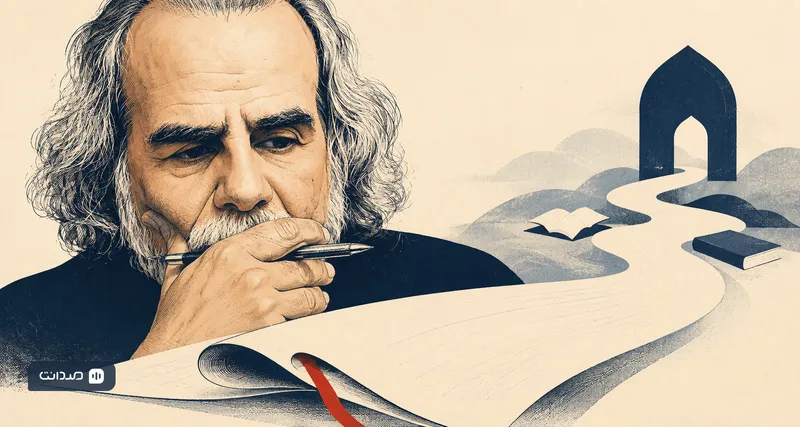
Mohammad Reza Ershad in Conversation with Dariush Shayegan: 'Seeing with a Hundred Eyes'
In a conversation with Ershad, Dariush Shayegan discusses his intellectual journey and return to the youthful passions of art and literature. Having used Indian civilization as a springboard for understanding civilizations, he reflects on the influence of Persian poetry and novels such as Proust.
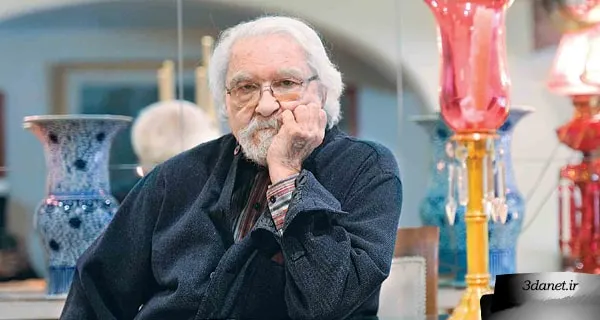
Mohammad Reza Ershad: Although he studied Indology, he did not confine himself to this field, and Indian civilization became a springboard for his better understanding of other ancient civilizations. This led to his comparative knowledge of these civilizations. Gradually, his mind was drawn to the question of why these civilizations have ceased to be dynamic precisely since the advent of modern civilization, and why, unlike several centuries ago, no significant civilizational and cultural works emerge from them. The search for an answer to this question is what has driven Dariush Shayegan (b. 1934) into a quest across various intellectual, scientific, and artistic domains, from the time he was a young student in Europe up to the present day. Shayegan does not pause in any realm; he constantly pokes his head into various fields like a traveler, even holding a great interest in paleontology, cinema, biology, and nanotechnology, and he follows the developments in these areas. Yet, by his own account, nothing satisfies him. Shayegan, born to an Azeri father and a Georgian mother, has lived in Tehran for many years. Although he travels to Europe frequently, he says he loves it here very much and enjoys speaking Persian more than English, French, or German. Shayegan often has a smile on his face and is fond of wit and humor, but he does not like to offend anyone. The publication of Shayegan's book The Magic Lantern of Time provided the impetus for us to sit down with him for a conversation about his interests, concerns, and worries.
What led you to become interested in art, literature, and the novel in recent years? Should this be considered a new turn in your thought and work?
I became interested in art and literature when I was a student in England and Switzerland. In England, I regularly went to see Shakespeare plays, concerts, and music festivals. In the 1950s, when I was studying in Geneva, the Geneva School of literary criticism was very famous. At that time, I attended the classes of the great figures of this school. However, because my mental preoccupation was with Indian religions, learning Sanskrit, and comparative mysticism, all of this prevailed over my interest in art and literature and was, in fact, somewhat pushed aside. It was in this context that I wrote Religions and Philosophical Schools of India, Hinduism and Islamic Mysticism—which was my doctoral thesis—Asia Against the West, and Mental Idols and Eternal Memory. Then I went to France and was there for about ten or twelve years. In France, I wrote ten books in French, the first of which was What is a Religious Revolution?—which was not published in Persian—followed by The Shattered Gaze, Cultural Schizophrenia, and several other books, including a novel called Land of Mirages—which also did not receive publication permission in Iran—as well as a collection of my articles published in a volume called The Illusion of Identity, and the book Under the Skies of the World, which was Ramin Jahanbegloo's conversations with me about my intellectual journey and works. Nevertheless, as I grew older, I recalled the love and passion of my youth for art and literature; for example, I wrote the book The Five Realms of Presence about the influence of five great Persian poets (Ferdowsi, Saadi, Khayyam, Rumi, and Hafez) on Iranian culture.
You have often said that although your expertise is not in Persian literature, you wanted to write this book. What compelled you to write it?
I was curious to understand the Iranian relationship with poetry and why we are so deeply entangled in it, unable to escape its influence. Later I realized that this trait of ours, our love of poetry, in one respect gives us a very solid identity, because we are constantly in touch with our great poets. In truth, we live more in Hafez's time than Hafez lives in ours. Although these poets are centuries removed from us, they are considered alive and contemporary to us! Understanding these matters was very important to me. Then I noticed how much I had been interested in Baudelaire since my youth. Baudelaire is a very great poet. With his poem Les Fleurs du mal, he had such an impact on the world that thirty years after his death all his poems were translated into the world's major languages. Baudelaire's influence in England, Italy, Germany, and even in Russia was immense. While I was working on Baudelaire, I realized how much Marcel Proust loved Baudelaire. The last thing Proust wrote before his death was an essay on Baudelaire. Then I remembered my youthful passion for Proust and the literary criticism classes I attended in Geneva, and how those interests I had in art and literature had been pushed to the back of my mind over the years, and what a treasure they truly were that I had been unaware of all this time! It was then that I said to myself, it would be good to attend to these things before I die. Hence, the first work I published in this field was the book In Search of Lost Spaces, a collection of my essays on the visual arts. For instance, the first essay in this collection, titled "My Journey to the Fifteenth Century," was the result of the impression I received after visiting an exhibition in Washington commemorating the five-hundredth anniversary of the discovery of the Americas. In this exhibition, artworks from all civilizations had been gathered. As I was walking through the exhibition, I noticed that while all these civilizations—Japanese, Indian, Chinese, Persian, as well as the pre-Columbian civilizations, namely the Maya and the Aztec—have their differences, they all dwell in a mytho-poetic world. In the midst of all this, there was only one corner of the world where the gaze upon the world had changed, and that was the works of Leonardo da Vinci. Da Vinci's paintings demonstrate his interest in mechanics, anatomy, and so on. Upon entering this section of the exhibition, you would step into an entirely different space, with a different gaze and different subjects. It was here that we understood that in Quattrocento Italy, da Vinci alone is the embodiment of the Renaissance.
What was it about the discovery of da Vinci, and that he is the embodiment of the Renaissance era, that was so stimulating for you?
This subject led me to think that something must have happened in this part of the world (the West). I then arrived at the point of realizing what an impact the gaze, and indeed the very concepts that took shape with Descartes (the French philosopher), had on the world, how they dislodged traditional civilizations from their orbit, and how today's world differs from the world that, say, Marco Polo knew. In any case, the book In Search of Lost Spaces was the first book that drew me back to the loves of my youth. It was around this same time that I resumed rereading Nietzsche's works and noticed the love Nietzsche had for French culture. Then I became aware of the concept of the "decadence" of modern civilization. Ultimately, I saw that the greatest novelist whose works I had read in France, and reread after my return to Iran, is Marcel Proust. In my view, it is not Joyce who brings the novel to an end, but Proust. That is how I came to think of writing a book about Proust. Fortunately, Proust's major novel had been translated into Persian. The late Sahabi had rendered this novel into Persian. This made my work easier.
How is the late Sahabi's translation of the novel In Search of Lost Time?
I knew Sahabi personally and was very fond of him. When he was translating the book, since the subject of Proust had not yet become serious for me, I was not intent on comparing his translation with the French text. But when I decided to write this book, I collated Sahabi's translation with the original text of the novel and saw that it is truly a good rendering and can be trusted.
Out of twenty, what score would you give this translation?
Sixteen is a very good grade; Proust's text is, after all, very difficult. Of course, in some places I do not agree with Sahabi's translation, and for that reason I translated those parts myself and included them in the text of my book, but I have used Sahabi's translation as the basis for about eighty percent of my book.
You said that the text of this novel is difficult. In your view, what does this difficulty stem from—the difficult language, the linguistic games and convolutions, or the work's narrative method?
Look! This novel is a strange novel. The end of the novel is at its beginning! In the foundational sleep at the beginning of the novel, the entire novel is potentially present. Proust wrote the last part of the novel after the last part. He knew what he wanted to say. What is interesting is that Proust could write four parts of his novel simultaneously. A section of my book (The Eternal Lantern of Time) is titled "Proust Before the Search." There I have noted that Proust's first work, in his youth, was the novel Pleasures and Days. Anatole France wrote a preface for this book praising Proust's work. After this book, Proust wrote the novel Jean Santeuil, which is about 900 pages, but he did not publish it. After that, he wrote another book and also many articles and reviews, and in some cases engaged in literary pastiches of greats like Balzac and Flaubert in order to find his own style.
Why was this novel so important to you that you spent about three years of your life writing about it?
Proust's novel is so important that, as the Germans say, it is a "Bildungs" novel; it both is and is not. It is an educational or apprenticeship novel. In my own interpretation, it is a novel of spiritual wayfaring.
Of course, I imagine that by this spiritual wayfaring you do not mean its mystical sense. Is that correct?
Yes! For that reason, it is not of the type of, for example, the story of The Conference of the Birds or the story of Hayy ibn Yaqzan. In Proust's novel, there is no talk of Being, nor of God, nor of mysticism; there is only art. If we go back a little, we see that the story of art begins with Kant. When this philosopher says in his book of critique that we cannot access "noumena" (the essence of objects and things), all the Romantics, like Novalis, take a stand against him and say that through art one can reach the "noumenon." With this statement, the German Romantic artists want to reach an absolute that is attainable only through art. In fact, they want to sanctify art. This subject later entered English philosophy and art through greats like Carlyle. Proust was also familiar with these currents. On the one hand, he had read the works of Ruskin, who had written extensively about Gothic art cathedrals, and on the other hand, he had read the works of Carlyle and Emerson. Of course, Proust was a strange person. He took things from everyone, but went further. However, Proust says somewhere that seeing life only from the perspective of art ultimately leads to the idolatry of art. Whereas, in his belief, there was a difference between the work and the author.
Then how is it that, in order to write the novel In Search of Lost Time, he imprisoned himself in the corner of a room for years and avoided socializing with others?
Look! Over the years, Proust had gathered various materials in his mind for writing this novel. In order to organize these materials, he needed silence and solitude. Céleste Albaret, the lady who cared for Proust in the last years of his life, mentions these points in a book published thirty years after Proust's death. This book shows that while writing this novel, Proust had adopted a kind of ascetic life. The work of writing this novel consumed Proust!
How is someone willing to impose such hardship on himself?
It seems he had a mission to finish this work. His mission was to write and present a work that was his own and to prove to himself that he could write; the very wish that is also expressed through the novel's protagonist.
With this description, can we consider this novel the epic of the twentieth century?
Many hold this view. It may even be the epic of the twenty-first century; because, as I see it, no great novel will emerge in this century. Of course, for many, Proust is a myth. They read Proust from morning till night. They are so immersed in this author's world that they can no longer get out of it!
In your opinion, what is the author seeking in this novel?
Proust is in search of the essence, which points to timelessness and eternity. Of course, a kind of mystical and Neoplatonic aspect is visible in Proust's work, without him being a Platonist or a mystic. When we say that with this novel, Proust has shaped the epic of the twentieth century, or perhaps even the twenty-first, we must see what gift he has brought us from this journey of his. In my view, in the twentieth century, when all metaphysical coordinates have been disrupted and man does not truly know where he came from or where he is going, if we wish to undertake a spiritual journey, it can be of the very kind that Proust achieves in his novel. In other words, if man wants to seek the absolute, Proust's novel can be a good model for this quest.
If that is the case, then what do the great philosophers of the twentieth century, like "Heidegger," have to say?
Philosophers have their own say. The point is that if someone in this chaotic world wants to reach a goal through a great novel and tries to attain "time regained" in some way, one of the prime examples could be this very work by Proust.
So, from this perspective, reading Proust seems necessary for everyone.
No! I am not saying that everyone must read Proust. My point is that reading Proust is inevitable for someone who is interested in the novel. Let me put your mind at ease; Proust is the end of a thousand years of Western civilization, which concludes with the First World War. Proust's novel also ends with the First World War. Look! If we compress Western culture from the tenth century to the twentieth, the peak of this culture is, in a way, crystallized in this work by Proust. The strange thing is that Proust's novel itself ends with the First World War. Of course, although the end of the novel—that is, the part that takes place at the party—is two years after the First World War, we must remember that by then, Europe was no longer the Europe of before the war. With the First World War, Europe commits suicide. Five great European empires disappear or, like the British Empire, are shaken. In fact, a world comes to an end. Therefore, Proust is, in a sense, the quintessence of Western civilization and culture.
Do you read many novels?
I love novels very much. I have learned more from novels than from philosophy.
But in most of your works, we see almost no references to great novels.
That is true; because for a period I was steeped in Indian philosophy and Islamic mysticism. Then I read Western philosophy extensively, like the works of Heidegger, Hegel, Plato. Of course, I do not consider myself a philosopher. But after a point, these (philosophical) works no longer satisfied me.
What were you looking for, what was your central question?
Because I have always been traveling and am therefore very curious and want to learn, I have come to the conclusion that, for example, one can learn much more from Leonardo da Vinci than from the entire Vatican Museum.
Meaning that for you, the sensory perceptions found in art are more important than philosophical rationalities. Nevertheless, it seems that the influence of art on you has been more intuitive and, in fact, exists in a hidden way in your works.
Philosophy has also done its work and has had its effects on me, but because I was curious and nosy (laughs) from the very beginning and poked my head into various fields, I grew up interdisciplinary. Even now, I study fields like paleontology, biology, and physics. I am particularly very interested in the future of the sciences. It seems to me that the future of the sciences will be in new technologies, nanotechnology, and biotechnology. Today, important work is done in laboratories and labs; there is even talk of "transhumanity," by which is meant the transformation of the human being into another entity. Or look at "gene therapy," how it can treat defective genes and even turn the aging gene into a youthful gene. I follow these things; because they are very interesting to me. Well! These fields, alongside philosophy, constitute the scientific and rational aspect of your being and, consequently, your works.... It seems to Proust that no sensation is a sensation unless the intellect analyzes it. He says somewhere that for the scientist, the intellect comes first, but for the writer, it comes last. He even says somewhere that instinct is more important than reason, but it is reason that decides that instinct should be first and itself in the next rank. It is very astonishing to me that all those strange and wondrous sensations that emerge from Proust's unconscious and deep self are important to him only when his reason analyzes and confirms them. Therefore, just like Baudelaire, Proust also possesses the madness of lucidity. It seems to me that the fact that reason ultimately determines the place of everything might be a French characteristic.
Given that you have been in France for many years and are well acquainted with its culture, thought, and art, has this French characteristic influenced your perspective?
Well! Although I studied at a French school during my childhood and have been familiar and comfortable with French culture since that time, emotionally I am very Eastern, but when I want to think and judge about something, I am very, very cautious and indifferent to rumors, and I cannot accept something until it is proven to me. I don't want to say scientific, but I have a "positivist" mind. In any research, I must see the various aspects of the work; for example, for writing this very book, "The Magic Lantern of Time," it was very important to me to give it a structure that people could understand. When we read the book "The Magic Lantern of Time," we realize that a spark was ignited in Dr. Shayegan by reading Proust... It is ignited in everyone. Dostoevsky is the same way.
One could say that by reading the works of this author, you have, in fact, read your own story. I have heard similar expressions from others who have read Proust. Am I right?
When I was a student in Geneva, I approached this novel several times, but I left it unfinished. At that time, other works were more important to me. Nevertheless, I knew it was a very important work. Twenty-four years ago, when I returned to Iran, I brought Proust's works with me and began reading them, but because I was busy writing "The New Bewitchment," I left it unfinished again. After writing the book "The Madness of Lucidity," I began to read Proust's works carefully. It was then that I said to myself, I absolutely must write a book about Proust. Writing this book took a lot of work. My intention was to give the Persian-speaking reader a compass with this book; because even the French themselves get lost reading Proust's works, let alone the Iranian reader. Somewhere in your book, you mention that Proust believed books are the children of the writer's silence. That is why Proust says that a book must come from within a person. Somewhere in the novel "In Search of Lost Time," he asks why these recollections (reminders and memories) keep repeating? What is their common essence? He answers himself that these memories and recollections are in the "deep self" of a person. That is, the place where a person is himself and himself; alone. Utterly alone; like the bottom of the ocean.
Therefore, can we say, in a sense, that works of art and even philosophy are the product of the artist's and philosopher's solitude?
The truths within human beings have their own laws; they are not subject to logical laws. Once we discover these truths, reason comes into play. In other words, when we discover from which part of our being the pain springs. Pain is like artesian wells: the deeper it is, the greater its gush will be.
Alright! So, when we read Proust, we are deeply confronted with our own solitude?
You go deeply into the core of your true "I."
Have you yourself had such an experience?
Well! I have tried. I also do meditation. Whether I attain it or not, I don't know, but in any case, I make my effort. Proust clarified many things for me. The novel "In Search of Lost Time" was very instructive for me. Above all, the concept of sleep presented in this novel was very fascinating to me; that same "fundamental sleep" that Roland Barthes speaks of, it is like a Tibetan "mandala." In the sense that everything is within it. Fundamental sleep is the essence; the world has not yet opened, it is closed. As soon as we wake up, time begins and the world is created. In Proust's novel, too, when the hero awakens from fundamental sleep, he asks himself: Who am I? Where am I? Then he says that he is like a caveman who does not know who he is. It is precisely from here that thinking about the self begins. Interestingly, Indians also speak of four states; that is, the waking state, the dream state, the dreamless sleep state, and the state of deep sleep, which is the same fundamental sleep of Proust's novel. Even more interesting is that Proust discovered all of this through himself, and I doubt he had read the Indian "Vedanta." Fundamental sleep is the world of pure unconsciousness, which is, in fact, the essence. The essence is eternity, which has no time. Many who have read this book have become tired and bored reading the description that dozens of pages of the book dedicate to this sleep, and they have not quite grasped Proust's intention. Of course, if they had been patient and read the book to the end, they would have judged differently.
But why does the novel begin with a sleep?
If we want to show the essence, or eternity, in a tangible way, this can only be done with a deep sleep, which is pure unconsciousness.
It is like a dark storeroom.
Exactly so. It has nothing; it has neither time nor space. Of course, this experience (fundamental sleep) is at the beginning of the novel, and at the end of the novel, the hero also attains it.
Have you yourself undergone this experience?
No! I have not had this experience.
Can such an experience be attained?
If we take this sleep to mean the unconscious world, people like Jung have thought a lot about it.
Do you agree it seems a bit vague?
Many things seem vague. Look! The meaning of this sleep becomes clear at the end of the novel; that is, at the end of the book, we realize this sleep is "time regained," just like a tightly wound spool that gradually unwinds. As the story progresses, we see the signs of sleep in the form of resurrections of memories. Many of these signs are meaningless. For this reason, their understanding is deferred to later.
What is your next project, Mr. Shayegan?
In the next book, for which I am currently gathering materials, I want to examine the new vision that emerges with the advent of modern sciences and, in fact, with the mathematization of the world and the geometrization of space. The geometrization of space is a very important concept. When space becomes geometric, substance no longer exists. The question is how this new scientific outlook shatters all the structures of previous civilizations and creates a vast chasm between modern civilization and ancient civilizations. Another point is that I want to see how the epics of the ancient world are transformed into the novel. As Georg Lukács said, if the epic belongs to the childhood of humanity, the novel belongs to its maturity. Then the question arises: where have those civilizational structures gone? Have they disappeared? In my view, (these structures) enter literature, poetry, and above all the novel in Western culture. It is at this very time that the novel comes into being. In the modern age, we humans are adrift. We do not know where we are going. We have neither a map nor a guide. The novel depicts such a situation. Therefore, the novel attempts to rediscover, in a new form, certain layers of civilization that have been repressed and forgotten. Of course, the novel does not discover mysticism and spirituality; rather, it discovers another reality that has arisen because of this repression and forgetting.
From what you say, it seems you are returning to that very initial point and concern from which your work began; that is, the question of the fate of ancient civilizations and the place of the 'mundus imaginalis' and spirituality in the modern world.
But that 'mundus imaginalis' that Henry Corbin speaks of, and that spirituality as well, can no longer be found anywhere. Perhaps it can be found in the works of, say, Novalis, the German poet; as he says somewhere: the more poetic, the more real. Perhaps it can also be found in some of Baudelaire's works; especially when he speaks of his poem 'Correspondances' and brings in the world of imagination, it is not unlike our mystical world. Nevertheless, bear in mind that he says all this in a new, modern context. We could say it is a new spirituality. It is a spirituality in which, while the age-old pain of humanity is present, the old prescriptions no longer answer to it.
By age-old pains, do you mean those questions of where have I come from and where am I going?
Yes! These pains remain, but they take on new forms and, on the other hand, demand new prescriptions and answers. William Blake, the great English poet, says somewhere: May God us keep / From Single vision & Newton's sleep! Or when we move from Dante to Shakespeare, if we look closely, we realize we are faced with two completely different worlds. Dante's world is entirely geographical; the locations of Purgatory, Hell, and Heaven are specified in it, but when we step into Shakespeare's world, it is not clear where Hell and Heaven are. Hell is in the heart of Macbeth himself.
In any case, in today's world, science, reason, the senses, and spirituality all exist side by side, and Dariush Shayegan has also strived to navigate within these spaces.
We are adrift in these spaces.
In truth, you try to give each of these spaces its due.
In any case, we try to understand something of this and something of that. For example, Shakespeare himself is an ocean. I truly do not know where he got these words! He says somewhere, life is a walking shadow; a poor player that struts and frets his hour upon the stage and then is heard no more. (Life) is a tale told by an idiot, full of sound and fury, signifying nothing. Well! Such words can only be spoken by someone who has emerged from the Middle Ages.
An Existential Experience
What is the importance of the novel 'In Search of Lost Time' for the Iranian reader?
As I said, it is a strange novel that has a close connection with the human 'self.'
Meaning that by reading this novel, one is somehow confronted with oneself.
Yes! With one's own solitude.
How was your own encounter with this novel? Did you reach new horizons in your own intellectual journey?
I reached a point where I realized that this pull towards myth and a kind of absolute within the human being is strangely profound.
This is despite the fact that with the emergence of the modern world, these matters were set aside.
That is true, but according to Jung, the human psyche is always in search of the absolute; whether it is Thomas Mann or Proust. Even in new sciences like "gene therapy," which seek to extend human life—though God forbid human life should become, say, two hundred years; because we would devour each other! (Laughter)—this tendency towards the absolute can be seen. In any case, if I want to speak of my own encounter with Proust, I must say that Proust's work was an "existential" experience for me. How a person spends their life on a work that they believe fulfills the mission within them, even at the cost of their life. Despite his knowledge of medicine and knowing that he would ultimately give his life in this pursuit, he wrote this novel. Proust knew that if he treated his illness, the work would not be finished. In other words, he knew that the work was nourished by the suffering he endured. He himself says somewhere that the origin of every great work is suffering. In Buddhist terms, to reach Nirvana, one must burn oneself away.
Where does this sense that great figures like Proust have a mission for themselves come from?
When we read Proust's works, we realize he always has one preoccupation: to become a writer who can write his own inner book, not a writer who, for example, writes history. In Proust's view, every human being has an inner book. Our task is to translate this book. This book exists in all of us; like hieroglyphic script, it must be interpreted and deciphered. The novel is such that the reader also participates in it; that is, they feel as if they are writing their own story. There are subtle points in this novel that prompt many insightful reflections about oneself. Proust is like Icarus; he has a hundred eyes that see a thousand things simultaneously. The prerequisite for this characteristic is knowing one's multiple selves and realizing the depth of one's own being, and of course, all of this must be analyzed with one's own reason. One must be intoxicated and sober at the same time.
It seems he was quite a good psychoanalyst as well...
Remarkable! Even though he was a contemporary of Freud, he had not read Freud's works, and of course, Freud had not read his either. The interesting thing is that he arrives at the same conclusions as Freud. With the difference that Freud remains within his concept of "libido," but he strives to leap towards the "essence."
What is this essence that you have also referred to in one or two other places in this conversation?
It is not clear. Some say it is Platonic.
What is your opinion?
Proust believes that every human being is like a "monad." No monad has any connection with another monad except through art. There is communication between humans, but it is art that creates the real connection. In fact, apart from art, we remain in the illusion of this connection.
.
.
A Conversation between Mohammad Reza Ershad and Dariush Shayegan, the Joyful and Ever-Fresh Philosopher
Title: "Seeing with a Hundred Eyes"
Published in Hamshahri Newspaper, 12 Bahman 1396
.
.


Discussion0 comments
No comments yet; let yours be the first voice.