Philosophy
A Conversation with Frithjof Schuon on Spirituality, Art, and Primacy
Frithjof Schuon, the mystic and scholar of religion, holds that the esoteric unity of religions depends on their conformity with the perennial philosophy, and describes spirituality as a synthesis of truth, worship, and morality. Art is the projection of truth and beauty that returns the human being to God.
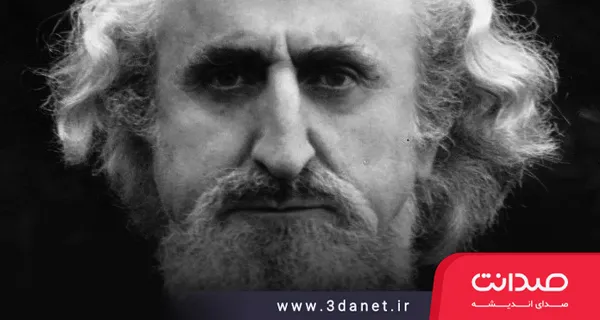
«ارزش انسان در مواجهه با امر مطلق است»،
گفتوگو با فریتهوف شوآن در باب معنویت، هنر و نخستینگی[1]
ترجمهی طاها عبداللهی
گفتگوی پیشِرو آیینهای است برای شناختِ اجمالی آرا و نظراتِ فریتهوف شوآن (1907-1998) عارف، دینشناس، فیلسوف، نقاش و شاعرِ سوییسی، در باب دغدغههای اصلی سنتگرایان، یعنی متافیزیک، هنر و زیبایی. تا جایی که صاحبِ این کیبورد تفحص کرد، زمانِ و مکانِ این گفت و گو ذکر نشده و سایتِ رسمی شوان، آن را بدون توضیحات بیشتر در باب منبع اصلی این مصاحبه منتشر کرده است. [2]
شوآن علاوه بر آنکه به وحدت درونی ادیان باور دارد، آن را بر متافیزیک نیز منطبق میداند، همچنان که زیبایی و هنر را در نسبت با آن حقیقت متافیزیکی تبیین میکند.
اگر چه آرای شوآن ریشههای دینی دارند، اما قرائتِ شوان از دین، فاصلهای بس زیاد با قرائت فقهی-کلامی از دین دارد. او با آنکه مسلمان است، به خلافِ انحصارگرایان قائل به حقانیت انحصاری دینِ اسلام نیست و حق را در هر لباسی میشناسد.
شیخ عیسی نورالدّین احمد[3] آلمانی زبانی که به فرانسوی مینویسد و به انگلیسی مصاحبه میکند و به ایتالیایی شعر میسراید، درویشی از بلادِ سوییس که آرامِ دل را در الجزایر میابد، نقاشِ مؤمنی که آثارِ هنریاش را باید از ترس رسوایی برهنهنگارانهاش در ته گنجه پنهان کرد، مسلمانی که آیین هندو را خالصترینِ ادیان میداند[4] دینشناسی که با سرخپوستان فلوت مینوازد و با هندوان سرود میخواند و با مسیحیان، پدر آسمانی را تقدیس میکند و همراه بوداییان به سکوت مینشیند.
گویا خودِ شوآن نیز مجموعهای از تضادها و تناقضهاست که ذیلِ سنتگرایی به وحدتی متعالی میرسد.[5]
معنویت
پرسش:شما بیش از بیست کتاب درباره دین و معنویت نگاشته اید. اولین کتاب شما وحدتِ متعالی ادیان[6] نام داشت. این وحدت را چگونه باید فهم کرد؟
فریتهوف شوآن: نقطه شروع جستوجوی ما، اذعان به این حقیقت است که ادیان گوناگونی وجود دارند که یکدیگر را طرد میکنند. این طردگری بدان معناست که یک دین درست و تمام ادیان دیگر غلط هستند،[7] این همچنین میتواند بدان معنا باشد که همه ادیان غلط اند.[اما] در واقع، تنوع ادیان بدان معناست که همه آنها درست هستند، نه در انحصارطلبی جزماندیشانهشان، بلکه در معنای اجماعی درونیشان که با متافیزیکِ نامشوب یا، به عبارت ِ دیگر، با حکمت خالده[8] انطباق دارند.
پرسش: ما چگونه میتوانیم دریابیم که این معنای متافیزیکی [همان] حقیقت است؟
ف.ش: نظرگاهِ[9] متافیزیکی مبتنی بر شهودِ خردمندانه[10] است، که بنابر طبیعتش خطاناپذیراست چرا که بصیرتی است برآمده از خردِ نامشوب، در حالیکه فلسفه نامقدس تنها با عقل و بنابراین با فرضهای منطقی و نتایج [آن فرضها] سر و کار دارد.
پرسش: این چنین است، بنیاد دین چیست؟
ف.ش: نظرگاهِ دینی، اعتقادی یا الهیاتی مبتنی بر وحی است؛ چنین نیست که هدف اصلی آن، توضیح طبیعتِ اشیا و یا قواعضد جهانشمول باشد، بلکه[هدف آن] نجات انسان از گناه و ملعنت [الهی] وهمچنین، برساختن تعادل اجتماعی واقعگرایانه است.
پرسش: با وجودِ دین –که ما را رهایی میبخشد- چه نیازی به متافیزیک داریم؟
F.S.: Because metaphysics satisfies the needs of the human being endowed with the gift of intellect. Metaphysical truth does not only concern the realm of our thinking, but penetrates our entire being; it is therefore far loftier than philosophy in its conventional sense.
Question: In the spiritual sphere, what does every human being need?
F.S.: Three things: truth, spiritual practice[11], and ethics. Unadulterated and revealed truth corresponds to metaphysics; religious dogmas are symbols of metaphysical truths; a deep understanding of religious symbolism is esoterism. Unadulterated metaphysics is latent in all religions.
Question: And what about worship?
F.S.: Spiritual practice is essentially worship. There are three forms of worship: first: canonical worship[12]; for example, the Lord's Prayer[13]; second: individual worship, the best examples of which are offered in the Psalms[14]; third: the contemplative prayer of the heart[15]; this is a mystical spirituality that requires specific conditions. The story of the "Russian Pilgrim"[16] provides an image of it; likewise the Hindu texts on Japa[17] Yoga, which is a methodical prayer.
Question: And what about ethics?
F.S.: After truth and spiritual practice, ethics is the third dimension of the spiritual life. On the one hand, ethics means responsible, wholesome, and generous conduct; on the other hand, it means the beauty of the soul, that is, inward nobility. In the absence of this quality, spiritual principles and spiritual practice will be sterile.
Question: You referred earlier to intellective intuition. Is it not the case that all human beings possess this aptitude?
F.S.: Yes and no. For the simple reason that man is man; in principle, everyone has the capacity for intellection, but in fact, intellective intuition—the "eye of the heart"—is, so to speak, hidden beneath a layer of ice, due to the decadence of the human species. We can therefore say that intellection is a gift, and not an ordinary human capacity.
Question: Is it possible to produce this higher intuition?
F.S.: There is no need to produce it; man can be saved by faith alone. But it is evident that a person who is very detached and gnostic has more intuition than a worldly individual.
Art
Question: May I ask what the role of art is in the spiritual life of man?
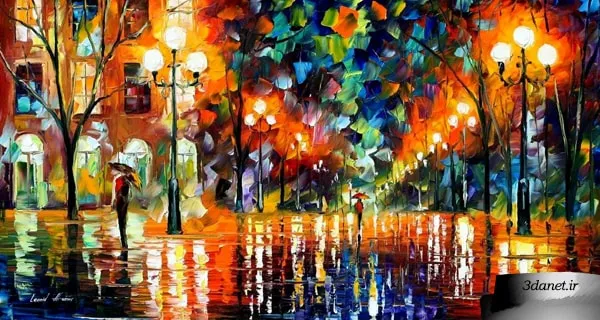
F.S.: We can say that after ethics, art—in the broadest sense—is a natural and necessary dimension of the human condition. Plato says, "Beauty is the splendor of truth."[18] Let us therefore say that art—which includes crafts as well—is a projection[19] of the truth and beauty of the world of Ideas. And precisely for this reason, it is a projection of archetypes. And in fact, considering interiorization, it is an exteriorization. Art is not only a means of dispersion, but also a means of concentration; a way of returning to God. Every traditional civilization has delineated a framework for beauty: a natural framework, necessarily surrounded by the environment, for the spiritual life.
Question: What are the criteria for understanding the value of a work of art? Its degree of inspiration?
F.S.: The archetypes of sacred art are inspired from Heaven; other works of art are inspired by the spiritual personality of the artist. The criteria for understanding the value of a work of art are: the content of the work, the mode of expression, its technique, and its style.
Question: Are there different criteria for evaluating different types of art, such as painting, sculpture, dance, music, poetry?
FS: No, the criterion [of evaluation] is not different for various types of art.
Question: Alongside beauty, there is something that some call the element of ambiguity, since [the element of ambiguity] can lead to worldly pride or forgetfulness of the Divine. What [do you say] about certain arts—such as music, poetry, and dance—where the element of ambiguity can be prominent?
FS: Painting and sculpture are more objective and dependent on thought, compared to poetry, music, and dance, which are spiritual and inward; therefore, the element of ambiguity is more manifest in these three arts.
Question: Could one claim that the Indian Darshana[20] perspective has been useful for the experience of art and beauty?
FS: Of course, the Indian Darshana perspective employs every kind of sensory and artistic experience, but in this case, it involves not only the sense of sight but also mental and auditory perceptions.
Question: Could one say that there is an inherent connection between beauty in the general sense and esoterism[21]?
FS: Yes, there is a connection between beauty and esoterism, because "beauty is the splendor of truth." Traditional art is esoteric, not exoteric. Exoterism tends toward morality, not beauty; exoterism may even come into conflict with beauty due to moral prejudices.
Question: Is it correct to say that esoterism, in the context of art and beauty, claims the right to transcend exoteric limitations?
FS: In truth, esoterism claims the right to transcend exoteric prohibitions, but in reality, esoterism rarely uses this right. However, it has occurred in cases such as the Sama of the dervishes and seemingly shameless Tibetan paintings.
Question: Alongside the "fine arts"—for example in Japan—there are [activities] like the art of flower arranging[22], the tea ceremony, and even martial arts, which are known (or were known initially) as spiritual manifestations of nature. How can an "everyday" activity like making tea be a means for spiritual blessing (grace)?
FS: The Zen arts—such as the tea ceremony—crystallize acting in the manner of the Buddha, or let us say, the primordial man. The Buddha never wielded a sword, but if he had, he would have acted like a Zen master[23]. Acting in the manner of the Buddha—even in the capacity of preparing tea—means conforming something to the Buddha-nature, which is a path open to inner enlightenment.
Question: Modern art is not traditional. Does this mean that a modern work of art is necessarily bad?
FS: No, because a modern work of art—modern in the broadest sense—may manifest various qualities depending on the content, as well as the conception [of the artist] and also the artist [himself]. Some traditional products are bad, and some non-traditional products are good.
Question: What does art mean for the artist himself?
FS: By creating an authentic work of art, the artist [in reality] works on his own soul; to some extent, he creates a sample of himself. Therefore, engaging in any art is a path to self-knowledge, whether in principle or in fact. The artist may not knowingly be influenced by insignificant or even negative subjects, but he works on authentic and profound subjects with his entire being.
Primacy
Your book, The Feathered Sun, speaks of your attachment to the American Indians. May I ask the reason for this attachment or inclination?
F.S.: The Indians—and especially the Plains Indians[24]—have much in common with the Japanese Samurai, [the very] ones who practice Zen spirituality extensively. Ethically and aesthetically, the Plains Indians are among the most remarkable peoples in the world. Distinguishing between "civilized people" and "savages" was one of the great errors of the nineteenth century, [whereas] there exist far more real and important distinctions; obviously, "civilization" in its usual sense is not the highest human value, nor is the term "savage" befitting of the Indians. What constitutes a human being's worth is neither these worldly cultures nor human practical or creative intelligence, but rather his approach in confronting the Absolute. And one who has an understanding of the Absolute never forgets the connection between man and virgin nature, for nature is our root, our natural origin, and God's most luminous message.
For the Arab historian, Ibn Khaldun, an important condition for [the realization of] a realistic civilization is the alignment of the Bedouins and the city-dwellers. This means [the alignment of] nomads and settlers, as well as innocent children and the representatives of complex cultural values.
Question: Your art books, "The Feathered Sun" and especially "Images of Primordial and Mystic Beauty" deal with the enigma of sacred nudity[25]; can you briefly state the meaning of this perspective (sacred nudity)?
F.S.: Sacred nudity—which plays an important role not only among Hindus but also among the Indians—is founded upon the allegorical correspondence between the most macrocosmic and the most microcosmic [dimensions of human existence]. Hence the body is viewed as the "outward heart," and the heart, in turn, is engaged in absorption, as if it were a physical projection; [in nudity] "the farthest points [of the macrocosmic and microcosmic dimensions of human existence] meet." In India, it is said that nudity is the outward embodiment of the flashes of spiritual penetration. And also, especially feminine nudity, which is a manifestation of Lakshmi[26], has a beneficial influence on the environment. To put it very generally: nudity expresses and objectively realizes the return to the essence, the origin, and the archetype, and hence is a return to the celestial state, "and this is why, naked, I dance," as Lalla Yogishwari, the great Kashmiri saint, said after finding the divine essence in her heart. Undoubtedly, there is a semi-official (de facto) ambiguity inherent in nudity, and this is due to the passionate nature of humankind.
But [in nudity] it is not only the passionate nature [of man] that is involved, but also the gift of contemplation, which can neutralize passion, something that is precisely true of "sacred nudity." In the same way, [in nudity] it is not only the seductiveness of appearances that is at play, but also the metaphysical radiance of phenomena, which allows man to understand the archetypal essence through sensory experience. When Saint Nonnus observed Saint Pelagia entering the baptismal pool naked, he praised God for having placed in human beauty not only a vehicle for the fall but also a platform for ascent toward God.
Message
Question: What is your message to humanity at large?
F.S.: Worship. To be human means to be connected to God; life without this has no meaning. Of course, to worship, beauty must also be added; for we live among forms, not among clouds. First, the beauty of the soul, and then the beauty of the symbols around us.
Question: You spoke of metaphysics. May I ask what the import of the perennial wisdom is?
F.S.: In truth, the meaning of metaphysics is the discernment between the Real and the apparent or illusory, in Vedantic terms [the discernment between] Atma and Maya[27], the celestial and the terrestrial. Metaphysics also deals with the roots of Maya in Atma, which is the manifestation of the Divine, God the Creator in His theophany—and then relates to the manifestation of Atma in Maya—which includes all that is good and positive in the world. And this is essential: metaphysical knowledge requires profound intellectual, spiritual, and moral understanding; insight demands recollection, meditation, and unity. Thus, the metaphysical perspective is not philosophy in the modern sense of the word, [but] something intrinsically sacred. Sanctity is a necessary condition for metaphysical perception, just as it is for every spiritual path. For the American Indians, as well as for the Hindus, everything in nature is sacred; modern man must learn this, for we are facing an environmental problem in the broadest sense. [In the realm of sanctity] the first condition of the path is worship, and then a return to nature! One might object that [to return to the realm of sanctity] it is already too late, [but in any case] now every individual is responsible for his own work—and not for the work of others—for each person is responsible before God and can observe the requirements [for the elevation] of his immortal soul. The first step toward a return to nature is respect. Respect for form and essence; respect creates a space in which worship settles in the human soul, for respect is participation in the Truth of truths.
.
.
[1] Primordiality
[3] The name Schuon adopted after embracing Islam.
[5] I sincerely thank my masters, Dr. Yaser Mirdamadi and Babak Rajabi, masters (in truth) and brothers (in the path), for refining and editing this text before its publication.
[6] Translated into Persian by Dr. Abdolrahim Govahi and published and distributed by Naqd-e Farhang Publications.
[7] Religious exclusivism.
[8] philosophia perennis
[9] perspective
[10] intellectual intuition
[11] spiritual practice
[12] canonical prayer
[13] A prayer that, according to Christian tradition, Jesus Christ taught his followers, found in the Gospel of Matthew, chapter 6, verses 9–13, and the Gospel of Luke, chapter 11, verses 2–4, emphasizing the teachings of Jesus Christ (peace be upon him) on the Kingdom of God. (Descriptive Dictionary of Religions, Abdolrahim Govahi, p. 509).
[14] The Psalms of David; a part of the Old Testament containing religious hymns.
[15] contemplative prayer of the heart
[16] Translated by Mr. Shahriar Moshiri and published and distributed by Agahan-e Ideh Publications.
[17] The repetition of God's name, which Hindus perform as a devotional act (Descriptive Dictionary of Religions, Abdolrahim Govahi, p. 437).
[18] Beauty is the splendor of the true.
[19] projection
[20] In Hinduism, it refers to a philosophical (intellectual) system. (Descriptive Dictionary of Religions, Abdolrahim Govahi, p. 241)
[21] esoterism
[22] For information on the method of flower arranging in Zen Buddhism, see Zen in the Art of Flower Arrangement, Gustie L. Herrigel, A. Pashaei, Fararavan.
[23] For information on the method of Zen masters in martial arts, see Zen in the Art of Archery, Eugen Herrigel, A. Pashaei, Fararavan.
[24] A group of Native Americans who lived on the plains and were composed of various tribes.
[25] Sacred nudity
[26] The goddess of wealth and fortune in Hinduism; she is the consort of Vishnu.
[27] See
In the Face of the Absolute by Frithjof Schuon
.
.

Discussion1 comments
سپاس بسیار از معرفی چنین انسان متعالی و بزرگواری و معرفی اندیشه او.