Philosophy
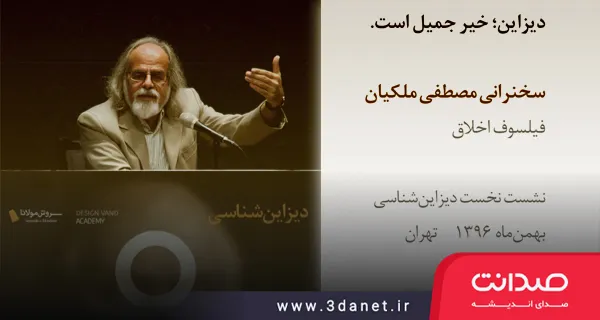
Mostafa Malekian's Lecture: 'Art, Ethics, and Freedom'
To perfect their work, the artist must be free and unafraid of external constraints. Political power and public opinion are the main threats, but resistance depends on the artist's will and the value they place on their art; a report on a lecture by Mostafa Malekian.
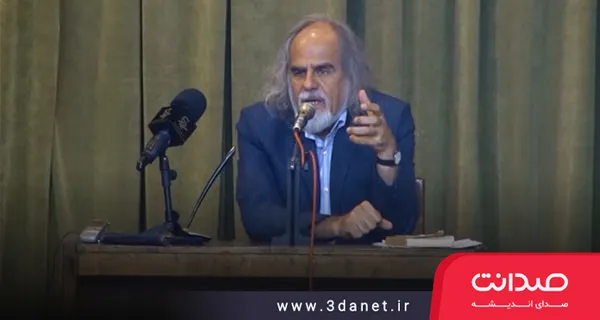
Here, by art, I mean both written and non-written arts. Thus, poetry, novels, novellas, plays, and so on fall within this discussion. What is meant by art, apart from literature, includes:
dance, music, painting, sculpture, architecture, photography, theater, and cinema. The totality of these eight non-written arts and literature, under the banner of art, will be discussed here.
When a person is called an artist, they are involved with several of the eight phenomena that will be mentioned. Sometimes when art is spoken of, what is meant is the artistic spirit. The artistic spirit is a spirit in which beauty has prominence and salience over other values. How many human values there are is a matter of dispute, but there are seven human values that can be said to have been accepted throughout history.
These sublime human values are:
1) Truth or veracity
2) The Good or goodness
3) Beauty or the aesthetic
4) Justice
5) Freedom
6) Equality
7) Fraternity
There is no consensus on the number of these human values, but thinkers throughout history have always presented a number of these seven values as the sublime human values. In every human being, one of these values may be prominent. For example, there is a person for whom truth is the primary value. This individual, in fact, possesses a scientific spirit, meaning that truth holds more value for them than other values. There are human beings who consider justice the most prominent of these values. Most social reformers fall into this group.
The eight phenomena with which the artist is involved are:
1) The artistic spirit
The artistic spirit is a spirit that considers beauty and the aesthetic the most valuable of values. One of the phenomena present in the life of an artist is the artistic spirit.
2) Artistic teaching and training
The second phenomenon is artistic teaching and training. Artistic teaching and training is distinct from the artistic spirit. A person may possess the artistic spirit, but life circumstances may not permit them artistic teaching and training.
3) Artistic learning and cultivation
The third phenomenon is artistic learning and cultivation. This phenomenon is the inverse of artistic teaching and training; it is the human act of being an artistic apprentice.
4) Artistic production
Artistic production is, in fact, the artistic process. When a person begins to make a sculpture or to create a building with architectural art, this process commences.
5) The work of art
The result and product of the fourth phenomenon, which is artistic production, creates the work of art.
6) Presentation of the work of art
Presentation of the work of art means placing the work of art before public perception. Most artists place their work of art in the view of others.
7) Critique of the work of art
Viewers of the work of art usually critique the work of art as well. Critique encompasses both the strengths and weaknesses of the work of art.
8) Promotion of the work of art
In the life of every artist, a number of these eight phenomena exist.
For these eight phenomena, the individual must necessarily be an artist. But for the trade of artworks or the establishment of art exhibitions, it is not necessary for the person to be an artist. Someone who possesses none of these 8 phenomena is not an artist.
Among these eight phenomena, one of them, which is the artwork itself, is not human but an object, while the rest pertain to human states. Therefore, the artwork can be separated from the human being. If the artist dies, their artistic spirit dies with them, but the artist's artworks remain after their death.
Since the intention is to address the connection and relationship of art with ethics and freedom, the artwork will not be discussed, because it is a non-human phenomenon (meaning it is not a state of the human being itself), and speaking of ethics in relation to it is meaningless.
Ethics and freedom pertain to the human being, but only where human will is concerned. If a phenomenon is human, but the will has no influence upon it, one cannot speak of freedom and ethics. Hence, the artistic spirit is also excluded from the discussion, as it is fundamentally not a matter of volition.
Ultimately, the aim is to determine the connection and relationship of 6 phenomena from the world of art with freedom and ethics.
An artist must be free. That is, the artwork can only reach perfection when the artist, in the process of creating this artwork, is not placed within the limits and boundaries set for them by other human beings, and no coercion from other human beings is imposed upon them. The artist must not fear from outside themselves and must not feel enslaved.
The constraints that may be imposed on the artist by other human beings are diverse, but two of them are particularly lethal:
Political Power:
The ruling political power can, by enacting unjust laws, or by the unjust enforcement of just laws, or by both of the aforementioned, put the artist under pressure and deprive them of their freedom in art. With the deprivation of freedom, the human being censors what their artistic spirit demands of them.
Public Opinion:
Public opinion is also among the constraints that exert pressure on the artist from the outside and limits the artist in terms of freedom in art. Sometimes, contrary to expectation, this public opinion holds more power than political powers.
These two mentioned constraints, namely political powers and public opinion, often exist and cannot be eliminated, nor can they be prevented. But there is a point here, which is that if the artist is also a human being, they too cannot stop the artist. Political power and public opinion constantly try to place the artist within their desired framework, but whether they succeed or not depends on the artist themselves. The stronger the will and the higher the resolve of the artist, the less they will surrender to these external pressures and will pursue their own desire. The mere fact that political powers and public opinion exert pressure on the artist does not absolve the artist of their duty. The individual themselves is also obligated to continue their work and not bow to the demands of these two external factors. In fact, a struggle takes shape here between the individual and these forces of compulsion, where sometimes the individual and sometimes these external factors succeed. But for the person to abandon the field from the very beginning, to renounce their artistic spirit, or to be enticed, indicates that they do not, in practice, hold much value for their art.
A person defends their honor against violation, because they consider their honor valuable and spend everything they have to preserve it, and this effort to protect honor is due to the value they place upon it. The artist, too, defends their art to the extent that they consider it valuable.
Just as political rulers know the value of their political power and exert power with all their being to preserve it, the artist must also know the value of the blessing called art within themselves and strive to establish it.
The same dynamic holds true in the face of public opinion. Public opinion, like political powers, exerts pressure. The artist must rise to combat these external factors, and it is evident that one cannot claim victory in every struggle, but the possibility of not winning a struggle does not mean abstaining from the struggle itself.
In addition to freedom, an artist also needs to possess ethical precepts for themselves and remain committed to them. Ethics is not a matter of imitation; a person must intuit that a rule, principle, or precept is ethical for it to become binding upon them; otherwise, that principle is not ethically binding. Ethical systems are not like administrative offices that issue regulations and expect them to be implemented. In truth, a person must feel that lying is an unethical act. This feeling is also interpreted as ethical intuition or moral conscience. Ethics must well up from within a person and overflow, not be injected into them from the outside—whether that external factor be religion, ideology, public opinion, or anything else.
The artist must have both a theoretical and practical commitment to ethical precepts.
When we speak of freedom, it means preventing external factors from ruling over the human being. And when we speak of ethics, it means preventing inner vices from dominating the human being. These inner vices include excessive love of wealth, misplaced loves and hatreds, and extravagant lusts and desires. The artist must strive not to take orders from their inner vices. If a person disregards their ethical intuitions and fundamentally lacks commitment to ethics, they have squandered their artistic talent, for art flourishes when an individual integrates their being and does not act contrary to their ethical intuitions.
Freedom is liberation from external shackles, and ethics is liberation from internal shackles. In the parlance of the ancients, 'freedom' (āzādī) means liberation from external factors, and 'liberality' (āzādegī) means liberation from internal factors. Therefore, the artist must possess both freedom and liberality. If a person is captive to popularity, fame, and wealth, they lack liberality, even if they are free.
Ethics and freedom from public opinion and political powers are both forms of freedom, but one is freedom from external factors and the other is freedom from internal factors.
The reason political power and public opinion can influence an individual is that the individual lacks liberality (inner freedom). Political power, through threats and enticements, tries to bring the artist under the sway of its commands. Through threats, they try to take away what the individual possesses, and through enticements, they try to give them what they do not possess. When the artist is neither overly attached to what they have nor overly eager to acquire what they lack, threats and enticements have no effect on them. In reality, when political power overcomes an individual, it exploits the individual's inner weakness and lack of liberality to impose its own taste. Political power threatens to strip away a person's fame, popularity, and wealth, to disgrace them, to invalidate their academic credentials, to deprive them of civil liberties, or to take their life. If a person is attached to none of these things, can political power still threaten them? Certainly not. If a person's heart is not set on their fame, the threat of obscurity becomes ineffective. The same applies to enticements. Thus, threats and enticements are only effective when a person lacks liberality, and the secret to preserving freedom is preserving liberality. A society or an individual loses their liberality (inner freedom) before they lose their political freedom.
Why does the artist need to be free from inner and outer bondage?
When the artist is free from inner and outer bondage, they become a suitable channel for the display of beauty, and when an individual's existence lacks freedom and liberality, the beauty displayed by that individual becomes distorted. Suppose a machine has been invented whose function is to take straight nails from one side and deliver bent and crooked nails at its output. Now, if one day a nail enters the machine and at the output, the nail remains straight, what conclusion should be drawn? The conclusion is that the machine did not perform its function, as if it had been turned off. All the bounties of existence are like this: they reach human beings whole and perfect, become distorted within our being, and emerge unhealthy at the output, unless the human machine has been turned off. Beauty, justice, goodness, freedom, equality, and fraternity are delivered to human beings from existence. It is the human machine that distorts these and makes them unhealthy. This machine must be turned off. In fact, the input (input) and output (output) of the machine must be identical, and this is achieved when the machine is turned off. The turning off of the individual's machine means that the individual extinguishes and suspends their ego (ego) and self-centeredness. When the machine of the artist's egoism and self-centeredness has been turned off, they re-present beauty exactly as they receive it from existence, in a pure and unadulterated form. When an individual's self-centeredness and narcissism are active, they develop negative prejudices toward others who are not like them, and toward their own beliefs they become dogmatic, rigid, fanatical, intolerant, wishful-thinking (I like A to be B, therefore A is B), and averse to reasoning. When an individual refuses to provide reasons and considers themselves above having to offer arguments for their words, they are afflicted with narcissism. All politicians and founders of religions, schools, and sects are at risk of narcissism. If the artist's narcissism is active, they will transform the purest aesthetic experiences into a party, ethnic, or racial manifesto.
If an individual is a true artist, they will remain far removed from many vices and impurities. Initially, a person may have no intention of being ethical at all, but in order to be a true artist and reflect beauty exactly as they receive it, they need to be ethical. That is, to the extent that artists are artists, they do two things: first, they transmit beauty, and second, they make society purer through their very existence.
These words also hold true for those who possess a scientific spirit and a quest for justice.
The woman who was the leader of the opposition in Burma, before assuming power, presented a justice-seeking persona in interviews, speeches, and writings. After her victory and ascension to power, she witnessed the burning and mutilation of Muslims by extremist Buddhists and remained silent. Why did she remain silent? Because she had acquired power and had become enamored with it, and out of fear that her power might be shaken if she opposed and condemned this inhumane act, she chose silence.
Therefore, the corruption of the ruling political apparatus or the corruption of public opinion is no justification for self-exoneration. Every individual can be an antidote to the poison of the corruption of power and corrupt public opinion.
.
.
Video of the Lecture 'Art, Ethics, and Freedom'
.
Audio of the Lecture 'Art, Ethics, and Freedom'
Download from Server 1 | Server 2 11.5 MB
PDF File of the Lecture 'Art, Ethics, and Freedom'
Download from Server 1 | Server 2 0.5 MB
.
.
Mostafa Malekian's Lecture: "Art, Ethics, and Freedom"
University of Art – 30 May 2017
Text source: Mostafa Malekian's Telegram Channel
Video source: Simafekr
.
.
Discussion1 comments
درود بر استاد ملکیان.. حرف نداشت.. خدا عمر طولانی بهتون بده <3