Philosophy
A Lecture by Mostafa Malekian: Violence, Hatred, Freedom, and Justice
Drawing a distinction between the 'violence of love' and the 'violence of hatred,' Mostafa Malekian stresses that the violence of hatred is incompatible with freedom and justice. The realization of an ideal society depends on cultivating a selfless, active love that demands sacrifice.
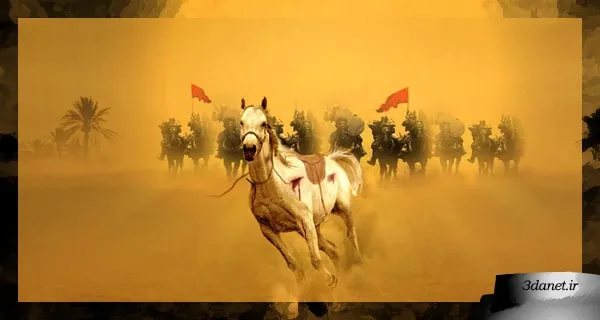
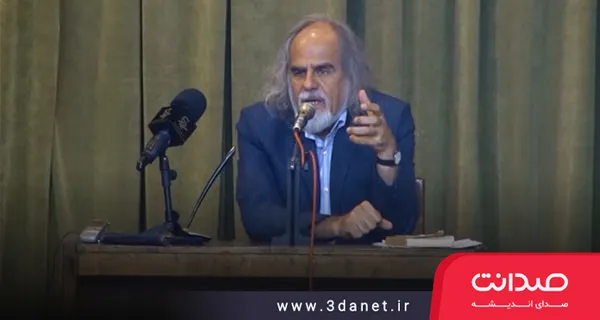
In Bahman 1384 (February 2006), coinciding with the days commemorating the martyrdom of Imam Hussein (AS), Mostafa Malekian delivered a lecture at Hosseiniyeh Ershad entitled “The Violence of Love,” which he later expanded upon in Esfand of the same year during a seminar on “Iran, Justice, and Freedom” under the title “Violence, Hatred, Freedom, and Justice”; the text of this lecture is presented below:
The points that will follow in this writing essentially convey three general themes. The first theme is that, psychologically and ethically speaking, there is violence in both “love” and “hatred.” Therefore, we do not only have “the violence of hatred,” meaning violence arising from hatred, but a kind of “violence of love,” meaning violence arising from love, is also conceivable, even though it seems paradoxical that love could generate violence. What is meant here by the violence of love is a two-sided violence: first, the violence that the lover, by virtue of being a lover, inflicts upon themselves, and second, the violence they perpetrate against their beloved.
The second theme is that the violence of hatred is of two types. In other words, we witness two kinds of violence of hatred in the arena of history and within our own inner realm: first, the violence of hatred in the sense of violence whose origin was hatred from the very beginning. The violence of figures like Stalin, Pol Pot, Hitler, and Saddam is violence that arose from the heart of hatred from the outset. The second type of violence is violence that was not initially the violence of hatred, but rather the violence of love. However, this violence of love became conjoined with ignorance of the realities of the human world and, as a result, transformed into the violence of hatred. That is, initially I was a lover of my beloved, but because I was ignorant of human realities, my violence of love towards my beloved gradually turned into the violence of hatred. It must, of course, be noted that these two types of violence of hatred are no different from one another in terms of their effects and consequences. That is, both of these types of violence of hatred are ruinous; both for the lover and for the beloved, though they are more ruinous for the beloved.
The third theme is that the violence of hatred is incompatible with both “freedom” and “justice.” I must emphasize this point: even if we accept the view of thinkers like Isaiah Berlin, who said that “human values are ultimately irreconcilable with one another,” we must still say that the violence of hatred is incompatible with both freedom and justice. If we accept Isaiah Berlin’s view, then the presupposition of our discussion will be that, ultimately, an incompatibility sometimes arises between freedom and justice. In other words, this presupposition means that sometimes, as an “agent” and sometimes as an “arbiter,” we have no choice but to either sacrifice freedom for justice or sacrifice justice for freedom.
Now, if we accept this presupposition—which, of course, one may not. That is, let us assume that Isaiah Berlin’s view is correct and that there is, ultimately, a kind of incompatibility among final human values, and consequently, an incompatibility between justice and freedom, then the discussion revolves around which of the two, justice or freedom, should ultimately be chosen. To put it another way, we either encounter those whom we loosely call “socialists,” who believe that when freedom and justice are incompatible, one must side with justice and sacrifice freedom for it, or we encounter those whom we loosely call “liberalists,” who believe that in this conflict, justice must be sacrificed for freedom.
My point is that whether we are of a socialist disposition or a liberalist disposition, and to be more precise, whether we believe in the precedence of justice over freedom or the precedence of freedom over justice, in either case we must accept that the violence of hatred is incompatible with freedom and justice. Therefore, we can exercise the violence of hatred neither in the name of socialist ideas nor in the name of liberalist ideas, because the violence of hatred strikes both of these rivals equally. That is, it is detrimental to both freedom and justice.
The Difference Between the Violence of Love and the Violence of Hatred
Concerning when and in what situation human beings will have the conditions for a better and happier society, differing views have been put forward throughout the history of human thought and culture, and the common point of all these views has been the creation of a better human individual and a happier society. Some have thought that through “religion” a human society can be created. In the period of “modernity,” some have also thought that only through the dissemination of “democracy” is this success achieved. Some have also said that the realization of a “global economic organization” that looks equally upon all human beings in the distribution of material, livelihood, and welfare resources will create a desirable situation. Still others have imagined that only through greater cultivation and scientific and academic education, and the ever-wider dissemination of literacy and knowledge, will the desirable situation come about.
Here, I intend to put forward the claim that the sole path to forming an ideal human society is to attain a kind of “non-egoistic and at the same time active love,” and this path, although the most difficult path to reaching the desirable human society, is at the same time the only possible path to reaching that ideal. The other paths that have been proposed for the realization of the ideal human society, although they can be necessary conditions for this purpose, are not sufficient conditions for reaching our intended goal. To reach a desirable society, we must, little by little, cultivate within ourselves a kind of non-egoistic and active love toward our fellow human beings.
I mean attaining a love that does not seek its own benefit and the satisfaction of its personal interests, and whose focus of attention is outward, toward others. This love, however, besides being non-egoistic, is also active. It is not a passive love, and for its satisfaction, it requires external actions. In other words, it is a love accompanied by benevolence and aid to other human beings.
Many of those who discuss matters in the fields of social psychology, ethics, sociology, and political thought have emphasized this point: that for reaching a desirable society, cultivating such love in the human being is necessary and essential. If we want to look upon other human beings as ends and goals, and not as means and instruments; if we want not to think that other human beings are a ladder for our advancement and ascent, we need a way of thinking that is founded upon external benevolence. By the necessity of our inner love for other human beings, and to achieve this desirable goal, there is no way but to help them, and this external helping certainly requires self-sacrifice and renouncing power, wealth, social standing, status, rank, fame, popularity, and the like. Renouncing these desires is, of course, not pleasant for any ordinary human being, and no human being is easily willing to renounce wealth, power, standing, status, rank, fame, popularity, comforts, and even, in some cases, their own knowledge for the well-being of others.
I call this unpleasantness of “benevolence born of love” the “violence of love.” When we love other human beings, life will naturally be harsh for us, and the love that draws us into a difficult, arduous, and toilsome life will, by its nature, also be a violent love. Those who are people of spirituality, whether those who are theoretically acquainted with spirituality or those who are practically engaged in spiritual practice, believe in a series of matters that they call the “paradoxes of spirituality.” The paradoxes of spirituality are paradoxes that every spiritual human being, sooner or later, encounters in their spiritual life. These paradoxes appear contradictory to a person who is not spiritual and loving, although in their inner reality they are not contradictory. Scholars of ethics, mystics, and those who engage in the “psychology of spirituality” have enumerated these paradoxes of spirituality.
Among the most important of these paradoxes is the one called "peace with the sword." The spiritual person, at a stage of life, feels that peace can only be attained with the sword. Jesus Christ also spoke of this peace with the sword. Another paradox is "life in death," which requires that you cannot gain life until you lose it, and life is impossible without dying. Another famous paradox is the "wisdom of fools," according to which fools possess a kind of wisdom from which even the wise sometimes benefit. "The strength of weaknesses" is another of these paradoxes. It is said that many of a person's weaknesses are their points of strength, and if these weaknesses did not exist in a person, certain strengths would not have emerged in them either. These are weaknesses whose absence is a weakness. Among these paradoxes, one is also the "violence of love."
Love, on the surface, has nothing to do with violence, but as was explained, for benevolence toward other human beings, enduring this violence is necessary and inevitable. In contrast to the violence of love stands the violence of hatred, and if in the "violence of love" this violence is directed at one's "self," in the "violence of hatred" this violence is directed at the "other." The loving person desires unpleasantness for themselves. This violence toward the self, which arises from a great affection for other human beings, is the "violence of love."
The violence of love, in this sense, is nothing other than sacrificing all of my own pleasures at the altar of my affection for other human beings, and it is this very violence of love that brings Imam Ali to the point of saying that if a mountain were to love me and wish to participate in this way of life I have chosen for myself, it would inevitably crumble just like me. Or, for instance, this expression appears several times in the Upanishads: "the harsh but healing tenderness of love." Also, in the expressions used by Rumi, the violence of love is seen:
Love, from the first, was headstrong and bloody,
So that whoever is an outsider would flee.
It is also in the expressions of Hafez:
One pampered by luxury finds no path to the Friend,
Loving is the way of the rogues, who must endure calamity.
The "violence of love" in this sense is a necessary, inevitable condition for a humane life, and of course, this violence will also bear its fruit. As a result of this violence, a person, slowly, slowly, transforms within themselves into another human being, and society, too, will gradually, gradually, become a joyful society. The violence of love, which means renouncing pleasures, encompasses a vast circle, for our pleasures are diverse and numerous. We have physical pleasures because we have a body; we have mental pleasures because we have a mind; we have epistemic pleasures because we possess knowledge; we have emotional and affective pleasures because we have emotions and affections; we have need-based and desire-based pleasures because we have needs and desires; and finally, we have social pleasures because we live within society. Now, if we contemplate both the breadth and the depth of human pleasures, we realize how difficult and grueling this kind of sacrifice, that is, renouncing pleasures, truly is.
Europeans use the word sacrifice for offering something up, and they call a pure and holy life sacred. Christian mystics utilize this linguistic point and say that a holy life is called sacred because without sacrifice, this life cannot be attained. It is as if, for a sacred life, we must constantly sacrifice one thing for another.
We sacrifice our own pleasures for the pleasure of another, in order to reach the ultimate pleasure, which is love for humanity and preparing a life full of truth and overflowing with meaning for them. When self-sacrifice of such breadth and depth is spoken of, there is no doubt that one can also speak of "martyrdom" and consider it the pinnacle and ultimate limit of the violence of love. For when I forgo my entire physical being for the well-being of other human beings and accept martyrdom, I have embraced the highest degree of the violence of love. The result of this selflessness, as was said, not only leads to the well-being and benefit of others, but also causes another human being to be born within me; a human being who, in one sense, is the same childlike human within ourselves and is synonymous with a return to childhood and its innocence.
Martyrdom, in this way, while being the ultimate violence, is the most tender act one human performs for other humans, and it is regrettable that some equate martyrdom, which is the violence of love, with the violence of hatred. Many have interpreted the violence of love of the founders of religions and creeds as if it were the same violence of hatred. The founders of religions and creeds imposed a hard and difficult life upon themselves so that the well-being of others might be achieved, and what a pity that some analyze the efforts of these great figures as if they wanted people to be their servants, rather than themselves being servants to the people. There is no doubt that in this narrative, the violence of love is transformed into the violence of hatred.
Martyrdom, as the ultimate end and peak of the violence of love, is not the wish of someone who ascribes intrinsic, inherent value to the shedding of their own blood; rather, it is a necessity that spiritual human beings, at the height of their love for humanity, feel.
The violence of love is of two kinds. The first kind is the violence that, when I fall in love with human beings, I inflict upon myself because I have fallen in love with human beings. When I am in love with human beings, whether in love with a single human or in love with a number of humans, the first violence of such love is directed at the lover themselves. That is, when I am in love, there is no doubt that I inflict violence upon myself in various respects. For example, when I am in love with an individual, naturally, that individual's pain and suffering will be my pain and suffering, and to the extent that my love for them intensifies, my pain and suffering will increase, and perhaps my love for them may reach a point where their pain and suffering causes me more pain and suffering than it causes them.
For instance, the statement in the Quran addressed to the Prophet: "Grievous to him is your distress" means exactly this. That is, what causes you slight suffering causes him immense suffering. That is, the Prophet is more sensitive to you than you are to yourselves. That is, the sensitivity in figures like Buddha and Muhammad ibn Abdullah (PBUH) is very great, and consequently, the pain and suffering that befalls them is greater than the pain and suffering that befalls the people.
On the other hand, I cannot reduce the pain and suffering of my beloved merely by wishing for their pain and suffering to diminish; rather, I must take action. This "taking action" is a second pain and suffering that, again, befalls me. Because when I want to take action to reduce the pain and suffering of my beloved, I encounter a series of problems.
The third point is that my possessions, or in today's terms, my resources for reducing the pain and suffering of others, are always far less than the resources required to reduce the pain and suffering of all human beings. Therefore, I always know that even until the end of my life, I will not be able to see human beings who are without pain and suffering. This very notion that "pain and suffering is the tragic fate of my beloved"—meaning the ineradicability of this pain and suffering—causes an increase in my own pain and suffering. Therefore, there is no doubt that for these three reasons, when I am in love with human beings and love them, pain and suffering befalls me. This is the pain and suffering that love inflicts upon me, and in this sense, love commits violence against me, the lover. In other words, love is an executioner for the nature of the lover themselves. That is, the lover is always under the lash of their own love.
Another part of love's violence is directed at the beloved. That is, in addition to the lover's own suffering and pain, they may also inflict pain and suffering upon their beloved. If a person becomes an "ideal person," then what is "pleasing" to them is called their "best interest." Of course, the ideal person is not the perfect human spoken of in mysticism or literature; rather, in the view of moral philosophers, an "ideal person" is one who possesses all the information necessary for decision-making. Why does a child dislike brushing their teeth? Because they do not have all the necessary information about the positive effects and consequences of brushing and the negative effects and consequences of not brushing. But it is assumed that the parents who insist on the child brushing their teeth possess all the necessary information.
The ideal person in ethics is one who, for every action—whether it be a matter of commission or omission—has the necessary information. For someone who has this necessary information, whatever pleases them will be in their best interest. That is, their pleasure and best interest will coincide, and their displeasure and harm will also coincide. But the majority of us humans are not ideal, and consequently, our pleasure and our best interest move in two different directions.
Another example is when I pull my child away from the television on the night before an exam and send them to their room to study, thereby depriving them of watching their favorite movie. My child will certainly be upset, because it is not pleasing to them; even when they go to their room, they might harbor a thousand grievances and curses against me in their heart.
In this example, by what authority have I compelled my child, contrary to their pleasure, to do something else? Because I supposedly assume that there is information I possess that my child does not, and since this is the case, I have no choice but to assume that if my child had this information in an ideal state, they would make the same decision I am imposing on them. But, at present, they lack such information. The first interpretation one can derive from the distinction between "pleasure" and "best interest" is that pleasure is not always in one's best interest; only in the ideal person do pleasure and best interest coincide, and the ideal person is one who has knowledge and awareness of all the effects and consequences of their action. A second interpretation can also be used, which is that "pleasure" means "short-lived pleasure" and "best interest" means "long-lasting pleasure."
Of course, I myself prefer the first interpretation for reasons I do not wish to discuss now, although I also consider the second interpretation to be a good one.
That is, in reality, we have some short-term pleasures and some long-term pleasures. For example, when due to an illness they want to amputate a part of my body, even though the very act of amputating that limb is displeasing to me and not my pleasure, in the long run, amputating that limb is in my best interest. Therefore, it seems I distinguish between my pleasure and my best interest through the "long-term" or "short-term" nature of pleasures.
Now when a person is in love with another human being, they do not observe their "likes and dislikes" but rather their "benefit and harm." Why do parents become so upset seeing their child sitting in front of the television on the night of an exam and forcibly drag them to their room, even at the cost of upsetting them? Yet, regarding the neighbor's child, even though they know they are also watching television, they show no such sensitivity or distress? Because it is assumed that the parents' love for their own child is greater than their love for the neighbor's child, and consequently, the violence they inflict upon their own child is greater than the violence they would inflict upon the neighbor's child. That is, if their child were to ask, "Why, when the neighbor's child brings home a failing report card, do you not frown, or slap them, or shout at them, while you do these things to your own child?" they would then reply: "Because we love you more than the neighbor's child." This statement means that when I love my child, I inflict a violence upon them that I do not inflict upon someone I do not love. Likewise, I do not inflict such violence upon someone I love less. Therefore, the violence of love arises from the fact that the lover desires the benefit of their beloved, and because they desire their benefit, they consequently inflict violence upon them.
The violence of hatred is of two types: first, violence whose origin is hatred from the outset, and second, violence whose origin was not hatred initially, but rather stemmed from love, yet due to ignorance of human realities, it has transformed into the violence of hatred. The first type of violence of hatred, which is the work of the Stalins of the age, is not the subject of my discussion. Here, I want to address how a person who initially loves human beings and possesses the violence of love gradually sees their violence of love transform into the violence of hatred. The second type of violence of hatred is more prevalent in our times.
Suppose I am in love with you; consequently, I must consider your interests, not your likes. Then, when I inflict violence upon you, you resist me. For example, my child, when I want to send them to their study room, if they are able, will resist me. If they do not resist, it is because they lack the ability, but they still curse me inwardly and lament about me. That is, the other party will have some form of physical, mental, or psychological resistance toward me, even though I am in love with them and desire their benefit. Now, if I want the other party's resistance to disappear, I can do two things. Of course, both tasks are very difficult, and both entail much pain, suffering, hardship, trouble, and toil for me, the lover. The first task is to use my "reasoning power," or in Russell's terms, my "persuasive power," to bring forth arguments and be able to convince my audience, that is, my beloved, that I am right. Therefore, I must resort to persuasive powers. If resorting to persuasive powers is successful, then the likes and the interests of my beloved will coincide. Because my beloved has been able to become convinced. But reasoning is a very difficult task.
The most difficult task a human being can undertake in their lifetime is to bring an unbeliever to belief, or to strip a believer of their belief, solely through the force of reasoning. This is the most difficult task one can perform in social relations. Of course, other forces are often employed in this process. But if you can accomplish such a task using only the force of reasoning, you have truly done something difficult. That is, if we can convince someone who does not believe that "A is B" to believe that "A is B," or if we can use the force of reasoning to take away the belief of someone who believes that "A is B," then we have accomplished a difficult task. Therefore, if we wish for the well-being and the pleasure of our beloved to coincide, the first thing we must do is reason with them, but this reasoning is exceedingly difficult. To do this, the lover, in addition to the overflowing love they must feel for the beloved, needs two other things: one is a vast body of knowledge, and the other is a very high power of thought. But it is possible that, despite the lover's intense love for the beloved, these two things may be absent in the lover. The lack of these two things means I cannot convince the beloved through reasoning, and consequently, my beloved will remain fixed in their position.
The second task one can undertake, which is as difficult as the first, is to change the "existential threshold" of my beloved. That is, to bring them to a state where, without the use of reasoning, they understand what I am saying. This means altering the other person's existential threshold. Here, there is no reasoning involved:
One asked, "What is it to be a lover?" / They said, "Become like us, and you will know."
This saying means that if you have not become a lover like me, no matter how much I reason about what love is, you cannot understand it; and if you have become a lover like me, then you have no need for reasoning. Thus, until you become a lover, reasoning will have no effect on you, and once you have become a lover, you will be free from the need for reasoning. If I, as a lover, cannot perform either of these two tasks (reasoning and changing the existential threshold), yet my violence is still in the stage of the violence of love—meaning I want to act for your well-being, but I have been unable to prove this well-being to you through either of these two methods, while I still love you—this causes me to constantly pull you this way and that against your pleasure, and this act is against your pleasure. But if you have power, you will resist my action. Children may not be able to resist their parents, but this does not hold true for another nation. A nation can resist a single person. A person who wants to change a nation, assuming they were initially driven to this by the violence of love, will gradually see the violence of love transform into the violence of hatred. From their perspective, this nation lacks the properties of malleability, ductility, and impressionability. Such a person does not attribute the fault to themselves and does not imagine that the fault lies with them. Their state is like that of someone who does not realize their own folly, that you cannot teach a cat to dance. It was for this reason that I pointed out at the beginning of the discussion that if the violence of love is coupled with ignorance of human realities, it turns into the violence of hatred. In this example, the person is ignorant of the reality that the anatomy of a cat's body does not permit it to dance. That is, the person is ignorant of a reality in the world of cats, and consequently comes to hate their cat, and never considers that the fault is their own, namely, that they do not know that a cat cannot dance.
Many people in history have begun their work with love for humanity, and out of love for humanity they have not considered what pleases people but rather their best interests. But when they sought to do this, that is, to consider people's best interests, they could neither convince people of their best interests through the power of reasoning, nor could they alter the existential threshold of people, and as a result, they resorted to violence. This violence, up to this stage, was the violence of love, but from the stage where people showed resistance against them, they then addressed people, saying what wicked creatures these people are; we want to implement their best interests, but they resist us. They then continue that these individuals either have a problem in their 'seed,' or a problem in their 'morsel,' or have an innate wickedness, or their primordial nature has been polluted and tampered with, or the like. Such individuals, when faced with the reality that people are not what they wanted them to be, then hatred arises in their hearts. That is, the love that had driven them to violence on the first day, because of the resistance people have shown against them, turns into hatred, and they then engage in violence out of hatred. That is, they try to forcibly drag people toward what they themselves want, and this is something we must all pay attention to. Of course, not because any of us might one day become a political leader of a country, but even in our own relationships with our child, spouse, colleague, friend, student, teacher, and everyone we deal with in life, we must pay attention to this point: if I, out of love, want to draw you to the path I myself am taking, I must equip myself with those two powers; that is, either the power of reasoning or changing the existential threshold. Otherwise, you will follow me only as long as you cannot resist me, but as soon as you find the ability to resist, you will stand against me. This resistance within me, slowly, diminishes my love for you and increases my hatred toward you. Consequently, after a while, I come to hate people.
This is a reality that has occurred many times throughout history. 'Benevolent reformers' slowly, due to ignorance of human realities, turn into 'benevolent despots,' and slowly, the 'benevolent despot' turns into a 'malevolent despot.' Because anyone, when other people stand against them, gradually harbors hatred for them in their heart. This is a point that, as I have mentioned elsewhere, has been researched both in experimental psychology, in the branch of social psychology, and has been demonstrated by history. That is, this point can be proven both with historical methodology and with the methodology of the empirical human sciences; that is, with social psychology. Therefore, there is no alternative but that if a person wants people not to resist them and to move toward their own best interests, they must equip themselves with these two powers, or at least one of them. In other words, either have such an influence on others as to change the existential threshold of others—which has various methods—or use the power of reasoning. But does such hatred-driven violence succeed or not? I return to the example of my child and try to view everything through the lens and window of that example.
If I truly love my own child, there is no doubt that I must consider his best interest, not his pleasure. Yet at the same time, two points exist. If I am sincere in my love for my child, when I want to exercise violence against him and draw him toward his best interest, I must have satisfied two presuppositions: first, that I am certain that what I consider to be in my child’s best interest really is in his best interest. But where have I obtained such a presupposition? Consider the example of brushing teeth. Why do I exercise violence against my child? Because my child, say until the age of ten, does not understand this best interest, and consequently I must compel him to brush his teeth. Why do I permit myself such violence and deem it permissible against my child? Because an objective knowledge—that is, knowledge obtained in one of the branches of medicine—gives me objective certainty that brushing teeth is, on the whole, beneficial for this child. I must possess such certainty; not subjective certainty—that is, the certainty that I myself have. For everyone who believes in a superstition also has subjective certainty about that superstition.
Therefore, objective certainty is necessary, that is, the certainty that objective research, or better put, methodological research, has shown that the best interest lies in such a thing. Thus, the first presupposition I must have is that if I myself believe that my child’s best interest lies in brushing his teeth, I cannot content myself merely with my own belief; rather, objective research must also recognize such a right. Otherwise, it is possible that I might have compelled my child with violence for years to brush his teeth, but brushing might be harmful to teeth, and I might have been mistaken. So the first presupposition is that one may exercise violence against the beloved in a matter where an objective knowledge supports and backs me. The second important presupposition is that I must exercise violence in a matter where doing the act willingly or unwillingly has no effect on the outcome. As in the example of brushing teeth, whether the child is blessing his father or cursing his father—that is, whether he is grateful to him or reproaches him—whatever his state of mind, if he performs the act of brushing his teeth, the brushing will have its positive effect. That is, the positive effect of brushing does not belong only to those who perform the act of brushing with consent and willingness; rather, even all those who brush by force receive the positive effect of brushing. But not all acts are like this.
For instance, does praying by force also have the same effect? That is, whether a person prays willingly or unwillingly, will the prayer have the same effect? Here we realize that phenomena are apparently of two kinds: phenomena that, whether performed willingly (out of desire) or reluctantly (out of unwillingness), lead us to the result in both cases, and phenomena that exist which lead us to the result only when performed out of desire. Therefore, I must pay attention to this point: I have the right to exercise violence in those acts where the other party, whether willingly or unwillingly, whether with hatred or with love, whether he wants to or not, attains the positive effect of the act. But not all acts are like this. Those whose violence of love gradually turns into the violence of hatred do not pay attention to these two presuppositions. That is, firstly, they compel people to do things that they imagine are in their best interest, but there is no objective reason that the thing is truly in their best interest. Secondly, they compel people by force to do things where, even if a positive effect ensues, it does so only if the act is non-compulsory. That is, that positive effect ensues upon an act that is done out of consent and willingness, not an act done out of unwillingness and reluctance. Therefore, those who want their violence to remain the violence of love must pay attention to this point: if they want to exercise violence against their beloved, they must ascertain these two presuppositions. That is, firstly, they must ascertain that what they consider to be in their beloved’s best interest really is in his best interest, and ensure that they are not mistaken. Secondly, the act to which they compel the other party through force and coercion must be an act that reaches its result even through force and coercion.
Let us return to the example of the child who is deprived of watching television on the night before an exam. If we look closely, we see that this example departs somewhat from the matter of brushing teeth. Because brushing teeth, even when done without enthusiasm, still yielded the necessary result, but when we deprive the child of watching television and send them to the study room, it will no longer yield the desired result. Because if the child is wrestling with themselves internally, they will no longer have concentration and cannot understand the lesson well. This example brings us closer to the second type of phenomena, where although the act was done under compulsion, the desired result will no longer follow from it. Suppose I have forced you, by might and main, to perform prayers or to fast. Also suppose that my first presupposition is true, meaning it has truly been established by objective reason that prayer and fasting are in your best interest. But these two acts belong to the category of phenomena where, if not performed with consent and willingness, the expected positive effect is not obtained. Therefore, others should not be forced into such acts. Because if we exercise violence, we have both compelled the person to do something they are not satisfied with, and no benefit from that act has accrued to the individual. In fact, neither their pleasure has been attained, nor their best interest. Those whose violence of love turns into violence of hatred do not take these two presuppositions into account. If I want to combine these two points, it is as follows: on the one hand, it was said that we must demonstrate the benefit through objective reason, and on the other hand, it was said that what is meant by objective reason is "methodological" reason. Considering these two points, it must be said that in the violence of hatred, "ideological" reasons have taken the place of "methodological" reasons. In other words, in the violence of hatred, there is no reason that can be proven by a method of inquiry. That is, I have accepted this worldview, and you must accept the same.
At this point in my speech, I note that the violence of hatred in both cases—whether it is violence that was violence of hatred from the beginning, or violence that was initially violence of love and then turned into violence of hatred—is incompatible with both "freedom" and "justice." In other words, the violence of hatred, whether of the first type or the second, will have destructive effects and consequences. However, at the same time, the violence of the second type has more lethal effects and consequences. Because in the violence of hatred of the first type, we might perhaps be able to prevent the other party from violence through one way, and that is when we have the ability to overcome them. For example, when Hitler is in prison, he still possesses his Hitlerian characteristic, but since he lacks power, he can no longer exercise violence. The Saddam who is now in prison is the same Saddam, but he can no longer exercise violence. Therefore, there is a way to prevent the other party from violence.
The Incompatibility of the Violence of Hatred with Freedom and Justice
At this point in my speech, I note that the violence of hatred in both cases—whether it is violence that was violence of hatred from the beginning, or violence that was initially violence of love and then turned into violence of hatred—is incompatible with both "freedom" and "justice." In other words, the violence of hatred, whether of the first type or the second, will have destructive effects and consequences. However, at the same time, the violence of the second type has more lethal effects and consequences. Because in the violence of hatred of the first type, we might perhaps be able to prevent the other party from violence through one way, and that is when we have the ability to overcome them. For example, when Hitler is in prison, he still possesses his Hitlerian characteristic, but since he lacks power, he can no longer exercise violence. The Saddam who is now in prison is the same Saddam, but he can no longer exercise violence. Therefore, there is a way to prevent the other party from violence.
But in the violence of hatred of the second type, the person who commits violence, since their hatred is born of love, may believe in their path and consequently will persist in their position until the very last moment. In other words, in the second type you are dealing with an internal matter, and separating this internal matter from the person who is violent is far more difficult than the case where we want to deprive the violent person of external means. The incompatibility of the violence of hatred with freedom is very clear. Because every human being, according to their psychological constitution, desires that their freedom not be limited without cause. Neither the restriction of freedom nor the threat to freedom is compatible with the psychological constitution of us humans. In the words of thinkers like John Stuart Mill, it must be said that we have a "first-order desire" for freedom, and if we consent to the restriction of freedom somewhere, it is a "second-order desire." Therefore, our psychological constitution is a freedom-loving psychological constitution. Given this assumption, when a person commits violence against me and, under the pretext of expediency, drags me this way and that, they are in fact limiting my freedom. The incompatibility of the violence of hatred with justice is also clear. Because if I ask my child to brush their teeth and they ask me for an objective reason and I have no reason, then my child might tell me that they also have no objective reason for brushing their teeth, so neither should you nor mother brush your teeth. That is, neither the parents have an objective reason for their claim nor does the child, so for what reason should the child obey the parents? Why shouldn't the parents obey the child? Is not any preference without a preponderant reason incompatible with justice? In other words, if both your word and mine are without reason, then why should I obey you and you not obey me?
To put it more precisely, when x and y are in the same epistemic situation, that is, either the strength of their reasons is equal, or the weakness of their reasons is equal, or their lack of reason is equal; in all three states, "x must obey y" (when y has no epistemic preponderance over x) or "y must obey x" (when x has no epistemic preponderance over y), the obedience of either of these two to the other is a preference without a preponderant reason, and in all the various theories that exist about justice, this point is implicit that a preference without a preponderant reason is not just. Therefore, if a person tells me that for the sake of interests that I understand, but for which I have no objective reason, you must obey me, I will also tell them that instead of doing this, do the opposite. Because if a statement cannot be accepted without reason, then why should I accept your statement, and if someone's statement can be accepted without reason, why don't you accept my statement. This is in fact a "dilemma"; that is, neither side of it can be justified. Therefore, in my opinion, neither those with socialist leanings nor those with liberal leanings can commit the violence of hatred. In other words, the violence of hatred is incompatible with the theoretical foundations of both schools of thought. But, interestingly, we see that some people, either because their violence was the violence of hatred from the beginning, or because their violence was initially the violence of love and then turned into the violence of hatred, veil this psychological reality. In the sense that when they are asked to speak clearly and to substantiate their speech with reason, they resist. If we see that despots, throughout history, have never spoken clearly, it has not been by chance or accident. Clear speech immediately exposes the speaker to criticism. Hence, in order not to be exposed to the criticism of others, one must speak unclearly. In summary, since the violence of hatred is incompatible with both justice and freedom, and since the violence of love in many instances turns into the violence of hatred, let us be vigilant neither to sanctify violence nor to commit violence in defense of sacred things. A two-sided phenomenon that has unfortunately become the common currency of our time: "defense of the sacred by resorting to violence" and "defense of violence by resorting to the sacred."
.
.
Download the transcribed PDF of the lecture by Mostafa Malekian titled Violence, Hatred, Freedom, and Justice
.
.
Titled “Violence, Hatred, Freedom, and Justice” (main title) [alternative title: The Violence of Love, the Violence of Hatred] (March 2006; at the “Iran, Justice and Freedom” seminar, organized by the Islamic Association of Students of the Faculty of Management, University of Tehran, in cooperation with the Center for Studies and Research of the Office for Strengthening Unity)
.
.
Related Content:
Lecture by Mostafa Malekian titled The Violence of Love
.
.



Discussion1 comments
با تشکر از زحمات دوستان و به خصوص دوست بزرگوارمان جناب آقای رضا ایرانمنش گرامی, بخاطر نورافشانی شان در فضای فکری ما, همان طور که در نوشته ی بالا می بینیم، در اول نوشته، تاریخ این گفتار آمده است. این کار درستی است, مخصوصا که در همان صفحه ی اول هم انجام بگیرد. از همه ی دوستانی که منتشرکننده ی گفتار نامدارانی هستند که مرتبا در مورد موضوعات مختلف, نظرات شان مورد توجه و اعتنای عمومی است با تاکید می خواهم که در همان عنوان بیرونی, یعنی در همان صفحه ی اول سایت یا در کانال های تلگرامی ناشر این گونه مباحث، از همان اول کار، تاریخ ابراز گفتار یا نشر بار اول نوشتار را درست در کنار عنوان بگذارند تا تکلیف خواننده با سیر فکری گوینده روشن شود. همین الان من فایلی از آقای ملکیان شنیدم با صدای خود خود خودشان: عشق به خدا چیست؟ طبعا این فایل با خیلی از فایل های دیگری که از ایشان, می بینیم , بخصوص فایل های مناسبتی ی خاص، ممکن است زاویه داشته باشد. وجود این زاویه،هبچ ایرادی به هیچ کس وارد نمی کند. حالا اگر من این فایل را با یک فایل دیگر همزمان بخوانم, ممکن است دچار سرگیجه بشوم که این اولی چه کسی است که حرف می زند و آن دومی چه کسی. گذاشتن تاریخ بیان و تاریخ نوشتن هر مقاله, چه در سایت ها و چه در تلگرام, ما را از سرگیجه در می آورد که گوینده, در فلان تاریخ نظرش آن بوده و حالا نظرش در مورد همان موضوع, این شده و کمی یا به کلی تغییر کرده است. ممنون می شوم که این نکته, از سوی همه ی خوانندگان و تولیدکنندگان رعایت شود. با سپاس, کمترین