Philosophy
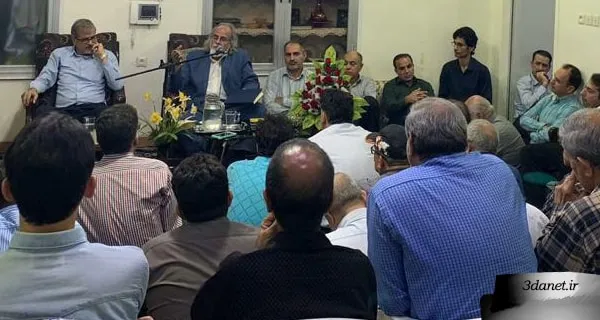
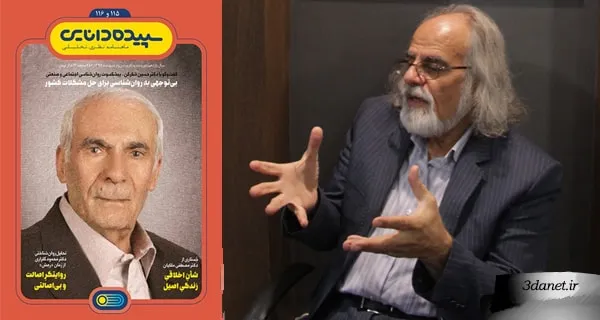
Mostafa Malekian's Lecture: The Successful Teacher
Mostafa Malekian defines a successful teacher as one whose students embody the seven traits of the ideal human being; the first is living an authentic life rather than a borrowed one. Using Socrates as an example, he says an authentic life means being aware of the weaknesses and unreasoned foundations of one's own positions.

Greetings to dear brothers and sisters, with respect and reverence to esteemed professors, and with a sense of delight at being in the presence of those who hold the lofty position of teacher in society.
I am utterly honored to be in the presence of teachers, in the presence of professors, and without any flattery I say that the greatest human dignity I have ever felt has been when I have sat before a professor, a teacher, and benefited. Without any exaggeration, I feel honored to be in your presence, and what I will say I consider a lesson I am giving back to my own teachers, and I hope they will view this lesson with a critical eye, and if any point seems contrary to the dictates of reason and argument, they will tell me. What has been asked of me, and my understanding of this invitation, has been to speak about "teaching" itself.
They certainly know better than I that one can speak of various dimensions of teaching and education, but today I will address only one point among these many points, and that is: who is the successful teacher, if we are to recognize them by their students? It is narrated from Jesus (peace be upon him) in the New Testament that a tree can be known both by its root and by its fruit. Today I intend to know the tree of the teacher by its fruit. Let us see what kind of teacher the good teacher is in terms of the students who are the fruits of this tree, and therefore I am not discussing teaching itself at all; I am only taking the effect that teaching has on the learners as the criterion for the success or lack of success of teachers. In my opinion, the successful teacher is one whose teaching fruits, that is, their students, we look at and find students who possess 7 characteristics, and these 7 characteristics, in my view, are a good criterion for distinguishing successful teachers from teachers who have not had much success in their work. These 7 characteristics, I believe, are the 7 characteristics of an ideal human being, a transcendent human being. Before I address these 7 characteristics, I will say this point: perhaps many of the things I say today will seem irrelevant to many dear ones, in the sense that it might be said that given the state our country's education system and higher education are in, these words are entirely irrelevant.
Given the situation we face regarding teachers, speaking like this is somewhat escapist, somewhat ignoring reality, somewhat unrealistic idealism. What can the enemy do when one comes to the battlefield holding a bouquet of flowers and basil? We do not hold bouquets of flowers and basil. Our field now is a field far more critical than this. You have points whose connection to reality is truly severed. I am fully aware that when our teachers, neither in terms of social status nor in terms of the legal treatment we accord them, have truly not sat in the rank they should; they have sat far below what they deserve. Such words seem poetic and perhaps seem fanciful, but at the same time, I have two apologies for this and two justifications and licenses for speaking this way.
One is that, well, there may be a teacher or teachers who say, despite these circumstances, we want to be exemplary teachers. They should at least know how their exemplariness can be envisioned from this perspective. It is true that most of us, due to those very issues, cannot be exemplary teachers, but still, there may be those who want to be exemplary teachers. That is the first point. And the second point is that even in this very social situation of ours today and in this very economic situation of ours today, we see exemplary teachers, and therefore, the mere fact that the economic situation is like this and the social situation is like this does not permit us to abandon our ideals. After all, exemplary teachers receive their salaries in the same country as non-exemplary teachers, and therefore they live exemplarily. For this reason, it seems to me there is no problem in presenting an image of the exemplary teacher in terms of the characteristics found in their students.
The first quality we must cultivate in our students is that they should lead an authentic life, not a borrowed one. This, in my view, is the most important characteristic of an ideal human being. Ideal human beings live authentic lives and turn away from any kind of borrowed life. To clarify my image of an authentic life, I will bring a few examples. With each of these examples, you will come a little closer to it. Socrates, the famous Greek philosopher, regarding the greatest trouble they had caused him and for which they later forced him to drink poison, used to say: Do you know why they made me drink poison and want me to be poisoned? Because I am the gadfly of society. What I do is what gadflies do. In fact, when a horse is standing at ease, if a gadfly lands on it, and if it lands on a spot that is a wounded place on the horse, the horse suddenly reacts. That is, when a gadfly lands on a horse, it shows the horse where its wounds are, where it is not as it should be, where it lacks the desired health. And in this regard, horses, by the number of gadflies that land and take off from them, know well the wounded places on their bodies. Socrates said I am just the same. Like a gadfly, I land upon society and show society: here you are doing something without reason; here you are doing something that, if I demand a reason from you, you have nothing to say. Well, when someone shows you that you are doing something without reason, taking a position without reason, living a life for which you yourself have no reason for its goodness, naturally it upsets you. And naturally, when they upset you, even though they have in fact done you a service, you take offense.
All those who show us our weak points are, in reality, such that they initially cause us pain, but ultimately act to our benefit. According to Socrates, where are our weak points? Socrates said our weak points are where we do something, perform an action, say a word, or take a position, and when asked "Why?", we say "We have been told so," "It has come down to us this way," "We have been commanded this way." This is where our weak point lies. He said I show you these weak points. I show you that most of the time, you have no reason for your reconciliations, you have no reason for your wars. In your customs and traditions, you are without reason. In your ethics, you are without reason. In your estrangements, you are without reason. In your reconciliations, you are without reason. If I ask why you have chosen this attribute, you are without reason. If I ask why you have chosen that profession, you are without reason. In fact, none of the positions you have taken throughout your life are positions for which you yourself have a reason; they are positions that have all come to you from others. And in Socrates' view, the greatest flaw of our life is that our beliefs are inherited. And I, Socrates, show you the inherited nature of these inherited beliefs—that you yourself have no reason for this action of yours; others have said it, you have inherited it from fathers, mothers, and others. And no inheritance is more disgraceful than inheritance in belief. No legacy is more shameful than legacy in belief. If we inherit anything else, it is without problem, but not if we have inherited our belief.
The distinguishing difference between human and animal is that the animal, by the decree of instinct, inherits everything, even its own opinions. But the human being must not inherit their belief. Inherit whatever inheritance you may, but do not inherit your belief. Choose every belief yourself when you see its reason as strong. Whether those before you have said it or not, have not said it. Socrates said: This is who I am, and because I am this, you become angry with me. Because I am this, I show you the wounds, I show you the points of your weakness. In fact, in Socrates' view, an authentic life is a life where a person first knows themselves why they have adopted this life. This is an authentic life. After Socrates, many people paid attention to this point, whose history I do not wish to recount to you now.
One instance of this Socratic thought appearing in Rumi's Masnavi is when, as you know, after enduring a period of hunger and finding no way to obtain food, he entered a city. He heard that the Sufi lodge was located in a certain place in Mashhad. In olden times, the Sufi lodge was a place for those who wanted to eat something without paying, find shelter, a place to sleep for the night, and so forth. He entered that Sufi lodge in order to finally get something. As it happened, the Sufis had not received anything for a while and were themselves suffering from hunger. When he entrusted his donkey at the door and went inside, the residents of that lodge, upon realizing a donkey had fallen into their hands, told the doorkeeper (the stableman) to sell that donkey and prepare some food with it so that we might eat something tonight. Then they began, chanting 'The donkey is gone, the donkey is gone, the donkey is gone,' with utmost joy, fervor, and delight. The stableman thought this act was wrong, to take and sell something that belonged to another.
He came to observe, to ask him (the donkey's owner), 'Sir, do you permit us to sell your donkey and have dinner tonight?' He saw that he, more than anyone else and with greater delight, was dancing and clapping more than any other, saying, 'The donkey is gone, the donkey is gone, the donkey is gone.' He thought, someone who says 'the donkey is gone' with such happiness and clapping must surely be not only content but indeed eager. He sold the donkey, they prepared dinner, and ate. The next morning, when [the donkey's owner] wanted to leave, he came to get his donkey and said, 'Where is my donkey?' He saw there was no donkey. [The stableman] said, 'But you yourself were saying, the donkey is gone, the donkey is gone! What does that mean?' Meaning, you yourself are living a kind of joyful life that is precisely against your own interest. Some told you to clap, and you clapped; others had told you, while your clapping was exactly your own predicament. Then comes his famous line: 'Imitation has laid the people to waste... O, a hundred curses upon this imitation.' This is, in fact, the very thing: in our lives, it is through such imitations that we lose our identity. Why? Because the one who says 'clap, wave your hands, dance, and stomp your feet' considers their own benefit. A person can dance a whole lifetime to their own detriment. According to Rumi, we have been dancing to our own detriment all our lives, but who told us to dance? According to Rumi, those who profit from this dance.
The authentic life is the life for which I myself have a reason for every position I take within it. Rumi's view, in fact, is that the authentic life is a life in which I do not imitate. I will later explain what 'I do not imitate' means; do not let your mind immediately go to jurisprudential imitation and the like. I will explain later. Let me return to the historical trajectory and move forward a little. We arrive at some philosopher-thinkers, like Heidegger in Germany, who have contemplated the authentic life and offered views, but I do not wish to take up your time in great detail on this matter. I will come back and speak a bit more psychologically. Carl Rogers, the famous psychologist of the third force in American psychology, one of the renowned psychologists of our time, conducted psychological research on this very subject of our living a borrowed life, dedicating 43 years of his life to researching this topic.
The results of his research have been published in four volumes; I will now offer you a digest of the fourth volume. Rogers says that when a human being is born, by the decree of instinct—whether you call it the hand of nature or the command of God, whatever you wish to call it—by the decree of instinct, anything that, if consumed, would benefit its body, its hand reaches for it and it eats it, and anything that, if consumed, would harm its body, it does not eat. This is entirely instinctive, but it is such that if a substance is beneficial to its body in terms of quantity and quality, it consumes that substance, and if something is harmful to its body, it refrains from eating it on its own. That is to say, instinctively, infants are such that they act in their own interest; although they lack reasoning, they still act in their own interest. It is for this reason, for example, that we see them wanting their mother's milk. Instinctively, without understanding what the components of the mother's milk are, yet because this milk is beneficial for this body, they want it and consume it. Some other foods, even if their shape resembles milk, they naturally cannot eat, because by the decree of instinct, it is harmful to their body. Up to this point, for a while, a person in fact lives and transacts and accepts something and rejects something in a way that is to their own benefit. But gradually, from the age of two onward, a phenomenon enters life, and it is this phenomenon that, unfortunately for some, continues until the end of their lives. And that is that from the age of two onward, the child gradually senses that there are things that, by the decree of instinct, are good for its body, but if it eats them, its mother becomes upset. That is, suppose there is a food item that is entirely beneficial; if it wants to eat it, the very moment it reaches out its hand, it looks and sees that its mother or father has frowned.
Then, gradually, a calculation emerges in the child's mind, and that is: if I want to act for the benefit of my body, I must eat this food, but if I want my father to love me or my mother to love me, I must not eat this food. Therefore, from the age of two onward, the child finds itself at a crossroads: whether to act in its own interest or to preserve its lovability before its parents. But the desire to become beloved, the desire for my father to love me, my mother to love me, my older siblings to love me—this desire to become beloved is so deep and so deeply rooted in the human being that at the crossroads, the child usually chooses that which is harmful to its body, but in return preserves its lovability before its mother and father. In fact, according to Rogers, it is as if children say in their unspoken language: Father! Mother! This is harmful to me, but you like it, and if I eat it, you will love me, so I will eat it; and this is beneficial to my body, but you dislike it, and if I eat it, you will not love me. And because I love for you to love me, I eat that which harms my body but makes you happy, and I do not eat that which benefits my body but makes you unhappy, makes you feel bad. In fact, at the crossroads between benefit and lovability, children choose lovability.
This pattern continues in all of us human beings. Later we see that in life, there are many things that, if it were just us and ourselves, we would have liked, but if we want to preserve our lovability before our father, mother, sister, brother, spouse, children, or superiors, we must go the other way. And the love of lovability, the love of being beloved, is so intense in a person that the person gradually comes to suppress their real and authentic desires for the sake of being beloved. That is, from the age of two onward, the human being slowly begins to censor itself. If no one else were present, it would want this food, but now, if others will not love it for eating this food, it eats another food. This self-censorship begins from the age of two, and now all of you and I are exactly like this. Which one of you and I is there who can say that my being here, in the presence of this gathering, is no different from when no one is here? Which one of you is there who can say that my way of dressing—in mourning, at a wedding, in estrangement, in reconciliation, in adopting political stances—everything about me is such that it is the requirement of my own understanding? If you pay attention, you will see that all of us, more or less, in order not to lose our lovability before others, come here and forgo one of our desires, there forgo another benefit, there another benefit, there another benefit.
In other words, and in the phrase Rogers used, borrowing it from Meister Eckhart, the famous German mystic, a person says: O God! Others do not love my naked, unmutilated soul. If I do not mutilate my soul, do not cut it into pieces, and present it unmutilated and naked to others, they do not love it. In order for them to love me, I either mutilate it, cut it into pieces, and let go of a piece of it every day, or if I do not mutilate it, I do not let this soul become naked; I hide it. All of us are like this in life. Each of you, if you look into yourselves, sometimes see in your life that you say to yourself: If it were just me, I would buy this house, but well, my wife says that house. If it were just me, I would choose this job, but my husband likes this one. If it were just me, I would read this book, but my children like that one. If it were just me, I would do this, but my boss does not like it.
Do you know what this really means? It means others do not love your naked, untorn soul, and because you want to remain beloved by others, you start tearing your soul into pieces. For my spouse's smile, I snip off a piece of my soul. For the friendship of my friend, I snip off another piece. So that my children do not dislike me, I cut off another piece. I am constantly snipping, I am cutting myself into pieces, I am destroying my authentic self in this way. For what? So that you will love me. Why? Because a person does not want to lose the friendship of others, but others' friendship is conditional. It is conditional on thinking like them, taking positions like them, behaving like them, being silent like them, speaking like them. Then, in this equation, you actually gain the friendship of others, but do you know what the result is? The result is that even if you are very successful and gain the friendship of others, you come to dislike yourself, you develop hatred. You say: What kind of life is this I am living? I have done nothing that my conviction dictated. I have done nothing that my own taste and preference dictated. I have done nothing that my own understanding dictated. I understood one way and acted another so that so-and-so would not dislike it. In one place, I liked something, but I chose something else so that another person would not dislike it. And my entire life has been sold to my spouse, my children, my colleagues, my friends, my students, and my bosses. A life that, whenever I look into myself, I catch the stench of it. But still, in order to preserve the affection of others...
This is why that famous German mystic, Mr. Jakob Böhme, said: "O God, they steal me from myself. O God, everyone who reaches me tears a piece from my being. I want to go this way, but you frown, so I go that way. Well, when I go that way, you no longer frown, but I come to dislike myself. After all, my understanding dictated this." "O God, they steal me from myself." O God, it is You who loves me just as I am, naked and unmutilated, but others say: either cut yourself into pieces, snip this piece off, cut that piece off, or if you do not cut, you must hide. If we find out what you are, the thread of our connection is severed. I have said many times that society acts among us exactly like that famous ogre in Western literature. In Western literature, there is a story of a famous ogre called Procrustes. They say this ogre's job is to wander in the deserts. He has a bed, and he always places this bed in the middle of the desert. He brings anyone he finds in the desert and lays them on this bed. If they are shorter than the bed, he grabs their head and feet and stretches them until they fit the bed, and if they are taller, he chops off their head and feet until they fit the bed. Today, you and I are the same. We are all the size of the bed that society has provided for us. Society says this, we say this. Fashion says fashion, fashion. This taste, that taste. That preference, that preference.
I have heard it many times: someone says, about something as simple as eating, “I liked such-and-such a dish, but you know, it didn’t look good on the table.” This means that the presence of others causes me to mutilate myself. This is not an authentic life; this is a borrowed life. Why is it borrowed? Because you are not living according to the content of your own understanding; you are living as others have demanded of you, have instilled in you, in order to preserve your popularity. Rogers said that most of us human beings remain in this state until the end of our lives, but there are rare individuals who, at some point, come to themselves and enter the third stage, saying, “This is who we are. Whoever likes us, likes us; whoever doesn’t, doesn’t. Why should I cut myself down so that you will like me? This is who I am. Whoever loves me, loves me; whoever doesn’t love me, doesn’t. From now on, I will live as my own understanding and perception dictate.” Because if we look closely at our lives, we see that our entire lives have been spent on this person and that. Why should a person live in a way that makes others happy at the cost of making themselves unhappy? This is not the authentic life. The authentic life is one in which I make my own understanding the axis of all my decisions. Whatever my understanding tells me, I act according to its dictates. Whoever is pleased, is pleased; whoever is not, is not. Ali ibn Abi Talib has a saying in Nahj al-Balagha that, in my opinion, is a very serious psychological statement. He says, “Rida al-nas ghayatun la tudrak” — the satisfaction of all people is a goal that no one has ever reached. You cannot win the hearts of all people. But let me take the objection even more strongly: suppose I could live in such a way that all human beings were pleased with me, why should I live in a way that pleases all human beings? Why? I must act according to the dictates of my own understanding. This is the authentic life. And let us also pay attention to how much we self-censor so as not to offend this person or that, while at the same time we offend ourselves.
Let me give another example from psychology. A few years ago, two famous American psychologists repeated this experiment in a great many cases, close to 700 times, and the result was always the same. Look, they conduct an experiment: they leave a person alone in a room, and this person is busy studying or doing something else. Then, slowly, they let some smoke in from under the door. As soon as the person sitting there sees this smoke, they feel that either something has caught fire somewhere or there is an electrical short; in any case, a danger is threatening. As quickly as possible, they get up and head for the door to inform the other occupants of the building what has happened. Is there a fire? What is going on? Here, when the person is alone and recognizes the danger, they act. But the result of the experiment was that if we increase the number of people to, say, three — if they put three people in a room and let in some smoke — the first one looks and sees smoke coming in, then says to themselves, “If it were something dangerous, the other two would have shown some movement, so it must not be dangerous.” Unaware that each of the other two is also looking at whom? At the other two, and saying, “If it were something dangerous, or posed a danger to us, would choke us, or caused us a problem, surely they would have stirred.” This one looks at that one, that one looks at the other two, and the other one looks at the other two, and none of them takes any action.
Why don't they take action? They say, "Surely those two have more sense than I do." I say, "Surely those two have more sense than I do," oblivious to the fact that the other two, who are also not moving, think that we two have more sense than he does, and the third one probably thought that the other two have more sense than he does. In reality, whose reason have we followed here? If you pay attention, in the previous examples, in the earlier stages, a person was following the thoughts of others, but in this example, whose thoughts is a person following at all? No one's. No thought exists here. We are like this in our lives. All of our lives, if you pay attention, when they say, "Sir, suppose, for example, we build the building this way," then I ask, "Why?" They say, "Well, it is customary, it is conventional." Then we say, "Surely their reason surpasses ours." In reality, all human beings are searching for the reason of no one, a reason that does not exist, because you have looked at me, and I have looked at you; each of us has looked at the other group. This life is not an authentic life.
An authentic life is for a person to always think: I am in a void. If I were in the void, what would I think? Live according to its dictates. If I were in the void, what would my feelings and emotions be? Act according to its dictates. If I were in the void, what needs would I feel? Go towards those very needs and desires. Do not think that when I say this, I mean you should oppress others, that you should not consider the interests of others. No. The discussion is that you yourself must understand what is in the interest of others and then take action. Not that the interests of others are also dictated to you by others. In this sense, all of our lives are inauthentic; it is a borrowed life. A very simple example I can give is this: an authentic life is if I sing and you ask me, "Why do you sing?" and I reply, "Because I enjoy my singing." This is an authentic life. But if they ask, "Why do you sing?" and I say, "I sing because others say I have a good voice." Here, the basis of my singing is not my own judgment. Whose judgment is it? The judgment of others. Someone who sings because others say he has a good voice, his life is not authentic. And if you pay attention, we teachers do not raise authentic students.
We do not raise students for whom public opinion is unimportant, individuals who say, "I act according to my own understanding. Whoever likes it, let them like it, and whoever does not like it, let them not like it. I fulfill my duty towards others. If others feel pleased with this duty I perform towards them, so be it; if not, so be it." This is called an authentic life. An authentic life, in one phrase, is a life based on one's own understanding and discernment, and nothing else. Live based on whatever you yourself discern. Whether others like it or dislike it, we have nothing to do with them. Can a person displease the dearest being to themselves in order to please other beings? The dearest being, in the words of Ali ibn Abi Talib, is myself. I must act according to my own discernment. Now, pay attention. If I ask this lady, "Why do you wear the chador?" she says, "Well, they say one must wear the chador." What is your own opinion? I ask, "Why do you wear a black chador?" She says, "One must wear a black chador." "They say"—meaning I myself have no reason, others have said so. Why must a teacher be like this? We have been told. Why must a teacher not be like that? We have been told. Why must a person's home be like this? We have been told. Why must a person's mourning be like this, their wedding be like this? We are a series of people who are, in the precise sense of the word, imitators, and the result of being an imitator is that the more your life progresses towards its end, the more depressed you become, because you feel you have not lived according to the dictates of your own pure nature. Every time, for a smile to sit upon a lip, or a sneer not to sit upon another's lip, you have snipped off a piece of yourself. You have snipped yourself so that this one does not sneer at me; I have snipped myself so that that one smiles at me. Where is my self? Now, I myself have no smile left. Because I dislike myself. In reality, I wanted to gain your approval. Your approval was not gained, but my own approval was certainly lost. This life is a borrowed life. It is a life that the mystics in all religions and faiths have all paid attention to. This is what the mystics meant when they said, do not follow custom and habit so much.
"Seek fulfillment from what is contrary to habit; for I gathered composure from that disheveled lock of hair."
That is to say, all of us are victims of the tastes and preferences of others; we have all ruined our lives for the sake of pleasing someone or avoiding someone's displeasure. The day you say, 'I take my orders from my own moral conscience and nothing else, and I seek counsel from my own reason and nothing else'—that is, the day you say, 'I act upon my own decree'—that is an authentic life. Of course, let not the word 'decree' lead your minds to jurisprudential decrees; my discussion is not on those matters. But we are not like this. If you have noticed, we teachers, on the contrary, cultivate the opposite in our students: domesticated students. And we call it 'socialization.' We say we want to raise children who can live in society. What does a child who can live in society mean? It means a child who, if one day they are told a suit must be like this, says it absolutely must be like this; if they are told it must be like that, says it absolutely must be like that—under the pretext that, after all, they must live in society. This is not an authentic life, and unfortunately, we cultivate our learners and trainees in this manner. The second point I wish to make, after the authentic life—though I would have liked to discuss this at much greater length, but I cannot.
Another point that we must cultivate in our students is that our students should be individuals who are not narcissistic; they should not have narcissism in the psychological sense. This means that the human beings raised under our care must not think that anything is good if it belongs to them and bad if it belongs to others. Narcissism, in psychology, means a person who thinks things are divided into two categories: those that are mine and those that are not mine. Those that are mine are good because they are mine, and those that are not mine are bad because they are not mine. This is narcissism. If I say that my city is the best city because it is my city, my country is the best country because it is my country, my religion is the best religion because it is my religion, my country's political system is the best because it is my country's political system, and my child is the best son or daughter because they are my child, and my spouse is the best woman or man because they are my spouse—this is, in fact, narcissism. And there is no shortage of this narcissism we possess; there is no shortage of this self-infatuation we have. We consider anything connected to ourselves good by virtue of its connection to us, and we consider anything not connected to ourselves bad for the same reason. This narcissism is cured by telling others that the world is not divided based on 'you' and 'not-you,' where what relates to you is good and what relates to not-you, meaning other than you, is bad. The criterion for the world's goods and evils is not me, nor is it you. Therefore, it is possible that someone is my son but not the most intelligent son in the world. I have often laughed at this point: at family gatherings, when relatives sit together, they constantly say, 'Our child is very intelligent; it's a pity they don't work hard. It's their own loss.'
Even though, for the father and mother, this should be a fault, a deficiency, to say, 'Our child is intelligent but works little.' A successful father is one who says, 'Despite my child being unintelligent, I raised them in such a way that they work hard'—not one who says, 'Of course, their intelligence is very good, but they don't work hard.' This is our narcissism; this is our self-infatuation. This, too, is not scarce among us, and I do not wish to elaborate further on its effects and consequences. The third point is that we must cultivate learners and trainees who are free from prejudice. It is these prejudices that make our social life so difficult. Prejudice means judging before you have encountered the entity about which you wish to judge. You have often heard it said that Jews are such-and-such, people from Khorasan are such-and-such, Turks are such-and-such. Perhaps we have never even met a single Jew in our lives, yet we say Jews are such-and-such. Whatever you say about Jews, you are prejudiced. Why?
Prejudgment means I pass judgment on someone I have not yet met. Whether this prejudgment is positive or negative—though we generally harbor negative prejudgments—even if we held a positive prejudgment, it would still be destructive to our lives. We must not judge any person until we have encountered them ourselves; we must not judge any school of thought until we have encountered it. Yesterday I was in a gathering where someone said, “Sir, the greatest revealed book in the world is the Quran.” I said to him, “I too am a Muslim, and I hold the same belief you express—I believe the greatest revealed book in the world is the Quran. But have you read any other revealed book besides the Quran?” He said, “No.” I said, “Then how do you know the Quran is the greatest revealed book in the world? On what grounds? You could ask me, ‘Is this heavier, or that other thing?’ I would say, ‘Well, where is that other thing?’ You might say, ‘Never mind that, where is that other thing? Tell me, is this heavier or that?’ I would reply, ‘My friend, both must be before my eyes for me to say whether this is heavier or that.’
Someone who has never read another revealed book in his life—this is a prejudgment that leads him to make such a statement. Even though I too am a Muslim and hold this same belief, the point is that this belief, even if it is your belief as well, should only cross your lips once you have examined every other revealed book. ‘My religion is such-and-such, my school of thought is such-and-such.’ I have often heard it said that in Iran, thank God, there is great abundance. I said to another friend—people used to say, ‘I went to Europe, and everyone I met would say, “In our country, thank God, there is great abundance.”’ Then I realized this is not unique to us; all of us, because we deceive ourselves, say, ‘In our country, such-and-such is the case.’ No, sir, your country is not something special simply because it is your country. Do not prejudge—neither positive prejudgment nor negative prejudgment. Everything in our society that I consider a destructive force stems from our prejudgments. We have not met someone, yet we prejudge them; we have not encountered them, yet we pass judgment on them; we have not read their book, yet we judge it. One of the thinkers of our country was rebuked by a certain cleric; this cleric had attacked him fiercely. I myself went to this cleric and said, ‘Sir, have you read his books?’ He replied, ‘Should I spend my life on his books?’ He had not read the books at all, yet he declared, ‘These books are destructive.’ All of this is prejudgment. We must nurture students who have no prejudgments whatsoever—who do not judge anything until they have encountered it, neither positive judgment nor negative judgment, and who, regarding anything they do not know, say, ‘We do not know it; we do not know whether it is good or bad.’
This, then, is the third characteristic.
The next characteristic is that we must cultivate students who are free from dogmatism. What does dogmatism mean? Dogmatism means that a person says, "I have closed my ears." In Arabic, tasmeem means making oneself deaf. Asamm in Arabic means deaf. Tasmeem means making oneself deaf. When a person decides to do something, they are, in fact, making themselves deaf; that is, they say, "After this, whatever anyone wants to say, I will do this thing." This is called making oneself deaf. Dogmatic people are those who, at some point, make themselves deaf. They say, "We have adopted our position; now, whether anyone agrees or disagrees, we have found our way." No human being, until the end of their life, should say, "We have found our way." Every human being, until the end of their life, should say, "Up to now, it seems to me that this is the best way. I do not know about tomorrow. If tomorrow I see that this way is still the best, I will continue on this way. If I see that another way is better, I will set my way aside without hesitation." Tasmeem means making oneself deaf to the words of others; this is the act of those who are dogmatic. Dogmatism means that I place a particular belief within a framework so that it becomes immune to any opposing speech. We must raise children who are not dogmatic, children who are open, who say, "Up to today, my opinion is this, but if a reason contrary to this is presented, and that reason is a strong reason, from tomorrow I will abandon this path." I have said many times that our attitude toward our own beliefs should be like that of a person who: imagine you have a dear friend whom you have not seen for twenty years and whom you love very much. As soon as you see them from a distance of 20 meters, you throw yourself into their arms. But suppose that at the very moment you are holding them tightly in your embrace, you learn that there is a bomb in your friend's embrace that is about to explode. What do you do here? With the same intensity and force with which you threw yourself forward, you pull yourself back.
You do not say, "Well, I threw myself into their embrace with such passion and joy; it would be shameful to pull back!" There is no shame in it. At the moment I threw myself forward, now I throw myself backward with the same intensity so that when this bomb explodes, it does not harm me. We must be like this with our beliefs. If we see a belief is true, as long as it is true, we hold it tightly in our embrace and are ready to sacrifice everything we have to defend that true belief. But as soon as we realize that a belief which we felt until today was true is actually false, we must abandon it as quickly as possible. Do not say, "But until yesterday I held this belief in my embrace; I have defended this belief for 20 years; I have gained prestige from this belief for 20 years." These discussions are irrelevant. If you consider a belief to be true, adhere to it. As soon as it is false, set it aside yourself, even if you have spent 20 years propagating this belief. Dogmatic people are not like this. Dogmatic people, sooner or later, make their tasmeem about every belief, meaning they make themselves deaf. "The truth is what we say, period. Even if you recite things into our ears for another hundred years, we will not abandon our way." We must not train students like this. Students who are completely open to every word of truth. Every word of truth, no matter who says it. Every word of truth, from East or West, new or old. Thought has neither place nor time. Because thought has no place, the matter of being Eastern or Western is irrelevant in thoughts. And because it has no time, the matter of being new or old is also irrelevant. If a thought is correct, meaning it corresponds to reality, we accept it whether it is Eastern or Western, whether it is new or old. And if a thought is incorrect, we do not accept it, whether it is Eastern or Western, whether it is old or new. Thought does not recognize place and time; the only thing that matters about a thought is its correspondence or lack of correspondence with reality. And therefore, I am always open. I, as a human being (I am not speaking of myself personally; I am presenting an ideal human being), am open to any belief that comes anew and enters my mind and consciousness. We must raise people like this.
Another characteristic we must cultivate is that we must foster a spirit of tolerance in our students. We must raise students who are tolerant; being tolerant means being able to live peacefully and humanely with those who disagree with them. I should not say I can only live humanely with Muslims; I must be able to live humanely with everyone—whether Muslim, I can live humanely with them; non-Muslim, I can live humanely with them; Shia or Sunni, religious or non-religious—I must be able to continue living humanely with anyone. Tolerance does not mean that one has retreated from one's own doctrinal positions; it means that, sir, my exercise of justice, my exercise of benevolence, and my exercise of love—these three have no conditions or restrictions. I exercise justice toward all human beings on earth, I exercise benevolence toward all those human beings, and I exercise love toward all of them. The fact that someone belongs to this school or that, this sect or that, should not prevent me from applying justice toward them, applying benevolence toward them, and applying love toward them. This spirit is called the spirit of tolerance. All those who make their love conditional say, 'I will love you if you enroll in such-and-such a field,' 'Father and mother will love you if you marry such-and-such a person,' 'I will love you if you don't buy that house,' 'I will love you if you don't get hired at that ministry'—that is, they make loving conditional upon a condition. These people lack tolerance. Tolerance means boundless justice, boundless benevolence, and boundless love; none of these should have any conditions or restrictions. We must be able to raise such human beings.
Another characteristic we must cultivate is that these human beings should not have prejudice. Prejudice is different from dogmatism. I have explained dogmatism. Dogmatism means that at some point I decide I will no longer deviate from this path. Prejudice is something else; prejudice means loyalty to a person even if that person undergoes fluctuations. You have seen some people say, 'Don't speak ill of so-and-so; I have been friends with them for 20 years, and no matter what you say, my friendship will not be set aside.' That is, no matter how much this person fluctuates, I will not, in fact, abandon my commitment and adherence to them. Whenever adherence and commitment to a person remains fixed despite the fact that the person themselves fluctuates, we are faced with prejudice. Those who say—we have heard it often—'You see, you used to support so-and-so at that time, why don't you support them now?' We say, 'Well, we are not prejudiced; we supported them as long as they possessed characteristic X. Now that they have lost characteristic X and acquired characteristic Y, we no longer support them.' 'Weren't you the one who once said in a speech that Mr. So-and-so is such-and-such?' I was the one who said Mr. So-and-so is such-and-such, but now they are not like that. I am not prejudiced; I, in fact, make the measure of my commitment and attachment to individuals subject to fluctuations. If one day I see that the person is not what I imagined, I withdraw. Commitment in which the fluctuations of the person to whom we are committed cause no change is prejudice.
We are not dogmatic; we are exactly like a thermometer. I have said many times that if a thermometer shows the temperature as 20 degrees Celsius, and a quarter of an hour later shows 21 degrees Celsius, you do not say to it, "Mr. Thermometer! A quarter of an hour ago you were saying 20, and now you show 21!" It says, "I am never bound by my past. At that time, the temperature was 20; what was I supposed to show? I showed 20. Now, in this quarter of an hour, it has gone up one degree; I show 21." We should not say, "Since you said 20 a quarter of an hour ago, you must keep saying 20 for another five hours." At that time, I showed 20 degrees Celsius; now I show 21 degrees Celsius. Many people have said to me, and may have said to you, "Sir, weren't you the one who said such-and-such at such-and-such a time?" I say, "Yes, I was that same person, but I do not say it now. Why? Because at that time, that was my judgment, and now this is my judgment." You cannot bind me to the past, saying that a word you spoke five years ago you must speak for the rest of your life. No, that is dogmatism. Five years ago, I said that word because I saw it as true, but now I do not say it because I no longer see it as true. But those who say, "Once we have shaken hands with someone, we are with them forever"—this is the height of their dogmatism and the height of their folly. The time you shook hands with them was a time when you saw virtues in them; when you no longer see virtues in them, should you still say, "We have shaken hands"?! What does "we have shaken hands" mean? "We have a file of friendship with so-and-so"—what does that mean?! Dogmatism is a trait that exists in us to a greater or lesser degree, and it is undesirable.
The last characteristic I want to mention, and then I will dispense with it, is that we must raise individuals who do not accept any kind of superstition—whether nationalist superstitions, superstitions arising from geography, or superstitions arising from religion and creed; they accept no superstition at all. We have no shortage of nationalist superstitions. Saying that people from Rasht are such-and-such, Turks are such-and-such, Persians are such-and-such—these are nationalist superstitions. Just as we might say Muslims are such-and-such, non-Muslims are such-and-such. From nationalist superstitions to the superstitions that exist in religion and creed, we are not devotees of superstition, and we try to raise students who, whenever anyone presents a claim to them, say, "Give your reason." Simply because you have said it, we do not accept it. If you accept the words of others merely because they have spoken them, in reality, sooner or later, you will be drawn to the border of superstition. Unfortunately, I was not able to express my discussion as I wished, but at the same time, since several questions have been asked that I must answer, I will conclude the discussion and hope that, God willing, I will be able to present these same topics to you on another occasion.
Question: Define the boundary between dogmatism/rigidity and the authentic life:
Answer: The authentic life is a life in accordance with understanding—the understanding I have now. If I am free from dogmatism and rigidity, and tomorrow's understanding differs from today's, I will live in accordance with that.
Question: Define the boundary between non-dogmatism and hypocrisy/opportunism:
Do you know what the question is trying to say? It wants to say that you were saying we might fall into hypocrisy; if I say we are not prejudiced, see, the boundary between hypocrisy and what I was saying is this: all human beings, throughout their lives, may change their opinions—there is no doubt about this. I may have an opinion and gradually, through more study, more reflection, and association with people stronger than myself, arrive at another opinion. Not being prejudiced, not being dogmatic, all those things I mentioned to you, mean that if I reach a different thought tomorrow, I should believe in that thought. But this is not hypocrisy. Hypocrisy is when, right now, I believe something in my heart and mind, but something else flows from my tongue and pen. Hypocrisy means that right now, as I am speaking to you, in my heart and mind I believe A is B, but what flows from my tongue and pen is that A is not B. This is hypocrisy, and hypocrisy is, of course, reprehensible. Hypocrisy is bad and should not be practiced; intellectual evolution is good and should be embraced. The difference between intellectual evolution and hypocrisy is that in hypocrisy, right now, in the depths of my heart, I believe A is B, but for your sake, what flows from my tongue and pen is that A is not B. What is intellectual evolution? It means that twenty years ago I said A is B, I said A is B, and now, after twenty years, I have reached the conclusion that A is not B, and now I say A is not B. This is intellectual evolution. Intellectual evolution is highly praiseworthy; intellectual hypocrisy and dissimulation are what are highly reprehensible.
I must tell you that because I wanted to touch upon all seven axes, I was forced to present the material in a somewhat half-chewed, half-chewed manner, for which I apologize.
O God, bring the end of the affair to such a pass
That You are pleased and we are saved
.
.
Video of Mostafa Malekian's Lecture Titled The Successful Teacher
Watch Part One on Aparat / on YouTube
Watch Part Two on Aparat / on YouTube
.
.




Discussion0 comments
No comments yet; let yours be the first voice.