Philosophy
Mostafa Malekian's Lecture: The Necessity of Spiritual Solutions for Material Life
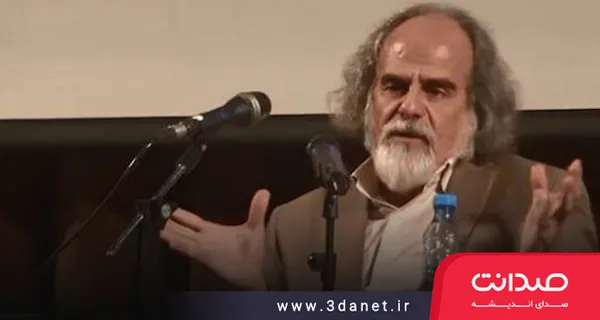
Mostafa Malekian sees material problems as having spiritual solutions and regards the reform of society not as a goal but as a consequence of individual reform. In his view, spiritual people are individualists who consider changing social institutions without inner transformation to be ineffective.
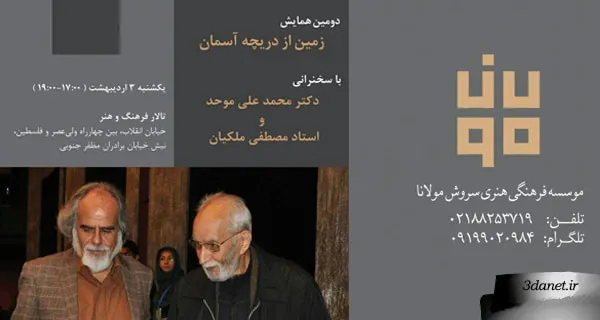
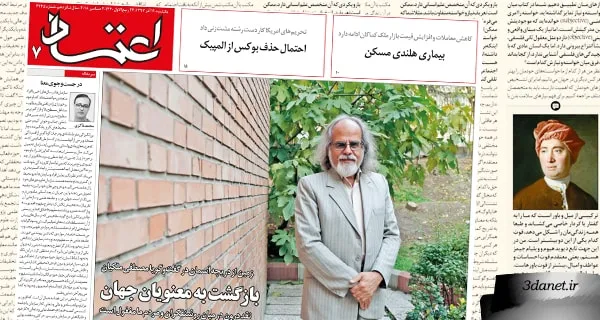
Mohsen Azmoudeh: At the recent gathering of the Soroush-e Mowlana Institute, titled “The Earth through the Lens of the Sky,” two renowned professors of mysticism, law, and moral philosophy offered thought-provoking solutions in response to the problems increasingly plaguing human society. Mohammad Ali Movahed identified the historical ineffectiveness of the discussions presented by philosophers and thinkers over the centuries as stemming from the primacy given to reason, emphasizing that, particularly in the modern era, the excessive emphasis on rights over duties, alongside abstract debates, has been problematic. Mostafa Malekian, reiterating his previous arguments on the primacy of culture and individualism, described the reform of society in the manner emphasized by intellectuals and social reformers as, if not invalid, at least ineffective, and stressed a return to the inner self. Without wishing to take a position on this turning away from reason and return to emotion on the one hand, and the withdrawal from society and politics and the call to the inner self and culture on the other, we can ask: what historical conditions have come to prevail over us that Stoicism and spiritualism have been so welcomed? Why have we become disillusioned with collective reason and are calling for individual emotion? Together, let us read a report of the talks given by these two.
On the Necessity of a Spiritual Solution
Mostafa Malekian
Philosophy Researcher and Professor of Ethics
At the beginning of the discussion, Mostafa Malekian summarized his talk as emphasizing spiritual solutions, stating: We must at least entertain the possibility that many material issues and problems also have spiritual solutions, although the claim will go even further and assert that ultimately, all issues and problems, whether material or spiritual, have spiritual solutions. Unfortunately, human society today is oblivious to the spiritual solutions that could solve its material problems. The spiritual culture of bygone eras and those who possess this spiritual culture today are more or less neglected, and as a result, we are deprived of its blessings, graces, effects, and outcomes. In other words, we often traverse long and winding paths to solve a problem, oblivious to the fact that if we grasped the heart of the matter, we would find that there were much more reliable and less consequential solutions for resolving that issue and eliminating that problem.
What is Spirituality?
Continuing, while emphasizing that there are spiritual solutions to problems, he clarified the concept of spirituality, stating: All those throughout history who have spoken of spirituality, whether mystics, sages, philosophers, theologians, and thinkers who do not formally fit into any of these molds but possess a spiritual outlook on the world, share one common feature that manifests in various ways. The essence of their message is that the individual's goal should be the reformation of their own self, and the reformation of society is the result of their work, not its goal. In this sense, all spiritual people of the world are individualists, meaning their addressee is the individual, not society. Therefore, the difference between the spiritual people of the world and the intellectuals and social reformers who have emerged more prominently in the last two centuries is that social reformers and intellectuals are mostly, and indeed in the vast majority of cases, exclusively focused on reforming society, and for this reason, they turn to social institutions. If they are of a liberal disposition, they turn to politics, and if they are of a socialist disposition, they turn to economics; that is, they mostly seek to change the state of society's political, economic, or legal institutions, because their purpose is the reformation of society. Whereas the spiritual people of the world recommend that the individual's goal should only, only, and only be the reformation of their own self, and to the extent that they achieve this goal, the reformation of society will automatically result.
Separating Goal and Result
To explain this claim, Malekian referred to the distinction between aim and result in the philosophy of action, saying: In the philosophy of action, the aim refers to the state that the agent undertakes an action solely to bring about, regardless of whether that state ultimately comes into being or not. But an action also has a result; the result is the state that comes into being as a consequence of the agent's action, whether the agent desired that state to come into being or not. Thus, in every voluntary human action, an aim and a result are conceivable. That action is successful when the agent's aim and the result of the action fully coincide. If the agent's aim does not coincide with the result of the action at all, or does not fully coincide, we say that action was not successful and the agent failed. Therefore, the spiritual figures of the world called the individual's aim in life—that is, the state for the sake of bringing which into being they undertake action—self-reform. If the individual fails, meaning the result of their action was not their own reform, so be it; but if the result of the action coincides with the agent's aim and the individual is reformed, then, as a consequence of their reform, society will also be reformed to a greater or lesser extent. In the view of the spiritual figures, this is the way to reform society. He continued, referring to the Hindu rite in which it is emphasized that every person, upon entering their temple, should hold a lotus in hand, and said: This spiritual outlook, with this rite, in fact points to the idea that if all human beings turn into the lotuses of the swamp, the sum of these lotuses will eliminate the swamp. That is, if the lotuses are cultivated and constitute a multitude, indeed the majority of society, the swamp will be eliminated; but in the spiritual outlook, the solution is for each and every one of us to become a lotus.
The Arguments of the Spiritual Figures
Malekian then addressed the question of why spiritual figures do not seek, from the outset, to eliminate the swamp. He said: There are three arguments among spiritual figures that lead them to consider this view correct, and indeed realistic. The first argument is that human beings are so constituted that society will never become ideal, and society will never cease to be a swamp; therefore, those who strive first and foremost to free society from being a swamp will fail. This view arises from an anthropology whose implication is that human beings in this world, by and large, in their transactions, interactions, and reactions, are mostly seeking their own benefit and to avert harm to themselves, and a society composed of such individuals will not be non-swampy. Thus, from the spiritual perspective, an ideal and good society is not realistic. However, from this perspective, a good individual is possible. In their view, all the efforts made throughout history to create a utopia are evidence for the truth of this claim that striving to create an ideal society leads nowhere, if we turn to changing social institutions such as the institutions of economics, politics, or law. Malekian described another argument of the proponents of spirituality, which is not as negative as the first argument and is, of course, realistic, as follows: This group says we want society to be reformed, but we know the only way is the reformation of the individual. Therefore, we say that if every individual alone becomes a lotus, the swamp will gradually dry up. In my opinion, this argument is entirely logical. The third argument that proponents of spirituality put forward to emphasize the priority of the individual over society is that if the individual wants to wait for the betterment of society, they will waste their own life. The individual must take their own share from the universe. If the individual makes a good, pleasant, and valuable life contingent upon the reformation of society towards an ideal and healthy state, they will lose their life. The way of the spiritual figures is that at least the individual saves their own skin. The individual cannot make a good, pleasant, and valuable life contingent upon the reformation of the economic, political, or social system, because there is no guarantee that society will reach an ideal state, and it is better for them to attend to themselves. To think 'first society, then me' is unrealistic, because the individual lives no more than 70 years, whereas society lives for tens of thousands of years. Therefore, based on the three aforementioned arguments, spiritual figures, whether in the East or the West, addressed their audience as the individual. He emphasized: Of course, the extent to which an individual's success in reforming themselves reforms society depends on various factors, but in any case, it is impossible for the reformation of the individual to reform nothing in society. That is, the extent of this reformation depends on the individual's position in society and the degree of their fame, power, social standing, wealth, status, rank, and academic knowledge; meaning, generally, to the extent of the influence an individual has over citizens, they impact society through their actions and way of life. However, it is impossible and unfeasible for an individual to be reformed and for no one to benefit in the slightest from this reformation of theirs towards being reformed. Therefore, the spiritual figures of the world, without entering into these debates about whether primacy belongs to the individual or society, or whether social betterment takes precedence over individual betterment or vice versa, or indeed without even having these conceptual frameworks in their minds, have reached this conclusion, and their intuition of the condition and nature of human beings is that you must become better yourself, and to the extent that you become better yourself, you will, of course, make things better, more or less.
Spiritual Figures versus Intellectuals and Reformers
Malekian described the tendency to train a magnifying glass on society and declare that first the institution of politics, or law, or economics, etc., must improve as stemming from self-conceit, saying: because this implies that I am the only being in society who does not need to change, and everyone else must change for the situation to improve. This arises from egotism and self-admiration; in this respect, I have placed the magnifying glass on social institutions and am demanding changes in them. It is as if I am the only being exempt from improvement. Moreover, this attitude will not succeed. That is, if everyone in society trains their magnifying glass on others, the desired outcome will not be achieved. The desirable society is one in which every person directs their magnifying glass at themselves and sees how much better they themselves can become. This professor of moral philosophy emphasized: This message of the spiritualists does not mean depriving social reformers and intellectuals who wish to reform society of their freedom; rather, this is one perspective and that is another. These two perspectives are different, and if someone sees good in that other perspective, they can follow it. The issue is that spiritualists consider their own perspective to be a requirement of human realism, meaning self-reform is the sole goal of the individual, and to the extent that they are reformed, others will willy-nilly be reformed under their influence. In the words of the Prophet (PBUH), "كونوا دعاه الناس بغیر السنتكم," that is, invite people to the truth without your tongues. Meaning, when we witness the lifestyle of a spiritual person, we are more or less transformed, without them having preached to us or consciously and deliberately sought to interfere in our actions and consciences.
The Solution of Social Reformers and Intellectuals
He then addressed the position opposing the spiritualists' view and said: Seeking to reform the situation by reforming the political system of a society is the alternative to the spiritualists' view; that is, to say that the root cause of a society's problems is its political system, and if the political regime governing a society is changed by any means—whether reform, revolution, coup, foreign intervention, or internal rebellions and centrifugal forces—all issues will be resolved and eliminated. This view identifies the ruling political regime of a society as its root cause. This view is the alternative and rival to the spiritualist perspective. I disagree with this view and believe that even if political regimes change a hundred times through any of the aforementioned methods, but the internal culture of individuals does not change, the situation will remain the same and will not differ much. Of course, there are those who wish to solve and eliminate the problems prevailing in their society by reforming the political system. He emphasized: Historical experience has shown that the political systems governing a society, regardless of their form, are always seeking to preserve power and want nothing else. To say that a democratic regime is better than a non-democratic one is correct, but not in the sense that democratic systems do not love power. Rather, the difference between a democratic and a non-democratic system is that in a democratic system, the preservation of power occurs with certain constraints and conditions; otherwise, there is no sultan, ruler, king, or president who does not want to preserve their own power. It is not realistic to imagine that political systems have come solely with the intention of serving. It is the thirst for power that draws people to the institution of politics. We live in a world where the democratic nature of political systems has an indisputable positive value; even Stalin claimed that we are democratic. But in reality, we witness what reactions occur. For this reason, in recent times, some have come to think that we must turn our hopeful gaze away from political systems toward charities and non-political institutions and NGOs. From the second half of the twentieth century, thinkers like Alasdair MacIntyre, the English communitarian thinker, say that people should turn their attention from the political regimes governing society to charities and NGOs, institutions that people themselves establish and through which they attend to their own needs; these non-governmental institutions strive to solve society's problems.
The Plague of Charitable Institutions
While emphasizing the importance of these institutions, Malekian also described them as having their own pathologies, saying: Not only are they the effect of a corrupt situation, they can also become the cause of a corrupt situation, and one must be vigilant about this. These non-governmental institutions are the effect of the political systems governing society and have emerged under conditions where political institutions have failed to fulfill their legal, educational, economic, and other duties. Therefore, the raison d'être of these charities is the incompetence of political systems. But unfortunately, they themselves can also become the cause of corrupt situations; that is, while welcoming and assisting them, we must be aware that these charities may gradually strip those they help of an independent life, fostering indolence and laziness in them and destroying their motivations for effort and activity. Most importantly, once charities gain power, they may later use that power for other purposes. About three years ago, a debate arose among roughly 25 moral philosophers and thinkers over whether charitable associations bring more benefit or more harm. Therefore, one must not neglect the pathologies of these associations. Malekian said: Of course, even if political systems did their job and there was no need for charitable associations, or even if charitable associations fulfilled their duties, these would still solve existing problems—meaning they treat, rather than prevent. Whereas what is important is the prevention of problems from arising, and this prevention is not the work of political institutions, charities, or NGOs. Because these institutions are not in a position to move ahead of society. A problem arises in society, and we refer its resolution to a political system or a charitable institution. But the important point is that humanity is not condemned to be afflicted with pains and then seek treatment for them. The occurrence of these pains can be prevented and forestalled. This is where a spiritual matter—that is, a cultural matter—can do something, and we return to the very words of the spiritualists who said that to prevent problems, one must realize that the mother of all problems lies within human beings. In other words, prevention is solely a cultural matter, and a cultural matter means an individual matter.
The Three Meanings of Culture
Referring to the three meanings of culture, Malekian said: In the social sciences, culture is one of the most complex concepts, and over 800 definitions have been used for it, all of which fall under three definitions. In its broadest sense, culture is used in opposition to nature, meaning whatever is not natural is cultural. Within this broad circle lies the second meaning of culture, used to refer to non-natural, human phenomena that have no physical embodiment, such as language, family, and so on. This second, narrower meaning of culture stands in opposition to civilization. Within the second meaning, an even smaller circle can be drawn, namely that which humanity has created, has no physical embodiment, and exists within the human being—unlike, for example, the family, which falls under the second meaning of culture, i.e., created by humanity and lacking physical embodiment, but existing outside the human being. My intended meaning of culture is this third sense: the feelings, emotions, passions, beliefs, and desires of human beings that they have created within themselves. Therefore, someone who believes in the primacy of culture means that human problems arise from the unhealthiness and incorrectness of three things: first, their beliefs; second, their feelings, emotions, and passions; and third, their desires. Perhaps those who said that the greatest problem of a person is their own self, which lies between their two sides, meant exactly this. Our meaning is also that our problems arise from our incorrect and unhealthy beliefs, feelings, emotions, passions, and desires. Pointing to the meaning of unhealthiness or incorrectness of beliefs, feelings, and desires, he said: The incorrectness of beliefs comes down to their falsity; the truth and correspondence with reality of a belief guarantees its correctness. The health of feelings, emotions, and passions also comes down to their proportionality to their objects. Healthy desires are also reasonable desires, and vice versa. Therefore, the entire message of the spiritualists, with this set of terms, is that to prevent societal problems, human beings must make their beliefs, feelings, emotions, passions, and desires healthy. That is, if human beings have true beliefs, appropriate feelings, emotions, and passions, and reasonable desires, they will create problems neither for themselves nor for the other inhabitants of society.
The Path to Salvation Lies Within
He concluded by saying: Therefore, the entire message of the spiritualists—that is, the mystical paths and the sages, and spiritualists in general—was to instill in their audience health in these three domains. That is, for a person not to impose suffering on themselves and others, they must investigate and make their beliefs truthful, their feelings, emotions, and passions appropriate and fitting, and their desires reasonable. Of course, it must be emphasized that this task is not simple in theory or in practice. But if it is shown one day that the way of the spiritualists is the sole path to salvation, one must endure its theoretical and practical difficulties. When we say the earth through the lens of the sky, meaning that material issues and problems have spiritual solutions; this is what is meant. The aim, of course, is not to fault those who turn to social institutions. Thus, the way of the spiritualists has three main claims: first, that every social corruption and problem arises from the individuals of society and there is no such thing as fate; second, that the inner world of humans is not an obscure matter, and within all of us there are three parts: beliefs, emotions, and desires; third, that if the reformation of society does not occur through inner reformation (though it certainly will), the individual themselves has become the lotus of a swamp and has lived well, meaning they have had a pleasant, good, and valuable life. An individual can live a healthy life in an unhealthy society. Karl Barth, the twentieth-century Protestant philosopher and theologian, wrote an important book on this subject, on how one can live a healthy life in an unhealthy society. The virtue of this perspective is that a person does not remain waiting and idle for society to improve, and at the very least, they themselves have lived a healthy life in an unhealthy society.
.
.
Watch the video of Mostafa Malekian's lecture: The Necessity of Spiritual Solutions for Material Life
Download the video of Mostafa Malekian's lecture: The Necessity of Spiritual Solutions for Material Life
Download the audio of Mostafa Malekian's lecture: The Necessity of Spiritual Solutions for Material Life
.
.

Discussion4 comments
با سلام خدمت استاد بزرگوار به نظر استاد اگر فرد اصلاح شود همه جامعه اصلاح خواهد شد و در واقع ایشان تقدم را به فر میدهند زیرا معتقدند جامعه همان جمع افراد است.. اما همه میدانیم که فرد نه در جامعه امروز و نه در جوامع گذشته فرد جدای از جامعه نبوده که بتواند بدور از فرهنگ موجود در جامعه خود را اصلاح کند ااگر فساد و یا صلاحی در جامعه باشد نتیجه فساد و یا صلاح به نحوی از انحا در رفتار و کردار افراد جامعه تاثیر میگذارد بنده میخواهم بگویم تقدم بر اصلاح نهادهای اجتماعی است و نه افراد .. زیرا کودکی که در مدرسه شروع به خواندن و تحصیل میکند در واقع فرهنگ و خیر و بد را از دریچه مدرسه می آموزد این مدرسه است که کودک را میتواند سر به راه بار بیاورد و یا یک شورشی.. پس اگر جامعه و نهادهایش همچون سیاست و اقتصاد و غیره به درستی عمل نکرده اند تاوان اصلاحش را نباید در اصلاح فرد در نظر گرفت بلکه این خود نهادها هستند که باید اصلاح شوند.. دب واقع دیدگاه استاد کاملا بر طبق مذاج حاکمان است.. زیرا این دیدگاه مبگوید کاری به سیاست نداشته باش.. تو خودت رو اصلاح کن.. غافل از اینکه این نهاد قدرت و سیاست است که سیاست گذاری درسی و پرورشی و رسانه ای را تماما در اختیار دارد و از این راه بر درون یکایک ما تاثیر میگذارد.. حاصل حکیم....
کاملا درست است دوست عزیز
باتشکرازاستادملکيان عزيز به نظربنده جناب ملکيان دوويژگي خيلي مهم دارند: 1-استادتقسيم بندي مباحث دشوارهستندوباتجزيه کردن مباحث شرايط رابراي درک بهترمفهوم فراهم مي کنند. 2-بسيارروشن وبدون درهم پيچيدگي وبازبان قابل فهم براي همه سخن مي گويند. البته يک نقطه ضعف کوچک هم دارندکه جنبه تاريخي مباحث راکمتردرنظرمي گيرندشايدهم به نظرايشان ضرورتي براي درنظرگرفتن تاريخ مباحث درگذشته توسط افرادمختلف ودرفرهنگ هاي ديگراحساس نمي کنند. ازسخنراني هاي صوتي ايشان استفاده بسيارمي برم براي ايشان آرزوي سلامتي وتوفيق دارم
بسیار زیبا و آموزنده بود.