Philosophy
Mostafa Malekian Lecture: The Meaning of Life from Rumi's Perspective
Mostafa Malekian frames the question of life's meaning as one of discovery versus invention. Focusing on the value of life, he interprets Rumi's image of the human being as a lover in exile, severed from the reed bed. A report from the twenty-sixth session of The Sudden Resurrection.

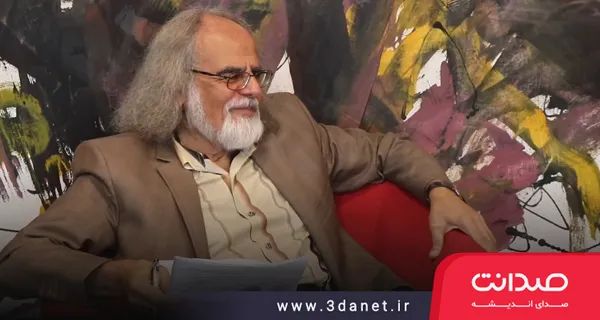
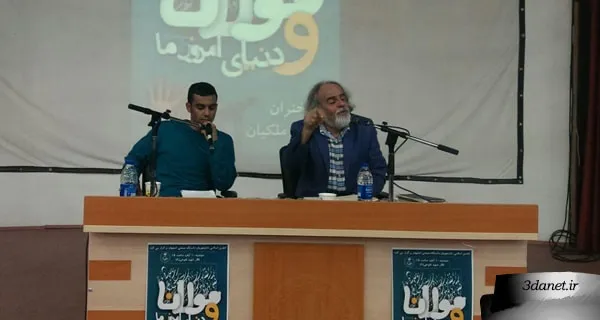
The twenty-sixth session of the “Sudden Resurrection” lecture series, titled “The Meaning of Life from Rumi’s Perspective,” with a lecture by Professor Mostafa Malekian, was held on the evening of Monday, January 19, in the Ivan Shams Hall. In this session, Professor Malekian, referring to how the meaning of life is defined, said: First, we must see what is meant by the meaning of life. Does meaning exist in life and merely needs to be discovered, or must each person fabricate the meaning of life? Therefore, either there is something in life that is discovered and we must only become aware of it, or there is no meaning at all and we must discover this meaning ourselves.
.
Mostafa Malekian: The subject of this lecture concerns the question of whether Rumi considers the meaning of life to be a matter of discovery or a matter of invention. Is there something that exists to be discovered, or is there nothing and we must fabricate it?
The problem of the meaning of life, in Albert Camus’s view, is the most important problem of philosophy. A problem which, if philosophy only answered it, even if it solved no other problem, would have rendered its service to humanity. I myself am very sympathetic to this view of Camus. Of course, the literature surrounding this problem cannot be explored in a single session. Those familiar with the literature and writings of this field know that even the list of problems raised in this area cannot be enumerated in one meeting. I myself, in an article that will be published soon, have shown that solving this problem requires solving about eighty sub-problems. That is, we need to answer these eighty questions in order to have an answer for our whole life. Today, I will try to set forth Rumi’s intent regarding this subject. First, we must note that the problem of the meaning of life can itself have three meanings.
In the first sense, the meaning of life means the value of life: Is life worth living? This problem arises from another problem in practical rationality. The essence of practical rationality is that you should not undertake an action whose cost exceeds its benefit. If you undertake such an action and realize midway that the cost of this action exceeds its benefit, you should quickly desist from that action. This is the essence or common denominator of all philosophers’ views on practical rationality. Life, too, is an action we are engaged in. If we realize that the cost of life exceeds its benefit, practical rationality dictates that we end life. Now, if we do not commit suicide, we presumably consider the benefit of life to be greater than its cost. Camus believed philosophers should address this subject. Every other problem relates to the quality of life. The meaning of life in this sense means the value of life.
Another meaning of the question of the meaning of life is the purpose of life. Now that we are to live, our question is what the purpose of our life is. We should not have a purpose in mind whose attainment is impossible. Moreover, it must be superior to all other attainable purposes. In addition, it should not be such that if I and another choose a purpose, we clash in the alleyway of life. The third meaning of the meaning of life is the function of life. One is what function the human species has had fundamentally from the first day of its emergence. Would the cosmos have suffered a deficiency in the absence of humankind? Beyond this point, is my coming and going as an individual also at issue? If I, as an individual, had not come, what disruption would have occurred? Therefore, we are faced with three distinct discussions. My discussion today, and the meaning I intend of the meaning of life, is the value of life. We want to examine what Rumi considers the value of life to be. I myself, whenever I have discussed the value of life, have adopted a new perspective. My perspective today is that depending on what you liken the human person to, the question of the value of life will find a different answer. What is your image of life? Once, in a session, I named twenty-three images. For example, some proposed the image of a bird in a cage; some, a prisoner in a prison; some, the subject of an experiment in a laboratory. Each of these images poses different questions. I cannot enter into this discussion in detail here. I only point out that, for example, a bird in a cage is different from a prisoner in a prison. If we are a prisoner in a prison, the question arises: when did we commit this crime? Where did we commit it? Who witnessed our crime? If we are a bird in a cage, the question arises: why have we fallen into the cage? What is the material of the cage? Now, if someone said it is none of these and instead proposed the image of a human and a mirror, for example, this question arises: is the mirror not crooked? And so on. The value of our life also becomes clear in proportion to these images. For example, if we consider ourselves a bird in a cage, the value of our life is to escape from this cage. Now, what is Rumi's image of life? Many consider Rumi a Platonist. That is, they consider his image to be that of a prisoner in a prison. What I prefer more, and believe the Shams Ghazals and the Masnavi also confirm, is this image: Rumi depicts the human being as a lover in a land of exile. A lover whose beloved is elsewhere, and who has now fallen into a land of exile. If this image is correct, then specific questions are posed from Rumi's perspective. Many considered Rumi's Ney-Nameh (Song of the Reed) to be the entirety of Rumi's message. Thus, the rest of Rumi's works are a commentary on these eighteen lines. In my view, even if we do not accept that Rumi's entire message is summarized in these eighteen lines, there is no doubt that an important part of his message is contained in the Ney-Nameh. This idea of a lover in a land of exile is very clear in the Ney-Nameh. We are faced with a reed that longs to return to the reed-bed. Only one point is unclear in the Ney-Nameh. Rumi, describing his own state, says: "Since from the reed-bed they have cut me." Here, another has separated Rumi from the reed-bed. The poem also points to this, but it does not point out who has cut him? The answer to this question comes in a ghazal in the Kulliyat-e Shams. In this ghazal, we see that the one who cut him is God Himself. This beloved had reasons and purposes for this separation. But Rumi still doubts whether this is truly in his best interest or if the beloved merely sought to separate him from Himself. The beginning of the ghazal is a preamble, and from the middle, we reach the main discussion, which is examining the meaning of life according to Rumi. Consider the following ghazal:
Do not throw stones at the side of the glassblower's workshop Do not strike a wound upon the heart of one already wounded at heart Strike all upon my heart, for it is a pity and a loss Your wound and your stone upon another's breast and soul Set free all the prisoners of cruelty except me So that even in cruelty you cast no glance but upon your servant I am happy with your loyalty, and happy with your cruelty too Neither with loyalty nor with cruelty, may I never make a journey without you
Here, Rumi says, I hope I never make a journey away from you. Now, why did you journey? From here, the story begins?
Since your image had not come into anyone’s eye, The eye of the slaughtered goat was dark and staring vacantly. Before this, in the world’s prison, I was entirely with you; Would that there had never been a passage over this snare of mine. How many times I said, “I am happy, I will not go on any journey.” Behold this arduous journey, the road from the heights to the depths. Your grace beguiled me, saying, “Go, you will not die at all; My generosity will be your escort, there is no danger for you. When you go into exile, you will gain perspective, you will become mature; You will return to your homeland informed and full of art.”
This couplet recalls a couplet attributed to Ali ibn Abi Talib, which I believe Rumi had in mind: تغرب عن الاوطان فی طلب العلی / و سافر ففی الاسفار خمس فوائد/ تفرج هم واكتساب معیشة *** و علم و آداب و صحبة ماجد Here it is said that there are five benefits in travel: you find diversion, you earn a livelihood, you acquire knowledge, you learn the manners of life, and you attain the companionship of great men.
I said, “O soul, without you, what shall I do with knowledge? For the sake of any knowledge that departs from you, may you rather be without knowledge. When I drink wine from your hand, I am without knowledge, intoxicated, and happy; Without danger or fear of anyone, without the evil and tumult of humanity.” He spoke words into my ear, words like the talk of highway robbers; He took my king from my head, he made me reckless. The story is long, yes; alas for his cunning and deceit, Unless his generosity shows our night a dawn.
Unless, perhaps, the first signs of returning to the homeland appear. Otherwise, the Beloved, through deception, separated me from myself.
Now, what is the resemblance between me and this image of the land of exile? In literary terms, every simile requires a point of similarity. In what respect is a human being a lover in the land of exile? I see ten points of similarity as more prominent, which I have selected. These ten points appear throughout Rumi's works and are repeated in various forms. First, the sign of the lover in the land of exile is the pain and sorrow of separation: «از درد چاره نیست چو اندر غریبییم/ وز گرد چاره نیست چو در خاکدان رویم» Another example: «عجب مدار ز کوری که نور دیده بجوید/ و یا ز چشم اسیری که اشک غربت بارد» Or elsewhere: «زین فرقت و غریبی طبعم ملول شد/ ای مرغ روح وقت نیامد که برپری» Because the spirit is the very lover who has fallen into this separation. This is the first characteristic. The second characteristic, which complements the first, is the longing to depart: «جان غریب اندر جهان مشتاق شهر لامکان/ نفس بهیمی در چرا چندین چرا باشد چرا» Why, while the soul wishes to return to the placeless realm, is the bestial (animal) self occupied with grazing? Or look in the Masnavi: «چونک هر جزوی بجوید ارتفاق/ چون بود جان غریب اندر فراق» But the third thing. When traveling in a foreign country, you lack tranquility and peace of mind. This is because you know that none of these things belong to you. A person can become intimate with a garden or a house they know they can live in for years. If you settle in a hotel, you can never have that necessary peace, because you cannot become accustomed to any of the elements of that hotel: «خاکی است آن کف غریبست اندر آب/در غریبی چاره نبود ز اضطراب» Malekian points out here that the estranged human is anxious. Or elsewhere he says: «خاموش باش و راه رو و این یقین بدان/سرگشته دارد آب غریبی چو آسیا» He likens estrangement to water in a mill, which, when poured over a person's head, robs them of peace and stillness; just as water takes stillness from the mill and sets it turning. In another verse, he says: « چون از این جا نیستم این جا غریبم من غریب/ چون در این جا بیقرارم آخر از جاییستم.» This verse expresses an important point. If someone asked Rumi, 'How do you say we are estranged in this world?' his answer would be that if we were not estranged, we would not be so restless. The fact that we have no repose or stillness indicates that we are from somewhere else. The fourth characteristic is that in exile, we look upon everything as transient. Rumi attributes this lack of concern for worldly affairs to this reason: « تو جان جان افزاستی آخر ز شهر ماستی/ دل بر غریبی مینهی این کی بود شرط وفا» The fifth characteristic is that in the land of exile, either we do not understand the people's language, or they do not understand ours. For this reason, we cannot have mutual understanding. Thus, Rumi says the mystic is astonished by people's joys. People, too, are astonished by a mystic's sorrows. Ali ibn Abi Talib said he fled from fame as forest animals flee from a lion. Now, if Ali ibn Abi Talib were to come and see a person who is sad because their photo was printed inside a magazine, not on the cover, then Ali ibn Abi Talib would be astonished. Rumi also refers to this lack of a common language: « وان جان غریب در تظلم/ مینالد و ترجمان ندارد.» The result of this lack of a common language is that we also do not mix with you. Rumi has said in several places that he and the people are like water and oil: «من چو آب و روغنم هرگز نیامیزم به کس/ زانک من جان غریبم این سرایی نیستم» The seventh point, which needs no evidence, is that in exile, one needs a living guide. This is the secret behind the great emphasis in Rumi's work on the presence of a spiritual master. But the eighth characteristic: even if you held a high position in your own country, if you go to another country, you never have that pomp and circumstance. In the land of exile, a person has no ego or self-importance. There is a story in the Masnavi about a king who went to the bathhouse and, having removed all his clothes, asked the bath attendant how much he was worth. The attendant said, 'You are worth five dinars.' The king was astonished, wondering how he could be worth only five dinars when his loincloth alone was worth five dinars. The attendant replied, 'I said that precisely for the loincloth.' In the land of exile, no one is a king. Therefore, here we are without ego and self: «خواهم که شرح گویم میلرزد این دلم/زیرا غریب و نادر و بیما و بیمنیست» My own hometown was a small city. From the beginning of Reza Shah's rule until the victory of the revolution, the member of parliament was always chosen from one family. So much so that instead of the term 'Member of Parliament,' the family's surname, 'Kian,' was used. If they wanted to say 'the Member of Parliament for Sabzevar,' they would say 'Kian of Sabzevar.' Once, one of the servants of this family had come to Tehran. He told a taxi driver he was going to the Kian residence.
The taxi driver had asked, "Who is Kian?" The man had replied, "You mean you don't know Kian, the representative of such-and-such parliament?" The driver had answered: "There are a lot of these so-and-sos around here. You have to give me an address so I can take you." In the land of exile, too, we cannot claim this self-importance for ourselves. The next characteristic is that you are always a spectator. You do not participate in any action, such as demonstrations or carnivals. You are never an agent. You are only a spectator. In your own city, however, this is not the case. Rumi says we are spectators in this world. The final characteristic is welcoming departure. Rumi welcomes death. According to the narrative of the Masnavi, Bilal, at the time of death, said to his daughter: "He said no, no, rather tonight my soul / Itself arrives from exile into the homeland" or "I am the bead you have dropped from your hand / Come, snatch me from this cup of exile" It is Rumi's point that we possess all ten of these characteristics that we have in ordinary exile in this world as well, and for this reason, whoever has a deeper sense of exile is a more perfect human being. For this reason, regarding Shams, whom he considers the most perfect human being, he has said, "There is no exile in the world like Shams." So our living is not forced labor. Its benefit outweighs its cost. Its benefit is knowing the worth of the Beloved and returning to Him..
.
Audio of the Lecture: The Meaning of Life from Rumi's Perspective
.
.
Lecture Title: The Meaning of Life from Rumi's Perspective (Rumi's Image of Life)
Lecture Venue: Shams Hall, Soroush Mowlana Institute
Lecture Date: 19 January 2015
Speaker: Mostafa Malekian
.
.


Discussion5 comments
در متن آمده است "یا اینکه معنایی در کار نیست و ما باید خودمان این معنا را کشف کنیم." این سخن عین تناقض است، چیزی که وجود ندارد را کشف نمی کنند.
واقعا سایتتون داره حالت تهوع آمیز پیدا میکنه، ملکیان و مولوی، ملکیان و دکارت، ملکیان و ادبیات، ملکیان و زندگی، ملکیان و چهره باطنی، ملکیان و میوه، ملکیان و راهنمایی و رانندگی، ملکیان و قفس، ملکیان اینجا ملکیان اونجا. اگر امکانش هست یک مقدار تنوع ایجاد کنید. واقعا اینجوری داره تهوع آور میشه. البته اگر مخاطب های متنوع برایتان اهمیت داره.
شما میتونی نخونی. متاسفم برای ادبیات کف خیابونیت.
خیلی با نمک نوشتی البته استاد چیزهای متنوعی میگه در ضمن تهوع اور هم نیست
نوشتههای دکتر ملکیان عالیه! همیشه با طبقه بندی، شماره گذاری و مرتب، و بیانی زیبا مساله های سخت رو آسان بیان می کنند.