Philosophy
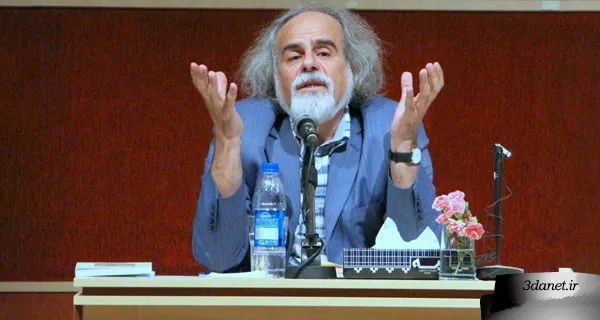
Mostafa Malekian's Lecture: 'Rumi and Our World Today'
In his lecture 'Rumi and Our World Today,' Mostafa Malekian evaluates practical mysticism against the criteria of rationality and moral conscience. Individual reform takes precedence over social reform, and society must be governed by collective rationality, not mysticism or ideology.

A topical summary of Mostafa Malekian's lecture titled 'Rumi and Our World Today' - Three general topics in mysticism: 1 Mystical doctrines (mystical cosmology) 2 Practical mysticism (methods or ethics) 3 Mystical experience - The general focus of the talk, some strengths and weaknesses in practical mysticism - Criteria for evaluation 1 Rationality 2 Moral conscience - Individuality as a goal in practical mysticism - Individual improvement and reform leading to social reform - Attention to the impossibility of maximal social improvement, and consequently not expecting social reform from practical mysticism - Distinguished points of practical mysticism: 1 Self-cultivation 2 Subjective and inner ethics 3 Secular ethics 4 Attention to the limitations of reason 5 Guidance towards the good in ethics (not recommending from a superior position, but recommendation as consultation, based on theoretical rationality and the individual's freedom of action) 6 Religious pluralism - Weak points: 1 Disparagement of reason 2 Mystical dogmatism 3 Reclusiveness 4 Disparagement of the human body
A snippet of Professor Malekian's talk:
- The topic of mysticism can be approached from three perspectives: theoretical mysticism (mystical doctrines), practical mysticism (mystical ethics), and mystical experiences. Today's discussion concerns practical mysticism and the methodology of mysticism. - Every person must take steps towards their own reform and should not seek to introduce these matters into the political and governmental system. - Society can only be administered through collective rationality and dialogue, and by no other means, including mysticism and ideology. - Individual reform is not a zero-sum matter; rather, to whatever degree one submits to ethics, life will become good, pleasant, and valuable. - One of the differences between mystics and jurists is that the jurists' attention is on the exterior of the human being, constantly observing what appears on the surface and what people's hands and tongues do, whereas the mystics' primary attention is on the interior and the inner self; for if we attend to subjective ethics and reform our inner selves, these reforms will overflow to the exterior. - One of the effects of attending to the inner self is that the individual distances themselves from superficiality and hypocrisy. Moreover, since they know they have no access to the inner selves of others, they have no right to morally judge or adjudicate another. - Of course, the door to legal judgment must remain open, and this type of judgment differs from moral judgment. - Any dogmatism incompatible with rationality must not be accepted. - The laboratory for human knowledge and actions is society. This is, of course, different from the thought of socialist intellectuals who say one must be in society in order for society to be built. - One must be in society to build oneself. - If a person withdraws from society, they distance themselves from their laboratory and cannot test themselves. - By proposing reclusiveness, mystical ethics neglects the point that we must enter society to reform ourselves. - Our criteria for selecting from religion are rationality and moral conscience. - The outcome of rationality and moral conscience is human rights and global ethics. - The existence of God is reason-transcending. Therefore, the existence of God is one of the several mysteries of existence. - Now, since it is neither reason-embracing nor reason-opposing, if we accept God's existence over God's non-existence, it can be established through rational arguments that God is not personal, and from there one arrives at the Unity of Existence. - Mystical ethics is neither consequentialist nor deontological, but virtue-oriented. - All our attention and consideration must be directed towards the self; then its effects will appear in society. - Based on the Marxist ideas that are the legacy of the Constitutional Revolution, we constantly chant slogans and say 'the people, the people.' The result of these slogans became the society you observe now.
.
.
Audio of Mostafa Malekian's lecture titled 'Rumi and Our World Today'
.
.
Mostafa Malekian's lecture titled 'Rumi and Our World Today'
Isfahan University of Technology | 10 Aban 95
.
.


Discussion0 comments
No comments yet; let yours be the first voice.