Literature
Audio of Mostafa Malekian's Lecture at the Sixth 'Mehr-e Mowlana' Conference
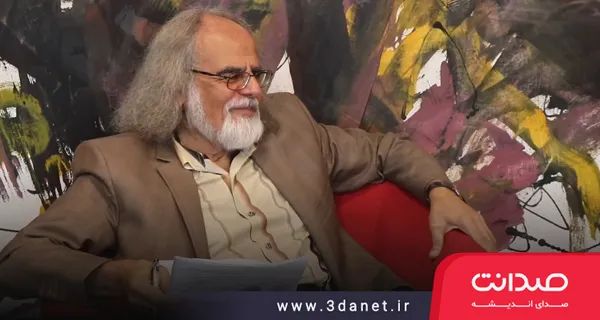
At the sixth Mehr-e Mowlana conference, Mostafa Malekian offered three reflections on engaging with cultural figures; he rejected claims of ownership over thinkers as meaningless and criticized pride in their origins on both philosophical and ethical grounds.
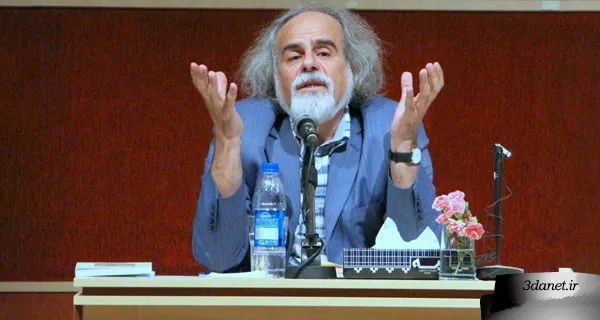
I intend to share three points with the audience in all sincerity, and this is a kind of well-wishing for future generations in their encounter with, especially, the cultural figures of their own society and, generally, cultural figures throughout the world. The three points I will make, although their initial reference is to Rumi, hold true for any thinker, whether in our own culture, civilization, and society or in any other culture, civilization, and society. Whether this thinker is among the sages of history, the mystics, the philosophers, the founders of religions and denominations, the theologians, the scholars of empirical sciences, especially the human-empirical sciences like psychology and sociology, or any other intellectual and thinker.
.
Mostafa Malekian's Lecture at the Sixth 'Mehr-e Mowlana' Conference
I intend to share three points with the audience in all sincerity, and this is a kind of well-wishing for future generations in their encounter with, especially, the cultural figures of their own society and, generally, cultural figures throughout the world. The three points I will make, although their initial reference is to Rumi, hold true for any thinker, whether in our own culture, civilization, and society or in any other culture, civilization, and society. Whether this thinker is among the sages of history, the mystics, the philosophers, the founders of religions and denominations, the theologians, the scholars of empirical sciences, especially the human-empirical sciences like psychology and sociology, or any other intellectual and thinker. The first point, which the lecture's topic also mostly concerns, addresses the question of, for example, to whom Rumi belongs. There is no doubt that ownership, in the sense of a conventional matter, pertains only to objects, and one can never consider the relationship of a human with persons—that is, with 'whos' as opposed to objects—as a relationship of ownership. Rumi is a person, not an object; therefore, ownership is entirely meaningless regarding him, so that I could say Rumi is mine or another's. But usually, when, for example, someone says Rumi belongs to us Afghans, or to us Iranians, or to us Turks; well, of course, it is true that they use the expression 'belongs to,' but usually, the intention is not to claim this conventional ownership that pertains to objects regarding their relationship with Rumi. Rather, in reality, their claim is that we take pride in the fact that Rumi arose from among us, and our pride in our cultural figures, in every culture and civilization, in fact, means that this is one of the members of the society and culture of which I am also another member. This is one of the builders of the same civilization of which I myself am also another builder, or at least a product. In my opinion, this sense is also completely objectionable. I have argued elsewhere that, from a purely philosophical standpoint, an ethical standpoint, and a prudential standpoint, this taking of pride is unacceptable. But since I have spoken at great length there, I will only make a brief reference here.
.
.
Audio of Mostafa Malekian's Lecture at the Sixth 'Mehr-e Mowlana' Conference
.
.
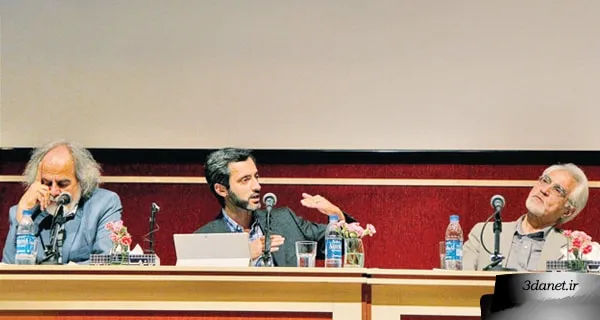
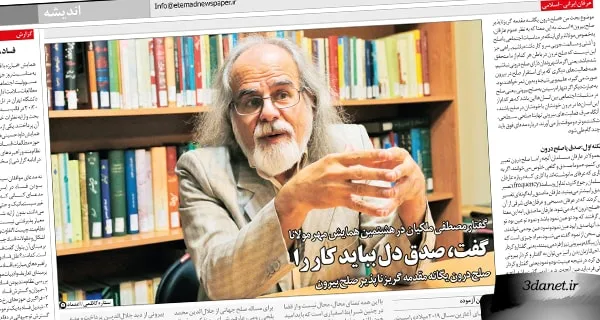
Etemad Newspaper's Report on the Sixth 'Mehr-e Mowlana' Conference with the Presence of Mostafa Malekian
.
.


Discussion6 comments
سلام. فایل صوتی موجود نیست. لطفا دوباره قرار دهید
سلام و درود اصلاح شد
مدیر محترم... شدیدا بدنبال صوت این جلسه هستیم و الان خم گویا فایل صوت از روی لینک حذف شده. اگه براتون مقدوره دوباره آپلودش کنید .. با تشکر ✋✋
اصلاح شد
سلام لطفا فایل صوت را به طریقه دیگری هم در سایت قرار بدین، این فایل را من نتونستم دانلود کنم
سلام. دست مریزاد به آقا رضاایرانمنش بابت صوت این جلسه