Literature
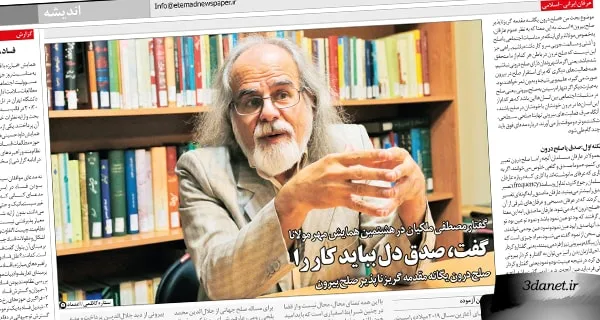
Etemad Newspaper's Report on the Sixth 'Mehr-e Mowlana' Conference, with Mostafa Malekian in Attendance
The sixth Mehr-e Mowlana conference examined the modern individual's relationship with Rumi and claims of ownership over him. At the gathering, Mostafa Malekian stressed that ownership is meaningless when it comes to cultural figures, and that 'boasting about anyone is to no one's benefit.'
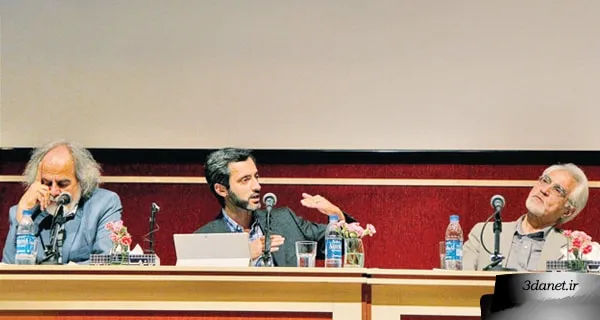
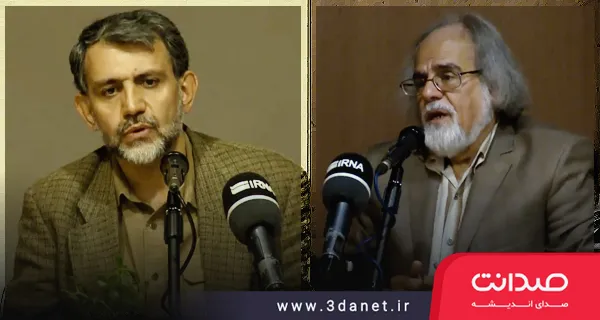
It seems that despite the fame of Mowlana Jalal al-Din Mohammad Balkhi in Iran and, of course, in the world, modern man, and especially the Iranian individual, has still not clarified his position on him. On one hand, some vilify Rumi and his prominent contemporary figure Shams Tabrizi with unwarranted accusations, such as the harsh comments recently published in the media quoting a traditionalist figure. On the other hand, we witness fanatical and "extremely nationalistic" views regarding Rumi, which fuel the controversy over whether he was Iranian or not, or, like any other extremist perspective, deem him beyond any form of criticism. Both of these extremist and reductionist tendencies occur while, unfortunately, despite all the aforementioned claims, our efforts in the field of Rumi studies still severely lag, and despite the vast volume of works and writings on Rumi's thought and life, most of these works are problematic by modern, rigorous scholarly standards. Moreover, some of the best work has been done by non-Iranians who have no affinity with either of the two extremist and reductionist tendencies mentioned, and who have subjected Rumi's legacy to critique and evaluation with a scholarly and scientific perspective, to the extent of their own understanding and ability. But beyond all these views mixed with extreme love and hatred, the question remains: who, ultimately, is Jalal al-Din Mohammad Balkhi Rumi; the man who lived, thought, and created works in the seventh century AH within the Iranian civilizational and cultural sphere? A Sufi or a sage? What relevance does he have to modern man in general and to Iranians in particular? Can anyone—be it an individual, group, faction, society, culture, or civilization—claim that Rumi belongs exclusively to them and is irrelevant to others? What consequences follow from such a claim? Over the centuries since Rumi's death, how has the audience's view of him evolved? What place does the Rumi who belonged to the tradition of Khanqah-based Sufism hold in global mysticism today? These questions were the central focus of the sixth Mehr-e Mowlana Conference, which, with the theme "Mowlana and Us," was held on the evening of Thursday, Mehr 8th, by the Soroush-e Mowlana Cultural and Artistic Institute in collaboration with the Javan Cultural and Press Institute and the Research Institute of Culture, Art, and Architecture of Jahad Daneshgahi, at the hall of the Research Institute of Culture, Art, and Architecture of Jahad Daneshgahi. At this conference, Mostafa Malekian, a professor of philosophy, moral philosophy, and religious studies, addressed the question "To whom does Mowlana belong?" Nasrollah Pourjavady, a professor of philosophy and researcher of mysticism and Sufism, spoke on whether Mowlana is a sage or a Sufi, and Ata Anzali, an assistant professor at Middlebury College and a researcher in the fields of mysticism and religious studies, discussed the evolution of the audience's view of Mowlana from Khanqah-based Sufism to global mysticism. Dr. Mohammad Mazaheri, Senior Advisor to the Minister of Culture and Islamic Guidance, was also present at the session. Initially, Maryam Mousavi, director of the Soroush-e Mowlana Cultural and Artistic Institute, provided explanations on the necessity of holding this conference on the anniversary of Mowlana's birth and commemoration, followed by speeches from Mostafa Malekian, Nasrollah Pourjavady, and Ata Anzali. A report of these speeches follows.
Ownership of Mowlana is Meaningless
Mostafa Malekian
Philosophy Researcher
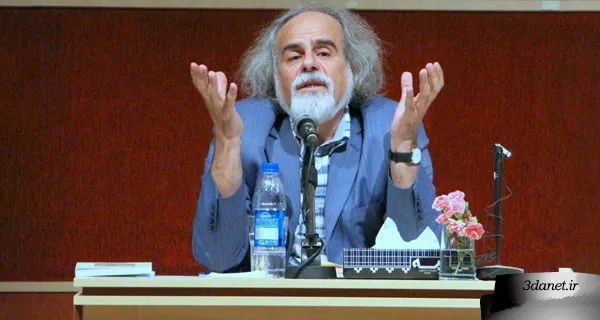
I intend to share three points with the audience in all sincerity, and this is a kind of well-wishing for future generations in their encounter with, especially, the cultural figures of their own society and, generally, the cultural figures of the entire world. The three points I will make, although their initial reference is to Rumi, hold true for any thinker, whether in our culture, civilization, and society or in any other culture, civilization, and society. Whether this thinker is among the sages of history, the mystics, the philosophers, the founders of religions and sects, the theologians, the scholars of empirical sciences, especially the human-empirical sciences like psychology and sociology, or any other thinker and intellectual. The first point, which the lecture also mostly addresses, deals with the question of, for example, to whom Rumi belongs. There is no doubt that ownership, in the sense of a conventional matter, pertains only to objects, and one can never consider the relationship of a human with persons—that is, with people as opposed to objects—as a relationship of ownership. Rumi is a person, not an object; therefore, ownership is entirely meaningless regarding him, so that I could say Rumi belongs to me or to another. But usually, when, for example, someone says Rumi belongs to us Afghans, or to us Iranians, or to us Turks; well, of course, it is true that they use the expression 'belongs to,' but usually, the intention is not to claim this conventional ownership that pertains to objects regarding their relationship with Rumi. Rather, in reality, their claim is that we take pride in the fact that Rumi arose from among us, and our pride in our cultural figures, in every culture and civilization, in fact, means that this is one of the members of the society and culture of which I am also another member. This is one of the builders of the same civilization of which I myself am also another builder, or at least a product. In my opinion, this meaning is also completely problematic. I have argued elsewhere that, from a purely philosophical, ethical, and prudential perspective, this taking of pride is unacceptable. But since I have spoken at great length there, I will only make a brief reference here. Boasting of anyone is not advisable How does the fact that Rumi lived seven centuries ago, for example, three thousand kilometers from my place of residence, make Rumi mine? How does this spatial and geographical distance and that temporal and historical distance make Rumi mine? If we do not limit the temporal distances to seven or ten centuries but extend them to two thousand five hundred years ago, or do not limit the spatial distance to three thousand kilometers; in that case, we must also take pride in the Greek Homer and say Homer is also ours. In other words, if you want to take the spatial and temporal distance as extremely, extremely, extremely narrow or zero, you can take pride in no one but yourself, and if you do not want to take the spatial and temporal distance as zero but say it can be expanded, then you must take pride in all the great figures of all human history. But if you do not want to consider that minimum limit and that very, very maximum limit and point to a limit between these two, I say, why did you place the limit here? Place it two spans further. In the words of the philosophers, any temporal and spatial limit you wish to determine is a preference without a preponderant cause, meaning you have preferred something over other things without considering a rational reason for this preference. If someone told me to take pride only in those born in my city and not to take their distance as more than a hundred years, then the number of people I could take pride in would become very narrow, but if they said consider your province and a temporal distance of three hundred years, well, the number would increase, but there is no rationality whatsoever in any of these numbers that indicate a specific temporal or spatial limit. Therefore, in one sense, one must boast of all the glories of human history, and in another sense, one must boast of no one, and if you want to determine a middle ground, this middle ground has no logic. You might say that the reason we consider Rumi ours is not because of the spatial distance of three thousand kilometers and the temporal distance of seven centuries, but because of the language of his works. I say the language of his works is Persian, but which Persian language is ours? The Persian language of today, or the Persian language of ten centuries ago, or the Persian language of Iran before Islam? And which one of these is not ours? Let alone the fact that if you bring this reason, what do you say about those luminaries who wrote their works in Arabic.
For example, Ibn Sina, who is one of the prides of Muslims, wrote most of his works in Arabic, and if a thinker wrote in several languages, speakers of which language should consider him one of their prides? It is for this reason that, neither from a purely philosophical standpoint, nor from an ethical one, nor from a prudential one, is boasting about anyone, or even boasting about oneself, advisable at all, and philosophically there is no argument in its favor. Therefore, in my opinion, in answer to the question of whom Rumi belongs to, it must be said that from this perspective, he belongs to no one and belongs to everyone.
Rumi is a spiritual physician
But on the second point, which has a constructive aspect and not a critical one—in the first aspect I was merely refuting that statement—I want to speak about resolving that statement. Regarding the resolution, if we want to see whom Rumi belongs to, we must see what status we accord to Rumi and by what attribute, more than any other, we recognize him. Since ancient times, one of the branches of medicine has been what we still call medicine today, and perhaps a better term would be to say body-medicine, that is, medicine of the body. Another branch, which is newly emerged and novel in today's culture, is what we call psychiatry, which, in perhaps a more precise term, should be called mind-soul medicine. There is also a third kind of medicine, which is neither body-medicine nor medicine of the human mind and soul, but rather a spiritual and inner medicine. It seems to me that if we look fairly at a person like Rumi, we must say that he is one of the authorities and specialists in spiritual and inner medicine. In fact, figures like Rumi, Shams Tabrizi, and personalities—in my view—greater than these, such as Buddha and Lao Tzu, offered spiritual medicine to humanity. That is to say, in reality, in the language of state and, of course, also in the language of speech, they were saying that besides the fact that you can have bodily and physical illnesses, and you can have mental illnesses and illnesses afflicting your soul, there is also a third realm within you, which is the realm of your spirit, and this spirit is different from that spirit which is taken as equivalent to the soul or self, and you also need a spiritual physician. That is, if you need a physician of the mind for depression, anxiety, and obsession, there are also illnesses that are more important than depression and obsession, and perhaps even more important than what psychiatrists call psychotic illnesses, and those are the illnesses that you can suffer from in a spiritual and inner sense. Now, I, Rumi, I, Shams, I, Ayn al-Quzat Hamadani, have come and want to treat this part of you. It seems a fair view would accept that the best description that can be applied to figures like Rumi is that they are spiritual physicians. When I lose the meaning of life, I need a spiritual treatment, and here I can no longer refer to a psychiatrist.
I am a Rumi-follower
If we accept that Rumi is a spiritual physician, then, in that case, the one who should take pride in Rumi is the one who can say, "I have placed myself under the treatment of this spiritual physician whose name is Rumi Jalal al-Din Balkhi," and to the extent that I have placed myself under the guidance and disclosure of this person, accepted his direction, and had theoretical and practical commitment to his prescriptions, I feel close to him. In the words of the Quran, "Indeed, the nearest of people to Abraham are those who followed him." When a dispute arose between the Jews and the Christians, each claiming they were closer to Abraham, and the Muslims had also entered this dispute, a verse came in the Quran saying, "The nearest of people to Abraham are those who follow him." I want to mention a similar statement here regarding Rumi and his like. Therefore, instead of asking whom Rumi belongs to, we would do better to ask whom we belong to, to whom we refer for our spiritual treatment. If I refer to Rumi for spiritual treatment, I must say I am a Rumi-follower or I am a Mowlavi-follower, and if you refer to another person, you are that. It is better to define this formulation of the question: are we Rumi-followers or are we not, and our statement should also be whether we have truly been able to have theoretical and practical commitment to the prescription that Rumi writes for our spiritual treatment, and if we have been able, how much we have benefited from this commitment. In this sense, I want to say that Rumi belongs to the one whose life Rumi has made better.
Rumi is not to be worshipped
I have always said that this sentence, which Wittgenstein greatly enjoyed and said, "I would like this sentence to be written at the beginning of my books," should be for all of us.
He had accepted this sentence from a musician, and it had penetrated the depths of his soul: “Dear reader! I wish for my book to make you better, not more learned”—not a greater thinker, not more of a philosopher, not more of a researcher. “I want my book to improve your state in life, to turn your state from bad to good, and for you to move from a good state to a better one.” If Rumi, whether in the Masnavi, the Divan-e Shams, the Fihi Ma Fihi, or his other works, can improve my state by even a hair’s breadth, to that same extent I am a Rumi-ite; and if he cannot do this, or if I do not practice theoretical and practical commitment, what barrier is there to my taking pride in the fact that my language shares a commonality with Rumi’s language? Another point is that spiritual physicians may err to the same extent as physicians of the body. The fact that I accept you as a spiritual physician in no way means that you have not erred and do not err. You, Rumi, while being, according to my diagnosis, a kind of spiritual physician for me, at the same time, I do not endorse and cannot accept all your movements, speech, and deeds. Morally, I also do not have the license to say that everything he says is the exact reality and everything he does is pure rectitude and expediency. In reality, you are my spiritual physician, meaning I acknowledge that you have a better understanding of my spirituality and my needs than I do, but this understanding is not one hundred percent. There is always someone who knows the architecture of my house better than I do myself, but this never means that he is an architect above whom there is no architect. For any kind of knowledge, a higher limit is conceivable, and for that knowledge, too, a higher limit; and the ultimate expression of this is that in every kind of knowledge, there is the possibility of error, and therefore, it is in need of completion, correction, revision, and deepening. A point that is very important is that we should never lose our independence before anyone. Now, this independence, in the realm of theory, means respecting one’s own rationality, and in the realm of practice, means respecting one’s own freedom of action. This is the ultimate expression of this fundamental and essential slogan of Islam as well; when Islam emphasizes “There is no god but God,” it means that the likes of Buddha and Lao Tzu are not God, and therefore are not to be worshipped. I believe, and I am also astonished, that those who turn to Rumi and believe that he has provided the best interpretation of “There is no god but God,” God, and humanity, how they fail to observe the first condition of the path and do not accept that Rumi is not God. Rumi is a human being higher than me, and much higher than me, and it is because of this superiority that I discern in him that I refer to him, but he is only higher than me, and this is not a confirmation of his infallibility. Points on Referring to Rumi But the third point is that, now that I look upon Rumi as a spiritual physician, if I want his prescription to be beneficial for me, I must pay attention to certain points—at least in my own opinion—in this prescription, and this is also noteworthy in referring to any other thinker, scholar, philosopher, theologian, and spiritual physician, because if we do not consider them, nothing will accrue to us from these individuals. Due to lack of time, I will only mention them and ask friends to reflect on accepting or not accepting my words. Before anything else, let me say one point: you can choose your specialized field as Rumi studies or mysticism studies in general, and there is no problem with that, but this is different from what I am saying and has different methods and goals. However, you and I, whose specialized field is not Rumi studies and who only refer to him for prescriptions for our spiritual-psychological ailments, must pay attention to these points for this prescription to be useful for us. The first point is that in Rumi’s teachings, many matters are based on ancient science, but we know today that they are no longer valid. Therefore, the first task is to eliminate from the works of a thinker and mystic like Rumi that which pertains to ancient science. Furthermore, there are many myths in Rumi’s works that cannot and should not be accepted without reflection. The third point is that we must eliminate from the works of mystics the legends they have written about personalities before their time. The next point is that one of the educational methods in all teaching and upbringing, including mystical teaching and upbringing, is exaggeration, but the audience must not take the exaggeration in its literal sense. In the statements of our mystics, including Rumi, there is also exaggeration, but this is not the speaker’s error; I, as the listener, must possess the understanding and reflection to grasp the meaning hidden within it. Another point is that every human being, in their expression, often uses literary devices.We do not always use the expression of truth—as one of the literary devices—and sometimes we transform the matter into figurative, metaphorical, comparative, allegorical, symbolic, and allusive expression. In all the languages of the world and in all periods of those languages, with a difference of degree of course, we also use the six devices of language other than truth, but the important thing is that when I want to understand the speech of a thinker, I must first translate his six modes of expression into truth. In mystical literature in particular, more than all other branches of our literature, we use these literary devices; if you do not realize that this is figurative, metaphorical, symbolic, allusive, comparative, or allegorical expression and must be converted into literal expression, you may well fall into a grave error. The next point is that we must not forget conformity with rationality; a statement cannot be true simply because it is the statement of Rumi. I know who Rumi is, but I want neither to seat him higher nor lower. Another point is never to take the beauty of form as the truthfulness of the text. Most of Rumi's works are in poetry, and we Iranians have a great tendency, when we find a poem beautiful, to think its meaning is true, whereas content demands an epistemological judgment. The final point is that Rumi is not a spontaneous phenomenon but emerged from within a great culture, and if you do not know that culture, you cannot know Rumi. If someone does not know Islamic theology, if someone does not know the history of Islamic mysticism, the Arabic language, the Quran, and Hadith, they cannot know Rumi.Rumi: From Khanqah Sufism to Global Mysticism
The main claim of this discussion is that if we wish to choose, from among the concepts used in Persian and Arabic, a concept with which to recognize the spiritual heritage of Rumi in the seventh century AH, that concept is tasawwuf (Sufism). That is, the concept of tasawwuf is the best concept with which one can understand the social and intellectual system in which Rumi lived. If we move from there to the twentieth and twenty-first centuries, we see that the two concepts of spirituality and mysticism are the concepts used to understand Rumi, meaning our contemporary understanding of Rumi takes place under the dominance of these two concepts. The meaning of these two concepts in contemporary Persian also does not differ much from what is called spirituality and mysticism in English. In English, too, we witness that Rumi is called a mystic, someone in whose poetry spirituality is realized. But it might be said, what difference is there between these concepts of tasawwuf, mysticism, spirituality, and so on? The reality is that, from a sociological perspective, there is a fundamental difference between these concepts and the way they are applied in different social and historical contexts. The important point is that, ultimately, these categories under which we recognize individuals and classify them are windows through which we view the world, and these windows, with their limitations, represent the world to us. Rumi the Sufi From the ascetic movement that Dr. Pourjavady pointed to as emerging in the second and third centuries AH, up to the fifth, sixth, and seventh centuries AH, a tremendous transformation occurs in the phenomenon of tasawwuf. This transformation is that the initial phenomenon first emerged in separate individuals in scattered regions of Mesopotamia and the Levant, and these individuals' fundamental concern was the inner, esoteric spiritual life. In the sixth century AH, this phenomenon turns into one of the most widespread and influential social institutions in Islamic civilization. One prominent historian named Marshall Hodgson, in his book The Venture of Islam, shows that three institutions were very important socially in the Islamic world: one was the institution of Sharia and jurisprudence, which had great breadth and influence in regulating social relations; the second is the matter of tasawwuf, which had extensive social and political influence; and the third is the matter of militarism. We witness the manifestations of this social and political importance of the institution of tasawwuf in the khanaqah system. The khanaqahs that existed throughout the Islamic world under various names, including zawiya, ribat, takiyya, and so on, were important institutions in Islamic society. One of the reasons for the expansion of this social institution in the history of Islamic civilization was that the Sufis did not only attract the educated elite class, but attracted various strata, including merchants, guild members, javanmardan (chivalrous), artists, poets, literate and illiterate. That is, the institution of tasawwuf influenced all these social strata, and this helped its expansion. Therefore, it can be said that tasawwuf was a movement that first began with individuals who had charismatic personalities, meaning personalities who could spiritually attract people with their magnetism, but gradually becomes institutionalized or routinized (routinization of charisma). Some call this institutionalization or routinization maturity, and others call it corruption. That is, someone might say that this pure movement, which initially emerged as individual movements, gradually became entangled in customs and rituals and fell into corruption. But some also believe that this is socially natural, that this event gradually occurs, and every intellectual current follows the same process over time. For example, Sufi orders form, like the Kubrawiyya order or the order that gradually formed after Rumi himself under the name of the Mevlevi Order. The cornerstone of this social institution is the relationship between the disciple (murid) and the master (murad). That is, the relationship established between the sheikh and the disciples, and the requisites that follow from this relationship, also shape the other aspects of this social institution, whether it be the order or the khanaqah. The very principle and basis of this master-disciple relationship is submission and devotion. That is, the disciple must be absolutely submissive to the sheikh. Recently, on a trip to Kosovo in the Balkans, I went to a khanaqah and saw that submission was emphasized on a plaque there. That is, disciples must practice submission, and it is not an easy task. Later, metaphysical aspects are also added to this relationship, meaning the sheikh is considered the Pole (Qutb) of the universe of possibility, and the disciple is nothing before the Pole. Shams Tabrizi himself has an analogy and says the disciple before the master is like non-existence before existence. The master is existence and the disciple is non-existence, or the relationship between the disciple and the master is like the relationship of the washer of the dead to a corpse.
یعنی مرید از خودش نباید هیچ ارادهای داشته باشد. صوفیه خودشان برای این شكل رابطه به داستان موسی و خضر ارجاع میدهند. علت اینكه به رابطه مرید و مراد اشاره كردم، این است كه اگر كسی بخواهد در قرن هفتم پیرو میراث مولانا باشد، باید به خانقاهی كه پسرش سلطان ولد تحت عنوان سلسله مولویه تاسیس كرد، برود و به عنوان مرید تسلیم باشد. تسلیم شدن نیز به این سادگیها نیست. باید لنگ بیندازد و این لنگ انداختن تعبیری است كه از حلقههای فتیان آمده است. بنابراین ریاضت و تسلیم شدن كار سادهای نیست. بنابراین ایدهآل تصوف در آن زمان به این شكل است. البته ممكن است در آن زمان كسی محب خانقاهی باشد، اما نخواهد تسلیم مطلق باشد. خیلی نیز چنین نبودند. اما در هر صورت پارادایم اصلی در آن زمان همین بوده است. بنابراین در این دوره تجربه باطنی و سلوك كه جنبه جمعی و اجتماعی دارد، اولا در قالب یك خانقاه تعریف میشود. ثانیا مبتنی بر نفی اراده و استقلال فرد است. ثالثا در این سلوك باطنی حفظ شریعت به خصوص برای برخی مریدان ضروری و حیاتی است. یعنی این راه در قالب شریعت تحقق مییافته است.Of course, it should be noted that one cannot say with certainty that the relationship between Rumi and Shams itself was like that of disciple and master. Figures like Rumi create molds and do not easily fit into them. That is, this tension exists in the relationship between Rumi and Shams, and one cannot say that the disciple-master mold, as I mentioned, applies to the relationship between Rumi and Shams, but within this very tension, it is clear what characteristics the disciple-master relationship has. That is, the standard and criterion was that one be the disciple and the other the master. Just as when Ghazali turns to Sufism, he experiences tension with his position as a jurist and scholar. The Gnostic in Place of the Sufi We said that our relationship with Rumi is subject to the concepts we use. If in the seventh century AH the Mevlevi order had lodges throughout Turkey and afterward Rumi's esoteric heritage continued in Egypt and Syria, in the contemporary period this tradition is known under titles such as mysticism and spirituality. This is because two important events occur. One event occurs in the Safavid era at the end of the eleventh century AH. The other important event occurs in the modern period and contemporary spiritual currents. What happens at the end of the Safavid period is that Sufism comes under attack from the jurists. This attack is also because Sufism is something linked to Iran's Sunni past. That is, with the strengthening of Shiism in the Safavid period, matters related to Iran's Sunni past are subjected to assault and criticism. At the end of the Safavid period, therefore, Sufism is attacked and it is said that a Shiite cannot be a Sufi. For example, in this period, Mirlouhi calls Rumi a Sunni Uzbek! This is despite the fact that Rumi was not an Uzbek. In contrast, some Shiite scholars who had esoteric inclinations, such as Qutb al-Din Nayrizi and Darabi and others, say that Sufism is a bad thing, but mysticism (irfan) is a good thing. Mysticism is the same themes of Sufism minus its social system. In other words, mysticism in the Qajar period, that is, after the Safavids, becomes a school-based phenomenon. That is, Sufism as a social institution of the lodge is suppressed, while mysticism remains in traditional schools. Today, too, Ibn Arabi is taught in traditional schools. Therefore, if you look at sources before the tenth and eleventh centuries, you will witness that the concept of mysticism (irfan) is not very prevalent, and what matters is the gnostic (arif) and gnosis (ma'rifat). The gnostic is also not in opposition to the Sufi, but is a Sufi who has attained perfection. That is, the gnostic is defined within the realm of Sufism. But with the event of the eleventh century, the gnostic is seen in opposition to the Sufi. Qutb al-Din Nayrizi himself, who was one of the masters of the Dhahabiyya order, says do not call me a Sufi, I am a gnostic. This is an indigenous transformation that occurs within Iran itself, and a new concept, that is, the gnostic, is born, and the esoteric heritage of Islamic culture is no longer viewed through the window of the concept of Sufism. Modern Spirituality: Product of Romanticism and Colonialism But the more important event occurs in the modern period, or the nineteenth and twentieth centuries AD. This event is no longer indigenous and must be considered on a global scale. What occurs from the sixteenth century AD onward is the issue of modernity. An earthquake in the dimensions of human life begins that spreads throughout the world. That is, a Copernican revolution occurs that changes humanity's view of everything. This change also occurs in the view of mysticism. Concepts such as spirituality and mysticism, which are translated as ma'naviyat and irfan, have no more than 200 years of history in the English language itself. That is, these concepts did not have much of their contemporary meaning before this date and perhaps had a negative meaning. The discourse of the Enlightenment and modernity initially begins with an absolute emphasis on reason, but in the nineteenth century we witness a rebellion against instrumental rationalism and pure materialism, and the Romantic movement takes shape. Figures such as Schleiermacher, von Schlegel, and Schiller belong to this tradition. The main claim of the Romantic current is that we need meaning and purpose in the world, and seeing the universe as a clock that someone made and runs by itself creates a void, and one cannot live with such a world. Idealist philosophers and poets such as Samuel Taylor Coleridge and William Wordsworth also gradually begin to think of solutions in this regard. They sought what they called the essential core of religion and called it the experience or feeling of connection with the infinite. Before that, religion had been a social phenomenon. Indeed, the Protestant movement and modernity were formed against this social and political domination. These pioneers called what can be taken from religion the connection with the infinite and created an alternative to rationalism and pure materialism.
همچنين قرن نوزدهم عصر استعمار است و كشورهاي اروپايي از امريكا تا آسياي دور را زير سلطه استعمار خود در ميآورند. يكي از پيامدهاي استعمار آن است كه محققان اروپايي به كشورهاي ديگر ميروند و با آشنايي با فرهنگ و زبان ديگر فرهنگها، به تدريج زبانشناسي قوت ميگيرد و غربيان از ساير اديان آگاه ميشوند و در نتيجه انحصارگرايي مسيحيت از اين سو نيز زير سوال ميرود. بر اين اساس گفته ميشود كه بايد ديد در اين اديان ديگر پيام اصلي چيست. بحث از سنت تصوف و پيام مولانا و حافظ نيز در اين زمينه شكل ميگيرد. اين دو عامل (جنبش رمانتيك از يك سو و جنبش فهم ديگر سنتها از سوي ديگر) دست به دست هم ميدهند و به زايش معنويت به عنوان يك امر اجتماعي در اروپا و سپس در امريكا منجر ميشوند. مثلا در امريكا از طريق كساني چون امرسون مكتب تعاليگرايي شكل ميگيرد. خود امرسون كه كشيش بوده، ديگر نميتواند به مسيحيت رسمي تن دهد و معتقد است بايد نگاه جديدي بيابيم و كتابي هم مينويسد با عنوان طبيعت و در آن اصل دين را نوعي معنويت و احساس باطني ميخواند. او از يك معنويت اين جهاني در ارتباط با طبيعت سخن ميگويد. نگاه معنوي به مولانا معنويت به معناي مدرن چند مولفه دارد: نخست اينكه اين معنويت امري فردي است، يعني ذات آن معنويت در تنهايي فرد رخ ميدهد. والت ويتمن ميگويد كه تنها در صرافت محض تنهايي فرد است كه معنويت ميتواند جلوه پيدا كند. دومين ويژگي معنويت جديد اين است كه مبتني بر عامليت (agency) و آزادي فردي است. اينجا ديگر بحث مريد و مرادي نيست، بلكه بحث انتخاب فرد مهم است. سومين ويژگي بحث جهان وطني (cosmopolitism) اين معناي جديد است. يعني به جاي آنكه بگوييم مسير معنويت در يك سنت خاص يافت ميشود، حكمت همه جا يافت ميشود و ميتوان معنويت را از هر سنتي گرفت. به اين معنا معنويت يك بحث مدرن است. در حالي كه مثنوي معنوي مولانا به اين معنا نبود. آنجا معنويت در برابر لفظ به كار ميرفت. بحث عرفان نيز همين طور است. عرفان به معناي مدرن را ويليام جيمز فيلسوف و روانشناس برجسته امريكايي صورتبندي كرد كه در كتاب تنوع تجارب ديني پيرامون آن بحث كرد. او در اين كتاب مولفههاي عرفان را بر شمرد و گفت كه ذات دين تجربه عرفاني است و باقي مسائل عوارض هستند. مولفه ديگر مهم در معنويت مدرن تلاش براي سازگاري آن با عقلانيت است. در مشايخ صوفي رابطه مريد و مرادي چنان است كه چندان نميتوان سخن از عقلانيت كرد. خود جيمز ميگويد كه مشخصه معنويت paradoxicality است. اما كساني كه با عامليت خود به دنبال يافتن راهي براي سلوك باطني هستند، امري غيرعقلاني را نميجويند. در نهايت مولفه ديگر معنويت مدرن اين جهاني بودن آن است. يعني از اين جهان به معنويت ميرسيم. همچنين معنويت به معناي مدرن تبديل به يك حركت اجتماعي ميشود. مثلا در امريكا بيش از ربع جمعيت خودشان را معنوي ميخوانند. بيشتر اينها هستند كه رومي را ميخوانند. جذابيت حكمي كه در مثنوي و پيام مولانا هست، براي اين افراد بيشتر است. پيام مولانا در زمان خودش تبديل به يك جريان اجتماعي نميشود و آتش آن در خانقاه مهار ميشود. اما امروز چنين ميشود. اما امروز شاهديم كه در ترجمه اشعار او مولفههاي معنويت مدرن برجسته ميشود و اشعار او همسو با شعر كساني چون والت ويتمن بيان ميشود. بنابراين امروز تجدد به مثابه پديدهاي كه تمام ابعاد بشر را تحول داده، نگاه ما را به سلوك معنوي تغيير داده است. به تعبير خود مولانا هر كسي از ظن خود شد يار من/ از درون من نجست اسرار من. ضمن آنكه در معنويت مدرن خود جستوجو مهم است و هدف چندان مهم نيست.
Nasrollah Pourjavady, Professor of Philosophy and Mysticism Researcher
The question of whether Rumi was a sage (hakim) or a Sufi takes us back to the distant past, namely the second and third centuries AH. Initially, it must be emphasized that in the past, when various groups and classes of scholars and mystics were called by a title, that title carried a social, educational, and pedagogical meaning. For example, when someone was called a philosopher, it had a specific meaning, i.e., this person had studied specific disciplines and books under specific masters, or when someone was called a Sufi or a sage, it was the same. Therefore, each of these disciplines and fields had a specific meaning. Accordingly, the question of whether Rumi is a sage or a Sufi is based on the premise that Rumi was certainly not a philosopher. He can, with some latitude, be called a sage. But he was not called such in the past. My answer is that Rumi was fundamentally a Sufi, and his Sufism also had specific characteristics. Beginning with Asceticism In the second and third centuries AH, engaging in religiosity and religion and being devout had become the principle of life for some. That is, some had dedicated their entire lives to religiosity, to be true believers and Muslims and followers of the Messenger of God (PBUH). In that same second century, the first groups who religiously devoted themselves to this matter were the ascetics (zuhhad). Ascetics were those who turned their backs on the world and renounced worldly pleasures to attain otherworldly pleasures. They wanted nothing from the world. Of course, there were also scholars who were men of action and were not merely ascetics; they also went to the battlefronts, like Ibrahim ibn Adham, who was both an ascetic and a man of action and took jihad seriously. But the general ascetics were not like this. Therefore, the first genre that emerged in the Islamic world was the ascetics. Based on this, one of the first literary and writing genres that emerged is the Book of Asceticism (Kitab al-Zuhd). Of course, other genres such as exegesis (tafsir), hadith, and prophetic biography (sira) also emerged in the second and third centuries AH. But we witness that in these three centuries, about one hundred books of asceticism were written. This shows the importance of the issue of asceticism. Of course, the genre of asceticism was generally seen in the regions related to Mesopotamia and the Levant. The Tradition of Iranian Sages At the same time, we see that in various regions of Iran, there are also people whose concern is religiosity and religion, and especially the issue of monotheism (tawhid) and knowledge of God, and for them, the principle is what to do to draw closer to God through knowledge and gnosis (ma'rifa). Connections emerge between these groups and those in the Hejaz and the Levant. Also, in the third century, we witness groups like the Malamatiyya who are engaged in such activities. In eastern Khorasan, there are also people who, from the third century onwards, were called sages (hakim), like Hakim Tirmidhi, Abu Bakr Warraq Tirmidhi, or Abu al-Qasim Samarqandi. Later, some classified these sages among the ranks of the Sufis. These sages had their own specific definitions. For example, it is narrated from Abu Bakr Warraq that after the prophets (PBUH), it is the turn of the sages. Of course, he himself was one of these sages. The sages of Khorasan, who later some become Sufis or the Sufis consider them among their own, had specific teachings. The aspect of their theoretical thinking was sometimes Neoplatonic. For example, Hakim Tirmidhi himself held Neoplatonic views. This school that emerged in eastern Khorasan continues. It is probable that some of our poets who have been given the title of sage (hakim) are somehow connected to these sages who were in Khorasan. For example, Ferdowsi or Sanai have been called sage. Of course, Sanai was a Sufi. Also, Nizami has been called sage. It is probable that these figures were familiar with Neoplatonic teachings. It is even not unlikely that before Islam, the views and teachings of Neoplatonic philosophy were prevalent in parts of Khorasan, Bukhara, and Tirmidh. That is, one should not imagine that philosophy existed in Byzantium and suddenly appeared in Bukhara, Samarqand, and Tirmidh. Some believe that this Neoplatonic philosophical thought existed in some form in Iran beforehand. It is no coincidence that the roots of the vast majority of philosophers of the Islamic world, from Farabi and Ibn Sina up to the sixth century, trace back to the Khorasan region. The point here is that it has been said that Rumi's father, Baha' al-Din Walad, was not a Sufi, but rather a continuer of the school of wisdom (hikmat) of Khorasan. Therefore, up until Baha' al-Din Walad, that is, until the late sixth century, the tradition of wisdom in Khorasan persisted. His book Ma'arif is also not a Sufi book in the sense we know of Sufism, but rather its aspect of wisdom is more prominent.
Rumi and Sufism But Rumi was a Sufi. It is true that his father, Baha' al-Din Walad, was a sage, but when he moved from the East to the West, when he reached Rum and Konya, he became acquainted with new schools, including Sufism. Especially after his acquaintance with Shams Tabrizi, he can be called a Sufi. Shams Tabrizi himself is a full-fledged Sufi. As mentioned, what emerged in the second century [AH] was asceticism (zuhd). But after asceticism, Sufism with theoretical aspects took shape from the third century onwards. In the second century, even if someone was called a Sufi, it did not carry the meaning that this term conveyed in the third century. Sufism took shape in Mesopotamia, particularly in Baghdad. Indeed, the third century is the most brilliant and generative of centuries in Islamic civilization. The roots and saplings of all the forms of knowledge that later developed all emerged in the third century. Sufism is one of these currents. In the third century, when someone was a Sufi, they did not consider themselves a school independent of the body of Islam; rather, the Sufis actually considered themselves true Muslims. Their concern was: what should we do to be true believers? The characteristic that Sufism acquires, distinguishing it from other schools and sects, has both a theoretical and a practical aspect. In Sufism, a school emerges in the fourth century AH called the Neo-Hallajian school, which shapes the theoretical aspect of Sufism. That is, after Husayn ibn Mansur al-Hallaj was hanged, the Neo-Hallajian school took shape. The most important characteristic of the Neo-Hallajian school is the issue of love. After love, the issue of beauty (husn) is raised. Love, of course, is a subject that others had discussed before Hallaj, such as Abu al-Husayn al-Nuri, who was tried and sentenced to death, but was not executed.
The Fire of Love One of the accusations against Hallaj was that he applied the term love to God. But what Hallaj does with love is to say that love is one of the divine attributes. Also, from his perspective, a divine attribute is identical with the essence. He calls love a fire. This fire manifested in pre-eternity, and from its manifestation the lover and the beloved come into being. We have two theories of creation, one the theory of the Abrahamic religions and the other the Neoplatonic theory. In the first theory, God is like an architect who creates the world from non-existence. But in the Neoplatonic theory, the creation of the world occurs through emanation, effusion, and manifestation. That is, they say creation is like a spring that gushes forth, or the sun from whose source light continually streams out and illuminates everything. That is, light constantly gushes from the source of the sun and the beings of the world come into being. Hallaj believes that love is just like this, meaning this spring of the fire of love continually gushes, and the world gushes forth from the rays of the fire of love. Fire has three attributes, all three of which are important from this perspective. One of these attributes is brightness or light. Fire is luminous and illuminates. Second, it has warmth and heat, and its heat is agreeable, and if the warmth of the fire of love did not exist, everything would die. The life of the world arises from this warmth. The third characteristic of fire is its destructive and lethal attribute. Love possesses all three attributes of light, warmth, and destructiveness. Hallaj introduced the discussion of love and the fire of love. But the Neo-Hallajians add a point to his discussion through the allegories, poems, and themes of Hallaj's speech, and that is the issue of beauty (ḥusn). As it is said: "In pre-eternity, the ray of your beauty breathed of manifestation / Love appeared and set fire to the whole world." That is, the discourse begins with beauty. Therefore, the Neo-Hallajians from the fifth century AH onward add the theme of beauty to Hallaj's discussion; for example, Ahmad Ghazali introduces the discussion of beauty, and then Attar, Rumi, Saadi, Hafez, and our other Neo-Hallajian poets discuss love and beauty together. This is the characteristic of the Neo-Hallajian school, which pays attention to both aspects of love and beauty. Beauty is the counterpart of love. In reality, love is love of beauty. When love manifests and the lover and beloved emerge from it, love belongs to the side of the lover, and beauty belongs to the side of the beloved. The lover is in reality the lover of the beauty, splendor, and loveliness of the beloved—the beauty that has manifested in the beloved. Ultimately, for everything to return to the point of unity, love must reach beauty and the lover must reach the beloved so that union and oneness are established between them. This is the theoretical aspect of Rumi's Sufism. Rumi's Practical Sufism and the Issue of Incarnation (ḥulūl) But what is the practical aspect of Rumi's Sufism? In the second century AH, one of the most important philosophical, mystical, and metaphysical issues that emerged in the Islamic world, and especially in Iran, was the issue of incarnation (ḥulūl). Ḥulūl, maḥall, ḥāll, etc., mean indwelling or taking up residence. When they said that the Truth had incarnated in a certain person, it meant that person had become a locus (maḥall) for the Truth. The issue of incarnation later acquired various dimensions and faced considerable criticism. Many tried to refute it because they believed that by doing so, they diminished the transcendence (tanzīh) of the Truth. But some held a firm belief in the issue of incarnation. The meaning of incarnation, as I said, was not what was later proposed. When they said incarnation had occurred regarding something, it meant it had acquired a divine attribute. For example, the Khattabiyya were called extremist Shia (ghālī) because they believed that God had incarnated in the Imams. Of course, one must be careful in using the concepts of extremist (ghālī) and extremism (ghuluww). At that time, these concepts did not exist, and what the Khattabiyya meant by the incarnation of the Truth in the elders and Imams differs from what is said today. In other words, there were two attributes, specific attributes, which when gathered in a person, they would say God had incarnated in him. This was an expression to say that this individual had acquired a divine aspect. One of these attributes was power, and the other was beauty. In discussions related to politics, the issue of power gained importance, and they believed that in someone who possessed a particular power, God had incarnated. Later, they used the expression "the homa of felicity." And if someone was very beautiful, they would say God had incarnated in him. Later, they said that God had manifested in this beautiful individual, or they said that a divine attribute had manifested in him. Various expressions were used in place of the term incarnation. The Sufis were concerned with the discussion of beauty. That is, when they saw something in which there was extraordinary and dazzling beauty, they would say that the Truth had incarnated in it, and later they said God had manifested in it. They believed that in everything that possesses an aspect of beauty, there is a divine aspect. "If our guide has become the Magian elder, what difference does it make? / There is no head in which there is not a secret from God."
بنابراین این زیبایی به سر الهی تعبیر شد كه در موجودات زیبا تجلی كرده است و آنها را زیبا كرده است. وگرنه اگر به خودشان بود، چیزی نداشتند. در عرفان مساله اولیا و ولایت هم كه از قرن سوم هجری مطرح میشود، میخواست جایگزین مساله حلول شود. یعنی كسانی را كه پیشتر میگفتند حق در ایشان حلول كرده را اولیا و دوستان خدا خواندند كه صفات الهی در اینها تجلی كرده و مساله قرب همین جا مطرح شد. یعنی الفاظ را سابیدند و تراشیدند و دقیقتر كردند. این كار متكلمان بود و جلوی صوفیه را میگرفتند تا هر چه خواستند نگویند. حلولیه به تدریج از سدههای سوم و چهارم از میان رفتند، اما آن اندیشه با تعابیر دیگری تداوم یافت. ایشان معتقد بودند این زیبایی كه در اشخاص هست، بیدلیل نیست. نظر به امر زیبا گروههایی در ایران بودند كه از قرن دوم جمع میشدند و كنسرت موسیقی دایر میكردند. ایشان جوانمردان (یا فتیان) بودند كه هنوز كیش و آیینشان را به دقت نمیدانیم. اما میدانیم كه چنین رسم و رسومی را داشتند. ایشان در كنسرتهایشان فقط به زیبایی شنوایی توجه نداشتند، بلكه در مجالس شان به زیبایی سایر حواس از جمله بینایی و بساوایی و بویایی و... نیز توجه میكردند. ایشان معتقد بودند كه همه حواس میتوانند و باید از زیبایی به تعبیر خودشان حسن كه ترجمهاش نیكویی بوده، بهرهمند شوند. تعبیر حسن یا نیكویی دقیقتر از زیبایی است. ایشان معتقد بودند كه هر ٥ حس میتواند از نیكویی و حسن لذت ببرد. مثلا بوی خوش از دید ایشان نیكو است و كسی كه بوی خوش استشمام كند، لذت میبرد. یا موسیقی خوب حسن است یا چشم اگر یك صورت زیبایی را ببیند و نگاه كند، لذت میبرد. بر این اساس وقتی میگفتند حسن یك موجود زیبا، حسن الهی است كه در او متجلی شده، در نتیجه وقتی كسی این نیكویی یا حسن را با حواسش درك كند، در واقع حسن الهی را درك كرده است. به عبارت دیگر كسی كه در زیبایی نظر كند و از حسن بهره مند شود، به خدا متقرب شده است. اما یك رسم دیگری نیز در میان صوفیه بوده كه مشكل آفرین بوده و آن بحث نظر به شاهد و امر زیبا بوده است و معمولا هر چیز زیبایی مد نظر بوده است. فراموش نكنیم كه در آن نگاه هر چیز زیبایی مجلای تجلی حسن الهی تلقی میشده است و بر این اساس این رسم رایج بوده كه به زیبایان نگاه كنند. این رسم در قرن سوم و در قرن چهارم نیز رواج داشته است. سابقه این رسم البته تا زمان افلاطون (فیدروس، ٢٥١ الف) پیش میرود. افلاطون در این زمینه بحث میكند كه چطور باید از زیبایی مقید به زیبایی مطلق رسید. شاید هم افلاطون به نحوی از ایران گرفته باشد. در این مراسم به یك امر زیبا خیره میشدند و سعی میكردند با تامل و تكنیكهایی كه داشتند، از زیبایی مقید به زیبایی مطلق برسند. این تكنیكها الان فراموش شده و ما نمیدانیم كه چه میكردند. ما مثلا میشنویم كه ذاكر آنقدر در ذكر غرق میشود كه عین مذكور میشود و عین ذكر میشود و خودش را هم فراموش میكند و در مرحلهای حتی ذكر را هم فراموش میكند. در این مورد نیز گفته میشد كه با نظر كردن در صورت، به معنا نفوذ كنید. یعنی با دیدن زیبایی ظاهر به معنا پی میبردند. این رسم تا زمان مولانا و سعدی و حافظ نیز رواج داشته است. مثلا یكی از اختلافات شمس تبریزی و مولانا در همین بوده است كه شمس تبریزی به شاهد نظر میكرده و در آثارش در این زمینه بحث شده است، در حالی كه مولانا با این رسم موافق نبوده است. البته مهمترین شرط این رسم آن بوده كه نظر از روی هوی و هوس نباشد. نظری كه از روی هوی و هوس باشد، باطل و حرام است. به همین دلیل معتقد بودند كه این رسم كار هر كسی نیست. افلاطون هم تاكید میكند كه در این نظر به امر زیبا اگر فرد همچنان در قید زیبایی مقید باشد، نتوانسته به مقصود و هدف نظر برسد. شعر و غزل سعدی، شعر و غزل نظر به شاهد است. حافظ نیز رند و نظرباز است. یعنی این صوفیه به زیباترین موجود در عالم انسانی و زیباترین موجود در عالم نباتات مثل گل و جوی و آب روان مینگریستند. اما این رسم به تدریج چنان كه در سده دوم و سوم بود، تغییر یافت. این نظر به امر زیبا در سعدی و حافظ و اوحدالدین كرمانی و... هست. عرفان عملی مولانا مبتنی بر محبت تفاوت اساسی غزلیات مولانا در كلیات شمس با سعدی و حافظ این است كه مولانا با رسم نظر كردن در امر زیبا همراه نبوده است. منوچهر مرتضی در آثاری چون جهانبینی و حكمت مولانا این امر را فضیلتی برای مولانا تلقی كرده است. از نظر او كسانی چون احمد غزالی و عراقی و اوحدالدین كرمانی كه به این رسم میپرداختند، ناقص بودند، زیرا صوفیان را در صورت مخلوقات میجستند. مرتضوی از فروزانفر پیروی میكند كه در كلاسش میگفته مولانا از نقصی كه در صوفیان گذشته بوده، گذشته است.He believes that Mowlana perfected this contemplative path of witnessing the Beloved and built the school of romantic mysticism upon love and affection—but love for the Perfect Human and perfections that are free from all carnal impurities. This outlook is, in any case, a kind of valuation. Whereas those who adhered to the earlier tradition sought beauty and goodness in all beautiful manifestations and were not at all people of caprice and lust. They regarded sensory things as the first step and believed that one must ascend from sensory things to the level of ethics and then to the principle of the Good, or the Idea of Ideas. Plato's Idea of Ideas is better translated as Beauty. But in any case, some considered the fact that Mowlana paid no attention to beauty in the sensory world to be a mark of his superiority.
.
.
PDF file of the Etemad newspaper report (Front Page | Second Page)
.
.
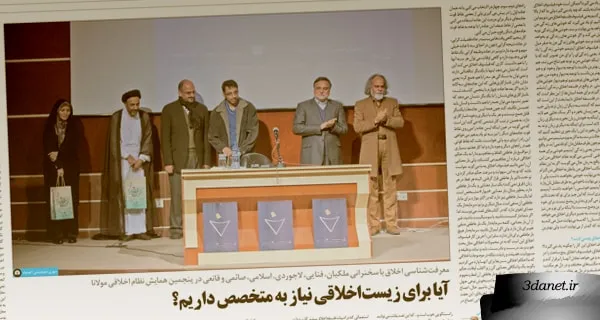
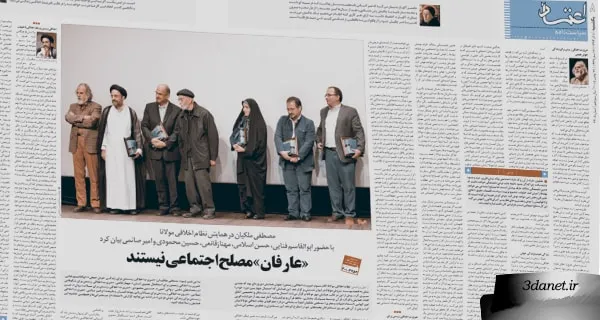
Etemad newspaper report (Mohsen Azmoudeh - Atefeh Shams) on the sixth 'Mehr-e Mowlana' conference, with Mostafa Malekian, Nasrollah Pourjavady, and Ata Anzali in attendance
We and Rumi
Rumi is not to be worshipped
.
.

Discussion1 comments
با فرمایش استادملکیان بخش بزرگی از فعالیت یونسکو،این نهاد زیر مجموعه سازمان ملل که وظیفه اش شناسایی و ثبت میراث فرهنگی کشورها به عنوان میراث تمدن بشری است و نیز سازمان میراث فرهنگی غیر لازم خواهد بود و اگر مثنوی هم به نام ترکیه ثبت شد ما فقط می توانیم دلخوش"ترجیح بلا مرجح "باشیم و به هیچ وجه هم نگران نباشیم که ترکیه و آذربایجان با افزودن به فهرست میراث فرهنگی خود و البته و صد البته با اتخاذ سیاستهای متناسب با گردشگری به شکوفایی اقتصادی روزافزون خواهند رسید و بهتر و مجهزتر برای آذربایجان ایران نقشه ها خواهند کشید چون چیزی که برای ما مهم است نسخه شفای روحی مولانا است!!!.البته استاد ملکیان انسانی متواضع و مطلع است ولی متوجه نمیشوم که چرا هرچه پیش تر می رویم ایشان بر چنین مواردی بیشتر اصرار می ورزد.