Religion
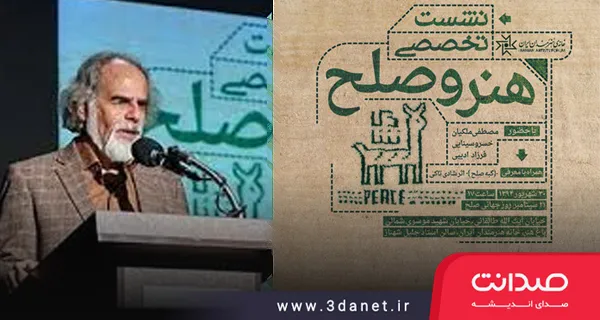
Mostafa Malekian's Talk at the Eighth Mehr-e Mowlana Conference: 'Inner Peace from Rumi's Perspective'
Mostafa Malekian described inner peace as the inescapable prelude to outer peace, defining it as harmony among one's beliefs, feelings, desires, speech, and actions. Without the alignment of these five existential domains, outer peace remains superficial and fragile.
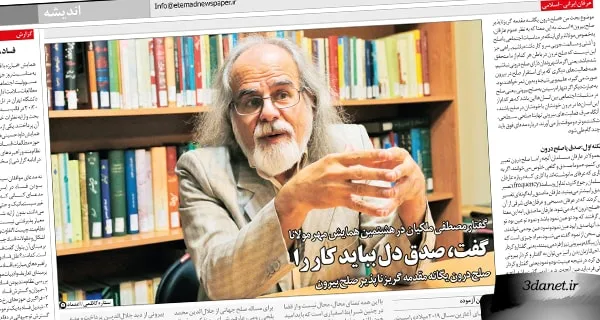
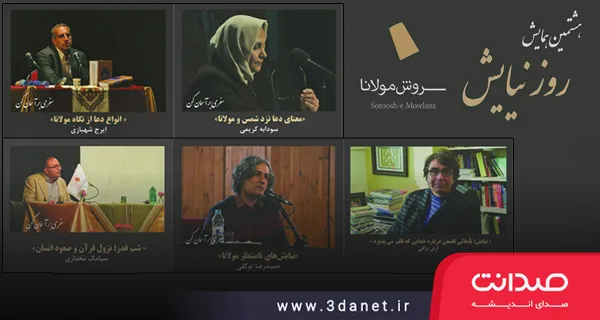
Mohsen Azmoudeh: It is the early days of 2019. Nearly a fifth of the twenty-first century has passed, and there is absolutely no scent of improvement in the world's condition. In just these two decades, the world has witnessed war, massacre, famine, terror, horror, and threat. In such dire straits, speaking of peace seems like an impossible wish. Yet desiring the impossible is not impossible, and as it happens, it is precisely in such deplorable circumstances that one must not lose hope and must seek a remedy. To realize world peace, many theorists, philosophers, scientists, politicians, sociologists, and others have so far proposed solutions. The eighth Mehr-e Mowlana Conference, held this year through the efforts of the Soroush Mowlana Institute at the National Library, was an attempt to seek a remedy for the problem of world peace from Jalal al-Din Mohammad Balkhi Rumi, the Iranian mystic, poet, thinker, and sage. It seems that Mowlana has remarkable things to say about peace, both from the perspective of his historical life and his thoughts. Mostafa Malekian, the contemporary Iranian researcher and neo-thinker who in recent years has spoken of the necessity of returning to the teachings of spiritual masters and sages, addressed in this conference the solution to external peace from Jalal al-Din's perspective and claimed that from Mowlana's view, inner peace or truthfulness is the prelude and prerequisite for external peace with others. In this speech, which was broadcast via video conference, Malekian offered three explanations to elucidate this claim from Mowlana's perspective. What you read is our account of his talk, provided exclusively to Etemad newspaper.
***
The subject of my discussion is "Inner Peace as the Sole Inescapable Prelude to Outer Peace," meaning that in the view of most mystics, particularly Mowlana, in order to deal with peace, reconciliation, and conciliation in social relations, there is no way other than for inner peace to be realized within each of us. That is, if we citizens do not possess inner peace, all other activities undertaken to establish peace externally will be sterile, fruitless, and without result. In other words, if the only way to achieve outer peace, that is, peace in social relations among human beings, is for each of these human beings to be at peace with themselves internally, then mere external activities will ultimately yield only a superficial, fragile, brittle, and temporary peace. Regarding the above claim, several steps must be taken.
First Point: Truthfulness or Inner Peace
Among Muslim mystics, what we term inner peace is generally called truthfulness (sidq) and sometimes purity (khulus). If you refer to the works our mystics have written or works about Muslim mystics, you will see a greater prevalence and frequency of the term truthfulness. Our mystics interpreted truthfulness in a way that in Christian mysticism and Eastern mysticisms is referred to as "inner peace." Our mystics understood truthfulness to mean that your being is identical with your appearance, and your appearance is identical with your being. They called truthfulness the identity of being and appearance. When speaking of appearance, what is meant is what external, outside observers see of the individual, namely the individual's speech and actions. Possibly, body language can also be annexed to external speech and actions. Consequently, the identity of being and appearance means that the individual's external speech and actions must be exactly what transpires within them. What transpires within a human being consists of their beliefs, feelings, emotions, excitements, desires, goals, ideals, and wishes. Therefore, truthfulness as the identity of being and appearance means that the individual's exterior, i.e., their speech and actions, must be in complete correspondence and harmony with their interior, i.e., their beliefs, feelings, emotions, excitements, and desires.
The Oneness of Being and Appearance
Upon careful reflection on this statement, we notice a presupposition. When it is said that a person's being must be identical to their appearance and their appearance identical to their being, it is as if a person's being is one thing and their appearance is another, and as if these two things must be in harmony and correspondence with one another. They have not said that a person's beings must correspond with their appearances, or a person's appearances with their beings. Therefore, it emerges from the mystics' words that those three inner matters (beliefs, emotions, and desires) must also be in harmony with one another so as to be one thing, and the two outer matters (speech and action) must also be in harmony with one another so as to be one thing. The meaning of this statement is that all five existential domains of the human being—namely beliefs, emotions and feelings, desires (the three mental domains), speech, and action (the two behavioral domains)—must correspond with one another. In other words, from the mystics' perspective, truthfulness means that the inner and subjective domains correspond with the outer and objective domains.
Consequently, a human being requires ten (10) correspondences to be characterized by honesty or truthfulness. Because their beliefs must correspond with their emotions, desires, speech, and action, which makes
4 correspondences. Emotions and feelings must also correspond with desires, speech, and action, which is 3 correspondences. A person's desires must also correspond with their speech and action, which is
2 correspondences, and finally, speech and action must also correspond with each other, which makes one correspondence. As a result, the sum of 4, 3, 2, and 1 is 10. Therefore, a person must have 10 harmonies and correspondences within themselves to be called a person of honesty and truthfulness. If their belief and our speech do not correspond, the result is lying. Hypocrisy is also a clear instance of dishonesty; in hypocrisy, too, one domain of a person's existence does not correspond with another. We have coined names for some of these non-correspondences. But complete correspondence means these 10 types of correspondence must exist within them. In this case, it means that each chamber of a person's existence has not tuned its own instrument, and all these 5 domains behave in a harmonious orchestra, unlike when, for example, a person lies. Therefore, if truthfulness, in this ethical sense that is of concern in mysticism, is realized within a person, what has been realized is what psychologists call existential integration, meaning all parts of a person's existence form an integrated and uniform whole. In fact, existential integration, in psychological terms, is the same as integrity in the ethical sense. If we look at it from a psychological perspective, it is called existential integration, and if we look at it from an ethical perspective, it means truthfulness.
Fidelity to Oneself
In a state of honesty, the individual is at peace with themselves, because none of the chambers of their existence is in conflict, opposition, or disagreement with another. The whole forms a single orchestra, and therefore the individual is reconciled with themselves. When it is said that an individual is not at peace and reconciled with themselves, it means one or more of these domains are incompatible with one or more of the other domains. The existentialist philosophers of our time call the truthfulness and honesty, in the mystics' sense, fidelity to oneself. That is, if an individual believes that A is B, and their emotions, feelings, desires, speech, and action are also proportionate to it, they say such an individual is faithful to themselves and has not betrayed, been disloyal to, or turned their back on themselves. A person betrays and is disloyal to themselves when a part of their existence inclines one way and another part inclines in the opposite direction. In fact, being faithful to oneself precisely means that all 5 domains of the individual's existence are at peace with one another. Peace with oneself means peace among the five domains with one another. But if an individual believes that God is the Provider, yet is greedy in amassing wealth, their belief is incompatible with their emotions and feelings. If an individual believes that the system of the world is a moral system, meaning evil will find its punishment and good its reward, yet at the same time does not behave well in their speech and action, it is as if their belief is not compatible with their speech and action. Various types and kinds of these incompatibilities are conceivable.
Therefore, our claim is that if an individual is at peace with himself internally, he will then also be at peace with others. But what connection is there between the reconciliation of the five domains of an individual's being with himself and his reconciliation with others? To answer this question, three explanations can be offered, which are inferable, discoverable, and extractable from Rumi's statements.
First Explanation: From strength arises rectitude in man
Most of the discord, differences, wars, disputes, and conflicts I have with other human beings stem from a feeling of weakness. When I feel weak, I cannot be at peace with others. Because I imagine I am weak and vulnerable, and therefore, since others see me as weak and vulnerable, they might want to harm me. Conversely, when I see myself as strong, because I do not see myself as vulnerable, I assume that others either cannot or do not want to be hostile toward me. Because if they were hostile, it would end to their own detriment, and no harm or injury would come to me. Whenever I see myself in a position of weakness, the world becomes for me an army of enemies, opponents, antagonists, and those who wish to obstruct and hinder me. For example, an elephant hardly considers anyone its enemy, because it knows that the enemy is either aware of its power and consequently refrains from enmity, or is unaware of its power, but cannot inflict a blow upon it. But a rabbit sees every nook and cranny of the world as an enemy, because it is itself weak and vulnerable and knows that whoever realizes its weakness can harm it. Therefore, most of my conflicts with others arise from a feeling of weakness and considering myself vulnerable. The saying attributed to Ferdowsi, "From strength arises rectitude in man / From weakness, crookedness and deficiency are born," is a true statement. The stronger an individual is, the more righteous he is. Unrighteousness stems from a feeling of weakness. The individual feels weak and takes the path of unrighteousness. An English proverb says, "So-and-so has the strength of a hundred men because he is pure." When a person is pure, he becomes strong. Thus, we see the world as our executioner, sworn enemy, antagonist, and opponent, but the cause is the weaknesses we are aware of within ourselves. The weaker a person sees himself, the more he considers others his enemies. Wherever a person feels weakness within himself, he imagines everyone lying in ambush for him and considers them his enemy.
If this premise is acceptable, then a person who is not at peace with himself has lost all his strength in the internal civil war within himself and sees himself as completely weak in his relations with others, unlike a person who is integrated. A person who is integrated, at the very least, does not expend his forces on internal civil war, meaning the war among the five chambers of his being. These five domains help one another. A person whose beliefs, feelings, emotions, speech, and actions are in harmony does not feel weak, and his entire being is a strong entity. This strong person's view of others is not that they are his enemies or opponents intending to strike him. From the perspective of mystics and Rumi, sincerity brings power. But when the chambers of a person's being are at war, the individual feels that all his forces have been consumed by this war, and he himself is a contemptible, wretched, weak, and helpless being. In many instances, Rumi attributes the astonishing deeds that prophets and saints performed, whether in relation to other human beings or in relation to the surrounding nature, to their sincerity, and says that a sincere person is strong, courageous, and has fortitude, and possesses power and credibility, even if others are in a state of threat toward him.
The sincerity of the lover affects inanimate objects / What wonder if it strikes the heart of the wise // The sincerity of Moses struck the staff and the mountain / Nay, it struck the tumultuous sea // The sincerity of Ahmad struck the face of the moon / Nay, it struck the path of the radiant sun. (Book Five of the Masnavi)
A person who is at peace with himself internally has fortitude, and therefore sees others as neither desiring enmity with him nor, should they desire enmity, capable of it. Thus, when a person is integrated internally, he has fortitude, and consequently knows that others neither desire enmity toward him nor are capable of enmity with him.
Second Explanation: When self-interest appears, virtue is veiled
This explanation is the one Rumi emphasizes most. He believes that anyone who is honest with themselves realizes that nothing they have is truly their own, and that everything they possess is a gift from God. This requires no complex philosophical argument. In fact, if a person could point to one of their possessions and say, "You must credit this to me," that statement would be called into question. If a person felt that they had given themselves everything they have, the first sign would be that they would have given themselves ten times as much. For instance, if a person gave themselves their own IQ, they would have given themselves several times more. The same applies to other advantages the human body or mind possesses. One might say, "I am hardworking and diligent, and I have made good use of God's gifts." Hard work and diligence are another expression of a strong will, and without philosophical argument, simply by looking within, one can say that none of the five categories of endowments we possess belong to us. We have three physical endowments: a degree of health, a degree of strength, and a degree of beauty. We did not give any of these endowments to ourselves. There is also a second category of endowments called mental endowments, such as the power to learn, the power to recall, the power to memorize, and so on. We did not give these to ourselves either. The third type is psychological endowments, like the power of management; the fourth is the endowments of geographical climate; and the fifth is the endowments of the cultural and social environment, such as who one's parents are, which teachers one encounters during one's education, in what environment one is raised, and so on. These five types of endowments are not a matter of choice. Therefore, from Rumi's perspective, a person cannot point to anything and say, "I can take credit for this." None of these endowments belong to the person because no effort can increase them, and if they are of the category of defects, no effort can diminish them. These are divine gifts.
If we believe that these are divine gifts, and if truthfulness means that all dimensions of our existence must be consistent with one another, then one's feelings, emotions, desires, and conduct must also be proportionate to this belief. Consequently, a truthful person with such a belief can no longer harbor vanity and self-infatuation. When self-infatuation disappears, many other things disappear as well. A person who is integrated holds one important belief: that their endowments are God-given. And since they are to be truthful, their feelings and emotions must also be proportionate to this belief, and the proportionate feeling and emotion is humility. When self-infatuation vanishes, one has no conflict or quarrel with another, for all conflict and quarrel stem from one's own self-infatuation. Rumi says that when a person is self-infatuated, personal interest becomes very important to them. He calls personal interest 'gharaz' (an Arabic term). When personal interest came, artistry was veiled / A hundred veils rose from the heart toward the eye. When a person is self-infatuated, they have prejudice ('illat' in Rumi's terms). A self-infatuated person believes that what belongs to others is not as positive as what belongs to them. Thus, they hold a negative prejudice against another society, nation, or academic discipline. Negative prejudice arises from self-infatuation, and the individual believes that what relates to them is superior, by virtue of relating to them, to things that do not relate to them. Bigotry, dogmatism, rigidity, and intolerance also stem from self-infatuation. All wars emerge from the heart of personal interest, prejudice, dogmatism, rigidity, bigotry, wishful thinking, intolerance, and being prey to superstition. A self-infatuated person does not resort to reasoning, because a person resorts to reasoning only when they consider themselves equal to others. The self-infatuated person says, "My opinion is superior to others'," and does not see themselves as needing to provide proof.
In the second book of the Masnavi, it is recounted that a judge wept while passing judgment. Someone asked him, "Why do you weep? Your station is most exalted." The judge replied, "Because I am an ignorant man caught between two worlds. For the plaintiff knows how the story goes, and the accused also knows, but I do not know what the matter is! The judge must deduce, use circumstantial evidence and indications, and piece together the proofs, while the plaintiff and the accused sit silently and say nothing." The one who had asked the judge why he wept gives him an important answer. He says the plaintiff and the accused have knowledge, but they have prejudice. When knowledge is accompanied by prejudice, it blinds a person. You have no knowledge, but you also have no prejudice. When ignorance is not accompanied by prejudice and is coupled with striving to attain the truth, it gradually transforms into knowledge. Of course, positive prejudice is also incorrect.
He said, "The adversaries are learned, yet with a defect; you are ignorant, yet the candle of the nation.// For you have no defect in between; that detachment is the light of the eyes.// And those two learned ones, their self-interest blinded them; their defect cast their knowledge into the grave.// Ignorance without defect becomes knowledge; knowledge with a defect becomes crooked and unjust."
Therefore, Rumi believes that if we hold the belief that nothing we have is from ourselves, then we will no longer find narcissism and will have no quarrel with anyone. It is narcissism that gives birth to seven offspring. Rumi, quoting the Bedouin woman who wanted to take a gift to the Caliph, says:
The wife said, "Sincerity is that which, from one's own being, arises purely from one's own striving."
When we perceive things in this way, we are also willing to pay our dues. Rumi says:
Sincerity is the giving of the soul; come, vie with one another! Read from the Prophet, "Men who are sincere."// All this dying is not the death of the form; this body is like an instrument for the spirit.// Oh, many a raw one whose outward blood was shed, yet the living soul fled to the other side.// His instrument broke, and the highwayman remained alive; the soul is alive, though the mount sheds blood.// The horse was killed, and his path was not traversed; he only became raw, ugly, and disturbed.
The Third Explanation: Become a Friend, So You May See Countless Friends
Rumi's third explanation for why, when a person's inner self is at peace with their outer self, they will be at peace with others. Rumi expresses this explanation implicitly. He says that human beings can smell the sincerity of other human beings, and when they see sincerity in someone, they have no desire at all to enter into war and conflict with them. According to Rumi, it is as if falsehood and insincerity have a foul odor, and truthfulness and sincerity have a pleasant fragrance. Indeed, when a person is sincere, even if others themselves are not sincere, they perceive the scent of sincerity in them, and when they perceive the scent of sincerity in them, they do not wish to enter into battle and war with them. It is for this reason that the very existence of such a person is a renunciation of war and hostility. The hearts of others do not bear witness to entering into war and strife with this person. In my opinion, this psychological reality is correct. No matter how impure and wicked a person I may be, I seem to have more inclination to fight and quarrel with the impure and wicked than with a person whom I see as wholly sincere. It is as if the existence of sincere people is a declaration of abandoning hostility and war, and a declaration of peace. Rumi has many verses on this theme, that sincerity has a scent, and dissimulation and hypocrisy also have a scent, and a person cannot hide the scent of either. When others smell this scent, they incline towards it. Rumi says:
He said, "Sincerity of the heart is needed for the work; otherwise, friends are not scarce for the friend."
That is, if a person has sincerity of heart, friends are not scarce in the world, and everyone falls in love with them; however, others must smell this sincerity. When they smell this sincerity, they have no desire at all to show incompatibility with them.
Become a friend, so you may see countless friends; for without friends, you will remain without help.
In my view, these three explanations from Rumi regarding the relationship between inner peace and outer peace are defensible. In other words, if these three explanations are correct, then it seems the most fundamental and foundational thing one can do to increase outer peace is for each person to make peace with themselves. When an individual makes peace with themselves, for the three reasons expressed on Rumi's behalf, it appears the path to making peace with others is also smoothed for them, and the occasion for conflict never arises in the first place so that we would need to make peace after the war. From the very beginning, human beings are in a state of peace. That is all.
.
.
Mostafa Malekian's Talk at the Eighth Mehr-e Mowlana Conference
He Said, the Work Requires Sincerity of Heart
Inner Peace: The Sole Inescapable Prelude to Outer Peace
Page 15, Andisheh Section, Etemad Newspaper, Wednesday, January 2, 2019
.
.

Discussion3 comments
قربان، درست ترش اینه که بگیم: الان زکات قرن بیستم رد شده، نه خمساش! بابا ای ول! علما دست از سرمون برداشته اند،و خمس و زکات رو یواشکی و توو سامسونیت متبرک می کنند، اون وقت شما برای قرن بیست و یکم هم فتوای خمس جاری می کنید؟ واللا من می گم "زکات" بهتره! سخن از سره نویسی نیست و باستان گرایی و کورش بازی و عرب زدایی. صحبت از اینه که باید مواظب غضنفر باشیم و مارادونا رو ول کنیم. عجبا!
اگر انسان احساس کند که هر چه دارد، خودش به خودش داده، اولین علامتش آن است که ۱۰برابر آن را به خودش میداد. مثلا اگر انسان خودش به خودش هوش بهر (بهره هوشی) میداد، چندین برابر به خودش میداد. همچنین است در مورد سایر امتیازاتی که بدن یا ذهن انسان دارد. ممکن است بگوید من سختکوش و پرکار هستم و از دادههای خدا خوب استفاده کردهام. سختکوشی و پرکاری نیز تعبیر دیگر اراده قوی است و بدون استدلال فلسفی و با رجوع به خود میتوان گفت که هیچکدام از پنج دسته مواهبی که داریم، مال خودمان نیست. ما سه موهبت جسمانی داریم: درصدی از سلامت، درصدی از نیرومندی و درصدی از زیبایی. هیچ کدام از این مواهب را خودمان به خودمان ندادهایم. همچنین دسته دومی از مواهب با عنوان مواهب ذهنی داریم مثل قدرت یادگیری، قدرت یادآوری، قدرت یادسپاری و… اینها را نیز خودمان به خودمان ندادیم. قسم سوم مواهب روانی مثل قدرت مدیریت است و قسم چهارم موهبتهای اقلیم جغرافیایی است و قسم پنجم موهبتهای محیط فرهنگی و اجتماعی است، مثل اینکه پدر و مادر فرد چه کسی هستند و به چه معلمانی در طول تحصیل بر بخورد و در چه محیطی پرورش یابد و… این پنج قسم موهبت اختیاری نیست. بنابراین از نظر مولانا انسان نمیتواند بر هیچ چیز انگشت بگذارد و بگوید این را میتوانم به پای خودم بنویسم. همه این موهبتها به این جهت از آن خود انسان نیستند که با هیچ کوششی نمیتواند آنها را افزایش بدهد و اگر از مقوله عیب باشند نیز با هیچ کوششی نمیتواند آنها را کاهش بدهد. اینها دادههای خدایی هستند. ايا بنا به كفته هاي بالا سختي ها و مشكلات زندكي را هم جزء داده هاي خداوند بايد كذاشت ؟ و بدي بخت را باي او بنويسيم؟ از جوابتون ممنون مي شم.
سرکار خانم مریم..با سلام .به نظرم پاسخ این است که استاد ملکیان درباره ب دارایی های روانی ماست که به ما"داده شده".سختی ها و مشکلات تصور می کنم جزو پیشآمدها و معلول هایی هستند که در این بحث نمی گنحند.