Religion
International Conference on Rumi Studies in India, with Mostafa Malekian in Attendance
At an international Rumi conference in India, Mostafa Malekian elaborated on Rumi's diverse views regarding the relationship between body and soul: sometimes the body is a cage for the soul, and sometimes an uncooperative fellow traveler, but in both cases, spiritual growth requires the discipline of the body.
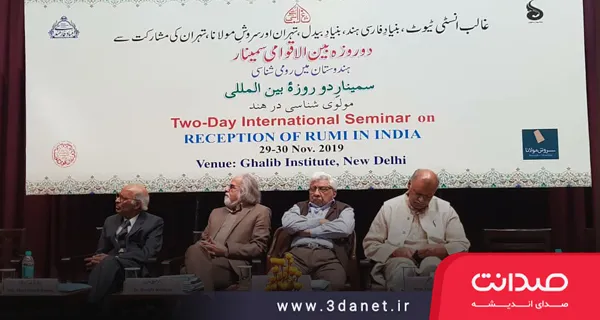
At the international conference on Rumi studies, which lasted a total of two days, the collective efforts made toward understanding Rumi, as well as the collection of unique manuscripts of this Persian poet, were presented. Speakers at the event also elaborated on the thoughts and ideas of Jalāl al-Dīn Rūmī. From Iran, Mostafa Malekian delivered a lecture titled “The Relationship between Body and Soul from Rumi’s Perspective.”
.
.
Report by Etemad Newspaper on Mostafa Malekian’s Lecture:
Mostafa Malekian, a researcher of philosophy and ethics and a contemporary Rumi scholar, at the two-day international conference on Rumi studies in India, held on November 29 and 30 of this year, elaborated on the various types and modes of the relationship between soul and body from Rumi’s perspective. The conference was organized by the Persian Foundation of India, the Bidel Foundation, and the Soroush-e Mowlana Institute. A report of his speech follows.
Rumi is, of course, among the thinkers who believe that in the human being, besides the body or the physical form, there exists another realm called the realm of the spirit or soul, but the entire question revolves around how these two realms within us relate to one another. Is the relationship between body and soul, or between the physical and the spirit, a friendly one or a hostile one? Are these two in harmony and agreement with each other, or in conflict and opposition? Especially for one who is engaged in spiritual and mystical wayfaring, how should they deal with these two realms of their being so that this transaction leads to their spiritual and inner development? If you examine Rumi’s works carefully, whether in the Masnavi-ye Ma’navi, the Divan-e Shams, or the Fihi Ma Fihi, you will see that he did not adopt a single viewpoint in answer to the above questions, and the entire issue is how these multiple viewpoints can be reconciled.
The Body as the Soul’s Cage
The first viewpoint from Rumi is the one we attribute to Plato in the history of philosophy; that view is that the human soul is a bird that has been captured and imprisoned in the cage of its body. There is no doubt that if the relationship between body and soul is that of a cage and a bird, this relationship is not harmonious or favorable. The cage is not a desirable thing for the bird. In fact, it is the deprivation of the bird from any kind of flight, journeying, and soaring. This viewpoint is repeated frequently in Rumi’s work.
For example, in these verses: “The ‘descend’ cast the soul into the depths / This menstruation deprived it of its prayer // The ‘descend’ cast the soul into the body / So that it was hidden in clay while in Eden.” It is as if the Platonic view aligns with the “descend” (ihbitū) that is addressed to Adam and Eve in the Quran. Here we see that our psyche, mind, and soul are captive in the cage of the body, and there is no doubt that the stronger this cage becomes, the more captive the bird will be, and whatever is for the freedom of the bird must be for the breaking and weakening of this cage. “Tear the body’s shackle from the soul’s foot / So it may prance around this meadow // Here the same expression is used, as if the body is a shackle on the human soul that prevents the human soul from flying: “The soul opens its wings toward the heights / The body has sunk its claws into the earth.”
Or he says: “Do not make a home in the hearts of others / Do your own work, do not do the work of a stranger // Who is the stranger? Your earthy body / For whose sake you are sorrowful // As long as you feed the body rich and sweet things / You will not find the gem of the soul fattened.” Here, the fattening of the soul is contingent upon the leanness and emaciation of the body. One must not feed the body rich and sweet things so that the soul may find fatness, growth, and transcendence.
Parallels to these poems are abundant in Rumi’s works, and all indicate that a discordant relationship exists between body and soul, and the physical and the spirit are not compatible. In fact, one is the cage of the other, and the more a person weakens that cage, the closer they have brought the bird to freedom, and the more they fortify that cage, the more condemned and doomed to captivity they have kept the bird.
Two Incompatible Fellow Travelers
There is a second view in Rumi as well. In this view, the relationship between soul and body is no longer like the story of the cage and the bird, but rather the story of two wayfarers and fellow travelers, where one companion is unsuited to the other—that is, it is slow and has no desire to travel, as if it has been compelled to journey without its own will or inclination, while the other is intensely eager and passionate about the journey. Thus, as long as these two fellow travelers are together, they both harm one another. Therefore, the right course is for them to part ways and for each to go its own path, one proceeding slowly and the other with agility and swiftness.
For example, Rumi says: "O mortal, you are in torment from this body / Your spirit-bird is bound to a different kind." That is, it is as if two birds have been tied together, each preventing the other from flying. He says: "The spirit is a falcon, and the natures are crows / It bears wounds from the crows of its body." That is, the crows of the body have become fellow travelers with the falcon of the soul, and these crows constantly harass and torment this falcon. The right path is for this falcon to sever its companionship and take a different way.
Or in another example, he says: "He remained in the midst, weeping bitterly / Like a Bu Bakr in the city of Sabzevar." That is, just as a man named Bu Bakr in the city of Sabzevar, where everyone is Shi'a, sees nothing but opposition and strife, this falcon too must separate its path from these crows, otherwise it will receive nothing but torment.
He says: "The leaf of the body is the leaflessness of the soul; quickly / This must be diminished, that increased." That is, we must reduce the foliage of the body as much as we can so that we may increase the foliage of the soul.
Or he says: "The body is in leaf day and night, and because of that / The soul's branch is shedding leaves and in autumn." That is, the more the leaves of the tree of the body increase, the more the leaves of the tree of the soul decrease and fall. Our soul becomes autumnal when the tree of our body becomes springlike. It is as if there is a kind of incompatibility between the two. In the same vein, he says: "Gradually withdraw from these foods / For this is the food of an ass, not that of a free man // So that you may become receptive to the original food / So that you may consume the morsels of light. If we look closely, we see that the second view, like the first, agrees with the previous view on the opposition between body and soul, but this opposition is somewhat less. In the first view, the soul is the prisoner of the body, but in the second view, the soul and body are two fellow travelers, one of whom is a source of torment for the other and an obstacle to its agility, swiftness, and dynamism.
The requirement of both views is the mortification of the body; that is, in both views, we must mortify the body so that we can nurture the soul. We cannot nurture both body and soul, and there is no choice but to mortify one. Of course, Rumi is opposed to the extreme asceticism practiced by some Sufis of that era in imitation of many Hindu ascetics, but he agrees with the principle of mortification and believes that one must diminish the body through asceticism so that the soul may find a kind of freedom.
Regarding these ascetic practices, he says: "The sense of this world is the ladder to this world / The sense of the afterlife is the ladder to heaven // The health of this sense comes from the flourishing of the body / The health of that sense comes from the ruination of the body." That is, we have two senses; strengthening one sense depends on the body flourishing, and strengthening the other, which is our spiritual sense, depends on the body being ruined—to use Rumi's explicit term—so that the soul can find agility.
He says: "So union with this is separation from that / The health of this body is the sickness of the soul." That is, if this body is sound and healthy, it means your soul is sick and afflicted with illness. That is, we have two entities that have inevitably been paired together, but the sickness of one is the health of the other, and vice versa. Therefore, there is no choice but to make one sick through mortification so that the other may become healthy.
From Rivalry to Companionship
But the third view on the relationship between soul and body in Rumi is that he says sometimes there is rivalry between body and soul, and sometimes this rivalry turns into companionship. In other words, it is as if at first the body and soul are in complete opposition, and after the soul has ruined the body, it then proceeds to cultivate the very body it has ruined. He says: "The soul's path is to ruin the body / Then after its ruination, to make it flourish." That is, he says after the ruination and destruction of the body by the soul, that same soul makes it flourishing and prosperous.
He says: You ruined the house for the sake of treasure and gold / And with that very treasure, you make it more flourishing. That is, when you ruin your own house, as a result of this ruination you find a treasure within the house, and with that very treasure, you build the house anew. Meaning, it is as if after the body is destroyed, it must be rebuilt. The spirit destroys the body, and then the spirit rebuilds the very body it destroyed with its own hands, because it apparently needs the body and, in any case, requires a flourishing body.
But in any case, at this stage, there is a kind of enmity, indeed hostility, between body and soul; one is destroyed and ruined by the other, and of course, after this ruination, rivalry turns to companionship, and a kind of reconstruction occurs anew. The meaning of this statement is that this being has a series of bodily and physical needs, and a series of spiritual needs, and both sets of needs must be fulfilled, and the fulfillment of neither set of needs hinders the other.
.
.
This conference was held through the efforts of the Soroush-e Mowlana Cultural Institute, the Bidel Dehlavi Foundation, the Persian Foundation of India, and the Ghalib Institute.
.
.
Full Video of the International Conference on Rumi Studies:
Watch on YouTube | Watch on Aparat
.
Download the Full Audio of This Conference
.
.
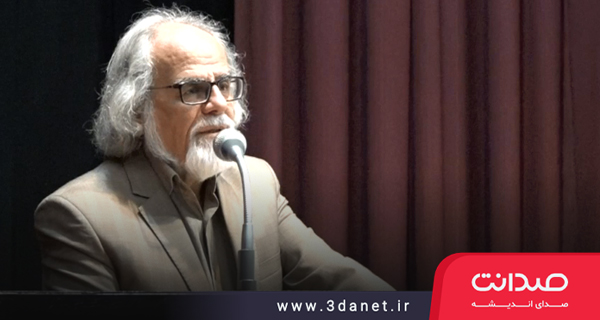
Video of Mostafa Malekian's Speech at This Conference:
Watch on YouTube | Watch on Aparat
.
Download the Audio of Mostafa Malekian's Speech at This Conference
.
.
International Conference on Rumi Studies in India (New Delhi)
Source:
Soroush-e Mowlana Cultural Institute Website
Soroush-e Mowlana Telegram Channel
.
.

Discussion6 comments
جناب استاد ملکیان در هر زمینه صاحبنظرند واقعا مصداق بحر در کوزه
من بدون هیچ قصد توهینی ،واقعا پس از خواندم هر مطلبی از جناب ملکیان در باب عرفان و از جمله مثنوی ،هنوز در نیافته ام که ایشان اصلا به به مقوله عرفان،بعنوان چیزی که راهی به سوی حقیقت می گشتید،معتقدند یا نه؟البته این سخنرانی را می توان صرفا توصیف آنچه ملکیان در باب این موضوع بدان نایل آمده دانست،اما پرسش در باب عقیده بنیادین وی می باشداین اول بار است که من در اینترنت مطلب می نویسن متاسفم برای شما
اميل چوران (در فارسي به اشتباه:سيوران) فيلسوف مجارستاني در كتاب "اعترافات و كفريات" (به فرانسوي : Aveux et anathèmes 1987) گفته: فرد در يك كشور ساكن نيست، در یک زبان ساکن است، آن (زبان) کشور ماست و سرزمین پدری ما — و نه چیز دیگر. همین قدر — در صورتی که فهم شود — برای مجادلاتی مثل ایرانی بودن یا نبودن مولوی و نظامی و سنایی و مثل اینها، کفایت می کند. بماند که افاغنه هم از اقوام ایرانی تبار بوده و هستند. ولي موضوع مهم اين است كه مصطفي ملكيان كه از مولوي شناسي (!) اين را كشف كرده كه جلال الدين "تعبد ظاهري" داشته و احتمالا با سابقه ای که دارد با خواندن کتاب “با پیر بلخ” مصفا، که کتابی به غایت بی مایه و در شناخت مولوی و مثنوی پرت و بیراه است، مثنوي و مولوي را به زعم خود فهميده، چه شايستگي براي حرف زدن در اين باب آن هم در مجامع علمي دارد؟! بهتر است استاد به همان توصيه هاي اخلاقي و بازنشر قوانين زندگي موفق بپردازند تا مثنوي. تنها وجه اشتراك ملکیان و مثنوی همين لفظ «معنوي» است که آن هم صرفا در ساحت لفظ است و بس. زمانی كسي مثل بدیع الزمان فروزانفر مثنوی پژوه بود یا عبدالباقی گولپینارلی یا ریموند آلن نیکلسون، امروز ملكيان! ببينيد ما به كجا رسيده ايم.
تصحیح می کنم: چوران اهل رومانی بود.
با سلام و احترام هر کسی حق داره در هر زمینه ای مطابق میل خود پژوهش کنه، از جمله در زمینه مولوی شناسی... خوب بود شما یکی از ناراستی ها و انحرافات ملکیان در شناخت مولوی را با استناد به گفتار یا نوشتار ایشان تبیین میکردین که چیزی دستگیر ما می شد. صرف طعن زدن و تف و لعن فرستادن ک ارزش نوشتن نداره برادر...
شاعر ایرانی؟! مولانای بلخی از خاک فعلی افغانستان چگونه ایرانی شده است؟