Philosophy
Audio Lecture: Rumi's Challenge to Philosophy by Mehdi Moinzadeh
Rumi regarded philosophy as a veil between the knower and the known and called science the building of a stable; his critique differs in nature from Ghazali's. The philosopher is one who, by relying on reason and proof, distances himself from the truth. A report on a lecture by Mehdi Moeinzadeh.

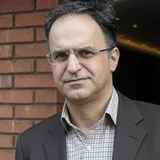
Mehdi Moeinzadeh
SpeakerWhat was it about philosophy and the philosophical that Rumi was hostile toward, and what aspect of it was the object of his criticism and censure? Perhaps it can be said that the most significant critique he levels is that philosophy interposes a mediator between the perceiver and the perceived, between the knowing subject and the object of knowledge; this mediator is a veil (in Rumi's view), it is reason and proof. Rumi says that philosophy takes pride in this veil.
Text of the lecture by Mehdi Moinzadeh titled Rumi's Challenge to Philosophy:
The subject we wish to examine is Rumi's challenge to philosophy. This tale, as Hafez says, bore fruit in the world. Essentially, this undertaking of Rumi's regarding the philosophers is not a novel or new thing; the spiritual climate and the climate governing the thought of that time was just so. After Ghazali's fierce attack on philosophy in "The Incoherence" and to some extent in "The Deliverer," the way was opened, and greater audacity arose among thinkers to launch repeated attacks on philosophy and philosophers. Sheikh Shahab al-Din Omar Suhrawardi—of course, every time his name comes up, we must add a note that the Sheikh of Illumination (who died in 632 AH), apart from him, wrote a book called "Rashf al-Nasayeh al-Imaniyah" in condemnation and denial of the philosophical and philosophy—Najm al-Din Razi also has fierce attacks in "Mersad al-Ebad," and likewise Baha al-Din Valad, Rumi's father, who was considered the Sultan of the Scholars of Balkh; of course, more important than these is Ghazali's book The Incoherence.
Philosophy and the philosophical were subjected to criticism and censure from two sides (the religious scholars and the people of Sufism); from the side of the religious scholars, the reason is somewhat clear, because the questioning in philosophy, regardless of whether this questioning harmed religious teachings or not, and in matters that are in principle matters of faith, could not be accepted by the people of Sharia, even though some of these questionings even turned into rulings against religious teachings, including the three issues for which Ghazali excommunicated the philosophers; for example, the impossibility of the resurrection of bodies or bodily resurrection. Rumi was the heir to such an intellectual atmosphere, although our claim, contrary to what is famous and what someone like the late Zarrinkoub points out, is that the nature of Rumi's critique and censure is different from all of these. Zarrinkoub explicitly states that Rumi levels the same critiques as Ghazali against the philosophers, not all of those critiques, but in the two or three instances where Rumi critiques, it resembles Ghazali's critique, at least his method is similar to Ghazali's method. But we will demonstrate that although in places where Rumi explicitly mentions philosophy and the philosophical, his words become very similar to Ghazali's words, if we consider the whole of the Masnavi and the climate governing the Masnavi, the nature of its critique and denial is of a completely different kind.
In "The Incoherence" and to some extent in "The Deliverer from Error," Ghazali puts forward twenty issues and in all twenty issues demonstrates the inability of the philosophers. Incoherence means both contradiction and gradual collapse, it is in fact a falling apart, however, in three issues, in addition to demonstrating inability, he also excommunicates the philosophers—he was Hujjat al-Islam and a holder of legal authority, and his excommunication was effective, just as he also forbade the cursing of Yazid from the pulpit, he has a fatwa on this matter that Shiites by no means approve of—; these three issues were the assertion of the eternity of the world? (06:20), God's knowledge of particulars, and bodily resurrection. Rumi has references to all three, especially the assertion of the eternity of the world, which we will refer to. To show how frequent the attack on philosophy is in the Masnavi and that it is not a random, sudden matter occurring in just one place in the Masnavi, we will point to a few examples: Firstly, like a number of sciences, they consider philosophy the science of building a stable (we will place greater emphasis on this part of Rumi's words at the end of the lecture).
Weaving garments of gold brocade / Finding pearls from the depths of the sea
The subtleties of the science of geometry / Or astronomy and the science of medicine and philosophy
Which is connected only to this same existence / It has no path to the seventh heaven
All this science is the building of the stable / Whose pillars were the ox and the camel
For the survival of the animal for a few days / These fools named these things mysteries
He disparagingly calls the philosopher a “little sage” (ḥakīmak): Since the little sage has adopted a belief / That the heavens are the egg white, the earth its yolk
He says to Ptolemy, let us consider the sky as the absolute egg, a hen’s egg. Bayḍa means white; if we consider the white of the egg, the earth is its yolk. In the Dīvān-e Shams, he calls him “philosophick” (falsafīk): May the philosophick go blind, may light be far from him. The reason he does not use this term “philosophick” in the Masnavī is perhaps that the word falsafīk does not fit in the ramal meter; otherwise, he would not have hesitated to bring it there. He considers the philosopher (falsafī or faylasūf) to be someone who, the more effort he makes to reach his desired goal, which is the truth, the further he gets from the truth, because he has his back to the treasure, and naturally, the more he advances, the more distant he becomes from his heart’s desire.
The philosopher killed himself with thought / Tell him, he is blind, his back is toward the treasure
Tell him, the more he runs forward / The more distant he becomes from his heart’s desire
He considers the philosopher to be someone estranged from the senses of the saints; for instance, he denies the story of the Ḥannāna pillar and miracles: The philosopher who denies the Ḥannāna / Is estranged from the senses of the saints, and again, he considers the philosopher to be someone who places various intermediaries and veils between himself and the truth by his own hand; this veil is precisely reason and proof: The philosopher increases in intermediaries / On the contrary, the pure one is freed from proofs, it is the bondage of rational concepts; he has ensnared himself in the bondage of rational concepts: The bondage of rational concepts is the philosopher / The pure one is the cavalier of the intellect of intellect, and in one place he even speaks of unbelief (kufr) regarding the philosopher, although this unbelief should not be taken too seriously, because even though Rumi himself was a mufti and, according to Aflākī in the Manāqib, until the end he received his livelihood from the stipend of the madrasa, his living was earned by issuing fatwas. Despite being a jurist and issuing fatwas, only in one place in the Masnavī is the attribution of unbelief made to him, but this verse should not be taken solely as excommunication: Rather, the reflection of that corruption and unbelief of his / Cast this denying thought upon him
Another place: A contemptible philosopher-logician / Was passing by the school at that time, the story is that in the Masnavī it is expressed this way: a close disciple, in Rumi’s own words, was reciting that verse: Say, “Have you considered: if your water should sink into the ground, then who could bring you flowing water?” If you wake up in the morning and see that the spring of water from which you drank has sunk into the depths (has gone deep), who will bring you sweet water? The philosopher hears this and says, “We will bring it out with a…?” (12:47) We will bring it out with a pickaxe. Then Rumi says this because this statement contained an implied criticism of the Quranic utterance.
In any case, the frequency of these fierce attacks has been such that we should take this matter seriously and not assume it to be an accidental or incidental affair. On the other hand, we want to see what the truth of this matter was. Was the attack directed at the subjects of philosophy? A science has a subject and a method; what aspect of this science was the object of Rumi’s criticism—its subjects, its method, or fundamentally something else? Or did he have a personal enmity with the philosophers? First, we will discuss the subjects: whether the subjects that are generally assumed in philosophy, the subjects that philosophers put forward, could Rumi have considered these subjects as non-subjects? When we look at the Masnavī, we see—as Zarrīnkūb says—it is nowhere devoid of philosophical insight, and there is scarcely any major philosophical issue that has not found an opportunity to be raised in the Masnavī and given an allegorical or demonstrative answer; for example, the issue of substance and accident.
In the second book, there is a story in which a master takes two people as slaves, and a dialogue takes place between them; we are not concerned with the story itself, but the dialogue between the master and the slaves arises over the issue of accident and substance. Here, Rumi refers to the noble verse, Whoever brings a good deed shall have ten times its like, and brings up the theological and philosophical rule: “Accidents do not endure for two moments,” an accident cannot exist without its substance; meaning, this blackness, around the philosophers and the rule of philosophy and theology, for this blackness to come out of this microphone, which is its accident, “it does not endure for two moments,” it must necessarily enter another substance, be joined to another substance, otherwise it cannot subsist by itself in time. God says in the Quran: “Whoever brings a good deed,” whoever brings a good deed to Us, not merely does a good deed, because doing a good deed does not necessarily mean bringing it before the Divine Presence; this good deed is an accident. Prayer and fasting, in Rumi’s view, are accidents; this accident must be incorporated into a substance like the soul so that we can go before God, otherwise it remains like wealth and property in this world, because it has not become substance, because “accidents do not endure for two moments.”
The condition is “whoever brings good,” not merely doing it / But bringing the good to the Divine Presence
Do you have a substance of a human or a donkey? / How will you carry these accidents when they perish?
These accidents of prayer and fasting / Since they do not endure for two moments, are negated
If they are not transformed into substance, they are negated. A detailed debate ensues there between the slaves and the master over the issue of substance and accident, which perhaps spans more than 100 verses, which is among the major philosophical issues. Likewise, the issue of temporality and eternity is among the major topics in both philosophy and theology; in the fourth book, a dialogue is arranged between a believer and a Sunni. When Rumi says Sunni in the Masnavi, he has the absolute believer in mind; between a Sunni and a Dahri (atheist/materialist), the believer defends the temporality of the world and the Dahri defends the eternity of the world. According to Rumi and many of these figures, even someone named Ibn Ghaylan, fifty years after Ghazali’s death, writes a treatise refuting the temporality of the world. They posited a necessary connection between asserting the temporality of the world and denying God’s creatorship, a connection that is not correct, and the incorrectness of this connection was shown much later by Ibn Rushd. Ibn Rushd has a book called “The Incoherence of the Incoherence”; that is, he exposed the contradictions of Ghazali’s “The Incoherence of the Philosophers” and defended philosophy. There, he stated that the necessary connection between the temporality of the world and denying the Creator’s role as maker is not a correct connection. One can consider the world eternal and God as the maker, because the philosophers say regarding the principle of causality that the complete cause brings its effect into existence by its very existence; therefore, if God is the complete cause, by the very existence of God, who is eternal, the world will also come into existence, and He is its complete cause, so the world has an existential posteriority to God, but in terms of time, both are eternal.
Therefore, it can be said that there is no contradiction between someone who believes in the eternity of the world and at the same time accepts God’s role as maker, just as in none of the works of our philosophers has God’s role as maker been denied. Our purpose was to show that the issue of temporality and eternity was also discussed in detail by Rumi. Plato’s theory of knowledge is the theory of recollection. Plato believed that we had an encounter with the Forms, and now, when we encounter things in the world that are imperfect examples of those perfect Forms, we remember things; these verses precisely evoke the theory of Forms:
For hundreds of thousands of years I was in flight / Like particles of air, without will
Even if I have forgotten that time and state / A memento remains with me in the sleep of departure
Even the theory of Forms is, in a way, brought up:
The bird is above, and its shadow below / Runs on the earth, flying bird-like
A foolish hunter chases that shadow / Runs until he becomes exhausted
Unaware that it is the reflection of that bird of the air / Unaware where the origin of that shadow is
Unaware that this is the shadow and that is the origin, the origin is above, and I am chasing the shadow.
The theory of the sages concerning the origin of music is also among the instances that Rumi adopted from the pre-Socratic philosophers, and probably from Pythagoras:
The reed-flute’s wail and the drum’s menace / somewhat resemble that universal trumpet-blast.
So the sages have said, these melodies / we have taken from the revolution of the spheres.
It is the sound of the spheres’ revolutions that people / convey with the lute and with the throat.
We have all been parts of the universe; / in Paradise we heard those melodies.
They believed that we had an encounter; first, that music is the very melody with which the celestial spheres and heavenly bodies revolve, and we have had an encounter with this. When the reed-flute’s wail, the drum’s menace, and the lute’s sound come, we feel harmony within ourselves, in tune with the harmony of the revolving spheres. Regarding the theory of Heraclitus and his famous saying that you cannot step into the same river twice, we found an occasion for its exposition in the Masnavi:
Life arrives ever anew, like a stream; / it appears continuous in the body.
Every moment the world and we are renewed, / unaware of the renewal within permanence.
So for you, every moment is a death and a return; / Mustafa declared, “The world is but a moment.”
Fakhr al-Din al-Razi, in his critique of the Aristotelian definition of motion as a gradual emergence from potentiality to actuality, says that we have no such thing as a gradual process at all; what you assume to be gradual is in fact something existing somewhere at every instant, which entirely perishes instant by instant and comes into being again, and is situated at moment t₂. That which you perceive as continuous is nothing but discrete moments in which the object is completely generated and corrupted, entering into generation and corruption. Rumi’s famous example is:
If you wave a firebrand back and forth, / to the eye it appears a very long fire.
That appears continuous due to the swiftness, / like a crooked spark when you wave it quickly by hand.
The list is long; we will content ourselves with this much to show how philosophical topics—whether as absolute subjects, like what we said about substance and accident, origination and eternity, or as theories attributed and belonging to philosophers—found an occasion for exposition in the Masnavi. Another issue is that not only philosophy but many other branches of knowledge are subjected to censure and denial in the Masnavi; likewise, theology, under the name of bāḥith: “A philosopher of another sort made a commentary; / a bāḥith wounded him with a rebuttal”—bāḥith in the Masnavi refers to the theologian. Even in theoretical mysticism, the hostility of the Sufis toward philosophy stems from the fact that they generally considered unveiling and direct witnessing to be the source of knowledge, and could not bear logical proof and demonstration. In theoretical mysticism, this was not the case either; as we see in Ibn Arabi, there is not much reliance on the power, intensity, and force of the philosophers’ adherence to demonstration. Rumi is also not on good terms with the people of theoretical demonstration. Regarding Sadr al-Din al-Qunawi, who was the disciple and partner in spiritual tastes of Muhyi al-Din al-Arabi in Konya, when Rumi recites those verses in the third book, his gaze is probably directed at one of Sadr al-Din al-Qunawi’s disciples. The verses are conceptually very lofty; they can play a pivotal role in the theory we are presenting, because Rumi’s real conflict with philosophy lay in these components.
A fool suddenly from a donkey’s stable—he means Sadr al-Din al-Qunawi’s circle—/ stuck his head out like a faultfinder.
He taunted, saying, “This discourse is lowly—meaning the Masnavi—/ it is the story of the Prophet and following him.
It is not a discussion of profound thought and secrets / toward which the saints spur their steeds,
From the stations of devotion to annihilation, / step by step, to the meeting with God.”
This does not depict it in the manner of theoretical mysticism; for instance, it does not say the first, second, and third station, or like Attar, that the first, second, and third stage is this until we reach the Simurgh. It is scattered, and this scatteredness and speaking of the rabbit, the lion, and the fox was burdensome for theoretical mysticism. Rumi says:
When the Book of God came, likewise / these infidels taunted in just this way,
That it is legends and a wretched fable, / there is no profundity or lofty investigation.
In the Book of God as well, when they said, “This is nothing but the fables of the ancients,” one etymological conjecture for the word asāṭīr is “story” or “tale.” Asāṭīr al-awwalīn means the Qur’an is a story; he says they said that about it, and here and in several other places he places his own book on a par with the Book of God. Jurisprudence, too, is vulnerable to Rumi’s attacks; Rumi never openly tangled with the jurists, but he has passing allusions. In the story of the grammarian and the boatman, when the boat falls into whirlpools, he says:
What is needed here is self-effacement, not grammar; if you are effaced, ride the water without danger.
Jurisprudence, jurisprudence, grammar, grammar, morphology, morphology / In the moment of need, you will find them wanting, O splendid friend.
Here is the core of life, the whirlpool of life; jurisprudence, morphology, grammar, and all such things you will find wanting in the moment of need; something else is required. Where love increased pain, Abu Hanifa and Shafi‘i taught no lesson; he names two of the four imams of Sunni jurisprudence, saying they have no path to that truth. And even regarding Hadith, without the two Sahihs! He alludes to Sahih Muslim and Sahih Bukhari, which are among the authoritative Hadith books of the Sunnis: Without the two Sahihs and the hadiths and the transmitters / Nay, rather, in the drinking-place of the Water of Life. Even to the principles of jurisprudence and the principles of religion: From your scholars of principles, seek your own principles / So that you may know your own origin, O noble man.
The multiplicity of branches that Rumi disparages leads us to think that the issue was not merely philosophy and twenty or three questions deemed heretical; the conflict probably drew water from somewhere else. Regarding methods, we know that the methods of philosophy are demonstration or proof, syllogism, induction, and analogy—though analogy has less authority and validity than induction, and induction slightly less than syllogism. He does not reject syllogism absolutely; he rejects it when it is set against scripture. Concerning that absolute statement, “The first to use syllogism was Iblis,” meaning the first to use syllogism was Satan, Rumi brings it up that the first to bring syllogism against scripture was Iblis, and this alludes to the juristic rule that if a jurist cannot derive a ruling from scripture, he may use syllogism. As for induction, there are instances in the Masnavi where induction is employed, and this couplet is also famous: So know this principle, O seeker of principles / Whoever has pain, his hand bears a scent. Before that, he points to several cases exactly like induction and says: Regret and lamentation are the signs of illness / At the time of illness, all is wakefulness. He gives illness and several other things as examples and then says: Whoever has pain, his hand bears a scent; if anyone is given pain, it is because he has caught a scent or has already caught a scent.
At times, Rumi sets out to resolve contradiction. We know that contradiction has been the leaven of mystical thought; this very verse, “You did not throw when you threw,” entails an apparent contradiction. “You did not throw when you threw” is explicitly a contradiction—when you threw, you did not throw. This is repeatedly cited in the Masnavi itself, as well as in Attar, Sanai, Mirsad al-‘Ibad, and Kashf al-Mahjub. Nevertheless, regarding two hadiths transmitted from the Prophet—between which a contradiction and conflict is felt—in the third book, Rumi considers himself obliged to resolve the contradiction. “Whoever is content with unbelief, it is unbelief,” meaning whoever is content with unbelief, that itself is unbelief; and the second hadith: “Whoever is not content with My decree, let him seek a lord other than Me.” Rumi wants to reconcile these two and resolve a contradiction, and he says resolving the contradiction depends on knowing the difference between the decree and the decreed: So know the decree, master, from the decreed / That your difficulty may be resolved at once. Of course, proof by contradiction also finds a field of emergence in the Masnavi; in one place he says:
When a prophet (this is about the call of the prophets) utters a cry from without / The soul of the community prostrates from within.
He says this voice is distinct from all voices / Bringing to life is the work of God’s voice.
Were this savor not contrary to reason / What need would there be for so many miracles?
The word the prophets speak is non-rational, irrational—not, of course, in the sense that the prophet speaks anti-rational words (irrational); that is, it does not conform to the rationality accepted by certain branches of human knowledge, otherwise, were it rational, this flavor / would not require so many miracles / Whatever is rational, reason consumes it / without the exposition of miracles, without ebb and flow. If something is rational, for instance, someone says the glass is on the table, it needs no miracle; a miracle is required when the word spoken is irrational, non-rational.
And other examples, until we arrive at allegory. The role of allegory in the Masnavi is very distinct; let us make a brief reference to the methodological role of allegory, or a Quranic verse, or anything else. In one place in the Discourses of Shams, Shams tells the circle of companions: you have no right to read the Quran; the Quran will lead you astray. This has a reflection in the Masnavi, where the Quran is likened to a rope, a cord, provided you have the ambition to ascend: The rope has no fault, O stubborn one / since you had no ambition to ascend. If you look upward, the rope pulls you upward, because many have gone astray through the Quran / from this rope, a people fell into a well / The rope has no fault, O stubborn one / since you had no ambition to ascend. You had no ambition to ascend, so this rope pulls you downward; had you looked upward, it would have pulled you upward. Shams says only Rumi is permitted to read the Quran and cite it as testimony, because he does not rely on it as authority, he cites it as testimony; for example, many disputants would bring a Quranic verse to silence their opponent in debate, saying the Quran states this. In the Masnavi, the Quran is never used in this way; that is, the methodological value of a Quranic verse in the Masnavi is equal to that of a witty anecdote; it is for opening up the matter, just as he says of allegory: So I will bring forth an imperfect allegory / to redeem the intellect from bewilderment. I tell this allegory not because they say allegory does not constitute proof; he does not use it as proof—to redeem the intellect from bewilderment—but to make the subject clearer. The same applies to Quranic verses, and they are not relied upon as authority.
We have arrived at the question of precisely what philosophical thing and what aspect of philosophy Rumi harbored enmity toward, and what part of it was the object of his allusion and critique. I have identified three axes, one of which I will discuss at length and the other two more briefly. Perhaps it can be said that the most significant critique he levels is that philosophy places an intermediary between the perceiver and the perceived, between the knowing subject and the object of knowledge; this intermediary is a veil (in Rumi's view), it is proof and demonstration. Rumi says philosophy prides itself on this veil. There are verses that express this. In logic books, when they want to establish the matter of proof and demonstration, they give an example, “The smoke indicates the fire” (dalla ʿalā al-nār al-dukhān). Rumi also says that smoke becomes an intermediary between us and the knowledge of fire; we infer the fire from the smoke, which is the intermediary. Proof and demonstration are of this kind. He says: If smoke is his proof of the fire / without smoke, we are blissful in this fire. Right here we burn and are blissful, and we see the burning; he does not want to see the smoke:
The art itself was that which saw the fire manifestly / not the chatter of “the smoke indicates the fire”
This proof of yours is like that staff / in your hand, indicating the defect of blindness
The one who holds a cane in his hand—the cane is a mediator for his walking; this cane signifies not seeing. That smoke signifies that I do not see the fire. This proof of yours is like that cane / In your hand, it proves the defect of blindness; it only proves your blindness. Clamor and clatter and noise and strife / Saying, "I cannot see, excuse me." With all this mediation and reasoning, you have stirred up dust to say that we do not see. Why does Rumi not tolerate this mediation? He takes one step forward and one step back. Someone might ask why knowledge derived from mediation should be knowledge unconducive to truth, lacking a drive toward truth. This goes back to Rumi's vision of being and his ontology. These famous verses indicate that Rumi considered thought and being to be of one kind and one substance, and believed that one who possesses more true knowledge has more being and more soul; their existence is intensified, they have an intensification of being:
O brother, you are all thought / The rest of you is but bone and fiber
If your thought is a rose, you are a rose garden / And if it is a thorn, you are fuel for the furnace
The soul is naught but awareness in the test / Whoever has more awareness, their soul is greater
(Not just any awareness; in the discussion of curiosity, we will say how much it is reviled and rejected by Rumi—awareness that relates to the most powerful thunderbolt within me, awareness that relates to my pain)
Our soul is greater than the animal's soul / Why? Because it possesses more awareness
Since the nature of the soul is to be a reporter / Whoever is more aware is more soulful
This awareness is not just any awareness, otherwise it could not connect with the soul. When being and knowledge are of one kind, it is natural that this being must acquire knowledge without mediation. The more you carve out mediators between being and knowledge, the more this homogeneity and consubstantiality is disrupted. For this reason, for Rumi, imitation (taqlid) and realization (tahqiq) have a meaning different from what we intend today. The things we do and call research would probably be considered imitation by Rumi. He considers realized knowledge to be knowledge that, according to the principle of the oneness of knowledge and being, has been realized in the soul of the researcher; that is, if one defends God's attribute of being the Provider in theology, the belief in God's providence must be realized in their soul. Knowledge is not like an ornament that I can take off and give to another, or even transfer. If someone asks me what God's providence is, I can only say: look at me, look at my life; you will see God's providence there, in my way of earning a living and my livelihood. And for this reason, imitative knowledge is, for him, knowledge that seeks a buyer, seeks to be sold; when it finds a buyer, it rejoices. Zarrinkoub says this temptation, which is particular to scholars, is far more innocent than the temptations of the powerful: a lasting legacy, an honorary diploma, an Oscar award—but ultimately, it is a sign that this knowledge is seeking a buyer:
Imitative knowledge is for selling / When it finds a buyer, it sells well and shines
Verbal knowledge, which is lifeless (it is not of the substance of our thought and being, it is lifeless) / Was a seeker of the faces of buyers
Though at the time of discussion, the knowledge is vast / When it has no buyer, it dies and departs
The buyer of realized knowledge is the Truth / Its market is perpetually thriving
My buyer is God, He draws me / Upward, for "God has purchased"
And regarding those who possess knowledge but this knowledge has not been realized in their souls—that is, the people of realized knowledge—in Rumi's view, they are not true researchers, and he has very real and harsh reproaches for them: Their intellect is tangled in the world's sweetmeats / Their thought of abandoning lust is nothing, nothing. Their chest at the time of claim is like the East (their breast is expansive there) / Their patience at the time of piety is like lightning (they have no patience for a moment). A scholar in arts, self-displaying / Like a disloyal scholar at the time of loyalty
The two or three steps we have taken so far were: why does Rumi not tolerate knowledge in which intermediaries become important? Because it does not fulfill his view of the oneness of being and knowledge. What must the subject of knowledge be like so that the knowledge obtained from it is of the same kind as our being, and then knowledge becomes verified and finds inclusion and realization in our existence? What must the subject of inquiry, the subject of knowledge, be like? Of course, existentialist philosophers have put it very well in a single phrase, and we will trace this phrase from Rumi’s words. They have said: on the condition that the inquirer has a personal involvement with the subject of his inquiry, that the subject is his own subject, in short, his own pain. Rumi even considers this more important than the principles of religion:
From your principles (he means principles of belief and principles of jurisprudence) your own principle is better / that you know your own principle, O great man
You knew those principles of religion, but / look to your own principle, if it is good
In untying knots you became a master / consider some other knot untied
Consider the knot untied, O you who have reached the end / the knot is hard on an empty purse
Which knot should you pursue? Pursue the knot that has seized your throat. We sit and discuss what we suppose is the most important philosophical problem in the world; someone comes in and says your salaries have been raised, and immediately we forget the most important philosophical problem in the world and focus on the salary. Sincerity, honesty, thought, and everything else will be obtained from here; only thinking around that fundamental problem can lead us somewhere and to knowledge. When it is said that so-and-so bought a house at such a price and in such a place, our hearts sink; this shows us where our primary drive lies. Pursue it and become rich; your task is clear. Thinking about the methods of becoming rich is the very essence of your true and verified knowledge; thinking elsewhere is imitation.
What does "Wisdom is the lost property of the believer" mean? It means wisdom is our lost property. We do not search for a lost property indifferently. Our state upon hearing news should be like standing before a court and a judge as they read the verdict; that verdict determines the course of this life and must make a great difference to us. But because it is not our problem, [we say] the world is eternal, let us sleep, let us eat lunch; the world is originated, bring our lunch. When the primary drive is absent, these issues will inevitably arise. This is one of those points where I say the word philosophy and philosophical is not mentioned in the Masnavi. Rumi's hostility toward the philosophical represents all forms of knowledge in which an intermediary is interposed between the human being and knowledge, because it is not of the same kind as existence and the fundamental question of the person, it is not the lost property of the believer, it is not our lost property, it is not our problem. Make this subject your quest and your problem; this turns us back into ourselves. In the Masnavi, this theme [appears]: look only at your interior and your most primary drive; the rest are strangers. The rest, not people, but subjects, are strangers. Your beloved is your saddlebag and your purse (imagine you have thrown it over your shoulder) / if you are Ramin, seek none but your Vis (Vis here is our primary drive, though recognizing this drive is very difficult). Your Vis and Ramin are your own essence / and these outward things are all your afflictions. Alien knowledges, that is, alien to your interior, alien to your primary problem, are all your afflictions. Like a lion, make your prey your own / abandon the coquetry of the stranger and make it your own.
Existentialist philosophers have developed this well. I will quote two sayings from Shams Tabrizi; there are very penetrating words in Shams' Articles: Someone said, "God is One." He replied, "What is that to you? For you are in the world of dispersion, a hundred thousand particles, each particle scattered, withered, and dejected across worlds. He Himself exists, His existence is eternal—what is that to you? Are you yourself one?" He said: "From these two thousand 'I's and 'we's, oh wonder, what 'I' am I? / Lend an ear to the clamor, do not put your hand over my mouth"—this is in the Divan-e Kabir—"Out of these hundred thousand 'I's and 'we's, have you made yourself one, so that now God's Oneness might be of use to you? You are six thousand; become one, otherwise you gain nothing from His Oneness." Regarding the talk that is made about the great ones, he has similar words (01:05:20): "These are the pure attributes of the Lord of Majesty and His blessed words. Who are you? What belongs to you? What is your word? These are the true and wisdom-filled traditions of the Truth; and these other indications are from the great ones. Yes, they are. Come, which one belongs to you? I speak a word from my own state" (01:05:55). Rumi did exactly this; the truth itself is the very cash of our state, just like the end of the Ney-nameh: "Hear from me, O friends, this tale; I speak a word from my own state." I attach myself to nothing; you too, tell me if you have a word.
I will make a reference to existentialist philosophy. Kierkegaard is considered the father of existentialism, even though he neither coined this term nor considered himself a philosopher, and he can rightfully be considered, alongside Dostoevsky, one of the founders of existential philosophy, which Continental philosophy later continued. Kierkegaard describes two types of truth: objective and subjective truth, which Mr. Maleki has translated as anfosi (subjective/internal) and afaqi (objective/external). He considers a Christian and says the objective or afaqi question for a Christian is: Is Christianity true? Then those discussions arise about providing proof that, first, a God exists, then that God sent a prophet named Jesus, and that his sending was in the form of the Word of God and incarnation. But the question of subjective or anfosi truth is another question; it asks: What is my connection and relation to this God and this Christ? In this whirlpool or situation, as Sartre would say, and thrownness (thrownness absolutely does not imply a denial of the Creator) or situation in the wind of regard, at the very first stage, you are faced with these very circumstances and your surroundings, not with universal principles. Kierkegaard's entire emphasis was that the objective question of Christianity's truth, which has generated religious knowledge in Christianity, has not the slightest connection to Christianity or to us; it creates no certainty whatsoever. Until the very last moment, you might find a document or a paper showing that Christianity was invalid from the start; its possibility always remains.
Therefore, your faith in Christianity will be deferred until the final moment. In the nineteenth century, similar debates arose about whether a historical Jesus existed. You become submerged; this one says that, and that one says this. A lifetime passes, and no knowledge or faith is attained, and only a borrowed light of imitation has been instilled in us. Kierkegaard says that every essential knowledge deals with existence, or knowledge that has a relation and connection to existence is essential. Any knowledge that is not existential is accidental knowledge, and its rank and scope are essentially unimportant; essentially, this information holds no importance. It is here that issues like curiosity and idle chatter arise.
Another of the great figures of modern thought, Heidegger, considered our first opening to the world to be a processing opening, that is, a practical opening. In the sphere of thought, Heidegger and continental philosophy are not distinct. Our first question to the world is: what use is this water to me? We process this water in the direction of our aspirations, goals, and the signs we have, even if these signs are not determinate; our first opening is not theoretical. He gives an example: a master carpenter says to his apprentice, who has taken up the hammer and is driving a nail, "This is heavy." "This is heavy" means it is heavy for driving this nail, and the apprentice goes and brings a lighter one. This has nothing to do with density, or volumetric mass, or anything else; that is, it is concerned with the authentic mode of processing knowledge. Knowledge is in the workshop; only when it leaves its authentic mode do volumetric mass and density come into question. When, as Heidegger says, it breaks down and causes a disturbance, then we think about what its volumetric mass was. As long as our processing opening is correct, it works correctly. Idle talk is the possibility of understanding things in general without having previously appropriated the matter. The matter has not been previously appropriated to me; that is, it was not mine, it was not my primary drive.
Therefore, we think we must know things in general; even if we know them, it is not knowledge for us. Whatever we talk about in this regard is idle talk. And regarding curiosity, he says we consider these things as value. The question of curiosity is: what is the next? Curiosity does not seek to understand what is seen, or in another sense, does not seek an approach toward what is seen; it merely busies itself with seeing for the sake of seeing.
I will make two brief references to the next two axes that show the truth of Rumi's confrontation with philosophy. Firstly, thinking as a standing face-to-face with what is worthy of thought is something Heidegger put forward in the book "What Is Called Thinking?" and of course, it can have many manifestations in Rumi as well. One manifestation is where he refers to the verse "Inna Fatahna" and says: At the time of returning from Hudaybiyyah in disgrace / The fortune of "Inna Fatahna" beat the drum. In the view of the general Muslims, Hudaybiyyah was a complete defeat, because the terms of the treaty were entirely against the Muslims, and the nobles have heard Umar's protests. Regarding the occasion of the revelation of "Inna Fatahna," there are two opinions, one being at Hudaybiyyah, and the stronger one being that it was revealed in Mecca. Rumi favors Hudaybiyyah and says: At the time of returning from Hudaybiyyah in disgrace (when they were returning from Hudaybiyyah in humiliation) / The fortune of "Inna Fatahna" beat the drum. It is not that the Prophet was told, "You will conquer later"; this is the very essence of conquest. Being the very essence of conquest means that for the Prophet, conquest and non-conquest made no difference, and in this respect, the external determination of matters was not at issue.
The third axis is the style of the stories in the Masnavi. The style of the Masnavi's stories best demonstrates his confrontation with philosophy. The stories of the Masnavi have increasingly distanced themselves from the narrative model we had, which was the anecdote. We had Kalila, where the story was told in 4-5 lines and the moral conclusion was given in 15-20 lines; the story separate, the moral conclusion separate. The moral conclusion was presented as a universal, of which that story was an instance; that is, it is applicable to it and predicated upon it. Even Attar is the same way; if we compare a story between Attar and the Masnavi, the matter becomes clearer. The fact that Rumi loses the thread of discourse in the Masnavi, a tale begins in the second book and concludes in the third book, and it is full of these words: The tale of the king and the viziers and envy (Sultan Mahmud says) / And the special slave and the small-minded king / Has remained far from the dragging chains of speech / We must return and finish it. What was the reason for the dragging chains of speech? The reason was not this gentleman's distraction, nor was it his absorption in that sense; it was not only his absorption in meanings. The method of the Masnavi is the method of association, but the reason for this was not only absorption. Absorption and association must have a presupposition before them, and that is that text and margin do not differ, the tale does not differ from the tale's conclusion. No single verse in the Masnavi is sacrificed for another verse; that is, when he, for example, in the story of the Bedouin and his wife, speaks of how the Bedouin protected the jug of water to take it to the Caliph, the account of his protection is a story.
In Attar, it is finished in seven couplets of the Musibat-nama. In the Masnavi, first of all, the personae change; in Attar, the allegory is clear: the man is reason and the woman is the carnal soul, and reason must overcome the soul. In Rumi, these personae constantly change. This final difference is a fundamental difference between the two, and it is there that we must seek Rumi's conflict with philosophy. The fact that no single couplet is sacrificed for another is precisely what brings this about. When he arrives at a couplet, he sees that the right of this couplet must be fulfilled, and it is not sacrificed for that outcome; he says, 'I will keep this, the outcome is more important.' From this arises the notion that Rumi has surrendered himself to the hands of the 'draggers of the skirt.' Regarding the story of the Bedouin and his wife, in the Musibat-nama it is finished in six or seven couplets. The story is this:
One night a Bedouin woman said to her husband / and took the talk beyond all bounds
'All this pain and cruelty we suffer / while the whole world is in joy, we are joyless
(Like the things most of our wives say to us: we are poor, you do something about it), 'We strike at the vein of a fly in the air / we mistake the moon's disk for a loaf of bread.' Our situation is wretched, and as usual, the husband says, 'Is there anything I can do?' She says, 'Go to Baghdad; a caliph has appeared there.' Attar calls this caliph Ma'mun, but Rumi, probably due to the aversion of the religiously scrupulous towards Ma'mun—because of his honoring of the Mu'tazila—does not name the caliph. He says, 'Go to the caliph; this caliph bestows gifts.' He says, 'Under what pretext should I go?' They had an oasis where rainwater collected; it was turbid water. She says, 'In Baghdad, there is no water like this. Take this water and give it to the caliph; he will surely give you a gift.' With what circumstances he takes that jug of water and delivers it to the caliph. Rumi says (up to this point, the story is the same between Attar and Rumi) the doorkeepers laugh at him, but because the caliph's disposition ('People follow the religion of their kings') had spread to the doorkeepers, they accept it and take the jug of water inside. The caliph fills that very jug with gold coins. However, the difference is here: Attar has said, on his return, lead him back through the desert so he does not see the Tigris; if he sees the Tigris, he will feel ashamed. In Rumi, on the contrary, it is said: the caliph says, 'Take him via the Tigris.' How can this difference be interpreted? Rumi's forgetfulness is not an unprecedented matter; he constantly forgets the beginning and end of stories. This difference is worthy of reflection. When it is said, 'Take him through the desert,' who becomes great here? God's caliph becomes great; he was so magnanimous that he said, 'Do not let him see the Tigris with its roaring waters.' Take him through the desert: God becomes great, but the challenge stops with the servant; the servant does not see the Tigris and does not fall into challenge. The story ends with the establishment of the meaning that God is most generous and magnanimous. In Rumi, he says, 'Take him via the Tigris,' which means continuing the Bedouin's challenge. The difference is this: the difference lies in the primacy of the particular or the universal. The particular is the life of this Bedouin; the universal is the propositions stated about God's generosity. When we say that Rumi derives knowledge from the heart of this life, from the heart of confronting life, no universal principle is imposed upon him; we have, in fact, shown his hostility to philosophy, because at least the dominant philosophy was a philosophy that began from universal principles.
.
.
Size: 19 MB Duration: 1 hour and 26 minutes Date: March 12, 2012 Location: Institute for Humanities and Cultural Studies
Download the audio file of this lecture from here.
Download an article by him on the same theme, titled "Rumi's Challenge to Philosophy and the Philosophical," published in the journal Naqd va Nazar, Year 5, Nos. 3 and 4, from here.
.
.



Discussion0 comments
No comments yet; let yours be the first voice.