Religion
Transcript and Audio of the Lecture “Being and Nothingness from the Perspectives of Khayyam and Rumi,” by Arash Naraghi (2)
Arash Naraghi compares the responses of Khayyam and Rumi to the experience of nothingness and the tragic nature of existence. Khayyam sees nothingness as pure non-being and recommends carpe diem, but Rumi deems this path incomplete and considers the search for a cure to lie in dispelling heedlessness.
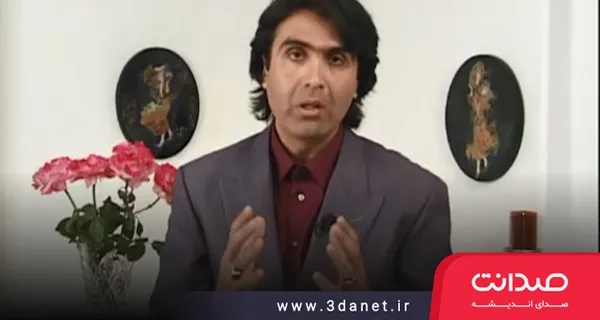
The subject of our discussion was Khayyam’s and Rumi’s conceptions of the tragic nature of human existence in this world. In the previous session, I explained that humanity, in fact, discovers the tragic nature of its existence primarily through the experience of tragedy. The unfortunate events that befall us humans confront us with a truth in this world: namely, that our existence in this world is woven from the warp of being and the weft of nothingness. And one of the most important experiences a human undergoes is, in fact, the discovery of the tragic dimensions of this world through the experience of the various manifestations of nothingness at different levels of human life. And as I explained in the previous session, the experience of nothingness is a wisdom-teaching and knowledge-imparting experience; a human who attains sufficient awareness and removes the veils of heedlessness from before their eyes, and perceives the truth of the world of existence and its most important characteristic—which is, in fact, its intermingling with nothingness—has certainly attained a profound wisdom in this world. Spiritual wisdom, in particular, is based on the perception and experience of the nothingness-imbued dimensions of existence; and, in fact, what we call tragedy is the confluence of being and nothingness. When the sea of nothingness breaks upon the shore of being, it is at this juncture that tragedy is born. As I explained in the previous session, the sage, particularly in three situations, comes face to face with the visage of nothingness in their life and can gaze into the eyes of nothingness. The first place where the sage experiences nothingness is the intuition of nothingness in the structure of the world of existence, in the world that is our home and in which we live. When the sage contemplates the world, the most prominent feature of this world that catches their eye is its perishability. In fact, perishability shows that what we thought was stable and enduring in this world was not actually so. Therefore, the first experience the sage has of nothingness is the structure of this world and the intuition of the perishable nature of the world of existence. The second realm in which the sage tests and observes nothingness is the structure of human existence itself. When the sage also contemplates human existence, they realize that the weft of nothingness is also woven into the warp of human existence. This can be interpreted as the mortality of the human being. When a person looks at the people around them, the most important characteristic that catches their eye is that humans are mortal. Not only do others die, but we too shall die. And there is no escape from it. The perception of the nothingness-imbued nature of existence and the tragic nature of the external world and human existence plunges a person into deep anxieties. The human asks about the meaning of life, and about the intention behind this arranged scene, what the meaning of these comings and goings was, and it is here that the manifestation of the nihilistic matter plunges the meaning of life into crisis. This painful awareness, which plunges the sage into a crisis of meaninglessness, of course, creates a specific spiritual, psychological, and emotional state for the sage, and that is a kind of anxiety and a kind of painful restlessness. The sage cannot bear the burden of existence and the burden of this truth that has been revealed to them. It is here that we expect the sage, in the face of their discovery, to see what reaction they show and what advice they offer us humans. How should we organize our lives in the face of this painful awareness so that we can bear the burden of existence? In the previous session, I explained that from Khayyam’s perspective, the Khayyamic reaction to the tragedy of existence is based on several important presuppositions. It is primarily based on the sage’s conception of the concept of nothingness. How the sage views nothingness determines what reaction they must subsequently show. From Khayyam’s point of view, as I explained, nothingness is pure non-existence; it is the end of the road. With the arrival of nothingness, everything comes to an end, and there is nothing beyond nothingness. It is an incurable pain, and therefore the best thing one can do is to lessen the suffering of this painful awareness so that the brief life we are allotted between birth and death does not turn bitter for us, so that we can spend these few days we live more or less in comfort, and it is for this reason that Khayyam’s advice to us is to be joyful and seize the moment. To take pleasure, appreciate the moments, and suck and taste the nectar of pleasure that exists in the moment to infinity. Therefore, Khayyam advises us to enjoy, be happy, and grasp the moment.
As I explained, Rumi largely shares the sentiments of a nihilist sage like Khayyam and believes that when we contemplate the structure of the universe or the structure of human existence, we clearly see this intermingling with nothingness. And a sage like Rumi realizes that this is a kind of demystification and a form of wakefulness in this world. And enduring this demystified world, bearing the burden of this wakefulness, and withstanding its scorching fire is, of course, a monumental task and not easily achieved. Rumi wholeheartedly agrees with Khayyam and says it is true, for the philosophy of hedonism and seizing the day of these great figures arose from a kind of wakefulness that was unbearable:
So that for a moment they might escape from wakefulness,
They put upon themselves the shame of wine and debauchery.
All have known that this existence is a trap,
Voluntary thought and remembrance are a hell.
They flee from selfhood into selflessness,
Either in drunkenness or in occupation, O guided one.
Rumi says these people know, and a wakefulness has come upon sensitive souls, as a result of which they have perceived great truths in this world, including that this existence is a trap and hollow, and bearing the burden of this trust is a difficult task. And the criticism I have of these great figures is that, in facing this painful awareness, they did not choose a fitting and worthy path. Thickening the veils of heedlessness, embracing the veils of heedlessness, and trying to erase wakefulness is, of course, not a wise act.
Rumi makes three main criticisms of the Khayyamesque solution. He says that, firstly, this path is not possible. Secondly, it is not desirable. And thirdly, it has a more fundamental flaw, which is that it is based on an incomplete conception of truth and reality. In Rumi's view, this negation of wakefulness and thickening the veils of heedlessness is, in fact, a form of legitimizing unawareness, and from Rumi's perspective, this is not right. And it is recorded in the life of Naser Khosrow that Naser Khosrow used to drink wine excessively, and later, when his life was transformed, he says in the preface to one of his books: I thought deeply and saw that there are many problems in this world whose resolution is beyond my power, and I wished to somehow solve the problem, and the most important tool we have for solving problems is our intellect. And when I turned to drinking wine, I effectively laid down the only tool I possessed for solving problems and untangling difficulties. Something similar to this more or less passes through the mind of a mystic like Rumi, and he says: Suppose a person is afflicted with an incurable disease; it is better for this person to seek a cure for their illness so that they might perhaps escape the predicament, rather than making themselves forget the disease and trying to forget the danger they are caught in. Because if there is a cure, resorting to heedlessness prevents the discovery of that cure, and also, by forgetting the disease, the disease progresses and its treatment becomes more difficult. In any case, in Rumi's view, a futile effort is better than slumber and surrender and resignation. And moreover, according to Rumi, the Khayyamesque solution to the tragic aspects of human existence is not even possible. Do not forget that the perishability of the world is part of the truth of this world. Human mortality is part of the reality of our existence and identity in this world. Denying these realities of existence is, in fact, a denial of the self and reality. This anxiety-inducing wakefulness is, in fact, part of the undeniable and inseparable reality of human existence and being in this world. Whatever a person may flee from, they cannot flee from themselves. Fleeing from the self is not possible. Rumi says:
I flee as long as my veins pulse,
How could fleeing from oneself be easy?
He whose flight is from another,
When he severs from him, he finds peace.
I, whose adversary is myself, am in flight,
Forever my task has become a constant turmoil.
Neither in India is there safety, nor in Khotan,
That which is his enemy is his own shadow
Therefore, Rumi says that thickening the veils of negligence is in fact a kind of denial of reality and flight from the self, and it is fundamentally impossible. Rumi says that the Khayyamian reaction to the tragic aspects of existence and painful awareness is neither possible nor desirable. Rumi says, more importantly and above this, the Khayyamian solution is built upon an incomplete picture of reality. From Rumi's perspective, what is presented in the Khayyamian school in describing reality is correct but not complete. The error begins where we take one aspect of reality for the whole of reality. Rumi is, to a point, in agreement with the sages and says that it is true you have seen a face of this world, and we are with you in that. But your error begins where you say that existence and reality are limited and confined to this face we have seen. Rumi says that what you have seen, you have seen correctly, but it is a part of reality. There are other faces that you must include in your picture, and when you add those aspects, of course your understanding of the whole matter of the human condition in this world will change. From the perspective of a mystic like Rumi, this world in fact has two faces. One face is called the Western face, and another face is called the Eastern face. The Western face is in fact the veiling aspect of this world, and the Eastern face is considered the luminous, sign-like aspect of this world. And the world sometimes shows us its Western face and sometimes its Eastern face. People like Khayyam have correctly and meticulously seen the Western face of this world. But the error begins when we confine the world to its Western face. The world also has an Eastern face and a sign-like aspect that must be considered. In other words, suppose this world is like a glass half full; the nihilist sage in fact sees the empty half of the glass and organizes his understanding of existence based on the empty half of the glass, and his emotional reaction to the tragic nature of existence is based on the empty half of the glass. But a sage like Rumi says this glass also has a full half, and that too is a part of the reality of this glass, and if you add this full half to your picture, of course your understanding of the totality of the glass will change. Let me give you an allegory to illustrate what these sages mean by the veiling face and the sign-like face. The example I give is borrowed from Buddhist wisdom. Suppose someone points a finger toward the moon. In this state, that finger takes on two faces: if your eye becomes limited and focused on the finger itself, the Western face of the finger has been revealed to you. But if your eye follows the line of the pointing finger and is guided to the moon shining in the sky beyond the finger, the Eastern face of the finger has been revealed to you. In the first state, the confinement of your attention to the finger prevents you from seeing the moon in the sky, meaning that finger becomes a veil to your vision; this is the veiling face of that finger. But in the second state, that finger becomes a sign and a verse for something beyond it; this is the sign-like face of this finger. If someone claims that this finger has a veiling aspect, they have spoken correctly, but if they claim it has no aspect other than being a veil, they have erred. That is, the finger here becomes like a signifier and points to something beyond itself. When a mystic looks at this world, they in fact see the world as a sign; this is one of the most important religious teachings, that when you look at this world, see the world as a sign, meaning that all the events that happen in this world point to something beyond themselves. And it is as if, suppose, this world is a ghazal flowing from the lips of God. All the events that occur in this world are words in this ghazal. And so the wayfarer on the path strives to learn the language in which this ghazal is composed, and therefore, when they look at the world, they see a cosmic poem and music. That is, all the incidents in this world signify something beyond themselves for them. Like the pointing finger aimed at the moon. Rumi says Khayyam experienced the world in its Western face; his experience was authentic and real, but his error lies where he presumed the world was confined to its Western face, whereas I say that another face can be seen in this world, and one can follow the direction of the finger and become aware of what is beyond the finger. To clarify the difference between the Khayyamian and Rumi's view, I would like to make a comparison for you between one of Hafez's Khayyamian verses and a somewhat similar verse from Rumi. So that we can better see the difference in the views of these two sages, the nihilist and the mystic-minded. Recall Hafez's famous verse where he says:
ﺑﻨﺸﯿﻦ ﺑﺮ ﻟﺐ ﺟﻮﯼ ﻭ ﮔﺬﺭ ﻋﻤﺮ ﺑﺒﯿﻦ
ﮐﯿﻦ ﺍﺷﺎﺭﺕ ﺑﻪ ﺟﻬﺎﻥ ﮔﺬﺭﺍ ﻣﺎ ﺭﺍ ﺑﺲ
This sage sits by the river of this world; when he gazes upon this realm, he sees events at the very moment they reach the precipice of non-existence. Events are caught by his eye at the instant of their decline and annihilation. In other words, this river is captured in its western aspect. But when Rumi, too, gazes upon this world, he sees the world like a flowing river, yet the description he gives and the angle from which he views this river are entirely different. Rumi says:
ﻋﺎﻟﻢ ﭼﻮﻥ ﺁﺏ ﺟﻮﺳﺖ ﺑﺴﺘﻪ ﻧﻤﺎﯾﺪ ﻭﻟﯿﮏ
ﻣﯽﺭﻭﺩ ﻭ ﻣﯽﺭﺳﺪ ﻧﻮ ﻧﻮ ﺍﯾﻦ ﺍﺯ ﮐﺠﺎﺳﺖ؟
ﻧﻮ ﺯ ﮐﺠﺎ ﻣﯽﺭﺳﺪ، ﮐﻬﻨﻪ ﮐﺠﺎ ﻣﯽﺭﻭﺩ
ﮔﺮﻧﻪ ﻭﺭﺍﯼ ﻧﻈﺮ ﻋﺎﻟﻢ ﺑﯽﻣﻨﺘﻬﺎﺳﺖ
ﺭﻭﺯ ﻧﻮ ﻭ ﺷﺎﻡ ﻧﻮ ﺑﺎﻍ ﻧﻮ ﻭ ﺩﺍﻡ ﻧﻮ
ﻫﺮ ﻧﻔﺲ ﺍﻧﺪﯾﺸﻪ ﻧﻮ ﻧﻮ ﺧﻮﺷﯽ ﻭ ﻧﻮ ﻏﻨﺎﺳﺖ
ﭼﯿﺴﺖ ﻧﺸﺎﻧﯽ ﺁﻧﮏ ﻫﺴﺖ ﺟﻬﺎﻧﯽ ﺩﮔﺮ
ﻧﻮ ﺷﺪﻥ ﺣﺎﻝﻫﺎ ﺭﻓﺘﻦ ﺍﯾﻦ ﮐﻬﻨﻪﻫﺎﺳﺖ
When Rumi looks at this same river, he captures the moment and the river at the moment of birth, not at the moment of decline and death. Precisely where existence is born and emerges, it is at the very moment of birth that the moment is captured. He captures the moment at sunrise, but when Hafez looks at the same river, he captures the moment at sunset. Hafez captures the mortality and perishability of the moment, and Rumi captures its renewal and birth. Of course, both look at the same river, but they view that single phenomenon from two different perspectives. One intuits the world insofar as it joins non-existence moment by moment, and the other intuits the same world insofar as it comes into existence moment by moment. And it is in these verses that you can see that Rumi's conception of non-existence is very different from what we can see in Khayyamian wisdom. The most important difference between Rumi and Khayyam, in understanding and grasping the tragic dimensions of existence and our way of confronting this tragedy in this world, goes back to the difference in their views on non-existence. From Khayyam's perspective, non-existence is pure darkness and sheer nothingness, but from Rumi's perspective, non-existence is the fountainhead of existence, the source of the renewal of the world and humanity. Rumi does not consider non-existence to be nothingness but rather a density of existence, and this is an important point. Let me give you an example to clarify this matter. You see, we experience darkness in two situations. One time, you enter a room and there is no light, and as a result, you see nothing. But suppose very powerful projectors have been installed in this room, and you open the door; the intensity of the radiance is such that your eye sees nothing. The density of light is such that your eye sees nothing. This is another experience of not-seeing and darkness. But not-seeing here does not mean the absence of light; rather, not-seeing here results from the density and concentration of light. Therefore, you can have two kinds of experience of darkness here. One time, there is no light, and another time, when there is a density of light and concentration of light, and the intensity of radiance prevents vision. In fact, Rumi's and Khayyam's understanding of non-existence is something like this. Non-existence, in Khayyam's view, is in fact the absence of existence and pure darkness. But in Rumi's view, non-existence is the density of existence, and it is from the excess of existence that we experience non-existence. That is, our senses and our existence cannot perceive that density of existence, and to the observer's eye, there is nothing; meaning our cognitive faculty fails to grasp what is before it and perceives nothing. That it perceives nothing is not in the sense that there is nothing before it, but in the sense that what is before it is so vast and immense that it does not fit into the net of his understanding, and therefore, despite such an immense existent being before him, he perceives nothingness. From Rumi's perspective, non-existence is in fact the density of existence, and Rumi uses the term non-existence for God and the unseen world. In fact, Rumi's interpretation is this. You must note that what is non-existence in the Khayyamian experience is, from the perspective of someone like Rumi, in fact the interior of this world. You see that something perishes, but Rumi's view is in fact that this thing we see goes from the manifest world to the hidden world. I, sitting on this side, assume it is destroyed, but the reality is that it has gone from this part of the cycle of existence to another part of the cycle of existence. Therefore, from Rumi's perspective, the world is perishable, but if you place this perishability within a broader context and add the interior of this world to its exterior, you will see that what apparently passes away in fact goes from the exterior to the interior, and what appears to be born in fact emerges from the interior to the exterior. Rumi says, if you see the departure of old things and if you see perishability, then also see the renewal of states and birth. Therefore, from Rumi's perspective, non-existence is not nothingness, but rather the Unseen. From Khayyam's perspective, existence is obliterated in nothingness, and this is the meaning of the world's perishability and human mortality, but from Rumi's perspective, existence sometimes goes from the exterior to the interior and sometimes from the interior to the exterior. That is, existence has two faces: a manifest face that we see, and a hidden face that is beyond the reach of our senses. Non-existence, from Rumi's perspective, is God, it is the density of existence. Therefore, from Rumi's perspective, although non-existence is a realm that appears as nothing, you must see true reality and the fountainhead of existence there. And contrary to this manifest world, which appears to our eyes as existent, in comparison with that ocean and in comparison with that interior, it is in fact nothing. Therefore, from Rumi's perspective, what Khayyam calls "existence" is what he calls "nothing that appears as existent," and it is not the truth but an appearance of exis
ی دارد.و آن چه که خیامHe showed non-being as being, and magnificent,
He showed being in the form of non-existence.
He concealed the sea and made the foam manifest,
He concealed the wind and showed you the dust.
It is for this reason that non-being is not a threat to being; rather, it is considered another facet and another level of being. And as soon as you cease to regard non-being as a threat to being, but instead see it as the source of existence and the source of renewals in this world, your emotional state towards non-being becomes entirely different, and you sometimes see non-being as blessed:
This non-being itself, what a blessed place it is,
For the aids to existence come from non-being.
All hearts are anxious, turning towards non-being,
This non-being is not non-being, it is the Garden of Eram.
All this army of the heart's thought,
Is but a single flag from the armies of non-being.
From you to the Unseen is a thousand years' journey,
For the one who goes by the way of the heart, it is but a single step.
And elsewhere in the Masnavi, he says:
From the realms of non-being towards being, every moment,
O Lord, a caravan is, a caravan upon a caravan.
This non-being is a place of income; from it, die, O man!
This being, more or less, is a place of expenditure.
Rumi advises: do not fear non-being; non-being is not the end of the road. It is the continuation of this life. Indeed, it is this difference in perception that provokes different approaches and reactions towards non-being. The nihilistic sage, because he sees non-being as pure nothingness and darkness, when he stands eye to eye with non-being, becomes anxious and terrified and loses the strength to bear the body's burden. And it is for this reason that, to find a remedy for this anxiety, he turns to wine-drinking, merrymaking, and seizing the day. But when Rumi comes eye to eye with non-being, he finds it to be the source of the beauties, subtleties, and renewals of this world. It is for this reason that when Rumi gazes into non-being, he does not become anxious and terrified, but rather enamored and fascinated, and says:
I am drunk on non-being, not on the existent,
Because the beloved of non-being is more faithful.
In the Masnavi, Rumi recounts the story of a sweet-natured dervish who, upon seeing an empty tablecloth, began to dance around it ecstatically. Someone asked the dervish the secret of this ecstasy, and the dervish gave him an answer that speaks of Rumi's own emotional relationship with the experience of non-being:
A busybody said to a Sufi, "What is this?
A tablecloth hung up, and underneath it, empty?"
He said, "Go, go! You are a seeker of meaningless form;
You seek existence, for you are not a lover.
The love of bread, without bread, is the lover's food;
No one who is sincere is bound to existence.
Lovers have no business with existence;
Lovers have profit without capital.
Lovers pitch their tents in non-being;
For, like non-being, they are of one color and one breath."
When he saw there was no bread on this spread, he was not in love with it; that “absence” reminded him of God. And for this reason, he dances around the empty spread, because the lack of bread and the absence of bread remind him of non-existence and remind him of God. And for this reason, unlike Khayyam, Rumi does not see non-existence as a threat, but rather considers it a “refuge.” If you consider something a threat, you must flee from it, but if you consider it a refuge, you rush toward it. Rumi says:
All the world have taken the wrong path,
For they fear non-existence, while it is a refuge.
From Rumi’s perspective, the tragedy of existence in this world lies in your gaze remaining limited and confined to appearances. In fact, the tragedy does not stem from the narrowness of the world, but from the narrowness of the world-dwellers’ gaze. Therefore, according to Rumi, the root and foundation of tragedy is the confinement of the gaze to the Western aspect of this world, and as soon as one considers non-existence not as nothingness but as the Unseen and the inner dimension of this world, and sees human existence within that broader context, the tragedy will, of course, disappear. To make the meaning clearer, I would like to make a brief comparison between Khayyam’s conception of death as nothingness and the end of the human path, and the image Rumi presents of death. Death, as I mentioned, is one of the most important manifestations where non-existence occurs, and the sage can observe non-existence in that phenomenon. See what different images of death these two sages offer us.
According to Khayyam, death is the annihilation of the human being. It is the end of the road, and it is finished, and we are entirely destroyed and annihilated. And for this very reason, death, in Khayyam’s view, is a terrifying experience. The image Khayyam gives of death is interesting; he says that the world we are in is like a caravanserai situated in the middle of a desert. You enter through one door, coming from a desert into this caravanserai, and you exit through another door, returning again to the desert.
The world, in which I see little permanence,
In its every breath, I see a thousand sorrows.
It is like an old caravanserai, from each of its sides
I see a path to the desert of non-existence.
It is clear that the inhabitants of the caravanserai tremble for themselves, lest they be driven outside. By every trick, they strive to postpone their departure, so that in the shadow of the caravanserai’s safe haven, they might rest a little longer and more pleasantly, and drive away the terror of that dark desert.
But the story is completely different with Rumi. Rumi says this manifest world in which we live is a cage placed in the middle of a lush and verdant garden. And we are like a bird that is in this cage. When we look outside the cage, our heart goes out; the beautiful, lush, and verdant garden, and our friends and other little birds on that side, are singing songs in the garden. My heart is restless within me, and I am impatient for this cage door to open so that I may fly and join my companions in the garden. Rumi’s image is not a caravanserai in a desert, but a cage in the middle of a beautiful garden. Rumi says:
Death has become sweet, and my departure from this abode
Is like a bird leaving the cage and flying.
That cage which is in the very midst of the garden,
The bird sees the rose garden and the tree.
A flock of birds outside, around the cage,
Sweetly sing tales of freedom.
For the bird in the cage, from that green meadow,
Neither nourishment remains, nor patience and rest.
It sticks its head out from every hole,
So that it might break this bond from its foot.
When its heart and soul are thus on the outside,
How would it be if you opened that cage?
It is this very image of death that grants Rumi's spirit courage in the face of death:
This death, of which the people are a morsel,
We shall make a morsel of it and have no sorrow.
If death is a man, let him come before me,
So that I may draw him tightly, tightly into my embrace.
I shall take from him a soul without color or scent,
He shall take from me a cloak of many colors.
It is here that you can see Rumi's joyfulness and Khayyam's hedonism. Khayyam's hedonism is, in fact, his spirit's reaction to the deep bitterness of his soul regarding the tragedy of existence, and it is here that the sage turns to hedonism to soothe this agonizing pain. This joy is external, and this joy must be injected. This joy is a sorrowful joy. But Rumi's joyfulness is of a different kind; it does not arise from external, heedlessness-inducing factors, but rather from Rumi's inner equilibrium and richness:
I am a sugar-mine, a reed-bed of sugar,
It grows from me, and I consume it.
Rumi found the source of joyfulness within himself. Yes, Rumi was intoxicated, but not from the wine of the grape. His intoxication welled up from within and overflowed outward:
The wine became intoxicated by us, not we by it;
The body came into being from us, not we from it.
In a very beautiful ghazal, Rumi makes a sardonic reference to Khayyam's sorrowful joy. There, Rumi contrasts his own mystical joyful-drinking with Khayyam's sorrowful joyful-drinking, saying that those joys come from outside and are the product of sorrow and grief, but my joy wells up from within, and sorrow has no access to our sanctuary:
Gnostics have no candle and beloved from outside themselves;
They have not drunk the blood of the grape, yet their wine is their own blood.
Everyone in the world has become Majnun for a Layla;
Gnostics are their own Layla, and moment by moment, their own Majnun.
For an hour, be the balance of that; for an hour, be the measured of this;
After this, become your own balance, so that you may become your own measured.
The sorrowful drink wine, and we are far more light-hearted;
Turn your face to the prisoners of sorrow, cupbearer, and give them your own opium.
Our blood is forbidden to sorrow, and sorrow's blood is lawful to us;
Any sorrow that circles around us becomes drowned in its own blood.
Wine is rouge upon the cheeks of the sick with sorrow;
We are pleased with our own color and our own rosy-cheeked face.
I am not dependent on the blast of the Trumpet, like the dead;
Every moment, Love grants me a soul through its own enchantment.
Henceforth, do not ask me "How are you?" and pass beyond "how";
For how can one speak of "how" who has become without "how" of their own?
.
.
Transcript and Audio of the Lecture “Being and Nothingness from the Perspectives of Khayyam and Rumi,” by Arash Naraghi (2)
Watch the video of this session on Aparat
Watch the video of this session on YouTube
Audio of this Session
.
.
Prepared and Edited: Omid Ghaem Panah (The text is transcribed from Arash Naraghi's presentation on the program "Parto-e Noor 441")
.
.




Discussion1 comments
من مشتاقم که اندیشه ی مولانا حقیقت داشته باشه ولی زشتی های دنیا رو چطور میشه تعبیر کرد؟ اصلا حکمت خلقت انسان چه بود؟ جز جنایت چه هنر دیگه ای دارد؟ شفقت و مهربانی که توی وجود حیوانات هم هست . این چه حکمتی هست که در خلقتش انقد انسان بی گناه بخصوص کودک کشته بشه.