Philosophy
Arash Naraghi’s Lecture: The Experience of Nothingness in Rumi and Khayyam
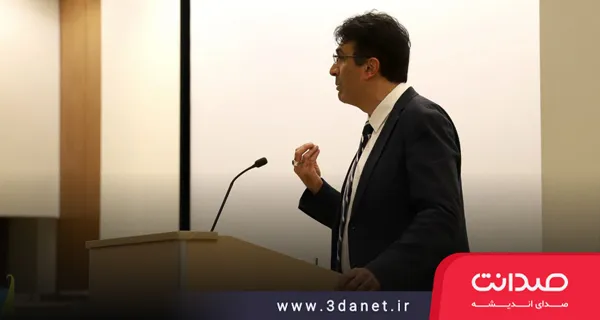
Arash Naraghi’s lecture, titled “The Experience of Nothingness in Rumi and Khayyam,” explores the concept of nothingness and its place in the thought and poetry of two great Iranian poets, Rumi and Khayyam. The lecture was delivered at the Conference of Iranian Culture Lovers in Chicago in 2018 and is available in both video and audio formats.
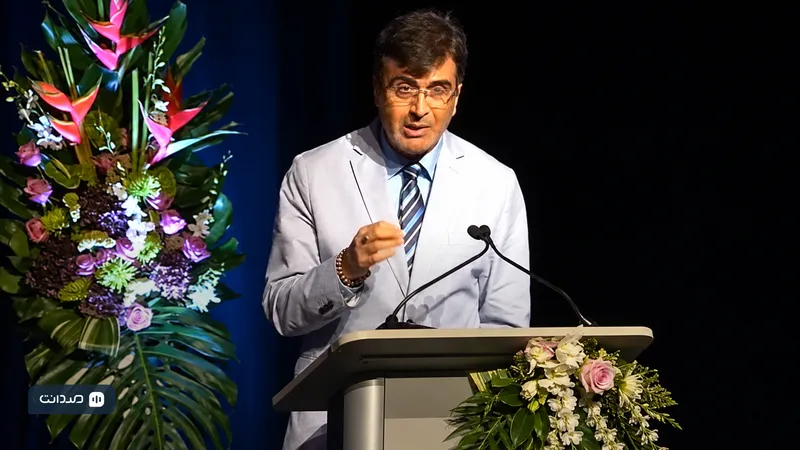

Arash Naraghi
سخنرانThe Experience of Nothingness in Rumi and Khayyam
Arash Naraghi’s Lecture
Conference of Iranian Culture Lovers in Chicago | Friday, August 31, 2018 | 9 Shahrivar 1397
In this lecture, Arash Naraghi considers “the experience of nothingness” one of the important sources of spiritual wisdom in Iranian culture and shows that this experience leads to two different responses in the thought of Khayyam and Rumi. Khayyam reaches a tragic awareness through the impermanence of the world, death, and the inscrutability of existence, calling human beings to cherish the present moment; Rumi transforms the same encounter with annihilation into a generative experience, seeing in the breaking of forms the possibility of liberation, love, and rebirth. The text below is the edited and unified version of this lecture.
Opening Remarks
Ladies and gentlemen, I would like to offer my greetings. I am very pleased to have once again had the opportunity to participate in this warm and intimate gathering of Iranian compatriots. I would also like to thank the organizers of this wonderful event for making this meeting possible. The subject of my discussion, as many of you are already aware, is “The Experience of Nothingness in the Thought of Two Persian-Speaking Iranian Sages: Hakim Omar Khayyam and Jalal al-Din Muhammad Balkhi.”
Rumi and Khayyam are two eminent figures of Iranian wisdom, representing two different forms of Iranian reflection on human existence in this world. Wisdom is not the same as knowledge or science. The source of wisdom is learning from life. A person must pass through years of living and experience the ups and downs of existence before the fruits of wisdom gradually appear on the branches of their being. An intelligent person may acquire great knowledge in youth and display remarkable talent, but becoming wise requires the passage of time. One must have undergone some of life’s profound experiences: losing a loved one, tasting sorrow and joy, experiencing success and failure, and perhaps becoming a parent, so that the deeper face of the world may gradually reveal itself.
One of the most important sources of wisdom, especially spiritual wisdom, is the experience of the sorrowful dimensions of life. Whoever encounters tragedy in this world comes into contact with what I call “the experience of nothingness.” Of course, tragedy by itself does not produce wisdom. When the storm of grief and suffering descends upon us, if we lose ourselves, allowing the waves to overwhelm and drown us, no wisdom emerges. A wise person is someone who, when waves of events move toward them, does not drown but instead rides upon the crest of the wave, rises above it, and sees horizons beyond. It is here that wisdom emerges; the sweet fruit of wisdom is gathered from the heart of the bitter storms of life experience.
For this reason, the dimensions of nothingness that form the foundation of tragedy and the sorrowful nature of life become objects of reflection for sages. Through direct, face-to-face and breath-to-breath contact with these dimensions, the sage gradually gains a deeper understanding of the nature of the world in which we live and of the nature of human beings themselves.
Three Dimensions of the Experience of Nothingness
To bring this broad and abstract concept closer to our minds, we can distinguish three domains in which the experience of nothingness manifests itself. For the sage, nothingness is not merely a mental and abstract concept; the thread of nothingness is woven into the fabric of existence, and human beings encounter its various faces in embodied life and in the world around them.
First, nothingness appears in the structure of the world, where we recognize the impermanence and vulnerability of existence. Second, it appears in the existential structure of human beings themselves, especially in the experience of death—both our own death and the death of those we love. Third, nothingness reveals itself in the realm of meaning and purpose, when we ask whether there is a design and intention behind the events of the world. Khayyam and Rumi both encounter nothingness in all three domains, but they arrive at different responses to this encounter.
The Impermanence of the World in the Eyes of Khayyam and Rumi
After experiencing the joys and hardships of life, the sage realizes that the nature of this world is impermanent. Nothing in this world remains for us; neither pleasures endure nor sorrows last forever. In Khayyam’s thought, this wisdom is expressed with remarkable clarity. The first thing that catches his discerning eye is the fleeting and unfaithful structure of the world:
Cupbearer, the flowers and greenery have become so joyful,
The next week, know that they will have turned to dust.
Drink wine and gather a flower while you can,
For when you look again, the flower has become dust and the grass has become straw.
Khayyam also speaks of the brevity of opportunity and the swift passing of human beings:
Those who were ancient and those who are new,
Each for a while pursued their own desire.
This lowly world belongs to no one forever;
They departed, we depart, and others will come and go.
When he looks upon the ruins of those who came before, he finds their glory and power insignificant before the erosion of time:
That palace where Jamshid once held his cup,
Now shelters deer and foxes.
Bahram, who hunted wild asses all his life,
You saw how the grave itself hunted Bahram.
Awareness of impermanence can also be seen in Rumi’s poetry. Speaking of those who have relied upon the unstable world, Rumi presents an image of a bubble-like tent without firm ropes:
O you who have placed certain trust
In breath and in a flattering sinner,
You have built a dome from bubbles,
A tent whose ropes are utterly fragile.
Deception is like lightning, and in its light
Travelers cannot see the road.
This world and its people are without true substance;
Both are united in their faithlessness.
The child of the world is like the world itself, unfaithful;
Even if it turns toward you, its face is still a trap.
Thus, the first face of the experience of nothingness is awareness of the fundamental unfaithfulness and impermanence of the world. The world is a house whose foundations are laid upon the wind; neither its pleasures endure nor its sufferings are eternal. This is the first touch of nothingness upon the awareness of the seeker and the sage.
Rumi is a mystical and heroic sage. He does not consider calculating reason sufficient for unlocking all the mysteries of the world; instead, he brings loving intuition into the arena. The decline of the material world is not the end of the story for him, but rather the breaking of a veil that can reveal the inner beauty of existence.
These two perspectives should not be simply dismissed or merged into one another. Khayyam’s sense of wonder makes us humble, while Rumi’s ecstasy gives us the strength to stand against the waves of meaninglessness and suffering. One reminds us of the danger of illusion and dogmatism; the other reminds us of the danger of despair and the collapse of meaning.
I will conclude with a ghazal from the Divan-e Shams. In this poem, Rumi presents the clearest expression of the inner joy of the mystic:
The mystics have no candle and beloved outside themselves;
Their wine is not made from grape’s blood, but from their own blood.
The sorrowful drink wine, but we are more joyful than wine itself;
Go, O cupbearer, and offer your opium of grief to those imprisoned by sorrow.
Our blood is forbidden to grief, while grief’s blood is lawful for us;
Every sorrow that came around us was consumed in its own blood.
I am not dependent upon the blowing of the trumpet of resurrection like the dead;
At every moment, love grants me life through its own enchantment.


Discussion1 comments
بسیار بسیار عالی استاد بی نظیرید شما دست مریزاد دنیای ما رو تغییر دادید