Philosophy
Text and Audio of the Lecture “Being and Non-Being in the Eyes of Khayyam and Rumi,” by Arash Naraghi (1)
Spiritual wisdom begins with grasping the tragic nature of existence and the experience of nothingness—where tragedy emerges at the crossroads of being and non-being. By comparing the thought of Khayyam and Rumi, Arash Naraghi examines two perspectives, nihilistic and mystical, on the question of nothingness and the human condition.
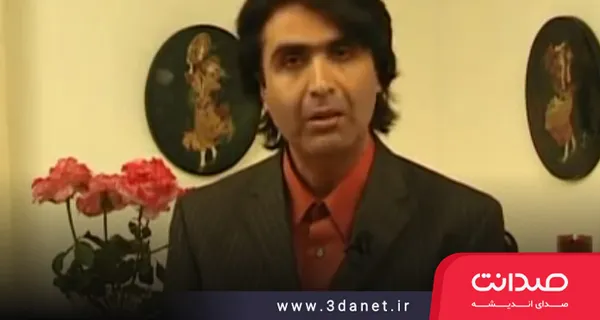
The subject of the talk I will present on this occasion is a discussion concerning the relationship between wisdom and the experience of the tragic nature of being in the thought of two eminent Persian-speaking sages, namely Hakim Omar Khayyam of Nishapur and Mawlana Jalal al-Din Muhammad Balkhi. One of the most important wellsprings of wisdom is the experience and understanding of the tragic nature of human existence in this world. All of us human beings have, in our personal lives, undergone experiences of sorrow, calamity, failure, the loss of loved ones, and the like. Of course, the role of experiencing sorrow and bitterness does not necessarily lead to wisdom and a kind of knowledge. What creates wisdom is, in fact, a kind of contemplation and reflection that a person undertakes regarding the nature of these sorrows. When the waves of sorrows arrive, the sage, instead of being overwhelmed and vanquished by those waves and drowning in the immense storms that arise in this sea of existence, strives to ride upon the crest of these waves and gain a higher vantage point over the world and the expanse of being, and to better see and recognize his own situation and that of other human beings within the masterpiece of this world.
Spiritual wisdom, in particular, begins with the understanding of the tragic nature of being. For example, if you refer to the teachings of Buddhism, you will see that the first noble truth the Buddha teaches human beings is that the world is full and brimming with suffering and sorrow, and the Buddha's own experience, which led to his clarity and awakening, in fact began with the experience and observation of death, grief, sorrow, and the experience of tragedy in this world. If you also refer to the Old Testament, there in the Book of Ecclesiastes, the son of David, who was once king of Israel in Jerusalem, delivers a very harrowing address to the people of his time, whose resonance has echoed down to our own day and continues to affect the ears of our souls. He says: "Vanity of vanities; all is vanity. What profit hath a man of all his labour which he taketh under the sun? All things are full of labour; man cannot utter it: the eye is not satisfied with seeing, nor the ear filled with hearing. The thing that hath been, it is that which shall be; and that which is done is that which shall be done: and there is no new thing under the sun. I have seen all the works that are done under the sun; and, behold, all is vanity and vexation of spirit." You see how these bitter words, which flowed from the tongue of that prophet, have preserved their influence and impact to this day and continue to affect us. In the Quran, too, if you observe, God employs harrowing expressions in describing the nature of life in this world. In the Quran, life in this world is called "la'ib wa lahw" or a plaything; a hollow plaything. And the description of the nature of the world in which we live is given in the Quran: "And present to them the example of the life of this world: [It is] like rain which We send down from the sky, and the vegetation of the earth mingles with it, then it becomes dry remnants, scattered by the winds." You see that the image given of the world is largely based on the tragic dimensions of being. A moment of freshness sprouts and turns green in this world, but be warned that it will not last long and will swiftly be scattered.
Therefore, it can be accepted that the source and origin of wisdom (especially spiritual wisdom) in this world is the understanding of the tragic nature of being in this realm. The sage, in delving deeply into these tragic dimensions, arrives at an important truth, and that important truth is that ultimately, the mother of tragedy in this world is the experience of non-being. In more philosophical terms, tragedy, in fact, arises at the intersection of being and non-being; wherever the sea of non-being crashes against the shore of being, it is at that intersection and juncture that tragedy is born. It is for this reason that many sages believed that a person cannot know his own truth unless he has an understanding and analysis of the nature of non-being in this world, and for many sages, the study of non-being is a prelude to the study of being. In order to properly grasp being, you must know its opposing element, which is non-being.
Both nihilistic wisdom in the existentialist tradition and mystical wisdom in our own religious and spiritual tradition assign a very important role to non-being and seek to re-cognize human existence and being in the light of the human experience of non-being. Generally speaking, and in a very simplified classification, one can distinguish two types of wisdom based on two different conceptions of non-being in this world. And, of course, to put it another way, there are two groups who have seriously contemplated non-being: one is the nihilistic sages, and the other is the mystically-inclined sages. In fact, in order to draw a comparison between these two views on the category of non-being, as I stated at the beginning of my remarks, I have chosen two Persian-speaking sages as two prominent examples within the Iranian intellectual tradition: the sage Khayyam and Mawlana Jalal al-Din; so that, through an analysis of the statements of these two thinkers and a comparison with one another, we may re-cognize these two different perspectives on the phenomenon of non-being, the perception of tragedy in this world, and the understanding of the tragic dimensions of existence in this world, and by comparing them, arrive at a more accurate understanding of this meaning.
When we speak of the tragic nature of existence or the experience of non-being, what is meant? Generally speaking, non-being reveals its face to human beings in its most manifest form in three distinct realms: one is the manifestation it shows in the structure of this world and in the existence of the universe in which we live; another is the manifestation it displays in the existence of us human beings (the inhabitants of this world); and finally, in the effect it leaves upon our conception and understanding of the meaning of life. Therefore, in these three domains, we can observe the experience of non-being as it is revealed to human beings and gain a clearer understanding of the tragic dimension of existence. I will first state that both the nihilistic sage and the mystically-inclined sage perceive the phenomenon of non-being in these three domains, and there are important commonalities between the existential experience of these sages regarding the phenomenon of non-being. However, I will later explain that despite the fact that the existential experience of Khayyam and Rumi regarding non-being and tragedy shares many commonalities, the final analysis of these two sages concerning the category of non-being differs from one another, and consequently, the understanding these two sages attain of the human being's place in this world, and the emotional confrontation they achieve with the experience of non-being, are of course not identical but different.
It is good to first examine the experience of non-being in the structure of the world and the universe in which we live. The experience of non-being in the structure of the world mainly manifests itself in our tragic perception of the perishable and decaying nature of this world. A sage is one who, when contemplating this world, realizes that existence is transient, that the world around us is unfaithful and impermanent. Probably, in our culture, the most vivid and influential depiction of this wisdom concerning the unfaithful and impermanent nature of existence is found in the thoughts of Khayyam. You see, when Khayyam, as a contemplative sage, looks upon the world around him, the most prominent face of this world that meets his eye is the perishability and impermanence of this world:
That palace where Bahram grasped the wine-cup,
The fawn now makes its fawn, and the fox finds rest;
Bahram, who hunted the wild ass all his life,
Did you see how the grave (gur) hunted Bahram?
When he looks upon Bahram's palace, he sees its ruin, that it was not faithful to Bahram and did not endure, and now that magnificence and that splendor have turned to what desolation.
Cupbearer, the rose and the green have become exceedingly delightful,
Realize that in another week they will have become dust.
Drink wine and pluck a rose, for by the time you look,
The rose has become dust and the green has become withered straw.
When he looks upon nature and the beauties of nature, the most important aspect of this nature that meets his eye is that these greens and these beauties that now delight his eye will not last long and will swiftly pass away.
Those who grew old and those who are new
Each ran a single course after their own desire
This ancient world remains for no one
They went, and we go; others will come and go
When he looks upon this world, he sees that people come and go. Blessings arrive and then decline. Nothing endures for human beings in this world. You see this very Khayyamic thought clearly in the verses of Hafez as well:
The world is old and without foundation; from this Farhad-slaying, cry out
For its sorcery and trickery have wearied my sweet soul
Seek not the soundness of a pledge from the world of frail nature
For this old crone is a bride of a thousand bridegrooms
There is no sign of pledge and fidelity in the smile of the rose
Lament, O disheartened nightingale, for it is a place for crying out
Hafez, too, when he looks upon this world, considers it frail-natured and unfaithful, upon which there is no fidelity. You see the smile of the rose, but this smile does not last long. You hear the song of the nightingale, but you know it is a song and a lament of separation. And finally, this very beautiful and thought-provoking verse of Hafez, which tells us that the life of this world is like a flowing river that does not pause for a moment:
Sit by the stream and watch the passing of life
For this hint of the transient world is enough for us
Therefore, we see that when the sage looks upon the world, the most important feature of the world that catches his eye is its impermanence and perishability.
When they look upon human existence as well, the matter is more or less the same. The experience of non-being in the structure of human existence manifests itself in the experience of death-awareness. In the understanding of this simple but profound truth that the human being is also a perishable and death-accepting entity. Everyone dies; this truth, though very simple, is a deep truth that we humans are often very prone to forget. The sage, in relation to death, perceives and experiences three simple truths with their entire being. First, that we usually recognize the phenomenon of death in the mirror of the death of others. If in this universe there were only me and myself, it is unlikely that I would develop a conception of death. When I see that other humans die, in the mirror of their death I realize that a phenomenon called death exists in this universe. Therefore, the first discovery is that we observe death in the mirror of the experience of others. But the matter does not end here; the second truth we discover about death, which must be the object of our attention and reflection, is that it is not only others who die. This camel will also kneel at my door; I too will die. Therefore, it is not just that some people die, but in addition to that, I am also among those people, and I too must one day undergo this immense experience. And the third simple truth is that there is no escape from death. No trick can be devised to find a way out of the grip of death. This is a threshold before which everyone must bow their head. Khayyamic wisdom stems to a very great extent from the deep understanding this sage has of the death-accepting characteristic of the human being in this world. When he looks upon his own human condition and that of other people, it is this face and this aspect of human existence that catches his eye more than anything else:
When the cloud washes the tulip's cheek for Nowruz
Arise and resolve firmly upon the cup of wine
For this greenery that is your spectacle today
Tomorrow will all sprout from your dust
Alas, the book of youth has been folded
And that fresh spring of life became yesterday
That bird of joy whose name was youth
Alas, I know not when it came, when it went
You observe that when he contemplates his own state, it is the swift passage of life that fills his eye.
For a while, to childhood we were apprenticed,
For a while, in our mastery we were delighted,
Hear the end of the tale: what befell us?
From the dust we came, and on the wind we departed.
Again, when he contemplates his own state, he sees how the perishability of this world and the swiftness of life's moments settle in his eyes.
Those who became paragons of virtue and culture,
In the assembly of perfection, became the candle of companions,
Found no way out of this dark night,
They told a fable, and fell asleep.
Again, you see here with what force human death settles in the eye of this sage.
I went to the potter's workshop last night,
I saw two thousand pots, speaking and silent,
Suddenly one pot raised a cry:
Where is the potter, the pot-buyer, the pot-seller?
When he looks at a pot, in the form of this pot's body he sees the human being who has passed away.
This pot, like me, was once a lovesick suitor,
Caught in the tress of a beloved's lock,
This handle you see upon its neck,
Is a hand that once lay round a beloved's neck.
Therefore, death is inevitable, and all must know that they will die, and this simple but important truth must always be kept before their eyes.
O eye, if you are not blind, behold the grave,
And behold this world, full of turmoil and tumult,
Kings, chiefs, and lords are beneath the clay,
Behold moon-like faces in the mouths of ants.
Those beautiful faces have today become morsels from which the ants feed.
The point I wish to emphasize is that the sage sees in human mortality a face and an experience of non-being, and the awe and dread of this experience captivate his soul. Again, you can see the resonance of these very Khayyamic thoughts in the poetry and ideas of Hafez. Hafez tells us:
On the shore of the sea of annihilation, we wait, O cupbearer,
Seize the moment, for from the lip to the mouth, all this is nothing.
Your life gleams and dies in a single moment; it does not last long. And of course, it is one of the wonders of this world that nothing is more certain than death in this world, yet people treat it as the most doubtful of truths. And Rumi repeatedly reminds us not to forget this simple truth: everyone dies. The remembrance of this meaning should fundamentally transform the way you live. This alertness and this awareness must always be present before your eyes:
Whether you are Jamas or Luqman, or the moon of Canaan,
Whether ugly or beautiful, at the time of death, there is no remedy.
Whether a sultan or a doorkeeper, or one of justice and benevolence,
And whether with soul or without soul, at the moment of death, is there a remedy?
Whether you are a miller, or one with a garden and orchard,
Or wise like Luqman, at the moment of death, is there a remedy?
Whether you are the king of Kerman, or the emir of Khorasan,
Or the Khan of Badakhshan, at the moment of death, is there a remedy?
Whether a rogue and a tavern-haunter, or a prayerful elder,
Or a possessor of miracles, at the moment of death, is there a remedy?
Whether you are a king or an emir, I know for certain that you will die.
Whether you are young or old, at the moment of death, is there a remedy?
Whether you are a drunkard and a Mahmoudi, or far from sin,
Or a Shibli and a Mansour, at the moment of death, is there a remedy?
You keep wearing a silken robe, you keep drinking red wine,
You have forgotten death; at the moment of death, is there a remedy?
Here, no remedy will be of any avail. Elsewhere, Rumi mocks those who forget the simple truth of death and warns them sarcastically:
Behold that false emir, with his little horse and little saddle,
Jaunty and mincing, his head bound with gold-thread,
Since he is a denier of death, he says, "Where, where is doom?"
Death comes to him from six directions; he says, "Here I am, right now."
His doom says to him, "O ass, where is all that pomp and glory,
And that mustache, and that nose, and that little pride, and that little malice?
Where is the beloved and where the joy? To whom did you give the royal bedding?
A brick is your pillow now, and ashes are your mattress."
The point is that the sage, when contemplating human existence, highlights the truth of death and believes that this truth, and the awareness of it, must be a part of our life and the most important principle upon which we structure our lives and set our priorities.
And finally, the sage, in fact, experiences non-being within the very texture of life's meaning, and this is an important point. When an intelligent person experiences the perishability of this world and the mortality of humans with their entire being, with every fiber of their existence, they arrive at a kind of painful awareness. That is, they suddenly find themselves facing the immense question of the meaning of life. They ask themselves: for what was this stage adorned? If we were meant to come onto this stage like puppets, play for a moment, and then be thrown into the trash heap, what was the purpose? What was the meaning of all this stage-setting? It is here that attention to and awareness of the world's transience and human mortality confronts a person with the important question of life's meaning. Suddenly, the sage asks themselves: has my life had any meaning? In other words, the experience of non-being in the layers of the external world's existence and human existence confronts the sage with a crisis of meaninglessness. And this is the station of painful awareness. You can clearly see this painful awareness in Khayyam's thoughts:
It is a cup that the creative intellect praises,
It bestows a hundred kisses of love upon its forehead.
This potter of the age makes such a delicate cup,
Then dashes it to the ground.
This potter has made a vessel of such beauty and fine carving, brought to perfection, having accumulated knowledge, attained beauty, and a thousand subtleties have blossomed within it. And now, at the peak of its flourishing, suddenly a breeze blows, knocks this vessel over, and shatters it, and it is finished and gone. The sage asks himself: why did this potter make such a delicate and beautiful cup, only to then recklessly dash it to the ground and break it?
In the circle that is our coming and going,
No beginning and no end is visible.
No one breathes a true word on this matter,
As to whence this coming is, and whither the going.
From my coming, the firmament gained no profit,
And by my going, its glory and dignity are not increased.
Nor have my two ears heard from anyone,
What this coming and going was for.
You see this crisis of meaninglessness, this immense question about the meaning of this stage-setting, surging through the thoughts and poems of this sage. Again, you can trace these Khayyamic thoughts in Hafez as well; Hafez also finds himself confronted with the immense question of the meaning of life:
The world and the affairs of the world are all nothing within nothing;
A thousand times I have verified this point.
Turn to a sanctuary and count the moment as a gain of time,
For the highwaymen lie in ambush along life's path.
It is this very experience that creates anxiety. The perception of this truth, staring non-being in the eye in these various layers, and experiencing the tragic dimensions of existence, disturbs and agitates the sensitive soul of the sage. Khayyam says:
I wish there were a place to rest,
Or that this long road had an end.
I wish that after a hundred thousand years, from the heart of the earth,
Hope might spring forth like green grass.
You see what regret and sorrow surge through these words.
Here, of course, Rumi also enters the scene and, in agreement with these sages, reminds us that in reality, these kinds of experiences that insightful humans undergo are, in fact, a kind of tearing of the veils of heedlessness. The station of wisdom is the station of dispelling heedlessness. But of course, one whose eyes are opened to the perishability of this world and the mortality of humankind, and for whom the meaning of life is deeply questioned, is suddenly seized by anxiety and agitation. Staring non-being in the eye is a profoundly shocking and anxiety-inducing experience, and enduring this experience is a very difficult task for the sensitive soul of the sage. Rumi himself tells us in the Masnavi that wakefulness is like fire, and bearing it is, of course, a very, very difficult task. In some respects, heedlessness is a blessing in this world:
If a person were to remain upon that fire,
Much ruin and deficiency would occur.
This world would be destroyed in an instant,
Greed would depart from people.
The foundation of this world, O soul, is heedlessness;
Wakefulness is a blight upon this world.
Wakefulness is from that world, and when that
Prevails, this world is abased.
If the emanation from the Unseen were to increase,
Neither art remains in this world, nor fault
Rumi says, of course, that a measure of heedlessness in this world is a blessing. But the more important point I wish to emphasize now is that Rumi also recognizes that awareness makes life in this world difficult for a person. It is like a fire that melts a person and makes them restless.
The next question that confronts the sage is: what should be done with this painful awareness that burns a person in fire and makes them restless? Ultimately, for a human being from whose eyes the veils of heedlessness have been torn away and who realizes that human existence in this world is tragic and intertwined with all kinds of tragedies, how should this person cope with this phenomenon and with these tragic dimensions and painful awareness? It is here that you see the difference between a nihilistic sage like Khayyam and a mystic sage like Rumi. These two sages prescribe two different ways of confronting the phenomenon of non-being. The reason for this is that their understanding of non-being is not the same. That is to say, in other words, because these two sages have different conceptions and notions of non-being, the recommendations they make to us when confronting non-being are not identical. The understanding they have of non-being necessitates a specific kind of confrontation with the phenomenon of non-being for them, and of course, they offer different recommendations to others in accordance with their understanding.
From Khayyam's perspective or Khayyamian thought, non-being is pure darkness. Sheer nothingness. There is nothing beyond non-being. Non-being is the very essence of nothingness, pure nothingness. It is the inevitable endpoint where everything reaches its conclusion. In this sense, non-being is, in the precise meaning of the word, the final point. Khayyam tells us:
Before they launch a night raid upon your head,
Bid them bring the rose-hued wine.
You are not gold, O heedless fool, that they
Bury you in the earth and then bring you out again.
In his view, death, which is one of the manifestations of non-being, is sheer nothingness, the end of the road.
They tell me the drunkard will be in hell,
A saying contrary to the heart, one cannot accept it.
If the lover and the wine-drinker are to be in hell,
Tomorrow you will see paradise as empty as the palm of a hand.
Khayyam says that the idea that life continues after death is a statement incompatible with reason and cannot and should not be accepted. Therefore, in Khayyam's view, non-being is a threat to existence, and there is no remedy, nor is there any cure. Thus, the tragedy of existence, which is in fact the manifestation and experience of non-being, is incurable and irremediable. One must only try to alleviate that pain as much as possible, and nothing more can be done; one must temporarily take a painkiller to slightly reduce the suffering of this pain. It is like a person afflicted with an incurable disease for which there is no treatment, and the patient endures very severe pain. In this state, when one is hopeless of a cure, the best thing they can do is to take a painkiller pill so that, at least for the few days they live, they do not have to endure this excruciating pain, and thus, from the little opportunity available to them in the meantime, they can make the most of it before the night raid of death. The Khayyamian philosophy of seizing the moment, of cheerfulness and enjoyment, is in fact a response to this painful awareness, to a kind of alertness that the sage undergoes as a result of the veils of heedlessness being torn from before their eyes. It is here that Khayyam tells us that in the face of the tragedy of existence, the only thing that can be done is to seize the brief time that is ours between two non-beings, and neither lament the past nor lose our present in hope of tomorrow. For who knows what tomorrow will bring us? Seize the moment, and as much as you can, suck the nectar of pleasure from the heart of the instant, be happy, and enjoy as much as possible:
This caravan of life passes by wondrously,
Seize the moment that passes with joy.
Saqi, why do you partake of the sorrow of tomorrow's companions?
Bring forth the cup, for the night is passing.
Time is fleeting, so seize this brief opportunity you have and, as much as you can, enjoy the pleasures available to you.
Khayyam, if you are drunk with wine, be happy,
If you sit with a moon-faced beauty, be happy,
Since the end of the world's affair is non-being,
Imagine you are not, while you are, be happy.
You observe that Khayyam's point is, in fact, that one should adopt carpe diem and cheerfulness. I emphasize that Khayyam's philosophy of seizing the moment and cheerfulness is absolutely not born of recklessness and superficiality. Rather, it is the result of his profound and wise understanding of the tragic nature of human existence in this world. And since this pain is incurable, and therefore there is no medicine for a cure, we must strive to soothe this suffering and anxiety as much as we can. For a human being who, of course, cannot bear this suffering. You observe that Khayyam himself tells us that this suffering and this awareness are so painful, and bearing it is so heavy upon me, that I have no choice but to try, through certain mechanisms, to lessen this pain of consciousness a little and cast a few veils of heedlessness over my soul, so that my soul might rest for a moment:
I cannot live without pure wine,
I cannot bear the body's burden without wine,
I am the slave of that moment when the Saqi says,
"Take another cup," and I cannot.
See what expressions he uses. Living, bearing the body's burden, has become utterly impossible for him. The heavy burden of that painful awareness is so great that it is unbearable, and therefore this sage, in order to treat this pain, has no choice but to somehow cast veils of heedlessness over his soul. Again, you can see traces of this thought in Hafez as well. Hafez, in fact, also advises, in the face of the tragic aspect of existence:
Arise, and into the golden bowl pour mirthful water,
Before the bowl of the head becomes a dust-flinger.
Ultimately, our abode is the Valley of the Silent,
For now, cast an uproar into the celestial dome.
Hafez says that the bowl of our head will soon become a dust-flinger, meaning we will die, and therefore we must seize this moment, and before going to the Valley of the Silent, make merry, dance, revel, and drink wine, to lessen this painful awareness a little.
The sorrow of the age, for which I see no end,
I see no cure for it but wine, like the Arghavan blossom.
I will not speak of abandoning service to the Magian Elder,
For I see no good for myself in that.
Elsewhere, Hafez says:
If wine did not sweep the heart's sorrow from our memory,
The terror of calamity would sweep our foundation from its place.
If reason did not drop anchor in drunkenness,
How could the ship escape from this whirlpool of woe?
I am the physician of love, give wine, for this elixir
Brings tranquility and sweeps away erroneous thought.
Finally, see, this thought and this restlessness must be dispelled in this way so that tranquility may come and we may rest for a while.
Therefore, the best thing we do in the face of painful awareness is to make ourselves forget this awareness. And, in the expression used by the mystics, to make the veils of heedlessness thicker and thicker.
The interesting point is that Rumi understands the states of these great figures. In the Masnavi, in several places, Rumi, in understanding these sages who have so delicately and intelligently grasped these deep layers of existence, empathizes with them and says, I understand the states of these sages who have attained this awareness and wisdom. He says:
So that for a moment they may escape sobriety,
They bring upon themselves the disgrace of wine and revelry.
All know that this existence is a trap,
Voluntary thought and remembrance are hell.
They flee from selfhood into selflessness,
Either through drunkenness or through occupation, O guided one.
See, Rumi is aware that they possess sobriety, and he is aware that if they turn to a path or make themselves forget something, it stems from the awareness they have previously attained. They have discovered this truth: that this existence is hollow and impermanent. When this suffering and this painful awareness overcomes them, what they do is somehow make themselves forget the suffering and lessen it a little.
Of course, you know that Rumi empathizes and accompanies these sages up to a point. That is, he acknowledges that these sages have attained a kind of awareness, a sobriety in this world, and a profound truth in this world has been revealed to them. But, of course, in Rumi's view, the solution that these great figures have adopted—that is, to thicken the veils of heedlessness or to immerse themselves in a kind of forgetfulness—is, of course, not the correct solution in Rumi's view. Although Rumi recognizes the wisdom and sagacity of a sage like Khayyam, he considers the Khayyamian solution and reaction to the tragedy of human existence in this world to be incorrect. But the question is, why does Rumi consider this Khayyamian solution and reaction to the tragedy of existence in this world to be incorrect? This entirely goes back to Rumi's understanding and conception of non-being. And this is a subject we will discuss next time. Therefore, the point I wished to emphasize up to here is that one of the most important wellsprings of wisdom in this world is the understanding of the tragic nature of existence, and the sage discovers this tragic nature and this truth in three realms: one, in the perishability of the world; one, in the mortality of the human being; and one, in the crisis of meaninglessness that arises from them. And this painful awareness is such a heavy burden on his shoulders that he must find a solution, a remedy, and an escape from this agonizing pain. A nihilistic sage like Khayyam, because he sees non-being as pure nothingness and a threat to existence that is inevitable, inevitably gives a response to the tragic situation of the human being in this world that is a kind of philosophy of seizing the day and hedonism. And this philosophy, as I mentioned, arises from the ultimate sobriety and wisdom of this individual and is by no means born of carelessness and superficiality. But the mystic has a different understanding of non-being, and consequently finds a different understanding of existence, and it is through this different understanding that the response he gives to the tragic nature of existence in this world differs from that of a nihilistic sage like Khayyam. I will speak about Rumi's view on being and non-being and the response Rumi gives to the tragic nature of existence in the next session.
.
.
Text and Audio of the Lecture “Being and Non-Being in the Eyes of Khayyam and Rumi,” by Arash Naraghi (1)
Watch the video of this session on Aparat
Watch the video of this session on YouTube
Audio of this Session
.
.
Prepared and Edited by: Omid Ghaem Panah (The text is transcribed from Arash Naraghi's presentation on the program "Parto-e Noor 441")
.
.



Discussion1 comments
سلام هزاران بار از شما و مجمعه ی همکارانتان ممنون. لطفا در تنظیم فایل های نوشتاری (pdf ) شماره صفحه هم در پایین هر صفحه قرار دهید تا برای چاپ نسخه راحت باشیم. بسیار ممنون