Religion
Mysticism and Transconceptual Consciousness: A Lecture by Dr. Arash Naraghi
Spiritual wayfaring begins with self-knowledge, and contact with the sacred occurs in the depths of the psyche. Mystics and the cognitive sciences distinguish between conceptual and trans-conceptual awareness; the latter, beyond concepts, is the path to contact with transcendent realms; a lecture by Naraghi.
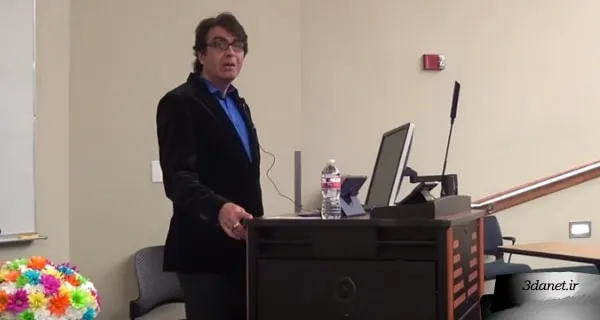
Below you can access the audio and video of the lecture Mysticism and Transconceptual Consciousness, delivered by Dr. Arash Naraghi in Farvardin 1395 (March/April 2016).
.
.
Transconceptual Consciousness and Contact with Transcendent Realms
(1) Spiritual wayfaring begins with reflection upon the human psyche. In religious literature, too, the starting point of the journey toward God is self-knowledge. One who knows their own soul and psyche opens the path toward knowledge of the God of existence. It is for this reason that the wayfarer has been encouraged toward contemplation and meditation upon the states of the self. The mystical tradition is founded upon this fundamental presupposition that contact with the Sacred or the transcendent reality occurs in the depths of the human psyche. The noble Prophet of Islam was asked where we should seek God, in the heavens or on earth? And his answer was: in the heart of the believer! It is as if the psyche of the human being of heart opens a window toward farther horizons. The point of contact with the transcendent must be sought within. One who casts the arrow of thought far afield to find the treasure of meaning goes astray and falls far from the goal. Spiritual contemplation begins with reflection upon inner states. But what lies hidden in the depths of the human psyche that opens its path toward farther horizons? Which vessel within our psyche carries us to the other side of the ocean, to the shore of the transcendent?
(2) Ancient mystics, as well as experts in modern cognitive sciences, more or less share the belief that there are two types of consciousness or cognition in human beings: conceptual consciousness, and transconceptual consciousness.2 The first type, that is, conceptual cognition or consciousness, can be considered the cognition that arises from experience in its general sense (which includes sense and reason), and renders the world intelligible and accessible to us in the form of a system of concepts. Physics and mathematics are prominent examples of this type of cognition. In this mode of consciousness or cognition, matters are subject to classification and analysis, their components are deconstructed and reconstructed, and this deconstruction and reconstruction is aided by and takes place within the framework of concepts that our mind possesses. It is through this process that what was previously unknown to us enters the domain of our consciousness and cognition. In other words, when faced with the chaotic and undifferentiated matter of the world before them, human beings strive to project the structure of their own mind onto that undifferentiated matter, and through their mental frameworks, give structure to that chaotic material. The correspondence between the structure of the mind and the structure of the external world de-alienates the alien and unknown world, and brings the unknown into the realm of human cognition and consciousness. Of course, this consciousness and cognition can, in turn, lead to the generation of newer conceptual frameworks. Our most important scientific and philosophical activities take place within the territory of this focal or concentrated consciousness. According to some common depictions of "consciousness" (known as the "Cartesian Theater" model3), the human mind is like a theater stage, and consciousness is like a concentrated beam of light that illuminates a circle at the center of the stage. In the dark margins of the circle of light, thousands of events are taking place, but the spectators do not see that hustle and bustle. What is "seen," that is, what enters the realm of the spectators' "consciousness" and cognition, are the movements and events that emerge from the darkness into the focal circle of light on the stage. The spectators' consciousness of what is happening in front of and behind the stage is limited to the focal circle of light and is proportionate to it. Therefore, conceptual cognition (the highest form of which is discursive cognition—both deductive and inductive) is cognition within the vessel of familiar frameworks. But our mystics have long claimed that conceptual cognition (or, by extension, acquired or mediated knowledge) is not the only way to contact the world and become aware of the realms of existence. Conceptual consciousness is important and necessary in its own place, but confining consciousness to conceptual consciousness is a mistake. In their view, human beings can contact the world around them in other ways as well—ways that are beyond the concepts and categories employed in concentrated consciousness. This cognition, which occurs outside the realm of concentrated consciousness and beyond the concepts and categories of the faculty of understanding, is a kind of "contact" with the world—a touching of the world not in the form of concepts but through feeling and emotion. The famous story of the Romans and the Chinese in Rumi's Masnavi can be seen as an allusion to the distinction between these two types of consciousness. The Chinese captured and represented the realm of truth/reality in the form of lines and colors, but the Romans seized that realm without lines and colors and beyond frameworks. The Chinese's consciousness was of the conceptual kind, but the Romans' consciousness was of the transconceptual kind. This type of transconceptual consciousness resembles, in some respects, the type and manner of a child's contact with the world. Darwin teaches us that we humans were singing beings before we became speaking beings. That is, our mode of contact with the world was not through words but through sound. The infant in its mother's arms gazes at her face. And the first signs of the world for it are the emotional fluctuations that ripple across the mother's face and voice. The newborn "recognizes" emotions on the mother's face in a manner beyond language, and gradually reacts to those emotional signs, and elicits the mother's response to that reaction. Its relationship with the external world (the mother) is formed not through concepts (which have not yet formed in its cognitive faculties) but through the harmony and consonance of emotions. Therefore, the first and most fundamental form of our consciousness of the world is through the emotional resonance between mother and child.4 We carry a form of this pre-conceptual or transconceptual consciousness from childhood into our adulthood, although this type of consciousness is gradually pushed to the margins, and conceptual consciousness comes to the center. In adulthood, focal and concentrated consciousness develops and dominates within us. But (according to the "Cartesian Theater" model) everything that happens on the stage of our mind is not limited to the events within the circle of concentrated light. Outside that circle and behind the stage, too, actors are intensely busy at work, but their presence eludes the grasp of concentrated consciousness.
In many cases, our primitive, transconceptual consciousness can make us aware of what is happening in our world but outside the focal circle of concentrated awareness. The individual apprehends without “understanding.”5 This transconceptual consciousness is still activated in us at times of danger. It is as if it is a kind of primitive defense mechanism that makes us aware of danger and prompts a reaction before conceptual consciousness is activated. Conceptual consciousness is time-consuming, and if human reaction to the perils of the wild world were dependent on conceptual consciousness, the human being would have perished before having the opportunity to react to the danger. Primitive, transconceptual consciousness provides an alternative mechanism by which the human being apprehends danger and reacts to it swiftly and appropriately without “seeing” and “understanding” it. The alternative consciousness that mystics reported is close to this primitive and more or less instinctive consciousness. Many mystics believed that the understanding of God occurs beyond understanding. That is, awareness of Him is contingent upon transcending or suspending conceptual consciousness. The suspension of discursive reason can be considered an attempt to activate another type of consciousness. Of course, the emergence of civilization and the expansion of the security it brought have both increased our need for discursive consciousness and provided a broader field for its growth and flourishing. And conversely, our need for instinctive, emotional, and transconceptual consciousnesses has become less and fainter.
To the extent that conceptual consciousness has become central and we have grown more skilled in its use, transconceptual consciousness has been marginalized, and the skills necessary for exercising it have fallen into oblivion within us. It seems there is a relationship between the marginalization of transconceptual consciousness and the loss of the skills needed to exercise this type of consciousness on the one hand, and the inability of modern civilized human beings to make contact with the transcendent realms of the world on the other.
(3) But what, from the mystics' perspective, was the purpose and role of this transconceptual consciousness? Mystical thought always poses this question to its audience: how do we know that the level of consciousness present in human beings is the highest level of consciousness in existence? Perhaps there is a being or beings in this world that enjoy a more complex and higher type of consciousness—a consciousness whose comprehension lies beyond the scope of our human cognitive apparatus. The new cognitive sciences teach us that our human cognitive apparatus has serious limitations and can perceive the world only within a certain range and in a specific way. But there is no reason that the limits of existence should be identical with the limits of human cognition. It is entirely possible that there are realms in this world that lie beyond the scope of our cognitive apparatus's understanding and consciousness, meaning that our cognitive apparatus is fundamentally not designed to perceive and understand those realms. For example, compare the relationship between a dog's consciousness and a human's consciousness. Undoubtedly, a dog possesses a kind of consciousness, and it is highly likely that its level of consciousness is far greater than humans suppose. Yet, at the same time, it seems there is an essential and qualitative difference between the level and type of a dog's consciousness and the level and type of a human's consciousness. That is, a dog's cognitive apparatus has evolved in such a way that important realms of human consciousness are fundamentally beyond its reach. For instance, understanding the subatomic world or quantum theory is entirely outside the sphere of a dog's perception and consciousness. That is, a dog's cognitive apparatus has fundamentally not evolved to understand such categories and worlds. But if the dog considers the world of existence limited to the bounds of its own consciousness, it is mistaken. The scope of existence is far broader and more complex than the scope of a dog's consciousness. Yet why, when it comes to themselves, do humans suddenly assume the scope of existence to be entirely or in principle within the domain of their own cognitive apparatus? What reason is there that the scope of existence should be identical with the scope of human consciousness? More importantly, what reason is there to suppose that human consciousness is the highest type of consciousness existing in this world, or that our cognitive apparatus is designed in such a way that it can, in principle, encompass all realms of being—without any limitation? The mystics' claim has been that (first) the scope of existence is not identical with the scope of our human cognitive apparatus's capacity, and (second) there are indeed realms (particularly of the nature of consciousness) in this world that remain beyond the reach of the human cognitive apparatus. I think affirming the first claim is not unreasonable. But on what basis can the second claim be considered justified or probable? In fact, their second claim should be reinterpreted as follows: there are realms of the nature of consciousness in this world that are entirely beyond the limits of our human conceptual consciousness's understanding. That is, the apparatus of human understanding's categories is fundamentally not designed to capture those realms, and therefore, the possibility of "understanding" those realms does not exist for humans. But the impossibility of "understanding" those realms does not necessarily mean that the possibility of "contact" with those realms is beyond the reach of human beings. In fact, their claim can be understood as follows: the apparatus of human conceptual consciousness is incapable of "understanding" those "transcendent" realms, but the apparatus of human transconceptual consciousness can place us in "contact" with those realms. These realms, which are of the nature of consciousness but fundamentally lie beyond the scope of our human conceptual cognitive apparatus, we can (assuming they exist) call "transcendent consciousness." Therefore, our human conceptual cognitive apparatus is fundamentally incapable of understanding transcendent consciousness (assuming it exists), but mystics claim that our human transconceptual cognitive apparatus can place us in contact with this transcendent consciousness (assuming it exists).
(4) If the ultimate goal of spiritual wayfaring is "contact" with this transcendent consciousness, then the central question in the station of wayfaring is how one can ascend from the station of "understanding" to the station of "contact." In fact, one of the most important pillars of spiritual wayfaring in Islamic mysticism was to teach wayfarers how they can move from one level of consciousness (conceptual consciousness) to another level of consciousness (transconceptual consciousness), to learn the necessary skills for "seeing otherwise," and thereby establish a contact of a different kind with the world around them, and especially to be able to experience the pulsations of transcendent consciousness in this contact. In mystical literature, the suspension of conceptual consciousness was sometimes called "madness" (junun). From the perspective of mystics, "madness" carried a very positive meaning. "Madness" was not irrationality or anti-rationalism, but was considered a transcendence of one level of consciousness (conceptual consciousness) and an ascent to another realm of consciousness (transconceptual consciousness). From the mystics' perspective, the lines and colors of Chinese painting are compatible with our conceptual cognitive apparatus, but if we are to perceive that which is beyond line and color and "wholly other," we must first free ourselves from the evil of the realm of line and color (i.e., the categories of understanding in conceptual consciousness) and enter the realm of formlessness. And the requirement of this voluminous journey is that we acquire sufficient skill and proficiency in employing our transconceptual cognitive apparatus. But how can a human being pass from the realm of line and color to the sphere of formlessness and colorlessness? To put it more precisely, how can a human being ascend from the level of conceptual consciousness to the level of transconceptual consciousness? The mystics' answer to this question was that to ascend to the sphere of transconceptual consciousness, we must learn to suspend our conceptual consciousness. It is as if conceptual consciousness interferes with the human being's transconceptual cognitive apparatus. The state of suspension or trance was considered a passage from one level of consciousness to another level of consciousness. But how does the suspension of conceptual consciousness occur? The common solution of mystics for suspending conceptual consciousness and ascending to the sphere of transconceptual consciousness was the discipline of meditation (muraqaba). Meditation, for the people of mysticism, had two main pillars: concentration and suspension. The practitioner first learned, through reflection on inner states, to bring order and discipline to their mind and thoughts and to gain control over their unruly mind (concentration), and after mastering inner thoughts, to suspend thinking (suspension). In mystical systems, meditation has been prescribed in two different ways: active or focused meditation, and passive or open meditation. In active meditation (which is close to the tradition of Islamic mysticism—especially the discipline of dhikr), the wayfarer takes something as the focal point of their mind's concentration (this thing could be one's own breathing, an external object, a point in the mind, or a remembrance in the heart), and then strives, through concentration on that focal point, to banish or suspend all other thoughts, imaginations, and ideas from the mind. In passive or open meditation, the wayfarer sits in seclusion and, without any activity, opens themselves to the influxes of their consciousness. Various thoughts, ideas, sensations, and emotions come and go within their mind, and they merely observe the contents of their mind in the moment—without distinguishing between them, classifying them, naming them, or imposing any interpretation or construal upon them—that is, they suspend all the conceptual processes of their mind and transform entirely into an observing eye. In both methods, the main goal is to strip consciousness of the object of consciousness. The essence of consciousness (at least from one important aspect) is considered to be its intentional character, meaning "consciousness" is always "consciousness of." At the level of conceptual consciousness, consciousness is always directed at a specific thing—for example, consciousness of a tree, consciousness of a number, consciousness of sorrow, and so on. But in the practice of meditation, the object of consciousness gradually fades away, and nothing remains of consciousness but its intentional character, meaning consciousness remains without being directed at any particular object. The practice of meditation ultimately acquaints the mind with the experience of objectless consciousness. The individual is conscious without being conscious of anything. And this consciousness without reference to a specific, particular object is, in fact, the essence of transconceptual consciousness. Therefore, the practice of meditation gradually brings discipline and stillness to the human being's unruly and restless mind so that it can ascend from "object-oriented consciousness" (i.e., intentionality directed at a specific object) to objectless consciousness (i.e., pure intentionality). Conceptual consciousness is directed at a specific object. But if "something" passes at the margins of consciousness that is not "specific," then focused consciousness (which is fundamentally designed to work with specific objects) remains incapable of encompassing that thing.
البته آگاهی فرا-مفهومی هم نمی تواند بر آنچه در حاشیه آگاهی می گذرد، »احاطه« یابد، اما این نوع آگاهی )که از تعیّن برآمده از موضوعات معّین فراتر رفته است(، می تواند )دست کم به معنای امکان منطقی یا متافیزیکی( با آنچه در حاشیه آگاهی متمرکز می گذرد، »تماس« یابد. یعنی آن را دریابد بی آنکه آن را »بفهمد«.
(5) What does not fall within the purview of focused consciousness in the form of concepts will, of course, also not be captured in the form of declarative language. Declarative language (which is the language suited to focused consciousness) is governed by the concept of truth as correspondence to reality. The proposition “Snow is white” is true if and only if snow is white. Here, the subject of the sentence, i.e., “snow,” refers to a specific object or correspondent in the external world, and the predicate of that sentence, i.e., “is white,” ascribes a particular attribute, namely whiteness, to that specific object (such that if this relation holds in the external world, the sentence is true, and if not, not). In a declarative proposition, there is a gap between language and the reality it represents. In other words, there is an existential or metaphysical gap between the signifier (linguistic signs) and the signified (the object or state of affairs to be represented). The signified is other than the signifier and lies outside it. Thus, signs within the context of declarative language point to something outside and beyond themselves. But what transpires at the margins of focused consciousness is not necessarily and always an “object,” or more precisely, a “determinate object.” And if (by hypothesis) contact with “that” indeterminate thing is possible, the experience resulting from that contact cannot be rendered in declarative language. The language suited to the experience of contact is often symbolic or metaphorical language.7 That is, the representation of the contact experience through the focal point of human language (i.e., declarative language) is impossible; for this purpose, one must go to the borders of language, where language bends and takes on a metaphorical character. Metaphor, in its true sense, can never be reduced to the concepts and conventional frameworks of declarative language. The contact experience becomes linguistically accessible through metaphorical representation. In metaphorical language, the signified creeps into the signifier and becomes one with it. In metaphorical language, language itself becomes that which is to be represented. In declarative language, signs point outside themselves, but in metaphorical language, language refers to itself. It is the linguistic structure created for metaphorical representation, in its entirety and in its self-reference, that conveys something meta-linguistic. Here, the signifier and the signified—in a sense—become one. In a metaphorical linguistic structure, the individual components of that structure, independent of the whole to which they belong, have no illuminating signification. It is the entire linguistic structure that becomes a symbol or sign. The language of poetry, parable, and allegory are good examples of metaphorical representation in language. Therefore, both functions of language (i.e., declarative and metaphorical) are, in a very broad sense, “declarative,” meaning that language in both its functions strives to unveil reality and its complexities, and thus, language in both its functions is, in a broad sense, “truth-apt.” But of course, the declaration of reality and the truth-aptness of these two linguistic functions do not necessarily follow a single logic. The metaphorical language used to represent the experience of contact with transcendent consciousness is, to a large extent, close to our language in narrating our dreams.8 In the “dream narrative,” language becomes a self-referential symbol, meaning the reality to be represented is the very linguistic situation that has been created, not something beyond it. The ineffable thing that emerges from our obscure and wild dreams acquires a complex emotional configuration and takes on “strange forms.” The “strangeness” of this formal and emotional network arises from the fact that the dream situation eludes the grasp of the concepts of focused consciousness. That is, the dream situation is not entirely reducible to the conventional frameworks and concepts of focused consciousness. The individual images and events that occur in the dream, independent of the totality of the narrative in which they are embedded, are obscure and meaningless. That is, the dream narrative has no declarative signification (in the specific sense). And any attempt to understand this narrative, i.e., to reduce it to the concepts and frameworks of focused consciousness, inevitably fails. But if, instead of discovering its true reference, the individual participates in the linguistic situation of the narrative, surrenders to it, and becomes part of that linguistic situation, they undergo a contact experience that was previously inaccessible to them except through this linguistic structure. Metaphorical language cannot be “understood,” but one can participate in it, live in it, and touch it. The “dream narrative,” which is a prominent example of metaphorical representation, has been the dominant narrative in many parables and allegories of sacred scriptures, and its continuation can be traced into the literature of the modern era. One of the most prominent figures who sought to recreate the dream narrative of sacred scriptures within the sphere of modern human experiences is the Czech writer Franz Kafka.
Kafka's deep understanding of the dream-narrative logic in the holy books enabled him to vividly portray the contemporary human's experience of profound dread in contact with the transcendent (or the absurd?) in his stories (which are highly reminiscent of the tales and parables of the holy books). To better understand the function and logic of dream narrative, it is good to examine one of Kafka's famous parables or tales together: "It was very early in the morning. The streets were clean and empty. I was on my way to the train station. I compared my watch with the tower clock, and realized that it was much later than I had thought, I had to hurry, the moment I understood this, I panicked, and this panic made me doubt my route, I still did not know the city streets well, fortunately there was a policeman nearby. I ran to him and breathlessly asked him the way. He smiled and said: 'You want to ask me the way?' I said: 'Yes, because I cannot find the way myself.' He said: 'Forget it, forget it,' and hurried away, like someone who wants to be alone with his laughter."9 Many readers are tempted to interpret this strange tale, for example, to see it as an expression of the author's psychological state, or as making a theological point. As if the author, in this strange tale, is trying to express something we already know and is familiar to us, but in a twisted and strange language. But the attempt to interpret this parable or metaphor (i.e., the attempt to reduce it to the familiar concepts of focused consciousness) turns it from a metaphor or parable into an allegory. In allegory, the linguistic form of the tale is not important; it is the core or essence of the story that matters. The author could, of course, have expressed the same point in conventional, declarative language, but to make that point sweeter, more effective, or easier to understand, he expresses it in the "form" of a tale or allegory. The meaning of an allegory is entirely expressible in conventional declarative language. But in a genuine metaphor, content is inseparable from form. That core cannot be separated from this shell, for fundamentally, shell and core are intertwined. A genuine metaphorical tale certainly allows for various interpretations, but its content always transcends those interpretations and any interpretation, and each time audiences return to it, they find a new aspect and meaning in it. Genuine metaphorical language, unlike declarative language, is open. It is for this reason that a genuine metaphorical tale must be accepted in its entirety, and one must resist the temptation to reduce or translate it into the realm of focused consciousness and declarative language. In Kafka's story, the background of the tale is very ordinary and banal: someone hurries through the city streets early in the morning to reach the train station. The first place where the narrative jolts and takes a slight distance from the line of conventional reality is where the individual's watch does not match the tower clock, and this matter so flusters and panics the individual that he begins to doubt his route. This reaction is somewhat unconventional. But one can assume that the individual is new to the city, does not know the city streets well, and is therefore excessively worried that he might not reach the train station on time. In this atmosphere of doubt and anxiety, a glimmer of hope suddenly opens: "fortunately" there is a policeman nearby, and policemen are generally trustworthy individuals who usually know the streets well. The individual asks the policeman the way (but the way to where? In the individual's question, there is no mention of the train station!), and the policeman's response seems to carry a kind of astonishment: "You want to ask me the way?" Why should the policeman be surprised that a passerby asked him for directions? What could be more natural than this? And the policeman's final reaction suddenly uproots us from the familiar logic of the conventional world: "Forget it! Forget it!" and he hurries away. Why should the individual forget his way to the train station? And stranger still, in what respect does the policeman's departure resemble someone who wants to be alone with his laughter?! What laughter? And why laughter? The final part of the tale suddenly distances the entire tale from the concept-accessible realm of focused consciousness. None of the concepts and categories of our conventional understanding fit this tale well. Whatever interpretive garment we dress it in, parts of its body remain bare. Something lies hidden in the heart of this tale that throbs and tempts us to interpretation, yet yields to no interpretation. But what is that throbbing thing? If this thing were something unknown, we could sooner or later find an interpretive garment for it that fits its body well, and reveal its hidden and invisible presence.اما آن چیز تپنده ای که در دل تاریکی رازآمیز حکایت استعاری کافکا نشسته است، امر ناشناخته نیست، امر ناشناختنی است. حکایت کافکا ما را در تماس با فهم ناپذیری امر فهم ناپذیر قرار می دهد.10 تماسی که به هیچ مفهومی فروکاهیدنی نیست. معنای حکایت همان استیصال آگاهی مفهومی ما در برابر امری اساساً فهم ناپذیر است. حکایت به چیزی ورای خود اشاره نمی کند. در اینجا حکایت همان چیزی است که بناست به آن اشاره شود، یعنی حکایت خود عین فهم ناپذیری امر فهم ناپذیر شده است. به گل نشستن کشتی فهم در کرانه حکایت همان لمس فهم ناپذیری امر فهم ناپذیر است. حکایت استعاری اصیل مثل شتر داستان مثنوی مولاناست که به میهمانی خانه مرغ آگاهی مفهومی آمده است- و غایت این میهمانی جز ویرانی آن خانه و درشکستن »هوش و عقل« نیست.(6) The upshot is that it seems the suspension of conceptual consciousness through the discipline of meditation can open our way to the sphere of transconceptual consciousness, and transconceptual consciousness can (at least in the sense of a metaphysical possibility) place us in contact with transcendent realms, that is, regions of consciousness that (assuming they exist) lie beyond the limits of our conceptual consciousness. The experience of "contact" is an experience of a transconceptual realm that can only be alluded to within the context of a dream narrative.
.
.
Download PDF of the lecture text: Mysticism and Transconceptual Consciousness
.
.
Watch the video of the lecture: Mysticism and Transconceptual Consciousness
.
.
Download the audio of the lecture: Mysticism and Transconceptual Consciousness
.
.
Mysticism and Transconceptual Consciousness | Lecture in Dallas, Texas
Farvardin 1395 (April 2016) | Mysticism and transcendent consciousness
.
.





Discussion1 comments
سلام . ممنون از تلاش شما . اگه امکانش هست نسخهی باکیفیت سخنرانیها رو در سایت بذارید .