Philosophy
Elucidating the Meaning of Life: A Conversation with Mostafa Malekian
Mostafa Malekian sees life's meaning as something to be 'created' rather than 'discovered'; in his view, the question of meaning only arises when a person lacks a 'zest for living.' If someone loves life itself, they never ask why one should live.
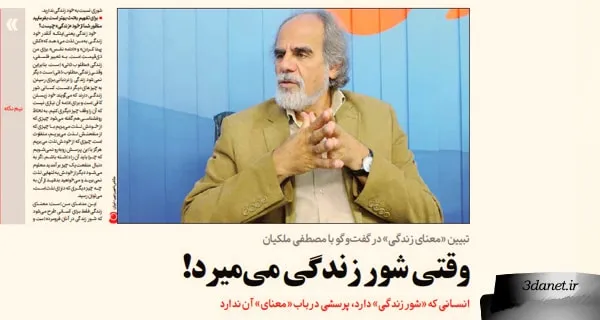
Kabutar Arshadi: Mostafa Malekian, born 1956 in Shahreza, is an Iranian philosopher and intellectual whose research largely concerns ethics, philosophy of religion, and psychology. His theory of “Rationality and Spirituality” can be counted among his most important and most recent ideas. In this conversation we sat down with him to discuss “the meaning of life.” Malekian’s views in response to the meaning of life, however, rest on a foundation of “life-enthusiasm,” which is definable from a psychological perspective. Malekian believes that the moment we say “I want to live in order to attain something else through life”—that is, we are not in love with life itself and have no enthusiasm for life itself—it is precisely at this point that the question of the “meaning of life” begins. In this discussion, a stage prior to “defining the meaning of life” is explored, namely, when does the question of the meaning of life arise for human beings at all, rather than what the answer to this question might be. Follow our conversation with him below:
Professor Malekian, when we ask about the “meaning of life,” to what extent will we arrive at an answer that is acceptable to a broad spectrum of human beings? In fact, we want to know whether the search for meaning in life leads all of us to a common point or a single proposition.
I am among those who do not consider the “meaning of life” to be “discoverable,” but rather “constructible.” In more conventional terms, I hold that the meaning of life cannot be “discovered” but must be “invented.” Therefore, I naturally do not believe that each and every human being who wants to construct or invent this meaning will all arrive at the same thing. Now, if one cannot say as many as the seven billion human beings on earth, there is nonetheless as much diversity in the construction and invention of this meaning as there are human groups, and it can by no means be the same for everyone. Philosophers who hold that the meaning of life is “discoverable”—that is, they believe there is “one” meaning of life, just as electricity existed for billions of years but no one had discovered it and it was discovered for the first time by a human being—conceive of the meaning of life like electricity, which was discovered at some time by someone, whether that person is the founder of a religion or creed or any other person who arrived at this meaning of life. Because something “discoverable” does not depend on you or me, it must naturally be a single thing; although even among themselves there is disagreement about what that single thing is. But for me, who does not subscribe to such a definition and believes that life has no meaning in itself and that it is I who must give meaning to my life, I also do not hold a single definition for everyone. Our task is not “meaning-finding,” but “meaning-giving.” So all human beings cannot give meaning to their lives in one way. However, common grounds for this meaning-giving can be sought among human groups.How different can the ways of “giving meaning to life” be from one another?
In truth, everyone can give meaning to their life in some way, and this diversity of meanings exists, although these ways of giving meaning may resemble one another, they occur independently.How much power does “enthusiasm for life” have to give meaning to life?
If a human being has “life-enthusiasm,” the question “What is the meaning of life?” never arises for them at all. My argument is not based on a particular philosophical tradition; rather, it is a psychological finding. In my view, “life-enthusiasm” means that if, for various reasons, you are in love with the very act of living, we say you have “enthusiasm” for life. When you are in love with life itself, you never ask whether you should seek a meaning for life, or whether you must reach a goal. When a person is in love with someone, they enjoy associating with them, but if one day they ask what function or benefit my association with them has, know that their enthusiasm and passion for that person has vanished; for as long as they are in love, they do not ask, “What do I want this thing for?” When life-enthusiasm exists, whether in the human beings of a historical period or in an individual human being, the question “What should we live for?” is never asked.Which psychological theory is your argument based on?
My argument relies on that branch of psychology known as "life psychology."When do you think the question of the meaning of life becomes more prominent in history?
According to this theory, the meaning of life only arises for those in whom the zest for life has died. As it happens, it seems that in "modern man" the zest for life is dead. From this perspective, modern humans question the meaning of life far more than their ancestors did in their philosophical books, and this has become more of a problem for them.The zest for life based on social action declines in certain periods in societies; because it seems that the "zest for life" is deeply intertwined with social and political issues and, of course, cultural infrastructures. A social human being who is not "dispirited" and is "reform-seeking" is naturally in search of the meaning of life; for example, from the 1940s to the 1950s and then from the 1960s up to the revolution, we encounter an Iranian human being who is intensely searching for the meaning of life. In other words, "social depression" and "social zest" each determine the degree of a human being's search for the meaning of life, such that in a dispirited society with a decline in social zest, the meaning of life becomes disordered. The question, in fact, is: where do the social aspects lie in explaining the discussion of the meaning of life?
You have a presupposition, which is that everyone who seeks reform has a strong "zest for life." But I say this presupposition is not at all correct. You say that it is possible that I come to my senses and see that I do not enjoy "mere living," so, this being the case, I might carry on with my whole life in pursuit of realizing an ideal. Now, this ideal could be the progress of humankind or the citizens of my own society; then, precisely in line with this meaning-making that I have done for my own life, I happen to seek to lead my fellow humans or the citizens of my country or society toward evolution and reform. Your presupposition is that, as if, whoever seeks reform, this reform-seeking stems from their zest for life. This is not true. Many have found their ideal after they wanted to give meaning to their life. That is, they were not necessarily dispirited at first? Psychologically, they were not depressed, but they also did not have that zest. They could not simply live just for the sake of having lived. They wanted to live in order to attain something other than life itself. In this sense, as soon as you say, "I want to live in order to attain something else through living," it means you are not in love with life itself and have no zest for life itself. To better elucidate the discussion, could you explain what you mean by "life" itself? Life itself means that life itself gives me so much pleasure that "its prolongation" and "its continuation" are valuable to me. In philosophical terms, life is "intrinsically desirable." Therefore, when life is intrinsically desirable, it can no longer be seen as a ladder to reach other things. Those who have a zest for life are those who say that living itself is enough, and there is no need to dedicate it to something else for its continuation. Psychologically, it is also said that something we enjoy for its own sake is different from something we enjoy for its benefit. Something we enjoy for its own sake never confronts us with the question of why we should have it. If you seek the benefit of something, it becomes clear that you no longer enjoy it for its own sake alone and want to know what other pleasurable thing can be reached through it. This is my claim: the meaning of life only arises for those in whom the zest for life has died and who want to use life as a means to reach something else, that something else being the meaning of life.As a value judgment, does treading the path that leads to the "meaning of life" hold intrinsic value for you?
For me, what matters is only that there is no escape from these stages; these stages are compulsory and inevitable, and there is no positive or negative involved. In any case, this life has been given to us by our parents; therefore, three paths lie before us. These three paths are "determined," but our choice among these three paths is no longer determined. One path is to find the life given to me so interesting and wondrous that I want to continue it—this is what is called "zest for life." At times, we see this life as lacking value and have no desire to continue it; then two paths exist for us: one is to end our own life, and the other is to reach the understanding that, although life itself is not something interesting, it can be used as a means to attain a valuable state, which is the "meaning of life." Our situation revolves around these three stages, namely "zest for life," "suicide," and the "meaning of life." There is no path other than these three, and this is the very determinism governing human life; but choosing any one of them depends on us.Are these stages universal or particular?
If someone has a zest for life, they do not think about any of these at all. But if the zest for life diminishes, they will think about one of these three stages. If someone is enamored with life itself, like Zorba the Greek; for such people, the very act of living is valuable. Zorba the Greek has a zest for life, so the "meaning of life" or "suicide" is never an issue for him. If life is not our "beloved," we must either "give it meaning" or "commit suicide."In your view, do humans either commit suicide or give their lives meaning?
Yes, they choose one of these two states.There are those who have not committed suicide but have also not given their lives meaning; how can this group be explained?
The simplest reasons can be the reason for this group of individuals to continue living; for instance, they do not want their parents to suffer the loss of a child, or many other such cases!Do all individuals consciously think about these three stages?
No, that is not the case. I have never made such a claim. Many individuals have a "zest for life" and derive abundant pleasure from life itself, and they continue, and they have no questions. But the reason that, when you enter the realm of philosophy, you see the "meaning of life" being discussed is that as long as a person has a "zest for life," they do not enter into the "meaning of life." Our ancestors mostly had a zest for life and enjoyed life itself, and they never asked, "What do we live for?" But we, their descendants, constantly face questions of this kind. Of course, even in an era when everyone enjoyed life, there were individuals who did not have such enthusiasm and zest for life; for example, "Abul Ala Al-Ma'arri" lived in a village in Damascus a thousand years ago and spoke of the "meaning of life" and asked, "Why should we live at all, and what kind of life is this?" This indicates how modern this individual was a thousand years ago. The opposite also exists; in this era, when everyone is searching for the meaning of life, there are some who have a "zest for life" and have no questions about the "meaning of life."But in the realm of philosophy, the question of the meaning of life has always been raised.
No, you do not see the question of the meaning of life in this form at all before Kant; you do not see it in Descartes either. It is not even seen in Spinoza. The further we have advanced, the more this question has been raised.What is the relationship between the "purpose and goal of life" and the "meaning of life"?
«معنای زندگی» لفظی است دارای سه معنا؛ «هدف زندگی»، «ارزش زندگی» و گاهی نیز «کارکرد زندگی» معنا میشود. اما به طور کلی معنای زندگی در هر سه این تعاریف در دوره پیشامدرن به ندرت طرح میشد. شما در افلاطون اصلاً این بحث را نمیبینید اما در ابوالعلا معری میبینید. در سرتاسر آثار ابنسینا یا فارابی هم مسألهای به نام معنای زندگی نمیبینید. پس طرح این مسأله در زمان اکنون هم به این دلیل است که «شور زندگی فروخفته است» و هم اینکه تعریفی که قدما ارائه میدادند بیاعتبار شده است و این تعریف به این خلاصه میشد: «خدا ما را برای هدفی آفریده است و همین هدفی که خداوند در نظر داشته، برای زیستن کافی است» از همین رو است که اکنون در صدد «معنا بخشیدن» به زندگی برآمدهایم؛ چرا که معنای زندگی «یافتنی» نیست.البته در ارجاع به مکتوبات فلسفی پیشا کانت ممکن است با سرفصل مشخصی به نام «معنای زندگی» روبه رو نباشیم، اما دغدغه این معنا یا «چرایی زندگی» از زمان سقراط تاکنون قابل ردیابی است.
متوجه هستم که منظور شما چیست؛ میخواهید بگویید میشود چنین معنایی را استخراج و استنباط کرد...بله، طبق فرمایش شما بحث معنای زندگی، در دورههای مختلف سویههای متفاوتی داشته است. همچنان اصرار دارم که تفکیک شما بین «شور زندگی» از «معنای زندگی» در این حد قابل احراز نیست. انسان در عین حال که میتواند از خود زندگی لذت ببرد میتواند در پی معنای استعلایی آن هم باشد.
اینجا معلوم میشود که من و شما «شور زندگی» را به دو معنا به کار میبریم. شور زندگی اگر به معنای دیگری باشد با هم اختلافی نداریم. اما شور زندگی برای این بحث، صفت انسانی است که از خود «زیستن» لذت میبرد و نمیخواهد از طریق زیستن به چیز دیگری برسد.با همین معنایی که شما بهکار میبرید وارد بحث میشوم و معتقدم تفکیکپذیر نیست.
چرا؟چطور میتوانیم به این چرایی پاسخ دهیم؟
من میگویم هر چیزی را در نظر بگیریم شما یا عاشق خودش هستید یا عاشق چیزی که از طریق آن میشود به دست آورد. ما یا «مطلوب ذاتی» داریم یا «مطلوب غیری». از این دو حال خارج نمیشود. اصطلاح روانشناسی آن، این است که اگر شما چیزی را برای خودش بخواهید از آن چیز «لذت» میبرید ولی اگر چیزی را برای وسیله قرار دادن در جهت رسیدن به چیز دیگری میخواهید از آن چیز «منفعت» میبرید. این اصطلاح «لذت» و «منفعت» در اینجا تعریف مییابد. «لذت» و «منفعت» از هم متفاوتند. تفکیک بین «مطلوب ذاتی» و «مطلوب غیری» یا به تعبیری تفکیک بین «لذت» و «منفعت» در کل زندگی قابل طرح است. اگر شما عاشق معشوقی باشید و در کنارش قرار گیرید، آیا میپرسید از در کنار معشوق بودن به چه چیز دیگری میرسم؟خیر؛ در عاشقی «معشوق» همه لذت است و وسیله چیز دیگری نیست، غایت است و تا زمانی که عشق برجاست، این معاشرت پرسش دیگری نمیآفریند. اما زیستن هم مانند عاشقی نوعی روند و تحول دائم است.
پس اگر خود زندگی هم معشوق شما باشد، با پرسش دیگری روبه رو نخواهید شد یا به دنبال مرحله دیگری نخواهید بود. در اصطلاح روانشناسی گفته میشود که شما «شور زندگی» دارید. شما در واقع از شور زندگی «افسرده نبودن» را در نظر میگیرید. در اصطلاح روانشناسی «شور زندگی» برمیگردد به خود زندگی نه چیزی که از طریق آن میشود به دست آورد..
.
فایل pdf این گفتوگو
.
.
.
تبیین «معنای زندگی» در گفتوگو با مصطفی ملکیان
وقتی شور زندگی میمیرد!
انسانی که «شور زندگی» دارد، پرسشی در باب «معنای» آن ندارد
Source: Iran Newspaper - Issue: 6507 - Monday, May 29, 2017
.
.




Discussion2 comments
به نظر من ،تقسیم بندی خیلی رادیکال و شدید بین کشف و جعل معنا ی زندگی ،تفسیر درستی نیست و از لحاظ پدیدارشناسانه مشکل دارد... باید طیفی و تشکیکی نگاه کرد... هم معنای زندگی قراردادی و اعتباری می تواند باشد و هم تکوینی و حقیقی... اینکه ما از اول بخواهیم موضع گیری و جبهه گیری کنیم بعد درباره همه ارزش های اخلاقی یک کاسه قضاوت کنیم که یا کشف کردنی هستند یا جعل کردنی ،خیلی شتاب زده است... و هر دو هم به بن بست می رسند... کسی که می گوید همه ارزش های اخلاقی و معنای زندگی کشف کردنی است واقعا نمی تواند اختلاف فرهنگ ها و تمدن ها و حتی سلیقه ها و خوشایند ها را در قضاوت اخلاقی توجیه کند و لاجرم به بنیاد گرایی می رسد و کسی که می گوید همه ارزش های اخلاقی و معنای زندگی جعل کردنی است ،سلسه مراتب ارزش های اخلاقی را یکدست کرده است و در نمی یابد که در تمام ادیان ابراهیمی و غیر ابراهیمی مثلا چهار حکم اخلاقی وجود دارد که یکسان است _ قتل نکن ،سوءاستفاده جنسی نکن ،دزدی نکن ،دروغ نگو _ این احکام با قرار داد های اجتماعی قومی و محلی در یک مرتبه قرار ندارد. و واقعا اگر کسی به لوازم منطقی جعل معنای زندگی صادقانه پایبند باشه به همه چیز مجازی _ اگر خدا نباشد همه چیز مجاز است داستایوسکی _ و نسبیت محض می رسد... و حتی به آنجا می رسد که بخواهد به جای خدا بنشیند...یعنی خدا را هم جعل کند... حقیقت های اخلاقی هستند که در عمق جان و سویدای دل وجود دارند که همواره ناگفته باقی می مانند و ارزش های اخلاقی قراردادی هستند که در بخش نامه ها و دستور العمل ها می آید و... بین این دو هم ارزش هایی وجود دارد... بله اگر هستی را طبیعت بی جان بدانیم که فقط هست، آن وقت ارزش های اخلاقی که از جنس باید ها باشند در طبیعت وجود ندارد و باید آنها را جعل بکنیم اما اگر هستی را یکدست ندانیم و به سلسه مراتب قایل باشم (بدون متافیزیک سنگین هم) آن نمی توان گفت هستی و طبیعت کور است و باید ها را متوجه نمی شود... واکنش جماد ها را با خوب و بدی نباید با واکنش انسان ها در برابر خوبی و بدی یکسان دانست و همان طور واکنش جان جهان را با واکنش انسان ها...
عالی بود این مدعای من است: معنای زندگی فقط برای کسانی طرح میشود که شور زندگی در آنان فرومرده است و میخواهند زندگی را وسیله کنند برای رسیدن به چیزی دیگر که آن چیز دیگر معنای زندگی است.