Philosophy
Mostafa Malekian's Lecture “Philosophy for Life” at the Conference on the Impact of Philosophy on Science, Art, and Life
Mostafa Malekian sees philosophizing as the sole path to liberation from ignorance and oppression, and identifies culture as society's fundamental problem. He believes what is needed are people who live philosophically, not professors who merely know philosophical products.
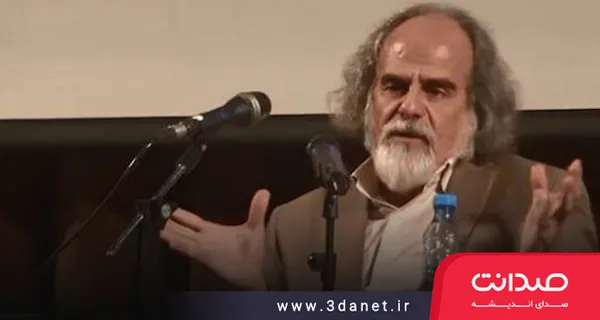
The keynote speaker at the World Philosophy Day event was Mostafa Malekian, whose appearance was met with great enthusiasm by his students. Malekian’s detailed lecture, titled “Philosophy for Life,” was devoted to the impact of philosophy on everyday life. He began by pointing to the importance of philosophizing and said: It is our hope that through genuine and true philosophizing, all of us—young and old, women and men—can be freed from the domination of five factors that have come to rule over us. Only through philosophizing, and nothing else, can we be liberated from the domination of ignorance, malevolence and ill-will, deceitfulness, violence, and oppression, which have cast their shadow over us and come to dominate the nature and destiny of us Iranians. We can only free ourselves from the grip of these five factors through cultural change and reform. I look upon philosophizing as the sole savior of us human beings in general, and of us Iranians at this historical juncture in particular. By philosophizing, I do not at all mean engaging in an academic discipline like other disciplines. It is akin to what Jesus (PBUH) said about truth. Philosophizing—and not knowing philosophy, nor reading philosophy, nor writing philosophy—holds exactly the same status for human beings that Jesus attributed to truth. In this sense, what I will say about philosophizing is not at all from the perspective of someone who has studied philosophy. Rather, it is from the perspective of someone for whom the idea of individual and social salvation matters. I see this individual salvation and social reform in nothing other than philosophizing.
In another part of his talk, drawing a distinction between the processes of philosophizing and philosophical products, Malekian sharply criticized Iranian academic philosophy and said: The greatest impact that philosophy has on everyday life, which I referred to as its salvific effect, belongs to the process of philosophizing. Of course, philosophical products also have a great impact, but the impact of philosophical products is not at all, in any way, comparable to the impact of the process of philosophy, that is, philosophizing. That is to say, if all 75 million Iranians became philosophers in the sense of being knowledgeable about philosophical products, I doubt our lives would become any better than they are now. Because we have top-tier philosophy professors in our universities who do not improve their own lives or the lives of others one iota.
If they have not caused us to regress, they have certainly never been the cause of our progress. Although they can explain Mulla Sadra Shirazi very well or expound the views of Avicenna, they absolutely do not possess an iota of rationality and philosophical thinking themselves, nor, naturally, do they transmit this rationality and philosophical thinking to us. If 75 million Iranians became like these gentlemen, our situation would not improve one iota. We are happy that we do not live like them, and we are glad that our lives are not like this. At the end, after explaining 12 benefits of philosophizing, Professor Malekian said: Our education system must teach us philosophizing from the very beginning. Of course, living in this way is difficult. I do not agree with the economic determinism that some socialists advocate, nor with the political determinism that liberals advocate.
I believe in the primacy of culture, and I believe that the sole problem of our society, or the cause of all causes of our problems, is a cultural problem. That is, as long as we are not reasoning-oriented, our problems will not be resolved. If we consider reasoning to be the meaning of philosophizing, we realize that our philosophy professors are not necessarily so. That is, none of the characteristics I mentioned for philosophizing apply to them. Therefore, we do not need teachers of philosophy; rather, we need human beings whose philosophizing is personal to them. Philosophy should not be their job and profession, and they should not attain wealth, status, position, and academic posts through it, but rather live with philosophy. If all 75 million of us lived like this, we would be saved from the five factors I mentioned at the beginning. I hope that all of us are truly seekers of truth and that we do not abandon this quest as much as we are able.
.
.
Download the video file of the Philosophy for Life lecture:
Part One of the Lecture
Part Two of the Lecture
Part Three of the Lecture
.
.
Watch the Video of the Lecture “Philosophy for Life”
.
On YouTube Part One Part Two Part Three
Watch the Full Video on YouTube
.
On Aparat Part One Part Two Part Three
Watch the Full Video on Aparat
.
.
Download the PDF Transcript of the Lecture “Philosophy for Life”
.
Download the Audio File of the Lecture “Philosophy for Life”
.
.
This lecture was delivered at the conference “Philosophy for Science, Art, and Life,” on 27 Aban 1392 (November 18, 2013), at the Faculty of Literature, University of Tehran.
.
.




Discussion2 comments
سلام. متشکرم. دست تون درد نکند. سخنانی راهگشا، مفید و قابل یادگیری. برای چندمین بار گوش داده شد.
پیشنهاد میکنم حتما دوستان فیلم این سخن رانی رو دانلود کنن و استفاده ببرن فوق العاده بود