Philosophy
Philosophy for Life in the Words of Mostafa Malekian: Ways of Facing the Suffering We Endure
Mostafa Malekian sees the rational life as dependent on two simultaneous tasks: reforming society and equipping oneself with personal shock absorbers. Using the metaphor of a bumpy road, he argues that reforming institutions is not enough—inner transformation is essential to reducing suffering.

Philosophy for Life in the Words of Mostafa Malekian
Ways of Facing the Suffering We Endure
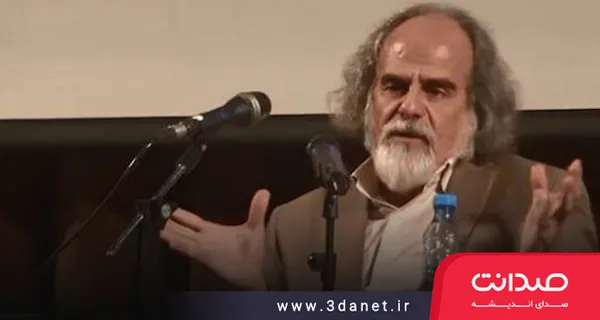
Mohsen Azmoudeh: Reforming society or attending to the individual self? This is a question that has preoccupied the minds of thinkers for centuries. For a happy life, is attention to individual reform sufficient, or must the living conditions of all be improved? Do personal pains and sufferings hold importance and priority, or collective and universal problems and afflictions? Mostafa Malekian, a well-known researcher of philosophy and ethics in Iran, has for years emphasized the primacy of culture and considers the main solution to problems to be the reform of culture in its specific sense, meaning the reform of the inner states of every human being. Nevertheless, he is never oblivious to social reforms and insists on their necessity. In the present discourse, he considers the two aforementioned tasks, namely social reform and attending to the individual self, as jointly necessary for a happy human life and emphasizes that these two tasks do not negate each other, but rather both are necessary for a rational life. The present text is a report of Mostafa Malekian's speech at the online Philosophy for Life session, which was held on Wednesday, January 12, at 9 PM in Club Maneshco on Clubhouse. In this session, which was presented with the hosting of Shekoufeh Ghashghaei and Nima Avidnya, Bijan Abdolkarimi and Soroush Dabbagh were also present. Due to space and volume limitations, on the following page we have confined ourselves to reporting only Mostafa Malekian's speech.
***
Suppose I am someone who, for some reason, must always be traveling on the Tehran to Shiraz road, and I can in no way forgo this journey, nor can I choose another road to go from Tehran to Shiraz. Under these conditions, if I am a rational human being—and rationality alone suffices for this purpose—I must do two things. I emphasize the duality of these tasks, because my statements have often been misinterpreted as if I believe in only one of these two tasks. Whereas I emphasize that if I am a rational human being, under the mentioned conditions I must do two things: First, if I am compelled to travel on this road, I must, to the extent of my own capacity and as far as my power and means allow, repair this road full of ups and downs, dangerous potholes, valleys, and rocky terrain, and help in its correction and restoration, and not allow this road to remain in this defective state. This is the first thing I must do as a rational human being, because I use this road; if I were moral, I would say that my fellow human beings also use this road. But for now, I am speaking solely based on pure rationality and have nothing to do with moral precepts, rules, criteria, and standards. Therefore, since I must spend a lifetime traveling on this road, rationality dictates that I correct, rectify, repair, and restore this road as much as I can, and spare no effort in this regard.
But I must also do a second thing. No matter how much I, and even other fellow human beings, strive according to the dictates of rationality to reform this road, there is no guarantee that the road will be completely flawless, faultless, and without problem or defect. In any case, this road may well have faults and defects until the end of my life or the lives of my fellow human beings who use it, because no matter how much we act, this activity does not guarantee total success, and therefore the possibility exists that I must make do with this road until the end of my life and that this road does not reach perfection. For this reason, another task must be done, and that is to at least equip my own car with strong shock absorbers so that the least amount of pressure from the uneven surface of the road is transmitted to my body.
The Necessity of Reducing the Pain and Suffering of Others
Let me use the above example to convey my meaning. A rational human being, and a fortiori a moral human being, must do two things within the vessel of their social life. First, they must strive, as far as they are able, to reform and rectify society and to reduce its flaws. Each person, in proportion to their inner assets—that is, their knowledge and abilities—and taking into account their personality and character traits, what genetics has transmitted to them, the events of their life, their education and upbringing, and, in short, considering all the possibilities available to them in life, must reform their own society as far as they are able, and must not be insensitive to the pain and suffering, the corruptions, the ill intentions, the mismanagements, and the ignorance that exist in this society. For even if one is not moral, one is at least rational and knows that, in any case, one must live in this society. Therefore, the more one brings this society closer to rectitude, the more one benefits oneself. And if one is moral, one wishes to provide a better situation for one's fellow human beings and all those who live in this society and have no choice but to do so.
The reason I constantly emphasize this first task is that, unfortunately, I have often been misunderstood as if I pay no attention to this first task, whereas I have said time and again that the first step on the path of morality—indeed, in the view of many experts, up to the very last step—is to reduce the pain and suffering of others, and others are precisely those who live in this society. Therefore, one can never be indifferent or insensitive to the oppression, injustice, disorder, insecurity, inequality, and lack of welfare, freedom, and compassion in a society. Thus, I must not withhold any effort I can make for the order, security, welfare, justice, equality, fraternity, freedom, and peace of this society.
We Need a Shock Absorber
But even if I expend all my efforts, and all other citizens of the society do the same, there is still no guarantee that our society will be flawless, and therefore we need a shock absorber. Providing this shock absorber is our second task. That is, we must do something so that the pressure arising from living in an unhealthy society is lessened for ourselves and the citizens of the society, and its harms cause less pain and suffering for ourselves and our fellow human beings. In an expression used in the Hindu tradition, even if society is a quagmire, a swamp, or a bog, we can at least be a lotus in this quagmire and bog.
The first task requires that in our activities we pay attention to what transpires in the institutions of family, economy, education, science, technology and art, politics, legislation, ethics, and religion, for it is these institutions that create the overall flaw of society. But for the second task, that is, providing a shock absorber, we must turn to a series of things with which we equip our own person. Therefore, my social dimension is my first task, and my individual dimension is my second task.
The reason for raising this point is that our intellectuals and social reformers largely place great value on the first task but do not value the second. That is, they greatly value reforming the institution of the family, the institution of the economy, the institution of education, the institution of science, technology and art, the institution of politics, the institution of legislation, the institution of ethics, the institution of religion, the institution of international relations, and so on. But in all the writings and works we read or hear from them, they emphasize reforming these institutions, yet they pay less attention, or no attention at all, to the second matter, namely the necessity of preserving oneself and considering a shock absorber. On the other hand, there are a few who value the second matter (that is, attention to the self) but pay no attention whatsoever to the first matter, namely reforming social institutions; that is, they say, equip yourself for living in an unhealthy society, but reforming the unhealthy society itself and bringing it as close to health as you are able is not your concern. Therefore, for most of our intellectuals and social reformers, the social aspect is important, and they do not pay attention to the solitary, individual, and personal aspect, while a few pay attention to the personal aspect, but the social aspect holds no importance for them.
Social Reform Does Not Make Self-Examination Unnecessary
My point is that both of these must go together. If you see someone who, in their teachings and reform efforts in society, pays attention to the teachings of the Buddha as a therapist and not as the founder of a historical and institutionalized religion, and to the teachings of the Dao, the Stoics, or the teachings of Spinoza, you should not condemn them. Such a person's concern is that these teachings serve the second task, but this person has never said that the first task should not be done. They cannot make such a claim, because all these great figures whose names were mentioned themselves say that even if you are thinking only of your own salvation, you have no choice but to be sensitive to social affairs and matters. Therefore, it is an incorrect statement and an unacceptable accusation, contrary to all existing documents and evidence, to cry out that those who speak of Stoicism, Spinoza, Daoism, and Buddhism want to invite people into the seclusion of their own homes and tell them to focus on self-perfection and completion, to engage in spiritual elevation, to practice asceticism, to gain self-knowledge, to engage in self-analysis and self-understanding, and to have nothing to do with social and political affairs and matters. We must do both of these tasks together; the first does not make us needless of the second, and the second never makes us dispense with the first.
For the first task, that is, to provide a healthier and more suitable society for human life, all human sciences and knowledge are needed. But for the second task, that is, to build that shock absorber which every individual must build for themselves so that they can better and more fully endure inevitable pain and suffering, one must use five sources, while, of course, making every effort to reduce social pain and suffering. The rest of the human sciences and knowledge, indeed all human sciences and knowledge, are useful for the first task, but for the second task, that is, building the shock absorber, in my opinion, five areas are useful. The first is psychology with all its various branches and divisions. To psychology, I append what we call psychotherapy. That is, I mean that both the science of psychology and the art of psychotherapy are needed.
The Knowledge Necessary for a Personal Shock Absorber
The second area of knowledge that is useful for the second task is parts of philosophy. By parts of philosophy, I mostly mean 6 of its sections, though not all the discussions within these 6 sections. These 6 sections are: 1. Metaphysics, 2. Epistemology, 3. Philosophy of Language, 4. Philosophy of Mind, 5. Philosophy of Action, and 6. Moral Philosophy. I emphasize that some discussions within these 6 parts of philosophy are useful for the second task, that is, preventing personal and individual pain and suffering. I believe the other branches of philosophy are not useful for this second task and are useful for the first task, that is, reforming society.
The third area of knowledge that is useful for reducing personal pain and suffering is world literature, especially the novel and poetry. Much of what we can consider as a shield and protection for ourselves in life is obtained in literature in general, and especially in poetry and the novel. The fourth area of knowledge is some, and I emphasize some, points that the mystics of all various religions, denominations, and cultures have spoken of throughout history. The fifth area is the teachings expressed by the founders of religions and denominations and the theologians who followed them. Therefore, an eclectic and, of course, consistent combination of a collection consisting of elements from these five mentioned areas is necessary for reducing inevitable pain and suffering.
But the question is, what do these five categories, with which we want to create a shock absorber for reducing personal and individual pain and suffering, do for us? Of course, I agree with the Buddha that as long as a human is human and as long as there is wanting, there is pain and suffering. But what do we use these sources for? First, to separate inescapable sufferings from avoidable sufferings. This first art is very important: to realize whether this pain and suffering is inevitable or avoidable. The second task is examining avoidable sufferings.
Ways of Facing Avoidable Sufferings
In my view, every human being faces four kinds of avoidable pain and suffering in life. The first type of avoidable pain and suffering is that which stems from unhealthy politics, economics, and social affairs. Unhealthy political, economic, and social systems and relations are the source of a great deal of pain and suffering. These pains and sufferings are avoidable, meaning they can be eliminated and we can prevent them from putting excessive pressure on us. We must also know what the incorrect ways of confronting this pain and suffering caused by wrong political, economic, and social relations and systems are. In my opinion, there are three such incorrect ways.
The first incorrect way is to imagine that this avoidable pain and suffering caused by wrong political, social, and economic systems can be eliminated through prayer alone. The second incorrect way is to imagine that this avoidable pain and suffering can be eliminated through submission. The third incorrect way of confronting this avoidable pain and suffering is mere sympathy. Sympathy with these sufferings is necessary, but it is absolutely not sufficient. I must be able to destroy this suffering and its source. The correct way is, firstly, to identify the source, origin, and root of these pains and sufferings, and then to eradicate it. The second type of avoidable pain and suffering consists of illnesses, injuries, and bodily harms and damages that afflict a person due to life's events. Here, too, there is no doubt that I must use the help of others to eliminate these pains and sufferings of mine, and these others include, for example, physicians. Of course, one must be careful to distinguish three things in this pain and suffering that comes from injury, illness, and harm and damage. When we are afflicted with these pains and sufferings, we sometimes suffer from the pain itself, sometimes from the duration of the pain, and sometimes from the consequences of the pain. The pain itself, the duration of the pain, and the consequences of the pain are three different things, and for treating each, there is a different path. The third category of avoidable suffering is emotional suffering. I am distressed by a series of sufferings that arise from being mistreated, from a feeling of loneliness within me, from being separated from a circle of friends, from losing my loved ones, from a decline in my social standing, and so on... These are sufferings arising from social relations and situations. Some of these sufferings are due to social relations, and a number stem from social situations. Any social failure or success can lead to suffering. But these sufferings are treatable, and if I am afflicted with them, I can cure them.
There is also a fourth kind of avoidable suffering, which is the torment of conscience. When I look back at my past and see how many moral errors I have committed, I suffer from the torment of conscience. But this suffering, too, is avoidable.
Unavoidable Sufferings
But apart from the four types of avoidable suffering mentioned above, there is a series of sufferings from which there seems to be no escape. First and foremost, it must be determined whether these unavoidable pains and sufferings have any benefit or not. Is there a treasure behind this unavoidable suffering, or not? Each person must clarify the answer to this question for themselves. If an individual, based on their information, experiences, understanding, and power of thought, realizes that there is no treasure behind these unavoidable sufferings, they live in a different way than when they realize, through knowledge, thought, and experience, that although these sufferings are unavoidable, they also hold benefits or advantages for them. In that case, the individual must understand what that suffering and treasure are. Here, there are two sets of views.
Transcendental Solutions for Unavoidable Sufferings
We call a series of views theological, transcendental, or otherworldly solutions. These views ascribe certain benefits to unavoidable sufferings or pains, but they depict these benefits through theology, transcendental matters, or otherworldly affairs. Two categories of these transcendental or otherworldly solutions are well-known: first, the Eastern solutions, which are summed up in reincarnation. These solutions say that the present unavoidable pain and suffering stem from a previous life, and in this way they render them meaningful. Eastern religions such as Buddhism, Jainism, and Hinduism justify unavoidable pain and suffering by resorting to reincarnation and say that if you do not wish this to happen in the next life, act differently in this life. Western religions, or Mosaic religions, or Abrahamic religions—that is, religions whose birthplace is the West—do not believe in reincarnation and explain these unavoidable pains and sufferings in another way, employing the theory of “theodicy” or “divine justice.” They have offered eight solutions: sometimes they say these unavoidable sufferings are a test for humanity. Some say they are worldly retribution, meaning they arise because of deeds in earlier years of this very life. Of course, it is also sometimes said that they are retribution for the errors and transgressions of the individual’s parents. The third view is that these pains and sufferings were visited upon the individual to keep them away from sin. The fourth solution is that the individual endures these pains and sufferings, but in return sees a far greater good in the otherworldly life, a good so great that later the individual wishes they had suffered even more in worldly life. The fifth theory is that the individual has fallen into suffering in order to draw closer to God through it. That is, sufferings become a cause for the individual’s closeness to God. The sixth theory is the reverse of the fifth and says that these pains and sufferings are the effect of the individual’s closeness to God, meaning that when a person draws very close to God, they endure more suffering and pain: “Affliction is for sainthood” (al-balāʾ li-l-wilāʾ). The seventh theory is that through sufferings the individual attains spiritual perfection and transcendence. The eighth theory is that these sufferings possess a wisdom, even if we are unaware of that wisdom.
All these transcendental theories, whether Eastern or Western, are a series of hypotheses. If these theories seem reasonable to the individual, they accept them, render their suffering meaningful through them, and are less harmed by unavoidable sufferings.
Philosophical Solutions for Unavoidable Sufferings
The second way of confronting unavoidable pain and suffering is philosophical, empirical, and this-worldly, not theological, transcendental, or otherworldly. These solutions do not refer a person to nirvana, the cycle of samsara, and so on. Seven of the most important of these views are as follows: first, it is said that a person learns only through suffering, and all learning comes through suffering. The second view says that suffering reforms a person. Here, life is likened to legal punishments, like an offender who is reformed through retribution. The third view, which is famous in Western culture and whose origin is Aristotle, says that a person’s character—and not their personality—is formed, built, and strengthened through suffering. Through suffering, a person acquires a steadfast and upright character. The fourth view says that through suffering, a person acquires the greatest human virtue, namely compassion for other human beings and creatures. The fifth view says that if there were no suffering, a person would not attain pleasure, delight, joy, and contentment. Suffering is the only ladder to reaching pleasure, delight, joy, and contentment. The sixth solution says that suffering is a necessary condition for perceiving pleasure, perceiving joy, perceiving delight, and perceiving contentment. The previous solution considered suffering the condition for the emergence of pleasure, joy, delight, and contentment, while this solution says that suffering is essential for appreciating pleasure, joy, delight, and contentment. That is, a person may be joyful, content, or delighted, but without suffering, they do not appreciate it. The reference to these solutions is to emphasize that it is better for us to use the teachings of figures such as Spinoza, the Stoics, the existentialists, the Dao, and the Buddha to create personal shock absorbers for confronting inevitable pain and suffering; of course, our first duty is to reform social life.



Discussion0 comments
No comments yet; let yours be the first voice.