Religion
Shariati and Baseless Challenges, Soroush Dabbagh
Critiquing Abdolkarimi's article, Soroush Dabbagh rejects the claim that religious intellectuals hold an anti-tradition stance, challenges the portrayal of Shariati as the sole embodiment of prophetic exemplarity, and emphasizes a critical re-reading of tradition while avoiding dismissive labels.
These days mark the thirty-ninth anniversary of the passing of Dr. Ali Shariati; the teacher of the revolution and a prominent contemporary religious intellectual. I have previously had the opportunity to write and speak, on various occasions, about Shariati's "Desert," "Islamic" and "Social" works, and through a critical re-reading of Shariati's legacy, to pay my debt to that great man. [1] It need not be reiterated that sparks of genius abounded in this creative thinker and concept-building intellectual; enchanting prose and rare oratorical power also distinguished Shariati from many of his contemporaries and peers.
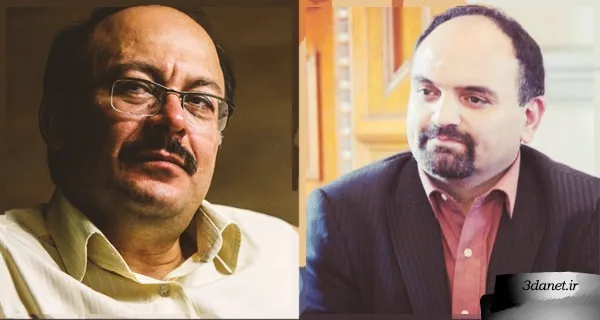
What prompted me to write these lines was the publication of an article by my dear friend, Dr. Bijan Abdolkarimi, titled "Shariati and Our Fundamental Question" [2]. As I understand it, in this piece, which was published on the occasion of the arriving anniversary of Shariati's death, the author has committed numerous errors. In what follows, I will try to address them by citing various passages from his writing:
"On the other hand, the vast multitude of our intellectuals also try to deny the values and worldview embedded in tradition and, influenced by the worldview and values of the Enlightenment era, adopt an anti-tradition stance or, at most, like the so-called religious intellectuals, try to somehow modernize tradition and impose a modern form upon the substance of historical tradition. In this method, too, tradition is emptied of its own spirit. Whereas Shariati neither wants to reduce modernity to the world of tradition, nor tradition to the modern world, and this very fact has caused him to be severely attacked and criticized by both traditionalists and modernists."
What does Abdolkarimi mean by "so-called religious intellectuals"? It seems this phrase carries a pejorative and possibly disparaging connotation.
Firstly, one can name numerous prominent Iranian intellectuals who do not fall under the school of religious intellectualism or religious new-thinking, yet are under the influence of the values of the Enlightenment; but they bear no antagonism toward tradition. Figures such as Dariush Shayegan, Dariush Ashouri, and Babak Ahmadi are among the intellectuals who not only bear no antagonism toward the Iranian-Islamic tradition, but, as their works attest, have devoted themselves to reflecting upon components of this tradition. Ahmadi has engaged in a re-reading of Attar of Nishapur's Tazkirat al-Awliya, and Shayegan, in works such as New Enchantment, In Search of Lost Spaces, and The Five Realms of Presence, has elucidated his relationship with the mystical-literary heritage of Iran. Ashouri, too, has for years been preoccupied with the Persian language, coining new words and enumerating the components of "open language"; at the same time, he is fascinated by Khwaja Shams-ud-Din Hafez of Shiraz and has drawn upon mysticism and roguery in Hafez's poetry. The aforementioned cases show that the "vast multitude of intellectuals" of our homeland do not hold an anti-tradition stance, and this claim is inaccurate and unjustified.
Secondly, what does Abdolkarimi mean by “the so-called religious intellectuals”? It seems this phrase carries a pejorative and possibly disparaging connotation. What is the necessity of addressing a school and a group in this manner? If someone were to say that Heidegger is a so-called philosopher, or that Abdolkarimi is a so-called commentator on the philosophy of Heidegger, would that be acceptable? I do not think the answer to this question would be positive. In the same vein, if I were in Abdolkarimi’s place, I would use the concepts of “religious intellectualism” and “religious new-thinking,” which are well-established concepts and about whose internal coherence and semantic validity, enough hasbeen said in recent years, without sarcasm or irony. [3]
Contrary to Abdolkarimi’s perception, religious new-thinkers and intellectuals neither seek to modernize tradition, nor do they wish to impose a modern form upon the substance of historical tradition so that the spirit of tradition is taken away; rather, they are in pursuit of a critical re-reading of the religious tradition with regard to the achievements of the new human sciences
Thirdly, contrary to Abdolkarimi's perception, religious new-thinkers and intellectuals (at least in the last thirty years) neither seek to modernize tradition, nor do they wish to impose a modern form upon the substance of historical tradition so that the spirit of tradition is taken away; rather, they seek a critical re-reading of the religious tradition with regard to the achievements of the new human sciences; there are leagues of distance between these two perceptions. In this regard, religious new-thinkers strive, by employing methods such as historical phenomenology and paying attention to the climatic-livelihood-cultural-epistemic coordinates of the Arabian Peninsula of fourteen centuries ago, to grasp the context and the time of the emergence of the sacred text and religious tradition and to understand the tale of the lock of hair that was composed in the heart of that night; [4] in the next stage, they set about evaluating and critically re-reading it. As it happens, the ultimate goal of this epistemic inquiry, contrary to Abdolkarimi's view, is the reconstruction and re-formulation of the spirit inscribed and folded within the religious tradition in the feverish and tumultuous present time. This claim can also be explained in another way. The discourse of religious new-thinking of the last three decades is a "discourse of compatibility," contrary to the pre-revolution religious new-thinking discourse, which was predominantly a "discourse of extraction" and sought to extract modern concepts from within tradition, and, in Shayegan's apt description of Shariati's project, "the ideologization of tradition." The taking away of the spirit of tradition is in proportion and harmony with the discourse of extraction, which reaches its peak in the intellectual work of Shariati and seeks the ideologization of tradition [5], not with the "discourse of compatibility," which, by distinguishing between universal matters [6] from contextual matters [7] in the sacred text and religious tradiand, with the aid of instruments such as “the separation of essentials from accidentals” and “cultural translation,” is preoccupied with recreating the spirit of tradition in the present age.
In the continuation of the text, Abdulkarimi has written:
“In Shariati's thought, there are components that have both shaped the future of thought in our society, and these elements are aligned with some of the most important insights of the great teachers of future human thought. For example, exiting the domination of the logic of Orientalism and reverse Orientalism, the radical critique of Eurocentrism in the modern humanities, a critical view of scientism, positivism, and technolatry, a spiritual interpretation of the world outside of theological systems and beyond the domination of official institutions responsible for truth…. Whether we like it or not, Shariati is a unique and figure unparalleled not only in contemporary history but in our entire history. He intensely possesses originality and selfhood… Throughout our history, we have had knowngroups such as theologians, jurists, ascetics, exegetes, mystics, and philosophers, each of whom has attended to an aspect of the ‘personality of the Prophet,’ as one of the sources of our historical tradition. But Shariati, up to our time, is the unique figure — or at least I do not know of another personality — who has tried to ‘emulate the Prophet in the totality of his personality.’ He strives, in an era when Galileo, Newton, and Einstein have more esteem and regard than Socrates, Plato, and Aristotle, and these three latter figures more than Abraham, Christ, and Muhammad [PBUH], to emulate the Prophet.”
With all the respect that can be accorded to Shariati, why is he the unique figure in whom “emulation of the Prophet in the totality of his personality” has emerged and manifested?
Firstly, “what does ‘the great teachers of the future of human thought’ mean? What precise meaning does this expression have? Does anyone have knowledge of the future course of human thought to be able to enumerate and specify its teachers in advance?! As Marcuse says,“history is not an insurance company,” and one cannot definitively say that so-and-so and such-and-such are among the teachers of the future of human thought. The presupposition of such a view is to ascribe an essence, inevitability, and certainty to history and to justify a narrative of historical determinism; a position that is unjustified and must be abandoned. At most, one can say that I have greater sympathy for a particular thought and hope that this thought endures, and that is all. To claim more than this is to speak in rhetoric and non-argumentative terms, and it carries no weight on the scales of inquiry.
Secondly, we should ask whether the esteemed author has used the term “positivism” in its journalistic, superficial, and common sense, or in the philosophical and technical sense of the word? If the latter is intended, Shariati’s works do not indicate his familiarity with positivist philosophy and, subsequently, its critique; a positivism that initially emerged in the works of Auguste Comte and was thereafter called “logical positivism” by members of the Vienna Circle, such as Carnap, Ayer, Schlick, and Reichenbach, under the influence of Wittgenstein’s Tractatus Logico-Philosophicus; a term and school that speaks only of one period in the history of Anglo-Saxon philosophy and no more. In recent years, numerous individuals have used the term “positivism” like a dime a dozen, as an insult and without regard for its philosophical foundations, principles, and historical background; as though anyone who is favorably disposed toward empirical science and open to modernity and the new humanities is a positivist!
It is an irony of fate that Abdolkarimi, as his works attest, is both enamored of Shariati and fascinated by Fardid; a Fardid who called Shariati a Freemason and was generally not favorably disposed toward the project of religious reform and peddled a hodgepodge of Ibn Arabi’s mysticism and Heidegger’s philosophy to his audience.
Third, with all the respect that can be accorded to Shariati, why is he the sole figure in whom “the embodiment of the Prophet in the totality of his personality” has manifested? What reason has Abdulkarimi adduced for this claim? I can guess the depth of Abdulkarimi’s devotion and fascination with Shariati, a state I too once experienced, however, the effusion of emotions and sentiments and the mention of unsubstantiated claims have no place in a writing that is supposed to be research-based and argumentative. In intellectual discussions, the master-disciple relationship holds no weight and does not captivate the heart; for “we are the sons of reason.” Why, in the history of Islamic civilization, has the embodiment of the Prophet in the totality of his personality not manifested for instance in Ayn al-Quzat Hamadani, Shahab al-Din Suhrawardi, Attar of Nishapur, Hafez of Shiraz, Sadra of Shiraz, and Iqbal Lahori, more than in Ali Shariati? From someone who is familiar with philosophical discussions, it is expected that they speak in a reasoned and measured manner.
Fourth. It is an irony of fate that Abdolkarimi, as his works attest, is both enamored of Shariati and fascinated by Fardid [8]; a Fardid who called Shariati a Freemason and was altogether not favorably disposed toward the project of religious reform and peddled an amalgam of Ibn Arabi's mysticism and the philosophy of Heidegger (as he himself claimed) and fed it to his audience.Personally, I have no sympathy for Fardid's philosophy and, as I find, his project of reconciling an imprecise narrative of the philosophy of Heidegger and Ibn Arabi is sterile [9] and leads nowhere and differs greatly from my understanding of the components and fundamentals of Ibn Arabi's mysticism and the philosophy of Heidegger. At the same time, I can understand that someone (like Abdolkarimi) might agree with the main tenets of Fardid's thought; but I cannot understand how one can be favorably disposed toward Fardid and also elevate Shariati and call him a unique figure? A thinker who, in his "Islamics" and "Socialities", speaks of "religious Protestantism" and the "religious intellectual"; a project which, in Fardid's parlance, entails theological work and is fruitless: "One was cutting the branch and the root".
One cannot simultaneously sympathize with Fardid, who considered all the efforts of religious neo-thinkers, including Shariati, as an instance of metaphysical thinking and therefore fruitless, unhelpful, and to be discarded; and with Shariati, whose Islamology entails providing a new reading of Islam. Although I do not sympathize with Shariati's "Geometric Design of the School" and "Ideological Islam" [10], at the same time it is conceivable to me that someone might still sympathize with this reading of Islam. To summarize, one can be a Fardidian or a neo-Shariatist, but reconciling the teachings of Fardid with the vast part of Shariati's project that is oriented toward " religious Protestantism" seems strange, far-fetched, and impossible. Setting aside the obvious and clear theoretical differences between Shariati and Fardid, the practical conduct of these two figures was also very different. Shariati was free-spirited and noble, felt the pain of religion, endured the suffering of prison and exile, and was preoccupied with the elevation of religiosity in the contemporary world. In contrast, Fardid, according to the testimony of some of his students, not only did not feel the pain of religion and sought political power at any cost, before and after the revolution; but also, he did not refrain from stigmatizing, insulting, and slandering authentic and great figures like Mehdi Bazargan: "See the difference in where the path leads from and to." In a word, the faithless and immoral Fardid cannot be reconciled with the faithful and sincere Shariati.[11]The closing paragraphs of the article state:
“The possibility or impossibility of the Prophet’s foundational experience of Being in the contemporary world,” is the most fundamental question facing our historical tradition and our society. Negative or affirmative answers to this question have pervaded our entire society. Yet what is essential is not answering fundamental questions but understanding the question and reflecting upon them seriously.”
Have not the later religious intellectuals, who have introduced and cast concepts and themes such as “the expansion of prophetic experience,” “the prophetic reading of the world,” and “apostolic dreams” into the intellectual sphere over the past two decades, been preoccupied with the Prophet’s foundational experience of Being or not? If so, why have they been accused of robbing the spirit of the religious tradition?
From Abdolkarimi's perspective, the possibility of the Prophet's fundamental experience of Being is the most important question that our society is grappling with in the present day. If this is so, have not the later religious new-thinkers, who have introduced and launched concepts and themes such as "the expansion of prophetic experience," "the prophetic reading of the world," and "apostolic dreams" into the intellectual sphere of the two recent decades,been preoccupied with the Prophet's fundamental experience of Being ? If so, why have they been accused of stripping the spirit from the religious tradition? Abdolkarimi, in principle can disagree with theoutcome of these discussions and not consider the arguments presented justified, but this does not negate the claim that the later religious new-thinkers have for years been preoccupied with"the Prophet's fundamental experience of Being." The implication of this statement is that Abdolkarimi, at the end of his article, has critiqued the very criticism he directed at religious intellectuals; in other words, the conclusion of his speech contradicts its beginning. Furthermore, the later religious new-thinkers, by defending democratic governance and a free society, have sought after an authentic faith and religious experiences that are only realized in such a context.Hence, they have been theoretically and practically preoccupied with "the Prophet's fundamental experience of Being," and have wholeheartedly and without embarrassment defended the democratic mechanism and rebuffed philosophies and political systems that are undemocratic and despotic . In their belief, in the present day, the democratic mechanism is both ethical and conducive to the realization of inner experiences and faith of the citizens.
One could also address other sections of the article, such as “Shariati’s Political Thought”; however, I believe what has been said suffices to demonstrate the inconsistencies and confusions of the article “Shariati and Our Fundamental Question.” In this article, numerous baseless and unfounded claims and groundless challenges are evident. From a scholar who teaches philosophy at a university, it is expected that they tailor their claims to the measure of their evidence, and nothing more; otherwise, the presented claims will be matters of taste and subjective preference, and nothing beyond that. In recent years, I have seen numerous continental philosophers who are specialists in Hegel, Husserl, Heidegger, Merleau-Ponty…, yet in their speech and writing, they do not neglect the side of reasoning, and above all else, they are concerned with establishing arguments and examining the proportion between their claims and their evidence. I do not know why, at least among some proponents of philosophy within the country who are promoters of continental philosophy and have a devotion to philosophers like Hegel and Heidegger, this matter does not hold much sway, and philosophizing has been conflated with the mere expression of claims.
.
.
References and Footnotes:
[1] For example, see the article “Be Thus, Under and Over: A Reflection on Shariati’s Kaviriyat”; also the audio files of the sixteen-session course “Shariati’s Legacy and Iranian Intellectualism,” which was held a few years ago in Toronto:
http://www.begin.soroushdabagh.com/pdf/169.pdf
http://www.begin.soroushdabagh.com/lecture_f.htm
[2] http://zeitoons.com/11376
[3] For example, see the following articles:
Abdolkarim Soroush, “Shir va Shekar”
Soroush Dabbagh, “Religious Intellectualism and Metallic Sour Grape Juice?!!”
[4] Reference to a poem by Hafez:
Last night in our circle, the tale of your tresses was told / Until the heart of night, speech was of the chain of your hair
[5] By Shariati’s project, I mean the dominant aspect of his works; I am fully aware that fine humanist-existentialist streaks can be seen in some of Shariati’s works, both in the Kaviriyat and in some other parts of the Collected Works, such as Collected Works 24, Man. I imagine that the neo-Shariatists, in reconstructing Shariati’s intellectual system for the present day, can draw upon the existential embers and sparks in Shariati’s works by setting aside its ideological part.
[6] universalities
[7] localities
[8] As an example, see: Bijan Abdolkarimi, Heidegger in Iran, Tehran, Iranian Institute of Philosophy.
[9] In this regard, the following scholarly article, in its critique of Ahmad Fardid’s statements and his unwarranted interpretation of Heidegger’s philosophy and its linkage to Ibn Arabi’s mysticism, is worth reading:
Siavash Jamadi, “The Great Censorship in the History of Our Western Studies”
[10] For an elaboration of this point, as an example, see the essay “Ali Shariati and the Event of Karbala”
[11] For an elaboration of this point, see: Ahmad Fardid, Didar-e Farrahi va Fotuhat-e Akhar al-Zaman, edited by Mohammad Madadpour, Tehran, Nazar Publishing. Also, for an acquaintance with Fardid’s practical conduct and disposition, see: Dariush Ashouri, “The Myth of Philosophy Among Us: A Revisit to Ahmad Fardid and the Theory of Westoxification”:
Also, see: Nasrollah Pourjavady, “The Differences in Fardid Before and After the Revolution,” Andisheh Pouya, No. 9.
.
.
Shariati and Baseless Challenges, Soroush Dabbagh
A Critique by Dr. Soroush Dabbagh of Dr. Bijan Abdolkarimi
.
.


Discussion0 comments
No comments yet; let yours be the first voice.