Religion
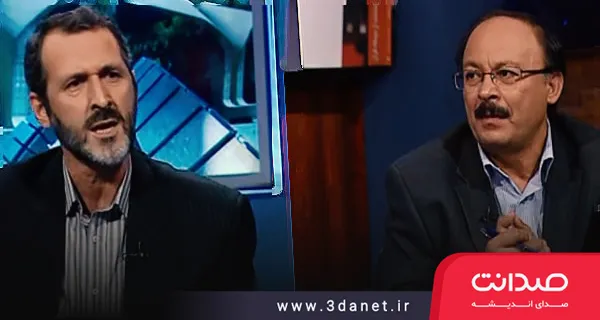
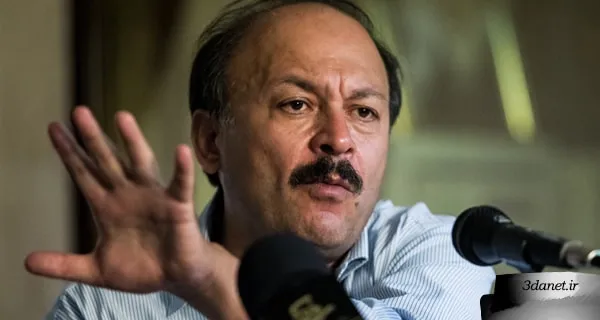
Bijan Abdolkarimi's Speech at the 'Imam Musa Sadr Freedom Tribune'
Bijan Abdolkarimi sees Musa al-Sadr as an embodiment of the 'religion of tomorrow' and a model for the clergy; through boundary-breaking and engagement with other groups, he offers a paradigm of an open religion that does not sacrifice human beings to historical beliefs and propositions.
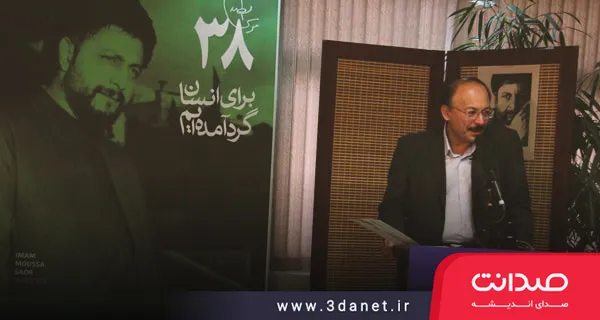
Bijan Abdolkarimi, researcher and professor of philosophy at the university: Truly, from many years ago, when I first became acquainted with Imam Musa Sadr, I felt a special sense of belonging to this man. If I were to choose a title for the points I wish to make, I would select two: one, “Imam Musa Sadr, an Epiphany of the Religion of Tomorrow,” a religion that is, in fact, different from the religion of today, and undoubtedly, the spiritual interpretation of the world on the horizon of tomorrow’s thought is far removed from the current historically institutionalized religion realized in most Muslim societies. The other title is “Imam Musa Sadr, an Exemplar for Our Clergy.” In my belief, our current clergy in the vast majority of Muslim societies needs an exemplar like Imam Musa Sadr; otherwise, it will suffer a historical defeat and a great historical loss, and will follow the same path that the clergy in the Christian world took, becoming marginalized in history. This path awaits our clergy as well if it cannot choose a suitable model of life and action for itself, and in my belief, Imam Musa Sadr is a very worthy model.
In my belief, we can speak of two types of religion: open religion and closed religion. Those familiar with the history of Western thought know that the terms open religion and closed religion are Bergsonian terms. Our lived experience shows that within the historical tradition of religions, two very fundamental possibilities exist. That is, around the phenomenon of religion, the ugliest, most hideous, most destructive, and most inhumane events can take shape, and religion can become a very great destructive force. For in today’s world, we have examples like ISIS, Boko Haram, Al-Shabaab, and so on, which are indeed archetypes, but in reality, with varying degrees of intensity and weakness, this type of religion is present in all of us. That is, in each one of us, this dogmatism, this rigidity, and this closedness to the other can exist.
But alongside this aspect, we know that another fundamental possibility is latent in the history of religions, and around the phenomenon of religion, humanity always ascends to a degree unseen anywhere else, and alongside every phenomenon, religion is seen as a very positive, very elevating force, giving meaning to existence, founding the metaphysics of ethics, and many other things.
Imam Musa Sadr is, in fact, the manifestation of a type of religion that is very far removed from the existing religion that prevails in Muslim societies today. Imam Musa Sadr’s religion is an open religion. It is not a closed religion. It is not a historically institutionalized religion. It is not an ethnic religion. It is not a tribal religion. It is not a religion that considers a set of historically institutionalized propositions as truth and sacrifices living, flesh-and-blood human beings for the sake of a set of propositions. Imam Musa Sadr’s religion is a religion that invites us to another truth beyond propositions, beyond ethnic beliefs, beyond historical propositions, and a set of convictions.
Closed religion is the religion of sects, the religion of conflicts, and the religion of war and strife. In contrast, there is a religion that is the religion of peace and reconciliation, the religion of altruism and sacrifice. A religion that looks at all human beings from the perspective of their humanity. And does not easily sacrifice human beings for the sake of beliefs and a set of labels, such as Shia and Sunni, Christian and Jew.
In Imam Musa Sadr, there are several characteristics that I am deeply fascinated by, and perhaps I would not be exaggerating if I said that Imam Musa Sadr has always been one of my models of action in the realm of culture and the social scene. I would like to examine these several characteristics in order.
First Characteristic: Breaking Frameworks
Imam Musa Sadr is a framework-breaker and easily sacrifices, so to speak, the conventional social frameworks that are tied to religion. Sometimes we speak of religion, and this religion is a set of mannerisms and affectations and a set of social frameworks that have suffocated the spirit of the religious tradition and the spirit of religious thought. Imam Musa Sadr easily breaks these frameworks, yet at the same time, his framework-breaking is not nihilistic. While breaking the frameworks, he remains faithful to the spirit of religion and the spirit of the historical tradition.
Imam Musa Sadr is ostensibly a Shiite cleric, a product of the seminaries of Qom and Najaf; as many others are as well. Based on prevailing frameworks and social norms, and the social relations that have formed throughout history, it is generally not expected, or fundamentally not customary, for a Christian cleric to speak to Muslims, or for a Shiite cleric to speak to Sunnis, or for a Muslim cleric to go to a synagogue or temple and speak. But Imam Musa Sadr easily transgressed these frameworks, and in my belief, this transgression of frameworks means thinking about a truth that is beyond these social frameworks, and it is very valuable to me. A person who, as a Shiite cleric, steps into a church and speaks with the other.
Second characteristic: The ability to connect with other groups
The second characteristic I see in Imam Musa Sadr is the ability to connect with other groups. Accept this fundamentally as a characteristic. Petty human beings, small-minded people, closed thoughts, closed religion, and the custodians of closed religion can only connect with the other within their own village. Only in a place where their authority is recognized as an institution of power and as an institution of authority can they establish a connection. When they step out of their own village, they have no communicative power whatsoever. This is fundamentally the characteristic of closed thought, that it can only connect within its own confines.
Generally, wherever you see a personality and a thought that can step outside its own social and identity group and establish a human, intellectual, and cultural connection with the other, there is certainly an authenticity hidden within it. For example, look at Dr. Shariati in our own society, one of the figures for whom Imam Musa Sadr also held great respect. That he can connect with the other, with someone who fundamentally does not accept his beliefs, someone who is secular, someone who is Marxist, someone who is materialist, someone who is existentialist. This indicates a kind of existential richness and cultural richness. Where an individual cannot connect with the other outside of their own social groups and is confined and captive to their own ethnic, social, class, belief, creedal, and religious group, in reality, there is neither an authentic and fundamental experience of truth nor cultural richness. This is a characteristic of the common people, that they can only connect within their own village, within their own domain, and within their own identity-giving public sphere.
One of the greatest values of Imam Musa Sadr is that he can connect with other social groups. Those who are captive to their own group and identity frameworks mainly rely on authorities and power relations. Suppose when I am invited to a seminar with a seminarian and we travel, naturally, privileges are granted to that seminarian that are not granted to me, who is a layperson. This is not for personality, knowledge, or erudition, but rather the social institution has created these values. Where reliance is on these social relations, the truth of religion does not exist.
Of course, Imam Musa Sadr was a cleric, and naturally, this attire had created possibilities for him. I do not wish to create a myth, but Imam Musa Sadr, in his relations, did not rely solely on this attire and the historical position of the clergy. In fact, he was able to connect with the other. It is very, very exhilarating for me that Imam Musa Sadr, outside his own cultural sphere, steps into a church, steps into a Christian law faculty, steps into a synagogue, and connects with others. Christian clerics sit and listen to his speech, and he connects with them. He connects with young people who are secular. In one of the sermons he delivered as an orator in a Beirut church, he arranged to invite Christian bishops to speak at one of the Friday prayers, and even for that speech to be considered as the prayer sermon.
This is something that is in no way compatible with our prevailing frameworks. Although it is entirely compatible with the spirit of the religious tradition as I understand it. Suppose this deconstruction were to occur in our society today; it would be a kind of revolution. It is a revolution for a Christian, a Jew, a Buddhist, or a Marxist to come and deliver a sermon at our Friday prayers. For this to happen, the digestive capacity of society and culture must be elevated. This was present in the thought of Imam Musa Sadr, and it is no small point. Of course, I must say this characteristic is not terribly strange; it is, in fact, the result of the cultivated religious spirit of Imam Musa Sadr. And this is a potential that exists in our tradition and culture, but because of the historical layers that have settled upon it, it seems immense and strange today, and due to these very social and historical obstacles that exist, I believe this type of thought is very important.
The Third Characteristic: Openness Toward the Other
The third characteristic present in Imam Musa Sadr is openness toward the other. In my belief, openness to the other is one of the most important indicators we can use as a criterion for examining personalities and ideas. Historically, Imam Musa Sadr was situated in Lebanon. In Lebanon, there exists cultural pluralism in terms of culture, civilization, ethnicity, and sect. There were Christians, Shiites, Druze, Sunnis, and, to some extent, Jews [in Lebanon]. Imam Sadr, in fact, shone brightly when placed in this sphere, and this is no small matter. For an individual, personality, or thought to be open to the other, and for the other to seek a path to him and refer to him, this is no small event.
Another point is that Imam Musa Sadr well understood the etiquette of engaging with the other. Many wish to associate and communicate with the other, but they do not know the etiquette of engaging with the other. The etiquette of engaging with the other is that you possess cultural richness and can speak to the other in the other's language. What causes us to be unable to communicate with the other, or even with our own brother, and for any difference of opinion to turn into a crisis, stems from the fact that we do not know how to speak with the other.
When I read the works, writings, sermons, or lectures of Imam Musa Sadr, I see how he approaches the other and speaks to the other in the other's language. He speaks to his audience in their own language and tongue. I must accept that my religious, cultural, and doctrinal beliefs hold legitimacy, authority, and reference only for me, but there is absolutely no reason that my beliefs should hold legitimacy for the other. As a Shiite, I have my own historical, intellectual, and cultural sources. But I cannot expect someone who is Sunni to view historical issues in the same way that I, a Shiite, view them. If I do not recognize this, I cannot establish communication.
As a Muslim, I have my own cultural sources, and I cannot expect a Jew to view issues in the same way that I, a Muslim, view them. Without such openness and etiquette, communication with the other is fundamentally impossible. But in the conduct of Imam Musa Sadr, we see how he observes this etiquette of association. The sermon he delivered in February 1975, approximately Bahman 1353, in the form of a homily at a church in Beirut, was profoundly moving for me. If I say that when I was reading this treatise or this writing, tears flowed from my eyes, I have truly not exaggerated. How, when he wishes to speak to Christians, he refers to the verses of the Bible and the words of Christ. He even speaks of the Pope with respect and quotes phrases from him. Then, at the end, he says that what you Christians believe, in the tongue of my Prophet, there are also such expressions that are close to the words of Christ. But he never begins with himself. His encounter is in no way self-founded. He invited to a common word. That is, he did not say, I am a Muslim and you are a Christian or a Jew. Just like the invitation of the Prophet himself, just as when the Jews said, "We are Jews," and the Christians said, "We are Christians," Muhammad (PBUH) said, "Come, let us believe in the One who is prior to Moses and Jesus, let us believe in the Hanif religion and the religion of Abraham."
We see this same invitation in the message and thought of Imam Musa Sadr. He calls for something beyond these ethnic and religious divisions and the theological conflicts that, unfortunately, fill our world. He is open not only to all religions but also to modern civilization. While he has his own religious and spiritual interpretation and his own demarcations with the modern world and the West, and while he firmly emphasizes religious thought, he is not closed to the cultural values of modern civilization; he is open to them. Shah Nematollah Vali used to say that our disciples are sheikhs of several books. Today, we live in a world where everyone is a sheikh of a single book. Our intellectuals understand only the language of the modern book. The clergy and traditionalists understand only the language of the world of tradition. But our present and our future depend on having sheikhs of several books—sheikhs who are familiar both with the language of modern civilization and with the language of their own historical tradition. This is something we rarely see.
Perhaps another example I would consider close to Imam Musa Sadr is Shariati. For me, Shariati is the epitome of the sheikh of several books. That is, he understands the language of civilization, he understands the language of modernity, and he is familiar with the language of tradition. Unlike the vast multitude of our traditionalists who fundamentally do not understand the modern language and can only say 'Death to...'—because they lack the language of dialogue, because they lack a language with which to communicate with the modern world. In contrast, there are our intellectuals who, for instance, believe that Islam is a religion of the sword, that Islam is a religion of ignorance and stupidity, and that Islam has only committed crimes. Well, this stems from the fact that they are not at all familiar with the spirit of this historical tradition. Imam Musa Sadr was a sheikh of several books. He was both a graduate of the seminaries of Qom and Najaf and held advanced academic degrees from the University of Tehran. This was not merely a matter of obtaining a certificate or passing a few courses in the seminaries. He was genuinely open to the historical tradition and to modern civilization and the new world.
A Power Relying on Speech and the Word
The final point I wish to make is that there was no power behind Imam Musa Sadr. By power, I mean political, social, and economic powers. When I see the photographs and films of Imam Musa Sadr, how he stood alongside presidents and holders of power like a president himself, I would ponder: on the strength of what did Imam Musa Sadr walk beside Gamal Abdel Nasser, walk beside Muammar Gaddafi, and sit and speak beside Mohammad Reza Pahlavi? Of course, he was a cleric, and one could say that, for example, the Supreme Islamic Shia Council of Lebanon conferred some power upon him, but these came afterward. What, then, caused the emergence of that power itself? I want to say that what fascinates me about Imam Musa Sadr is that he was able to acquire such power and become a source of historical influence solely by relying on speech and the word.
All of these are reasons why Imam Musa Sadr has become a beloved exemplar for me. I do not utter the name of Imam Musa Sadr lightly. For me, this man is, in the truest sense of the word, dear. I do not know whether he is currently well or not, whether he is alive or not, but I hope that we all witness the day when we hear news of his health and witness his return.
.
.
Bijan Abdolkarimi's Speech at the 'Imam Musa Sadr Freedom Tribune'
Anniversary of the Abduction of Imam Musa Sadr | 30 August 2016
Source: Imam Musa Sadr Institute Website
.
.
Discussion1 comments
سپاس بسیار بابت انتشار این سخنرانی خوب. از خود امام موسی صدر در رابطه با گفتگو هم اگر مطالب دستچین شده ای بگذارید ممنون میشوم.