Philosophy
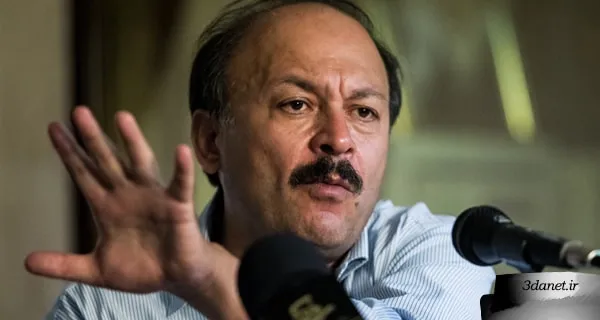
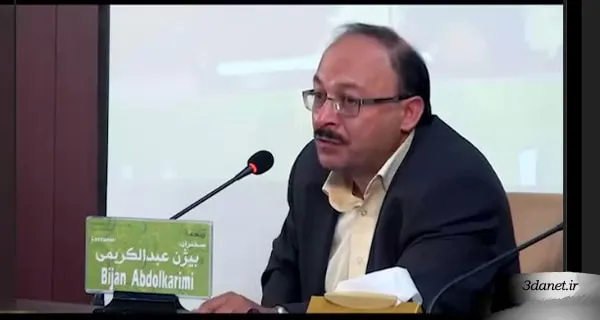
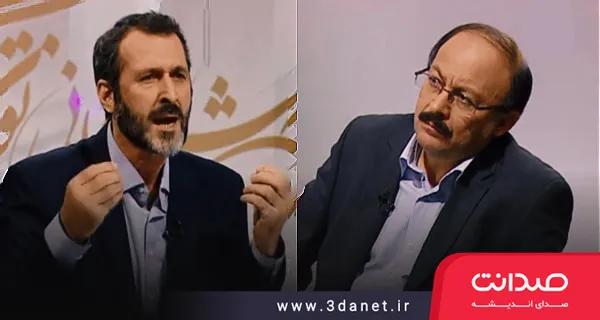
Lecture by Dr. Bijan Abdolkarimi: Twilight of the Idols
The common understanding of youth and culture revolves around natural time, whereas genuine thought requires reflection on the nature of time and the distinction between calendrical and historical time. Understanding one's historical position and civilizational ruptures is the key to grasping the condition of youth and culture.
At first glance, it might seem that speaking about this subject is not a very difficult task, especially since it appears that all of us are familiar with the three categories implicit in this question—"youth, culture, and thought"—and we all know "who is a youth and what is youth? (in comparison or relation to the concepts of child and childhood, old person and old age), and we also know what culture is? and what thought is? because all of us deal with these categories at every moment and live with them." The category of youth: what initially comes to mind, based on lived experience in everyday life, is this: human beings are born. They spend a short period in the stages of infancy, childhood, and adolescence, and then step into the period of "youth," and after something like roughly three decades, they enter middle age and then old age. In such a primary and common understanding, childhood, youth, and old age are understood based on "natural time," that is, "the earth's rotation around the sun," and also based on "the natural and biological course of the human body's life." It is on the basis of this same level of ordinary, prevalent, and common understanding that psychologists speak of the child, the adolescent, and the youth and the psychological characteristics of each, and tell us, for instance, what specific psychological traits young people acquire at the age of puberty due to biological changes and the secretion of certain hormones, and that, for example, they face the crisis of puberty or an identity crisis, or that, having become more nervous, their aggressions must be understood, or that at this age they feel a need for the other, and parents must recognize their personality and understand them at the age and position they are in, and regard their needs, desires, thoughts, and feelings with respect, and what skills we should learn and what incorrect habits we should abandon in order to create and establish a correct, logical, and effective relationship, and so on. Likewise, it is on the basis of this same level of ordinary, prevalent, and common understanding that sociologists speak to us of generational differences and the distinctions in social characteristics between new generations and previous generations, and emphasize the differences seen in various cultural, behavioral, and social dimensions between the people of the past generation and today's generation, and believe that each of parents and children try to make the other resemble their own generation and forget that it is the right of all of us that we must be children of our own time, and we must be able, through effective social strategies, to bridge this gap and the distances created between the two generations and not allow these gaps to become pretexts that make these distances greater and greater every day.
The Importance of the Discussion of Time But even at the level of ordinary, prevalent, and common understanding, when we think about categories such as youth and young age, and the old and old age, we encounter the category of "time," and in such a primary and common understanding, we understood childhood, youth, and old age based on "natural time," that is, "the earth's rotation around the sun," and also based on "the natural and biological course of the human body's life."
Natural time or true and authentic time? But here there is a fundamental question that might serve as a suitable entry point for our reflection on the relationship between youth, culture, and thought: “Is natural time true time, or is there a truer time and a more authentic time than natural time, and is scientific and natural time virtual time and not true and authentic time?” What, fundamentally, is true time? Or what, fundamentally, is the nature and truth of time? We see here that, through a little reflection on the category of “youth” and in comparison with categories such as “childhood” or “old age,” alongside the categories of “culture and thought,” we have also encountered the “category of time.” But can one truly speak with ease about categories such as “time, culture, and thought”? What, truly, are time, culture, and thought? Can one speak about something that is outside of time, culture, and thought? Are not time (past, present, future), culture, and thought all-encompassing and enveloping matters that embrace everything and hold it in their grip? Can one truly speak about these all-encompassing and enveloping categories with ease, with complete precision, and in all their aspects? Like the fish in Rumi’s parable and the example of water. Categories such as time, culture, and thought resemble categories such as life and existence: that is, totality and wholeness, that is, everything. We rarely reflect upon this wholeness. Fundamentally, one of the distinctions of authentic thought regarding the category of culture and thought is precisely this thinking about: 1. the nature and whatness of time 2. this very wholeness. When we do not think about the nature and whatness of time, and when we do not reflect upon this wholeness, our movements and stillness become independent of time and independent of this wholeness, and thus we submit to movements and behaviors that are very populist, vulgar, and entirely anti-time, anti-culture, anti-thought, anti-human, and anti-truth. (Like ISIS and fundamentalism/ signs of which, more or less, also exist in our society, and I hope we can address them.)
A reflection on the nature of time Here, there is neither the opportunity, nor in a general student program at a faculty are there suitable conditions, nor do I have such an intention, nor do I fundamentally see in myself such scientific and philosophical power to speak about “the nature, whatness, and truth of time.” However, I will suffice merely to express a few points and a few questions, for the purpose of provoking thought in my young audience. A. Is time a natural and objective matter or an existential and subjective one? The calculation of time based on the natural clock of the sun or the measure of motion, or the time of human states?
Points 1 & 2: Objective or subjective time? Objective time or subjective time? Is time in the human, or is the human in time? The time of fears and hopes, of separations and reunions. Existential time in sacred scriptures? The Night of Qadr is better than a thousand months/ The story of the Companions of the Cave
3 & 4: Calendrical time or historical time: The result of this discussion: calendrical and chronological time/ social and historical time. Do all societies today live in the twenty-first century? Is the calendrical time of Burkina Faso and Afghanistan the same as the historical time of Norway, Sweden, and Belgium? Is the historical time of an American or French girl the same as that of Farkhondeh Mohammadi from Afghanistan or the six-year-old Setayesh from Afghanistan? Therefore, when we want to think about categories such as the self, the condition of youth, culture, and thought, we must know our “time and era,” that is, we must know where we stand in history. Where is our “place + position”? Common understanding thinks based on chronological time and does not grasp historical time and the pulse of history, but the thinking individual reflects deeply on social and historical time. An example from Shariati: “I have a thirty-year generation gap with my father, but with my children, it is thirty thousand years.” This statement refers to the profound transformations that have taken place in recent decades in the world and also in societies like ours.
5. The second civilizational rupture: We are witnessing our second historical and civilizational rupture. Many do not perceive this second rupture. Our traditionalists, due to a lack of historical understanding, do not perceive that time has changed. They have no understanding of the emergence of new rationality, new thought, and new metaphysical subjectivism. Many of our youth and intellectuals have not yet opened their eyes to the emergence of the second civilizational rupture.
6. Historical backwardness: Fundamentally, one of the basic problems of our society is “historical backwardness,” and we must overcome this historical backwardness. Should our youth also have an understanding of their own historical time? Where do they stand in history? The historical backwardness of the youth themselves: Are our youth contemporaries of their own age? And is every young person necessarily a contemporary? Here I will point to another fundamental and basic question: Are we contemporaries of our own age? Or are we behind our time? Or perhaps, like great thinkers, ahead of our time?
7. “Contemporaneity” as a problem: Here I wish to replace the discussion of “being young,” which is a biological and identity-card concept, with “being contemporary,” which can be a philosophical concept. Today we use the concept of “being contemporary” in many contexts, such as “contemporary poetry,” “contemporary literature,” “contemporary writer or thinker.” Hence, “contemporaneity” is a widely used and common concept. But what truly is the concept of “being contemporary and contemporaneity,” and what are its characteristics and components? It seems the story of the Companions of the Cave points to such a historical understanding of temporality and contemporaneity. Is “contemporaneity” a fixed and absolute concept, or is it a spectral, relative, and variable concept? For instance, does “being a contemporary poet” merely mean that someone writes poetry in the form of New Poetry, that is, poetry in free (Nimaic) or blank (Shamlou-esque) styles, or the New Wave, or the like, or are there other intellectual and spiritual criteria and components in this regard? Or what are the components of a “contemporary writer or thinker or human being”? If someone speaks of new themes but in a traditional poetic form (like Rahi Mo'ayyeri or Shahriar, M. Sayeh), are they not a contemporary poet? Or if someone speaks of the themes of the ancient world in the form of New Poetry, are they not a contemporary poet or writer? Can it be said that everyone who has, for instance, taken up the pen in the last half-century or the last hundred years is a contemporary poet, writer, or thinker? Can it be said, for instance, that many of our traditional figures who write books or compose poetry these days are contemporary writers, poets, or thinkers? Does “being contemporary” mean “being of the same time and age”? Then, for instance, can it be said that “Kierkegaard and Auguste Comte” or Shariati and Sheikh Qasem Eslami are contemporaries of one another? Must the mode of thinking, the mode of perspective, and the type of language and discourse also be considered for being contemporary (for instance, in the discussion of contemporary poetry)? But what truly is contemporary thought, perspective, and language, and what are its components? Can we not, and should we not, also reflect on being contemporary in an essential and philosophical sense? Truly, in an intellectual and philosophical sense, what does “being contemporary” mean, and what are its real, philosophical, and sapiential components? Are all of us truly contemporaries merely because our identity cards show a number in this recent half-century? Are we all contemporaries to the same degree? Regarding Bertrand Russell, the famous English thinker (1872–1970), Dr. Davari says that he was born two centuries too late, or that he is a great thinker of the eighteenth century. Both Nietzsche and Fardid said: I have come too early. Now, even if one disagrees with the specific attribution regarding Russell, Nietzsche, or Fardid, one can agree with the principle of the statement. Repetition of the previous question: The historical backwardness of the youth themselves: Are our youth contemporaries of their own age? And is every young person necessarily a contemporary? Have they remained in the eighteenth and nineteenth centuries and do they not suffer from a historical backwardness? Also, if we take calendar and chronological time as the criterion for contemporaneity (read: being young), are our youth of today younger, or in a sense more contemporary, than our youth of yesterday? By way of example, can it be said that figures such as Mr. Jafar Sobhani (born 1929) are more contemporary than Fardid, who was born in 1910? Or are Mr. Javadi Amoli, Dr. Reza Davari, and Shariati, all three born in 1933, contemporaries of one another? Can it be accepted that, for instance, all works created in the current decades are more contemporary than all works created in previous decades? Or must we find more real components for determining time, history, and contemporaneity?
8. The human being and the determination of one’s own time, freedom, or on the question of time and transcendence: Is time linear? Virtual and objective time is linear (though it is cyclical: the calendar is linear; but what of subjective time? The non-linearity of historical and existential time. Can the human being exist outside of time and history? The human being and time (the human being is not a prisoner of historical time): The negation of historical determinism, the human being and the determination of one’s own time: Kierkegaard and Christ: being contemporary with Christ. It seems that time, history, and being contemporary with “culture and thought”—that is, the two other categories present in the title of our discussion—have a very close connection.
An exposition of some of the cultural and philosophical components of our age
9. Time, history, culture, and thought as encompassing and indeterminable matters: As was said, categories such as time, culture, and thought are highly pervasive and encompassing matters (precisely like the categories of world, life, existence, or being), and we cannot turn them into an object or a static counterpart before us, nor can we speak about these categories easily, with complete precision, and in all their aspects. Hence, I am compelled here merely to outline very general lines and orientations for understanding our own historical, cultural, and intellectual situation in the contemporary world:
10. The principle of progress or decline (a linear interpretation of history?): A fundamental question? The main claim: We, both on a global level and on a local level within our own society, are in a process of cultural decline and death. Thus, we are in a process of decline in a twofold sense, and this process is extremely dangerous for our individual and social life. That is, we can think of both global cultural factors and local, indigenous factors. The coordinates of the cultural atlas?: With which categories should we think about the position and condition of culture in the contemporary world? My aim and purpose: To propose several categories so that we might draw a new “world-picture,” culturally and metaphysically, appropriate to our own time.
11. Culture as an existential matter: A reminder: The category of culture is not an administrative, bureaucratic, executive, political, or security matter.
12. Thought and the being-ness/facticity of the human being: Culture and thought are not a collection of habits or beliefs; rather, they are connected to the depths and underlying layers of human life and to the mode of being and the being-ness of human beings. This is precisely what, unfortunately, is not understood in our society: Culture and thought are the result of a mode of being and a mode of the realization of human existence.
13. Culture and thought are not subject-centered, will-centered, or human-centered categories. (Just like the world itself and life itself.) This, too, is what is not understood, or is less understood, in our society. That is, just as one cannot say we command someone’s eye color or height to change, one cannot seek to change culture through coercion or non-cultural methods.
14. The distinction between fatalism and a thinking of destiny: (A thinking of destiny, not fatalism): Opposition to subject-centeredness is not an invitation to fatalism: There is a misunderstanding here: The failure to understand that something is not subject-centered is interpreted as fatalism: The question of destiny and freedom, understanding this destiny and its possibilities, and confronting superficial thinking and quixotic voluntarism: The dual danger we face: a. Superficial thinking and reducing the problem to a justification for defending human freedom, thereby sliding into voluntarism (Daesh). b. Fatalism and acquiescing to the current situation and process, sacrificing the authentic mode of human being (authenticity), and surrendering to inauthenticity and passivity. c. Therefore, neither voluntarism, superficial thinking, and quixotism, nor fatalism, passivity, and death, but rather a thinking of destiny, and within this thinking of destiny, let us strive to attain a readiness so that perhaps a way might reveal itself to us.
15. What is culture? / The indefinability of culture: As I said: the indefinability of culture, the difficulty of culture: perhaps no other term in the social sciences and humanities has had as many definitions as the term “culture.” Our concern is not to define the word culture or to provide a comprehensive and restrictive definition of it; we leave that to lexicographers, sociologists, encyclopedists, and… academicians. Here we rely on a general understanding of culture. Culture is a highly complex set of awarenesses, beliefs, feelings, arts, knowledges, symbols, epistemological, aesthetic, and ethical values, rituals, legends, myths, habits, traditions, customs and mores, decrees and laws, and everything that has taken shape within specific geographical, historical, ethnic, and racial boundaries—which are themselves highly fluid and changeable matters—that human beings learn in and from society, and in and with which they live and die.
16. Signs of the decline of a culture (both traditional and modern culture): Culture is the shared path of human life, thought, and action. Reflection: Question: Can traditional culture, and also modern culture, determine the shared path of human life, thought, and action today? (In traditional culture, this rift has become more apparent. Bifurcation in traditional culture and society / Explanations regarding this great social rift)
17. Postmodernism as distrust (the weakness of modern culture): The weakness of culture: In my belief: today, both traditional culture and modern culture are facing serious doubts, uncertainties, distrust, and crises.
18. The identity-conferring nature of cultures and the loss of this function by cultures: Cultures are specific paths based on which human beings have lived in different parts of the world, formulating and expressing their experiences in various ways, and acting creatively. It is culture that defines the boundaries of a society and the beliefs of its people, and shapes and constructs their identity. Hence, culture can be defined as a diverse set of ideas, feelings, and activities that characterize various types of human communities. Culture is that part of human ideas and behavioral patterns that is manifestly valid for the members of that society and requires no debate or argument. Culture brings about social unity and cohesion among the individuals of a society; this shared unity and cohesion creates order and regularity in social life. Culture is like the shared spirit of society. In the postmodern era in general (due to distrust in the theoretical foundations of cultures) and in our societies in a double sense, cultures are no longer identity-conferring.
19. Culture and loneliness: Most people in a society follow the cultural patterns of their society; through “shared culture,” they align themselves with a group of human beings, find shared meaning, purpose, and mood, and thus escape loneliness. In any society, individuals, under the influence of culture and the constitutive elements of culture (such as religious and social factors and the customs and traditions related to that society), develop a particular personality that, psychologically and in terms of rational behavior, should be considered a typical specimen, distinct from the behavioral personality and the psychological and rational behavior of other individuals. Therefore, the personalities of individuals within one culture are close to one another and distinct from the personalities of individuals in other societies. (Discussion of immigration / marginalization) Culture can also be defined as “the factor that gives meaning and direction to human life.” Every culture creates a comprehensive behavioral type or pattern for the individuals under its coverage, which delineates and determines the meanings, ideals, and goals of individuals and guides their instincts, inclinations, and desires. To put it more simply, every culture imposes a specific horizon and behavioral pattern on the individual. For example, the supreme model of being human in the Middle Ages is “imitation of Christ” and “being a saint,” that is, a mode of being that seeks refuge in divinity and the sacred, whereas the supreme model of being human in the modern period is imitation of Newton and Einstein and “being an engineer,” that is, a mode of life whose ultimate goal is the acquisition of power in order to dominate nature and derive greater benefit from the natural world.
20. One of the signs and symptoms of a culture's decline: superficiality: the matter and form of culture / the manifest and hidden dimensions of culture: If customs, traditions, rituals, symbols, and the consciousness and emotions embedded within them are part of a cultural system, then in times of stagnation, weakness, or decline of a culture, merely the outward appearance and shell of these ceremonies, customs, rituals, and symbols remain, without the consciousness and emotions latent within them being reproduced. (For example, the Chaharshanbe Suri ceremony and the loss of the spirit belonging to the Zoroastrian era and the importance of fire and light in this ritual, or ceremonies related to pastoral and agricultural eras and societies in the age of industrial societies (such as the Mehregan festival, tree-planting ceremonies, etc./ or Christmas carnivals in the West). If we accept that culture has manifest and hidden dimensions, and the manifest dimensions of culture reveal themselves in customs, traditions (repeated behaviors), structures, and institutions, but the hidden dimensions of culture are the pure forms of culture, which reveal themselves in artistic and literary works, the emotions, tendencies, interests, tastes, and feelings of the members of society, then in times of weakness and decline of a culture, structures and institutions are more powerful than the hidden dimensions of culture and pure cultural forms. That is, forms overcome content and overtake it. (For instance, mosques and churches become more magnificent yet colder and more lifeless, or spiritual power transforms into an institution and political and social power) and the pure, hidden forms of culture become victims of socio-cultural institutions and structures. The hidden designs are what people of thought see, but people of politics, power, and propaganda do not see; they see only the manifest dimensions. (Example: Radio Quran, example: building mosques, example: granting cultural rent to certain specific cultural currents/ even in universities, this propagandistic rent exists.) Culture includes manifest and hidden designs for human life. Culture has manifest and hidden dimensions. The manifest dimensions of culture reveal themselves in customs, traditions (repeated behaviors), structures, and institutions, but the hidden dimensions of culture are the pure forms of culture. For example, the Persian language or mosques and khaneqahs narrate the manifest dimensions of our culture, meaning everyone, even foreigners to this culture and tourists, sees them, but Hafez, Rumi, Iranian mysticism, and Persian literature are among the pure cultural dimensions that are not easily understood or seen by just anyone, except someone who has grown up in this culture or has become intimate and familiar with it. As previously mentioned, these hidden and intangible dimensions of culture are what people of thought and culture see and grasp, but people of politics, power, and propaganda are solely concerned with external manifestations, institutions, and structures, that is, the external dimensions of cultural life, and are oblivious to the inner and hidden dimensions of culture. If we consider the arts, sciences, literature, poetry, philosophy, etc., as both constitutive elements and manifestations of a culture, then the non-emergence of new manifestations of that culture (in the realm of art, literature, philosophy, ...), or the slowing down of the growth of these manifestations, or the failure of a culture's manifestations to emerge and appear as required by and expected from that culture.
21. Carnivalism: (one of the characteristics of the postmodern era)
22. Don Quixotism: The lack of a correct understanding of the internal and external problems of society (the gap between subjectivity and objectivity / thinking with concepts and categories that do not correspond to reality / historical and cultural backwardness)
23. The suppression of fundamental questions / The relationship between culture, thought, and fundamental questions: The failure to pose problems and questions in society and culture / The suppression of questioning and thought (a discussion on the relationship between civilization, culture, thought, and questioning / fundamental questions)
24. The technological revolution / and the technological revolution and the inability to suppress fundamental questions / Questions remaining at the level of the media (at an unofficial level). Due to the failure to pose questions, culture and thought lose their dynamism, belief in cultural models weakens, and due to the failure to pose questions, culture and thought do not produce knowledge. Consequently, there is no answer for the problems that arise in society, and finally, in a society where questions are not posed for the scientific community to seek answers to, no science is produced, and as a result, we face an accumulation of problems and crises. (Reference to the structure of scientific revolutions by Thomas Kuhn. Accumulation of problems / emergence of crisis / collapse and revolution.) In this society, there is no regeneration of knowledge and traditions.
25. A tradition that is not revived is not a tradition) / Tradition and the spirit of culture become weak. Tradition is not revived without fundamental questions. The former society and culture do not become acquainted with the relations of the new world; no new thought or new idea is created. Small and minor issues replace great and fundamental ones. (Thoughts turn to small and non-essential issues).
26. Al-Fiqh al-Asghar and al-Fiqh al-Akbar: Reflections on aspects of culture in the modern era on a global scale
27. The death of culture: The primacy of life itself in its instinctual and consumerist sense, and the marginalization of the transcendent aspects of life
28. Populism / Inauthenticity / Unwisdom: Perhaps this aspect of culture in the contemporary world can be expressed with the familiar and accustomed political, sociological, and ideological term populism.
However, in my discussion, populism should be understood not in a political and social sense but in a historical and civilizational concept. In the nineteenth century, Hegel declared: "The masses are coming." Kierkegaard interpreted it as inauthenticity. Even Auguste Comte, a positivist and enamored with the modern era, declared: "Our age, which is an age of ruin and decay, will bring the world to destruction if it does not create a spiritual power." Nietzsche interpreted it as the domination of slaves over the free. Behind this scientific and technical progress, Nietzsche saw the untrained spirit of Western man. José Ortega y Gasset (1883–1955) interpreted it as the revolt of the masses, and Heidegger interpreted it as the domination of Das Man. Heidegger spoke of a danger more harmful than the explosion of nuclear weapons. The Frankfurt School thinkers, influenced by Heidegger and also the young Marx, spoke of the reification of man and life and the commodification of life. Baudrillard speaks of the third wave of nihilism. Writers and novelists such as Alice Munro (who is not a philosopher) speak of the loss of quality in life and the lightening of life.
Modernity and Populism With the explanation that populism should not be considered a description of certain political and social currents or a cultural description of some societies, but rather should be counted as one of the characteristics of the new era, coinciding with the emergence of modernity. Populism, which in Persian has been used as the equivalent of the terms "vulgarism" and "faith in the people." Populism versus elitism: My effort is to analyze, with the help of some thinkers, specifically philosophers, the deeper layer of the problem beyond this conceptual duality of populism and elitism. At the level of metaphysical discussion, the boundary between populism and non-populism collapses. And boundaries must not collapse. (Reflection: Boundaries are political, ideological, and at another level of discussion, there is no fundamental difference between them.
Populism at the Metaphysical Level: The advancement of technology is not accompanied by the expansion of culture and spirituality. We see masses of people who possess the tools and instruments that human civilization has created. (But they do not know what efforts were made to achieve them, and the masses exploit the tools and civilizational achievements without feeling the need to acquire the capabilities for this exploitation or feeling a commitment to preserve human achievements: they are merely consumers.
Ortega y Gasset and the "Phenomenon of the Crowd" When Ortega speaks of the phenomenon of the "crowd," he states that the concept of "crowd" is a quantitative and visual concept. But from the concept of the crowd, Ortega seeks to arrive at the concept of the "social mass," which is a cultural category and, in my belief, perhaps also a metaphysical concept. // The principle of the leveling and homogenization of human beings and the disappearance of individualities and authenticities. Ortega says: There is no longer a hero; all actors are collective. The mass means the sum of the untrained / The total and complete domination of the masses: The "mass" is the average man. Man in a state where he has no distinction whatsoever over others, but is a general type, constantly repeated. In our time, there is an agreement of desires, thoughts, and forms of life among individuals who belong to this crowd and these social masses. But in the elite class, the real agreement of members is in a desire, an idea, or an ideal that closes the door to a large number of others, i.e., the masses. For the formation of the elite class, it is always necessary that each elite individual, for private and relatively personal reasons, separates himself from the crowd.
Who/What Is the Mass? Mediocrity: The “mass” is anyone who, without particular reasons—in goodness or in badness—does not ascribe any special value to himself, but rather considers himself simply an average person and is happy in this skin of his, and is not disgusted if he notices that he is just like everyone else. Let us imagine a simple person who asks himself: Do I excel over others by particular qualities? Do I have a talent for anything? Am I more outstanding than others in some respect? And in answer to himself, he confesses that he is not “extraordinary” in any field. This person feels himself to be of little talent, an ordinary person, an everyday and average person, yet he does not count himself among the “mass.” From Ortega’s perspective, humanity can be divided into two categories—and this division contains an important point—the category that expects a great deal of themselves and burdens themselves with duties and difficulties; and the other category that demands nothing of themselves and are content from one moment to the next to be and remain what they have been, without any effort to push themselves beyond themselves—like floating buoys at sea, driven this way and that by the wind. The dominance of the masses and ordinary people is one of the signs of our time. The political events of recent years are nothing but the dominance of the masses of people. The mass destroys everything that is different from other things, everything that is superior to other things, anyone who has distinction, who has personal talent, who is select. Anyone who is not like others, anyone who does not think like others, runs the risk of being ostracized. This very massification of culture and populism is something new and unprecedented in the history of our civilization, the like of which has never been seen before. The age of the masses is the age of coarseness. In the age of the masses, we live under the violent domination of the masses. “The style of the masses” has triumphed in all classes of life, Ortega: I reject any interpretation of our own present time that finds a direction and meaning other than the dominance of the masses, in the manner in which they view this dominance without anxiety and a shudder of disgust. The danger of the moral rebellion of the masses threatens us, a danger unbridled, tyrannical, and ungovernable, a two-faced danger like any destiny, where is it dragging us? Is it fundamentally bad or good? The place of depth and breadth has been transformed: there is breadth but no depth: (like modern universities and education). Time has been lost, time has become a flat surface: absolute time, chronological time is utterly flat. The dizzying acceleration of life: the speed of mobility in which we live today, the vigor of work and the energy with which we enter into everything, is terrifying for people of an old and ancient nature. Instead, we live in a time that feels immense powers within itself, and does not know how to employ them. Modern man dominates the world, but does not dominate his own self; he is lost in his excesses and abundances. The present generation, with more means, with broader sciences, with more complete technology, is more dissatisfied and more miserable than all past generations, exposed to the storms of the world. This strange contradiction between the “sense of power” and “lack of self-assurance” is fully visible in the spirit of our contemporaries. Our age is unparalleled in terms of its “reserve of possibilities.” But it cannot determine the “direction” of its life from the past. In the contemporary world, people live from day to day in everydayness. The future is not charted for it, without having a plan for life. It does not know where it is going; if we look closely, it is not moving from its place at all; it has no path that it has previously determined, no road to travel. It should not utter the name of the future, but must confine itself to the present. The mass man is a person who is driven this way and that by the wind without a goal. For this reason, he is never a builder, although his possibilities and powers are many. And this type of person holds the destiny of our time in his hands.
Some Other Important Characteristics of Our Contemporary World:
29. The emergence of the postmodern world and “our second civilizational rupture”: The modern world, too, is gradually turning into a part of the ancient world, and a world is replacing it that can be called the “Nietzschean world / or the postmodern world.”
30. The Nietzschean World: Under the influence of Nietzsche's teachings, the Western world, just as it accepted that "God is dead," by the same measure arrived at the conclusion that "truth is dead." Today, following Charles Taylor, one can claim that contemporary European philosophy is nothing but a facet of a new Nietzscheanism. In the current era, Nietzsche is the most influential philosopher in the West. Nietzsche is a thinker who both correctly diagnosed the crisis of modernity and, despite all his efforts to the point of madness, inadvertently caused the expansion of metaphysical subjectivism and thus the intensification of the very crisis he sought to overcome. Now, what is the Nietzschean/postmodern world like? By the Nietzschean world is meant the world that Nietzsche described, and while he sought to critique certain aspects of it, he himself became one of its constitutive elements. The most prominent features of the world he lays bare for us are the death of God, the death of truth, and the death of morality. In the realm of theory as well, today, all thinkers who consider themselves or are labeled as postmodern have, in some way, made Nietzsche's ideas the central theme of their thought. In fact, Derrida, Baudrillard, Lyotard, Foucault, and Deleuze have shaped their approaches in terms of Nietzschean approaches, such as his critique of the concept of truth and doubt in all metaphysical categories, emphasis on the will to power instead of the will to truth, the collapse of the boundary between truth and metaphor, and so on. If we consider modernity, philosophically and theoretically, as the totality of modern rationality—that is, the rationality that emerged with Galileo, Descartes, and Newton—as well as the views put forward by the thinkers of the Enlightenment era and figures such as Leibniz, Hume, Kant, Locke, Hobbes, Rousseau, Montesquieu, Diderot, and others, meaning reliance on independent and self-founded human reason, faith in this reason for understanding the world, emphasis on the new empirical-mathematical science and considering the results and achievements of modern rationality and science as objective, and applying these results to secure human welfare and comfort; in contrast, postmodern thought must be regarded as the result of a kind of disbelief in this very modern rationality and the promises of the new science, and the negation of the possibility of realizing the grand ideals of the Enlightenment era. In postmodern thought, this disbelief in the foundations and values of the modern era is accompanied by a kind of irrationalism, subjectivism, and pessimism toward any kind of theoretical systems, and fundamentally, the denial of objectivity and the negation of any objective foundation for human knowledge and action. If in the modern era only scientific thought was considered legitimate, postmodern thought, following Nietzsche, considers modern rationality and modern science also to be the result of the will to power and an effort to dominate nature, and thus a kind of myth-making and legend-spinning, fundamentally denying any meta-narrative and foundation for truth. It is through Nietzschean approaches that postmodern thought critiques the values of the Enlightenment era and its cultural-scientific themes and norms, and in a sense, leaves them behind. Now the question is: what theoretical and metaphysical characteristics constitute the Nietzschean world?
31. The World Without Metaphysics (the reign of theological systems in tradition and the reign of scientific and technological rationality in the modern era: the collapse of both) With Hume, the category of causality was shaken. Kant, through his critical and transcendental philosophy, inquired into the intrinsic possibility of metaphysical knowledge. Kant's philosophy was not the proposal of one metaphysical system alongside other metaphysical systems. His philosophy was the metaphysics of metaphysics, that is, the posing of this fundamental question: Is the attainment of metaphysical knowledge, as a science, fundamentally possible? By posing this question, and with knowledge being regarded as phenomenal, the foundations of metaphysical thought began to tremble. Kant's answer to this question within the framework of the Critique of Pure Reason was negative. But this tremor was not confined merely to metaphysics and metaphysical thought; it also engulfed theology and theological thought. Despite all of Kant's immense efforts in the Critique of Practical Reason to ground theology upon the presuppositions and a priori principles of ethics, neither the foundations of metaphysics nor the foundations of theology ever regained their former, lost solidity. With Kant and his Copernican revolution, metaphysical categories lost their value and validity in discovering the truths of the world; these categories do not provide us with the foundation of objectivity. Metaphysical categories are no longer ontological categories that narrate the structures of the world and express the mode of being of entities, but are merely subjective concepts, that is, the products of the logical activities of the human mind, which assist it in constituting and ordering the world and its objects. With the devaluation of metaphysical categories, despite all of Kant's efforts to grant them validity in the discussion of transcendental deduction, all the foundations and proofs of speculative theology, which are based on the objectivity and validity of metaphysical categories, collapse of their own accord. Thus, with Kant, metaphysics and theology find themselves on a single front, for both are equally exposed to threat and devaluation. In Nietzsche's view, Being is an exceedingly difficult enigma. Hence, one cannot employ the consolations arising from Platonism (metaphysics) and Christianity (theology) to solve this enigma, for these two approaches will cause humanity an irreparable lapse. For Nietzsche, the sense of security obtained from Plato's philosophy and the teachings of Christ is in no way reliable, because it is founded upon a delusory notion, namely the denial of this world and staring into another world, the world of Forms or the Kingdom of Heaven. Therefore, in our age, when metaphysical criteria, principles, and standards have all, following Nietzsche, been cast into doubt and the ancient supports of tradition have also vanished, it is felt that all the firm bases of both metaphysics and theology have collapsed, and no reliable support remains for us. Thus, our world has become without-metaphysics. By the world becoming without-metaphysics, I mean that in our era, all systems of thought, whether theological or ontological systems, have been devalued and are regarded merely as a myth and a mode of giving form to the fluid and incomprehensible reality of the world.
32. The Loss of Ontological Security With the collapse of systems of thought, humanity has lost its world and its order, becoming homeless. In an age when all theological and metaphysical systems have been cast into doubt, the ancient supports of both tradition and modernity have vanished, and it is felt that all the former firm bases have collapsed and no reliable support remains for humanity, the sense of ontological security is also lost. The loss of ontological security is the natural consequence of the world-become-without-metaphysics. The human being of our era, unlike the human of past ages, has lost its ontological security.
34. "The Death of God" In The Gay Science, Nietzsche paints a poetic image for us: "A madman with a lantern in broad daylight and in public wanders through the streets and alleys searching for God and constantly cries out: 'I seek God! I seek God!' His cry is met with the laughter of the people. But when everyone gathers around, the madman says: 'I will tell you where God has gone. You and I, that is, we, have killed him. We are the murderers of God' (section 125). And the madman emphasizes again: 'We have killed him. Our knife has spilled the blood of the holiest and most powerful thing that the world has ever possessed up to now.' This statement by Nietzsche means that the Christian (Hebrew) concept of God has lost its former power in Western culture and, it must be added, following the West, in most societies today.
35. The Death of Truth The death of God also signifies the "death of truth," for humanity, throughout long periods of its existence, has believed that "God is truth." According to Nietzsche, from the time of Socrates onward, Western thinkers and philosophers have solely attended to the Apollonian approach and the theoretical discovery of truth, paying special attention to theory and universal, theoretical principles, and have continually striven to extract truth from theoretical foundations and principles. In any case, at the end of the tradition of metaphysical thought, Nietzsche, in Twilight of the Idols, explicitly states, "Truth is nothing but an illusion whose illusory nature we have forgotten over time." In The Will to Power, he reiterates, "Truth is a kind of error without which one cannot live"; "There is no truth. What exists is interpretation." According to Nietzsche's view, as expressed in Beyond Good and Evil, "The world that confronts us is nothing more than a fable." Therefore, in the Nietzschean world, the existence of truth is denied. For Nietzsche, truth is nothing but a fluid and dynamic constellation of metaphor, metonymy, ambiguity, and anthropomorphism, and in general, truth entails illusions whose illusory nature we have gradually forgotten. In Nietzsche's view, "Truth is itself nothing more than an illusion." Disbelief in truth is another expression of the death of truth.
36. A Pragmatist Understanding of Truth: Nietzsche believed that "Truth is nothing but that which facilitates life." In our own era, Richard Rorty reiterates Nietzsche's approach, stating that thought must abandon the framework of philosophy's long-standing principles, such as the correspondence of mind and object and the agreement of a proposition with previously accepted propositions, and instead of discussing the revelatory nature of truth, attend to the creative or productive essence of truth.
37. The Death of Truth and Freedom: (The Terrifying Nightmare of Liberalism) Postmodern perspectives, particularly the thought of Foucault, regard the concept of truth as an obstacle to a profound understanding of being and life, and consider the passing of the concept of truth, that is, the death of truth, as the groundwork for humanity's complete and authentic liberation and freedom. According to Foucault, it suffices to strip power from the concept of truth for complete freedom to be realized, for if we accept that there is no truth, then everything will be permitted. In this way, freedom will reach its ultimate possible limit. But the question is: In such a world where truth is dead, will freedom truly be realized? Freedom can only be realized in relation to truth. But this opinion, in Nietzsche's view, is a consequence of Platonism and the Christian ascetic ideal. Postmodern thinkers also consider it a thought belonging to the ancient world.
38. The Humanization of Truth What is meant by the humanization of truth is understanding truth as a human action and production, and making it entirely dependent on human activity.
39. The Death of God, the Negation of the Supersensible World, the Death of Eternity, the Death of Meaning: But with the denial of the supersensible world, metaphysical nihilism revealed itself with greater intensity and severity. Life in this world, with the denial of the supersensible, was confronted with the loss of the concept of purpose, and this very matter drove it toward nihilism. With the denial of eternity and the supersensible world, there is no longer a value for the sake of which we endure life. Humanity has not yet been able to become the purpose-giving agent of the world itself.
40. The Death of God = The World Becoming Groundless In the present era, following Nietzsche and post-structuralist thinkers, deconstruction and the undermining of foundations have become characteristics of our age. According to the interpretation of postmodernist and post-structuralist thinkers like Derrida, if we consider the world, following Nietzsche, as a fluid, turbulent, and unstable process, then there is nothing that, in terms of permanence and stability, could provide the possibility for the formation of true beliefs. To put it more simply, our world is a world without foundation and ground. In the view of this group of thinkers, the search for depth, profundity, origin, principle, determination, and certainty is a futile and fruitless endeavor. In the present age, precisely because of this groundlessness and foundationlessness of the world, we dwell in a kind of confusion and disorder and in a chaotic world, and we are in no way capable of finding a secure point or resting place in this torrent of becoming. It is as if we are compelled either to build our ontological dwelling upon shifting sands, because there is no firm foundation in the desert of this world, or to accept disorder, homelessness, and consequently ontological insecurity as the destiny of humankind. Denial of Origin and Telos: In opposition to logocentrism and the belief in the sovereignty of reason in the world, and the belief in the existence of an origin, a telos, and a prior divine plan for this world, the historical and genealogical perspective shows that history has neither an ontological origin and foundation nor an ontological end and purpose. The world lacks any objective and reliable foundation. In the Nietzschean world, the universe is absolute, multiple becoming, devoid of any unifying matter or truth. In our time, the world has sunk into an abyss of plurality, and no unifying basis or principle governs the world.
41. The World as Fable The death of God turned the existence of absolute philosophical truth into a critical problem through postmodern interpretations. With the world becoming groundless and foundationless, the opposition between truth and error is suspended, and inevitably, the effort to find truth becomes meaningless. When no truth exists in this world, and all that exists are merely interpretations of events and experiences based on perspectives that are themselves the product of the human will to power, then there is no correct interpretation of matters and events. Simply put, in his view, discovering the meaning of the text, like truth, is unattainable. Derrida explicitly states that we are no longer able to ask what is right and what is wrong. Even if truth exists, searching for it in our world is futile. How can one choose among various and sometimes even conflicting interpretations? For this reason, we are left with countless interpretations on every subject before us.
42. The Production of Truth The result of all these approaches is the denial of the disclosive nature of truth and the belief in its productive character. Throughout the history of metaphysics, truth has always possessed a disclosive nature, meaning that truth existed independently of us, and the essence and nature of thought and knowledge consisted of the effort to disclose and unveil it. But with Nietzsche, truth, in its disclosive nature, is denied and acquires a productive character, meaning that what is considered truth is the product of our will to power. Truth is something we produce and then validate as truth.
43. Language and Truth: Truth is not the result of a kind of language game.
44. The Death of Morality: The foundationlessness of morality is a catastrophic event that has occurred solely in the modern history of the West. The foundationlessness of morality is one of the most important results and consequences of the Nietzschean world. With the dissolution of all ethnic and local histories and civilizations into modern Western civilization, this foundationlessness has encompassed all societies, including ours, to varying degrees. Faith in God and theological beliefs have always been the guarantor of humanity's moral life. However, with the shaking of Christian faith and theological beliefs, and the loss of the power of the concept of the Christian God over human souls, which Nietzsche interprets as the death of God, the last bastion of the foundations of moral life also collapsed. The death of God entails the death of truth and the death of the absolute, and with the death of the absolute and the relativization and humanization of truth, values will no longer have any basis or foundation, and values will also become relative and conventional matters. The death of God means the death of the absolute, and the death of the absolute entails the death of morality.
45. The Disruption of the Relationship between Truth, Virtue, and Happiness: In bygone eras and in the ethical systems of the ancients, there was always a firm connection between truth, virtue, and happiness.
46. The Death of Man: In such a world, which in itself possesses no meaning, the very existence of the human being has also become an enigma, devoid of meaning and purpose; no meaning or value will any longer render our lives meaningful and purposeful.
47. Nihilism The result of all that has been said is nothing but the full emergence of nihilism. In his book The Will to Power, Nietzsche had predicted that the emergence of nihilism would shape the next two hundred years of Western history. This prediction came true, with the difference that nihilism has encompassed not only the Western world but the entire globe. Nihilism has created conditions in which all the higher values of thought—namely, knowledge, truth, and virtue—have lost their validity. By nihilism, I mean the denial of the existence of a transcendent truth that serves as the foundation of the world, the unifier of multiplicities, the center of meaning for the world, humanity, and life, and the determinant of the content and substance of knowledge and the correctness or incorrectness of human cognition and action. The death of God and the death of truth have no meaning other than the reign of nihilism. Life in a Nietzschean world, with the denial of the supersensible, confronts the loss of the concept of purpose, and this very matter drives it toward complete nihilism. In such a world, the world, knowledge, truth, morality, values, and even the human being itself possess no sacred or transcendent quality whatsoever. In our time, nihilism is the most important constitutive element of the current era and the determinant of our world and our mode of existence in all spheres. Nihilism has also made its home within our being. One who, in our era, has not experienced nihilism within their own being has not yet entered the realm of serious and profound thought. Nihilism has culminated in the emergence of the human being whom Nietzsche calls the "last man."
48. The Last Man The "last man" or "little man" in Nietzsche's literature is a metaphorical expression for the human being of the modern era. In Nietzsche's view, the modern human being does not believe in experiencing or putting themselves at risk, for they fundamentally believe in nothing. In the modern human being, there is no trace of passion, ardor, or concern. In their view, every insight and vision lacks validity. They see all people as alike and claim that anyone who thinks otherwise must certainly be sent to a mental asylum. The last man strives solely for material well-being. They never endanger themselves for serious undertakings and are averse to new values and norms. They find the herd morality compatible with their own existence. They make everything small and contemptible. The mode of existence of the modern human being must be considered an intensified form of the herd animal of the nineteenth and the first half of the twentieth century. The human being of our time is also Nietzsche's last man. This human being says yes to every monstrous phenomenon. They lack resolve and are more passive and reactive. In a passive mode of existence, reactive forces replace active forces, and, in general, affirmation gives way to negation, and positivity gives way to denial and disavowal. Social depression, pervasive pessimism, and so on are signs of nihilism. The sick conscience and slave morality are clear and obvious symptoms of the passive and reactive spirit. In such a passive and reactive human being, a sense of resentment, vengefulness, and disgust replaces love, friendship, and affection. In such a human being, social solidarity, a sense of belonging to a transcendent truth or heritage, or even love for the ancestral homeland is not seen.
49. Individualism: Individualism and the Atomization of Human Beings: The dominance of extreme individualism, which is one of the main characteristics of our era, signifies the death of love and, in Sartre's words, "hell is other people." : Individualism and the weakening of social solidarity
51. The End of Politics
52. The End of the Age of Nation-States: “The end of politics,” in the view of the proponents of this idea, actually means the end of the “age of nation-states.” According to this group of political scientists, in the West, the age of nation-states, which was formed with the French Revolution and the formation of the concept of the modern state, is coming to an end. In summary, the emergence of global capitalism and the formation of transnational corporations, the formation of the global network and the collapse of borders, the fundamental change in the meaning and concept of space and place due to massive transformations in the field of new information and communication technology, the expansion of migrations, the possibility of holding multiple nationalities simultaneously, the diminishing attachment to nationality, the flight of capital from countries to wherever it enjoys greater security and profit, the brain drain to wherever higher wages are paid, a sense of pessimism toward state cadres in the fair allocation of resources, and hence a sense of dissatisfaction and alienation of citizens from states can be considered signs of the beginning of the process of the end of the age of nation-states, a process that is also seen, albeit at a slower pace, in non-European and non-American societies.
53. The Shaking of the Geographical and Territorial Foundations of Politics: In our era, nation-states are becoming a legal concept, because territory and land as the foundation of social life have been shaken, and the acquisition of benefits and public services has increasingly become the basis of individual and social life. No one says anymore, “My lamp burns in this house,” “My roots are in this soil.” Nation-states emerged in an age when social relations were based on direct dependence on the land. But in our era, when human activities are not limited to a specific geographical space and freely pass from one territory to another, and in an era when the mobility of humans and their livelihood and economic activities disrupts geographical divisions, everything changes. In our era, geographical territories are no longer a determining criterion.
54. The Death of Heritage: Also, regardless of territory, in the contemporary era, given the de-metaphysicization of the world, no heritage from the past remains for the human of the current period, because there is no heritage from the past that cannot be questioned and doubted. When historical memory is lost or weakened, the possibility of connecting with the other becomes difficult or impossible to the same extent.
55. The Death of Utopia: There was a time when words like democracy, freedom, the right to vote, free elections, liberalism and individual rights, or socialism, justice, the primacy of society’s rights, the salvation of the deprived, independence from the yoke of imperialism, etc., as the great ideals of the human of the nineteenth century and the first three-quarters of the twentieth century, warmed the hearts of intellectuals and, consequently, many of the masses. However, in our era, they are no longer ideals but have become merely bureaucratic, executive, formal, and empty procedures. Not only in the West, but even in non-Western societies, idealism and utopia have died. Nationalism, the quest for independence, and the struggle against imperialism have become outdated concepts and have lost their legitimizing power. Economic phenomena and the effort to combat economic crises have come to dominate everything. In such conditions, only the gigantic bureaucratic apparatuses operate according to their inherited and traditional model in a whirlwind of everydayness and pragmatism, without any horizon for the future.
56. The Expansion of the Present Time (Everydayness)
57. The Absence of Liberating Forces Due to the domination of technology, the link between technology and capitalism, and the rule of the economy resulting from the system of production for consumption and consumption for continuous production, and consequently the placement of the human of the new era in the cycle of everydayness in order to meet the needs imposed by technology and capitalism, and hence the reification of the human and their drowning in objects, their lack of encounter with themselves, and their failure to discover their inner forces, no liberating force is seen in our era.
58. The Transformation of Negating Forces into Affirming Forces
59. The End of the Age of Revolution Our age is an age in which the era of great social revolutions has come to an end. The concept of "social revolution" was a concept belonging to the modern era and the product of a subject that sought the realization of its own consciousness, plans, and human will. However, with the decay of the human face of man in the current period, the concept of social revolution has also become a concept belonging to the lexicon of a bygone era. Revolution is a human phenomenon and the result of human action and agency. Yet, with the death of man, the concept of social revolution has also lost its living presence in the thought and feeling of contemporary man. There is no longer a will to protest against and expose social inequalities. Social revolution means the attainment of great social and historical outcomes. To achieve great outcomes and great political and social leadership, great power and a great idea and ideal are needed. But in the new era, such a grand idea and ideal does not exist.
60. The Perception of "Conflict" as "Abnormality": The Domination of the System The situation is even more lamentable than this. Not only does social revolution and thinking about the phenomenon of revolution appear as an unattainable ideal in our era, but even any social conflict and critique that slightly disrupts the current order and entails paying a small cost is considered a kind of social abnormality. The catastrophe is that conflict is suppressed not only by political power but, prior to that, by other citizens, through being perceived as an abnormality.
61. The Death of Authenticities / Uniformity and Sameness as a Principle and Rule In our world, uniformity and sameness have become a principle and a rule. Any authenticity, selfhood, and being different is perceived as a breach of norms. Today, new societies need neither the Platonic philosopher-king, as in the Greek age, nor the intellectuals of the Enlightenment, as in modern nation-states. Today's societies need uniform and normative individuals, that is, those conforming to the overall process of the social order. Everyone must strive, above all, to make themselves uniform and harmonious with others. In our era, the power of adaptation has become a principle, and being an exception has turned into an anti-value. In new societies, the exception has neither the opportunity to emerge nor the opportunity to grow.
62. The Increase of Systemic Determinism
63. The Domination of Slave Morality With the death of individual aspirations, values, and ideals, under the pressure of the domination of technology and economic forces, a feeling of captivity in the grip of fate and the acceptance of a kind of passivity and servitude—that is, the gradual formation of the belief that changing the situation and destiny is fundamentally and in principle impossible—has prevailed.
64. The Formation of the Feeling of Self-Alienation An increase in the need for consumption and the imbalance between available resources and the satisfaction of these needs, the dominance of individualism and the atomization of individuals, and consequently a lack of loyalty to national, ethnic, and social unity, as well as a lack of commitment to national interests, the destabilization of the geographical foundations of social life and the individual's lack of belonging to the land of their ancestors, the death of historical heritage and tradition, and as a result, the feeling of the individual's disconnection from the collective, the experience of losing a sense of identity, distrust towards others, distrust towards the state in the equitable distribution of resources, and the individual holding society and its managers responsible for their failures, and thus a deep rift between the individual and the political community, and the perception of the political structure merely as a tool for achieving personal goals and not as a structure that sustains social life, the formation of a feeling of discrimination, the prevalence of pessimism, and so on... all of these have led to the formation of a feeling of self-alienation in the individual within society and, consequently, to their indifference towards the political matter and the shared destiny of the members of society. Despite all the technological advancements that should have ostensibly made life easier and simpler, the pressures of economic and livelihood structures bear down so heavily on the human being of our era that we all feel that we are, in a very powerful way, far more powerfully than in previous periods, captive to our livelihood and daily life. In our time, humans cannot advance their own projects. The spirit and mind of contemporary humanity are entangled in daily life and the consumer system that global markets and the process of technological growth impose upon the individual and society. The struggle to acquire job opportunities, educational opportunities, life chances, even forming a family and satisfying sexual instincts... has placed the individual so thoroughly in the vortex of everydayness that it has made them completely oblivious to themselves, their own presence in this world, and to thinking about their relationship with the world. Despite the expectation that the growth of technology and mass production in the modern era would completely liberate humanity from poverty and destitution, bringing freedom of spirit and thought and the cultivation of transcendent talents for modern humanity, the reign of the religion of consumerism and the imposition of desires and the consumption of new products by the technological process has disrupted the harmony between expectations and possibilities in an irrational way. The unrestrained expansion of industrialization has caused the emergence of a kind of social anomie. The production process has turned the world into a vast market. The economy has come to dominate all social institutions, weakening all norms regulating behavior, including the authority of religion and other social traditions. The power of the economy and money, by weakening religion and destroying traditional mechanisms for justifying the individual's place in the social system, has brought about a decrease in social satisfaction. With the disruption and confusion in the social needs and desires of individuals, the individual's dreams and ideals become worthless, society mocks these values and ideals, and instills in the individual that only by observing the inhumane and immoral rules of the market game, that is, with the death of values and ideals, can one succeed in life.
65. Money as a Metaphysical Category: In such conditions, money has acquired a metaphysical meaning and concept. In the modern era, money is no longer a tool for economic exchange and the embodiment of human labor and effort, but has become the sole meaningful and fate-determining sign for contemporary humanity. Money is the only sign that makes the translation of other signs into one another possible. Money is a substitute for all our lost identities. Money is the only universal institution that remains for the humanity of our era. The problem of anomie in our time has become a chronic issue, and the movement towards economic progress has freed human relations from the supervision of the moral order of traditional society and also from the constraints of Enlightenment values. There is no longer sufficient moral power to supervise the realms of commerce and industry, as well as politics. De-moralization must be considered as de-humanization. Offering a few guidelines: What can our youth do?
Understanding the importance of the category of culture: / Failure to understand the category of culture * “Culture” is a vital necessity and is by no means a decorative, secondary, or entertaining matter. * The second civilizational rift: the second earthquake and collapse of all cultural foundations (all due to global factors as well as local and indigenous factors) * The collapse of all culture-identity-forming institutions in the postmodern world/ a society empty of all authentic cultural resources: the clergy, the university, and the school: we will witness the emergence of the growth of delinquency, social rebellions, and ... barbarism. * The collapse of values and nihilism * The de-metaphysicization of values * Understanding nihilism as the greatest event of our time (that which our political power, clergy, and intellectuals are all oblivious to) * Saving culture from politicization, ideology, and populism (populist culture/ populist religion, populist defense of the West) * The relationship between culture and thought *The relationship between culture and questioning * The paradox of culture * Culture and its unworthy custodians: *Failure to understand the spirit of culture as a mode of human realization, as an existential matter? *A materialist interpretation of culture? * Turning one’s back on tradition and historical and cultural heritage (Westoxification), reliance on a possibly revived tradition and culture? Or the reconstruction and revival of heritage in the light of thought * Understanding cultural heritage on the horizon of the past or on the horizon of the future? * Distinguishing the various possibilities latent in cultural heritage: radical critique and, at the same time, defense of the spirit and truth of tradition * Understanding oneself as a historical tradition (Hindu-Iranian-Islamic thought) * The true spirit of tradition: openness to a transcendental truth, the indeterminability of this truth, love for this truth, and dwelling within this truth (the East and the possibility of religion) * Posing the fundamental question: the intrinsic possibility of this culture? * Dwelling in thought/ the importance of authentic philosophical and wisdom-based thought for our culture and for our human existence: Today’s youth has seen many of its idols shattered. Twilight of the Idols: two consequences: nihilism or the emergence of a new faith Two dangers: nihilism or the emergence of a new possibility: the historical tradition of the past has reached its end. In our time, the last arrows of degenerate traditional thought will be released from the quiver, and these arrows will bear no relation to our time and age. *Subjectivism: the possibility of a break from it or not? * The historical and spiritual tradition is one of the greatest Eastern historical traditions that provides the possibility of a break from subjectivism.
* Text of a lecture by Dr. Bijan Abdolkarimi at the “Youth, Culture, and Thought” session at the University of Isfahan Source: Mehr
.
Download audio of the Twilight of the Idols lecture
.
.
Lecture by Dr. Bijan Abdolkarimi titled Twilight of the Idols Isfahan University of Technology, Arman Student Organization Sunday, Ordibehesht 12, 1395
.
.


Discussion0 comments
No comments yet; let yours be the first voice.