Philosophy
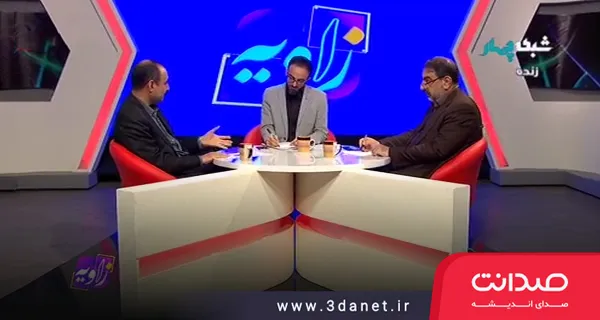
A Debate Between Bijan Abdolkarimi and Qasem Pourhassan: Modern Islamic Civilization—Reality or Illusion?
Abdolkarimi sees the project of a new Islamic civilization as the product of a delusional reason devoid of historical self-awareness; Pourhasan, however, critiques this ideological view and emphasizes a conceptual exploration of civilization as the flourishing of possibilities and agency.
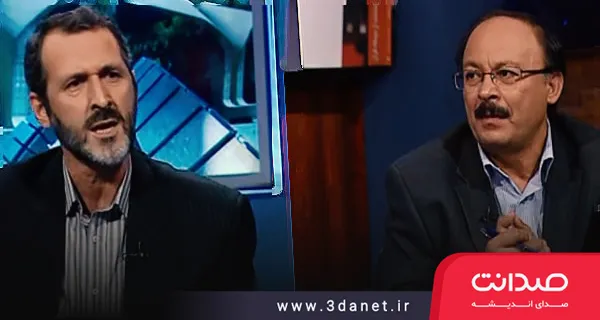
Abdolkarimi: The issue has not been posed correctly at all. It seems that in recent years, great historical transformations have taken place in our country, which I believe is a blessed and auspicious transformation. In my view, after several decades since the revolution, we are gradually moving from a “delusional/ahistorical/abstract” reason toward a “non-delusional/historical/concrete” reason. The project of establishing a modern Islamic civilization is the product of “abstract, ahistorical, and delusional rationality,” meaning it is the posing of a grand issue, but in reality, fruitless and meaningless for society. This shows that we lack “historical self-consciousness,” meaning we do not know where we stand in history and where our here and now is. When a society or an individual lacks self-consciousness, they fall into delusion. In reality, instead of addressing the far more fundamental and real problems of our society, issues that perhaps should be much more concrete—issues like the human holocaust we are perpetrating in our education system, destroying 20 million children, air pollution, poverty, the great economic recession, the vast class divide and gap, and so on—we have abandoned them and are posing illusory and unreal issues, perhaps to cover up many of our weaknesses. In my opinion, the proposal of the idea of establishing a modern Islamic civilization is more of an “utterance” than “thought”; that is, we are merely expressing a phrase. It is by no means a real issue. It is a pseudo-issue, and perhaps not even a pseudo-issue—that is, an issue that bears no relation whatsoever to our real historical problems. Issues like changing the world’s scientific system, creating a new episteme, creating a system against modernity, the Islamization of the humanities, and making the new sciences religious all arise from an ahistorical, non-concrete, and delusional reason. In my opinion, at the dawn of Islamic history, there existed in the society and in the souls of Muslims a truth, grandeur, and original luminosity that does not exist in our souls. Today, that truth, grandeur, and luminosity that should exist in our cold and frozen souls is absent; therefore, we have substituted grand and hollow claims for that truth which is absent among us. In any case, I believe that historical self-consciousness is absent in the posing of these issues; hence, posing such illusory issues makes our work more difficult and squanders the immense material and spiritual resources of this country.
Pourhassan: My perception is that we can, based on the “logic of dialogue,” conduct a conceptual inquiry into the discussion of civilization and the main claims of Islamic civilization.
Regarding civilization, we must understand three fundamental concerns:
First concern: It seems that neither the proponents nor the opponents of civilization-building have a free relationship with the concept of civilization. Their view is “non-objectivist” because their view is “ideological.” My perception is that Mr. Abdolkarimi’s and others’ ideological view prevents us from reaching a conclusion that leads to an objectivist approach.
Second concern: Civilization is the expansion and flourishing of the abilities, possibilities, and knowledge of a collective, land, country, and geography. Many opponents are caught up in the “linear theory of civilization.” When I say “we have not found a free relationship,” it means that regardless of what has historically passed and regardless of the situation we currently find ourselves in, we can have a rational discussion about how civilization fundamentally emerges and manifests. Must we be subject to the school of geographical determinism, where the emergence of civilization is only possible in one geography? Or, on the contrary, the building of civilization—which I prefer to discuss under the title “emergence of civilization” because I consider civilization to be a process and a trend—is neither subject to a prescription and instruction manual nor to desire, but is based on elements that, wherever they occur, civilization can emerge, and it is not the case that civilization must only arise in the West. This is an important point, because in later discussions we might debate whether, fundamentally, if our subject is Islamic civilization, do we know of any geography other than Iran that can contribute to this maturation regarding possibilities or the flourishing of possibilities?
Third concern: When we speak of civilization, two things must be considered as the most fundamental issues: first, that civilization does not come into being or emerge without the production of thought, knowledge, and ideas. And second, that civilization is linked with something called “agency.” Agency is equivalent to Bildung—meaning to build, but it carries a meaning far beyond that; Bildung means “internalization and construction.”
Well, these are important points about civilization-building. If we look at these carefully, we see that we are still far from being able to judge whether the claims made about civilization are false or whether a deviation has taken shape within them. I believe we must first properly understand the meaning of civilization. Friedman has a book called The World in a Hundred Years. In this book, he examines what the West, particularly the United States, must do if it wants to hold power in the next hundred years. He says you might tell me that in the academic sphere we should not engage in prophecy, but this is not prophecy; it is “prediction.” Based on knowledge and the elements of knowledge that exist, I can have an understanding that in a hundred years, for instance, instead of wanting to focus on the Atlantic Ocean in the maritime domain, the Pacific Ocean will be more important. Naturally, your investments and your way of thinking will change. Instead of wanting to focus on the Middle East, I will turn toward the East. This is something we can also do regarding civilization.
Of course, Islamic civilization has a complexity, a difficulty, and a predicament, and that predicament goes back to the inherent fragmentation of the countries situated within the sphere of Islamic civilization. Contrary to al-Jabri’s claim, I do not believe that the Arab sphere has any understanding of civilization, just as the Arab sphere has no understanding of democracy. I do not believe that other spheres, such as Central Asia or even Turkey, can contribute to the advancement of these discussions. So, we might say in the continuation of the discussion that what we speak of as the foundations of the land, our referent will be this very Iran. This helps us to be able to attain that “correct” meaning of civilization. I mean the “correct” meaning of civilization, not the “true” meaning. These are different; when I say the true meaning, it means there is a meaning of civilization that exists. Regarding civilization, I speak of “expanded flourishing.” But regarding the correct meaning, in which there is a “free relation,” I no longer call civilization expandedness; rather, I might call civilization “the internal coherence of various domains with a very complex order that may exist and with the universal aspect that may take shape in this civilization.” So, these are different meanings that exist for civilization. I think it is necessary that we first, with the help of Dr. Abdolkarimi, state what we mean by civilization. If we can discuss this, then we can say which of the claims in Islamic civilization are sterile and which are productive, and what rival objectivist theory we can propose against this ideological view that exists regarding civilization.
Abdolkarimi: If we accept that until the meaning and concept of civilization are clarified, it remains unclear what we are talking about building and establishing, then I think Dr. Pourhassan's judgment that I have approached the issue of civilization ideologically—since he has not yet heard my view on the meaning and concept of civilization—was somewhat hasty. In my opinion, the most important point of discussion is precisely this: to define the concept of civilization in the first place. My view is that the concept of civilization is "indefinable." When we speak of civilization, what are we truly talking about? There are a great many definitions. It is even said that there are about 250 definitions in the field of culture and civilization. Naturally, we do not intend to examine each one here. For me, civilization is a "transcendental/all-encompassing" concept. It is something akin to the concepts of existence, life, reality, history. If you were asked to define "life," with which components and how many components would you define it? How many components are there within life? We are within life and we feel life, but because life encompasses us, we can never objectify life and think about it like other things and objects, nor can we encapsulate it in a definition and express it in a proposition. This is why I believe civilization is an extremely, extremely complex composite concept. It is a totality in which we are immersed, and defining it as a concept that encompasses all aspects of life and our entire life is a very difficult, and perhaps impossible, task. Recall that story of Rumi where the fish were searching for the meaning of water; they come upon a large, wise fish and ask him: What is water? The large, wise fish replies: You tell me what is not water? In the sea, everything is water. Civilization is that very sea in which we, the fish-like humans, are immersed. Defining civilization is very difficult. Civilization by no means has a single meaning. Sometimes we have very different meanings and usages of civilization. Sometimes we use the word civilization and civilized person as a norm and standard, that is, we consider "civilized behavior" to mean "humane behavior." Incidentally, this meaning was common in the seventeenth century. From the seventeenth century onward, civilized behavior meant behavior based on Roman laws. Sometimes we set civilization against barbarism. They say the state engages in civilization-building, meaning we must stand against the barbarism of individuals. The police are doing civilizational work. Because if people were to pass judgment themselves and carry out the sentence themselves, that would be an uncivilized act. You see, in the debate on the possibility or impossibility of "civilization-building," the point of contention is not at all about civilization in these senses. What I mean by civilization is "civilization as a world and a historical lifeworld." In this sense, that is, civilization as a historical lifeworld, it is a very complex composite concept that encompasses a way of life and very broad and complex social relations, meaning it includes family relations, relations of production, the legal system, the economic system, the political system, science and technology, the ethical system, and many other things. This totality, in fact, encompasses a group of humans in a historical period within a geographical region or a cultural sphere so that humans can think within this horizon and act within this horizon. What are the foundations of civilization? Naturally, there is much discussion. But in my view, every civilization has its own specific ontological foundations. Every civilization has an ontological system, an epistemological system, a particular understanding of truth, a particular understanding of human beings, knowledge, and history. Now, when someone says they want to establish a new Islamic civilization, for me this claim resonates with the statement that I want to change our own historical lifeworld; I want to change the worldhood of the Muslims' world. I want to begin a new chapter in the book of human historical life. In my belief, such a grand claim is the product of delusional reason. That is, in fact, if I am asked whether the establishment of a new Islamic civilization is fundamentally possible or not, I believe that whether Islamic or non-Islamic—meaning the question of Islamicity is not even at issue—a civilization cannot fundamentally be established through a program and in a voluntaristic manner.
Pourhassan: The first point I must note is that we should view civilization from the perspective of “constructedness.” Civilization is not transcendental, civilization is not sacred, and it has no aspect of sanctity. Civilization is entirely the product of the determination of a society’s rationality. If we consider civilization to be transcendental, that conscious action I am speaking of, that rational aspect which aids in the process, harms our understanding of the meaning of civilization. I do not consider civilization to be transcendental. I consider it to be entirely constructed. It is for this reason that I adhere to a “process theory” regarding civilization. Of course, this process theory need not be a linear theory. That is, it is not the case that if we consider civilization to be the product of the determination of reason, we mean reason in the sense of a specific historical reason that emerged in a particular Western perspective, such as that of Hegel, Herder, and others. This is an important point.
The second point is that the Islamic world, roughly from the time of Sayyid Jamal until now, has a desire for “return,” with the exception of Iran. Iran has a desire for “retrieval.” These are different. When I propose that we undertake a philosophical rereading of civilization, this rereading of civilization tells us what the fundamental elements of a civilization essentially are. In civilization, we can believe in domination; domination over nature, over societies, and so on. These are characteristics we recognize in civilization. It is not necessary for us to necessarily provide a definitive definition, claiming such a definition is impossible. That is, I think we must first recognize the characteristics and distinguishing features that exist regarding civilization. Through this, we can say that this is a general understanding we have of civilization. In civilization, we require skill. In civilization, we require a theory of labor. In civilization, we require a theory of population. In civilization, we require a theory of wealth. And above all, in civilization, we require a theory of knowledge. Countries and lands that cannot produce thought, even if they produce a mass of wealth, lack the capacity for civilization-building. Therefore, there must be internal coherence among these. So, one of the important characteristics of civilization is internal coherence. That is, it is not the case that wealth alone, knowledge alone, or power alone suffices.
Look, these must be enumerated inductively. I believe that through a philosophical rereading we can help and set aside what should not take shape in our understanding of civilization. It is an important art to discern what things we should not pursue at all. The error and mistake we had regarding the humanities, that is, we developed this incorrect notion that Western humanities and Islamic humanities are separate. Humanities are humanities. Humanities can, with a change in “epistemic origin” and “telos,” transform into another form of the same humanities. Civilization is the same. Not only do I not place Islamic civilization in opposition to other civilizations in terms of essence, but civilization is such that we can see the ultimate expansion in the knowledge, power, and thought of a society.
Nor does this process take shape all at once. That is, the formation of this process is based on complex wills that exist, such as the will to dominate, the will to skill, and so on. When I say skill, I mean that if Iran, or any land that claims civilization, cannot produce a commodity or present an idea that has a universal dimension—that is, one the world wants—it will also be incapable of building a civilization. There is a Moroccan thinker named al-Jabri who has a particular understanding of civilization and its meaning. He believes that, in general, if we want to speak of civilization in the Islamic world, we must split it in two: the East of Islamic civilization and the West of Islamic civilization. He believes that our project must initially be a "project of decline." I believe this understanding is mistaken. The project of decline leads you to retreat. Therefore, I believe the thought of the West of Islamic civilization is, on the whole, a "Salafist" view. A Salafist view means you do not understand the new intellect. A view of retreat means you have no understanding of the modern period. As I am saying, if you cannot produce a thought that is considered and applied on a global scale, it will have no efficacy whatsoever. That is, it cannot be that you produce a mass of articles, while over the course of even 30 years you cannot present a single theory as a theory that is taught in the world and becomes a focus of attention and a basis for study. So, you see, it is not that the question of civilization is a simple and straightforward matter, and that we can have a negligent, optimistic, or simplistic view of civilization and decree that it is impossible or possible. My perception is that we are somewhat caught up in incorrect understandings of civilization. Just as was the case with the humanities, where, because we did not have a correct understanding of the humanities and turned to fruitless disputes, this caused us to be unable to articulate that correct view of the humanities based on our own exigencies, questions, and desires.
On the whole, I consider civilization to be an "inner rational coherence" that requires a complex process, and at the same time, I consider it the product and construct of the determination of rationality. I not only consider the construction of Islamic civilization in our time possible, but I also believe we must pay attention to this matter.
Abdolkarimi: Dr. Pourhassan had a misunderstanding regarding the term "transcendental." When I said civilization is a transcendental matter, I meant that it is an all-encompassing matter. That is, civilization cannot be objectified, and I did not mean that civilization is a sacred matter.
Another point: what do we mean by “the retrieval of Islamic civilization”? On this matter, Dr. Pourhassan and I agree that we do not found civilizations—that is, we cannot design a civilization-building project. But what is the retrieval of Islamic civilization? Look, there is a time when we are speaking of historical tradition, and I accept that thought is impossible without historical tradition. Thought is impossible in a vacuum. Thought is not something you can start from zero. Can a Muslim ignore Islamic philosophy? Can a thinker ignore his own cultural and historical achievements and start from zero? That would be primitivism. So that is not the point at issue. He says this retrieval of Islamic civilization is possible. To me, this concept is both somewhat contradictory and unclear: “the retrieval of Islamic civilization”? He says let us not make the concept of civilization too transcendent and historical; it is very clear—we want a theory of skill, we want a theory of labor, we want a theory of population, we want a theory of wealth and a theory of knowledge, and these theories must of course possess internal coherence, not merely formal coherence. But here several questions arise: it seems to me there is a kind of wordplay here. Until now we said we want civilization, now we say we want internal coherence. Another point is that he says we mistakenly posed the problem and said we want Islamic humanities. The humanities are the humanities, and we do not have Islamic and Western humanities. He wishes to defend the position of “objectivism” and not relativism. Very well, according to his objectivist theory, the theory of skill is the theory of skill, the theory of population is the theory of population, the theory of labor is the theory of labor—that is, it has no Islamic or non-Islamic, Western or Eastern character. But where does the Islamicity of this new civilization, the product of your objectivism, come from? This civilization that is based on the internal coherence of scientific and objective theories—where did you get its Islamicity? If we are to arrive at a theory of labor and if we are also objectivists, I ask Mr. Pourhassan, the non-ideological, objectivist phenomenologist: if the humanities are the humanities, well then, the theory of wealth is the theory of wealth, the theory of population is the theory of population, and so on. But where did you get this Islamic suffix? What is this concept of Islamicity doing here? You want a theory of population, you are also an advocate of an objectivist theory of population—what is the Islamic aspect of this retrieval of civilization? What is this Islamicity supposed to do with us? Another point that exists here, and on which Dr. Pourhassan himself is in sympathy with me, is that civilization should not be sought in the past; civilization is a process that must be sought in the future. Now we have a major debate as to whether we can predict historical possibilities and whether history is a determinable and predictable matter or not. But even if we pass over this debate, in my opinion, the historical transformations that have taken shape in our era in no way permit us a return to the past. In no way can we return to the past and to the worldliness of the Islamic world as it was in the past. Islamic civilization is based on a metaphysics that had not experienced this new subjectivism. Now, if that civilization is to be able to establish a relation with the new metaphysics, it must establish a relation with this subjectivism. The episteme, the system of knowledge, the knowledge system that existed in the past was based on another lifeworld. If you want to repeat it, it is fundamentally impossible. That conception falls under the category of return. The point is this: we can refer to our tradition and take fundamental insights, and on condition that we do not repeat and parrot them in the same form, we can re-understand and reinterpret those insights in the geography of our present lifeworld. However, it is by no means clear what the result of this process will be, and it is by no means clear where in the future the suffix of Islamicity is actually going to be situated in the culture and civilization of the future and what function it will have; especially since, with the death of metaphysics and the collapse of the foundations of metaphysical categories in the post-Nietzschean world, the walls of theological systems have also crumbled, and they too have undergone a kind of collapse.
Pourhassan: When we speak of the past, we can intend two meanings from the term “past.” One meaning of the past is the sense of “being a point of reference.” This being a point of reference is the ontological and existential aspect of the past. That is, a past that constructs identity, a past that is connected to us. I do not think Dr. Abdolkarimi would accept the view that a future exists as a void, without the backing of the past in the sense of “being a point of reference.” The second meaning of the past is “rupture and discontinuity.” I am not concerned with this second meaning. When I speak of the past, I speak of a re-reading of this tradition, and I do not believe at all that we can say the future in this geography—that is, in Iran, in a civilization that seeks to emerge—is without relation to the past. I do not even believe that civilization in the West was realized through a rupture with the past. Yes, a new civilization occurred with a new understanding; we accept that. It is for this very reason that the past, Greece and the post-Greek era, is continuously being re-read in the West, whether critically or in other ways. Look, we still have a long dispute ahead of us before we can speak of the Islamicness of civilization. I did not use such a term (the attribute of Islamicness) at this stage; that is, I did not say that if a civilization is to emerge, it will stand in essential opposition to the West. I rejected this and do not accept that we say this is a specific characteristic of Islamicness. My point is this: when I say that a civilization arising from the exigencies of a land, from the questions of that land, takes on the color and scent of that land’s desires, the purpose it will have, the efficacy it will have, will be related to the questions of that society. If this is the case, it is natural that the very dispute we now have about philosophy—that is, when you say Islamic philosophy, perhaps the most accurate interpretation is that this philosophy came into being in such a context; we in the Islamic world re-read Greek philosophy and tailored a garment suited to ourselves, even though we understood it. We have been in intellectual exchange with it. In my view, we must not be hasty; that is, it might distance us somewhat from what exists in the logic of dialogue. That is to say, I do not necessarily consider Western civilization to be Western now, and I speak of human civilization.
Abdolkarimi: What Dr. Pourhassan emphasizes is that thinking takes place within tradition. This point is entirely correct and is not at all the subject of debate. However, our past is not only Islamic; our past also includes Greek metaphysics, and our past includes the mystical tradition and Hindu-Iranian thought. Another point is that it would have been good if Dr. Pourhassan had raised these discussions about four hundred years ago. But Dr. Pourhassan and the friends who emphasize Islamic civilization and a return to and retrieval of it, in reality, do not see modernity, the phenomenon of globalization, and the recent transformations in the postmodern world—how they have brought an end to local histories and have given unprecedented speed and intensity to the emergence of a globalized history and civilization. In such a world, where local histories are dissolving and being absorbed into global history, speaking of local histories, as in the past, appears difficult. The idea of establishing or retrieving Islamic civilization still operates within the historical space that relies on local histories, but this historical space has long since come to an end.
.
.
Download Links for the Modern Islamic Civilization Debate:
Download Video File | Download Audio of this Debate | Watch on YouTube
.
.
Debate between Dr. Bijan Abdolkarimi and Dr. Qasem Pourhassan
Modern Islamic Civilization: Reality or Illusion?
Wednesday, October 7, 2015
Zaviyeh Program
.
.
Related Content:
A Debate Between Bijan Abdolkarimi and Qasem Pourhassan: The Possibility of Establishing a Modern Islamic Civilization
.
.

Discussion0 comments
No comments yet; let yours be the first voice.