Religion
Mehdi Nasiri and Hossein Sozanchi Debate the “Compulsory Hijab Law” on Zavieh
Mehdi Nasiri and Hossein Sozanchi debated the 'Mandatory Hijab Law' on Zavieh. Nasiri, citing the counterproductive results of coercion and the creation of polarization, called for a revision, while Sozanchi considered the hijab a symbol of Islamism and attributed the opposition to 'poor implementation of the law.'
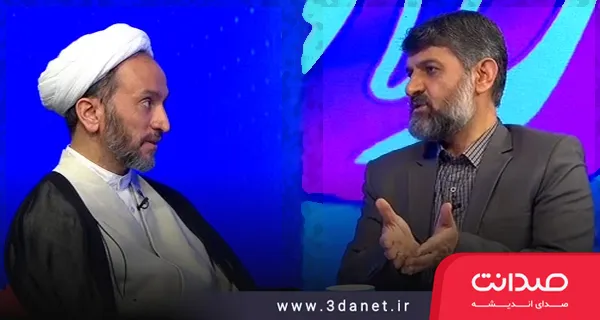
On Wednesday, September 16, 2020, the television program Zavieh hosted a debate titled “The Compulsory Hijab Law.” On this live broadcast of IRIB Channel 4, Mehdi Nasiri, a researcher in the field of religion and politics, appeared as an opponent of the “compulsory hijab,” and Hossein Sozanchi, an associate professor at Baqir al-Olum University, appeared as a proponent of this requirement.
Mehdi Nasiri, emphasizing that the compulsory hijab has so far been counterproductive, called for a reconsideration of the matter, while Hossein Sozanchi, stressing that the hijab is a symbol of Islamic identity, attributed the opposition to “poor implementation of the law.”
The full text, along with its video and audio, is provided below.
.
.
Full Text of the Zavieh Program Titled “The Compulsory Hijab Law”
Source: Ensaf News
Habib Rahimpour, editor-in-chief of Zavieh: Mr. Nasiri, you are most welcome. On the subject of hijab, we find ourselves in a dichotomy called compulsion and commitment, and in this program, you are to represent the idea of commitment.
Mehdi Nasiri: In the name of God, the Most Gracious, the Most Merciful, and there is no power nor strength except in God, the Most High, the Most Great.
I also offer greetings and respect to you and all the dear viewers. Allow me to begin my discussion with this historical incident: Asadollah Alam, the Shah’s minister of court, forty years after Reza Shah’s unveiling decree, traveled to Shiraz and Pahlavi University, where he encountered a strange phenomenon—the presence of a number of students wearing hijab, some even in chadors. He became very worried. We, forty years after the victory of the Islamic Revolution, are encountering the phenomenon of “bad hijab” and, in some cases, a tendency toward unveiling. And for this reason, we have become worried. This shows that the issue of hijab is not of the category of compulsion, such that it can be erased and eliminated by legal force, as Reza Khan sought to do. Nor can hijab be preserved, consolidated, and expanded through this compulsion. Hijab belongs to the category of commitment and belief, to the category of a matter of the heart. In this program, I do not want to say that the Islamic Republic should announce the removal of the legal compulsion of hijab starting tomorrow. In this program, I want to say that I want the discussion of non-compulsion not to be our red line, and that this subject has its own evidence and arguments, and that we have been mistaken until today in placing this issue under red lines.
I will make a few preliminary points: that hijab, meaning the covering of a woman’s body with the exception of the face and the two hands up to the wrists, is among the certainties and definitives of Islam, both Sunni and Shia; all jurists are in consensus. If anyone has expressed another opinion on this matter, it is an anomalous view and not worthy of consideration.
The second point is that there is no doubt that women being veiled has very positive spiritual, moral, and social effects and outcomes, just like other divine rulings that are based on certain interests.
The next point, which is where the main discussion begins, is this: from the perspective of Sharia and jurisprudence, can we compel hijab? And enact a law requiring the observance of hijab? There are two views on this matter; both views have their own evidence, and both are worthy of consideration. That is, it is not the case that we can say one side’s view has very strong evidence and the other side has a weak argument. One view says yes, a religious government can compel hijab, and the other view says that we have no reason in Sharia and jurisprudence for compelling hijab.
I will now assume that the view permitting the compulsion of hijab is correct, but if our forty-year experience has shown that this law of compulsion has not been successful, has not led to the preservation and consolidation of hijab, and has itself been among the factors weakening hijab, can we, from a religious and rational standpoint, continue this course?! In my opinion, no! From the perspective of rational and religious logic, it cannot be continued.
Apart from this issue, there are a number of other points in defense of the non-compulsion of hijab. Religion is a system, and we must view it as a system in both the individual and social spheres. If some parts of religion are highlighted and others neglected, whether in the realm of individual piety or social piety, it is not a proper matter and can present a distorted image of religion; at times, it may present a monstrous image of religion.
When we place so much emphasis on hijab and have been negligent or unsuccessful regarding other parts of religion in practice, the outcome of this issue in the public mind is precisely that distorted religion. Therefore, from this perspective, you should not insist so much on this matter.
The next point is that we believe in freedom of choice in religion and belief, based on numerous Quranic verses. The difference and distinction between the creation of humans and angels is that God wanted to create a being who freely stands at the crossroads of good and evil, makes a choice, and ultimately answers to God. This is the principle. This very matter can be extended to each and every ruling. That is, if it is proven that a society, for any reason, has weak belief in a religious ruling or resists it, this very resistance can be among the evidence that you should relent and desist from enforcement.
The next point is that in the last hundred years, we have undergone a discursive shift from tradition to modernity. Modernity has arrived and come to dominate various aspects of our lives. Among the transformations that have occurred is that the traditional woman of one or two hundred years ago has undergone changes in her lifestyle and outlook. One of the results of this set of transformations is the weakening of belief in hijab and attention to it. This is an obstacle before you and cannot be ignored by saying the situation has not changed and that we should expect the modern woman to adhere to hijab with the same intensity we could expect from the traditional woman.
Another problem this compulsion has created is the formation of a dichotomy in our society over the past forty years: a dichotomy between the hijab-observant and the poorly-hijabed or loosely-hijabed. And this dichotomy has had very negative cultural, social, and even political effects. Perhaps we can find few evils as significant as the evil of creating a dichotomy from the perspective of Quranic verses and narrations. That is, the well-known verse on enjoining good and forbidding evil is placed between two verses, the first recommending unity and the next advising against division. Meaning, for example, if the act of enjoining good and forbidding evil leads to the polarization of society, as with the hijab issue, you are acting completely contrary to the Quranic verses. This issue has led to a great evil, which is the polarization of society.
The next point is that we have experience in relenting on many matters, such as satellite television, video, the presence of women in stadiums, etc. I think we will also relent on this issue, albeit at a much greater cost.
The next issue is that they say removing the hijab mandate will lead to the phenomenon of nudity; I will explain later that there is no such necessary correlation between the two.
And the final point is that one of the challenges of removing the hijab mandate is the objection that more devout and traditional segments of society have to this matter, which they are entitled to and which stems from a position of sincerity, but we must talk to them, explain, and clarify the problems of this compulsion so that they too consent to its removal.
Habib Rahimpour, Editor of the Zavieh Program: Welcome, Mr. Sozanchi. You have heard Mr. Nasiri's views. I prefer to postpone your disputes regarding his opinion to the debate round, and in this segment, let the audience become familiar with your view. In tonight's conversation, you represent the idea of compulsion in hijab.
Hossein Sozanchi: In the name of God, the Most Gracious, the Most Merciful
Greetings to you and the esteemed viewers of the program. If I may very briefly offer a few points, my first point is that I am not very fond of this duality of compulsion and commitment. There is no debate that all matters of religion should be a matter of commitment. The debate is over whether, in addition to commitment, there should also be compulsion. It is sometimes inferred that if someone is in favor of compulsion, commitment is no longer an issue for them. No, that is not the case. Another point I should make by way of introduction is that I do not consider the issue of hijab a priority for a system; this subject is one issue among others, and otherwise, especially in the current situation, there are other problems that might be our priority.
But regarding the subject of the discussion, if I may speak very briefly, the first point is that it is very clear that hijab is not an issue pertaining to individuals' private sphere. The private sphere means the realm a person has in solitude and for themselves. The issue of hijab is fundamentally in the presence of a non-mahram and in the social arena. That is, there is never any meaning to 'lack of hijab' concerning someone who is without hijab in their own home. The second point is that a degree of hijab and compulsion towards it exists throughout the world, meaning if individuals were to appear naked on the streets, they would face challenges anywhere in the world. And this degree is not a small degree, if we look at it globally.
Our entire discussion is whether this limit, which is accepted to some extent throughout the world, should be determined by Islam or left to individual tastes?! I don't think anyone would agree that individuals should come into the streets however they wish. The Coronavirus pandemic made this issue clearer for us: if the government is responsible for the health of the people in both physical and spiritual dimensions, and if we accept that Islam's most important concern is spiritual health and its rulings are aimed at that, then our question will be: how seriously should this government take the rulings of Islam? Among the rulings of Islam, some are not of a legal and compulsory nature, such as performing prayers; we even have some social issues that do not necessitate compulsion, like backbiting. These are forbidden and major sins, but you cannot enter them into the legal domain. However, the issue of dress code, in global custom, has a legal capacity. The simplest proof of this is that they ban hijab. That is, the issue of dress code has the legal capacity for a ban on hijab to exist, and we have its compulsion.
One point to which many misunderstandings trace back is that in the legislative sphere and governmental compulsions, we have two types of law. One category of laws is called civil laws, and another category is called criminal and penal laws. We must know, when we want to introduce a law in society, whether it is of the civil law type or the penal or criminal type, and which one should we emphasize? Unfortunately, in our country, most issues are taken into the realm of criminal laws. What are criminal laws? A very simple example that everyone understands is laws related to murder, theft, etc. These are usually such that the nature of the issue is very clear, everyone knows its wrongfulness, and the important task of legislation is determining the punishment; that is, by determining the punishment, the law is given social compulsion. Civil laws, however, are not like this; in civil laws, the point of cultural cultivation within the legal arena is serious. Therefore, if you drag the adjudication of civil laws towards criminal laws, the law itself will face problems in its implementation. I think the concern of many friends who oppose this is that their view is entirely focused on criminal matters, and from that perspective, they ask why the hijab law is not enforced. The nature of the hijab law is also this. For example, one can have a criminal approach to traffic laws, meaning we wait to see who commits a violation so we can punish them. But if we say this law is a civil law, based on that, the pillar of this law is cultural cultivation, but the meaning of this cultural cultivation is not that if someone violates it, they are not punished. Its axis, however, is not punishment. You remember that initially, the police would hide to issue fines, but later they themselves announced that they no longer had the right to do this and must be visible; meaning, we do not want to catch people out. This difference between civil and criminal laws is, in my opinion, a very important issue.
In my opinion, the issue of hijab is clearly a matter of civil law. What does that mean? It means the main pillar of our work should be cultural cultivation, but the major mistake that occurs is that we should not draw a line such that crossing it results in punishment. For example, in traffic laws, they encourage compliance, but they also say that if you run a red light, you will be fined.
But one of the mistakes that has occurred is that everything else has been abandoned, and it has come down solely to what the police do about the hijab. The final point that seeks to seal the border.
Another issue that is heavily emphasized is the claim that people are dissatisfied and do not comply. In sloganeering, everyone says, "I am the people," but we must go into the heart of society and conduct a statistical and research-based survey to see what the people's opinion actually is. The latest research I found was a widespread field study conducted across the entire country in 2017. Based on that, when individuals were asked what the minimum acceptable Islamic covering is, eighty-five percent knew what Islam prescribes. When asked whether Islamic commands should be observed or not, 68.7 percent said they should be mandatory. The target population of this survey was also women. So, those who say it should not be mandatory are not the majority. Twenty-one percent say it is beneficial but should not be made mandatory, similar to the view Mr. Nasiri also expressed. Then they were asked, regardless of what Islam's view is, in your own opinion, how should women appear in society? 66.3 percent said they should have full covering. That is to say, I want to point out that this claim that the majority opposes mandatory hijab is contradicted by field research.
Rahimpour: If one day these surveys yield the opposite result, will the law, in your view, not be enforced?
Sozanchi: I want to make another point. Currently, in the public sphere, it is constantly said that there is no public support; I want to explain that this is not the case. If one day society does not support a measure, the government must show forbearance toward society and proceed gradually. Under specific circumstances, it can even forgo the law. But the current situation is not one where society opposes mandatory hijab.
The concept of societal support is very different at the beginning of an initiative compared to its continuation. Often, to start an initiative, support needs to be at a very high percentage, but that is not the case for its continuation. I cite the example of the governance of Imam Ali (AS). At the beginning, he did not accept the caliphate. Towards the end of his rule, how much support did he have?
Rahimpour: Mr. Nasiri; the main question facing your idea is how you expect an Islamic government to implement a non-Islamic ruling?
Nasiri: We, based on Quranic principles, authentic tradition, and the conduct of the Ahl al-Bayt (AS), do not have such a principle that divine rulings must be implemented at any cost and regardless of the outcome. This perception some have that we are duty-bound to the task, not the result, has no rational or religious basis. We must see the result of our work in every area of governance. This approach we have taken toward hijab from after the revolution until today—that it is a divine obligation and we must establish and expand it—has not had a positive effect and has sometimes had the opposite effect. Numerous surveys since 1994 show that we have a one to two percent annual decline in hijab observance, and this is also palpable. The average rate of non-observance of Islamic hijab in our country is seventy percent. And we are witnessing a downward trend in hijab observance. One of my friends who lived in Turkey for many years recounted that over the past decade in Turkey, we have encountered the phenomenon of a grandmother without hijab, a daughter with partial hijab, and a granddaughter with full hijab. This equation is reversing in our society; a grandmother with full hijab, a daughter with partial hijab, and a granddaughter without hijab—we are facing such a phenomenon. What does this indicate? It indicates that…
Rahimpour: Do you consider the cause of this to be the mandatory hijab?
Nasiri: Yes, this mode of confrontation of ours, part of which goes back to compulsion—and even if it has other causes, the compulsory hijab has been unable to counter and eliminate those other causes. This compulsory hijab has not been without cost. One might say that’s fine, we accept that compulsion hasn’t been successful, but at least compulsion means we lose only one or two percent of hijab observance a year and the process of distancing from hijab is gradual; that in itself is an achievement. In response, it must be said: no, such a thing has been very costly for our society. Let me give a few examples. As I said, with this compulsion we have created a bipolarity—a theoretical and intellectual bipolarity. As long as it remains at the level of commentary and dialogue, there is no problem, but this bipolarity enters the arena of social practice. According to a survey conducted by the Ministry of Culture and Islamic Guidance in 2015, more than 70 percent of Iranian society does not agree with compulsory hijab. But what happens in the face of this seventy percent? Just today, coincidentally, a lady who is an acquaintance of ours, who is veiled and wears the chador, called me. She said that in one of Tehran’s hospitals belonging to a certain institution—I won’t name it—I witnessed a scene where a female patient, observing full Islamic hijab with a manteau, headscarf, and mask, came to the hospital. A chadori lady was standing at the hospital entrance. She first told her, ‘First of all, you’re wearing makeup; you have to remove your makeup, and secondly, you must wear a chador to come inside.’ This veiled, chadori lady who witnessed the incident spoke of it with disgust. That is, it had such a negative effect on this chadori lady that she said, ‘Why should this hospital treat this woman in such an insulting and humiliating way?’ You see where these bipolarities have led…
Rahimpour: Bipolarity between what and what?
Nasiri: Between two segments of society.
Rahimpour: Two segments of society, or a segment of society and the state?
Nasiri: Yes, between two segments of society, one segment closer to the state’s preferences and one segment distant from the state’s preferences. In practice, this bipolarity exists between two segments of society as well as with the state.
Rahimpour: So you think that in this bipolarity, the hijab-observant are on one side and the badly-veiled and unveiled on the other?
Nasiri: No, interestingly, not all of our hijab-observant women believe that hijab must be compulsory. I think a significant number of our chadori, veiled women object to this mode of confronting hijab. Compulsory hijab has not had positive consequences. It has been the source of many conflicts. Now all our universities have a problem: what to do about the hijab issue? They station security guards, who confront, give warnings, and arguments ensue. You have seen numerous scenes in the streets regarding the Guidance Patrol’s confrontations—scenes that human nature cannot accept, where a woman who hasn’t observed hijab is treated that way, and an officer forces her into a vehicle while she screams and cries out.
See, this duality has even reached the point where recently one of the Friday prayer leaders said that the principle in hijab is that the face, too, should be covered, but the Islamic Republic has shown leniency. Where have these words come from?! That a Friday prayer leader would say such a thing. A jurist might have said this at some point, but the consensus of our jurists is that the face and hands are exempt, yet he speaks in a way that has a broadly anti-religious reflection in society.
Or another example: we had Ms. Mirzakhani, who was a mathematical genius, went abroad, and is a global figure. We have a problem: if we want to introduce Ms. Mirzakhani to society as a scientific role model, what should we do? Should we artificially put a hijab on her head?! Or no, Ms. Mirzakhani was as she was. Can we put her photo in books and show it in the media?!
The last issue is these text messages. A text message is sent [about the removal of hijab in cars] — firstly, sometimes these text messages are mistaken, and then a request is made for them to go there, and the car is impounded, and they are fined, and classes are held, and so on… These things pump hatred into society. Not only those who face these situations, but outside observers…
Rahimpour: Do you see this as stemming from the manner of implementation or the principle of the law?
Nasiri: No, the principle of this compulsion has created this duality. As long as this compulsion exists, we will face such phenomena.
Rahimpour: Mr. Sozanchi; Mr. Nasiri has two claims: one, that we are not obligated to implement the commands of Sharia in any manner and under any circumstances. And two, their argument does not concern the manner of implementing the compulsory hijab law, but rather objects to the principle of the law itself, and they believe that the more we insist on this law, the more we seem to be defeating its purpose.
Sozanchi: I am in complete agreement with his first statement, and I don't think there is any opposition to it. No one believes that every Islamic issue must be implemented in any way possible. To invoke that famous saying of the late Imam Khomeini here, I think, is an injustice to Imam Khomeini.
Sozanchi: Yes, that’s a very good example; let’s turn to that very example. Many times you do something even though you know this event will occur. A very clear example is the traffic restriction zone. How many people used all sorts of tricks to enter the traffic zone, but you say that if you remove this traffic scheme, so many problems will arise and it will become so gridlocked that, for that reason, we continue with it even though we know many people are violating it. My point is that it is very important, when we are discussing a law… Mr. Nasiri made a remark at the beginning of the program that was very good, and I want to approach it from that angle: we should see the rulings as a system, and not think that if we remove or add one, everything else will remain in its place. One might dispute whether there was haste in implementing the compulsory hijab at the beginning of the revolution, but a law has been established and is being implemented in society—and I accept that it is poorly implemented in some places. If, due to some problems, we remove the law itself, we are disrupting the entire system. It is not the case that if we touch this piece, only the adjacent piece shifts; you disrupt the whole system.
Look, why is the issue of banning the hijab so prominent all over the world now? One of the issues I often raise in these discussions, and which is very neglected, is that the hijab is analyzed solely and exclusively from the angle of chastity—which is, of course, an important angle—but today, in the new world, the hijab has taken on an identity role; it is the signboard of being a Muslim. That is, when Time magazine wants to run a piece about Islam, it puts up a picture of a veiled woman. That picture alone is enough for people to know it is going to talk about the hijab. When something becomes a signboard and a symbol, are its laws the same as the laws for things that are not signboards and symbols?! Is tampering with these laws like tampering with secondary and minor laws?! It seems to me that in the Islamic system, the hijab had a certain place; in our new model of life, this hijab’s potential has risen for various reasons, some of which are our doing and some a global issue. Its sensitivity has increased. Tampering with this is not at all like tampering with a minor jurisprudential issue, where we say, let’s temporarily relent on this jurisprudential matter.
Rahimpour: You mentioned a point that if we set aside the compulsory hijab as a law, the entire system will collapse. What are the risks of setting aside this law for the Islamic Republic?
Sozanchi: One point he himself also mentioned, and I think it is an important point, is that many times, in a situation you are placed in—especially in societies that have enemies, and individuals who are rivals of religion (I am not concerned with political rivals)—some have targeted the religion of Islam in this country, and they plan well. If you make a change here… The JCPOA process was a good example, wasn’t it? You take one step back where you shouldn’t, and suddenly you see the situation completely turned upside down. He says that if the hijab mandate is lifted, there will be no nudity, but for me, it is as clear as day that very severe nudity will emerge in our country; not that the women of our society will become naked—I agree with him that the majority of our women, over ninety percent, will not go out in a bad and offensive state even if the mandate is lifted—but what will the manifestation of that ten percent be in society? And this statistic he gave, which I find very surprising and do not know where he got it from. The statistic I gave at the beginning was from the IRIB Research Center in 2017, which was also a very detailed study. As for his claim that seventy percent believe in non-compulsory hijab, no such thing exists. Yes, among the postgraduate and doctoral demographic, this statistic might hold—close to sixty-something percent say it should not be compulsory—but you have to look at the general atmosphere of society, a country that has Tehran and also has provincial cities. People were asked, how should women’s hijab be? 66.3 percent said full covering except for the hands and face, whether with a manteau or a chador; 25 percent said minimal covering, meaning a headscarf but with the collar open and some hair showing.
Rahimpour: If we enter into the discussion of social surveys, ultimately, such an idea of a hijab referendum is what stands. If Mr. Nasiri's standing were to be brought forth regarding which part of Iranian society is in favor of abandoning the mandate, or if you were to cite evidence in an article, it might ultimately be suggested: why a social survey?! Let's hold a referendum.
A point was mentioned about the Guidance Patrol and the manner of the police force's intervention; although it warrants having multiple programs about the Guidance Patrol, the fundamental issue of our program is not the category of the Guidance Patrol at all. The issue is whether the hijab should be seen as a jurisprudential matter or a legal one?
Mr. Nasiri; Mr. Sozanchi has an idea, saying that the issue is not a conflict with the hijab at all, the issue is a conflict with the principle of Sharia, and if you say A, you must go all the way to Z.
Nasiri: In my preliminary remarks, I pointed out that the question of whether, from the standpoint of a religious government, we can fundamentally mandate the hijab and impose punishment for its violation is a serious discussion. But on the other hand, I also said that there is a view that says we can do this; we are faced with a balance of evidence here, but…
Rahimpour: Meaning you consider these two jurisprudential opinions to be of equal weight in terms of jurisprudential validity, but you say we choose based on a consideration of custom.
Nasiri: Let us assume that the government can mandate it. The philosophy of enacting a law is that it must be enforced. In the matter of traffic regulations, for example, regarding wearing a seatbelt, if seventy percent of your society resists wearing a seatbelt and you see on the streets that seventy percent do not comply, there too, there is no alternative but to retreat from enforcing the law and move towards cultural development. And until cultural development occurs and the custom of society accepts this matter, you will not confront the issue by fining ten percent of that seventy percent and not the rest. Conflict arises when you want to issue a fine…
Rahimpour: Meaning you see the validity of the law as contingent upon compliance with the law?
Nasiri: Without a doubt.
Rahimpour: Meaning if a law is not accepted in practice by the citizens…
Nasiri: A law that, for any reason, faces social resistance—social resistance that creates a multitude of complications—indicates that there is a flaw somewhere, meaning there is a predicament here…
Rahimpour: And you consider the current state of the hijab in Iran to be of this nature.
Nasiri: Exactly, that is how it is. I have mentioned examples of the predicaments and problems it has created for us. It has created a fundamental polarization. Regarding the very point Mr. Sozanchi made, that the hijab has become a symbol of Islamism and progressive Islam, the discussion is that in the Islamic Republic of Iran, as an Islamic and revolutionary country, we are faced with a daily decline in the hijab, unlike a society like Turkey, even unlike some European societies where Muslims reside.
Rahimpour: Meaning you are saying that even if we attribute a symbolic function to it, it is to our detriment?
Nasiri: Yes, the question arises for everyone: if the symbol of Islamicity and Islamism is the observance of hijab, why is your society facing a continuous decline in hijab? What challenge and problem does this very issue create? It can call your entire achievement into question. Shouldn't the product of this insistence on compulsory hijab yield a fruitful result, and shouldn't we see its tangible effect? Seeing religion as a system, which I mentioned, is a very important point. Let me give an example: if we are walking down a street in Tehran and see a 12-year-old girl bent over a trash can, earning her livelihood from it, nothing special happens for many of us who believe in compulsory hijab. If this same 12-year-old girl removes her hijab somewhere else, it becomes a serious issue. If she also takes a video and walks a hundred meters, it becomes a fundamental problem. This type of religiosity is not rational. This type of religiosity is not religiously legitimate either. It is a kind of incomplete and irrational religiosity that forgets the priorities, forgets and squanders the principles, neglects justice and addressing poverty, and then focuses on a secondary or important issue. Two years ago, right here in Tehran, on Dr. Fatemi Square, I was a guest somewhere at one o'clock. I reached the beginning of the street and saw a car pull up, drop off seven or eight 7- or 8-year-old boys, and pick up a few others. It later turned out that these were children begging under some form of control. Their begging shift had ended... How shocking and distressing should these scenes be? As much as we have spoken from our social platforms against the issue of bad hijab and loose hijab as an evil, how much sensitivity have we shown about these issues?
According to statistics, a thousand abortions occur daily in our society. If we assume that in one city, a thousand women conspire together to remove their hijabs, this would become a news bombshell and everyone would mobilize to confront it. What is our reaction to a thousand abortions a day? What is our reaction to five hundred divorces a day? What is our confrontation with the collapse of the family unit itself in this society?
Ayatollah Arafi, the head of the Qom Seminary, gave a speech two years ago at the Quds Day ceremony in Qom and officially said, 'I am sounding the alarm: the family in Iranian society is on the verge of collapse.' See how our sensitivities are distributed afterwards?
Rahimpour: They raise two points; one, that an Islamic society should be recognized by a symbol like hijab is fundamentally a point of contention, meaning why should we recognize an Islamic society by hijab? Why not, for example, by the eradication of poverty? You consider something as the symbol of a society's Islamicity, and what you make a symbol is very important. One view is that hijab is the symbol, meaning when you enter Iran, you point to women's covering as the symbol of Islamicity. Or, from another perspective, it might be said that no, this is not so fundamental as to be considered the symbol of Islamicity. The second point is that even if we assume this symbol was chosen correctly, this symbol is acting against itself and is constantly declining.
Sozanchi: I wanted to make some points about the final part of his statements as well, which I think is a very flawed comparison. But let's start with the symbol. We do not make symbols; symbols become symbols. As Heidegger says, we live in the 'Age of the World Picture.' In the Age of the World Picture, the image becomes the most important symbol of identification. Yes, justice is far, far, far higher than hijab; I have no doubt about this matter. These cases he mentioned are the pains of our society, and I am sorry that after forty years, such problems exist, which is an injustice, but a symbol is something else. The symbol is not in our hands. A symbol is a social phenomenon. Did we do something to make hijab become a symbol?! It was not in our hands to make this a symbol or that one.
Rahimpour: Did we not play a role in its establishment?
Sozanchi: The second point is that they said it is declining. Being a symbol exists to the extent that it is present. Benazir Bhutto's hijab was like the hijab of our badly-hijabed women, but it was a symbol. The concept of a symbol is very different from the jurisprudential concept of hijab. It was interesting for me in these statistics... Now you say we shouldn't mention statistics, but he mentions statistics that... If it is as he says...
Rahimpour: I didn’t say don’t cite statistics; I’m saying that if our main argument is statistics, its ultimate outcome is a referendum.
Sozanchi: No, there are times when statistics matter. If seventy percent of society resists a ruling, I would side with him. These aren’t statistics we can just pull out of thin air, saying seventy percent… Yes, if seventy percent resist a religious ruling, you cannot enforce it.
Rahimpour: In that case, would you abandon the compulsory hijab?
Sozanchi: Yes, we would be forced to. We couldn’t; practically, we’d have no choice. But do the statistics say that seventy percent resist? According to the statistics, across Iran, 66 percent say full hijab should be compulsory, and 25 percent say minimal covering. This high percentage does not resist the principle of hijab itself. These incomplete hijabs, from a jurisprudential perspective, might warrant forbidding wrong, but socially, I don’t engage much with them.
With that preface, let me move on to the second point of his remarks. Look, a girl bending over a trash can is a disgrace for our system, and the other cases you mentioned, but allow me to alter his example to clarify its meaning. Could we say, why are you sensitive about this girl but not about a spy who is very polite and well-mannered? I agree with this part, that the greater sensitivity of our devout to hijab than to injustice is a flaw, and I don’t want to defend it. But the discussion is about the hijab law that exists in the country. We ask, why are you sensitive to this law but not to such-and-such social problem?!
Rahimpour: Your view is that we should increase sensitivity to other issues, not decrease sensitivity on this one.
Sozanchi: We cannot abandon it. That is, you cannot, just because we are deficient in one area, abandon another task as well. With this same reasoning, one could eliminate all traffic laws. All social arenas must be seen together so that, as he says, the situation doesn’t become a caricature.
Nasiri: Regarding the statistics, let me say that I have been following the statistics presented by the Public Culture Council of the country and the Ministry of Culture and Islamic Guidance on this issue for about 15 years. The statistic I mentioned, that over seventy percent oppose compulsory hijab, goes back to a survey prepared by the Ministry of Culture and Islamic Guidance, and the interesting point was that even in the city of Qom, the percentage of opponents of compulsion was higher than supporters, and in a province like South Khorasan, the percentages were equal. Of course, there are other statistics that differ slightly, but one of the interesting points is that because the results of the surveys on this issue were not very favorable to us, we have not published the results. We have even been less willing to agree to select a credible, neutral statistical center and ask it to accurately gauge society’s views on this matter.
Seeing it as a system means all the parts move together. Professor Motahhari gives an example, saying that one-dimensional growth is like a person whose right arm grows, but whose head does not grow in proportion to his arm. Two limbs grow while several others remain stunted—what an ugly figure this person presents. There is a narration from the Commander of the Faithful (AS) stating that four things cause the weakening and decline of nations; one of these four is that we squander the fundamentals and the essentials, such as justice, such as freedom of choice, which takes precedence over many secondary rulings. The second thing he mentions is clinging to non-essentials and secondary matters. I understand from this narration that the Imam could have said that squandering the principles causes the fall of nations, but he wants to say that this alone does not swiftly lead to downfall and decline; when you squander the principles and cling to secondary matters, the decline is accelerated. Look at our society, our religious people, our Friday prayer pulpits, our media—they lack sufficient and necessary sensitivity to what is important and remain silent in the face of major economic and political evils, yet they are full of speeches about bad hijab, no hijab, and loose hijab. The audience will not have a balanced image of religion, and this is a very fundamental evil. What evil is greater than this, that our manner of confronting hijab leads to distancing from the very principle of religion? Not observing hijab is a transgression, but losing faith in the entirety of religion is disbelief; this manner of ours in confronting hijab is leading to disbelief. Because the transgression is public, we are sensitive to it, but because disbelief is hidden, we are not at all worried about it.
Another point is that, as Dr. Sozanchi mentioned, I also believe that if the compulsory hijab is removed, a very limited percentage will come out naked; I see this number as under ten percent. Look, sometimes you enact a law against which there is seventy percent resistance, and sometimes you enact a law against which, in the most extreme case, ten percent resist. With ten percent resistance, you can impose fines and punishments.
Rahimpour: If, for example, this percentage progresses over the next seventy years, will you forgo it again?
Nasiri: You mean seventy percent would want nudity?!
Rahimpour: In a hypothetical scenario.
Nasiri: You mean an Islamic system, say, seventy years from now, or even twenty years from now, has reached such a point; when it reaches that point, we must bid farewell to religious government. A society over which an Islamic system has ruled, then in a trajectory, seventy percent want to be naked—of course, even under those conditions, I think a religious government could relatively exist…
Rahimpour: It's a hypothetical example, and we are not linking it to Iranian society. But the discussion is about this: if you are implementing Sharia in society and you say that attention to custom is a prerequisite for implementing Sharia, to what extent do we grant validity to custom?
Nasiri: You know how much validity it has. Imam Khomeini has a saying: if the people choose a dictatorial system, which is the worst system, no one can stop them—there is nothing beyond that. That is, for governance, for implementing divine rulings, we must bring the people along with us. I have said before on this program that the reason they say “enjoining good and forbidding evil” and not “enjoining the obligatory and forbidding the prohibited” is that one should enjoin an obligatory act when the custom of society accepts its obligatoriness and desirability. Some misunderstood me, thinking I meant that whatever the majority of society says is obligatory, we must say is obligatory—absolutely not; if the whole world gathers, they cannot change a definitive divine obligation. This is one of our certainties, but the conduct of the prophets has been, and the divine verses say, that if we want to implement the rulings of religion, we must build culture so that custom accepts it, and when it accepts, we implement it. Some object: then what about the prescribed legal punishments (hudud)? Why do you carry out the punishment? The prescribed punishments that must be implemented are where 1) there is a violation of public rights, such as theft, murder, waging war against God (muharibah), etc., 2) or it disrupts public order, 3) or where it endangers public chastity, such as adultery, sodomy, etc. Here the Lawgiver has set punishments, for which there are very difficult conditions of proof. No punishment has been set for hijab; of course, there is a discussion about whether removing the headscarf endangers public chastity or not, which is debatable.
Rahimpour: Mr. Nasiri’s claim is that custom has more relevance than we think for implementing Sharia and its rulings.
Sozanchi: What you said about one-dimensional growth being very bad is a completely correct point, but you must note that this is a critique of the method of implementation, not a critique of the principle of the law. You zoomed in on the method of implementation in one place and not in another; that becomes the method of implementation. This does not justify removing the law. The system of law has been established by the Lawgiver.
Rahimpour: He is saying, do not enforce the law anymore.
Sozanchi: Because it was badly implemented, it became one-dimensional growth, or because it was implemented, it became one-dimensional growth? These two statements are very different.
Rahimpour: Just suppose he is saying that because it was badly implemented, it reached this caricature-like situation, and from this he concludes that from now on, do not enforce it.
Sozanchi: That is exactly what I am saying: can one conclude from the bad implementation of a law that the law should not be enforced? This is an important question for me. Bad implementation never justifies not enforcing the law. Resistance can justify it; that is, if a society resists a law, I think that is an acceptable reason, but bad implementation is never a valid reason for not enforcing the law. If that were the case, we would have to forgo enforcing many laws.
The second point about the “more important and less important” (ahamm wa muhimm) that you mentioned—let us unpack this. We mistakenly think that the “more important” matters are only deep issues like justice. Whereas, at the same time that deep issues are important, the superficial matters of religion are also among the “more important.” According to hadiths, venerating the symbols of religion (sha‘a’ir) brings about piety of the heart. Sha‘a’ir means slogans and symbols. To give a simple social example, in all countries, their flag has significance, and they say, “I defend my flag.” Or, for instance, they say, “I will not give up an inch of my country’s soil.” What value does an inch of soil have?! The point is not that an inch of soil has value; rather, this phrase is a symbol of the border.
They say, if the obligation is lifted, deal with those ten percent who came out in a state of nudity. What is the limit of nudity for that ten percent with whom we can deal?! If they come to the street in what manner can we deal with them?! If you remove the boundary, you can no longer draw a line anywhere. Right now, while we have the hijab law, does anyone confront those whose hair is exposed this much?!
I have great difficulty with his interpretation that speaks of public fisq (open sin) and inner kufr (disbelief). From the perspective of social action, public fisq is more important than inner kufr—much more important. The legislator and religious rulings are such that corruptions like adultery or sodomy are not made public. Once they become public, the burden of their accountability is very different from the burden of accountability for a non-public matter.
Rahimpour: So you believe that the law has a preventive function more than a punitive one. And if we remove the obligation, we have, in practice, removed the prevention.
Sozanchi: And you cannot manage it. For example, so many people in the world become apostates, why did Imam Khomeini only target Salman Rushdie?! Haven't many books been written against the Quran and Islam?! Why did he target this one?! You cannot compare someone who becomes a symbol with others.
My point is, if he accepts that removing the obligation would impair public chastity by ten percent. Where would the boundary of hijab be for this ten percent?! Where do we want to draw this line?
If we lived in a liberal country, they would say the boundaries of these things are conventional and consensual; but when you have a religion and the people are generally committed to it, we cannot determine the boundaries based on personal tastes. In his statistics, he says seventy percent do not observe the religious hijab, therefore seventy percent are resisting; these two are very different. I can accept that seventy percent do not observe the religious hijab, but that does not mean seventy percent say it should not be a law. The point he made about enjoining good and forbidding evil is also indefensible. Although good deeds must become recognized as good in society for enjoining them to be established, this does not mean that if an obligation is not recognized as good, we should not forbid evil. The best evidence for this is the Prophet's narrations concerning the end times, which say that in society, good will become evil and evil will become good, and some will forbid what is good. Explain what


Discussion9 comments
آدم لذت میبره که موافقان و مخالفان یک پدیده مودبانه و با تامل و مستدل با یکدیگر گفتوگو میکنند قطعا مسیر رشد جامعه از همین راه طی میشود دم همتون گرم
کاش از روی اندیشه ورزی باشد شما میدانید خود جوش بودن کمی با حاصل تحریک دیگران بودن فقط کمی فرق دارد. تاریخ تجزیه عثمانی بخصوص در مورد عربستان و فلسطین را توجه بفرمایید.
تناقض اصلی مدافعان حجاب اجباری این است که دائما ادعا میکنند حجاب باید اجباری باشد چون جامعه ما اسلامی است و اجباری بودن حجاب خواسته اکثریت مردم ایران است. ولی هرگاه صحبت از همهپرسی میشود میگویند حجاب حکم الهی است و نظر مردم در اینجا تعیین کننده نیست. امثال آقای سوزنچی اگر صداقت داشتند از همهپرسی دفاع میکردند تا معلوم شود چقدر ادعایشان با واقعیت منطبق است.
دوست عزیز نمی آیند برای هر چیزی نظرسنجی بگذارند، مثلا برای مجاز شدن قتل، تجاوز، و خیلی دیگر از جرایم همه پرسی نمی گذارند. کشور ما هم کشور اسلامی است و طبیعی است که حجاب بخشی از قانون آن باشد. شما باید به عنوان اقلیت حق و حقوقی داشته باشید ولی قرار نیست نظم کشور را به هم بزنید.
فرض کنیم دین بطور کامل خطاست. نوشته شما حاوی خطاست تناقض مدافعان حجاب بی معنی است کسانی که از ثمره حجاب برای جامعه می گویند یکی نیستند. شما ابتدا گزاره بیان شده را بایست درست گزارش کنید و روی اون صحبت کنید. وقتی از خودتان جمله می سازید که نتیجه رو مهندسی کرده اید و ارزش فلسفی خود را از دست می دهد.
خلاصه نظرات سوزنچی از سایت خودش http://www.souzanchi.ir/debate-with-mehdi-nasiri-about-the-official-law-of-hijab/ مقدمه با توجه به مشکلات روز، من مساله حجاب را مهمترین مساله امروز کشور نمیدانم؛ در عین حال، اهمیتش در ردیف یک مساله جزیی فقهی نیست: حجاب غیر از کارکرد اصلیاش، در جهان امروز وجهه نمادین هم پیدا کرده است؛ قرآن کریم میفرماید «بزرگداشت شعارهای دین خودش مایه تقوای قلب است (سوره حج، آیه۳۲). آیا ارزش پرچم یک کشور برای مردمش، فقط در حد قیمت پارچهاش است؟ الف. دلیل ضرورت وجود قانون حجاب در جمهوری اسلامی ایران قانون حجاب، ناظر است به حضور زن در مقابل نامحرم، نه در حریم شخصی خود؛ یعنی برای نحوه حضور زن در مجامع عمومی است؛ پس سنخ این حکم، یک حکم اجتماعی است، نه صرفا مربوط به حریم خصوصی افراد. حکومت همان طور که دغدغه مساله سلامت جسمی مردم (مثلا کرونا) را دارد، نسبت به سلامت معنوی مردم (از جمله عفت عمومی) هم باید حساس باشد. درجهای از پوشش و الزام به آن، در عرف بشر در جهان وجود دارد، که درجهی کمی هم نیست؛ بحث ما این است که محدوده قانونیِ آن را اسلام تعیین کند یا سلیقههای شخصی؟! در جامعهای که عموم مردم مسلمانند، احکام اجتماعی اسلام باید در عرصه قوانین جدی گرفته شود [اصل چهارم قانون اساسی: کلیه قوانین و مقررات مدنی، جزایی، مالی، اقتصادی، اداری، فرهنگی، نظامی، سیاسی و غیر اینها باید بر اساس موازین اسلامی باشد.] به علاوه، یک کارکرد مهم قانون حجاب، تعیین مرز معین برای رعایت قانون در عرصه عفت عمومی است؛ درست است که حداقل ۷۰-۸۰ و بلکه ۹۰ درصد زنان جامعه ما عفیفاند و اگر قانون حجاب برداشته شود اغلب به نحو زنندهای پوشش خود را کنار نمیگذارند؛ اما آن ۱۰ درصد و حتی کمتری که بیعفتاند چطور؟! اگر برای حفظ عفت عمومی باید جلوی اینها را گرفت، با چه قانونی؟ با کنار گذاشتن حد و مرزی که خداوند برای رعایت پوشش معین کرده، همواره درباره اینکه چه حدی از عدم پوشش، خلاف عفت عمومی است مناقشه خواهد شد. ب. اشکالات و مخالفتها با قانون حجاب؛ و پاسخ همه اشکالات منطقیای که موجب مخالفت عدهای با قانون بودن حجاب میشود، ناظر به بد اجرا شدن قانون بوده، نه اصل الزام قانونی؛ اما بد اجرا شدن، دلیل موجهی برای «اجرا نکردنِ» قانون نیست: مثلا، آیا اگر پلیس از قانون ممنوعیت عبور از چراغ قرمز سوءاستفاده کرد، باید عبور از چهارراهها کاملا دلبخواهی شود؟! و بد اجرا شدن، ناشی از این است که با اینکه مساله حجاب از جنس قانون مدنی است، اما جامعه ما فقط قانون کیفری را به عنوان قانون میشناسد! مساله اصلی در قانون کیفری (مثلا قوانین مربوط به دزدی یا قتل)، تعیین مقدار مجازات و سپس مجازات کردن مجرم است. اما مساله اصلی در قانون مدنی، تنظیم روابط افراد جامعه با یکدیگر است؛ مانند قوانین مربوط به معاملات ویا قوانین رانندگی؛ و البته مجازات، آخرین گام آن است. در این دسته از قوانین، نگاه اصلی به قانون، نگاه فرهنگی و اجتماعی است؛ البته حد و مرزها هم مشخص میگردد و اگر کسی تخطی کرد مجازات میشود. اشکالات و مخالفتهای منطقی همه به این برمیگردد که چرا میخواهید با زور افراد را محجبه کنید؟! منظورشان این است که چرا با «قانون کیفری» میخواهید حجاب را مستقر کنید؟! و از این جهت راست میگویند. اما اشتباهشان این است که با اصل قانون بودن حجاب مخالفت میکنند؛ در حالی که سزاوار بود میگفتند: این قانون را به عنوان «قانون مدنی» ببینید و اجرا کنید؛ که الزام گام آخر آن است، نه از ابتدا تا انتهای آن. ج. شرایط دست برداشتن حکومت از اجرای یک قانون اگر واقعا اکثریت مردم در جامعهای با اجرای قانونی مخالفت کنند، هر حکومتی ناچار است در نحوه اجرای آن تجدیدنظر کند؛ اما عمل نکردن افراد، لزوما مخالفت با اصل قانون نیست. از مشاهده افرادی که حجاب شرعی صددرصدی را رعایت نمیکنند نمیتوان نتیجه گرفت آنها مخالف وجود اصل قانون حجاب، و طرفدار غیرالزامی شدن آن هستند؛ مانند این است که گفته شود افرادی که قوانین رانندگی را کامل رعایت نمیکنند، مخالف وجود قوانین رانندگی در جامعه، و طرفدار غیرالزامی شدن قوانین رانندگیاند؟! همچنین تفاوت بسیار است بین ناتوانی از اجرای برخی از قوانین (= به خاطر مشکلاتی فعلا نتوانیم یک قانونی را اجرا کنیم)، با کنار گذاشتن یک قانون (= به سلیقه خودمان ویا به خاطر عرف، احکام دین را اهم و مهم کرده، از ابتدا اجرای برخی قوانین را معلق کنیم)! قوانین اسلام منظومهوار است؛ و خداوند است که مقدار واجبالالزام این منظومه را معین کرده است؛ ما حق نداریم به تشخیص سلیقهای خود، از قانون دانستن برخی از قوانین اجتماعی اسلام صرف نظر، و این منظومه را کم و زیاد کنیم؛ هرچند ممکن است که گاهی به خاطر شرایط پیرامونی نتوانیم یک قانون را اجرا کنیم.
من این گفتگو را از تلویزیون تماشا کردم . چند نکته درباره نظرات آقای سوزنچی برام عجیب بود . درجایی ایشون میگن که اون قشر مخالف حجاب هم از قشر دانشگاهی مثلا دارای مدرک دکتری هستن . خب اینجا آیا این قشر نیستن که نظراتشون مهمتر باشه ؟ و در جای دیگری میگن فسق مهمتر از کفر هست. درسته ظاهر مهمه اما تاثیر باطن بر ظاهر بسیار قابل توجه تر از ظاهر بر باطن هست . و در ضمن به نظرم آماری که آقای نصیری میدادن خیلی دقیق تر بود . کمی که توی خیابون راه برید متوجه میشین .
وقتی با یک فرد امروزی سخن می گویی با یک duality مواجه می شوی در برابر فرهنگ شرق و شمنیسم و shamanism و زن Zen ، فرهنگ ناواهو سرخپوستی ، fakir هندی و فرهنگ چینی و منکییسم Manichaeism ساسانی ، شینتویزم سخن از ژان ژآک روسو و لیبرتاریانیسم و ارزش های egalite می کند و وقتی این فرهنگ غلبه و سرکوب با سرخپوستهای مواجه می شود اندرو جکسون فرمان سرخپوست زدایی می دهد و همه را قلع و قمع می کند. وقتی در دوران Age of Discovery به آمریکای جنوبی می رود طلاهای مردم را غارت می کند، وقتی با هندی های استقلال طلب مواجه می شود دست به اسلحه می برد و برخلاف تصور برخی استقلال را پس از خونریزی سفاکانه از دست می دهد. وقتی با قشر مذهبی ضد استبداد آمریکایی روبرو می وشد صدام حسین عفلقی را به جان ایرانیها می اندازد. آن چه مدرنیته با ساینس eugenics آشویتس هیتلری و فاشیسم بدست نیاورد با لبخندهای زیرکانه روزولت و چرچیل کسب کرد. آن چه ماکیاولی و هلوتیوس نتوانستند بقبولانند با فرهنگ تفریح و ادعای آزادی و رشوه جنسیت به جوانان دست یافتند. چه قشر مذهبی شما درست بگویند و چه غلط بهترین مطالعه تصورات القاء شده اساتید دانشگاه و باصطلاح فلاسفه عاشق و کشته مرده شهرت و فهم مدرن با مطالعه غرب و روش گیج کردن و سرکوب شرق آغاز میشود. اگ ته دل شما را رشوه جنسیتی جامعه بیرحم مدرن قلقلک می دهد نمی توانید با آزادی اندیشه و academic integrity تحلیل اجتماعی و فلسفی فرهنگ و اخلاق شرقی را درک کنید.
دم آقای سوزنچی گرم خیلی خوب و مستدل بحث کرد